分类: society

  • Little support for petition to pay school ‘shadows’ more

    Little support for petition to pay school ‘shadows’ more

    A public campaign is pushing Jamaica’s national government to correct longstanding unfair pay practices for school shadows — trained special education support workers — in the country’s public education system, where many of these critical staff members currently earn less than the official national minimum wage.

    Launched on the official Jamaica House online petition platform on April 1, 2025, the appeal formally requests government intervention to uphold equitable compensation for these workers, who deliver specialized one-on-one support to students with disabilities learning in mainstream public school classrooms.

    Also widely referred to as shadow teachers or classroom aides, school shadows play an indispensable role in advancing inclusive education across Jamaica. Their core responsibilities go far beyond basic classroom assistance: they adapt learning activities to match each student’s unique needs, help young people navigate emotional and behavioral challenges, facilitate positive social connections with peers, and intentionally foster long-term independence rather than ongoing reliance on support.

    In their petition, organizers emphasize that the vital work school shadows do to enable vulnerable disabled students to access learning, stay safe, and contribute fully to school community life has been largely unrecognized, particularly when it comes to the personal investments these workers make in their own professional development. Many shadows pay for additional training and advanced qualifications out of their own pockets, yet even after meeting these updated professional requirements, the majority of public sector school shadows still earn wages that fall below Jamaica’s national minimum wage.

    Petition organizers call this systemic underpayment unjust, environmentally and professionally unsustainable, and misaligned with both Jamaica’s existing national labor regulations and the government’s stated commitment to educational equity. Currently, Jamaica’s national minimum wage sits at $16,000 per 40-hour workweek, and the government has already approved a scheduled increase to $17,000 per week that will take effect on July 1, 2026. Even with this planned adjustment, the petition notes that the current pay structure for school shadows remains unlawful and unfair, requiring urgent policy correction.

    The issue of school shadow compensation is not a new one for Jamaica’s education leadership. In 2024, then Education Minister Fayval Williams acknowledged that the public education system employed roughly 500 school shadows, and identified improved pay for these workers as an ongoing policy priority. All public sector school shadows are deployed through the Ministry of Education’s Special Education Unit, which provides specialized support for learners aged 3 to 21 with a wide range of disabilities, including hearing and visual impairments, learning disabilities, intellectual disabilities, emotional and behavioral disorders, and autism, alongside tailored support for gifted and talented students.

    Data from past discussions within Jamaica’s education sector highlights a sharp discrepancy between public and private sector pay for these roles. In a 2022 interview with the Jamaica Observer, then President of the Jamaica Independent Schools’ Association (JISA) Dr. Andre Dyer reported that private school parents who cover shadow teacher pay out of pocket often spend between $15,000 and $90,000 per month, depending on the worker’s qualifications, with lower costs only available when schools offer partial subsidies.

    Demand for qualified school shadows has risen steadily across both public and private Jamaican schools since the COVID-19 pandemic, when two years of suspended in-person learning exacerbated developmental and learning gaps that require targeted one-on-one support for many disabled students.

    Under Jamaica’s official petition framework, any registered citizen can launch or sign a public appeal on the Jamaica House portal. For a petition to qualify for formal review by the Office of the Prime Minister, it must gather 15,000 valid signatures within a 40-day window. If the appeal meets the platform’s participation standards, the Prime Minister’s office is required to issue a formal public response. The current petition on school shadow compensation is set to close on July 1, 2025, and as of reporting, it has not yet gathered any signatures. All petitions undergo a pre-publication review to confirm compliance with platform rules, and only eligible appeals are posted for public signing.

  • Jaii Frais retains Isat Buchanan in shooting case; makes first court appearance

    Jaii Frais retains Isat Buchanan in shooting case; makes first court appearance

    KINGSTON, Jamaica — A post-carnival shooting in the Jamaican capital has left three people wounded, including prominent local podcaster Jhaedee “Jaii Frais” Richards, and sparked an ongoing police investigation with two people now in official custody. The violent incident unfolded Sunday night at the Ranny Williams Entertainment Centre in St Andrew, immediately following the conclusion of official carnival festivities in the area.

    Following the shooting, Richards was taken into police custody as a person of interest connected to the attack. On Wednesday, he appeared before a local court to consider a police application for an extended remand, a request that would allow officers to hold him without formal charges beyond the 48-hour window mandated by Jamaican law. The court ultimately granted the police’s application, scheduling Richards’ next court appearance for Friday.

    Richards has retained prominent defense attorney Isat Buchanan to represent him throughout the investigation and upcoming court proceedings. Buchanan confirmed to local outlet Observer Online that he successfully petitioned the judge to order emergency medical care for his client, noting that the island’s police lockup facilities lack the capacity to properly treat the gunshot wound Richards sustained in the attack. Following the court ruling, Richards was transferred to a local hospital to receive care for his injury.

    “ We await the completion of the investigation and all I can say is trust the process,” Buchanan told reporters outside the courthouse Wednesday.

    Three people were hit by gunfire during the attack at the popular Big Wall after-party venue, according to official updates. Alongside Richards, the injured include a U.S. citizen and a member of dancehall recording artist 450’s personal entourage. The entourage member suffered critical injuries in the shooting but has survived and is currently receiving medical treatment, authorities confirmed.

    Richards is not the only person detained in connection with the high-profile incident. Jahvel “Jahvy Ambassador” Morrison, a well-known music producer and talent manager, has also been held in police custody since Sunday night immediately following the shooting. Morrison has retained top legal representation, King’s Counsel Peter Champagnie, to guide his case through the legal process.

    Local law enforcement has not yet released formal details on possible motives for the shooting, nor have they announced any timeline for the filing of formal charges against the two detainees. Investigations remain ongoing as officers work to piece together the sequence of events that led to the Sunday night attack.

  • ODPEM reports more than $1.4 b in donations following passage of Hurricane Melissa

    ODPEM reports more than $1.4 b in donations following passage of Hurricane Melissa

    KINGSTON, Jamaica — Five months after Hurricane Melissa made landfall and caused widespread damage across Jamaica, the island nation’s disaster management agency has secured more than JA$1.4 billion in donations from a global network of supporters to fund recovery and long-term resilience work.

    Commander Alvin Gayle, Director General of the Office of Disaster Preparedness and Emergency Management (ODPEM), announced the updated donation figures during an April 15 post-Cabinet press briefing at Jamaica House. As of March 31, more than 17,000 individual and institutional donors have contributed to post-hurricane reconstruction efforts, which launched after the storm hit the country on October 28 last year.

    To streamline giving, ODPEM set up multiple donation channels: an online payment gateway integrated into the official Support Jamaica portal for digital contributions, as well as dedicated local bank accounts for both Jamaican dollar and U.S. dollar direct transfers. Gayle confirmed that roughly 80 percent of all total donations arrived via direct bank transfers, highlighting the preference for direct giving among large and institutional donors.

    The donor pool represents a broad cross-section of partners, ranging from local community members and domestic businesses to regional blocs, international governments, global non-governmental organizations, and private individuals from across the world. After accounting for currency conversions, net donations deposited in ODPEM-managed accounts total JA$1,478,269,567, Gayle confirmed.

    To date, a portion of the pooled funds has already been allocated to two core priority areas aligned with the government’s national recovery strategy: the public Shelter Recovery Programme and the purchase of heavy construction equipment to boost national disaster response capacity. Per a donor request, the equipment purchase is already greenlit for funding.

    So far, JA$146 million in donated cash has gone toward the government-led roof repair initiative, which has been further bolstered by an in-kind donation of $400 million worth of roofing materials from international and local partners. An additional JA$7.2 million has been disbursed to cover logistics and operational costs for the housing recovery program.

    As of the latest update, 410 damaged residential roofs have been fully completed under the program, with dozens more scheduled for construction in the coming weeks. Gayle noted that total program spending will rise as more projects move forward, adding that all beneficiaries have been vetted for vulnerability by the Ministry of Labour and Social Security to ensure support reaches the communities most in need.

    Separately, JA$320 million in donations has been earmarked for the procurement of heavy construction equipment designed to strengthen Jamaica’s emergency response capabilities. According to Gayle, this allocation does more than just address the immediate aftermath of Hurricane Melissa: it represents a long-term strategic investment that will upgrade the country’s entire national disaster preparedness and resilience infrastructure for future extreme weather events.

    The remaining unspent donation balance will be held in reserve and allocated to additional recovery and resilience projects as needed, including the upcoming rapid deployable modular housing initiative, which is designed to provide emergency shelter quickly after future natural disasters.

  • North Coast Hardware Workers Secure First Collective Bargaining Agreement

    North Coast Hardware Workers Secure First Collective Bargaining Agreement

    For years after North Coast Hardware employees voted to unionize, workers at the Antigua and Barbuda-based retail hardware outlet have finally achieved a long-awaited milestone: a fully finalized Collective Bargaining Agreement (CBA) between company management and the Antigua and Barbuda Workers’ Union (ABWU) that delivers meaningful, tangible gains for every member of the workforce. This landmark accord is the first formal negotiated agreement to be completed since workers formally opted for union representation, marking a watershed moment for labor rights at the company.

    The deal packs a range of financial and work-life improvements for staff, starting with structured wage gains that will roll out over the next four years. In addition to an emergency 3% wage bump awarded to workers in 2024 while negotiations were still ongoing, the CBA locks in an total cumulative 8% base wage increase split across three years: 3% in 2025, followed by 2.5% annual increases in both 2026 and 2027. Beyond pay raises, the agreement codifies a suite of new and expanded benefits designed to support workers across all stages of their careers and personal lives.

    Notably, all contract employees at the company will be converted to full permanent positions, a change that drastically boosts job security for a large segment of the workforce that previously lacked stable employment protections. The CBA also establishes a $20 daily meal allowance for workers, adds three paid days of paternity leave for new fathers, and creates a retirement plan that calculates benefits at 75% of an employee’s final severance rate. For staff employed as full-time company drivers, management has committed to covering the cost of renewing their professional driver’s licenses. The agreement also introduces clear, standardized rules for vacation time accrual and adds a formal compassionate leave provision to support workers dealing with personal or family emergencies.

    Negotiations to reach the final agreement stretched over a longer timeline than many involved anticipated, according to Kem Riley, Senior Industrial Relations Officer at the ABWU. But despite the protracted process, Riley emphasized that the final outcome was well worth the sustained effort from union negotiators and worker representatives.

    “Securing this first agreement and these meaningful benefits on behalf of our members was a top critical priority for our union,” Riley explained in a statement following the deal’s finalization. “We stayed the course through every stage of negotiations, and we are genuinely pleased with the outcome we have delivered for North Coast Hardware workers.”

    For the ABWU, the successful conclusion of this landmark CBA represents more than just gains for one group of workers: it is a significant step forward in the union’s broader mission to advance fair compensation, improved working conditions, and stronger job security for organized labor across Antigua and Barbuda.

  • UWI FIC First Year Experience Programme Leads Community Clean Up, Collects More Than 4,000 Pounds of Garbage

    UWI FIC First Year Experience Programme Leads Community Clean Up, Collects More Than 4,000 Pounds of Garbage

    On April 12, 2025, The University of the West Indies (UWI) Five Islands Campus turned out over 100 participants for a landmark community-wide clean-up organized through its flagship First Year Experience Programme, pulling more than 4,000 pounds – equal to 2 metric tons – of waste from public spaces across the Five Islands region of Antigua and Barbuda.

    The cross-group collaboration brought together incoming first-year undergraduates, tenured and junior faculty members, campus administrative staff, local community residents, and corporate sponsors to rejuvenate high-traffic public areas. Volunteers split into coordinated teams to cover three key stretches of coastline and roadway: the corridor linking Pensioners Roundabout to Green Apple Cafe, the route from Royalton Antigua Resort’s back entrance to Green Apple Cafe, and the coastal stretch from Hawksbill Beach to Green Apple Cafe. This targeted coverage addressed areas popular with both locals and tourists that had accumulated excess waste over recent months.

    Campus leadership framed the event as far more than a one-off environmental action, positioning it as a concrete demonstration of the institution’s pledge to act as a responsible, embedded partner to the community that hosts its campus. The First Year Experience Programme, the framework behind the initiative, was designed specifically to ease new students’ transition into higher education, with core priorities spanning academic preparation, personal growth, and intentional cultivation of civic duty. Unlike traditional first-year orientation programming that focuses solely on on-campus adjustment, this model prioritizes experiential learning outside the lecture hall, pushing students to engage with pressing local social and environmental challenges from their very first semester.

    Rhajhel Brown, the programme’s coordinator at the Five Islands Campus, expanded on this educational mission in comments after the event. “The First Year Experience Programme is built around out-of-classroom learning, designed to help our new students adapt not just to the demands of university academics, but to the real-world challenges that shape our community today,” Brown explained. He also highlighted that the clean-up would not have achieved its large-scale impact without support from regional partners, naming Royalton Antigua, the Akhimo Group, the Rotaract Club of Antigua, Adoptacoastline, Green Apple Café, and the Governor General’s Deputy Sir Clare Roberts as key contributing collaborators.

    Senior campus administrators echoed Brown’s enthusiasm, emphasizing that the event reflects a long-term institutional commitment rather than a temporary public relations exercise. Dr. Camille Samuel, Campus Registrar, noted that the clean-up offers clear proof of the positive contribution the UWI Five Islands Campus makes to surrounding neighborhoods. “The Five Islands Campus has already left its mark on this community, and we hope our faculty, staff, and students will keep working to improve the place we call home,” Samuel said. She added that campus administration will continue allocating resources and support for future community engagement projects, framing the 2025 clean-up as one part of a sustained, ongoing effort to lift overall quality of life for residents of the Five Islands community and the wider nation of Antigua and Barbuda.

  • NOTICE: Section of Newgate Street Temporarily Closed for APUA Repiping; Businesses Remain Open

    NOTICE: Section of Newgate Street Temporarily Closed for APUA Repiping; Businesses Remain Open

    A short stretch of Newgate Street will be shut down to all through traffic starting today, as crews from the Antigua Public Utilities Authority (APUA) carry out critical repiping work along the corridor. Local transportation officials have confirmed that despite the closure, all retail shops, restaurants, service providers and other commercial operations located along the affected section of the street will continue normal operating hours throughout the duration of the construction project. Commuters and recreational drivers who typically rely on this route to reach their destinations are being urged by transportation authorities to map out alternate paths in advance, and build extra time into their travel schedules to account for inevitable traffic congestion and delays stemming from the blocked roadway.

  • Blue Economy Department Launches Ocean Month Art Competition for Young Children

    Blue Economy Department Launches Ocean Month Art Competition for Young Children

    To kick off official programming for Ocean Month 2026, the Department of the Blue Economy has unveiled a one-of-a-kind art competition open exclusively to children between the ages of 7 and 11, centered on ocean conservation and sustainable blue economy themes.

    Organized in partnership with the Ministry of Education’s Education Broadcasting Unit and a coalition of additional community and institutional partners, the competition invites young creative minds to translate their personal understanding of the blue economy into visual art. Participants can choose to create either murals or posters, with encouraged themes ranging from vibrant depictions of native marine life to illustrations of actionable ocean conservation practices.

    According to event organizers, the competition serves two core goals: to foster the creative talent of young people across the region, and to build broader public awareness of the critical role healthy oceans and marine ecosystems play in supporting communities and economic activity. Unlike many youth art competitions that end with a simple award ceremony, this initiative offers a unique lasting opportunity for the top participant: the winning entry will be converted into a full-size public mural that will be displayed in a community space, leaving a permanent legacy of the young artist’s vision and work.

    Submissions for the competition opened to participants on April 13, and the submission window will remain open through to May 7. Following a period of judging, the winner is set to be publicly announced on June 8, which aligns with the annual observance of World Ocean Day, tying the event to a global movement for ocean protection.

    Department officials are actively encouraging parents, primary school teachers, and guardians to guide and support children in entering the competition. They frame the event as more than an art contest: it is a targeted opportunity to nurture the next generation of creative thinkers, innovative problem-solvers, and dedicated environmental stewards who will carry forward the work of protecting the world’s oceans for decades to come.

  • Anglican Canon Massiah dies at 79

    Anglican Canon Massiah dies at 79

    One of Barbados’ most venerated senior Anglican religious leaders, The Reverend Canon F. Errington Massiah, has passed away at the age of 79. His death came early Monday morning, following a short stay for medical care at a local hospital, closing a 45-year career of spiritual and public service that left an indelible mark on the Caribbean nation.

    Widely recognized for his straightforward, unfiltered approach to both pastoral care and public commentary, Massiah built a reputation across Barbados for his vibrant oratory style and unflinching willingness to confront pressing social problems that affected everyday citizens. His decades of consistent, dedicated service earned him respect across religious and political circles, and tributes poured in immediately from across the country after news of his passing broke.

    The Right Reverend Michael Maxwell, Bishop of Barbados, described the cleric’s death as a moment of profound sorrow for the entire Anglican Diocese of the nation. “It is with deep sadness that we note the passing of The Rev’d Canon Errington Massiah, one of our retired Anglican clerics who served the Church faithfully and devotedly for over 35 years in active ministry,” Maxwell shared in his official statement.

    Massiah’s journey in ordained ministry began in August 1980, when he was ordained to the diaconate, followed by ordination to the priesthood just 11 months later in July 1981. He cut his teeth in parish leadership early, serving his curacy at three congregations: St Leonard, St John the Baptist, and St Cyprian. In January 1984, he received his first appointment as Priest-in-Charge of All Souls Church, setting the stage for the tenure that would define his career.

    Later that same year, Massiah took up the post of Rector at St Joseph Parish Church, one of the oldest ecclesiastical sites on the island of Barbados. He would hold this role for more than 25 years, ultimately adding responsibility for St Aidan’s at Bathsheba to his portfolio before retiring from full-time active ministry in August 2016. Two years prior to his retirement, in recognition of his decades of outstanding service, then-Archbishop John Holder conferred on him the honorary title of Canon. Bishop Maxwell called the award “a fitting tribute to a life poured out in ministry to both Church and society.”

    Beyond his pastoral work within parish walls, Massiah carved out a prominent role as a public voice on social and religious issues in Barbados. For many years, he penned a regular column titled “Outside the Pulpit” for the *Weekend Nation* newspaper, where he shared thoughtful social commentary and updates on church activities for readers across the country. He also took on a number of public service roles, including serving as Chaplain to the Senate of Barbados during the 2013–2018 parliamentary session, and working as a supervisor for the Caribbean Secondary Education Certificate (CSEC) national examinations.

    Prime Minister Mia Mottley joined Bishop Maxwell in paying tribute to the late cleric, noting that Barbados has lost “a devoted son of the soil…. A faithful priest, a steady shepherd, and a man whose ministry touched both Church and country.”

    Mottley emphasized that over decades of service, Massiah “served with conviction, care and consistency, and many Barbadians came to know him through his long service at St Joseph Parish Church, where he led with quiet strength and deep faith. His life was one of duty, pastoral grace and deep commitment to the people he was called to serve.”

    The prime minister also highlighted Massiah’s contributions to national life outside his religious work, noting that “His role in the life of Parliament, including as Chaplain of the Senate, reflected a ministry that understood the importance of conscience, moral guidance and national responsibility. At a time when this country needs strong religious voices, steady spiritual leadership and men and women who can help call us back to faith, decency and deeper values, his passing will be felt even more keenly.”

    Bishop Maxwell extended his condolences not only to Massiah’s family but to all the congregations he served over his career, “especially the people of the Cure of St Joseph with St Aidan, among whom he served for many years.” He closed his tribute with the traditional Anglican blessing for the departed: “May our departed brother rest in peace, and rise in glory.”

    Massiah is survived by his widow Denise Massiah and their two daughters, Kean and Andrea.

  • NIA Empowers Women Through “Her Future Blueprint: Financial Security for Women 40+” Seminar

    NIA Empowers Women Through “Her Future Blueprint: Financial Security for Women 40+” Seminar

    CHARLESTOWN, Nevis – April 14, 2026 – The Nevis Island Administration (NIA) is moving forward with its ongoing mission to close the gender economic gap, announcing a targeted upcoming seminar designed specifically to boost financial security for women aged 40 and above.

    Organized by NIA’s Department of Gender Affairs, the event, titled “Her Future Blueprint: Financial Security for Women 40+”, carries the core theme “Own Your Future: Women, Wealth & Homeownership”. It is scheduled to run from 5:00 PM to 7:00 PM on May 11, 2026, at the Malcolm Guishard Recreational Park, and registration is now open to interested participants via an online Google Forms portal.

    This initiative is not an isolated outreach effort; it is developed and hosted under the umbrella of Nevis’ National Gender Equality Policy and Action Plan (NGEPAP), a national framework that prioritizes inclusive economic advancement for all groups of women. Event planners designed the seminar specifically to address the unique, often overlooked financial barriers that women over 40 face in Nevis, with a particular focus on marginalized subsets of this demographic: women working in the informal sector, those nearing retirement, and women living with disabilities.

    Despite the significant contributions these women make to Nevis’ society and local economy, the NIA notes that many face persistent systemic barriers that block access to critical financial tools including credit, insurance, and evidence-based long-term financial planning resources. The seminar aims to fill that gap with practical, actionable learning rather than abstract discussion.

    Attendees will take part in interactive, solution-focused sessions covering four key pillars of long-term financial stability: tailored insurance protection, accessible savings and investment strategies, foundational education on loans and credit access, and methods to maximize retirement income. The core goal of the program is to leave participants with both the knowledge and confidence to make informed financial choices, and to take tangible steps toward building personal assets, including homeownership, and achieving full economic independence.

    As part of a broader national strategy to advance gender equity in Nevis, the seminar aligns with government priorities to expand equal access to opportunity, strengthen the economic resilience of women across the island, and support sustainable, long-term livelihoods for all. The Department of Gender Affairs has issued an open invitation to all eligible women in Nevis to register, encouraging them to use the event as a space to evaluate their current financial goals and take proactive steps toward a more secure future.

  • Teachers still footing school costs, says BUT

    Teachers still footing school costs, says BUT

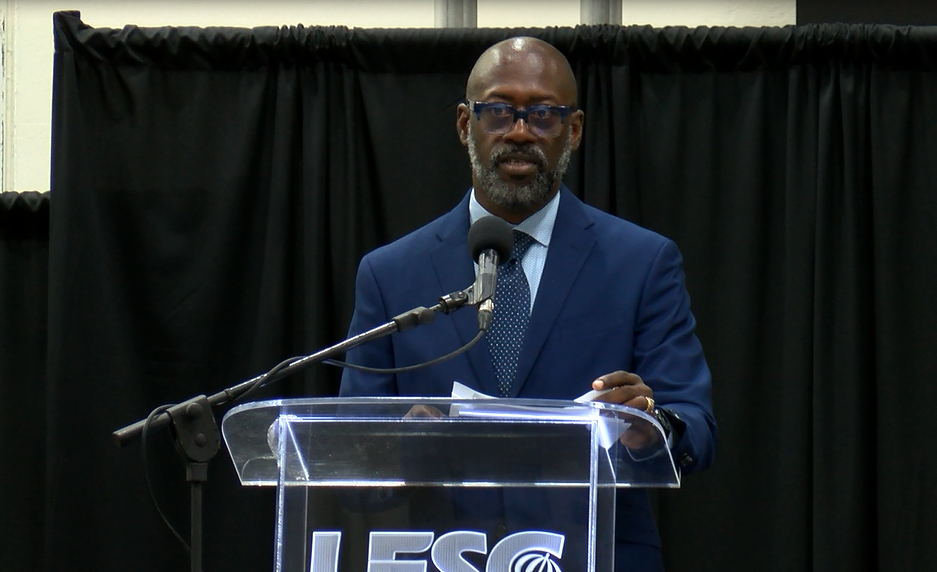
    At its Annual General Conference held this week at the Lloyd Erskine Sandiford Centre, the Barbados Union of Teachers (BUT) has laid out a clear set of demands and observations for the island nation’s ongoing education transformation push, led by its president Rudy Lovell. Opening his address to union members and education stakeholders, Lovell cut straight to the most pressing funding gap facing the country’s public schools: the absence of a dedicated, ring-fenced annual budget earmarked exclusively for classroom resources. Against the backdrop of the government’s widely promoted education reform agenda, Lovell stressed that meaningful, lasting change to the education system cannot be achieved if classrooms remain underresourced. To date, the burden of filling that resource gap has fallen unfairly on frontline educators, with thousands of teachers still spending their own personal salaries to purchase basic supplies needed for day-to-day learning – a practice Lovell described as both inequitable and completely unsustainable. He called on the Ministry of Education Transformation to move forward immediately with implementing a realistic, fully funded annual budget that delivers essential learning materials to every school across the country, regardless of its location or student population.

    Turning to one of the most hotly debated components of the government’s broader reform push – the future of the Common Entrance Examination, widely known as the 11-Plus – Lovell delivered a definitive statement: the century-old assessment is not going anywhere. He confirmed that union leadership met with ministry officials in October 2024 to clarify the government’s proposed changes to the exam, and that the BUT is now prepared to collaborate on aligned elements of the reform process, while actively consulting its nationwide membership to gather on-the-ground feedback and share educator insights with policymakers.

    Lovell did not limit his address to grievances, using the platform to acknowledge significant progress across multiple areas of the education sector over the past 12 months. Positive developments highlighted included expanded access to ongoing teacher training, enhanced support systems for students with special educational needs, strengthened foundational literacy and numeracy programs, and the successful hiring of more than 350 new teachers to fill long-standing vacancies across primary and secondary schools. He also celebrated the long-awaited restoration of teachers’ term vacation leave to its pre-2014 structure, a win secured through constructive negotiations with the ministry earlier this year, alongside improved institutional responses to school health and safety concerns and a full return to the pre-pandemic normal academic calendar. Lovell extended explicit gratitude to senior government leaders, including Prime Minister Mia Mottley, Education Minister Chad Blackman, and Permanent Secretary Kim Belle, noting that a new culture of collaborative dialogue between the union and the ministry has helped resolve dozens of long-standing issues that previously impacted educator working conditions.

    Despite these wins, Lovell made clear that a host of persistent systemic challenges continue to undermine both educator well-being and student learning outcomes. Foremost among these is widespread teacher burnout, a crisis exacerbated by ballooning workloads that now include mandatory expanded online reporting requirements and additional teaching periods for primary school educators. Lovell framed teaching as one of the most intellectually and emotionally demanding professions in the public service, explaining that the unrelenting cycle of lesson planning, classroom management, and student assessment inevitably leads to chronic fatigue and burnout if left unaddressed.

    The union also raised urgent concerns about substandard physical infrastructure and basic working conditions across many schools. Widespread issues include overcrowded classrooms, insufficient and poorly maintained bathroom facilities, a total lack of dedicated staffroom space at some institutions, and even a shortage of basic furniture such as teacher desks and chairs – a gap Lovell called deeply troubling amid the government’s transformation agenda. Additionally, while the government mobilized replacement teachers during last year’s mass sickout, permanent vacancies often remain unfilled when teachers take approved, legitimate leave, creating avoidable disruption to learning that impacts both primary and secondary schools. Further issues identified by members include conflicting guidance from multiple overlapping reading programs rolled out across different schools, a lack of targeted training to implement new curricula effectively, rising student behavioral issues, and additional administrative workload tied to Caribbean Examinations Council (CXC) school-based assessment requirements. Delays in processing job appointments, salary adjustments, and other routine administrative requests continue to drag down educator morale, the union confirmed.

    School violence emerged as another top priority for action, with Lovell detailing a string of serious incidents recorded across the island this year, ranging from weapons possession on campus to physical attacks on educators and large-scale student altercations. These events have created widespread fear among both teaching staff and parents, with Lovell noting that educators are increasingly forced to act as de facto security mediators rather than focusing on their core instructional role. He issued an urgent call for the immediate rollout of a long-promised national school security protocol to address the growing crisis.

    The BUT also shone a light on the escalating youth mental health crisis impacting classrooms across Barbados. Citing data from the national mental health hotline, Lovell shared that 40 percent of all calls received by the service come from children and teenagers – a statistic he described as stark proof of the growing emotional and psychological strain facing young Barbadians, which in turn impacts learning outcomes and classroom dynamics. Looking ahead to the future of education, Lovell emphasized that the sector will require significant systemic adaptations to keep pace with digital transformation, warning that hybrid learning models are set to become the new normal. To avoid student disengagement and educator frustration, he stressed that the government must prioritize investment in modern edtech infrastructure, universal reliable high-speed internet access for all schools, and targeted training for teachers on artificial intelligence and other emerging digital tools.

    On the topic of proposed policy changes, the BUT reiterated its firm opposition to the planned introduction of mandatory teacher licensing. Lovell argued that existing professional requirements for Barbadian educators are already clearly defined and robust, and that a new licensing regime would only add unnecessary bureaucratic red tape without delivering any improvements to teaching quality or student outcomes. Instead of licensing, the union advocates for expanded investment in continuous professional development, upskilling, and retraining for existing teaching staff. Lovell also called on the Ministry of the Public Service and Talent Development to approve the BUT’s request for a full-time paid union officer, recognizing the critical role that union representatives play in supporting frontline teachers and advancing collective concerns with government officials.

    Even with the long list of unaddressed challenges, Lovell reaffirmed the BUT’s commitment to remaining a constructive collaborative partner to the Ministry of Education Transformation and other government stakeholders as the reform process moves forward. “We see ourselves as a partner in national development,” Lovell said, closing his address by calling for the BUT to be included as a core stakeholder in all future discussions related to education policy, reform, and transformation across the country.