分类: society

  • Masked Gunman Shoots Into Vehicle, Injuring Occupant

    Masked Gunman Shoots Into Vehicle, Injuring Occupant

    In the pre-dawn hours of Tuesday, a brazen shooting unfolded on Dickenson Bay Street that has left local law enforcement working to piece together the details of the attack and identify the perpetrator. A 4 a.m. act of gun violence left a man with facial injuries after a shooter opened fire directly into the car where he was sitting.

    According to initial accounts from the scene, the attacker was concealed by a mask and wore all black clothing, a disguise that has complicated early witness descriptions for investigators. The assailant walked up to the stationary vehicle, took aim at the window, and fired a single bullet that crashed through the glass.

    The flying shards of shattered glass from the bullet’s impact caused the facial wounds that the victim sustained. Emergency responders quickly transported the injured man to Sir Lester Bird Medical Centre, where he has already received medical attention for his injuries. As of Tuesday, no updates have been released on his current condition, and no suspects have been taken into custody in connection with the attack.

    Local police have confirmed that they are still actively investigating every angle of the incident, working to collect forensic evidence from the scene, interview potential witnesses, and track down the masked gunman responsible for the early morning attack.

  • Double murder accused walks

    Double murder accused walks

    In a landmark judge-alone trial delivered Friday, a Maracas St Joseph man facing charges for a high-profile 2020 double homicide has walked free after a High Court justice threw out the prosecution’s core evidence as fatally unreliable.

    Warren Small, 48, who also goes by the street names “Quincy” and “Blacks”, faced four total charges: two counts of murder for Darrie Simon and Sharlene Ramkissoon, plus unlawful possession of a firearm and matching ammunition. The two victims were killed in a brazen daytime shooting on March 3, 2020, outside a mini-mart at Acono Junction, Maracas, St Joseph, a case that shook the small local community for nearly four years.

    The entire prosecution case rested entirely on the testimony of Joseph Tinto, Darrie Simon’s mother, who was present inside the mini-mart during the attack. Tinto told the court she had known Small since he was a child, and claimed she was able to identify him when the gunman’s face covering slipped for a brief moment during the shooting.

    But presiding Justice Nalini Singh outlined multiple critical flaws in Tinto’s identification that cast irreparable reasonable doubt over the prosecution’s narrative. In her ruling, Singh noted that the gunman was almost fully concealed by a hooded sweatshirt and bandana throughout the incident, meaning any glimpse of his face could only have lasted a matter of seconds amid the chaos and terror of a sudden violent attack. Compounding this issue, Tinto was positioned behind a thick glass display counter inside the store at the time of the shooting, a barrier that the court ruled further distorted and compromised her ability to make a clear visual identification.

    Singh also highlighted conflicting testimony from a second independent eyewitness, Celine Rebeiro, who not only failed to identify Small as the gunman but also described the shooter as wearing dark sunglasses — a key detail that never appeared in Tinto’s account of the incident. Beyond the problematic eyewitness testimony, the court also called out significant investigative failures by law enforcement, including the complete absence of a formal police identification parade and a failure to conduct a prompt, official reconstruction of the crime scene to verify witness accounts.

    After weighing all the evidence, Justice Singh concluded that the crown could not overcome reasonable doubt over the identity of the actual shooter, and entered not guilty verdicts on all four counts against Small, resulting in his immediate discharge from custody. Prosecutors Shervon Noriega, Rebecca Trim-Wright and Khi Cambridge represented the State during the trial, while Small was defended by court-appointed defense attorneys Colin Selvon and Anastasia Weekes.

  • Electrician fined for trespassing on Lethem aerodrome

    Electrician fined for trespassing on Lethem aerodrome

    Updated Wednesday, June 10, 2026, at 7:22 a.m. by Denis Chabrol

    In a landmark enforcement of Guyana’s civil aviation safety rules, a local man has become the first person convicted of unauthorized trespassing on a hinterland aerodrome, just 10 days after national aviation regulators issued urgent public warnings about unsafe activity around the country’s remote airstrips.

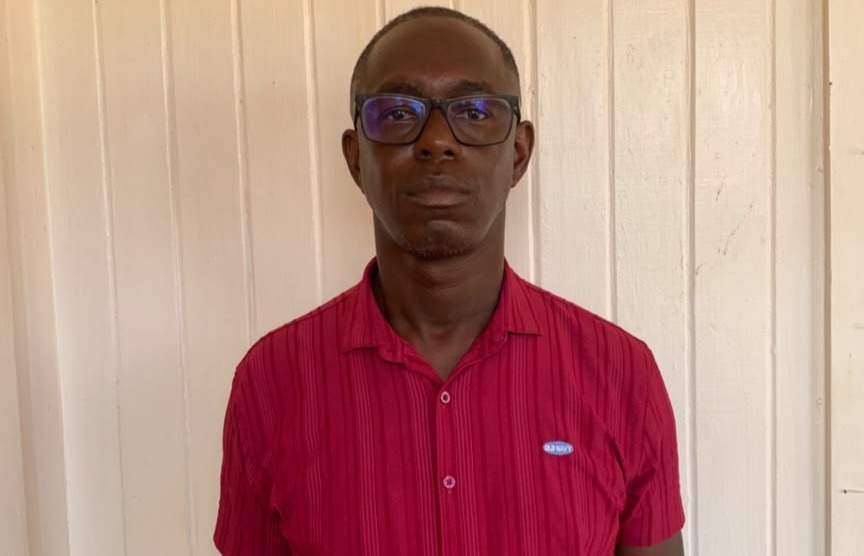
    Forty-three-year-old Leonard Pompey, an electrician residing in Culvert City, Lethem, Central Rupununi, entered a guilty plea to one count of trespassing on the Lethem Aerodrome, a violation of Section 83(1) of Guyana’s Civil Aviation Act. Presiding over the case at the Lethem Magistrate’s Court, Magistrate Omadatt Chandan imposed a fine of GY$300,000. Pompey will face three months of imprisonment if he fails to pay the penalty within the required timeframe. The charge carries a maximum penalty of GY$1 million in fines and six months behind bars, underscoring the severity of aviation safety violations under Guyanese law.

    The conviction comes on the heels of a joint public appeal from the Guyana Civil Aviation Authority (GCAA) and the Aviation Operators Association of Guyana (AOAG) calling for heightened public accountability around all national airstrips and runways. The warnings were triggered by a disturbing incident reported in late May, when unidentified actors deliberately placed large rocks across the entire length of the Lethem Aerodrome runway. Regulators labeled the act as an unacceptable threat to aviation operations and the lives of passengers, crew, and remote communities that rely on Lethem’s air link for essential access to goods and services.

    Despite the urgent push for improved public safety awareness, a long-standing administrative gap has left required aerodrome warning signs gathering dust in the compound of the former Ministry of Public Works in Kingston’s Wight’s Lane for multiple years. The oversight comes amid a recent government restructuring that moved aviation oversight from the Ministry of Public Works to the newly created Ministry of Public Utilities and Aviation.

    In the wake of the conviction, the GCAA reaffirmed its commitment to protecting public safety, urging all Guyanese to treat every aerodrome as critical safety infrastructure. The authority asked community members to report any suspicious activity or threats to aerodrome operations directly to regulators, including anonymous reports via the GCAA’s dedicated safety hotline at 608-4222. “The safety of the travelling public remains our highest priority,” the agency stated.

    AOAG officials have emphasized that hinterland airstrips face far greater safety risks than major international hubs, making unauthorized activity especially dangerous. Most of Guyana’s remote runways are short, narrow, and unpaved, meaning pilots already operate with extremely limited safety margins, particularly during periods of heavy rain or poor visibility. Every foot of usable runway is critical for safe takeoffs and landings, and even small hazards can drastically increase the risk of a catastrophic crash.

    The association says it continues to receive frequent reports of reckless and dangerous behavior across airstrips nationwide. Common violations include motor vehicles, motorcycles, bicycles, and pedestrians crossing active runways while aircraft are approaching or departing; leaving debris, glass bottles, and other foreign objects on runway surfaces; deliberately or accidentally placing stones and other obstacles on landing strips; using active runways as public thoroughfares or shortcuts; causing permanent damage to runway surfaces and shoulders from repeated vehicle traffic, which creates ruts, erosion, and narrows the usable landing area; and even law enforcement personnel using active runways for recreational games.

    “While these actions may seem trivial to people who do not work in aviation, they create life-threatening hazards for pilots, passengers, and entire remote communities,” the AOAG noted in its public warning. “A single discarded bottle, loose stone, uneven rut, or unexpected vehicle crossing can cause a pilot to lose control of an aircraft, trigger a propeller strike, blow a landing gear tire, cause irreparable structural damage, or result in a deadly crash. The consequences of these irresponsible acts are often irreversible.”

    Beyond the immediate risk of injury and death, such incidents can destroy aircraft valued at hundreds of millions of dollars, disrupt critical regional services, and leave long-lasting economic and social impacts on communities that depend on air travel for access to healthcare, education, and supplies. Irresponsible runway use also drives up operational costs across the entire Guyanese aviation sector: aircraft repairs, unplanned maintenance, flight delays and cancellations, insurance claims, and infrastructure repairs all ultimately raise the cost of air services for the hinterland residents who rely on them most.

  • Five arrested, guns seized after violent home invasion, robbery

    Five arrested, guns seized after violent home invasion, robbery

    Authorities in Guyana have taken five suspects into custody and recovered two unregistered .32 caliber pistols following a brazen early-morning armed home invasion and robbery in the GoodHope community, located along East Coast Demerara. Regional police made the announcement in an official statement released to the public on Wednesday, 10 June 2026.

    The incident unfolded at approximately 3:45 a.m. on Monday, when seven armed attackers targeted the residence of a 49-year-old self-employed man. Police records show the gang arrived at the property carrying an arsenal of weapons, including two firearms, cutlasses, and knives, according to witness accounts. After repeatedly striking the residence’s front door, witnesses reported hearing multiple loud blasts that investigators have classified as suspected gunfire. The attackers then forced their way inside the home, catching the sleeping family off guard.

    During the home invasion, the victim, his wife, and one of their daughters were physically assaulted by the suspects, according to preliminary investigative reports. After subduing the family, the intruders ransacked nearly every room of the property, stealing a cache of personal property including an assortment of jewelry, two mobile phones, an undisclosed amount of cash, and critical personal identification documents. As of Wednesday, the total monetary value of the stolen items has not yet been finalized.

    The victim managed to evade the attackers and alert local law enforcement shortly after the robbery. Responding police officers immediately arrived at the crime scene to secure the area and provide assistance, before escorting all three injured victims to the Enmore Regional Hospital for mandatory medical evaluations and treatment for their injuries.

    Following days of coordinated investigative work, law enforcement personnel executed a targeted search warrant at a property in Phase Two, GoodHope on Tuesday, 9 June 2026. During the search, investigators made a key discovery: the two .32 pistols were concealed inside a blue cookie tin stored at the location.

    Two suspects, a 21-year-old day laborer and a 33-year-old taxi driver, both residents of the GoodHope Squatting Area in East Coast Demerara, were taken into custody immediately following the search. Both remain in police custody as of Wednesday, helping investigators piece together details of the robbery and the gang’s broader activities. Subsequent follow-up inquiries led law enforcement to three additional co-conspirators, who have also been taken into custody. The investigation remains ongoing as police work to identify the two remaining attackers who have not yet been apprehended.

  • President Díaz-Canel visits Recycling Business Group units in Havana

    President Díaz-Canel visits Recycling Business Group units in Havana

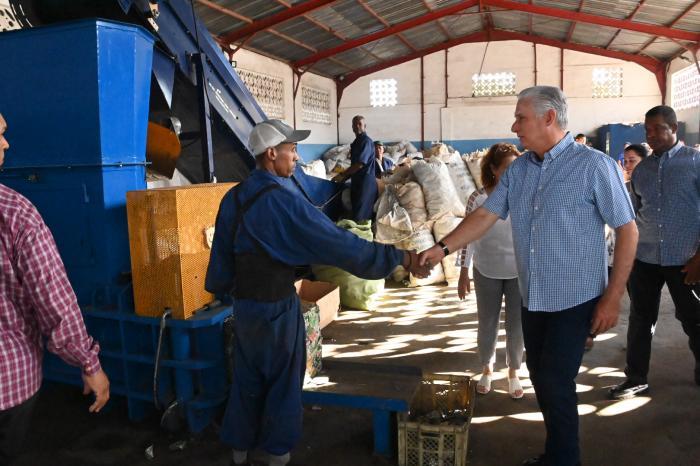
    On Tuesday, June 10, 2026, Miguel Díaz-Canel Bermúdez, First Secretary of the Central Committee of the Communist Party of Cuba and President of the Republic of Cuba, conducted a scheduled working visit to two facilities operated by the Recycling Business Group (GER) in Regla, a municipality of Havana. The tour forms part of Díaz-Canel’s regular weekly engagements with strategic local entities that drive the island nation’s economic and social development, with a focus on advancing solutions to one of Havana’s most persistent public challenges: unmanaged solid waste.

    The president’s first stop was the Alfredo Ramonal Basic Business Unit (UEB), a facility specialized in the processing and sorting of non-ferrous waste. During a walkthrough of the facility’s operations, Díaz-Canel greeted frontline workers and received a detailed briefing on the unit’s performance amid ongoing economic and infrastructure challenges. He publicly commended the team for leveraging new opportunities for the domestic business sector to grow revenue even amid extremely difficult operating conditions.

    UEB Director Sadie Jiménez Condés shared details of the unit’s adaptive strategies with reporters following the meeting, noting that the operation has adjusted to prolonged power outages that disrupt raw material processing by implementing staggered work schedules and providing dedicated electric transportation for employees. Jiménez added that the president expressed particular interest in workforce retention and compensation, an area where the Alfredo Ramonal UEB has posted strong results: employee turnover remains near zero, with the full workforce consistently retained. Workers report high satisfaction with their compensation, which in turn drives consistent productivity.

    As of the end of May 2026, the UEB reports an average worker salary of 40,000 Cuban pesos and cumulative profits exceeding 3 million pesos. Díaz-Canel urged the unit’s leadership to reinvest these gains into refining operational processes, upgrading facility conditions, and addressing key worker needs including housing support. Looking ahead, the unit plans to roll out upgrades to raise production quality, including new mechanized crushing equipment for copper processing and the installation of independent power infrastructure for the facility’s can processing line. All processed raw materials from the Alfredo Ramonal UEB are sold with value addition to Desequip Company, the GER’s export-focused affiliate, before entering international markets.

    Following his visit to the UEB, the president traveled to Desequip, which handles all import and export activity for the GER under Cuba’s Ministry of Industries. At Desequip, he received an update on a groundbreaking locally developed waste management system that has been piloted in Havana in recent months. The project grew out of research conducted by Cuba’s Ministry of Science, Technology and Environment (CITMA), launched as part of a national priority initiative announced by Díaz-Canel in 2025 to reverse declining public hygiene conditions across Havana.

    Marian Herrera Delgado, a recovery team lead at the Havana Raw Materials Recovery Company who presented the initiative to the president, explained that the new system is designed to boost waste recovery rates through optimized process organization, eliminating the need for large capital outlays or additional workforce expansion. Early results from the pilot phase have already delivered an increase in export revenues, though organizers note key areas for further refinement, including the upcoming launch of a custom mobile app to coordinate operations and expanded engagement with local communities and non-state economic actors.

    In a key update shared during the briefing, GER executives confirmed that the successful pilot has positioned the new local waste management system for a national rollout, with plans to extend the framework to all other provinces across Cuba. In closing remarks, Díaz-Canel emphasized that the innovation—centered on more structured organization of waste dumping, collection and processing—represents a critical opportunity to convert what was once unmanaged waste into much-needed export revenue for the Cuban economy.

    The president also stressed that long-term success will depend on expanded grassroots organization at the neighborhood level, to ensure that individual residents, private businesses, state institutions and non-state economic actors all understand contractual terms, know the location of approved dumping and collection points, and can participate in a national shift toward widespread source separation of waste. This shift will allow the country to unlock additional value from materials that were once treated as valueless refuse.

    Tuesday’s tour of GER facilities aligns with Díaz-Canel’s ongoing focus on strategic sectors that underpin Cuba’s long-term progress, including food production, electrical grid recovery, digital transformation, energy transition and electric transportation, all areas that are central to the country’s ongoing development efforts.

  • Missing cruise crew member died after fall on Mount Liamuiga, Police confirm

    Missing cruise crew member died after fall on Mount Liamuiga, Police confirm

    BASSETERRE, St. Kitts – Local law enforcement has officially confirmed the cause of death for a missing Chinese hiker, Ziyuan Wang, a 33-year-old crew member from a visiting cruise ship, who died in a tragic accidental fall on St. Kitts’ iconic Mount Liamuiga earlier this year.

    Wang first went missing on May 27, 2026, after he set out to hike the mountain’s range alone, without an authorized guide, and strayed from the designated path. According to official records from the Royal St. Christopher and Nevis Police Force (RSCNPF), Wang was last spotted on the main hiking trail at roughly 10:00 a.m. that day, wearing a black outfit and red footwear. By 2:00 p.m., the stranded hiker managed to place an emergency call to local 911 services to report he was lost, but all communication cut off immediately after the call, leaving rescuers with no further updates on his location.

    Within hours of losing contact, a large-scale multi-agency search and rescue operation was mobilized to locate Wang. The joint effort brought together personnel from the RSCNPF, the St. Kitts-Nevis Defence Force, national Fire and Rescue Services, the National Emergency Management Agency (NEMA), and dozens of local volunteer groups. Search teams scoured large swathes of the rugged mountainside extending as far as the volcano’s crater, continuing search efforts through the evening of May 27 and resuming the operation at first light the following day. It was not until five days later, on June 1, that search crews located Wang’s body in a deep ravine far off the marked hiking route.

    A full post-mortem examination was carried out on June 9 to confirm the circumstances of his death. The examination results showed the 33-year-old died from severe trauma caused by a fall from a significant height. Investigators confirmed there is no evidence of foul play, and all findings align with the conclusion that his death is a tragic hiking accident. In the wake of the investigation’s conclusion, the RSCNPF released a formal statement thanking all participating agencies, volunteers, and community members who contributed their time and resources to the search operation.

  • Onderwijsvernieuwing vraagt meer dan nieuwe plannen alleen

    Onderwijsvernieuwing vraagt meer dan nieuwe plannen alleen

    On the second day of the 2026 National Education Congress held in Paramaribo, Suriname, education experts, policymakers and key stakeholders from across the sector united around a clear consensus: meaningful, long-lasting education reform requires far more than ambitious policy blueprints and good intentions—it demands coordinated structural strengthening of teachers, infrastructure, funding and governance alike.

    Hosted on Tuesday at the Royal Ballroom of Hotel Torarica, this year’s gathering centered on the overarching theme “Education: The Path from Poverty to Growth and Progress,” framing education reform as a core driver of national economic and social advancement. Per official updates from the Communication Service of Suriname, breakout sessions and plenary discussions repeatedly emphasized that sustainable transformation demands a cohesive, cross-cutting approach, rather than piecemeal changes. This approach must address not just improving student learning outcomes and teacher professional development, they argued, but also the foundational enabling conditions that make quality education accessible to all.

    Attendees highlighted a range of non-negotiable prerequisites for effective reform: from supportive learning environments, up-to-date learning materials, functional school furniture and modern educational infrastructure to robust digital tools and clear career advancement pathways for education staff. A particularly urgent priority raised during discussions was boosting competitive compensation for teachers, a step designed to stem the growing tide of educator outflow to other domestic sectors and employment opportunities abroad.

    Leading education expert Ivan Fernald opened one of the congress’ keynote sessions by stressing that overall education quality is directly tied to the quality, professional standing and institutional support given to classroom teachers. “The quality of our education system stands or falls with the quality of our teachers, the recognition they receive, and the support we provide them,” Fernald told delegates. He emphasized that no education innovation can succeed without properly equipped, motivated educators, and called on leaders to move beyond rhetorical ambitions, set clear actionable priorities, and track progress through measurable outcome targets.
    Fernald further noted that education transformation is a shared responsibility of the entire Surinamese society, not one that falls exclusively to the Ministry of Education, Science and Culture. He added that educators themselves have historically been insufficiently included in the design and rollout of major systemic changes to the education system—a gap that must be closed for reform to work.

    Across panel discussions, delegates echoed the need for collaborative decision-making and collective vision to advance durable reform. Hans Lim A Po, Rector of the FHR Institute for Higher Education, emphasized that societies lacking a shared, unified vision for education struggle to build meaningful, long-term progress. Former Education Minister Marie Levens added that Suriname already possesses the necessary local expertise and knowledge to drive successful reform; what is needed now, she argued, is a deliberate choice to adopt an education model aligned with the country’s unique needs and on-the-ground realities, rather than importing systems ill-suited to Suriname’s context.

    By the close of the second day of proceedings, delegates reached a unified conclusion: education reforms in Suriname will only deliver lasting positive outcomes if they are implemented systematically, and keep the well-being and holistic development of learners and educators at the center of all policy and practice.

  • Sister: Our family is broken

    Sister: Our family is broken

    A quiet, tight-knit Trinidadian community is grappling with unfathomable pain after the brutal killing of 12-year-old Mercedez Layne, a promising Standard Four student who dreamed of becoming a doctor, leaving her family shattered and the entire nation in mourning.

    In an emotional social media post shared publicly this week, Mercedez’ older sister Shereeka Layne opened up about the family’s overwhelming heartbreak, describing the gap left by the young girl’s violent death. “I love you so much babygirl, this really breaks my heart. I wish there was something I could do to keep you with us. You were so beautiful, and you didn’t deserve this,” Shereeka wrote, adding that she is forcing herself to stay strong for their mother and younger siblings. She remembered Mercedez as the funniest, most lovable person she had ever known, ending her tribute: “Rest in paradise, til we meet again my sweet sister.”

    For the small community of Erin, where everyone knows every child by name, Mercedez’s death is far more than a headline crime story. Residents watched her grow from a toddler into a focused, ambitious young girl, with a future that seemed full of endless possibility. That future was violently cut short on Saturday, when Mercedez — who was supposed to attend a dance class that afternoon — was abducted while traveling home. Her body was discovered the following morning, just a few minutes’ drive from her family’s Los Iros Beach Road home, dumped in dense bushes along a secluded dirt road near oil pipelines and a local well, roughly 500 feet from the main route.

    Investigators paint a chilling picture of the crime scene, where law enforcement recovered a broken glass bottle, a piece of lumber, a black plastic bag holding four ramen noodle packs, one half of a slipper, assorted clothing, and a packet of cigarettes. Official post-mortem results confirmed the 12-year-old died from severe blunt force trauma to the head. When family members and local residents spotted Mercedez’ partially clothed body in the brush, the area was filled with screams of agony from loved ones who had joined the frantic search for the missing girl.

    Just days before her killing, Mercedez was excitedly counting down to a school field trip to northern Trinidad. She had been looking forward to exploring the capital, visiting a local mall, and seeing the national landmarks she and her classmates had studied in their lessons at St Francis Erin RC Primary School. Less than a year away from sitting her secondary school entrance exams, Mercedez had already shared her dream of following in her older sister’s footsteps to become a doctor, driven by a deep desire to help other people and create change in her community. Today, her empty desk at school stands as a quiet, devastating reminder of a young life stolen too soon, and teachers and classmates gather to mourn their lost friend.

    Local government councillor Arlene Ramdeo, a lifelong resident of the greater Erin area who has known Mercedez’ father Ronald Cabrera since they were children growing up together in Arena Village, explained that the small community of roughly 200 residents raises its children collectively. For generations, neighbors shared responsibility for every child’s safety: doors were left unlocked, children walked freely between relatives’ homes, and every adult looked out for every young person in the area. “I watched Mercedez grow up when she and her family lived with her dad in Arena. She was a petite, quiet little girl, always respectful and focused on her goals. Her teacher said she gave 100% to everything she did, and last year she was even a model in the school’s annual fashion show,” Ramdeo recalled.

    After Mercedez’ parents separated, her mother moved her and her siblings out of Arena Village but stayed within the greater Erin community. A family member, who asked to remain anonymous to protect their privacy, shared that Mercedez spent the Thursday before her death at her aunt’s home in Lorensotte North Trace, Rancho Quemado, adjacent to her grandfather’s property. Around 11 a.m. the following Saturday, her grandfather placed her in a private hire (PH) car for the short three-minute drive to her family’s home on Los Iros Road. “But she never made it home,” the relative said.

    When Mercedez failed to arrive, the village immediately raised an alert, filed a missing person report with police, and launched a large-scale search involving family members, local law enforcement, and a volunteer hunter search and rescue team. The search ended early Sunday morning, when searchers found the child’s body in the wooded area not far from her home.

    Police investigators currently believe the PH taxi driver abducted Mercedez, diverted from the planned route, and drove her to the secluded forested area where she was attacked and killed. Law enforcement has already taken a 26-year-old suspect from Palo Seco — who operates as a PH driver along the Siparia to Erin route — into custody. The suspect remains held at a police station as detectives from the Region Three Homicide Bureau of Investigations continue to process evidence and interview witnesses.

    As news of the brutal crime spread across the country, an outpouring of grief and anger has swept through Trinidad. Thousands of citizens have shared prayers and tributes for Mercedez and her family on social media, alongside widespread calls for swift justice and action to prevent similar tragedies. For the tight-knit community that raised Mercedez, healing will take time, Ramdeo says: “This village will heal one day, but it will never, ever forget.”


  • Prisoner beaten to death in MSP cell

    Prisoner beaten to death in MSP cell

    A deadly violent incident at Trinidad and Tobago’s maximum-security correctional facility in Arouca has left one remand prisoner dead and thrown a harsh spotlight on long-standing, dangerous infrastructure and operational failures plaguing the institution. The victim has been publicly identified as 48-year-old Christopher Banfield, who was killed in a fatal beating carried out by a mentally ill fellow inmate between Monday evening and early Tuesday morning.

    The attack unfolded inside a shared cell at the G&R Division building of the facility’s Remand Unit. Unverified accounts from the prison have indicated that other incarcerated people were present in the cell during the assault, but were too intimidated to step in and stop the attack. Prison staff first discovered Banfield’s motionless body during a standard routine headcount conducted when shift changes took place early Tuesday. First responders found his body in a fetal position, with clear visible trauma, and he showed no signs of life when found.

    In the wake of the incident, prison authorities have launched a full investigation. All inmates who shared the cell with Banfield at the time of his death have been moved out of the general prison population to a separate section of the facility, as investigators work to collect witness statements and other critical evidence. Both the Trinidad and Tobago Police Service and the national Prison Service are running parallel investigations to map out the full sequence of events that led to Banfield’s killing.

    In an official statement released Tuesday, Prisons Commissioner Carlos Corraspe confirmed the details of the discovery and extended the Prison Service’s formal condolences to Banfield’s family and loved ones. Corraspe noted that responding medical staff were called immediately after the body was found just after 6 a.m., and administered first aid and attempted lifesaving measures before the death was confirmed. He added that an assigned Prison Welfare Officer has already reached out to Banfield’s next of kin to notify them of his passing.

    Gerard Gordon, head of the Prison Officers Association (POA), spoke publicly Tuesday to frame the fatal incident as an avoidable tragedy rooted in long-unaddressed systemic problems at the Arouca Maximum Security Prison. Gordon stressed that the facility lacks the capacity to properly categorize and separate incarcerated people based on their physical and mental health needs, a gap that directly created the conditions for the attack.

    Gordon identified severe overcrowding as one of the most critical contributing risk factors, noting that the facility was never originally designed to hold remand prisoners in the first place. Beyond overcrowding, the prison suffers from widespread neglected maintenance and crippling infrastructural deficiencies. “From no lighting, no ventilation, no water, faulty gates or the gates not working at all and that’s just the tip of the iceberg when it comes to that facility,” Gordon explained.

    He also called out overcrowding in individual cells, confirming that cells in the division where the attack occurred were engineered to hold a maximum of three men, but often hold far more. While he could not confirm the exact number of people in the cell on the night of the killing, he made clear that three occupants is far from the norm. Gordon added that understaffing also exacerbates risk, noting that it is common for only a single officer to cover overnight shifts, creating an unsafe environment for both staff and incarcerated people.

    Gordon framed the deadly incident as a broader failure of society, noting that people are confined in conditions that no one would keep a pet in. “As long as you are dealing with the human condition, with a man, a mind, a desire, hopes, dreams, all of these things in an environment that you wouldn’t even keep your dog in, it says something about us as a society,” he said. Gordon emphasized that any death behind prison walls is a profound tragedy, and called for urgent action to address the dangerous conditions at the facility.

  • Nevis Water Department informs of Disconnection of Water Services

    Nevis Water Department informs of Disconnection of Water Services

    Residents and businesses across Nevis are being put on formal notice this week that the local Water Department is set to begin a cycle of service disconnections targeting customers with unpaid, overdue water balances. Scheduled to run between Tuesday, June 16 and Friday, June 26, 2026, the disconnection initiative is the department’s standard enforcement action to encourage resolution of outstanding account balances.

    In an official public notice posted Wednesday, June 10, 2026 at 2:45 PM, the department stressed that customers have until the close of business on Friday, June 12, 2026 to pay down any overdue amounts on their accounts to avoid having their water service cut off. For customers who fail to settle their outstanding balances before the June 15, 2026 deadline for avoiding disconnection procedures, the department has confirmed that a mandatory $150.00 reconnection fee will be added to their total owed amount before service can be restored.

    This routine annual action by the Nevis Water Department is designed to recover unpaid utility revenue that supports ongoing maintenance, infrastructure upgrades, and consistent water delivery services across the island. Account holders with questions about their balance or available payment plans are encouraged to contact the department directly before the June 12 deadline to arrange for settlement and prevent unexpected service interruptions.