分类: society

  • Police report decrease in major firearm-related crimes

    Police report decrease in major firearm-related crimes

    BASSETERRE, St. Kitts – The Royal St. Christopher and Nevis Police Force has announced plans to intensify crime-reduction initiatives throughout 2026, building upon a year of remarkable progress in combating serious offenses across the twin-island Federation.

    Commissioner of Police James Sutton revealed during a January 7 press conference that preliminary data for 2025 demonstrates substantial decreases in multiple major crime categories, though certain offenses showed concerning upward trends. The most dramatic improvement appeared in firearm-related homicides, which plummeted from 25 cases in 2024 to just four in 2025 – representing an unprecedented 84 percent reduction.

    The comprehensive statistical review indicates robberies decreased by 29 percent, sexual assaults dropped by 51 percent, and larcenies fell by 7 percent. However, non-fatal shootings remained unchanged from the previous year, while offenses involving other bodily harm increased by 11 percent. Malicious damage incidents rose by 20 percent, and firearm and ammunition possession violations surged by 37 percent.

    Commissioner Sutton attributed the positive trends to “sustained enforcement efforts, intelligence-led operations, firearm interdictions, and increased cooperation from sections of the public.” He emphasized the direct correlation between firearm reduction and decreased violence, stating: “Fewer guns on our streets mean fewer gun victims. That relationship is neither theoretical nor accidental.”

    The police force’s strategic framework for 2026 encompasses five core approaches: enhanced community policing with deeper neighborhood integration; technology-driven crime detection utilizing advanced data and intelligence systems; targeted enforcement against illegal firearms and repeat violent offenders; a transition toward proactive crime prevention; and expanded youth engagement initiatives focusing on early intervention and diversion programs.

    Sutton stressed that law enforcement effectiveness remains dependent on broader societal support, noting: “Preventing crime and violence requires the cooperation and involvement of society in its entirety. Education, family structures, mental health support, youth development and community responsibility all play critical roles.”

    The Commissioner acknowledged recent tragedy during the Sugarmass 54 festivities, where 18-year-old Kaden Hanley was fatally stabbed during Last Lap activities, alongside several other injuries from altercations involving bladed weapons. Sutton described this incident as staining “an otherwise safe period” and serving as “a stark reminder that progress can be reversed by individual choices made in moments of anger or impulse.”

    He expressed concern about an emerging pattern of escalating interpersonal aggression, observing that disputes are increasingly being resolved through violence rather than restraint. As the Federation moves forward, the police force remains committed to “building a safer, more disciplined and socially responsible Federation” through strengthened community partnerships and continued progress in crime prevention.


  • Column: Regelmatig wandelen

    Column: Regelmatig wandelen

    Thousands of Surinamese citizens from all age groups undertook an extraordinary predawn pilgrimage across the Wijdenboschbridge on January 8th, transforming the infrastructure project into the nation’s largest participatory fitness event. The annual walking tradition saw participants converging on Commewijne as early as 5:00 AM, with all attendees required to commence their journey by 7:00 AM, demonstrating remarkable dedication to this increasingly popular wellness ritual.

    This massive turnout reveals a substantial public demand for accessible physical activities that current offerings fail to satisfy. While the bridge walk has successfully mobilized citizens who might otherwise remain sedentary, its current format as a standalone annual event represents a missed opportunity for broader public health advancement.

    Organizational stakeholders, particularly the national athletics association, could leverage this demonstrated enthusiasm to develop structured movement initiatives. Practical constraints understandably prevent frequent bridge closures, but alternative approaches could replicate the event’s success through decentralized community-based programs.

    A proposed framework suggests regular neighborhood walking events organized at the ressort level, complemented by quarterly district-wide gatherings. Such structured programming would provide ongoing mental health benefits through stress reduction while simultaneously addressing Suriname’s growing obesity concerns.

    The consistent thousands-strong participation indicates deep-seated public appetite for organized physical activity. Rather than relying solely on government coordination, neighborhood associations and non-governmental organizations could spearhead these initiatives, potentially transforming a singular annual phenomenon into sustained movement supporting national physical and mental wellbeing.

  • IAD launches national program to regularize occupied state lands

    IAD launches national program to regularize occupied state lands

    SANTO DOMINGO – The Dominican Agrarian Institute (IAD) has unveiled a comprehensive national initiative to address longstanding issues of irregular land occupation across the country. Under the leadership of interim director general Darío Castillo Lugo, the institution announced the National Program for the Regularization of IAD Land Occupations, designed to bring legal clarity to thousands of undocumented land holdings.

    This ambitious program represents a cornerstone of the IAD’s institutional transformation efforts, operating within the legal framework of the Agrarian Reform Law. The initiative seeks to establish enhanced legal security for land tenure, create transparent management protocols for state-owned land assets, and foster systematic territorial development that aligns with sustainable practices.

    Prospective participants have been granted an extensive application window stretching from January 12, 2026, through April 17, 2026. All submissions must be processed exclusively through the dedicated digital portal at regularizacion.iad.gob.do. The application requirements are comprehensive, mandating the presentation of documented evidence of land occupancy, detailed records of agricultural or livestock operations, financial documentation, proof of property enhancements, and authorization for technical surveys to facilitate thorough evaluation.

    The IAD has issued a clear warning regarding post-deadline consequences: properties that remain outside the regularization process will face legal reclamation procedures in strict accordance with prevailing legislation. Importantly, the program specifically excludes agrarian reform beneficiaries holding provisional titles, who will instead be serviced through the separately announced National Program for Definitive Titling of Agrarian Reform Landowners revealed in December 2025.

  • Agriculture : World Bank, School Feeding Program Evaluation Mission

    Agriculture : World Bank, School Feeding Program Evaluation Mission

    A comprehensive evaluation mission conducted by the World Bank in collaboration with multiple international agencies has assessed the progress of Haiti’s innovative school feeding initiatives under the Resilient Agriculture for Food Security Project (PARSA). The December 2025 mission to Grand’Anse Department involved representatives from the World Bank, PARSA coordination team, Food and Agriculture Organization (FAO), and World Food Programme (WFP) examining the implementation of various project components with particular emphasis on school nutrition programs.

    The assessment focused on operational functionality of school canteens and meal quality standards for students across the region. Since the 2023-2024 academic year, PARSA has significantly expanded its school feeding coverage, now benefiting over 125,000 students across Nippes, Sud, Grande Anse, and Centre Departments through two distinct implementation models.

    The primary model, serving 95% of beneficiary students, utilizes a decentralized local purchasing system where WFP partners with cooperating organizations to source supplies directly from agricultural producer organizations within the project’s intervention zone. This approach simultaneously addresses child nutrition while stimulating local agricultural economies.

    A particularly innovative pilot model in Chambellan and Moron communes grants substantial autonomy to canteen workers who receive fixed per-meal allocations and manage local market purchases and meal preparation independently. This stock-free approach requires daily market purchases by canteen workers who earn income based on dish pricing and actual preparation expenses rather than receiving direct compensation.

    The evaluation included site visits to Saint-Joseph National Congregational Girls’ School in Moron and Bon Berger College in Chambellan, enabling year-over-year progress assessment. Through the PARSA framework, WFP and Haiti’s Ministry of Agriculture, Natural Resources and Rural Development (MARNDR) are collaboratively strengthening the national school feeding system while bolstering local economic networks.

    During the 2024-2025 academic year, WFP’s comprehensive funding approach, including PARSA resources, provided daily school meals to approximately 600,000 children across 10 departments, with nearly 400,000 beneficiaries receiving meals sourced exclusively from local food systems.

  • Eight-Year-Old ‘Lucky to Walk Again’ After Being Struck by Motorcycle

    Eight-Year-Old ‘Lucky to Walk Again’ After Being Struck by Motorcycle

    A severe traffic incident involving an eight-year-old student has ignited urgent conversations about road safety measures near educational institutions. Karter Benedit, a second-grade pupil at Holy Family RC Primary School, sustained significant injuries when a motorcycle struck him in Hopkins Village this past Tuesday. The accident occurred shortly after school dismissal as Benedit was crossing the street alongside classmates.

    Emergency services transported the critically injured child to Southern Regional Hospital where medical personnel performed immediate surgical interventions. Benedit’s mother, Dydy Martinez, provided disturbing details regarding her son’s condition, noting visible muscle tissue exposure in his leg and multiple deep lacerations requiring approximately fifteen stitches across his back and head. Additionally, the young victim suffered substantial facial swelling and extensive abrasions.

    Medical professionals indicated the family should consider themselves extraordinarily fortunate, as the boy’s white tissue—likely referring to bone or deep connective tissue—remained intact despite the traumatic impact. Specialists emphasized that damage to this critical anatomical structure could have resulted in permanent mobility impairment.

    Law enforcement authorities have detained the motorcycle operator pending formal investigation into the circumstances surrounding the collision. The victim’s family has publicly criticized the absence of adequate safety protocols near the school premises, specifically highlighting the lack of crossing guards and necessary traffic calming infrastructure like speed bumps. This incident has amplified existing concerns about vehicular compliance with school zone regulations and enforcement effectiveness.

  • Motorcycle Accidents Renew Safety Concerns

    Motorcycle Accidents Renew Safety Concerns

    A disturbing pattern of motorcycle accidents in Belize has sparked urgent national concern and prompted government action in the opening days of 2026. The recent tragedies include the fatal collision involving Brian Miguel, who was thrown from his motorbike during an incident with a Ford F-150 on the George Price Highway on January 3rd. In a separate incident, eight-year-old Karter Benedit of Hopkins Village remains hospitalized after being struck by a motorcycle while crossing the street after school.

    These incidents have intensified calls for comprehensive road safety reforms, particularly emphasizing protection for pedestrians in school zones and addressing concerns about reckless riding practices. The alarming frequency of these events has highlighted the severe consequences for both riders and vulnerable road users.

    In response to the growing crisis, Transport CEO Chester Williams revealed that Cabinet is actively reviewing enhanced motorcycle safety measures. The proposed initiatives include overhauling training requirements with government subsidies for riders. Under the contemplated system, experienced riders with 2-5 years of infraction-free operation would undergo partial training, while new applicants and those with less than two years of experience would complete comprehensive government-subsidized training programs.

    Williams confirmed that the Ministry of Transport has prepared an information paper for Cabinet consideration at next week’s meeting, which is expected to provide definitive direction on motorcycle training protocols. The Transport CEO emphasized that Prime Minister himself recognizes the essential nature of proper training, indicating strong governmental support for these initiatives.

    Enforcement measures will also be significantly strengthened with Cabinet approval for additional traffic officers, aiming to expand the department to approximately 200 personnel capable of conducting 24-hour highway enforcement. The enhanced enforcement capabilities will include advanced equipment such as body cameras for officers, dashboard cameras for vehicles, speed detection devices, and breathalyzers to comprehensively address traffic safety concerns.

  • Transferred Police Officers Still Owed Allowances Months Later

    Transferred Police Officers Still Owed Allowances Months Later

    Dozens of Belizean police officers are experiencing significant financial hardship due to unresolved payment delays spanning several months to years. Investigations reveal approximately two dozen officers who underwent transfers or promotions continue awaiting essential financial entitlements, including transfer grants, housing allowances, and corresponding salary adjustments.

    One particularly concerning case involves an officer promoted and relocated to Belize City over twelve months ago who has yet to receive any form of increased compensation. This situation persists despite accumulating costs associated with working substantial distances from their original residence. Another officer transferred from Belmopan to Belize City has endured nearly two years of financial uncertainty, undertaking daily commutes without receiving the officially promised allocations.

    When confronted regarding these delays, Ministry of Home Affairs Chief Executive Officer Rear Admiral Elton Bennett stated he lacked awareness of the payment issues but emphasized that no policy changes had occurred regarding entitlement distributions. Bennett reaffirmed that all officers would ultimately receive their legally mandated compensations.

    National Trade Union Congress of Belize (NTUCB) President Ella Waight has publicly offered institutional support, urging affected officers to seek union assistance. Waight clarified that NTUCB representation extends beyond unionized workers to all Belizean laborers, while simultaneously encouraging direct engagement with the Public Service Union. The union leader characterized the prolonged delays as unacceptable in modern administrative contexts and pledged organizational intervention should the situation reflect retaliatory motives.

  • Uncertainty Surrounds LIU Gang Employment Program

    Uncertainty Surrounds LIU Gang Employment Program

    A contentious government initiative in Belize designed to provide employment for young men from gang-afflicted neighborhoods is facing renewed scrutiny. The Leadership Intervention Unit’s (LIU) program, which employs approximately 350 individuals in Belize City for community beautification projects, has come under question following the city council’s recent awarding of a separate $33,000 weekly contract to Reliable Waste Solutions for similar cleaning and beautification services.

    Acting Director Andrew Dawson confirmed the program remains operational despite what he described as “slight hiccups” in efficiency. Participants in the LIU initiative earn approximately $350 twice monthly for working on beautification projects within their own communities, with supervisors receiving slightly higher compensation.

    The program targets individuals who have been largely excluded from formal employment sectors, aiming to foster civic pride while simultaneously improving neighborhood environments. Dawson emphasized the psychological impact of environmental improvements, noting that enhancing community spaces can positively influence mindsets and reduce violence.

    Despite these objectives, the program continues to face public skepticism. Dawson acknowledged the challenge of operating a program that lacks widespread public acceptance, though he maintains that those directly involved understand the initiative’s importance through various sessions and conversations conducted by the conflict trace team.

  • San Felipe Targets Litter as Trash Builds Up

    San Felipe Targets Litter as Trash Builds Up

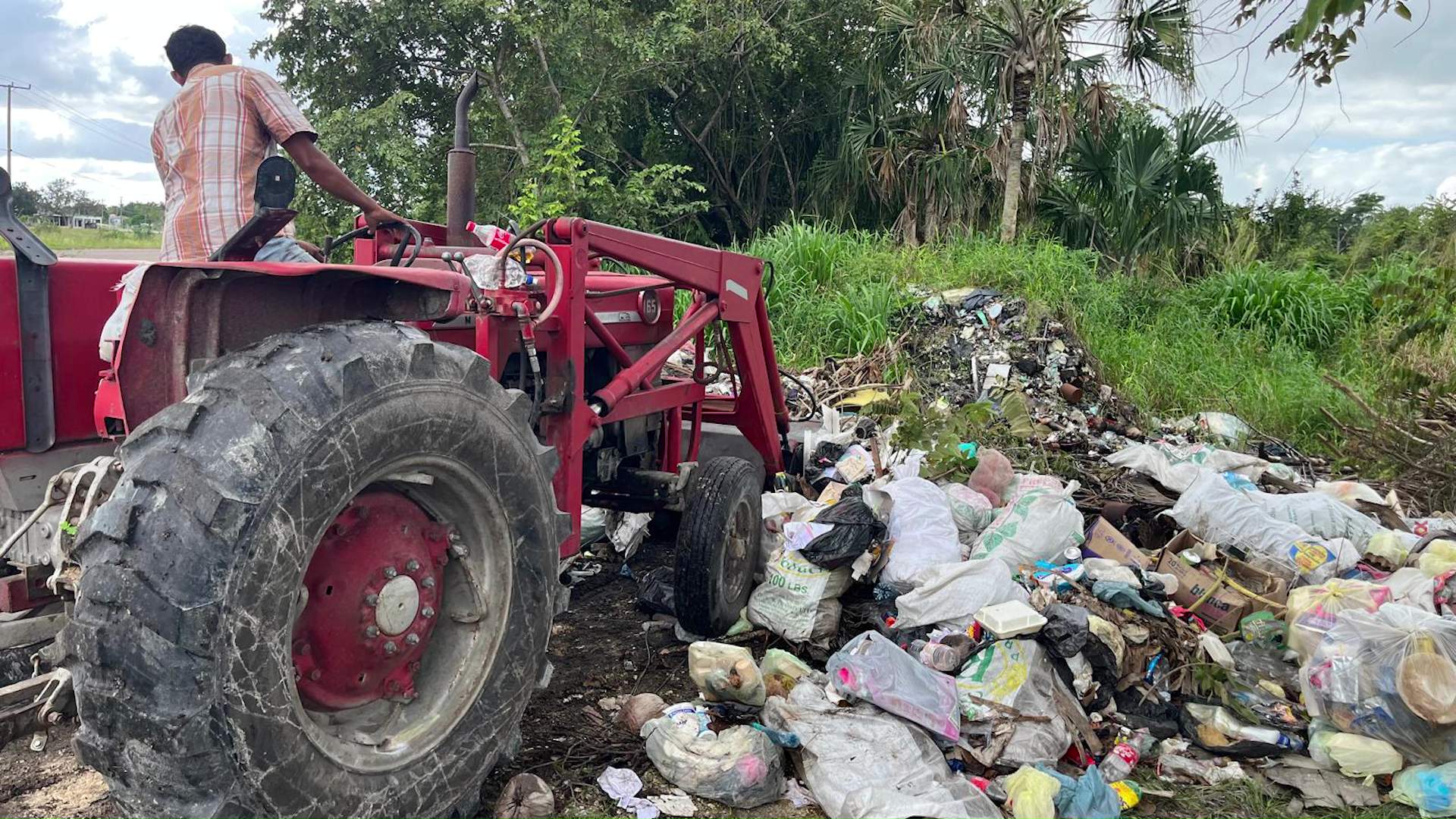
    The rural community of San Felipe in Orange Walk District faces an escalating public cleanliness crisis as illegal dumping transforms village entrances and public spaces into unsightly garbage zones. Municipal authorities have issued urgent appeals for civic responsibility following failed cleanup initiatives and growing environmental concerns.

    Village Council officials launched a social media campaign in December 2025 highlighting the deterioration of public areas, particularly noting the negative visual impact at key community landmarks. Despite organized volunteer cleanups and municipal interventions, refuse continues to accumulate within days of removal efforts.

    Vice Chairman Ricardo Domínguez revealed the root cause stems from the closure of a temporary dumping site after landowners revoked access due to perimeter littering. This closure triggered widespread indiscriminate dumping along roadways and public spaces. The village operates a subsidized garbage collection service charging merely $5 weekly, yet many residents bypass this service for illegal dumping.

    Enforcement remains challenging as Domínguez acknowledged witness reluctance to identify offenders. The cycle continues despite mechanical interventions, including tractor-assisted cleanups provided through government assistance programs. Municipal ordinances permit fining violators, though implementation proves difficult without consistent community cooperation.

    The environmental eyesore now threatens community pride and potentially affects external perceptions of the village, creating urgency for sustainable waste management solutions and behavioral change among residents.

  • Caledonia Considers Police Help as Roadside Dumping Persists

    Caledonia Considers Police Help as Roadside Dumping Persists

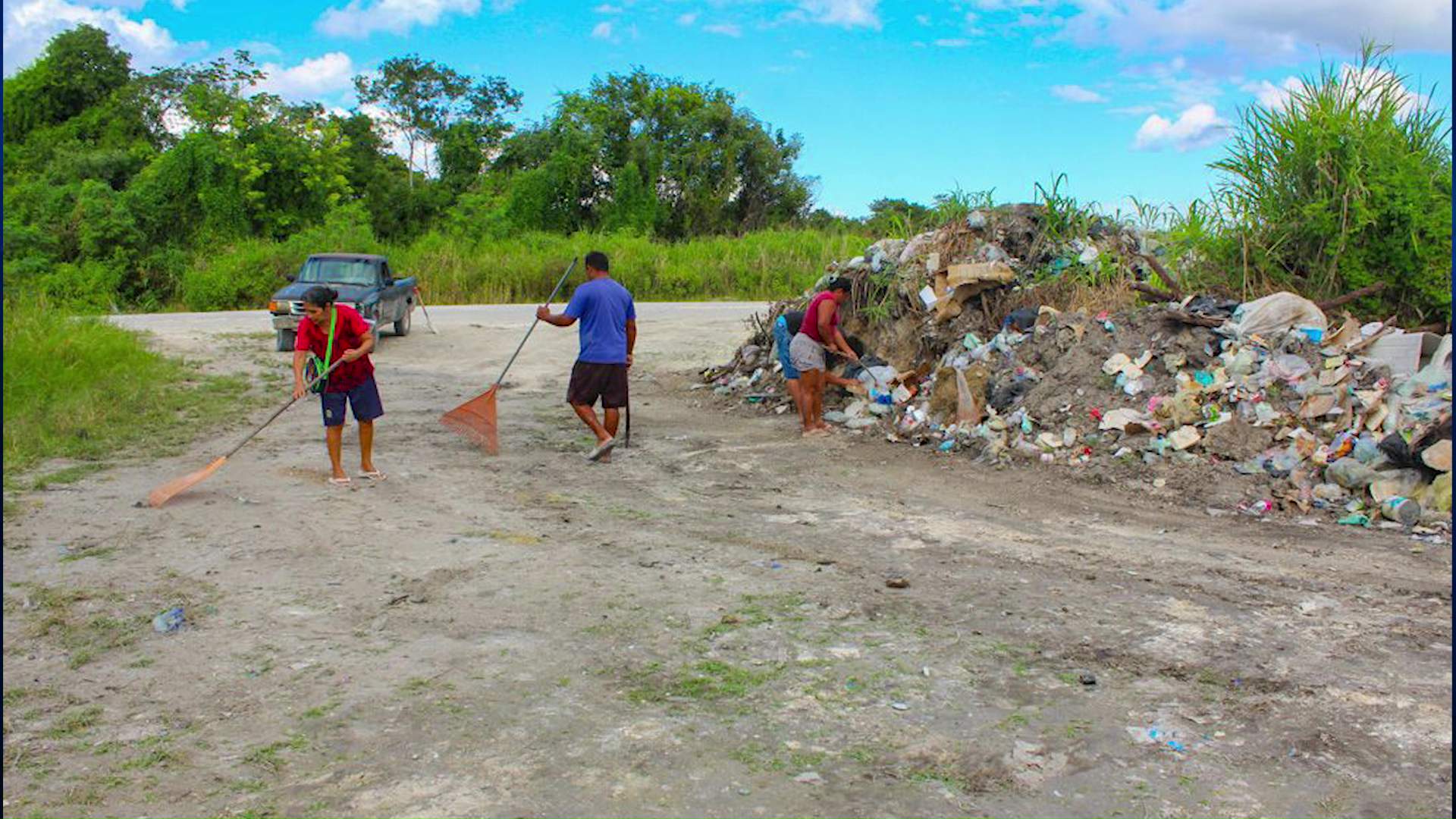
    The village of Caledonia is confronting a persistent environmental challenge as illegal roadside dumping continues to plague the community’s main entrance despite concerted cleanup initiatives. Local residents have expressed mounting frustration over what they describe as more than a mere aesthetic issue, warning that the accumulating refuse now presents genuine safety hazards for both motorists and pedestrians while creating a negative first impression of the village.

    Docia Chan, Vice Chairperson of the Caledonia Village Council, provided insight into the ongoing struggle. “We inherited what was essentially a dump site in complete disarray,” Chan stated. “Since our election, we’ve prioritized transforming this area, recognizing that the garbage accumulation occurs at the very gateway to our community.”

    The council recently conducted a comprehensive cleaning operation last Sunday, leaving the area spotless. However, by Monday, numerous garbage bags had already reappeared along the roadside. This pattern of immediate re-pollution has raised questions about potential intentional disregard for community standards.

    Despite installing warning signs and repeated public appeals, the dumping persists. Chan has issued a renewed call for civic responsibility, urging villagers to dispose of waste properly. The Vice Chairperson indicated that if voluntary compliance fails, the council may escalate enforcement measures through consultation with police officials to identify and penalize offenders, potentially involving formal investigations and legal consequences for those responsible for the environmental violations.