分类: society

  • Works begin at 13 primary schools ahead of September return

    Works begin at 13 primary schools ahead of September return

    A comprehensive summer infrastructure upgrade programme is now underway at 13 public primary schools, just days after the campuses were closed for the project, the Ministry of Education Transformation has officially confirmed. Launched with the core goal of delivering safer, more functional learning spaces when students and educators return for the new academic term in September, the initiative aims to leave every participating school with modernized facilities fit for 21st century learning, ministry officials shared in a statement released Monday.

    Wayne Baker, head of the Education Technical Management Unit, which is overseeing the refurbishment works, detailed the targeted upgrades being carried out at individual sites to address long-standing infrastructure issues. At Grantley Prescod Primary School, located in St Barnabas, the school’s original 1954 construction included outdated TenTest fibreboard ceilings across the main hall, all classrooms, and connecting corridors. These decades-old materials are currently being removed and replaced with durable modern PVC ceiling boards, eliminating safety and degradation concerns linked to the obsolete material.

    Over at Deacons Primary School, work teams have prioritized replacing aging louvred windows in the campus’ eastern building, a section that has struggled with chronic water leakage during rain events for years. The faulty windows have allowed moisture to seep into classrooms, damaging interior finishes and creating uncomfortable learning conditions, so the replacement work will resolve this persistent issue.

    Beyond these site-specific fixes, a set of uniform broader upgrades will be rolled out across all 13 schools in the programme. According to Baker, the most impactful campus-wide change will be a full replacement of existing roof sheeting: the standard permaclad sheets currently in place will be swapped out for new white-coated alternatives. “These new sheets cut down on heat buildup inside classrooms, which means we can create much more comfortable learning and working environments for both students and staff,” Baker explained of the energy and comfort benefits of the upgrade.

    In addition to structural repairs, roofing replacements, and targeted fixture updates, all 13 participating schools will receive a full cosmetic refresh: external walls, safety railings, and entry doors will be repainted to boost curb appeal and protect exterior materials from weather damage. The full list of schools joining the programme includes Blackman and Gollop Primary, A. Dacosta Edwards Primary, All Saints Primary, Roland Edwards Primary, St James Primary, St Stephen’s Primary, Hilda Skeene Primary, Bayley’s Primary, Christ Church Girls’ Primary, Hillaby Turners Hall Primary, and St George Primary, alongside the two schools already undergoing site-specific work.


  • Security Guard Escapes After Armed Intruder Targets Business Compound

    Security Guard Escapes After Armed Intruder Targets Business Compound

    In the early hours of Sunday, a dramatic confrontation unfolded at a commercial property in Cassada Gardens, where a security guard escaped what law enforcement confirms was a targeted attempted robbery at the hands of an armed, masked attacker.

    The incident began shortly after 1 a.m. at a site located along Utility Drive, when the security officer was taking a rest break inside his personal vehicle parked on the business grounds. Without warning, the unidentified suspect approached the car and shattered the passenger-side window using a cutlass, according to details released by investigating officials.

    Following the window breakage, the assailant pulled the guard out of the vehicle and forced him to provide entry to the commercial building. Described by investigators as a slim-built, dark-skinned man approximately 5 feet 7 inches in height, the suspect was carrying additional weapons: a knife and a screwdriver were also in his possession during the attack.

    Rather than complying with the attacker’s demands, the security guard fought back. A physical struggle broke out between the two men, and the guard managed to successfully break free from the suspect’s grasp. After pushing the attacker away, he fled the compound to a safe location to call for assistance.

    Remarkably, despite the violent nature of the encounter, no injuries were reported to either party in the incident. Law enforcement agencies have now opened a full formal investigation into the attempted robbery, and they are actively working to develop leads to identify and locate the suspect for arrest and prosecution.

  • Old Haulover Bridge to Connect Six Communities to Twin Towns

    Old Haulover Bridge to Connect Six Communities to Twin Towns

    As June 2026 progresses, a transformative infrastructure project in western Belize is moving steadily toward completion, set to unlock new connectivity and economic opportunity for thousands of residents across northern Cayo District. The project, led by Belize’s Ministry of Infrastructure Development and Housing, repurposes the decommissioned old Haulover Bridge from Belize City to create a new crossing linking the twin towns of San Ignacio and Santa Elena to six underserved communities in Cayo Northeast.

    For local leaders and everyday residents, the upcoming opening of the bridge is far more than just a new road crossing—it is a long-awaited solution to decades of travel delays and limited access to essential services. Silas Sabal, Vice Chairman of the Santa Familia Village Council, shared that the project has generated widespread excitement across the region, thanks to the wide-ranging benefits it will deliver. Most immediately, the new crossing will cut average travel time between the six communities and the twin towns by 15 to 20 minutes. In emergency medical situations, that time saving is life-changing: Sabal noted that residents in critical need will now be able to reach hospitals in Santa Elena in just five minutes or more, rather than facing a much longer, potentially dangerous journey.

    Daily commuters, particularly education workers, are also celebrating the improved connection. Shajira Ayala, a local teacher, explained that the shorter, more direct route will eliminate the daily stress of long commutes for hundreds of educators who travel from Santa Elena and surrounding districts to reach schools in the Cayo Northeast communities.

    Beyond easing daily travel, village leaders say the bridge will put smaller, less well-known communities like Santa Familia firmly on Belize’s tourism and economic map. Julian Carrias, Chairman of Santa Familia, emphasized that the improved access will draw more visitors to the area, opening new opportunities for local small businesses, agricultural vendors, and community-led tourism initiatives. “A lot of people don’t know where Santa Familia is located,” Carrias noted, adding that the bridge will change that permanently.

    Orlando Habet, Belize’s Minister of Sustainable Development, outlined the full scope of the project’s impacts in an official Facebook post, highlighting that the benefits extend across all segments of the local population. “The bridge will provide safer and faster access for our farmers transporting their produce, our teachers and students commuting daily, and the many families and residents who travel between our villages and the Twin Towns,” Habet wrote.

    Beyond the time savings, the new crossing dramatically reduces overall travel distances for common local routes. For residents traveling from Santa Familia to Spanish Lookout, the new route cuts roughly 6 miles off the previous journey. For commuters traveling between the six Cayo Northeast communities and San Ignacio via the old Iguana Creek Bridge route, the reduction hits nearly 11 miles—an annual saving of hundreds of miles of driving for regular travelers, cutting fuel costs and vehicle wear and tear for working families and businesses across the region.

  • Making Women Seen in Belize’s Fishing Industry

    Making Women Seen in Belize’s Fishing Industry

    On June 16, 2026, the ninth annual Women in Fisheries Forum kicked off in Belize, shining a long-overdue spotlight on a pressing, underdiscussed challenge facing the Central American nation’s critical fishing industry: the systemic invisibility of women who power the sector across every step of the supply chain.

    While Belize’s multi-million dollar fishing economy relies heavily on women’s labor—from catching and processing seafood to managing coastal households, adding product value, and running small marine-focused businesses—industry data and official records have largely erased their contributions. For decades, many women working in the sector have been undocumented, overlooked for professional opportunities, and locked out of critical benefits and resources simply because their work is not formally recognized. Most commonly, women who sell their catch to fishing cooperatives have their products registered under their spouse or husband’s name, leaving their individual labor unaccounted for entirely.

    This two-day convening brings together a cross-section of stakeholders: artisanal fishers, female marine entrepreneurs, conservation leaders, and policy advocates, all united around a shared goal of breaking down the barriers that hold women back. This year’s forum centers the blue economy, with a specific focus on helping women expand beyond the traditional high-demand species of fin fish, lobster, and conch into new, sustainable fisheries segments that offer greater economic stability.

    Ralma Lamb-Lewis, Marine Conservation Director at the Wildlife Conservation Society, a key organizer and stakeholder in the event, emphasized that while progress has been made in recent years to acknowledge women’s fundamental role in Belize’s fishing sector, the conversation must now move from recognition to action. “We’ve definitely gained traction in terms of recognising the role that women play within this space,” Lamb-Lewis noted. “But more so what we want to transition into now is for us to be able to definitely increase their access to some of the resources available out there.”

    The stakes of formal documentation are high for women across the sector. Without official recognition of their work, women cannot access basic social security benefits, workplace injury protection, or targeted funding and capacity-building opportunities offered by non-governmental organizations, government agencies, and international donor groups. “Once they’re documented, it allows you to access more opportunities,” Lamb-Lewis added. Participants at the forum are expected to draft collaborative policy recommendations and partnership frameworks to address the documentation gap and expand equitable access to leadership, financing, and resources for women working across Belize’s fishing industry.

  • Frederick Henry Pleads Guilty to Attempted Murder in 2023 Carlisle Bay Shooting

    Frederick Henry Pleads Guilty to Attempted Murder in 2023 Carlisle Bay Shooting

    A criminal case stemming from a 2023 late-night shooting outside a popular Antiguan resort has reached a critical turning point, after a Golden Grove resident entered guilty pleas to all charges related to the attack that left two hotel workers seriously injured.

    Frederick Henry, the defendant in the case, formally admitted his guilt on Monday to four separate criminal counts: one count of attempted murder, unlawful possession of a firearm, unlawful possession of ammunition, and shooting with intent to inflict grievous bodily harm. With his guilty plea on the record, High Court justice officials have scheduled sentencing hearings for July 21, where a judge will determine the appropriate punishment for the offences.

    The violent incident that led to these charges dates back to April 11, 2023. At roughly 11:30 p.m., as two employees of the Carlisle Bay Resort (located in Old Road) were finishing their shifts and exiting the property, they were ambushed and shot by the attacker. Court documents confirm the identities of the two victims as Dane Anthony and Morrisa Henry, who were walking toward the resort’s main gate when the attack began.

    In the immediate aftermath of the shooting, Anthony suffered at least two distinct gunshot wounds, while Morrisa Henry sustained multiple gunshot injuries to her arms and torso. Remarkably, despite his own serious injuries, Anthony managed to walk back to the hotel’s main lobby to alert staff and call for emergency help. Both victims were quickly transported to a local hospital for urgent medical care, treated for their life-altering injuries, and eventually released after recovering enough to leave care.

    Since the incident occurred, Henry has remained in court custody as the case moved through the island’s criminal justice system. His decision to plead guilty eliminates the need for a full public trial, bringing the pre-sentencing phase of the case to a close. When the court reconvenes next month to hand down sentencing, judicial officials have confirmed they will take three key factors into account: the severity of the crimes committed, the lasting physical and psychological impact of the attack on the two victims, and any mitigating circumstances that could affect the length or severity of the sentence.

  • $340K Water Equipment to Hook up Homes in 15 Villages

    $340K Water Equipment to Hook up Homes in 15 Villages

    On a ceremonial handover held Monday, the Belizean government has distributed roughly $340,000 BZ worth of critical water system equipment and maintenance supplies to 15 rural communities spread across three districts: Cayo, Stann Creek, and Toledo. The initiative, led by the Ministry of Rural Transformation, Community Development & Local Government, includes a broad range of essential assets to upgrade and expand community-run water access, from large storage tanks, connecting piping and water meters to general plumbing materials, drainage culverts, and maintenance tools such as weed eaters and a commercial lawnmower.

    Addressing attendees at the event, Rosaura Chan, president of the National Association of Village Councils, framed the handover as both a transformative opportunity and a collective obligation for recipient communities. “The true value of these resources will not be measured by what is received today, but by how well they are maintained and how many lives they continue to improve in the years ahead,” Chan remarked. She also emphasized the foundational role of rural communities to national strength, noting, “The strength of Belize is not found only in towns and cities. It is found in our villages.”

    In remarks that carried clear political overtones, cabinet minister Oscar Requena drew a sharp contrast between the current administration and the previous 13-year rule of the United Democratic Party (UDP). Requena directly questioned event attendees, asking repeatedly if the former government ever delivered comparable infrastructure investments to rural villages, before concluding that such a commitment to rural communities “never” happened under UDP leadership. Requena also pushed back against growing calls to transfer management of all rural water systems to the national utility Belize Water Services, arguing that community-governed water boards keep revenue and resources local to directly benefit residents. As evidence of this model’s success, he pointed to two rural communities, San Antonio in Toledo and Hopkins, which have paid off tens of thousands in collective debt and built up significant community savings after installing community-managed metered systems.

    Osmond Martinez, the area representative for the district that includes three of the 15 beneficiary villages, Bladen, San Isidro, and Bella Vista, highlighted the urgent unmet need driving the investment. Martinez noted that Bella Vista has experienced an unprecedented 88% population growth between 2010 and 2022 – a faster rate of expansion than any other village in Belize’s history – leaving dozens of local homes still without access to piped running water.

    Fellow cabinet minister Dr. Louis Zabaneh closed out official remarks by reaffirming the current government’s commitment to directing public and donor funding toward rural community needs. “It is important for us to continue to give as much as we can to our communities and to our people, because that is what the balance is,” Zabaneh said. “It is by what we’re doing, by taking the taxpayers’ money, by taking grant funds, loan funds, or whatever it is, and using it properly and the right way.”

  • Dominican-authored book on Caribbean World War II history helps individuals link to family in St Lucia

    Dominican-authored book on Caribbean World War II history helps individuals link to family in St Lucia

    Historical research often uncovers forgotten battles and little-known military operations, but a newly released book on German U-boat activity in the Caribbean during World War II has delivered an unexpected, heartwarming result: reconnecting two branches of a divided family across Dominica and St. Lucia.

    Author Clement Richards’ latest work, *Sea Wolves in Warm Waters: The U-Boat Battle in the Caribbean*, explores the underdocumented impact of Nazi submarine attacks on Caribbean waters and the local people caught up in the global conflict. Far from staying confined to its pages, the publication has already sparked unexpected personal revelations that align with its core mission, Richards shared in a recent official press statement.

    The story of the reconnection began on June 13, 2026, when Richards appeared as a guest on DBS Radio’s popular current affairs program *Connecting the Dots*. During the interview, he walked listeners through the untold experiences of Caribbean merchant seamen who served and died during the war, highlighting the case of McWilliam Hector, a Dominican sailor killed in a 1944 U-boat torpedo attack.

    Within days of the broadcast, 76-year-old Annaclette Theresa Hector-Leslie from Paix Bouche, Dominica, reached out to Richards by phone to share a life-changing revelation: she was one of Hector’s surviving daughters. This new contact solved a months-long search for a man who had spent years looking for his father’s side of the family. The information Hector-Leslie provided will soon be shared with R. Walcott Everette, a St. Lucia resident who is also Hector’s son.

    Everette first launched his public search for his Dominican relatives earlier this year. On April 28, 2026, he left a comment on a Facebook post from the popular page *I Love St. Lucia*, which was sharing news of the upcoming release of Richards’ book. In his comment, Everette explained he had been born shortly before his father’s ship was attacked and sunk in 1944. Raised only by his mother, he knew his father was originally from Dominica and had spent decades hoping to trace his paternal family roots on the island.

    For Richards, the accidental reconnection is far more than a charming coincidence—it is proof that the deeper purpose of his work is already being realized. While the book’s primary focus is documenting the scope of German U-boat operations across the Caribbean between 1939 and 1945, it was also always intended to center the human cost of the conflict, lifting up the personal stories of affected families that have been left out of most mainstream military histories.

    Public reaction to the book has repeatedly reinforced this core truth: the Caribbean’s World War II experience is not just a story of ships and submarines, but of ordinary people who played active roles in the global war. “The Caribbean was not on the sidelines of World War II,” Richards emphasized. “Our people served, suffered, and sacrificed. Some never returned home. The story of Mr. McWilliam Hector is one of those stories, and I am deeply moved that this book has played even a small part in helping his children reconnect with that history and with each other.”

    This unexpected outcome perfectly illustrates the power of local historical research to recover lost memories and bridge generational and geographic gaps for modern families, Richards noted. A central goal of the book is to spark broader public conversation about the Caribbean’s forgotten wartime role and encourage communities to uncover the full stories behind the names in official historical records.

    *Sea Wolves in Warm Waters* is Richards’ second published book, following his debut work *Indian Warner: Son of Two Worlds*. The new release continues to draw widespread attention across the Caribbean for shining a light on a dramatic, yet long-overlooked chapter of the region’s modern history.

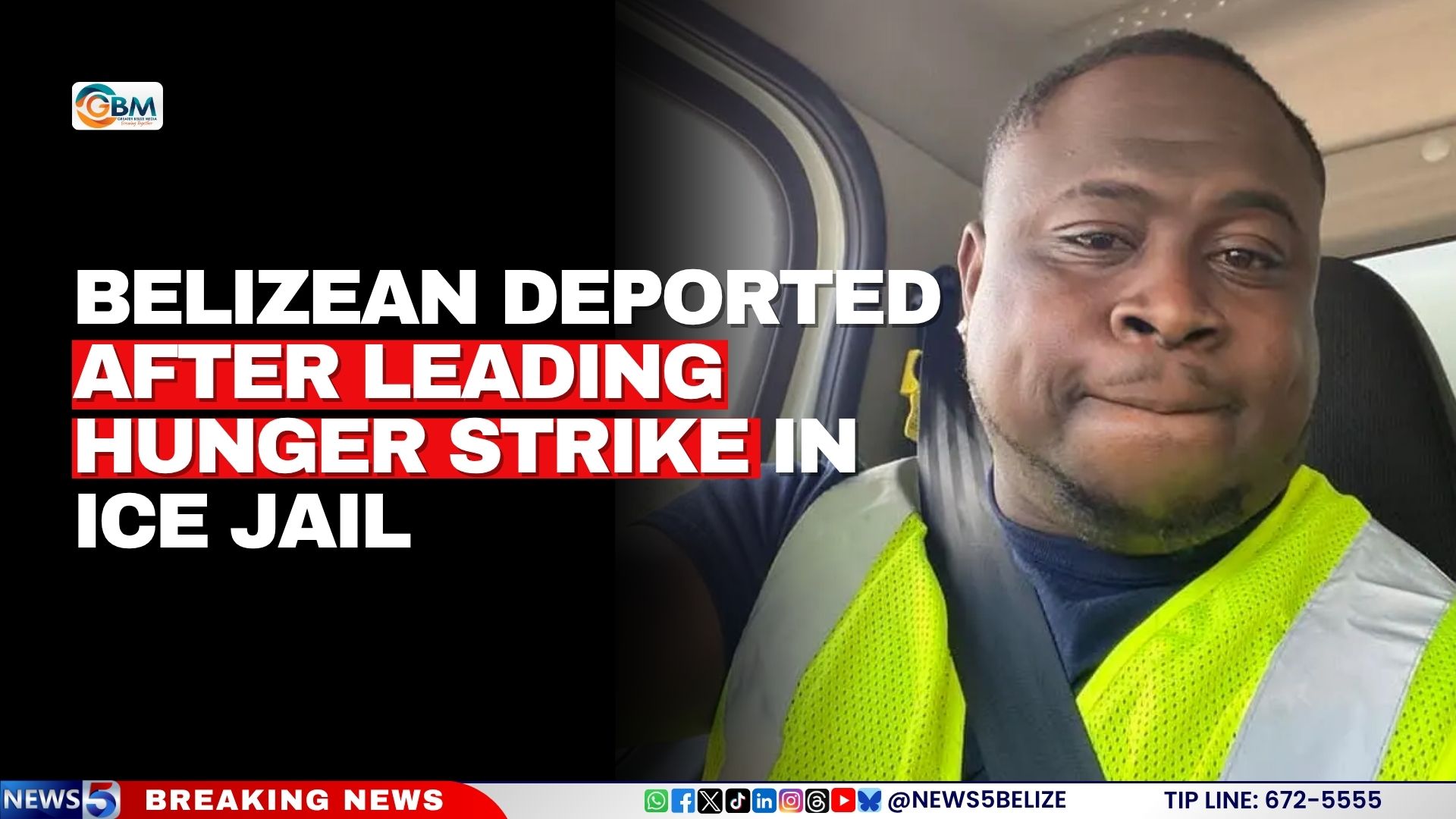
  • Belizean Deported After Leading Hunger Strike in ICE Jail

    Belizean Deported After Leading Hunger Strike in ICE Jail

    In a move that has reignited debates over immigration detention conditions and retaliation against activist detainees, a Belizean man who emerged as a key organizer of a high-profile hunger strike at a U.S. Immigration and Customs Enforcement (ICE) facility in California has been deported back to his home country. Immigrant rights organizations are calling the deportation an act of retaliation for Kyron Shakeel Swaso’s public criticism of abusive and unsanitary conditions inside the Adelanto ICE Processing Center.

    Per accounts from local outlet CALÒ News and legal nonprofit Immigrant Defenders Law Center (ImmDef), Swaso’s removal followed a pattern of improper transfers to detention facilities in Texas and Louisiana, carried out in what advocates say is violation of existing legal requirements. His deportation came fewer than 14 days after he held a meeting with members of the U.S. Congress, where he helped deliver a formal petition signed by 150 fellow detainees detailing systemic poor conditions at the Adelanto site.

    The document signed by detainees raised multiple serious allegations: toxic mould growth in holding areas, contaminated drinking water supplies, insufficient and low-quality food, and persistent barriers to accessing necessary medical care. In a final statement released before his deportation, Swaso emphasized the demands of the protesting detainees. “We want this place shut down and we want to be released… Our due process rights are being violated. They are using taxpayer dollars to abuse immigrants. The things they say publicly do not match what we are living through,” he said.

    ImmDef’s legal team has pushed back against the government’s process, confirming that Swaso was transferred out of California without the mandatory advance notice required under a federal court order. The organization argues the irregular transfers and subsequent deportation were explicitly retaliatory measures targeting Swaso for his leadership in the hunger strike and his willingness to bring detention abuses to national attention.

    The U.S. Department of Homeland Security (DHS), the federal agency that oversees ICE, has confirmed Swaso’s deportation but forcefully rejected all claims of retaliation. According to remarks shared with DemocracyNow, DHS stated that Swaso had already received a final, legally binding order of removal, and his transfer and deportation followed standard operating procedures for immigration removal cases. The agency also outlined background on Swaso’s immigration history: he entered the United States on a tourist visa in 2019, and overstayed the terms of his visa. DHS additionally claimed Swaso faced a series of criminal charges, including aggravated assault on a law enforcement officer, illegal firearm possession, and drug possession.

    ImmDef has pushed back against these criminal allegations, countering that the only charges on record against Swaso are minor drug offenses that were ultimately dismissed and cleared through post-conviction relief processes. The organization says Swaso has no other active convictions on his record.

    Beyond the dispute over Swaso’s deportation, DHS has also denied that any hunger strike is currently ongoing at the Adelanto facility, and rejected all allegations of systemic abuse against detainees. This official denial stands in direct contradiction to claims from current detainees and immigrant rights advocates, who have repeatedly documented poor conditions at the site. Local reporting from CALÒ News has recorded at least four detainee deaths at the Adelanto facility in recent years, further fueling calls for independent oversight and facility closure.

  • Browne Says Antigua and Barbuda Near Full Employment, Calls for New Labour Survey

    Browne Says Antigua and Barbuda Near Full Employment, Calls for New Labour Survey

    Antigua and Barbuda is currently operating at near-full employment, according to Prime Minister Gaston Browne, who has publicly committed the government to commissioning an updated national labour market survey to capture accurate, up-to-date workforce dynamics. Speaking during a parliamentary question-and-answer session, Browne acknowledged that the most recent comprehensive analysis of the country’s labour market dates back to between 2016 and 2017, leaving policymakers without the granular, current data needed to shape evidence-based employment policy. While formal statistical data is overdue for a refresh, Browne noted that on-the-ground and anecdotal observations paint a clear picture of a tight labour market, with the country hitting a near-full employment threshold. As primary evidence of robust labour demand, Browne highlighted the consistent stream of new arrivals to the twin-island nation who are able to secure employment almost immediately upon entry. “In fact, there are people coming into this country literally on a daily basis and obtaining employment,” he told parliament.

    Beyond the strong overall employment picture, however, the prime minister outlined a growing, persistent challenge that is disrupting local industries: a rising reluctance among native-born Antiguans and Barbudans to take on open roles that align with their existing qualifications. Browne framed this trend as an emerging cultural shift that is creating widespread staffing shortages across multiple key sectors of the national economy. “We have a developing cultural problem within the society,” he said. Local employers across critical service industries including retail, private security, domestic work and hospitality have consistently reported struggles to fill open entry-level and skilled positions with local workers, even as unemployment remains near historic lows. The surge in demand for foreign labour has been reflected in a sharp uptick in work permit applications across the country. In response to this trend, the national Cabinet recently moved to centralize the work permit approval process to streamline applications, but Browne confirmed that many businesses continue to face major challenges recruiting local candidates for open roles.

    Synthesizing his observations of the current labour market, Browne argued that the small number of working-age people who remain out of work are largely not unemployed due to a lack of available jobs. “I’m pretty convinced that we practically have full employment and that those who are not employed is that they’re either not willing to work or they’re unavailable to work,” he concluded.

  • BARNUFO, CFPA pay tribute to Dr Shelly-Ann Cox

    BARNUFO, CFPA pay tribute to Dr Shelly-Ann Cox

    Two leading industry bodies in Barbados’ fishing sector are honoring the life and legacy of Dr Shelly-Ann Cox, the nation’s Chief Fisheries Officer, who passed away recently. The Barbados National Union of Fisherfolk Organisations (BARNUFO) and the Central Fish Processors Association (CFPA), both led by president Vernel Nicholls, have issued public statements of grief and tribute to the late public servant.

    In statements released jointly on behalf of both organizations, Nicholls extended heartfelt condolences to Dr Cox’s immediate family, close friends, professional colleagues and all those who knew her well. He remembered Dr Cox as an unwaveringly committed public servant whose decades of work left an indelible, positive mark on the entire Barbadian fishing industry.

    Nicholls emphasized that Dr Cox left the community far too early in her career, highlighting the depth of expertise, steady leadership and contagious passion she brought to advancing the nation’s fisheries every day. He specifically noted her consistent advocacy for adopting new technology, scaling innovative practices and creating more opportunities for young people to join and lead the sector.

    Among Dr Cox’s most critical contributions, Nicholls pointed to her work in disaster preparedness and post-storm recovery for fishing communities. After Hurricane Beryl swept through the region, Dr Cox worked around the clock to educate fishers on critical hurricane safety protocols, while pulling together cross-stakeholder collaboration, streamlining inter-agency communication and coordination, organizing critical logistics and leading on-the-ground recovery efforts. Her long-term goal was to build a more resilient, forward-looking framework for disaster risk management that would protect the fishing sector for future generations.

    “As we mourn this devastating loss, we sincerely pray that divine strength and comforting peace will surround Dr Cox’s family, friends, co-workers, and all fisherfolk leaders across the country in this difficult time,” Nicholls added.