分类: society

  • LETTER: Mental Health Stigma in the Workplace & the Society

    LETTER: Mental Health Stigma in the Workplace & the Society

    Across workplaces and broader communities, a quiet crisis of unfair treatment toward people living with mental health challenges is gaining long-overdue attention. Multiple informal reports and on-the-ground observations have documented repeated cases of bias and mistreatment targeting individuals who manage mental health conditions or navigate acute mental health crises, often at the hands of their own colleagues.

    Mental health struggles do not discriminate by profession, income bracket, background, or age – they touch every corner of society. Most people can name at least one person, whether a close connection or a distant acquaintance, who is quietly grappling with these challenges away from public view. A wide spectrum of triggers can spark mental health distress, from unmanageable workplace burnout and the grief of personal loss to crippling financial strain and other unexpected life upheavals, many of which remain hidden from outside observers.

    The treatment that many of these individuals face in professional settings is both deeply unjust and alarming. Being met with mockery, harmful gossip, and implicit or explicit bias simply for experiencing a mental health episode does more than erode a person’s sense of dignity at work. It also creates a crippling barrier that stops people from reaching out for the life-saving support and care they need, trapping them in cycles of silence and distress.

    To reverse this harmful trend, workplaces and community institutions must center empathy, intentional understanding, and radical inclusivity as core values. Mental health status must never be used as a justification for discrimination or social exclusion. Instead, all spaces should be cultivated to be safe, supportive environments where every person feels respected, regardless of the mental health challenges they navigate.

    Currently, preliminary discussions are already underway around the development of a dedicated national mental health bill. There is widespread, cautious curiosity about how the proposed legislation will be structured, and whether it will deliver tangible progress on three critical fronts: reducing the persistent social stigma attached to mental illness, strengthening legal protections for the rights of people living with mental health challenges, and expanding access to affordable, accessible support services for all those who need them.

    As a collective society, the time has come to move beyond performative, selective compassion. We have a shared responsibility to extend consistent, unwavering empathy to all members of our communities, especially the most vulnerable among us who are navigating the isolation of mental health distress.

  • SEA opens all-male youth workshop amid concern over crime among boys

    SEA opens all-male youth workshop amid concern over crime among boys

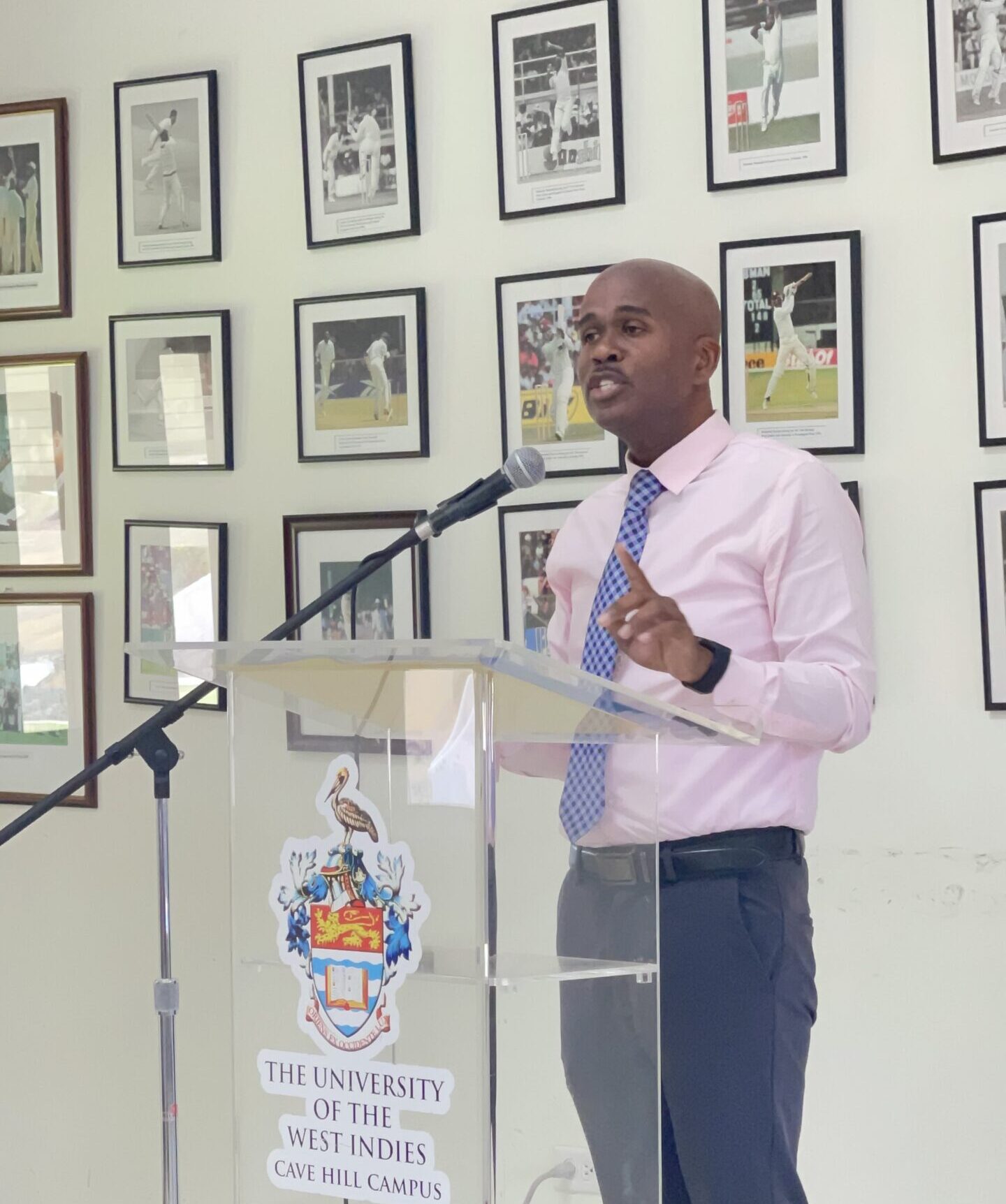
    Against a backdrop of growing concern over rising youth violence, increasing encounters with the justice system, and shifting social pressures reshaping adolescence for Barbadian boys, the Social Empowerment Agency (SEA) launched a targeted all-male workshop for 12 to 16-year-olds Thursday at the 3Ws Pavilion on the Cave Hill campus of the University of the West Indies.

    Titled *The Blueprint: Designing the Man You Want to Be*, the initiative brought together cross-sector experts ranging from local law enforcement and drug counselling specialists to healthcare providers, legal representatives, probation officers and educators. The collective goal is to arm at-risk young males with practical tools to navigate an increasingly complex and risky social landscape that looks far different than it did just a generation ago.

    SEA Deputy Chairman Carl Applewhaite explained that the workshop was intentionally designed to create a judgment-free, safe space where young men can feel seen, supported, and heard, aligned with the agency’s community-centered mission. Drawing a connection to local Barbadian culture, he noted that the agency’s acronym SEA sounds identical to the Bajan phrase “we see you” — a core promise from the prime minister that the social service body would remain rooted in local identity and priorities.

    Applewhaite emphasized that the challenges facing young Barbadians have shifted dramatically in recent years, requiring a new approach to intervention. “We are fighting a different fight in 2026 than we did years ago,” he said, pointing to escalating peer pressure, worsening mental health crises, a widespread scourge of violence, and a host of overlapping stressors that disproportionately harm young male adolescents. The workshop forms part of a broader systemic effort to address the root causes of youth delinquency, rather than just responding to its outcomes, with a key objective of dismantling automatic, survival-driven responses that often lead to violent behavior and criminal justice involvement.

    Roseann Richards, Director of SEA’s Social Care Delivery and Support Directorate, added that the workshop marked the conclusion of the agency’s five-part stakeholder workshop series, developed specifically in response to alarming local trends involving adolescent boys. She noted the timing of the event is particularly critical, as Barbados has recorded a steady increase in the number of boys under 18 coming into conflict with the law.

    Drawing on decades of experience working with local children and families, Richards voiced deep concern over growing disconnection among many young boys, noting a troubling pattern of disengagement from family, community social structures, formal education, and positive extracurricular activities such as sports and community groups. She also highlighted rising rates of harmful behavior among underage males, including underage smoking and drinking, and peer bullying. Richards urged participants to reject rigid, harmful stereotypes of masculinity that force young men to suppress their emotions, encouraging them to open up to trusted adults about feelings of happiness, sadness, and frustration rather than bottling up their experiences. She stressed that consistent access to positive role models and strong mentors is critical to guiding boys through a healthy transition to adulthood.

    Jakeem Sealy, a social worker in SEA’s Child Care Unit, reiterated that the initiative was tailored specifically to the unique, on-the-ground realities facing young male Barbadians. “We recognise and understand that in Barbados, as we are all aware, the crime rate among boys 18 and under is extremely high,” he explained. One core session of the workshop explores the well-documented link between childhood trauma and adverse behavioral outcomes later in life, helping young people connect their past experiences to their current actions. A central takeaway for participants is the message that emotional vulnerability is not a weakness for men: it is okay to cry, feel pain, express sorrow, and seek support, with dedicated safe spaces available in schools and communities for young men to share their experiences without judgment.

    Roger Husbands, founder and chairman of local support organization Drug Education Counselling Services (DECS), focused his contribution on teaching participants how to identify and resist unhealthy social influences. He explained that while some peer pressure can be positive, much of what pushes young men toward harmful behavior goes unrecognized, and the workshop helps boys clearly distinguish between positive and negative pathways. Husbands encouraged participants to trust their own judgment and take ownership of their paths, noting “You don’t have to follow the path, you can be your own lone wolf.”

    Presenter Paul “Ras Simba Akoma” Rock led a session focused on redefining masculinity and teaching practical emotional self-control. He challenged the common cultural narrative that frames violence as a core trait of manhood, explaining that true strength means having the capacity for violence but intentionally choosing non-violent responses. Rock emphasized the importance of teaching young men to recognize their personal emotional triggers, understand when their emotions are out of balance, and develop practical strategies to regulate their responses — a critical skill in a cultural environment that often normalizes and glorifies chaotic violence. “If we want to prepare boys to be men, we have to let them understand their own capacities to be violent and to control it in the midst of an environment that sort of encourages chaotic violence and representations of that violence,” he said.

    Unlike traditional intervention programs that rely on one-sided lectures, the workshop is structured around a collaborative “shoulder-to-shoulder” engagement model that encourages open discussion and participation. Core topics covered include the link between child maltreatment and brain development, digital safety, navigating peer pressure, rethinking harmful norms of masculinity, and improving mental health outcomes. Per SEA’s program outline, overarching goals include helping participants identify their personal emotional triggers, dismantle harmful stereotypes about manhood, resist negative peer and online influences, understand the long-term consequences of their choices, and build healthy habits for digital engagement. Ultimately, officials say the program seeks to empower adolescent boys to move beyond being passive followers of destructive social norms and grow into proactive, engaged young men who contribute positively to their families and communities across Barbados.

  • Moroccan footballer Hakimi to be tried in France for rape, appeals court says

    Moroccan footballer Hakimi to be tried in France for rape, appeals court says

    In a development that has rocked the global football community, a French court formally confirmed on Friday that Paris Saint-Germain and Morocco national team captain Achraf Hakimi will face trial on rape charges. The 27-year-old star player, who was preparing for Morocco’s second World Cup qualifying match against Scotland on the same day the ruling was handed down, has repeatedly rejected the accusations against him and says he is ready to clear his name in court. Hakimi took to social media platform X following the court’s announcement to restate his denial, noting that the upcoming proceeding will finally give him the opportunity to present his side of the story directly.

    The case dates back to February 2023, when a 24-year-old woman filed a formal complaint with police in Val-De-Marne, a department southeast of Paris. According to initial police reports, the accuser—who has chosen to speak publicly for the first time under the pseudonym “Jeanne” in a recent article published by Mediapart—says she met Hakimi on Instagram one month before filing the report. She claims she traveled to the footballer’s home via a taxi he ordered, where he allegedly assaulted her sexually without her consent. The accuser says she eventually escaped Hakimi’s residence after pushing him away and alerting a friend via text message, who then picked her up from the location.

    To date, court officials have not set an official start date for the trial, which will be held at the criminal court in France’s Hauts-de-Seine department. Fanny Colin, Hakimi’s defense attorney, emphasized that Friday’s ruling only confirms the case will proceed to trial, and does not indicate any finding of guilt. “This confirmation was expected. Nothing here says that he is guilty of anything, he remains steadfast in his defence,” Colin told reporters.

    For the accuser and her legal team, however, the court’s decision marks a significant milestone in the case. Rachel-Flore Pardo, the plaintiff’s lawyer, stated that the ruling has brought her client “relief and hope.” Speaking to Mediapart in her first public comments on the case this Thursday, the accuser explained why she chose to move forward with the legal process. “I wanted a trial to defend myself, to be heard,” she said, adding, “I want to explain myself. I want people to believe me.”

    As one of the highest-profile active footballers in Europe, Hakimi’s case has drawn intense international media scrutiny, with attention focused on how the legal process will unfold amid his ongoing club and international career.

  • This Day in History: 19 June 1971

    This Day in History: 19 June 1971

    In the early summer of 1971, a routine maritime voyage between two Caribbean islands turned into one of Grenada’s most devastating forgotten maritime disasters. On June 19, 1971, the City of St George — a wooden-hulled motor schooner constructed just six years earlier on Carriacou by local builder McLawrence and owned by D McFarlane of St George’s, Grenada — was traveling from Trinidad to Grenada carrying a full load of both passengers and cargo when an unexpected fire ignited in the vessel’s hold.

    The blaze spread rapidly across the wooden structure of the ship, engulfing the entire vessel in flames before any effective emergency response could be organized. In the chaos that followed, 22 people aboard the schooner drowned, among the victims the majority called Carriacou home: 13 victims were from that island, most hailing from the Windward district. One additional victim was from nearby Petite Martinique, while the remaining deceased were residents of mainland Grenada.

    A unique legal complication arose in the wake of the disaster, as the tragedy unfolded within Trinidad’s territorial waters. At the time, Grenada’s existing legal framework did not allow for official inquests into fatal events that occurred outside the nation’s borders. This left the victims’ families in limbo, unable to formalize death declarations to access estates, insurance benefits, and close out the legal affairs of their lost loved ones.

    To resolve this crisis for surviving relatives, Grenada’s government passed a targeted piece of legislation, Act No. 41 of 1972, on December 16, 1972. This law was specifically written to formally declare all victims of the City of St George disaster legally dead, clearing the legal barriers that had impacted grieving families. Today, more than half a century after the disaster, the only permanent memorial honoring the lives lost stands inside the Grand Anse Roman Catholic Church on Grenada.

    This historical account draws from archival records preserved in Beverley A. Steele’s *Grenada: A History of its People* and maritime wreck database The Wrecksite. This content does not reflect the editorial position of NOW Grenada, and the platform is not liable for contributor-provided statements and information.

  • Police Hunt Two Suspects After Robbery Ends in Shooting

    Police Hunt Two Suspects After Robbery Ends in Shooting

    A violent armed robbery at a All Saints Road construction site has left an innocent worker injured, with two perpetrators still evading law enforcement more than 24 hours after the incident unfolded.

    Local police confirmed the altercation took place shortly after 3 p.m. on June 12, when the two unidentified suspects targeted a man at the location. According to initial police accounts, the pair successfully stole an undisclosed amount of cash and jewelry from their intended victim before attempting to make a quick getaway.

    The situation turned dangerous during the suspects’ escape, when shots were fired into the area. A stray bullet struck a nearby construction worker in the lower abdomen, leaving the innocent bystander wounded in the crossfire.

    Emergency responders transported the injured worker to a local medical facility for immediate treatment. Law enforcement officials have confirmed that the worker suffered only a minor injury, and no further life-threatening complications have been reported as of the latest update.

    Authorities have launched a full criminal investigation into the armed robbery and shooting, and are currently working to identify and locate the two at-large suspects. No additional details about potential descriptions of the pair or a timeline for arrests have been released to the public as the investigation remains active and ongoing.

  • National Trust Act violated at historic Fort Zeelandia during Independence Flag Raising

    National Trust Act violated at historic Fort Zeelandia during Independence Flag Raising

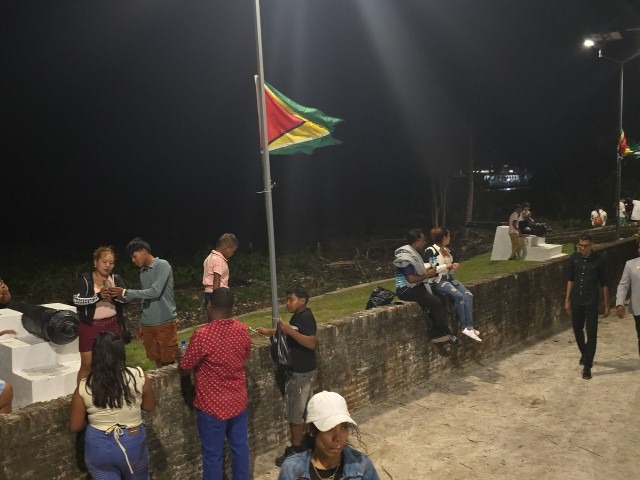
    Last updated Friday, 19 June 2026, a leading urban and regional planning expert has sounded the alarm over severe, avoidable risks to Fort Zeelandia, a nearly 300-year-old brick heritage site on Guyana’s Fort Island in the Essequibo River, following unregulated activity tied to last month’s 60th independence anniversary flag-raising ceremony.

    Dr. Allyson Stoll, a United States-trained city and regional planning specialist, outlined multiple harmful interventions that have already compromised the fragile 1749 structure in comments to Demerara Waves Online News. Pre-ceremony grading work stripped topsoil from areas adjacent to the fort’s historic structures, and bulldozers cleared a stand of mangroves – a critical natural habitat for native birds and marine species that also helped stabilize the fort’s surrounding soil.

    During the evening ceremony, no officials were present to enforce heritage protection regulations set by Guyana’s National Trust. Witnesses observed members of the public climbing, sitting, walking and jumping across already weather-worn sections of the brick fort, while uniformed Disciplined Services personnel stood on the structure’s upper level.

    Stoll emphasized that allowing foot traffic and weight-bearing activity on the fort’s historic brick revetments and earthen ramparts is never acceptable, given the site’s advanced age and fragile condition. “The entire section can collapse inward or outward, especially after the removal of vegetation that held the outer revetment in place,” she explained. “Bricks can become dislodged individually or in entire sections. The situation is already made worse by the fact that many loose bricks have previously been stolen by island residents to use as foundation material for private homes.”

    Guyana’s National Trust has posted an official warning sign near the fort, stating that anyone who damages the protected site can face a fine of GY$130,000 and a court order to cover all costs of repairs. This mandate is formalized under the National Trust Act, which specifies that any person who disturbs, damages, or interferes with a national monument without written approval from the National Trust is liable on summary conviction to the six-figure fine, plus additional court-ordered compensation for restoration work.

    A gaping lack of prior structural assessment has compounded risks, Stoll noted. No comprehensive scientific analysis has ever been completed to map the fort’s current condition, leaving experts unable to confirm whether load-bearing walls remain stable, whether burrowing animals have weakened substructures, or whether the original 1740s iron bracing used to hold the brick walls in place is still intact.

    In addition to unauthorized activity during the event, Stoll condemned unapproved pre-ceremony construction work that saw tons of river sand dumped and compacted across the fort site by heavy machinery. “It is absolute madness to introduce untested new materials to a centuries-old earthen fort that has never even been structurally studied,” she said. “Any qualified structural engineer would have immediately rejected this plan. There was no justifiable reason to put this irreplaceable heritage site at risk for a single ceremonial event.”

  • Bewoners Houttuin vragen DNA opslag radioactieve bronnen op te schorten

    Bewoners Houttuin vragen DNA opslag radioactieve bronnen op te schorten

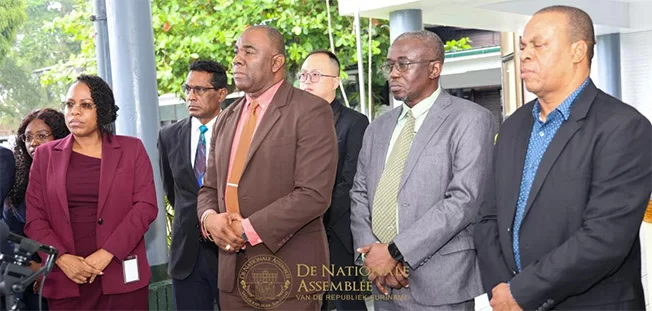
    On a Thursday in mid-June, community activists and local residents from Houttuin and its surrounding residential areas delivered a formal petition to Suriname’s National Assembly (DNA), calling for immediate intervention to halt a proposed radioactive source storage and contaminated material treatment facility planned for the Kuldipsingh industrial site in their neighborhood. The petitioners argue that the project’s potential threats to public health and the local environment have been woefully understudied, and demand a full, independent re-evaluation of the entire proposal before any construction proceeds.

    The petition was formally received by Ivanildo Plein, first deputy vice-chairperson of the National Assembly, during a brief suspension of the body’s public plenary session, with multiple sitting members of parliament present to acknowledge the community’s concerns. It bears the signatures of hundreds of stakeholders, including prominent local organizers Maggie Schmeitz, Winston Stüger, and dozens of other long-term residents of Houttuin and adjacent neighborhoods.

    Beyond calling for a temporary suspension of all pre-construction activities and a complete project reassessment, the petition outlines four core demands: a mandatory reclassification of the project’s risk category, a full environmental impact assessment (EIA) conducted exclusively by independent, unbiased experts, and guaranteed meaningful community inclusion at every stage of future decision-making for the proposal.

    According to Schmeitz and Stüzer, the Suriname National Environmental Authority (NMA) incorrectly categorized the facility as a Category B Track 2 project, a classification that only requires a limited environmental analysis rather than a full EIA. After this initial classification, regulators approved moving forward with only a standalone environmental management and monitoring plan, which the residents note imposes far weaker scrutiny and stricter regulatory requirements than a full impact assessment.

    The petitioners emphasize that the storage and handling of radioactive sources, which fall under the category of radiological hazardous contaminants, belong to the highest risk classification under both national regulations and international safety standards. For this reason, a full independent EIA is not just requested, but legally and ethically required, they argue.

    The community also highlights that binding international nuclear safety guidelines require such high-risk facilities to be sited in remote, sparsely populated, geologically stable locations, at a safe distance from major drinking water sources and residential zones. The proposed Houttuin site fails to meet every one of these basic requirements, according to the petition. Residents also point to critical gaps in the existing environmental review: no comprehensive study of alternative locations, such as isolated industrial zones far from residential areas, was ever conducted, and there is no complete risk analysis mapping potential impacts to local soil, groundwater, and the long-term health of people living within proximity of the facility.

    In an additional revealing finding, the organizers note that residents only discovered through persistent questioning that the facility would not just store radioactive materials in hermetically sealed packaging. Workers will also regularly open these containers to adjust the sources in the on-site workshop, a detail that makes the project’s official description as a simple “storage facility” intentionally misleading, the petitioners say.

    Criticism is also leveled at the authors of the existing incomplete environmental report. The residents note the experts who prepared the document lack specialized training and credentials in nuclear engineering or health physics, meaning the report cannot serve as a credible or reliable foundation for a responsible final decision on the project.

    In response to the petition, Plein confirmed that the National Assembly has already taken note of the community’s concerns. The issue has already been discussed internally among parliamentary leadership, he said, and lawmakers will now work to identify a path forward that brings all relevant regulatory agencies together to address residents’ demands and reach a collaborative solution. Plein added that the petition will also be brought directly to the attention of the National Assembly’s president for further review.

  • Court awards welder over $100,000

    Court awards welder over $100,000

    A Trinidadian blue-collar worker has secured a significant legal victory against the state, after a high court judge ruled he was wrongfully arrested, imprisoned and maliciously prosecuted over a 2016 drunk driving charge that was ultimately thrown out due to fatal police evidence errors.

    Thirty-eight-year-old Narace Dwarpaul, a welder by trade, was pulled over on June 11, 2016, during a routine roadside traffic enforcement operation on the M2 Ring Road in La Fortune. Police arrested him on charges of failing to provide a valid breath specimen for alcohol testing, in violation of the country’s Motor Vehicle and Road Traffic Act. But when the case went to a lower magistrate’s trial, law enforcement submitted a breath test result slip that was clearly erroneous: it carried a woman’s name and was dated 2015, a full year before the stop. The magistrate subsequently dismissed the charge, finding Dwarpaul not guilty, and he launched a civil claim against the state for damages in 2019, three years after his arrest.

    Dwarpaul, represented by attorneys Ramesh Deena and Christian Deena, laid out his account of the 2016 incident in his witness testimony. He told the court he had not consumed any alcohol that evening before he was stopped, and he complied fully with officers’ instructions to blow into the breath testing device. Instead of processing the result correctly, Dwarpaul said officers accused him of wasting their time. He claimed he was never shown any test reading, was handcuffed, transported to a local police station, and held in a dirty holding cell for roughly seven hours, where he was also denied access to a telephone call.

    The state, defended by attorney Rachael Jacob, called two witnesses to support its case: the Assistant Superintendent of Police (ASP) who oversaw the traffic operation, and the constable who filed the original drunk driving charge against Dwarpaul. The constable’s testimony painted a very different picture. He claimed Dwarpaul admitted to having consumed alcohol, a field sobriety test returned a reading of 91 micrograms of alcohol per 100 milliliters of breath – nearly three times the 35 microgram legal limit – and that the welder deliberately manipulated the breath test mouthpiece, leading to three consecutive void readings on subsequent tests. The officer also asserted he showed Dwarpaul every invalid result, allowed the claimant to make four phone calls from the scene of the stop, and held him in a newly painted, well-kept single cell.

    The ASP’s account contradicted the constable’s testimony on key points: under cross-examination, he said Dwarpaul was never handcuffed, and that all four of his phone calls were made from the police station, not the roadside. These conflicting statements became a central pillar of the high court’s eventual ruling.

    Delivering judgment in the case, Justice Robin Mohammed highlighted that the inconsistencies between the two state witnesses were not minor errors – they touched on the core facts of Dwarpaul’s arrest and treatment in custody. The judge also emphasized that the submission of the incorrect test slip, bearing another person’s name and the wrong year, raised serious red flags about the prosecution’s conduct.

    Mohammed ruled that Dwarpaul had successfully proven the prosecution against him lacked any reasonable or probable cause. He pointed to a series of failures in the constable’s investigation and evidence: inconsistent witness testimony, no accurate contemporaneous records, the missing valid test slip, the failure to call the officer who initially stopped Dwarpaul to testify, and the submission of the erroneous test document all confirmed the prosecution was not built on legitimate grounds.

    “The court finds that the claimant has proved on a balance of probabilities an absence of reasonable and probable cause,” Mohammed wrote in his judgment. The judge further ruled the constable had acted with malice, finding that “the inference is that he was prepared to use questionable means – including an erroneous test record – to secure a conviction. I find that it is an improper and wrongful motive.”

    In terms of damages, the judge awarded Dwarpaul $85,000 in general damages, with 2.5% annual interest accruing from 2020 through 2026. He also ordered the state to pay $7,500 in special damages, with 1.5% annual interest running from 2017 to the present. While Mohammed declined to award aggravated or exemplary damages, he ordered the state to cover all of Dwarpaul’s legal costs in the case. Total compensation, including accrued interest, exceeds $100,000.

    The Deena brothers were instructed on the case by attorney Vishwanath Rambaran, while Jacob was instructed by attorney Sara Muslim.

  • New Joshua Obadiah Williams Primary School Set for January Opening

    New Joshua Obadiah Williams Primary School Set for January Opening

    BASSETERRE, St. Kitts — More than a year after breaking ground, the ambitious reconstruction of the Joshua Obadiah Williams Primary School in Molineux is moving toward completion, with government officials planning to welcome students to the upgraded facility at the start of the January 2027 academic term. All on-site construction work is on track to be finished by October 2026, according to updates from local public works authorities.

    The EC$8 million transformation project is being delivered by three construction firms working in parallel across different zones of the campus, keeping the build on schedule after 11 and a half months of steady progress. What was originally planned as a simple replacement of the aging original structure has evolved into a comprehensive expansion and modernization initiative that will serve both the school population and the entire surrounding Molineux community.

    Structural Engineer Jared Joseph shared project details during a recent press briefing, noting that the project team made a deliberate decision to go far beyond replicating the old school’s footprint. “It would have been straightforward to rebuild to the same dimensions and specifications we had before,” Joseph explained. “Instead, the Public Works Department opted to design a cutting-edge educational facility focused on lifting quality of life for students, staff and the whole neighborhood.”

    The scale of the upgrade is dramatic: the original 8,400-square-foot school has been expanded to roughly 25,500 square feet, tripling the total usable space of the campus. Every section of the facility has been reimagined to address longstanding gaps in the old building. Classrooms for students are now 50% larger than they were in the previous structure, providing more room for interactive learning and student movement. The new campus also features upgraded science laboratories, a dedicated student library, expanded faculty workspaces, private restrooms for teaching staff, and dedicated amenities for employees, including a larger staff lounge, a designated lunch area, and extra open spaces for relaxation and collaborative planning.

    One of the most community-focused additions to the campus is a new multi-purpose auditorium, a flexible space designed to meet multiple needs across different contexts. “The first role this space will fill is hosting the school’s assemblies, plays and student performances,” Joseph said. “But for local residents, it will operate as a public community center, and in emergency situations, it is engineered to serve as a certified hurricane shelter.”

    To support reliable operation during crises, the school is also outfitted with a large capacity cistern for water storage and a full-size backup generator, ensuring the facility remains functional during power outages or disruptions to public utilities, a critical feature for both daily operations and its emergency shelter role.

    Joseph emphasized that the project’s impact will extend far beyond the school gates. “We’re confident this development will deliver lasting benefits not just to teachers and students, but to the entire community,” he said. “We hope this model of inclusive, multi-purpose public infrastructure will be replicated in other districts across the country in coming years.”

    With structural work largely complete, the project is now moving into the final phase of fixture installation and interior finishing, all scheduled for completion by October. Government project leads confirmed that the timeline remains on track, and they are looking forward to welcoming the first cohort of students to the new facility when the January academic term begins.

  • Government Warns Vandalized Bus Stops Could Lead to Prosecution

    Government Warns Vandalized Bus Stops Could Lead to Prosecution

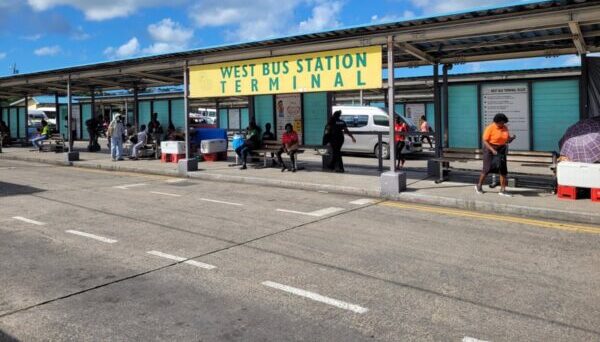
    Authorities in Antigua and Barbuda are advancing a broad national initiative to upgrade and preserve community public assets, with new plans to ramp up surveillance and pursue legal consequences against people who intentionally vandalize shared infrastructure such as bus stops. The policy outline was revealed during a post-Cabinet media briefing held Thursday, where government officials also unveiled a nationwide package of infrastructure improvements including renovated bus stops, updated road signage, and refreshed road markings.

    The conversation around harsher anti-vandalism measures followed repeated incidents of deliberate damage to public bus shelters, which have left many existing facilities in a state of severe disrepair that requires costly major repairs. Maurice Merchant, the country’s Director General of Communications, explained that the administration is currently evaluating a range of strategies to deter further destruction of facilities built and maintained using public taxpayer funds.

    “Surveillance represents one key strategy to make sure these facilities stay intact and accessible for public use,” Merchant noted in his remarks to reporters. He confirmed that constructive discussions are already ongoing between government officials and national law enforcement agencies to establish processes for identifying and prosecuting anyone found guilty of intentional public property damage. “Conversations are already underway with the law enforcement community to target these individuals who recklessly destroy public assets for no discernible reason,” Merchant added.

    Under the proposed new accountability framework, people found responsible for damaging public infrastructure will be held financially liable for the cost of repairs. Merchant clarified that this requirement already applies to damage caused by reckless driving, and will be extended to cases of intentional vandalism: “If public property is destroyed, those responsible will be required to repay the full cost of repairs.”

    The broader infrastructure rehabilitation project, which includes the installation of new directional, road and traffic signs, is being funded through the national Tourism Fund, and will bring upgrades to bus stops across both islands of the nation. In addition to formal enforcement measures, Merchant issued a public call for greater collective responsibility to protect shared community assets, urging residents to embrace a greater sense of national pride. He questioned why any member of the public would seek to destroy facilities designed for the benefit of the entire community.

    As of the briefing, the government has not yet released a specific timeline for the rollout of new surveillance measures, but officials confirmed that stricter enforcement and clearer personal accountability for damage will be core components of the ongoing national effort to upgrade and maintain public infrastructure across Antigua and Barbuda.