分类: society

  • Regional support powers JPS restoration efforts in final phase after Hurricane Melissa

    Regional support powers JPS restoration efforts in final phase after Hurricane Melissa

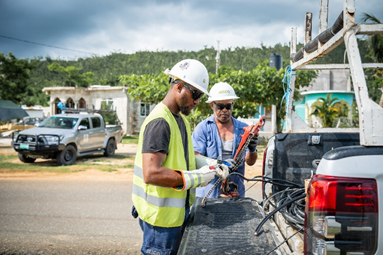
    KINGSTON, Jamaica — More than a week after Hurricane Melissa swept across Jamaica, leaving widespread destruction to the national power grid, the Jamaica Public Service (JPS) has confirmed it is moving into the final stretch of recovery efforts, with fewer than 3,000 customers still waiting to have their electricity restored. In an official public statement released Friday, the utility provider attributed the steady, significant progress of restoration work to critical operational support from partner energy teams across the Caribbean region.

    To date, more than 80 external skilled personnel have joined local JPS crews on the ground to speed up recovery. Line workers from Bermuda’s Bermuda Electric Light Company (BELCO) have been deployed alongside certified technicians from two St. Lucia-based firms: King’s Electrical and Islandwide Electrical Limited. According to JPS, these cross-border teams have played an indispensable role in accelerating restoration, especially in coastal and rural communities that suffered the worst damage from the hurricane’s high winds and flooding.

    Right now, all remaining work is concentrated in the western Jamaican parishes of St. Elizabeth and Westmoreland. Crews in these areas are still contending with rugged, hard-to-access terrain damaged by the storm, and are carrying out full reconstruction and partial redesign of large sections of the local power grid that could not be simply repaired.

    Ricardo Case, Senior Vice President of Shared Services at JPS, emphasized that coordinated regional collaboration has been a game-changer for overcoming the unprecedented challenges posed by Hurricane Melissa. “We fully recognize how much frustration our customers in western Jamaica are feeling right now, going days without reliable power,” Case said in the statement. “But we have kept our promise: work has not stopped for a single day. Our local teams, reinforced by skilled support from utility partners across the Caribbean, have adapted creatively to restore power to some of the hardest-hit parts of the grid, even with limited access and large-scale rebuilding required. None of this progress would have been possible without these partnerships.”

    When Hurricane Melissa made landfall on Jamaica on October 28, 2025, it knocked out power to roughly 77 percent of the country’s utility customers, and caused catastrophic, widespread damage to the national transmission and distribution network. JPS has called the event one of the most damaging storm impacts in the company’s operating history.

    Case acknowledged that the final phase of restoration remains extremely demanding work. “But every single one of us shares the same top priority: get power back to every single customer, no exceptions,” he said. “The shared commitment and positive energy of all the crews working side by side will make sure we get this done as safely and as quickly as humanly possible.”

  • Mandela Highway reopened after shooting

    Mandela Highway reopened after shooting

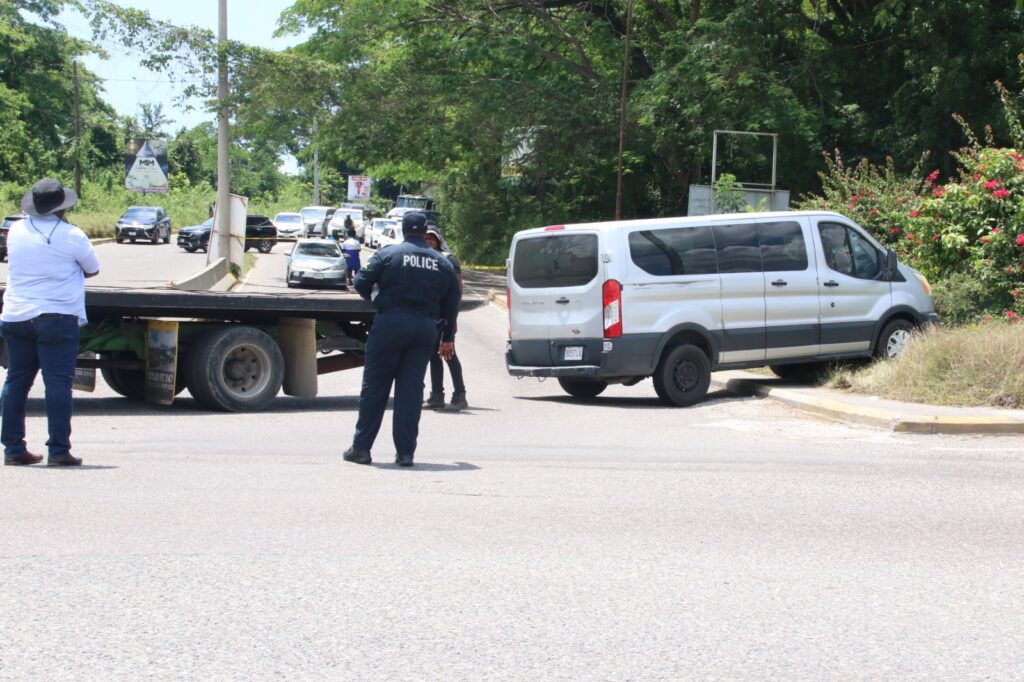
    KINGSTON, Jamaica — Law enforcement authorities have issued an update for motorists traveling across the island’s major transport corridor: the westbound lane of Mandela Highway, a key route connecting the capital to the populous municipalities of Spanish Town and Portmore, is now open to traffic again. The stretch had been closed off for forensic investigation and processing after a deadly shooting that left one man dead and a second person wounded.

    The violent attack unfolded shortly after 7:15 a.m. on Friday, at the busy Caymanas intersection along the westbound corridor. According to initial police accounts, a Ford Transit work truck was moving through the junction when the driver pulled to a stop. That was when two armed suspects riding a motorcycle pulled alongside the right side of the vehicle, and fired multiple rounds through the truck’s right front window and windshield.

    Both people inside the vehicle were hit by gunfire. Emergency responders rushed the injured pair to a local hospital for urgent care, but one of the occupants was pronounced dead shortly after arrival. The second victim remains hospitalized for treatment of their injuries, as of the latest update.

    In the immediate aftermath of the shooting, police cordoned off the entire westbound lane to preserve the crime scene and allow investigators to collect evidence. The closure caused significant traffic disruptions for commuters traveling between Kingston and the heavily populated St. Catherine parishes, where both Spanish Town and Portmore are located. With the investigation’s on-site processing complete, authorities have confirmed the lane is once again accessible for regular traffic.

  • ‘Learn. Play. Connect.’ autism workshop highlights need for stronger awareness and support

    ‘Learn. Play. Connect.’ autism workshop highlights need for stronger awareness and support

    KINGSTON, Jamaica — Adverse weather and early logistical hurdles failed to derail a much-anticipated community-focused autism event held this past weekend, as organizers and attendees pushed forward with the “Learn. Play. Connect.” Autism Awareness Workshop to build stronger support networks for neurodivergent residents and their families. The gathering united hundreds of stakeholders from across the island, including caregivers, classroom educators, and local community leaders, all gathered with a shared goal of deepening public understanding of autism spectrum disorder and expanding accessible local resources.

    The event was spearheaded by Shanique Nelson, who holds the title of Intercontinental Queen of Jamaica. Nelson drew from her own lived experience as a parent raising a child on the autism spectrum to design the workshop’s program, prioritizing real-world guidance and peer connection over abstract discussion. Though unseasonably heavy rainfall pushed back the event’s start time and forced minor adjustments to the planned schedule, organizers quickly adapted, and the rest of the day’s activities unfolded with almost no further disruption.

    Per an official press statement from the organizing team, attendees arrived continuously throughout the day, engaging actively with a lineup of educational sessions and open conversations. Two leading local experts led core presentations: Laren Hartley, who shares an autism diagnosis, offered personal insights into what it means to live with the condition, while Peta-Gaye Forbes Robinson centered her talk on boosting public autism awareness, expanding formal community support systems, and sharing actionable, everyday strategies for families new to navigating autism-related challenges. Both presentations filled critical information gaps, leaving many first-time attendees with clear, practical guidance they had struggled to find elsewhere.

    One of the day’s most anticipated components was a candid panel discussion made up entirely of parents raising autistic children. Moderated by Deidre Ferguson, the panel featured three caregivers — Esther Waugh, Sheriece Blake, and Darrion Blake — who opened up about their personal journeys, the unexpected joys and unspoken struggles of caregiving, and the gaps in public support that Jamaican families still face. Their honest sharing resonated deeply with attendees, many of whom reported feeling less alone in their own experiences after the discussion.

    Local organizations stepped up to make the event possible, with Transformational Worship Centre donating both event space and full technical support for the day’s activities. Additional sponsorship and in-kind contributions came from four other local groups: The Party Vault, DABS Creative Designs, McIntosh Photography, and Classic Queen International Ja. To accommodate attending families, organizers also set up a fully supervised, child-friendly play area, which let kids engage in age-appropriate games and activities while caregivers participated in adult-focused workshop sessions.

    In post-event comments, organizers emphasized that the workshop was never intended to be a one-off gathering. Instead, the core mission is to spark long-term cultural change: encouraging greater public awareness of autism, challenging harmful stigmas, and fostering far more inclusive community approaches to neurodiversity across Jamaica. Early feedback from attendees has already led organizers to begin planning similar workshops for other parishes across the island in the coming year.

  • Vehicle Crashes Through Preschool Fence Behind Greenbay School

    Vehicle Crashes Through Preschool Fence Behind Greenbay School

    A startling incident has unfolded at a preschool situated adjacent to Greenbay School, after a motor vehicle careened off course and crashed through the site’s perimeter barrier. Photographic evidence captured at the scene shows the car remains wedged deep within the crumpled, damaged fencing that borders the early childhood education facility. As of the latest update, local authorities have not yet released any official details confirming whether anyone sustained injuries in the crash, nor have they shared information on the potential causes that led the vehicle to end up on the preschool grounds. Parents of children attending the facility have not yet received formal notifications about any risks to student safety, leaving community members waiting for further clarification on the situation.

  • Crabbs Water Line Break Causes Service Disruptions in Several Communities

    Crabbs Water Line Break Causes Service Disruptions in Several Communities

    The Water Business Unit of the Antigua Public Utilities Authority (APUA) has issued an urgent public announcement confirming that a critical 20-inch water transmission line in the Crabbs region has suffered a complete break. Utility crews moved swiftly to isolate the damaged segment of the pipeline immediately after the incident was reported, clearing the way for emergency repair work to begin without delay.

    To minimize widespread disruption to residential and commercial consumers, system operators have reconfigured the local water distribution network to reroute supply through a standby 16-inch transmission line that was not in active regular use. While this temporary workaround is currently keeping the network operational, utility officials have warned that the smaller alternate line lacks the full capacity of the damaged 20-inch infrastructure.

    This capacity shortfall means the network cannot guarantee sufficient water delivery to all end customers that are normally served by the Parham Booster Station. As repair efforts continue over the coming hours and days, residents and businesses across several nearby communities should prepare for inconsistent water service, including periods of reduced water pressure and unplanned temporary outages. These service impacts will persist until crews fully repair the broken main line and restore the network to its normal operating configuration.

    APUA’s repair team has mobilized all available resources to accelerate the project, with field technicians working around the clock to complete fixes as quickly as safety standards allow. In a public statement accompanying the service alert, the authority extended a sincere apology to all customers affected by the unplanned outage and associated disruptions, and expressed gratitude for the public’s patience and understanding as crews work to resolve the issue.

  • ‘HEAT’ OVER WATER

    ‘HEAT’ OVER WATER

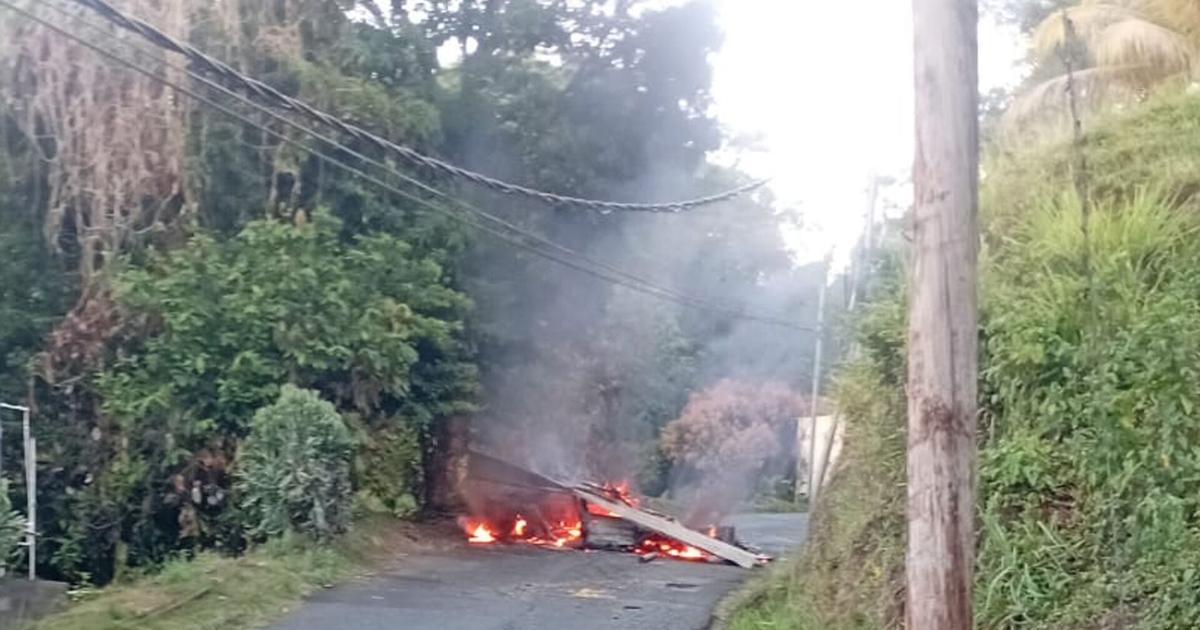
    A simmering public grievance boiled over into direct action in the quiet coastal village of Castara, Tobago, on Wednesday, when angry residents ignited debris, blocked key local roads, and demanded urgent intervention to resolve a debilitating month-long disruption to their piped water supply. For weeks, the community has endured inconsistent or completely absent water access, forcing households to ration stored reserves and rely on unregulated alternative sources to carry out even the most basic daily tasks, from cooking to cleaning.

    Renrick Jackson, a long-time Castara resident and one of the organizers of the demonstration, told reporters that the community’s patience had run out after repeated unaddressed complaints to local water officials. “We are exhausted and fed up with this ongoing neglect,” Jackson said during the protest. “We took to the streets today to make our voices heard, and if this issue is not resolved as quickly as possible, this will not be the last you see of us. The disruption has upended every part of our lives – families are being forced to reallocate water set aside for farm and livestock just to drink and cook, simply because there is no other option.”

    Residents specifically point to unaddressed leaks along the local transmission line and inconsistent, unfair distribution as the core of the crisis. Omari Solomon, another hillside resident, explained that geographic inequity has exacerbated the problem for households located at higher elevations. “Water does make it to some parts of the village, but it all goes to low-lying, flat areas,” Solomon said. “The problem is simple: WASA technicians are supposed to adjust the valve and pressure line to get water up the hill, but they never show up when they say they will. Most of us up here have gone weeks without consistent running water.” Jackson added that WASA crews have been observed driving past the known leaks daily for weeks without stopping to make repairs, leaving residents feeling completely ignored.

    Shortly after the protest began, local and national officials acknowledged the crisis and outlined steps to resolve the issue. Minister of Public Utilities Barry Padarath confirmed that the community’s demands had been escalated to his office, noting that cross-island logistical delays had held up critical repair work for weeks. “We have been struggling to transport heavy required equipment from Trinidad to Tobago to fix the faults that are straining the local distribution line,” Padarath explained. “But we have now secured assistance from the Tobago House of Assembly to source local heavy equipment while we wait for our mobilization from Trinidad to be completed.”

    To provide immediate relief to affected residents, especially those on elevated terrain where low pressure has cut off access entirely, Padarath added that additional emergency water trucking routes have been arranged, with service expected to be fully operational by the end of the protest day. Public Utilities Secretary Ricky Joefield also traveled to Castara on Wednesday to meet with residents and oversee the ongoing relief and repair efforts.

    In an official public statement released Wednesday, the Water and Sewerage Authority (WASA) confirmed it had launched an urgent response to the community’s concerns, noting that multiple leaks along the transmission line connecting the Bloody Bay Water Treatment Plant to Castara and surrounding areas had left high-elevation customers without consistent service for more than a month. The authority announced it had already deployed two water trucks to serve affected communities across Northside Tobago, including Castara and neighboring Parlatuvier, while repair teams worked to seal active leaks across the network.

    WASA officials explained that while a major pressure-reducing leak was successfully repaired on Saturday, unforeseen electrical and mechanical failures at Bloody Bay Well #1 on Monday extended the service disruption. Full restoration of the water system was projected to be completed by 2 a.m. Thursday. The authority also implemented a temporary scheduled water distribution program for high-elevation areas to ensure fair access while final repairs are completed: high points in the Castara Housing Scheme will receive water from 6 p.m. to 6 a.m. Sunday through Wednesday and on Saturdays, while high points in Parlatuvier will receive daily scheduled distribution limited by overall system capacity.

    WASA has also deployed dedicated customer response and communications teams to the area to provide residents with real-time updates and address individual concerns. “We fully understand the deep inconvenience and frustration this extended outage has caused our customers, especially those in elevated areas, and we share the community’s sense of urgency,” the statement read. “We can assure all residents that every available resource is being deployed to stabilize the distribution network and restore a reliable, consistent water supply as quickly as possible.” Residents seeking additional information or emergency trucked water deliveries are encouraged to contact WASA’s 24/7 call center, operating three dedicated lines for the affected region.

  • Man to hang for killing wife, infant

    Man to hang for killing wife, infant

    In a landmark judge-alone trial held this week, a 31-year-old Barrackpore resident has been handed the ultimate capital punishment for the brutal 2024 murders of his separated common-law wife and their 14-month-old child. Rishi Motilal, who also goes by the street alias “Cook Meat”, was found guilty on two separate counts of premeditated murder by Justice Nalini Singh on Monday, who formally sentenced him to death by hanging.

    The guilty verdict follows the prosecution’s thorough presentation of evidence connecting Motilal to the fatal October 8, 2024 attack that claimed the lives of 31-year-old Tara “Geeta” Ramsaroop and the couple’s young daughter, Shermaya Motilal. Court proceedings laid out a grim timeline of the violence, which erupted inside Motilal’s Rig Road residence after a routine argument between the estranged couple escalated to lethal force. Per the case presented by the State, Motilal first assaulted Ramsaroop with an iron pipe before retrieving a cutlass, which he used to repeatedly slash his victim before cutting her throat. After killing Ramsaroop, he turned the weapon on their defenceless toddler to end her life as well.

    Following the attack, Motilal fled the scene in a blue station wagon owned by a relative of Ramsaroop’s new romantic partner. Investigators later located the vehicle torched and abandoned in a dense, bushy terrain off Rochard Road in Penal, a finding that Motilal did not contest. He also entered a guilty plea for the charge of malicious property damage related to the arson, for which he was sentenced to time already served behind bars leading up to the trial.

    A core pillar of the prosecution’s case rested on first-hand testimony of Motilal’s own confessions delivered immediately after the killings. Both his mother, Farisha Mohammed, and sister-in-law, Gayatri Motilal, told the court they received phone calls from a distraught Motilal, who openly admitted to carrying out the double homicide. An independent civilian witness corroborated this account, confirming that Motilal had made a similar admission to them as well.

    In an effort to reduce the charges against his client, Motilal’s defence team mounted a provocation defence, arguing that the killings were not premeditated. Motilal testified that Ramsaroop’s comment that he would never be allowed to see their children again pushed him over the edge, saying he fell into a “dark hole” and could not clearly remember the sequence of events that followed. His legal team urged Justice Singh to reduce the charges from murder to manslaughter on these grounds.

    Justice Singh ultimately rejected the defence’s argument, pointing to multiple pieces of evidence that proved Motilal acted with clear, deliberate intent to kill. She noted that the sequence of events—from Motilal choosing to arm himself with two separate weapons to the brutal nature of the injuries inflicted—demonstrated premeditation rather than a sudden, uncontrollable outburst of rage. She further highlighted Motilal’s own statement to police, in which he explained he killed the infant to prevent her from “suffering” without her mother, as additional confirmation that he made a calculated choice rather than acting out of uncontrolled passion. The judge emphasized that the deliberate manner of the child’s killing left no room for any finding other than intentional murder.

    The prosecution team was led by barristers Dylan Martin, Josiah Soo Hon and Khi Cambridge, while Motilal was represented throughout the trial by defence attorneys Stephen Wilson and Ayanna Norville-Modeste.

  • Public Works announces temporary closure of Tiradentes Avenue overpass

    Public Works announces temporary closure of Tiradentes Avenue overpass

    A major infrastructure upgrade project in Santo Domingo is set to trigger a temporary full traffic shutdown on a key urban overpass, with local transportation authorities releasing detailed timelines and contingency context for the upcoming disruption.

    The country’s Ministry of Public Works and Communications confirmed that the overpass linking two of the city’s busiest thoroughfares, Tiradentes Avenue and 27 de Febrero Avenue, will be closed to all vehicle traffic starting at 10:00 p.m. on Saturday, May 2. The shutdown will extend through the weekend, with the overpass scheduled to reopen to motorists by 4:00 a.m. the following Monday.

    In a public statement addressing the closure, project leaders noted that the decision to concentrate all rehabilitation work within an overnight weekend window was a deliberate strategic choice. By scheduling the entire intervention during off-peak hours, authorities aim to strike a balance between advancing critical infrastructure updates and limiting the impact of the shutdown on the city’s daily commuting routines. This timing also creates a safer working environment for construction crews carrying out rehabilitation tasks, while reducing the risk of accidents that could occur if work progressed alongside active heavy traffic.

    Public works officials acknowledged that even with the carefully planned weekend timing, the temporary restriction will likely force thousands of regular drivers to adjust their travel routes over the closure period. However, they stressed that the long-term benefits of the project far outweigh the short-term inconvenience. The ongoing rehabilitation work is designed to address aging infrastructure, boost overall road safety for all users, extend the service life of the overpass, and improve the long-term functionality of this key urban connection for years to come.

  • CNTT President warns employment growth is concentrated in informal work

    CNTT President warns employment growth is concentrated in informal work

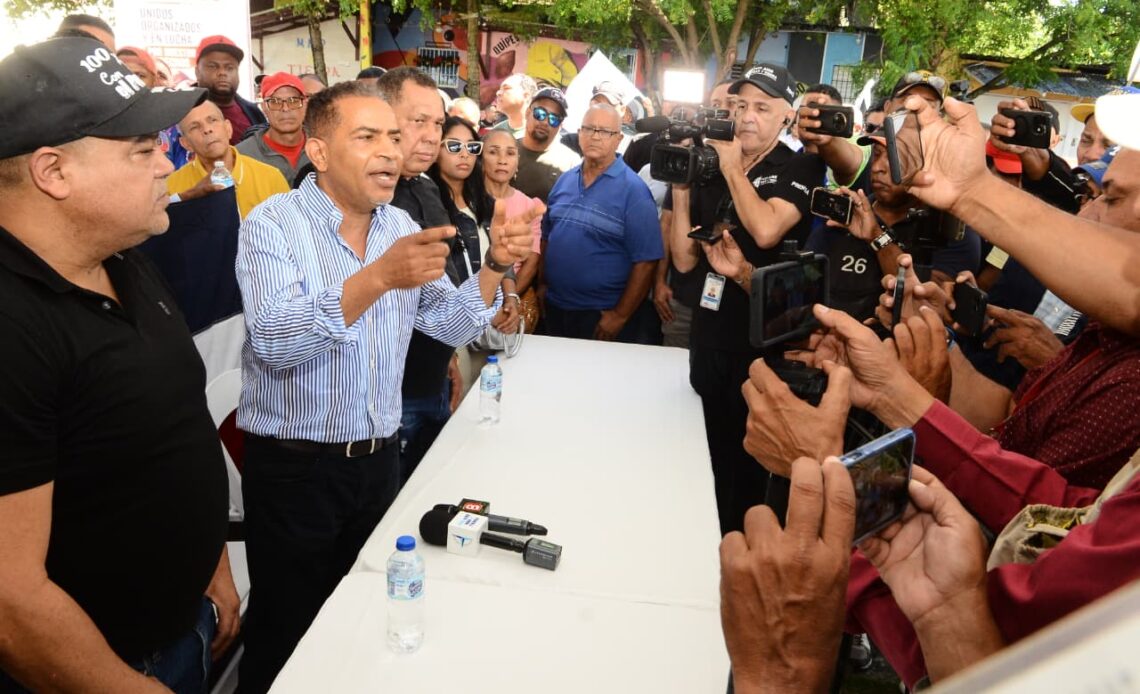
    On the occasion of International Workers’ Day, the top leader of the Dominican Republic’s largest transport workers’ organization has drawn public attention to a worrying discrepancy behind the country’s nominal employment gains over the last two years. Juan Marte, president of the National Confederation of Transport Workers (CNTT), revealed that total employment across the nation has expanded by roughly 5 percent since 2022 – but the overwhelming majority of these new positions have been created in the unregulated informal sector, not in formal, protected work arrangements.

    Marte specifically highlighted unregulated motorcycle taxi services as one of the single biggest drivers of informal job growth in the country. A large portion of the Dominican Republic’s registered and unregistered motorcycles are now deployed for commercial passenger transport, he explained, absorbing tens of thousands of workers who cannot find formal employment opportunities. Beyond motorcycle taxis, Marte outlined that the entire domestic transport sector – including licensed taxis, urban public transit, intercity bus routes, freight logistics, and other passenger services – generates approximately 200,000 total jobs across both formal and informal segments of the economy.

    A key point of concern raised by Marte is the rapidly growing share of immigrant workers filling informal transport roles, especially in the motorcycle taxi segment. He added that this pattern of over-reliance on informal immigrant labor extends beyond the transport sector, noting that core Dominican industries including agriculture, construction, and commercial food production have increasingly turned to non-domestic workers to fill labor gaps left by the absence of formal, attractive working conditions for local citizens.

    In his remarks centered on International Workers’ Day, Marte launched sharp criticism of the Dominican government for failing to implement targeted policy measures to protect formal workers and expand the number of regulated formal employment opportunities. He argued that systemic gaps in state support and labor regulation have pushed thousands of low-income Dominican citizens into unstable, high-risk informal work that offers little to no social protection or labor rights. Marte’s public comments echo widespread concerns shared by labor analysts and advocacy groups across the Dominican Republic, where informal labor has long persisted as one of the most defining structural characteristics of the national workforce.

  • Severe weather keeps four provinces on red alert in Dominican Republic

    Severe weather keeps four provinces on red alert in Dominican Republic

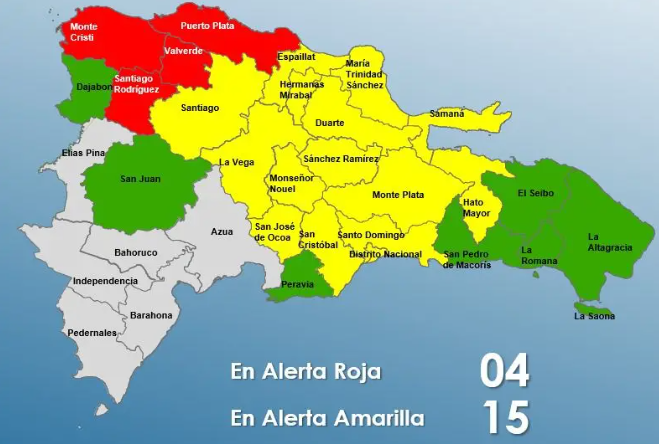
    A slow-moving atmospheric trough continues to dump relentless heavy rainfall across large swathes of the Dominican Republic, triggering a cascade of natural hazards that have left thousands displaced and critical infrastructure damaged, the nation’s Emergency Operations Center (COE) has confirmed. As of the latest official update, a three-tiered alert system remains in place, with four northern provinces – Monte Cristi, Puerto Plata, Valverde and Santiago Rodríguez – placed under the highest-level red alert, 15 additional regions under yellow alert, and a further seven under precautionary green alert.

    The unrelenting downpour has spawned a range of hazards across both urban and rural communities. Flash flooding has inundated low-lying neighborhoods and farmland, multiple rivers and small streams have burst their banks, and saturated hillsides have given way to landslides in scattered settlements across the affected zones. Official damage assessments paint a grim picture of the disaster’s human toll: more than 5,000 local residents have been forced to evacuate their homes to emergency shelters, while over 1,000 residential properties have sustained impacts ranging from minor flood damage to total destruction. Dozens of homes have suffered major structural compromise, and four dwellings have been completely lost to the weather event.

    Transportation networks have been heavily hit, with damaged roads and bridges cutting off access to 42 isolated communities that are yet to regain connection to surrounding areas. The nation’s water distribution network has also taken significant damage: 22 regional aqueducts are currently out of operation, cutting running water service to more than 300,000 registered users across the country. In response to the unfolding crisis, emergency response teams have been deployed across the hardest-hit zones, with 15 residents rescued from floodwaters in Santiago Rodríguez alone as of the latest report.

    Authorities have issued urgent public advisories warning all residents to avoid attempting to cross flooded roadways or swollen rivers, even if crossings appear passable. Drivers have been urged to reduce speeds and exercise extreme caution, as ongoing rainfall continues to cut visibility on roads across the alert zones. Meteorologists with the COE have extended warnings for continued precipitation across much of the nation in the coming days, with officials warning that the risk of further flooding and landslides will remain elevated until the trough system moves out of the region.