分类: society

  • Ferry sinking kills 18, leaves 10 missing in south Philippines

    Ferry sinking kills 18, leaves 10 missing in south Philippines

    A domestic ferry carrying hundreds of passengers sank off the southern Philippines in the early hours of Monday, resulting in a tragic maritime disaster that has left at least 18 dead and 10 individuals unaccounted for. The MV Trisha Kerstin 3 issued a distress signal at approximately 1:50 AM local time while traversing waters near Baluk-Baluk Island, just four hours after departing Zamboanga City on Mindanao island.

    Philippine Coast Guard spokeswoman Noemie Cayabyab confirmed that search-and-rescue operations would continue through the night, with the official passenger manifest revised downward to 344 individuals after determining some listed passengers had not actually boarded. The 44-meter triple-decker vessel sank in the same maritime corridor where another ferry owned by Aleson Shipping Lines caught fire in 2023, claiming 31 lives.

    Conflicting eyewitness accounts have emerged regarding sea conditions at the time of the capsizing. While coast guard officials cited survivor reports of rough waters, at least two survivors contradicted this narrative. Jun Guro, a lawyer among the rescued passengers, questioned the official account in an interview posted by the Isabela City government: ‘I hope they investigate this, because we did not have bad weather. Why did it sink when there was no storm?’

    The human drama unfolded through harrowing personal accounts, including a final text message from recent maritime academy graduate Kyle Punsalang to his brother: ‘Our boat is tipping over. Please help.’ Rescue efforts faced significant challenges as emergency responders in Isabela City and Basilan province struggled with limited resources. Ronalyn Perez, a Basilan emergency responder, reported being ‘short-staffed at the moment’ while handling the influx of survivors.

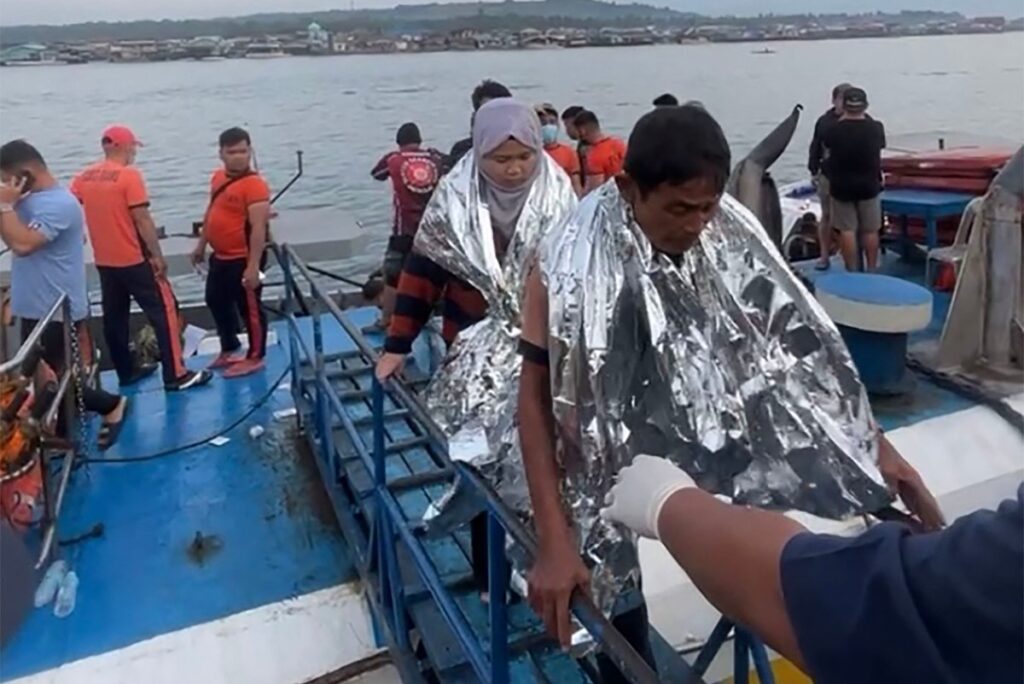
    Coast guard video footage showed survivors being pulled from dark waters and receiving medical attention on shore, where barefoot victims were wrapped in blankets and placed on gurneys. The tragedy has prompted multiple investigations, with the Maritime Industry Authority dispatching a team to determine contributing factors. Aleson Shipping Lines expressed condolences and confirmed close coordination with authorities, while the coast guard preliminary stated the vessel had not been overloaded.

    This incident highlights ongoing safety concerns in the Philippine maritime transport system, where millions depend on inter-island ferries to navigate the archipelago’s 7,000+ islands. The nation has experienced numerous maritime tragedies, including a 2015 capsizing that killed over 60 people and the 1987 Dona Paz collision that resulted in more than 4,000 fatalities – the worst peacetime maritime disaster in history.


  • Dump truck driver robbed at Beetham Landfill

    Dump truck driver robbed at Beetham Landfill

    In a brazen daylight robbery, a dump truck operator fell victim to an armed assault at Port of Spain’s Beetham Landfill on January 25th. The incident occurred approximately at 1:20 pm as the driver was exiting the waste management facility.

    According to law enforcement officials, four individuals of African descent confronted the victim while he operated his blue and red Nissan CK20 dump truck. The assailants executed a coordinated robbery, making away with multiple valuable possessions from the driver, who resides in La Paille Gardens, Caroni.

    The stolen items include a premium grey Samsung S20 mobile device housed in a blue protective case, valued at approximately $2,000 TT dollars. The perpetrators additionally confiscated a black wallet containing $675 in cash and a First Citizens bank card, with the wallet itself appraised at $200. Notably, the thieves also took a black Adidas strap bag worth $60, which contained critical access items to the victim’s personal vehicle and residential property.

    Law enforcement authorities have circulated detailed physical descriptions for three suspects involved in the criminal act. All individuals are described as having brown complexion and slim builds. The primary suspect stands approximately six feet tall with distinctive cane-row comb-back hairstyling and an elongated, clean-shaven facial structure. His attire consisted of a white vest paired with blue three-quarter length trousers.

    A second accomplice matches similar height characteristics with conservatively cropped hair, last seen wearing a green T-shirt with blue three-quarter pants. The third identified individual presents significantly shorter at five feet three inches with rounded facial features and no visible facial hair. His clothing included a distinctive yellow and black padded jet ski vest complemented by brown three-quarter pants.

    Criminal investigations remain actively ongoing as authorities pursue multiple investigative avenues to apprehend those responsible for this violent act against a essential service worker.

  • Violence against children persists in Latin America and the Caribbean

    Violence against children persists in Latin America and the Caribbean

    A groundbreaking collaborative study from the Pan American Health Organization (PAHO) and the United Nations Children’s Fund (UNICEF) has revealed a devastating epidemic of violence plaguing the youth of Latin America and the Caribbean. The report, formally titled ‘Violence against children and adolescents in Latin America and the Caribbean: New data and solutions,’ presents a harrowing portrait of a region where millions of young lives are endangered by pervasive physical, psychological, and digital abuse.

    The most severe manifestation of this crisis is the alarming homicide rate. Between 2015 and 2022, an estimated 53,318 children and adolescents were murdered. Recent data reveals a complex and troubling gender disparity: while the homicide rate for adolescent boys (15-17 years) decreased from 17.63 to 10.68 per 100,000 between 2021 and 2022, the rate for their female counterparts more than doubled, skyrocketing from 2.13 to 5.1 per 100,000 in the same period.

    The agencies attribute this lethal violence to a dangerous confluence of factors, including the proliferation of organized crime, easy access to firearms, deep-rooted social inequalities, and harmful gender norms. The report emphasizes that violence is not isolated but interconnected, often intensifying over a child’s lifetime. It begins shockingly early, with six out of ten children under 14 subjected to violent discipline at home. Educational environments offer no refuge, as one in four adolescents aged 13-17 endures bullying. Furthermore, nearly 20% of women in the region report experiencing sexual violence before turning 18, with digital environments emerging as a new, yet poorly documented, frontier for abuse.

    Roberto Benes, UNICEF Regional Director for Latin America and the Caribbean, stated, ‘Every day, millions of children… are exposed to violence – at home, at school and in communities with a gang presence. Multiple places and situations in the region present real risks.’

    PAHO Director Dr. Jarbas Barbosa highlighted the profound and lasting impact on both physical and mental health, asserting that health services are a critical line of defense. ‘When health workers identify people and groups at risk early and provide timely, quality support, they can make a real difference,’ he noted.

    Beyond diagnosing the crisis, the report outlines a clear roadmap for change. It urges regional governments to enact a multi-faceted strategy: strengthening child protection laws, enforcing strict firearm control, training key frontline workers (police, teachers, health professionals), investing in safe schools, and scaling up support services for survivors. The findings were validated at a major regional ministerial consultation in October 2023, uniting over 300 officials and advocates to commit to building safer environments for the region’s future generations.

  • Unions warning of healthcare collapse

    Unions warning of healthcare collapse

    The Bahamas’ public healthcare system is teetering on the brink of operational collapse as a critical shortfall in overtime funding triggers widespread staff discontent and threatens essential medical services. This crisis emerged following a January 13 internal memorandum from the Public Hospitals Authority (PHA) announcing that overtime compensation would be suspended without prior approval from the managing director’s office—a measure unions characterize as penalizing frontline workers for administrative failures.

    Key health unions, including the Bahamas Nurses Union and the Bahamas Public Service Union, have urgently advised their members to refuse any additional shifts beyond scheduled hours until outstanding payments are resolved. Union leaders Muriel Lightbourn and Kimsley Ferguson have condemned the situation as both unacceptable and profoundly disrespectful to medical professionals who regularly work beyond their contracted hours to maintain patient care standards.

    Consultant Physicians Staff Association president Dr. Charelle Lockhart reported that physicians are departing “in droves,” not due to diminished commitment to patients, but because of perceived abandonment by health system leadership. She issued a stark warning to government officials, comparing the scenario to a live grenade awaiting detonation within the medical care system.

    Health and Wellness Minister Dr. Michael Darville has acknowledged the severity of the budgetary depletion, labeling it a matter of “great concern” and convening emergency meetings to address compensation gaps across healthcare facilities. Minister Darville attributed payment delays to acute staffing shortages within the PHA’s finance department, exacerbated by retirements and private sector migration, though he assured that outstanding overtime “not only must be paid, but will be paid.”

    The PHA management maintains that the directive was necessary to preserve funding for critical priorities, including essential hires, and to implement stricter oversight following the exhaustion of overtime allocations. Managing Director Dr. Rolle recognized the inconvenience caused and promised staff further updates regarding payment resolutions.

  • BNT urges action as invasive iguana caught in Adelaide

    BNT urges action as invasive iguana caught in Adelaide

    The recent capture of a substantial green iguana in Adelaide has amplified concerns from The Bahamas National Trust (BNT) regarding the escalating threat of invasive species throughout New Providence and surrounding regions. BNT Executive Director Lakeshia Anderson-Rolle verified the incident occurred Saturday, confirming coordinated response efforts with the Department of Agriculture.

    Anderson-Rolle emphasized the increasing frequency of green iguana sightings, highlighting the nation’s inadequate preparedness for addressing biological invasions. She revealed ongoing discussions with environmental planning authorities to secure critical funding from the JEFF Global Environment Facility, essential for implementing a nationwide mitigation strategy.

    The current national invasive species framework, acknowledged as obsolete by conservation experts, requires immediate governmental attention. While BNT develops specialized protocols for managing invasives within national parks, Anderson-Rolle stresses that comprehensive intervention demands centralized leadership.

    Ecologically destructive by nature, green iguanas—non-native to Bahamian ecosystems—devour vegetation, devastate agricultural lands, and compromise structural integrity through extensive burrowing along waterways and foundations. These reptiles aggressively displace indigenous wildlife, particularly native lizard species and iguanas, in competition for resources and habitat.

    Public vigilance is paramount, Anderson-Rolle advised. Residents encountering green iguanas should immediately report sightings to agricultural authorities and safely contain the animals whenever possible before contacting departmental animal control services.

  • Jamalco track meet waives fees for western schools

    Jamalco track meet waives fees for western schools

    KINGSTON, Jamaica — In a significant relief measure for educational institutions grappling with post-hurricane recovery, organizers of the upcoming JAAA/Puma/Jamalco track meet have announced substantial support for schools from western Jamaica. The February 7th event at Jamalco Sports Club will feature waived entry fees and complimentary lunch provisions for participating athletes from regions devastated by Hurricane Melissa last October.

    The organizing committee revealed on Monday that all registered schools from five severely impacted western parishes would receive full exemption from participation costs along with nutritional support. “Each registered institution will receive up to 15 lunches for their competing athletes,” stated the official announcement, emphasizing their commitment to equitable access despite ongoing recovery challenges.

    This initiative comes as western Jamaican communities continue rebuilding efforts after Hurricane Melissa caused extensive infrastructural damage to nearly all educational facilities in October. The catastrophic weather event also damaged homes of numerous students and educators, creating substantial obstacles in athletic preparation for the 2026 track and field season.

    The track meet organizers’ decision aligns with broader educational support measures recently implemented across Jamaica. Last week, the Inter-Secondary Schools Sports Association (ISSA) waived academic grade requirements and attendance qualifications for western schools participating in national track and field championships, responding to formal requests from affected institutions.

    This coordinated response between sporting organizations and educational authorities demonstrates an evolving approach to disaster recovery, recognizing how natural catastrophes create multifaceted challenges beyond immediate physical damage. The measures aim to preserve normalcy in youth athletic development while communities address fundamental rebuilding needs.

  • Bitter cold grips millions as US digs out of sweeping snowstorm

    Bitter cold grips millions as US digs out of sweeping snowstorm

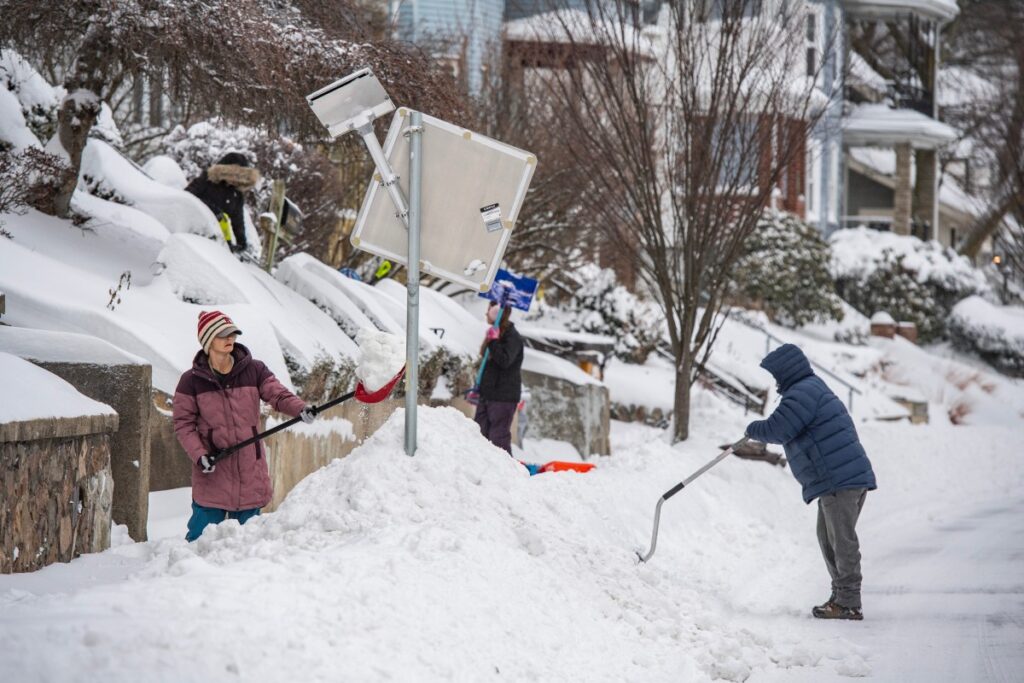
    A historic and expansive Arctic weather system continues to grip the United States, creating life-threatening conditions for millions of citizens and overwhelming infrastructure from the southern states to the Northeast. The aftermath of a colossal winter storm has left over 780,000 households without electricity, paralyzed transportation networks, and is being blamed for at least 21 fatalities, according to local media reports.

    Meteorologists from the National Weather Service (NWS) described the event as particularly dangerous due to its vast geographic scope. An estimated 190 million Americans remained under extreme cold alerts, with temperatures plummeting to a brutal -23°F (-30.6°C) in parts of Minnesota and Wisconsin, where wind chills made it feel as cold as -50°F (-45.6°C). The storm deposited massive snowfall, with New Mexico’s Bonito Lake recording a national high of 31 inches (78.7 cm), while New York’s Central Park received 11.4 inches (29 cm), breaking a single-day record that had stood since 1905.

    The crisis has been acutely felt across southern states like Tennessee, Texas, Mississippi, and Louisiana, where communities are ill-equipped for such intense winter weather. NWS expert Allison Santorelli highlighted the unique challenge: recovery efforts are hampered because northern states, typically more resilient to such events, are also overwhelmed and unable to share resources and equipment with their southern counterparts. This has left many areas without the necessary means to clear roads and restore power swiftly.

    Compounding the problem is the nature of the snowfall, described by NWS meteorologist Dave Radell as ‘very dry’ and ‘fluffy,’ which allows powerful winds to create massive drifts and severely reduce visibility. The storm’s origin is linked to a distorted polar vortex, a phenomenon some scientists suggest may be occurring with increasing frequency due to climate change, though the issue remains a subject of ongoing research.

    With freezing temperatures forecast to persist along the Gulf Coast through the week, at least 20 states and Washington D.C. have declared states of emergency to mobilize emergency personnel. Municipalities have initiated warming centers for vulnerable populations, and authorities nationwide are pleading with residents to remain indoors as the nation confronts this protracted and dangerous deep freeze.

  • Gov’t allocates $165m towards energy poverty reduction project in Westmoreland

    Gov’t allocates $165m towards energy poverty reduction project in Westmoreland

    The Jamaican Government has initiated a targeted financial intervention to address energy poverty in communities devastated by Hurricane Melissa. Energy Minister Daryl Vaz confirmed the allocation of J$165 million specifically for relief efforts in Westmoreland, representing a strategic reallocation within the broader national energy project budget of J$1.1 billion.

    Minister Vaz, speaking at the launch of Jamaica Public Service’s emergency mobile power generation unit in Westmoreland, explained the government’s prioritization strategy: “We have temporarily suspended projects in less affected parishes including Portland, St. Thomas, St. Mary, St. Catherine, and Kingston-St. Andrew to redirect resources toward the five western parishes most severely impacted.”

    The allocated funds will facilitate critical support services including electrical house wiring, infrastructure remedial work, and government certification through electrical regulators. The specialized project timeline extends from December 2025 through March 2026.

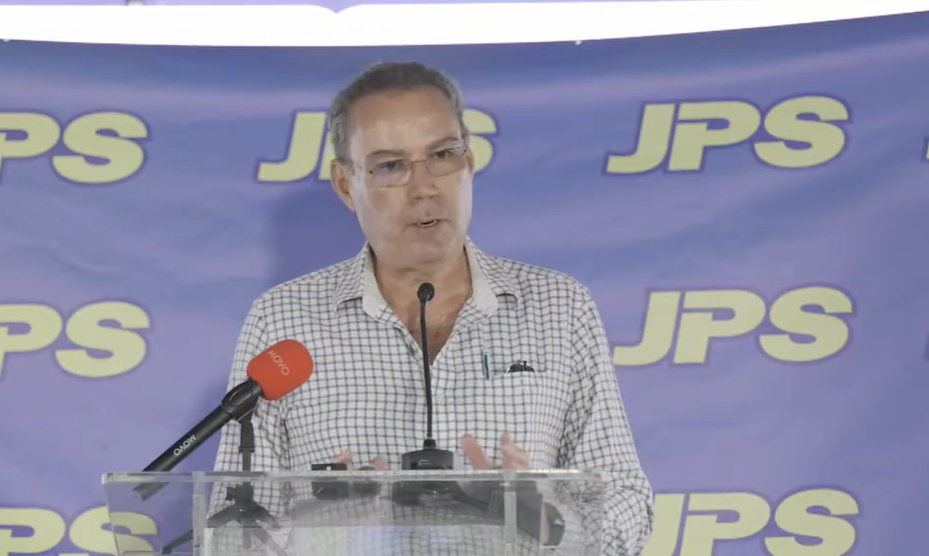
    In parallel developments, JPS CEO Hugh Grant reported significant progress in power restoration, with 60% of Westmoreland customers now reconnected to the electricity grid. The newly launched emergency mobile generation unit will provide interim power to affected communities while permanent network infrastructure undergoes reconstruction.

    According to Minister Vaz, the Bethel Town power plant is scheduled for commissioning by the end of next week. Local MP Dr. Dayton Campbell welcomed these initiatives, stating: “I appreciate the innovative solutions being implemented to benefit our residents and anticipate the successful activation of the Bethel Town generator.”

  • High Court dismisses nurse’s sick leave lawsuit

    High Court dismisses nurse’s sick leave lawsuit

    In a landmark employment ruling, the Trinidad and Tobago High Court has rejected a registered nurse’s legal challenge against the South-West Regional Health Authority (SWRHA) regarding salary deductions following her extended medical absence. Justice Westmin James delivered the decisive verdict on January 26, affirming the health authority’s actions as both lawful and contractually justified.

    The case centered on Nicolia McLean-Kelly, a nurse employed at San Fernando General Hospital since 2018, who contracted mycoplasma pneumonia while on duty in July 2020. Her condition deteriorated critically, requiring multiple weeks of hospitalization including three weeks in intensive care where she suffered cardiac arrests and underwent emergency lung surgery.

    Despite the severity of her medical crisis, Justice James determined that SWRHA acted within its contractual rights when it reclassified portions of her sick leave as unpaid absence. The court found that McLean-Kelly had exhausted her contractual entitlement of 14 working days of paid sick leave per year by late July 2020. Subsequent payments made during her extended absence constituted overpayments that the authority was legally obligated to recover under the Exchequer and Audit Act.

    The judge systematically dismissed the claimant’s arguments that the deductions were unlawful or unfair. He emphasized that the employment contract explicitly granted the employer discretion in determining whether extended sick leave should be paid, and that this discretion was exercised rationally and consistently with established HR policies. Justice James further noted that the contract expressly required employees to comply with applicable institutional policies, making it implausible that a senior nurse would be unaware of such regulations.

    The court also addressed the timing of the deductions, acknowledging that medical certificates could only be issued upon hospitalization completion, which delayed the reclassification process. Once overpayments were identified, recovery became legally mandatory.

    In addition to dismissing the claim for recovered salary totaling $63,482.08, the court rejected claims for gratuity losses ($13,917), aggravated and exemplary damages, and interest. Justice James ordered McLean-Kelly to pay the SWRHA’s prescribed costs of $19,479.80 (excluding VAT) while granting a 90-day stay of execution.

  • NCIC president Surujdeo Mangaroo outlines vision for culture, youth and global reach

    NCIC president Surujdeo Mangaroo outlines vision for culture, youth and global reach

    Surujdeo Mangaroo has embarked on his presidency of the National Council of Indian Culture (NCIC) with a transformative vision that merges cultural preservation with global expansion. Elected in August 2025, Mangaroo brings over two decades of dedicated service to the organization, where he previously served as first vice president and chairman of the renowned Divali Nagar festival since 1999.

    Mangaroo’s cultural journey began during his formative years at Palo Seco Secondary School, where inspiration struck during bhajan sessions led by Professor Anantanand Rambachan and teacher Raghuraj Bahadursingh. This early exposure ignited a lifelong passion that would shape his professional and personal endeavors. Beyond his cultural leadership, Mangaroo maintains dual responsibilities as CEO of Trinity Insurance Brokers Limited and as a family patriarch, having married Nadra Baksh in 1978 with whom he raised four children.

    The cornerstone of Mangaroo’s presidential agenda centers on youth empowerment through innovative programs. He has been instrumental in developing platforms such as the NCIC Youth Champ Competition, the NCIC Dance Competition, and Sangeet Pradarshan—a television program designed to elevate performance standards. His philosophy emphasizes preparing artists for international recognition, noting ‘Our goal is to cultivate a new wave of artists in TT and across the diaspora who can excel domestically and internationally.’

    Under Mangaroo’s previous leadership, Divali Nagar evolved from a local celebration into an internationally recognized cultural phenomenon reaching throughout the Caribbean, North America, and South America. This expansion continues as a priority, with strengthened international partnerships to facilitate cultural exchanges for young performers. ‘We have an abundance of talent in our country,’ Mangaroo observes, ‘and by giving them opportunities to travel abroad, they can take their culture and talents to excel.’

    Mangaroo’s approach to cultural promotion emphasizes unity through diversity, asserting that celebrating Indian heritage contributes to Trinidad and Tobago’s national identity rather than promoting isolation. ‘Cherishing our culture is not merely about preserving the past,’ he explains, ‘it is about honoring the resilience and contributions of those who came before us.’

    The impact of Mangaroo’s mentorship emerges through testimonials from cultural ambassadors like singer Nirmala Sesnarayan, who credits him with providing transformative international opportunities since 2004. Similarly, singer Ravi Jagroop acknowledges Mangaroo’s pivotal role in his artistic development, while Bobby Seenath of the Mahatma Gandhi Charitable Organization praises his unwavering support for youth initiatives. Through his additional role as executive director of Neeleeji Events, Mangaroo continues creating platforms for young talent despite challenges of stereotypes and limited resources, believing that ‘the rewards of positively impacting lives and preserving our cultural heritage make it all worthwhile.’