分类: society

  • Mentally ill man who made gun in 2024 charged with firearm possession again

    Mentally ill man who made gun in 2024 charged with firearm possession again

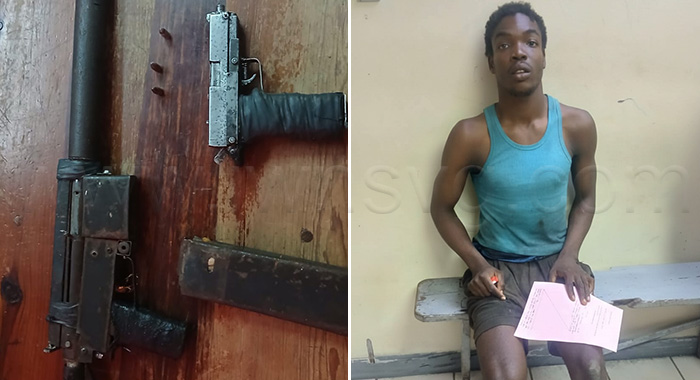
    A 27-year-old man with documented mental health issues has been ordered to undergo psychiatric evaluation following his second arrest on firearms-related charges within an 18-month period. Kesroy Williams of Belair, East St George, was taken into custody on Thursday after police allegedly discovered two firearms and three rounds of ammunition in his possession without proper licensing.

    Law enforcement officials reported seizing a prohibited weapon, a modified .32 caliber firearm, and corresponding ammunition during what they described as a coordinated intelligence-led operation. This incident marks the latest development in Williams’ ongoing legal and mental health struggles.

    Williams’ previous encounter with the justice system occurred in July 2024 when he pleaded guilty to possessing a .38 pistol and ammunition. During court proceedings that December, he revealed his unusual craftsmanship—having constructed a functional firearm using scrap metal, an umbrella spring, epoxy, and screws. Despite the ingenuity noted by Senior Magistrate Colin John, who encouraged Williams to channel his talents into legal pursuits, the defendant served four months on remand followed by a seven-month prison sentence with an additional three-month concurrent term for ammunition possession.

    The current charges involve more serious allegations, including possession of a prohibited weapon category that civilians are typically barred from owning under any circumstances. Police emphasized the significance of this seizure in their public statement, noting that “each illegal weapon seized reduces the potential for serious harm within communities.”

    Following his appearance at the Mesopotamia Magistrate Court on Friday, Williams was remanded to the Mental Health Centre for a two-week observational assessment. The case has been adjourned until February 20 and will be transferred to the Serious Offences Court for further proceedings.

    Authorities have reiterated their commitment to combating illegal firearms trafficking and encouraged public vigilance, stating that citizen reports remain crucial to successful operations against weapon-related crimes.

  • Man found unresponsive with apparent gunshot wound

    Man found unresponsive with apparent gunshot wound

    Law enforcement authorities in St. Vincent and the Grenadines are investigating a fatal shooting in the Diamond/Brighton community, marking the nation’s fifth homicide within the first weeks of the year. Police were dispatched following reports of an unresponsive male victim presenting apparent gunshot wounds, though official identification remains pending pending family notifications.

    The incident occurred merely 24 hours after the country recorded its fourth homicide, creating a disturbing pattern of violent deaths. This recent violence follows the fatal shooting of Mesopotamia resident Kevin Richards, locally known as Masicka, who was killed on Friday evening. Richards’ death represented the third homicide recorded within a consecutive three-week period, signaling a concerning escalation in violent crime across the island nation.

    Local communities have expressed growing apprehension as the homicide count rapidly approaches numbers typically recorded over entire calendar years. Law enforcement officials have intensified patrols and investigative efforts while urging community cooperation to address the surge in violence. The consecutive nature of these incidents has prompted discussions about underlying social factors and potential organized crime elements contributing to the spike in deadly altercations.

    Authorities have characterized this as an ongoing investigation with multiple active leads. iWitness News continues to monitor developments and will provide updates as official information becomes available through proper channels. The Royal St. Vincent and the Grenadines Police Force has appealed to the public for any relevant information that might assist their investigations into these connected violent incidents.

  • COE maintains four provinces on green alert due to cold front

    COE maintains four provinces on green alert due to cold front

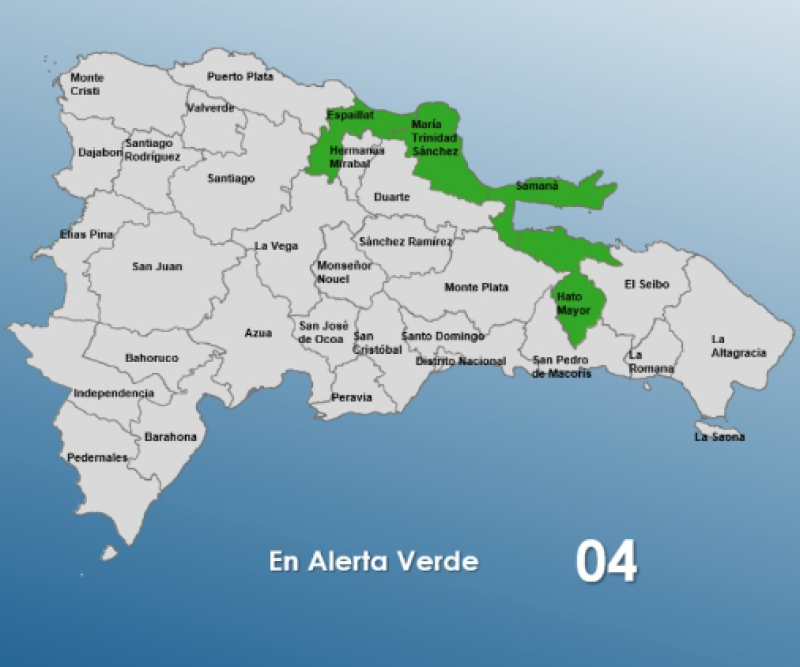
    The Dominican Republic’s Emergency Operations Center (COE) has escalated its national alert system in response to an advancing cold front affecting multiple regions. Four provinces—Espaillat, María Trinidad Sánchez, Samaná, and Hato Mayor—have been placed under official green alert status due to anticipated hazardous weather conditions.

    According to COE protocols, a green alert signifies that meteorological characteristics predict a potentially dangerous event for the population, whether partial or comprehensive in scope. This precautionary measure comes as the Dominican Institute of Meteorology (Indomet) forecasts continued scattered showers throughout the day across seventeen provinces, including Puerto Plata, Hermanas Mirabal, Monte Plata, and Greater Santo Domingo.

    Indomet has issued specific warnings to maritime operators, advising fragile and small-to-medium-sized vessels to exercise extreme caution along coastal perimeters. The agency strongly recommends against sea ventures due to prevailing strong winds and abnormal wave patterns. The meteorological institute emphasizes that these conditions pose significant risks to coastal navigation and marine activities.

    The coordinated response between emergency management and meteorological agencies highlights the government’s proactive approach to weather-related threats. The alert system activation enables local authorities to implement preventive measures and mobilize resources in vulnerable areas, potentially mitigating the impact of the ongoing weather phenomenon on communities and economic activities.

  • Start ATC-opleiding voor versterking luchtvaart

    Start ATC-opleiding voor versterking luchtvaart

    Suriname’s Ministry of Transport, Communication, and Tourism (TCT) has inaugurated a specialized Air Traffic Controller (ATC) training program under the Basic Air Traffic Services (BATS) framework, marking a significant advancement in the nation’s aviation infrastructure. The initiative, launched on Friday, represents a strategic investment in enhancing safety protocols, operational continuity, and professional excellence within both domestic and international air transport systems.

    Thirteen candidates with prior practical experience in aviation operations have been selected for this comprehensive training curriculum. The Civil Aviation Safety Authority Suriname (CASAS) will oversee the entire program and conduct final assessments to certify participants’ mastery of essential knowledge and technical competencies. Successful graduates will qualify as Tower Controllers, with clear pathways for career progression to full Air Traffic Controller roles.

    Transport Minister Raymond Landveld emphasized during the opening ceremony that human capital development is fundamental to building a resilient and secure aviation industry. He noted that effective air traffic management is critical for supporting key economic sectors—including tourism, oil and gas, medical evacuations, and international connectivity—while also strengthening global confidence in Suriname’s airspace integrity.

    Concurrently, the ministry is advancing training for Aeronautical Information Services personnel, aligning with stringent International Civil Aviation Organization (ICAO) standards. These efforts collectively aim to bolster the international reputation and operational credibility of Suriname’s aviation sector, reinforcing its commitment to world-class safety and efficiency.

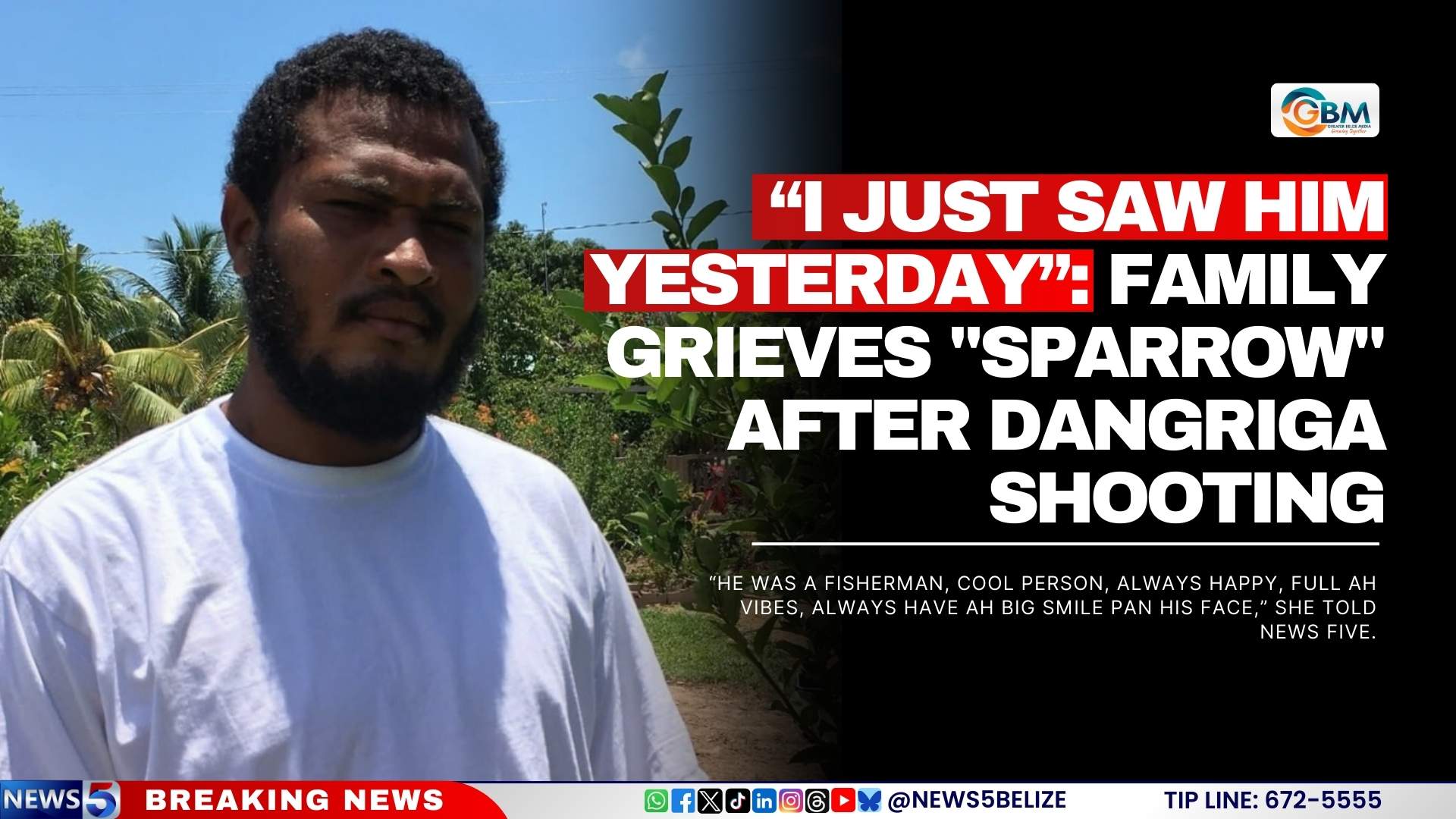
  • “I Just Saw Him Yesterday”: Family Grieves “Sparrow” After Dangriga Shooting

    “I Just Saw Him Yesterday”: Family Grieves “Sparrow” After Dangriga Shooting

    The coastal community of Dangriga is grappling with the tragic loss of a cherished resident following a fatal shooting incident on Friday evening. Bernaldo Gorosica, affectionately known throughout the town as ‘Sparrow,’ was killed in the Riverside area, sending shockwaves through this tight-knit Belizean community.

    Gorosica, remembered as a perpetually cheerful fisherman from the Salty Dog neighborhood, was described by those who knew him as a beacon of positivity. His cousin, who spoke with local media through tears, painted a portrait of a man whose infectious smile and vibrant personality touched everyone he encountered. ‘He was a cool person, always happy, full of vibes, always had a big smile on his face,’ she recounted emotionally.

    The victim’s sudden and violent death has left his family, including his two sons, devastated. The emotional impact is particularly profound given that many relatives had interacted with Gorosica mere hours before the tragedy. His cousin revealed the heartbreaking detail that she had exchanged greetings with him just one day prior to the shooting, making the loss even more difficult to process.

    Local law enforcement authorities have launched a comprehensive investigation into the circumstances surrounding the shooting. While police continue to pursue leads and evidence, the community focuses on mourning a man whose presence defined the character of his neighborhood. The incident has raised concerns about public safety in the area, though official details regarding potential suspects or motives remain undisclosed as the investigation progresses.

  • Social Security director urges self-employed individuals to register with the department

    Social Security director urges self-employed individuals to register with the department

    The Director of the Dominica Social Security (DSS), Janice Jean-Jacques Thomas, has issued a compelling appeal to the nation’s self-employed workforce, urging immediate registration with the national social security system to secure future welfare benefits. Emphasizing the critical need for personal financial planning, Thomas highlighted a concerning trend where individuals neglect to make provisions for their later years yet expect support upon reaching retirement age or becoming unable to work.

    Thomas articulated the core principle of the social security system as a mechanism for ensuring personal independence through compulsory savings. “By making the modest sacrifice of regular contributions during your productive years, you guarantee financial compensation from DSS when your earning capacity diminishes,” she stated, framing the system as a foundational pillar for retirement security rather than an optional expense.

    In parallel, the DSS Director issued a crucial advisory to all salaried employees, encouraging them to proactively verify their contribution status. Thomas clarified that observing a social security deduction on one’s payslip does not automatically confirm the remittance of those funds to the DSS. She strongly recommended that employees periodically visit DSS offices to conduct official checks, ensuring their employers are fully compliant with contribution payments on their behalf.

    This dual-focus outreach underscores a broader governmental effort to strengthen the social safety net by expanding coverage and enforcing compliance, thereby safeguarding citizens against financial insecurity in old age or incapacity.

  • Learning under leaks

    Learning under leaks

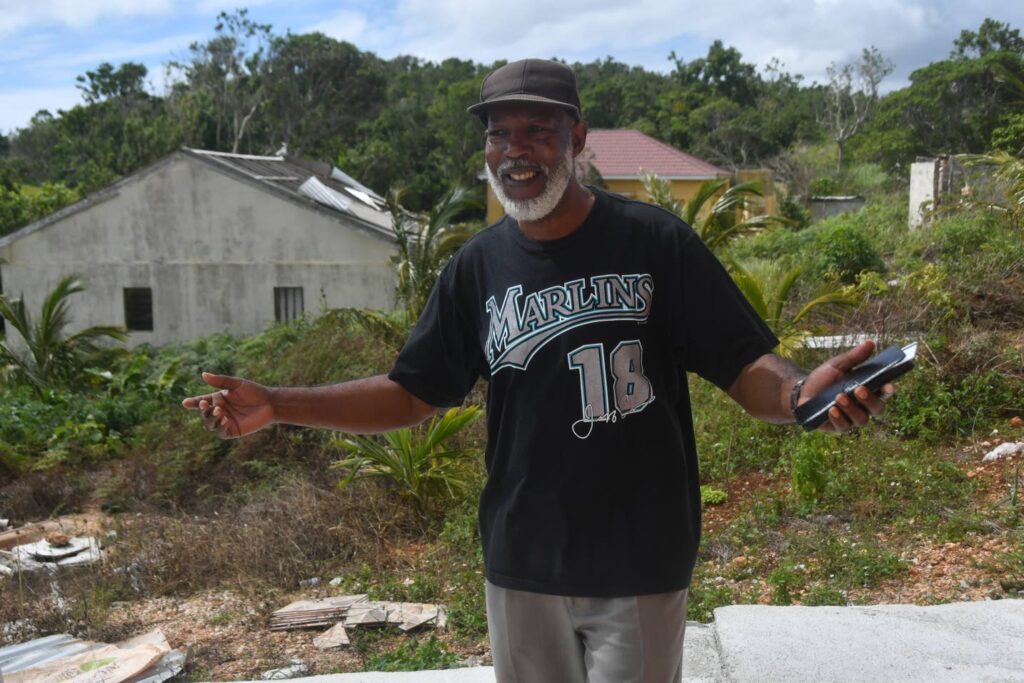
    The passage of Hurricane Melissa exacerbated long-standing infrastructure challenges at Mayfield Primary and Infant School in Southfield, St Elizabeth, where leaking classrooms had been an ongoing concern. The storm inflicted severe damage, tearing roofs from three classrooms serving grades four through six and worsening pre-existing water damage that caused concrete structures to break apart.

    Acting Principal Marion White-Cuff described the extensive damage: ‘We have relocated classes to the teacher’s lounge and another classroom. The infant department suffered complete ceiling damage with water intrusion causing structural loosening.’ The school’s perimeter fencing was compromised, though quickly repaired for security reasons.

    Financial relief is forthcoming through the 2026 Sagicor Sigma Corporate Run, which has identified Mayfield among five western Jamaican schools selected as beneficiaries. The charity event aims to raise $150 million toward repairing hurricane-affected institutions. White-Cuff expressed profound gratitude for the selection, noting that the entire school community was ‘shocked and thankful’ for the recognition among many damaged schools.

    The National Education Trust has conducted multiple assessments to guide restoration efforts. Meanwhile, school staff demonstrated remarkable resilience, spending days clearing water and debris to reopen promptly after the hurricane. White-Cuff emphasized her commitment to minimizing educational disruption: ‘I know about the loss of learning during COVID and I didn’t want that.’

    The school’s computer room remarkably escaped water damage, though the main office computer was destroyed. Contractors revealed that protective membrane installations meant to provide watertight seals were blown away during the storm, intensifying leakage issues.

    Beyond institutional damage, the hurricane impacted the school community personally—assessment revealed 24 students and one teacher suffered partial home or roof damage. The school organized a successful Christmas donation drive to support affected families.

    As the institution awaits restoration funding, White-Cuff remains determined to maintain educational continuity: ‘I will do whatever I can, and work with whatever I have to make sure children aren’t out of school.’

  • Alexander Crooks: From student leader to practice-bound architect

    Alexander Crooks: From student leader to practice-bound architect

    The architectural journey of Alexander Crooks began not in a classroom, but with childhood curiosity about a simple wooden T-square. This early fascination with drawing tools evolved into a profound passion for technical drawing, setting the stage for an exceptional career in architecture that would blend cultural narrative with technical precision.

    Crooks’ academic prowess became evident at Campion College, where technical drawing emerged as his strongest subject. His trajectory shifted decisively in 2019 when he achieved seventh place in the Caribbean CSEC examinations for Technical Drawing. This accomplishment transformed architecture from mere interest into professional ambition, leading him to establish an architecture club at his school and pursue internships to understand the discipline beyond theoretical boundaries.

    His educational path advanced significantly through the GraceKennedy UTech Scholarship, which enabled his enrollment at the University of Technology’s Caribbean School of Architecture by alleviating financial barriers that often hinder talented students. The transition to architecture school introduced Crooks to the intensive studio culture characterized by conceptual design projects, relentless deadlines, and collaborative overnight sessions where students supported each other through critique and motivation.

    Crooks developed a distinctive methodology prioritizing strong conceptual foundations early in the design process, allowing for refined execution in later stages. This approach yielded impressive results in upper-level studios where projects incorporated real-world conditions. Two undergraduate works defined his development: El Centro Cultural de Renacentista, a cultural center for the Dominican Republic, and Cántaro, a ten-story vertical culinary museum in Panama. Both projects demonstrated his commitment to Latin American and Spanish Caribbean culture through immersive spatial experiences.

    His research-driven methodology earned him the Caribbean School of Architecture Head of School Drawing Award twice—a rare distinction achieved by only two students—recognizing his successful integration of storytelling, architectural quality, and presentation clarity. Beyond academics, Crooks demonstrated exceptional leadership as president of the Caribbean Architecture Students’ Association (CASA), where he connected students with professional architects, hosted design competitions, and organized developmental workshops.

    These accomplishments culminated in his nomination as university valedictorian for the Class of 2025, reflecting both academic excellence and sustained community contribution. Parallel to his studies, Crooks gained practical experience through internships that developed his skills in drafting, measured surveys, and eventually independent design work meeting professional standards.

    Now working as an architectural designer at Mosaic Architects, Crooks focuses on tropical architecture within contemporary residential, commercial, and hospitality projects. His work involves design development, construction documentation, and site engagement, particularly excelling in hospitality projects where spatial sequencing and materiality create immersive user experiences.

    Crooks’ design philosophy, deeply influenced by his education, emphasizes responding intelligently to tropical conditions through passive cooling, hurricane resistance, and cultural authenticity. He advocates for architecture that reflects the Caribbean’s cultural complexity while creating spaces that communities identify with and celebrate. Through disciplined practice, cultural sensitivity, and meaningful spatial experiences, Crooks aspires to advance Caribbean architecture and strengthen the region’s built environment identity.

  • Disabled worker waits five years for NIS injury benefit

    Disabled worker waits five years for NIS injury benefit

    A protracted five-year ordeal involving Jamaica’s National Insurance Scheme (NIS) has finally reached resolution after systemic administrative failures prevented a permanently disabled worker from receiving entitled benefits.

    The case originated from a workplace accident on October 16, 2019, that left the individual permanently disabled. Despite submitting a formal application for Employment Injury Benefits in April 2020, the claimant encountered what they described as ‘gross negligence’ and institutional incompetence that stretched across half a decade.

    Throughout the extensive delay, the NIS office maintained that certain medical documentation was missing from the claimant’s file. However, in a September 2025 communication, officials refused to specify which exact sick notes were allegedly absent. This critical lack of transparency created a circular bureaucratic impasse, as the claimant could not remedy undefined deficiencies.

    The situation revealed deeper systemic issues when investigation showed the NIS had failed to properly communicate requirements to both the employer and medical providers. Contrary to the agency’s assertions, the employer confirmed all documentation had been properly submitted, and medical professionals had certified the necessary 180-day medical verification.

    The breakthrough came when the case was escalated to a senior NIS officer who initiated proper communication channels with both the employer and medical provider. This intervention confirmed that all documentation had been complete throughout the process, exposing the earlier claims of missing documents as institutional error.

    The resolution, facilitated through the ‘Tell Claudienne’ public assistance column, highlights ongoing challenges within Jamaica’s social security administration and the human cost of bureaucratic failure.

  • Light at last!

    Light at last!

    The Potsdam district in St. Elizabeth, Jamaica, has emerged from a 97-day electrical blackout that began when Hurricane Melissa devastated the island last October. The prolonged outage finally ended last Tuesday when Jamaica Public Service Company (JPS) restored power to the relieved community.

    Residents expressed overwhelming joy at returning to normalcy after months of darkness and financial strain from generator dependence. The restoration enables simple comforts previously taken for granted—refrigerated food storage, reliable lighting, and resumed daily routines.

    Damian Keane encapsulated the collective relief: “We’re happy and grateful because to be in the dark at night, we couldn’t manage.” Like many residents, he initially hesitated to trust the restoration, waiting days before plugging in appliances amid concerns about stability.

    The hurricane initially left 77% of JPS customers without electricity, with western parishes including Westmoreland, St. James, Hanover, and Trelawny suffering most severely. As of February 5th, approximately 4% of customers remain without power as restoration efforts continue.

    Beyond household inconveniences, the outage created significant economic hardships. Businessman Gregory Bloomfield reported spending $6,000 daily on generator fuel for his shopping complex, severely eroding profits. Telecommunications provider Everoy Foster lost numerous customers during the outage and questioned why repairs took months when most utility poles remained standing after Melissa, unlike during Hurricane Beryl when infrastructure was completely destroyed.

    Foster provided temporary relief by distributing free Starlink satellite internet service throughout the community, enabling vital communications during the blackout. Despite his concerns about business recovery, he remains hopeful as customers gradually return.

    Residents now advocate for improved infrastructure, including additional street lighting to enhance community safety. The experience has highlighted both the vulnerability of rural communities to natural disasters and the profound social and economic impacts of prolonged utility disruptions.