分类: society

  • DASCI opens 2026 scholarship application period for Dominican students

    DASCI opens 2026 scholarship application period for Dominican students

    The Dominica America Scholarship and Culture, Inc. (DASCI) has officially launched its scholarship application cycle for the 2026-2027 academic year, targeting primary school graduates across Dominica who require financial support for their transition to secondary education.

    This nonprofit initiative, established in 2007 by a collective of dedicated Dominicans, has designated sixteen primary institutions for participation in this year’s program. The selected schools include Coulibistrie, Goodwill, Mahaut, Massacre, Roseau, Salisbury, St. Martin, St. Mary’s, Convent Prep, Berean Christian Academy, Campbell, Pioneer Prep, Ebenezer SDA, Kelleb Laurent Primary, Western District SDA, and Christian Union.

    DASCI has confirmed the availability of a minimum of thirty scholarships for qualified students demonstrating financial need and meeting specific eligibility requirements. The application deadline has been set for May 1, 2026, with submissions accepted through both electronic mail and traditional postal services.

    School principals from participating institutions have been formally notified of the program and will play a crucial role in facilitating student applications. This collaborative approach ensures that deserving candidates receive proper guidance throughout the application process.

    Since its foundation, DASCI has demonstrated remarkable commitment to educational advancement, having distributed 162 scholarships totaling approximately US$106,950 (EC$288,165). The organization employs a rotational selection system for participating schools, guaranteeing equitable access to opportunities across different educational institutions over time.

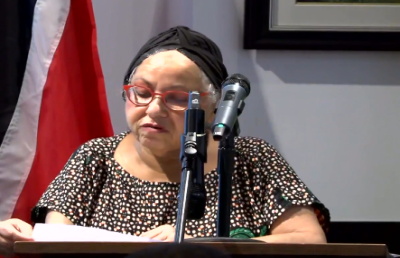
    Patricia David, President of DASCI, reaffirmed the organization’s mission: “Our members and supporters remain deeply motivated and committed to supporting students in need through these educational initiatives.”

    Prospective applicants can obtain detailed information and access application materials through DASCI’s official online portal, which provides comprehensive guidance on eligibility criteria and submission requirements.

  • Visual alerts, sign language, equity — Saint Lucia’s deaf demand change

    Visual alerts, sign language, equity — Saint Lucia’s deaf demand change

    The deaf and hard of hearing population in Saint Lucia confronts escalating challenges in accessing modern amenities and achieving equitable treatment, despite global technological progress. This Caribbean nation’s accessibility gap continues to widen compared to developed countries, creating significant barriers for those with hearing impairments.

    Unlike visible disabilities, hearing impairment often escapes immediate recognition, leading to unintended discrimination and exclusion. Even in areas designed for disability accommodation, such as designated parking spaces, the community frequently encounters restrictions due to this invisibility of their condition.

    Shanel Chedy-Romulus, President of the Society of the Deaf Club, identifies multiple sectors requiring urgent improvement. Emergency response systems remain particularly inadequate, lacking visual alerts and text-based warnings during critical situations like natural disasters or security threats. Healthcare accessibility similarly suffers from communication barriers, with insufficient interpreter services and alternative communication methods.

    The employment landscape presents additional hurdles, as communication gaps during job interviews and workplace interactions prevent skilled deaf individuals from securing and maintaining employment. Romulus emphasizes that reasonable accommodations—including sign language interpreters, workplace captioning, and visual alarm systems—could transform employment prospects.

    Educational institutions likewise fail to provide adequate support for deaf children, who require qualified sign language interpreters to access curriculum content equitably. Beyond physical accommodations, Romulus stresses the necessity of involving deaf individuals in policy-making decisions that directly affect their community.

    Notably, Barbados has demonstrated regional leadership through its Deaf Empowerment Project initiated in 2022. This comprehensive program has advanced communication access, advocacy, and social integration, offering a potential model for Saint Lucia’s own accessibility initiatives.

    The fundamental solution, according to Romulus, requires a paradigm shift in societal attitudes toward deaf citizens—recognizing their capabilities, respecting deaf culture, and ensuring their inclusion in all aspects of community life.

  • WATCH: There Are Too Many Decrepit Buildings in St. John’s, PM says

    WATCH: There Are Too Many Decrepit Buildings in St. John’s, PM says

    In a strategic move to accelerate the transformation of the nation’s capital, Prime Minister Gaston Browne has issued a compelling appeal to property owners throughout St. John’s, urging them to initiate immediate aesthetic enhancements to their buildings. This call to action comes as the government prepares to launch extensive road and drainage infrastructure projects across the city.

    Addressing citizens during a public consultation forum on the capital’s future development, Prime Minister Browne emphasized that significant urban improvement doesn’t necessarily require massive reconstruction investments. He articulated that many structures simply require basic cosmetic attention—fresh paint, window replacements, and general maintenance—to achieve substantial visual transformation.

    “We’re not asking for monumental financial commitments,” Browne clarified to attendees. “Many buildings merely need superficial upgrades that can generate immediate positive impact on our city’s appearance while we undertake the larger infrastructure overhaul.”

    The Prime Minister outlined a dual-path approach to urban renewal, positioning government-led infrastructure works and private property enhancements as complementary components of a comprehensive strategy. While the state will execute major public works including road rebuilding and drainage system modernization, Browne stressed that parallel efforts from property owners are essential for achieving meaningful urban transformation.

    Browne’s proposal establishes a collaborative framework for urban development, suggesting that simultaneous action from both public and private sectors will accelerate St. John’s renewal process. This coordinated approach prevents the city’s visual improvement from being delayed until completion of all infrastructure projects, creating immediate visible progress while long-term upgrades continue.

    The government’s commitment to infrastructure modernization, combined with voluntary property enhancements, represents an innovative model for urban revitalization that balances public investment with private sector participation in creating more attractive urban environments.

  • Youth Forum to build on legacy of laureates Walcott and Lewis

    Youth Forum to build on legacy of laureates Walcott and Lewis

    Saint Lucia is set to host the groundbreaking Creativity and Innovation Youth Forum on January 31, organized by the Caribbean Film & Media Academy under Imagine Media International Limited. This initiative, strategically aligned with the Nobel Laureate Festival, targets young Caribbean citizens aged 13-21 with an ambitious agenda to develop essential life skills beyond conventional content creation.

    According to academy founder Lisa Wickham, the forum represents a significant evolution from last year’s Teen Creators Academy in Trinidad and Tobago. “While young people naturally gravitate toward content creation, our mission focuses on building foundational capabilities including team collaboration, resilience, and critical analysis,” Wickham explained. “We’re integrating these vital competencies within creative frameworks to elevate regional thinking capacity.”

    The forum consciously honors Caribbean intellectual heritage, drawing inspiration from Nobel laureates Derek Walcott and Sir Arthur Lewis. Wickham revealed the event’s conception emerged through collaboration with late colleague Lisa Joseph and veteran broadcaster Don Evelyn, who recognized the natural synergy with Saint Lucia’s Nobel Laureate Festival.

    Participants from diverse schools and youth organizations will experience interactive workshops featuring notable facilitators. Tatiana Ali, former star of ‘The Fresh Prince of Bel-Air’ turned accomplished producer and philanthropist, will lead storytelling sessions. Dr. Vaughn Raspberry, Associate Vice Provost for Education at Stanford University, will explore connections between narrative arts and academic scholarship.

    “We’re examining how storytelling and scholarship intersect and influence each other,” Wickham articulated. “This addresses crucial questions about how Caribbean youth shape regional identity narratives and assert our presence on the global stage.”

    The initiative aims to spark a transformative wave of critical thinking reminiscent of the region’s foundational leaders in the 1950s-60s. Looking toward the future, Wickham envisions bringing young Caribbean filmmakers to the 2027 Pan-African Film Festival as part of ongoing development programs encompassing creativity, innovation, entrepreneurship, and leadership.

    Addressing technological challenges, Wickham advocates for engaging young minds with stimulating alternatives to passive screen time. Based on previous successful experiments with device-free learning environments, she emphasizes: “When we provide exciting creative opportunities, young people naturally transcend digital distractions. Our approach embraces technology as an enhancement tool rather than a babysitting substitute.”

    As evidence of this balanced perspective, Wickham recently produced an AI-generated music video for Trinidadian soca artist Shurwayne Winchester, demonstrating her commitment to harnessing emerging technologies for creative advancement.

    The hands-on forum will commence at 8:30 AM on January 31 at the Pastoral Centre in Marisule, representing a significant investment in the Caribbean’s future creative leadership.

  • WATCH: Property Owner Says Rent Controls Make It Hard to Finance Building Repairs

    WATCH: Property Owner Says Rent Controls Make It Hard to Finance Building Repairs

    Property investors and landlords in St. John’s are raising urgent concerns about the financial sustainability of maintaining aging residential buildings under current rent control regulations. During recent municipal consultations, multiple owners detailed how government-mandated caps on rent increases—typically ranging between 10-15%—fail to cover escalating repair costs, material expenses, and labor charges.

    The regulatory framework, designed to protect tenants from sudden rent hikes, has inadvertently created a financial straitjacket for property owners. Many report being forced to absorb rising maintenance costs without adequate means to reinvest in their properties. This financial pressure is accelerating physical deterioration rather than facilitating necessary refurbishment in the capital’s older neighborhoods.

    The discussion emerged during broader municipal talks addressing urban decay, with property stakeholders emphasizing that enforcement measures alone cannot reverse declining building conditions without parallel financial reforms. Owners argued that the economic realities of property maintenance must be central to any effective urban renewal strategy.

    Government representatives acknowledged these concerns during the consultation, admitting that outdated rental legislation has become part of a complex challenge affecting building upkeep and investment in historic urban centers. The dialogue highlights the delicate balance between tenant protection and property preservation in aging Canadian cities.

  • Survey Finds Over 500 Derelict Homes in Urban Communities

    Survey Finds Over 500 Derelict Homes in Urban Communities

    A comprehensive government survey has uncovered a staggering 500+ abandoned residential properties across urban communities in Antigua, Prime Minister Gaston Browne revealed this week. The findings expose severe urban deterioration within the capital corridor encompassing Point and Grace Farm areas adjacent to St. John’s.

    During a public address, PM Browne characterized these structures as fundamentally uninhabitable—dilapidated buildings that have fallen into complete disrepair and remain vacant. The disclosure highlights a growing architectural decay crisis affecting the nation’s urban landscape.

    Notably, the Prime Minister identified a troubling pattern of overseas ownership, stating that numerous property holders reside abroad—primarily in the United States, North America, and Europe. This absentee ownership has created neighborhoods where local residents endure substandard living conditions amidst surrounding urban blight.

    The survey results have catalyzed government efforts to intensify urban renewal initiatives. Authorities are now prioritizing the removal of derelict structures and accelerating redevelopment programs, particularly within historic communities that form the capital’s urban backbone. This initiative represents one of the most significant urban rehabilitation efforts recently undertaken by the administration.

  • ‘Literaire Blik op ons Verleden’ brengt slavernijgeschiedenis de klas in

    ‘Literaire Blik op ons Verleden’ brengt slavernijgeschiedenis de klas in

    Dutch author Elena Beelaerts van Blokland is pioneering an innovative educational program that brings nuanced discussions about colonial history and slavery legacy into secondary school classrooms. The initiative, part of the foundation Skrifi’s “Literary View on Our Past” project, utilizes her book “Ach freule” (Oh Baroness) as a springboard for historical exploration.

    This week, the author conducted sessions at four schools with three additional institutions scheduled for next week. The curriculum focuses on teaching students how to interpret visual archives and historical sources to document and contextualize personal and collective histories. Each workshop concludes with a practical assignment developed in collaboration with Surinamese writers, providing students with diverse perspectives on colonial narratives. Participating schools receive copies of Beelaerts van Blokland’s book to support ongoing learning.

    The program originated during the author’s 2025 visit to Suriname for the book presentation, where she encountered profound interest in deeper understanding of slavery’s historical impacts. Audience members posed compelling questions about intergenerational dialogue, emotional challenges of familial research, and the integration of personal stories within broader historical contexts.

    These inquiries evolved into a comprehensive educational framework that brings together writers and artists to examine slavery’s legacy through multiple viewpoints. By connecting individual narratives to historical events, the program makes complex and sensitive topics accessible to younger generations, emphasizing how understanding historical roots informs contemporary identity formation.

  • Bernard Warner Says Taxi Association Blocked His Bid to Serve Disabled Tourists; PM Steps In

    Bernard Warner Says Taxi Association Blocked His Bid to Serve Disabled Tourists; PM Steps In

    A significant conflict over accessible transportation for disabled tourists has reached the highest levels of government, prompting direct intervention from the Prime Minister. Bernard Warner, an entrepreneur, has publicly accused the national taxi association of systematically blocking his innovative service proposal designed specifically for tourists with mobility challenges. Warner claims his venture, which proposed a fleet of wheelchair-accessible vehicles and trained drivers, was met with formidable opposition from the established industry body, effectively halting its launch. The association reportedly cited regulatory compliance and existing service frameworks as justification for their opposition. The situation escalated when Warner bypassed traditional channels and brought the issue directly to the attention of the Prime Minister’s office. Acknowledging the gravity of the allegations and the clear gap in accessible tourist services, the PM has now stepped in to mediate. An official review has been initiated to investigate the claims of anti-competitive behavior and to assess the current state of accessible transport provisions for both residents and visitors. This move has been hailed by disability advocacy groups as a critical step toward ensuring equitable access and fostering inclusive tourism in the country.

  • Limestone kiln launched to aid heritage restoration in Antigua and Barbuda

    Limestone kiln launched to aid heritage restoration in Antigua and Barbuda

    Antigua and Barbuda has inaugurated a newly constructed limestone kiln at the Harrison Centre, marking a significant advancement in the preservation of the nation’s architectural heritage. This facility will produce authentic lime mortar specifically designed for the restoration of historical structures throughout the dual-island nation.

    The project represents a collaborative effort between multiple entities, including Antigua and Barbuda’s Ministry of Education, the Culture, Youth and Sports Division, the National Parks Authority, and the UK-based Centre for the Study of the Legacies of British Slavery. This partnership aims to resurrect traditional construction methodologies that predate the widespread adoption of modern cement.

    Technical specifications reveal the kiln measures 48 inches square with a production capacity of approximately 10 feet of lime per firing cycle. The resulting lime mortar offers superior preservation qualities compared to contemporary cement, as it permits historical masonry to naturally regulate moisture through breathability—a critical factor in maintaining structural integrity over time.

    Beyond material production, the initiative serves as an educational platform for skill development. Officials emphasize the kiln’s role in training both students and craftsmen in specialized heritage techniques, including conservation, masonry, and restoration practices. This knowledge transfer addresses a critical gap in the local heritage sector, where the unavailability of appropriate materials has previously compelled restoration teams to compromise with modern alternatives.

    Project organizers highlighted during the launch ceremony that this facility not only bridges a technological void but also safeguards traditional knowledge while equipping the younger generation with valuable expertise in heritage conservation.

  • Secondary School Students Explore Local Chocolate Production in Antigua and Barbuda, sponsored by TicketPulse

    Secondary School Students Explore Local Chocolate Production in Antigua and Barbuda, sponsored by TicketPulse

    A cohort of secondary school students in Antigua and Barbuda recently gained exclusive insight into the nation’s burgeoning chocolate industry through an innovative educational initiative. Sponsored by the local enterprise TicketPulse, this program transported students beyond classroom walls to witness firsthand the complete bean-to-bar chocolate manufacturing process.

    The immersive experience began at local cacao farms, where agricultural specialists demonstrated cultivation techniques and sustainable harvesting methods. Students then visited production facilities to observe the intricate stages of fermentation, drying, roasting, and grinding that transform bitter cacao beans into premium chocolate products. Industry professionals provided detailed explanations of quality control measures and the economic significance of value-added processing for local agriculture.

    This industry-academia collaboration represents a strategic effort to stimulate student interest in agricultural science and food technology sectors. By exposing young learners to viable career paths within their homeland’s economy, the program simultaneously promotes STEM education and domestic economic development. The initiative also highlights how local businesses like TicketPulse can actively contribute to educational development and workforce preparation through corporate social responsibility programs.

    The excursion particularly emphasized the growing importance of import substitution industries and sustainable local manufacturing in small island developing states. Students engaged in practical workshops where they crafted their own chocolate creations while learning about the chemistry behind tempering and flavor development.