分类: society

  • 13 Santiago Monorail trains under assembly in France

    13 Santiago Monorail trains under assembly in France

    The largest urban infrastructure project in the Dominican Republic has hit a key construction milestone, with 13 out of 15 planned monorail trains for the new Santiago Monorail currently taking shape at Alstom’s production facility in Belfort, France. This assembly work brings the long-awaited transit system one major step closer to opening for passenger service.

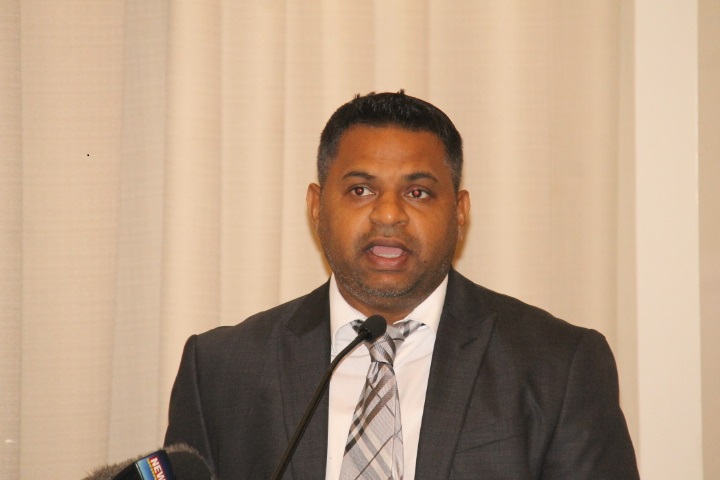
    Jhael Isa, executive director of the Dominican Republic’s Transport Infrastructure Institute (FITRAM), recently carried out an on-site technical inspection of the Belfort plant to examine the manufacturing and supply chain processes ahead of the trains’ scheduled shipment to Santiago. The first two Innovia 300 model monorail trains already reached the Dominican Republic earlier in 2024, giving local stakeholders an early look at the vehicles that will serve the new line. Each train is configured as a four-car consist with a total maximum capacity of 590 passengers, and it is built with a full suite of accessibility features to serve all riders, including dedicated wheelchair spaces, audible stop announcements, priority seating for disabled and elderly passengers, and real-time digital passenger information displays.

    Designed to transform regional transit connectivity, the Santiago Monorail is projected to move up to 20,000 passengers per hour in each direction. Trains will operate at a top speed of 80 kilometers per hour, with scheduled headways as short as 90 seconds between vehicles to keep wait times low for riders. The assembly work at the Belfort facility is also a showcase for Alstom’s updated production capacity: the trains are being built on a newly launched assembly line, leveraging proprietary transit technology that Alstom gained through its 2021 acquisition of Bombardier Transportation.

    The full monorail network is a 13-kilometer elevated rail corridor that will run between the Cienfuegos and Pekín districts of Santiago. It will include 14 passenger stations plus a central terminal that links directly to the city’s existing cable car transit network, creating an integrated multi-modal system for commuters and travelers across the metropolitan area. When the system enters full operation, it is expected to deliver widespread benefits for the city: it will serve more than 500,000 residents annually, cut down on household transportation costs, reduce crippling street traffic congestion across the city, boost local economic productivity, and lower the environmental impact of urban travel by shifting commuters from gasoline-powered private cars to electric public transit.

    After more than four years of continuous construction work, FITRAM has announced that the entire Santiago Monorail project has reached an overall completion rate of 92.6%. Shipments of the remaining trains from Alstom’s French plant will begin later this year, as the project clears the final milestones ahead of its launch into commercial service.

  • Getting better value from road patching

    Getting better value from road patching

    Jamaica’s expansive road network relies on regular patching work to keep connections open and travelers safe, but many motorists rarely stop to question why some repairs last for years while others fail within months. In a submitted commentary, infrastructure expert Denton Moore, author of *Risk Management in Secondary Road Construction and Maintenance in Jamaica*, breaks down the multilayered set of factors that determine the longevity and performance of road patching projects across the island.

    Road patching is the most routine yet critical form of road maintenance in Jamaica, addressing everything from deep potholes formed by heavy traffic to pavement damage worsened by intense seasonal rainfall. When done correctly, these repairs preserve access for all road users and cut the risk of traffic accidents caused by uneven pavement. Despite its seemingly simple appearance, Moore explains, the lifespan of a patch depends on a range of interconnected variables: the quality of raw materials, ambient weather during construction, site drainage, the skill of the construction crew, daily traffic volumes, and the structural condition of the underlying road base.

    Of all these variables, material and construction quality stands as the most impactful. National and international established standards outline clear protocols for material selection, on-site testing, and construction techniques that directly boost repair durability. When contractors source high-grade materials and adhere to these verified procedures, Moore notes, patches deliver consistent performance and far longer service life, reducing the need for frequent repeat repairs.

    A second often overlooked critical factor is site drainage. Moore emphasizes that water is the single leading cause of premature road and repair deterioration across Jamaica’s tropical climate. Even if a patch uses the highest quality materials, blocked drainage ditches or standing water trapped on or under the road surface will seep into the pavement, weaken the bond between the patch and existing road, and lead to rapid cracking and crumbling. Without addressing underlying drainage issues before patching, any repair effort is likely to be short-lived.

    Beyond engineering and construction considerations, successful road maintenance also depends on rigorous pre-project planning, budgeting, and financial stewardship — an area where quantity surveyors play an indispensable, underrecognized role. These finance and infrastructure specialists produce detailed, accurate estimates for all project costs, including materials, labor, heavy equipment, and ancillary project needs. Reliable cost data allows road agencies to build effective budgets and make strategic decisions about how to allocate limited public maintenance funds to deliver the greatest benefit across the network.

    By collaborating closely with civil engineers, project managers, field technicians, and private contractors, quantity surveyors ensure that every repair project is mapped out thoroughly and resources are distributed to avoid waste. For Jamaican road agencies, which are tasked with maintaining thousands of kilometers of road while balancing competing infrastructure priorities and tight budgets, delivering maximum value for every public dollar spent is a core objective. This means not just patching damaged pavement, but designing and executing repairs that maximize long-term performance and useful lifespan.

    As Jamaica ramps up investments in preserving and upgrading its national road network, Moore argues that sustained focus on four core pillars will drive better outcomes: strict adherence to quality standards, proactive drainage improvements, accurate cost estimation by trained professionals, and consistent implementation of sound construction practices. When combined, these elements deliver multiple interconnected benefits: improved overall road performance, reduced need for costly repeated repairs, and more efficient use of limited public funds.

    Moore concludes that every long-lasting road repair is the product of coordinated contributions from a diverse team of skilled professionals. While road users only ever see the finished patch, a wide range of experts work behind the scenes to plan, cost, design, supervise, and execute each repair. Recognizing the critical role each of these roles plays, he says, will build greater public understanding of the work required to maintain and expand Jamaica’s critical road network for future growth.

  • From courtrooms to communities

    From courtrooms to communities

    Last Friday, Jamaica’s Court of Appeal convened a rare full-bench special sitting to celebrate the life and legacy of Ian Forte, the court’s late former president, who passed away on June 5 at the age of 89. Across Jamaica’s legal community and the wider Caribbean, tributes poured in highlighting the profound respect Forte earned over a trailblazing 50-plus year career in law and judiciary.

    Forte’s journey through Jamaica’s legal system saw him rise through nearly every key rank, starting as a practicing counsel, before serving as resident magistrate, director of public prosecutions, and ultimately earning elevation to the Court of Appeal as a judge in 1988. He stepped into the role of Court of Appeal President in 1999, holding the position until his retirement in 2005. Beyond Jamaica’s borders, his reputation for intellectual rigor and integrity earned him cross-regional appointments, including serving on the Courts of Appeal for both the Cayman Islands and the Turks and Caicos Islands.

    Presiding over the special sitting, current Court of Appeal President Marva McDonald-Bishop opened the tributes by emphasizing that Forte’s contributions extended far beyond his formal judicial work. “In every office he held within the legal and judicial system, whether at home or abroad, he exemplified the fundamental qualities that sustain confidence in the administration of justice,” she said. McDonald-Bishop noted that through his sharp scholarship and balanced judgment, Forte left an indelible mark on Jamaican and Caribbean jurisprudence. What truly defines his legacy, she added, is his selfless service outside the courtroom: through his local church, the Norman Manley Law School, his alma mater St George’s College, and the Kiwanis Club, he touched countless lives through mentorship, teaching, and quiet generosity. His lifelong commitment to public service, she said, earned him formal national and professional honors that rightly reflect the widespread respect he inspired across the legal community and the nation.

    Jamaica’s Chief Justice Bryan Sykes, head of the national judiciary, shared a pre-recorded message noting that Forte’s decades of dedication helped shape the development of Jamaican jurisprudence and strengthen the judiciary, a core institution of the country’s constitutional democracy. Sykes pointed out that as Court of Appeal President, Forte occupied one of the nation’s highest judicial offices, and he carried the unique responsibility of appellate adjudication with extraordinary seriousness and principle. “Those who appeared before him quickly came to appreciate that he was always thoroughly prepared. He understood that judicial preparation is, itself, a form of respect — respect for the litigants, respect for counsel, respect for colleagues, and respect for the judicial process,” Sykes said.

    Sykes also highlighted Forte’s rare judicial temperament: at a time when modern public discourse often prioritizes loud certainty over thoughtful reflection, Forte remained a model of calm deliberation. Soft-spoken, courteous, and respectful to everyone who entered his courtroom, Forte’s gentle demeanor never masked his formidable intellect and deep mastery of the law, Sykes added.

    Winston Anderson, president of the Caribbean Court of Justice, echoed these remarks, noting that Forte’s 50-year career reflected extraordinary dedication and a deep, abiding passion for the law. “It speaks to a life devoted to the thoughtful interpretation and persistent advancement of the law, whether in chambers preparing and strategising, at the Bar table arguing a case, or behind the bench crafting decisions whose influence resonated far beyond the courtroom,” Anderson said. Forte’s life’s work, he added, ultimately shaped how Caribbean people interact with public institutions, how those institutions function, and how individual rights are protected and advanced across the region.

    Patrick Brooks, retired former president of the Court of Appeal, recalled his early experiences working with Forte when Forte served as director of public prosecutions, saying he was always in awe of Forte’s leadership. Even when parties disagreed with his rulings, Brooks noted, Forte’s judgments were always fair and rigorously reasoned. “I stood on his shoulders in my time as president, and the court is much better for his administration of it,” Brooks said.

    Responding to the outpouring of tributes, Forte’s widow, Marlene Malahoo Forte — a third-term Jamaican parliamentarian and former minister of legal and constitutional affairs — confirmed that the public portrayals of her late husband matched the man she knew in private. Citing a popular Jamaican proverb that notes knowing someone publicly is very different from living with them privately, she said: “for Ian, seeing him and living with him were the same. Everything I have heard said about him publicly I’ve lived it privately with him.”

    Opening up about their life together, Malahoo Forte described Forte as a man easy to love, who commanded deep respect for his commitment to Jamaica and the justice system. She said she counted it a privilege to care for him through all stages of his life, from his career prime to his final vulnerable years, and that he remained lucid and kept his characteristic sense of humor until the end of his life. When she made the decision to leave the judicial branch to enter electoral politics, she said, Forte was initially disappointed but never stood in her way, instead offering unwavering support and drawing on his decades of experience to provide constant wisdom and guidance.

    The special sitting was also attended by dozens of Forte’s family members, and additional tributes were delivered by senior legal figures including former Appeal Court President Seymour Panton, Attorney General Dr Derrick McKoy KC, multiple former and current directors of public prosecutions, Senate President Tom Tavares-Finson KC, and representatives from both the public and private bar.

  • Brace for AI-related cyber attacks, expert warns

    Brace for AI-related cyber attacks, expert warns

    MONTEGO BAY, St James — Even as Jamaica celebrates landmark progress in cutting both violent traditional crime and digital incidents, the top cybersecurity official at the island nation’s Major Organised Crime and Anti-Corruption Agency (MOCA) is sounding a clear alarm: an unavoidable wave of AI-fueled cyber attacks is on the horizon. Dr. Patrick Linton, MOCA’s chief cybersecurity expert, shared this warning during a plenary session focused on security and public safety at the 11th Biennial Jamaica Diaspora Conference, hosted last Tuesday at the Montego Bay Convention Centre.

    Linton explained that the rapid evolution of digital technology and expanding internet access across Jamaica have created ideal conditions for cyber threats to grow more complex and widespread. “As crime has dropped in the physical world, as the commissioner’s representative and the national security minister noted, it has simultaneously grown on digital platforms,” Linton told attendees. “We have already tracked a steady rise in cybercrimes and related incidents across the country.”

    What makes the coming wave particularly concerning, Linton emphasized, is the integration of artificial intelligence into criminal strategies. AI-powered cyber attacks will dramatically boost both the scale and sophistication of threats targeting Jamaica and nations across the globe, he said. “We are going to see a surge in cyber attacks enabled by artificial intelligence, so it is critical that the public understands the shifting risk landscape we face,” he warned.

    In response to this emerging threat, MOCA is moving aggressively to strengthen public resilience through expanded education and outreach. The agency is embedding cyber safety training into schools, universities, churches and a wide range of community social facilities, while ramping up public awareness campaigns to help Jamaicans recognize and avoid common cyber threats. “We are expanding our awareness sessions, and institutionalizing cybercrime education across primary and secondary schools, as well as higher education institutions. Our teams have already delivered training to churches and dozens of community groups across the country,” Linton added.

    Looking back at his decades-long career in cybersecurity, Linton recalled a formative trip to South Korea 20 years ago, where local authorities were already fending off roughly 16,000 cyber attacks every single day. At the time, most Jamaicans dismissed that level of cyber activity as something that could never happen on the island, he noted. “Now, with far wider internet penetration and greater volumes of personal and institutional data online, we are absolutely going to see a rise in cybercrimes, ranging from phishing scams to business email compromise and other sophisticated attacks,” Linton said.

    Linton also confirmed that over the past five years, multiple Jamaican government systems have already faced cyber attacks, with MOCA leading the response to contain and remediate those breaches. While threats remain active, he credited targeted public education and cross-sector partnerships for the notable drop in successful cyber incidents Jamaica has seen in recent years. Early gaps in public awareness, the absence of formalized cyber incident response frameworks and limited institutional focus on cybersecurity left the country far more vulnerable in years past, Linton explained. Those weaknesses pushed MOCA to deepen collaboration with system administrators, the Jamaica Constabulary Force (JCF), educational institutions and community groups — efforts that have delivered clear results. “We have seen a sharp reduction, a significant slash in successful cyber attacks against public and private targets across Jamaica,” he said.

    Beyond financial and state-targeted cybercrime, Linton also highlighted the growing crisis of cyberbullying, a issue that keeps MOCA’s response teams busy around the clock. The agency receives constant reports of online harassment, he said, underscoring the organization’s expanding mandate to protect vulnerable populations in digital spaces. “Our core mission at MOCA is to work hand-in-hand with communities to reduce the prevalence of cyber attacks, and to prosecute offenders under existing national laws when cybercrimes are committed,” Linton noted.

    The security plenary session, moderated by Senior Superintendent Dennis Brooks, also included remarks from several top Jamaican security officials: Deputy Prime Minister and Minister of National Security and Peace Dr. Horace Chang, Deputy Commissioner of Police Richard Stewart, and Chief Technical Director for Crime Prevention Shauna Trowers.

    Dr. Chang used the platform to share promising news about broader crime reduction efforts across Jamaica, announcing that the island recorded 674 murders in 2025 — marking the first time in more than 30 years that the annual homicide total has dropped below 700, a milestone he described as historic. The 2025 homicide rate landed at 24 per 100,000 people, a dramatic decline from the 62 per 100,000 recorded in 2005. What is more, homicides in the first quarter of 2026 have already fallen 29 percent compared to the same period in 2025, Chang added.

    The national security minister also noted that law enforcement clearance rates have improved dramatically over the past 13 years. In 2012, police made 44 arrests for every 100 murders committed; by 2025, that number climbed to 99 arrests per 100 murders. This improvement has strengthened deterrence and boosted public confidence in Jamaica’s law enforcement institutions, Chang said.

  • Pringle Urges Greater Appreciation for Fathers in Father’s Day Message

    Pringle Urges Greater Appreciation for Fathers in Father’s Day Message

    As Father’s Day is observed across Antigua and Barbuda, Opposition Leader Jamale Pringle has issued a heartfelt appeal to families nationwide, calling on them to step up and give the nation’s fathers the appreciation and affection that many of them currently go without. In his official holiday address, Pringle pushed for a meaningful shift in how paternal contributions are acknowledged, asking both children and adult family members to intentionally honor fathers for the quiet, steady work they put into lifting their households and local communities. “It is my sincere hope that families in every corner of this nation will take the time to pay tribute, show genuine gratitude, and share the love that so many fathers crave – but all too often, do not receive in the full measure that they have earned,” Pringle shared in his statement. Beyond his call for greater appreciation, Pringle also offered public praise for fathers who take an active role in nurturing their children and stepping into clear leadership positions within their family units. “I want to use this opportunity to commend all the dads who are stepping up to the plate, guiding their families down the right path, and leading from the front,” he said. Pringle also highlighted the far-reaching influence that fathers hold across the country, noting that their example extends far beyond their own four walls. In addition to serving as foundational role models for their own children, Pringle emphasized that fathers set critical standards of behavior and responsibility for young men growing up in communities across Antigua and Barbuda. “You are an example not only to your own offspring, but to the young males in our communities,” he added. Closing out his address, Pringle extended warm, sincere Father’s Day greetings to every father across the twin-island nation, wrapping up his call for greater recognition with a message of well-wear for the holiday.

  • PM Says Reckless Driving Nearly Cost Tahje Browne His Life

    PM Says Reckless Driving Nearly Cost Tahje Browne His Life

    A promising young elite cyclist in Antigua and Barbuda has escaped death after a hit-and-run traffic collision that has prompted the nation’s prime minister to issue a urgent new plea for greater road responsibility among motorists.

    Prime Minister Gaston Browne confirmed on his weekly ‘Browne and Browne’ radio show Saturday that Tahje Browne, widely recognized as the country’s top competitive cyclist, was struck by a passenger vehicle earlier that same day. The prime minister emphasized that the crash serves as a stark warning about the deadly risks of reckless speeding, noting the incident could very easily have ended in a fatality.

    According to Prime Minister Browne, the vehicle involved reportedly spun out of control before striking the young rider, a sequence of events that makes Tahje’s survival a stroke of extraordinary good fortune. He added that initial medical updates have brought significant relief: the cyclist’s injuries are not classified as life-threatening, though he remains in care.

    One detail of the incident that drew sharp criticism from the prime minister was the motorist’s decision to flee the crash site rather than remain to assist the injured cyclist and cooperate with authorities. Browne labeled the departure unacceptable and called on the driver to turn themselves in to law enforcement immediately to face the investigation.

    Expanding his warning to all road users across the country, Browne used the incident to highlight specific safety concerns he said have circulated for years around Toyota Vitz vehicles. The prime minister stated that many drivers have reported the compact cars become unstable when driven at excessive speeds, a flaw that has led some people to refuse to ride in the models entirely. He urged all operators of Toyota Vitz vehicles to acknowledge their mechanical limitations and never push them beyond safe operating parameters.

    “No one should be speeding on our roads and putting people’s lives at risk,” Browne reiterated in his address, stressing that consistent cautious driving is the only way to prevent preventable tragedies on national highways and local roads.

    The crash has already sent ripples of concern through the country’s small but tight-knit sporting community. Fellow athletes and loyal supporters of the young cyclist have flooded social media and local sports groups with messages of well-wishing, all sharing a united hope for a swift and full recovery for Tahje.

    As of Saturday’s address, official law enforcement investigations into the exact circumstances of the collision remain ongoing.

  • COMMENTARY: Interrogating black fatherhood

    COMMENTARY: Interrogating black fatherhood

    Each Father’s Day, global conversations turn to the irreplaceable role fathers play in nurturing the next generation, but for Black communities across the Americas, one critical conversation remains long overdue: unpacking how centuries of systemic anti-Black oppression distorted the global perception of Black fatherhood, and how we can begin to rewrite that harmful story. As former U.S. President Barack Obama once noted, biological parenthood does not make a man a father—courage, commitment, and consistent care do. This truth carries extra weight when discussing Black fatherhood, a role that has been systematically maligned and undercelebrated for generations.

    One of the most pervasive and harmful myths shaping modern discourse is the false, racism-rooted claim that Black masculinity is inherently toxic, dangerous, and detached from family life. This harmful stereotype has not only skewed public perception—it has had deadly consequences, justifying excessive police violence and the extrajudicial killings of countless Black men at the hands of law enforcement. Too often, public discourse points to high rates of father absence in Black communities as evidence of this supposed failure, ignoring the centuries of systemic trauma that created this reality in the first place.

    To understand the roots of the modern narrative around Black fatherhood, we must trace it back to the transatlantic slave trade and chattel slavery. As historian Libra Hilde, associate professor of History, documents in her groundbreaking work *Slavery, Fatherhood, and Paternal Duty in African American Communities over the Long Nineteenth Century*, even under the brutal constraints of slavery, enslaved Black men were loving, invested fathers who fought tirelessly for their children. Despite systemic barriers that stripped them of legal rights to their families, enslaved Black men provided food and clothing, risked their freedom to purchase family members from enslavers, planned escapes to reunite broken families, and cultivated shared identity for their children in a system designed to erase it. Hilde frames this quiet, consistent care as an act of resistance: by claiming their paternal roles, enslaved men reclaimed power that white enslavers tried to steal.

    That said, the trauma of slavery cannot be understated. Slavery was designed to dehumanize Black people, and a core part of that project was the deliberate emasculation of Black men and the destruction of the Black family unit. Upon arrival in the Americas, enslaved people were routinely separated, with spouses and children sold to different plantations to break communal and familial bonds. Black men were reduced to property, valued only for forced reproduction in the practice of slave breeding, where enslavers forced Black men to mate with enslaved women to increase the enslaver’s capital. Sexual abuse of enslaved Black men was widespread, used as a tool to assert dominance and strip Black men of their autonomy, a topic that remains vastly understudied and overlooked in mainstream historical narratives. Even cultural identity was stolen: African names were replaced with the surnames of slave owners, a legacy that many Black descendants carry to this day. The end result of this deliberate destruction was the normalization of matrifocality—family structures headed by single mothers with fathers absent for extended or permanent periods—a structure that outlasted slavery and persists in many Black communities across the Americas today.

    The term matrifocality was first coined in 1966 by anthropologist Raymond T. Smith during his study of working-class Black Caribbean families in British Guiana, and its prevalence in modern Black communities is no accident. Research consistently shows that children in two-parent nuclear households have better academic outcomes, lower rates of maladaptive behavior, and reduced exposure to poverty than children growing up in father-absent households. The normalization of matrifocality, rooted in slavery’s deliberate attack on Black fatherhood, created a cycle of disadvantage that continues to impact Black communities generations later.

    Today, as we mark Father’s Day, it is past time to reorient this conversation and celebrate the growing number of young Black fathers who are showing up consistently for their children. It is now commonplace to see Black fathers pushing strollers, attending school events, and building deep bonds with their kids—an image that mainstream media has long ignored, but one that deserves far greater celebration. At the same time, we must hold accountable fathers who have stepped back from their commitments, particularly when it comes to meeting child support obligations, and encourage them to prioritize the needs of their children.

    Creating lasting change requires intentional investment across multiple sectors of society. The education system, which has long served to reinforce colonial and racist power structures, must be reformed to support healthy Black masculinity and prepare young Black boys for responsible fatherhood. Currently, many Caribbean curricula still retain colonial biases, and popular culture often reinforces harmful norms that celebrate men having multiple partners. There is an urgent need for decolonization of school curricula across the Americas, as well as investment in mentorship programs, parenting clinics, and co-curricular activities that teach young boys what responsible fatherhood looks like. Faith institutions also have a role to play: for centuries, the Bible was misinterpreted and misused to justify the enslavement of Black people, and religious communities must now lead conversations that honor the dignity of Black fatherhood.

    Governments across the Americas, particularly in the Caribbean, have a responsibility to realign policy and education to support Black families and uplift Black fatherhood. On this Father’s Day, we honor all Black fathers who have shown up for their children against all odds, who have broken cycles of intergenerational trauma, and who work every day to leave a better world for the next generation. Your role is irreplaceable, your work matters, and you deserve to be celebrated.

    In closing, this piece honors author Wayne Campbell’s own father, Fitzroy, echoing the words of Dr. Martin Luther King Jr., who famously spoke of his own father’s courage and integrity: “I have rarely ever met a person more fearless and courageous than my father. The thing that I admire most about my dad is his genuine Christian character. He is a man of real integrity, deeply committed to moral and ethical principles. If I had a problem, I could always call Daddy.”

    Wayne Campbell is an educator and social commentator focused on development policy, culture, and gender issues.

  • Coast Guard Recovers Body of 19-Year-Old Following Overnight Search

    Coast Guard Recovers Body of 19-Year-Old Following Overnight Search

    Authorities in Antigua and Barbuda are probing the tragic death of a 19-year-old woman, whose remains were pulled from the coastal waters near Devil’s Bridge on Sunday, June 21. According to initial preliminary accounts, the young woman is believed to have jumped from the iconic natural bridge formation into the open ocean during the late hours of Saturday night.

    Emergency response teams were dispatched immediately after the incident was reported to local law enforcement. Officers from the Royal Police Force of Antigua and Barbuda joined personnel from the Antigua and Barbuda Defence Force Coast Guard to launch a large-scale coordinated search, covering both the surrounding shoreline and adjacent marine areas. As night fell, harsh environmental conditions and unforeseen operational constraints forced responders to call a temporary halt to the search operation overnight.

    Search efforts resumed at first light on Sunday, and within hours, Coast Guard teams successfully located and recovered the woman’s body from the water, before transferring her remains to land for official processing. Investigating officers have remained at the site to carry out detailed inquiries, working to piece together the full sequence of events that led to the tragedy.

    In an official statement released through the Royal Police Force’s Office of Strategic Communications, the Police Administration extended its heartfelt condolences to the deceased’s family, relatives, and close friends as they navigate this devastating loss. Law enforcement also issued a public request for media and community members to respect the family’s privacy amid the ongoing investigation.

  • Man Beaten, Robbed and Left Unconscious at West Bus Station

    Man Beaten, Robbed and Left Unconscious at West Bus Station

    A brutal, unprovoked assault and robbery in the early hours of Saturday at Antigua’s West Bus Station has left a local man recovering at home, while reigniting widespread community anxiety over rising violent crime and insufficient public safety measures across high-traffic transit hubs.

    Details of the shocking attack, shared by a close relative of the victim, outline that the assault unfolded sometime after midnight, when multiple unknown attackers ambushed the man. In a particularly dehumanizing turn, the assailants stole every possession the man carried with him – even stripping him of his outer clothing, including his pants and shoes, leaving him only in his underwear before fleeing the scene. The attackers left the man unconscious from the beating on the concrete floor of the bus station, where he remained undiscovered for hours.

    It was not until a passing member of the public stumbled upon the injured victim that emergency services were notified. Responders rushed the man via ambulance to the territory’s primary healthcare facility, Sir Lester Bird Medical Centre. Once at the hospital, the man regained consciousness, received urgent care for traumatic head injuries sustained during the attack, and was ultimately deemed stable enough for discharge to continue his recovery at home.

    To date, law enforcement officials have not made any arrests in connection with the case. The victim, still recovering from the assault, has been unable to provide detailed identifying information about his attackers to aid the investigation. Police authorities have confirmed that they have launched a formal probe into the incident, though no new updates have been released as of press time.

    The brazen nature of the attack has sent ripples of concern through the local community. The victim’s relatives have spoken publicly about their shock, noting that the violent attack could easily have resulted in a fatal outcome given the severity of the man’s head injuries and the hours he lay untreated. Community organizers and local residents have echoed this worry, pointing to a recent string of violent incidents in public transit areas as evidence that more proactive safety measures are needed to protect residents and commuters.

  • Van Dijk-Silos lanceert stichting voor leiderschap en nationale ontwikkeling

    Van Dijk-Silos lanceert stichting voor leiderschap en nationale ontwikkeling

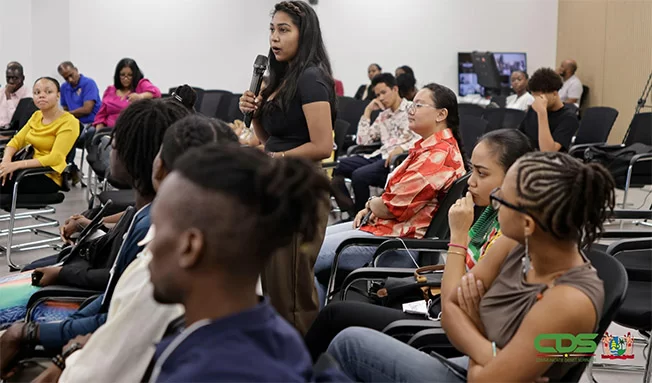
    On a Friday in mid-June, prominent Surinamese jurist Jennifer van Dijk-Silos officially launched Stichting Passie voor Land en Volk (Passion for Land and People Foundation), a new independent civil society organization designed to steer Suriname toward equitable, sustainable national development as the country enters a transformative era driven by its emerging oil and gas sector.

    The foundation has outlined five core priorities: cultivating responsible leadership across all sectors, strengthening active civic participation, advancing inclusive nation-building, expanding a progressive local content policy, and building a targeted strategy to leverage the global Surinamese diaspora for national growth. At the launch event, van Dijk-Silos, who serves as the foundation’s chair, emphasized that Suriname stands at a historic crossroads. The projected economic windfall from new hydrocarbon resources should not only boost state revenues but deliver tangible, widespread benefits to every segment of Surinamese society, she argued.

    “The critical question is not how much natural wealth a country holds, but how much of that wealth actually reaches and improves the lives of ordinary people,” van Dijk-Silos stated during her launch address.

    Rejecting the narrow common definition of local content that limits the framework to contract and procurement requirements, van Dijk-Silos called for a much broader, more inclusive approach to the policy. Under her vision, local content should ensure that Surinamese small and medium business owners, local workers, and national knowledge institutions directly capture meaningful gains from the country’s oil and gas expansion. “Local content is fundamentally about how Surinamese people can actively participate in building the economic future of their own nation,” she explained.

    The foundation chair stressed that long-term sustainable development cannot be achieved through natural resource extraction alone. True national prosperity depends on intentional investment in people: through accessible high-quality education, support for domestic entrepreneurship, continuous knowledge development, and the strengthening of inclusive public institutions. “Countries do not become wealthy from natural resources alone – they grow wealthy from investing in their people,” van Dijk-Silos noted.

    A key pillar of the foundation’s work is targeted engagement with the global Surinamese diaspora. With hundreds of thousands of Surinamese migrants living across the globe, the community holds untapped potential in the form of specialized skills, professional experience, capital, and international networks that can accelerate national development, van Dijk-Silos argued. Instead of framing the diaspora as people who left Suriname, the foundation reframes them as Surinamese citizens who have simply expanded their sphere of influence, and invites them to contribute to national progress. “We must see the diaspora not as those who abandoned our country, but as Surinamers who have extended their reach across borders,” she said.

    Structured as an independent cross-sector platform, the foundation will facilitate open dialogue between diverse stakeholders: ordinary citizens, domestic entrepreneurs, young people, civil society groups, academic institutions, and national government. Planned activities include public discussion forums, guest lecture series, leadership training programs, and independent research projects on key national challenges. A top priority for the organization is developing the next generation of ethical, effective young leaders, as van Dijk-Silos argues that sustainable leadership is a non-negotiable foundation for good governance, social stability, and long-term economic growth.

    Beyond economic development, the foundation is committed to advancing inclusive nation-building in Suriname, a country known for its deep cultural, ethnic, and religious diversity. Van Dijk-Silos emphasized that this diversity is not a barrier to national unity, but one of Suriname’s greatest strategic strengths. Instead of centering divisions of origin, religion, or political affiliation, the foundation calls on all Surinamers to embrace shared responsibility for the country’s future. “A strong nation is built on shared values: integrity, respect, solidarity, justice, and active civic responsibility,” she said.

    Closing her launch address, van Dijk-Silos framed the foundation’s creation as more than just the launch of a new civil society organization. It is, she said, an open invitation to all Surinamers – both those living in the country and those part of the global diaspora – to collaborate on building a future where economic growth goes hand in hand with broad social progress, shared national identity, and sustainable, people-centered leadership. “Suriname’s future will not be defined by oil alone,” she concluded. “It will be defined by the quality of our institutions, the resilience of our entrepreneurs, the potential of our people, and our willingness to work together toward a common goal.”