分类: society

  • Waterloo Charitable Trust Donates $95,000 to Anglican Cathedral College

    Waterloo Charitable Trust Donates $95,000 to Anglican Cathedral College

    A decades-long partnership between a philanthropic organization and a Belizean secondary school has reached a new milestone, as the Waterloo Charitable Trust has announced a $95,000 donation to fully renovate and modernize Anglican Cathedral College (ACC)’s aging information technology lab. The transformative gift was formally presented during a short, meaningful ceremony held on the campus’ weekly Wednesday morning mass, an event that brought together the school’s entire student body and teaching staff. Lord Michael Ashcroft, the founder of the trust, personally handed the ceremonial cheque to ACC principal Paulette Augustus, marking the latest chapter in 32 years of sustained support for the institution.

    The full donation will be allocated to a comprehensive overhaul of the existing IT facility, bringing much-needed upgrades that will benefit students across multiple academic departments. Under the renovation plan, the school will receive 40 brand-new computers: 30 of these devices will be installed in the upgraded main lab, while the remaining 10 will be deployed to the literature room and library to support remedial instruction in mathematics and English. Beyond new computing hardware, the project also includes structural upgrades to the lab space itself: a replacement ceiling, new tiled flooring, modern student and instructor workstations, and two large wall-mounted flat-screen displays to facilitate group instruction and collaborative learning.

    Speaking at the ceremony, Lord Ashcroft reflected on the long-running connection between the trust and ACC, which stretches back to 1994. That year, he made his first financial contribution to help the school launch its very first computer lab, at a moment when personal computing was just beginning to enter widespread commercial and educational use around the world. Addressing ACC students directly, Ashcroft emphasized the unprecedented pace of technological change that the current generation will experience in their lifetimes. “The innovations in technology and artificial intelligence you will witness over your lifetimes will be beyond what you can think about today,” he told the assembled crowd, adding that he was delighted to return to the campus to help expand the school’s tech capabilities once again.

    For school leadership, the donation comes at exactly the right moment to address a long-standing barrier to student learning. Principal Augustus explained that prior to the gift, the old IT lab was in such poor condition that it was “not conducive at all” to effective instruction, even as technology has become a core component of nearly every subject taught at ACC. She noted that the school’s core mission is to prepare graduates to enter the modern workforce by building strong digital literacy skills that employers increasingly demand. “We are preparing our students and envisioning what we want our students to achieve in leaving ACC and being technologically sound in order to be equipped for the jobs that they can get into,” Augustus said. “With this whole development and renewal of the lab, there is so much more that we can accomplish. Our teachers now have the resources that they need to teach.”

  • Government Seeks Relatives of Silvie Martin Before Public Burial

    Government Seeks Relatives of Silvie Martin Before Public Burial

    Local government authorities have launched an urgent public appeal to locate any surviving family members of Silvie Martin, a recently deceased individual whose identity has been confirmed but whose next of kin remain untraced. The call comes as officials prepare to arrange a formal public burial for Martin, after no immediate relatives have come forward to claim the remains or make alternative arrangements.

  • Chief Magistrate Urges Integrity and Professionalism in Address to Police Recruits

    Chief Magistrate Urges Integrity and Professionalism in Address to Police Recruits

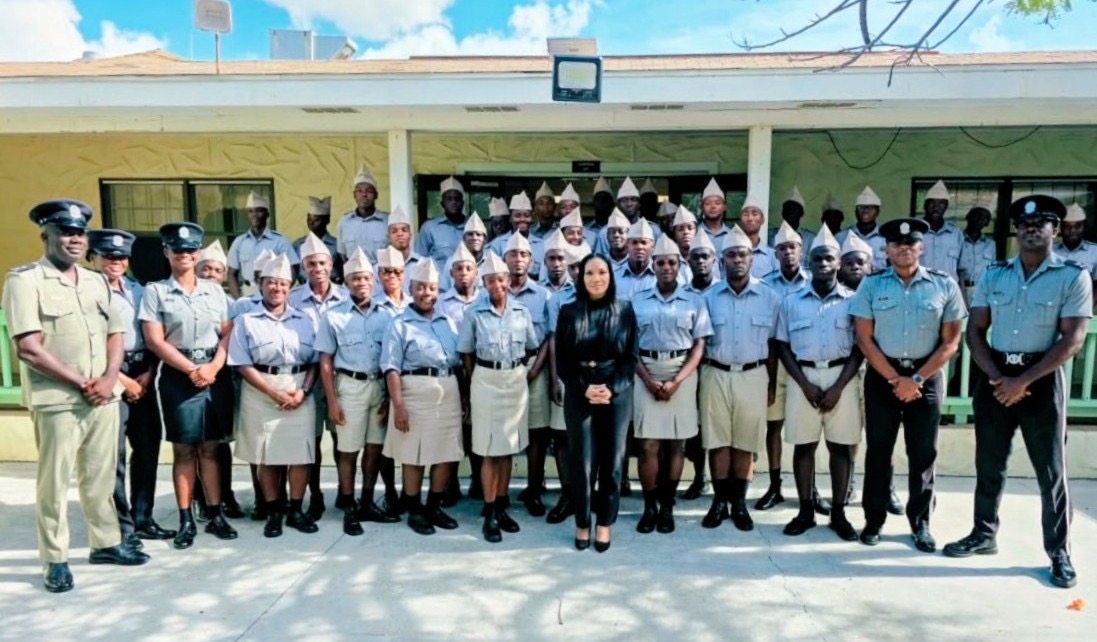
    In a targeted effort to boost the preparedness of the next generation of law enforcement officers in Antigua and Barbuda, Chief Magistrate Ngaio Emanuel has led a pivotal educational session for trainee officers at the Sir Wright F. George Police Academy. The engagement, held on June 9, 2026, comes as part of a broader push to bridge the gap between academic police training and real-world operations within the country’s criminal justice system. The official media release from the Royal Police Force of Antigua and Barbuda’s Office of Strategic Communications confirmed the details of the session, which focused on two core areas: criminal practice and procedure in the Magistrate’s Court, and the practical application of the nation’s Child Justice Act.

    Trainees in attendance gained targeted, actionable insight into key operational topics that will shape their day-to-day work, from court procedural rules and mandatory evidential requirements to structured case management practices. A major focus of the lecture was the unique legal framework that governs cases involving children and young persons, an area of law that requires specialized sensitivity and knowledge from frontline police officers. This classroom session was not an isolated training moment: it built on a hands-on educational experience one week prior, when the recruits traveled to the St. John’s Magistrate’s Court for an on-site visit. During that June 3 excursion, the group got a firsthand look at active court proceedings, observing how justice is administered in real time and deepening their understanding of the judiciary’s central role in the broader criminal justice ecosystem. That on-site visit already reinforced core lessons for the trainees, including the critical importance of conducting thorough investigations, maintaining accurate case documentation, and upholding professional standards of conduct when appearing in court.

    Beyond technical legal knowledge, Chief Magistrate Emanuel used the session to emphasize the foundational character traits that define effective, trusted law enforcement. She told recruits that competent policing extends far beyond memorizing statutes and procedural rules: it requires consistent sound judgment, unwavering personal integrity, and a deep, abiding commitment to serving the public. She laid out three core guiding principles for every officer to carry throughout their career: integrity even when no one is observing their actions, courage that is always paired with disciplined judgment, and prioritizing public service over personal ambition. Emanuel reminded the group that public trust, the most valuable asset any police force can hold, is only earned through consistent accountability and ethical conduct. She encouraged them to remain steadfast in upholding values of fairness, professionalism, and compassion in every interaction they have with community members over the course of their careers. “Policing is not merely the exercise of authority,” she told the group, emphasizing that it is ultimately the responsible, humane application of law to serve the public good.

    Leadership from the Royal Police Force of Antigua and Barbuda, alongside the commandant and staff of the Sir Wright F. George Police Academy, publicly thanked Chief Magistrate Emanuel for donating her time and extensive expertise to train the incoming cohort of officers. They noted that her willingness to lead this session is a reflection of the strong, collaborative partnership that exists between the police force and the judiciary in Antigua and Barbuda. This partnership, they added, works continuously to advance equal access to justice and lift professional standards across the country’s law enforcement community. For the recruits, the combined experience of on-site court observation and expert-led lecture has equipped them with a more holistic understanding of how police work intersects with the judicial process, preparing them for the practical realities of serving the public once they graduate and enter active duty.

  • Upcoming summer program aims to help Dominican youth become climate resilience leaders

    Upcoming summer program aims to help Dominican youth become climate resilience leaders

    As the 2026 Atlantic hurricane season approaches, the Caribbean island nation of Dominica is launching a groundbreaking new educational initiative designed to equip its youngest residents with the knowledge and skills to address climate change and natural disaster risk. The Junior Climate Resilience Champions Program, developed and led by the island’s long-running non-profit Business Training Center (BTC), will kick off this July, with full funding supported by a $22,000 grant from the Caribbean Catastrophe Risk Insurance Facility Segregated Portfolio Company (CCRIF SPC) through its Small Grants Programme.

    The free program will welcome 125 young participants between the ages of 5 and 15 across two months of summer learning and hands-on community engagement. To ensure age-appropriate instruction aligned with each group’s developmental needs, BTC has split participants into two cohorts. For younger learners aged 5 to 9, core climate and disaster concepts will be introduced through playful, immersive formats including interactive storytelling, educational games, and hands-on group activities. Older participants, aged 10 to 15, will dive into more complex topics, ranging from foundational climate science and local disaster risk assessment to collaborative problem-solving for climate adaptation.

    The program’s structured curriculum is organized around five core thematic areas: comprehensive disaster risk management, introductory principles of climate-resilient infrastructure engineering, climate literacy through creative and artistic expression, community-focused environmental action, and individual leadership capacity building. Unlike traditional classroom-only education programs, the Junior Climate Resilience Champions places heavy emphasis on practical, real-world application of learned concepts. Participants will take part in a range of community-focused projects, including native tree planting drives, watershed clean-up campaigns, the development of shared community food gardens, and educational visits to local sustainable farms.

    In a nod to Dominica’s own recent history of devastating climate disasters, the program will also include guided educational tours to sites deeply impacted by past extreme weather events. Scheduled stops include the Hurricane Maria memorial in the coastal community of Pointe Michel, and several hard-hit communities in the Kalinago Territory, a decades-long experience with climate impacts that organizers say will help young participants connect abstract concepts to tangible, local experiences. These on-site visits are designed to reinforce the critical importance of disaster preparedness and long-term resilience building for the island.

    BTC Managing Director Lucia Stedman emphasized the intergenerational impact of the initiative in a statement ahead of the program’s launch. “This program is about planting seeds of resilience in the next generation,” Stedman explained. “As hurricane season 2026 officially begins, Dominica knows firsthand the devastating effects of climate-related disasters. By equipping our young people with practical knowledge and skills, we are building communities that are better prepared, more aware, and actively engaged in protecting our environment.”

    Beyond educating the 125 direct participants, the program is structured to amplify its impact across entire communities through its “Climate Champions” model. Young participants are encouraged to share the lessons and skills they gain with family members, neighbors and peers, extending climate literacy far beyond the program’s direct cohort.

    With nearly 30 years of experience designing and delivering youth development and community empowerment programs across Dominica, BTC brings deep institutional knowledge and local trust to the initiative, positioning the organization to successfully cultivate a new generation of environmentally conscious, disaster-ready Dominican citizens.

  • Public Asked to Help Locate Stolen Honda CR-V

    Public Asked to Help Locate Stolen Honda CR-V

    In St. John’s, Antigua and Barbuda, a vehicle theft incident has prompted a public appeal for assistance from the owner of a stolen black 2012 Honda CR-V. The compact SUV was taken from the Potters New Extension neighborhood, according to official updates circulated to local communities online.

    Investigative timelines place the theft between 3 a.m. and 4 a.m. local time on Wednesday. The stolen vehicle carries the official Antiguan and Barbudan registration number A24314, and was last confirmed to be in the Potters New Extension area before it was reported missing.

    Local law enforcement and the vehicle’s owner are urging any member of the public who encounters the SUV or obtains details about its current location to avoid approaching the vehicle out of an abundance of caution. Instead, tipsters are instructed to reach out to the relevant authorities directly via the two dedicated public tip lines: 780-2033 or 721-0246. Any small piece of information could prove critical to recovering the stolen vehicle and resolving the case.

  • Family appeals for help in search for missing Gros Islet man

    Family appeals for help in search for missing Gros Islet man

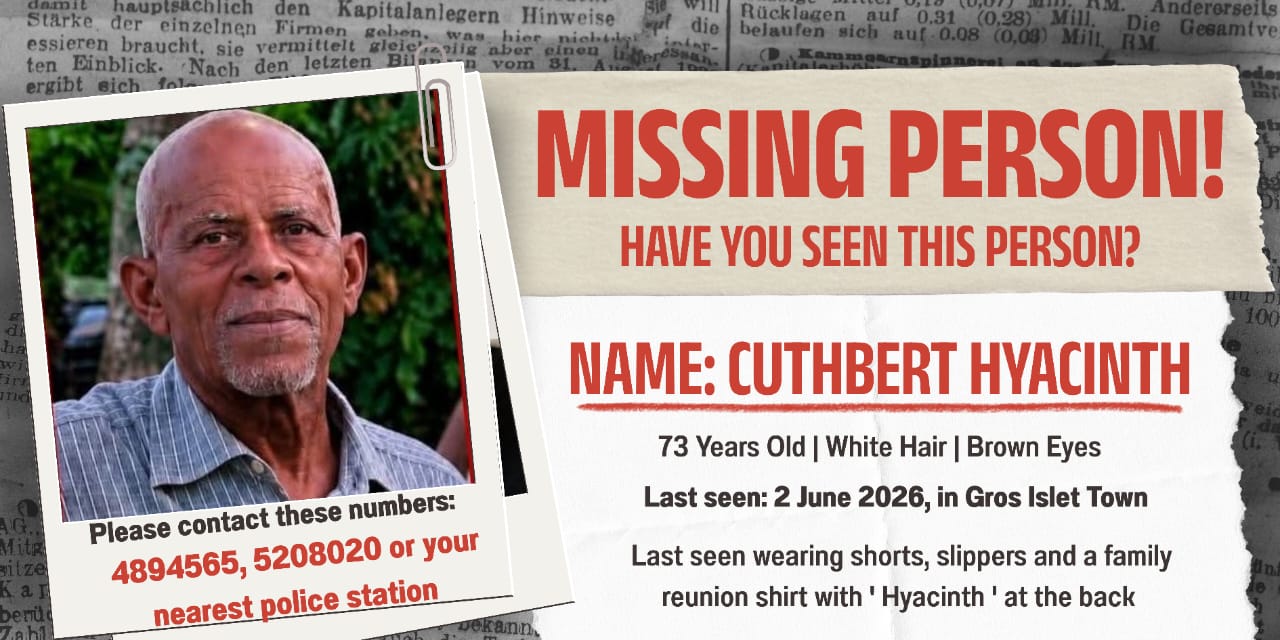
    A 73-year-old resident of Gros Islet, Saint Lucia, has been missing for more than a week, sparking a coordinated search effort by local community members and law enforcement. Lawrence Hyacinth, a resident of the Morne Giraud neighborhood, was last seen by his family at around 2 p.m. on Tuesday, June 2. When he left his home that afternoon, he was dressed in casual attire: shorts, slippers, and a commemorative family reunion t-shirt emblazoned with the name “Hyacinth” on the back.

    Relatives later confirmed that independent sightings by Hyacinth’s friends placed him in the area on the following Wednesday morning. This partial confirmation has left the family clinging to cautious hope, suggesting he may have traveled outside the boundaries of his immediate neighborhood rather than remaining close to home.

    Since Hyacinth was reported missing, volunteers from northern communities across the island have mobilized to comb through local areas in search of any trace of him. Dozens of family members, friends, neighbors and ordinary residents have volunteered their time to check wooded areas, local businesses, public gathering spots and abandoned properties, but as of yet, no credible clues to his whereabouts have emerged.

    Marylin Hyacinth, Lawrence’s sister, spoke publicly about the family’s urgent distress, noting that their anxiety is amplified by the 73-year-old’s pre-existing health conditions. “We are begging members of the public, especially bus drivers who travel across the island every day, to keep an eye out for him and reach out if they see anything that matches his description,” she said in an interview.

    She explained that Lawrence faces heightened risk due to his combination of medical issues: he lives with both dementia, which can impair his ability to navigate or communicate where he is, and diabetes, which requires consistent medication and blood sugar management. With each passing day that brings no update on his location, the family’s worry grows exponentially.

    Marylin Hyacinth confirmed that the family notified law enforcement immediately after realizing Lawrence was missing. “We filed a missing person report with police right from the start, and we have been checking in regularly for updates while continuing our own independent search efforts across the island,” she said.

    Beyond on-foot searches led by local volunteers, the family has launched a public awareness campaign to spread information about Hyacinth’s disappearance. They have distributed hundreds of flyers featuring a clear photograph of Lawrence and multiple family contact information to community centers, shops, and post offices in towns across Saint Lucia, in the hope that a member of the public may have seen him and can share critical information.

    Local police have confirmed they are supporting the search effort. Investigators have been reviewing public and private surveillance camera footage from areas near Hyacinth’s home and along common travel routes, though the investigation is still ongoing with no conclusions to date.

    The Hyacinth family is urgently appealing to anyone who has spotted Lawrence, or who has any information about where he may be staying, to contact them immediately. Anyone with relevant details can reach the family at three dedicated phone lines: 4894565, 5208020, or 4885646.

  • NWC breaks ground for $148 million Santa Cruz By-pass Mains Replacement Project

    NWC breaks ground for $148 million Santa Cruz By-pass Mains Replacement Project

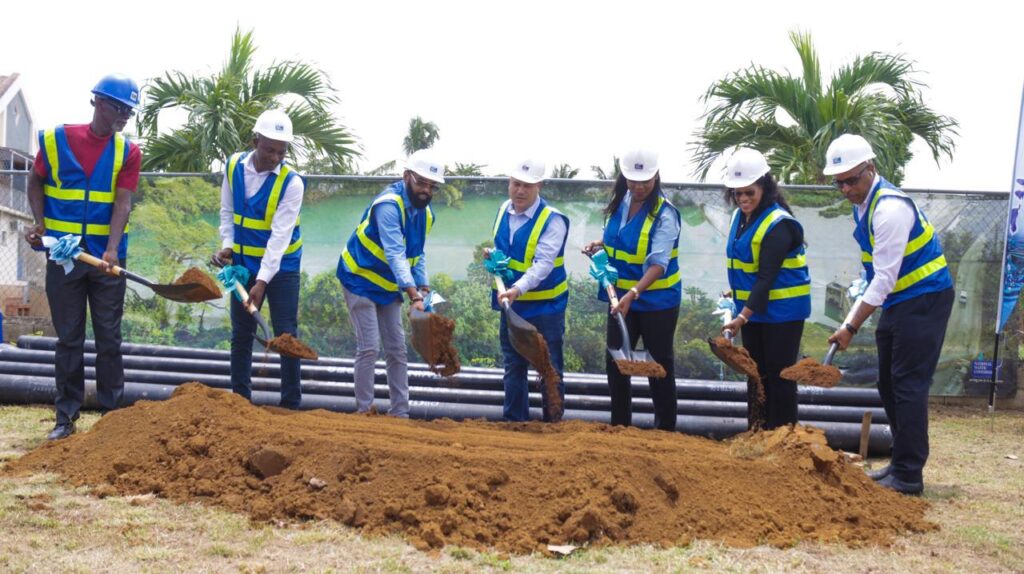
    ST ELIZABETH, Jamaica — Officials launched a critical water infrastructure improvement initiative this week, breaking ground on the long-awaited $148 million Santa Cruz By-pass Mains Replacement Project, a core component of the broader Santa Cruz Water Supply Improvement Programme led by the National Water Commission (NWC).

    For more than half a century, the region has relied on an outdated three-inch cast iron pipeline laid in the 1970s—an asset that has long exceeded its projected service life. Under the new project, this aging network will be replaced with a robust six-inch ductile iron main built to deliver decades of reliable service. When construction wraps up in November 2026, the upgrade is projected to transform water access for roughly 1,200 individual customers, representing around 300 households across the Santa Cruz By-pass corridor and adjacent communities including New River, Brighton, Friendship Street, and Doctor Rock. Key improvements will include more consistent water flow, stronger overall system integrity, and increased water pressure across the entire service area.

    Attending the official groundbreaking ceremony on Thursday was Matthew Samuda, Jamaica’s Minister of Water, Environment and Climate Change, who framed the project as a foundational investment in the region’s future. “The Santa Cruz pipes, laid in the 1970s, are simply past their useful life,” Samuda told attendees. “Today is a major milestone for a project that matters to the future of Santa Cruz. We are investing just under $150 million in your water supply, and I want to assure you that the contractors will ensure you have a Merry Christmas in this area once the project is completed.”

    NWC Project Engineer Neville Green explained the technical and operational benefits of the upgrade, noting that the larger, more durable ductile iron pipeline will eliminate the frequent pipe bursts that have long disrupted service. “Installing the durable six-inch ductile iron pipeline will allow us to safely increase system pressure and optimise distribution without recurring bursts,” Green said. “This upgrade will drastically reduce Non-Revenue Water losses, ensuring that the water treated by NWC reaches consumers’ taps rather than leaking into the ground.”

    To address community concerns about construction disruption, the NWC has committed to fully repaving affected road segments once pipeline installation is complete, restoring full, smooth access for local motorists and pedestrians.

    Samuda also used the event to respond to recent public scrutiny of the NWC’s capital budget implementation, offering new transparency into the commission’s fiscal performance. He confirmed that the NWC spent 94% of its allocated capital budget in the last fiscal year, with the remaining 6% disbursed in April this year. The delay in releasing those remaining funds was tied to after-effects of Hurricane Melissa, he added. Samuda also noted that a recent independent performance audit turned up no allegations of mismanagement or corruption, and that the NWC has already moved forward with implementing all operational and management recommendations put forward by auditors.

  • Returning resident takes St Thomas clean-up into her own hands

    Returning resident takes St Thomas clean-up into her own hands

    Decades after leaving her rural Jamaican parish of St. Thomas in search of greater opportunity, 47-year-old Michelle Jones has come home – and brought with her a relentless mission to spruce up public spaces, protect residents from flood risk, and inspire collective community action, all at her own expense.

    Jones’ life story is one of persistent drive to chase better prospects. After graduating from Yallahs Primary and Seaforth High, she left St. Thomas at 18 for Montego Bay, drawn by the limited economic and professional growth available in her underdeveloped home parish. She worked a series of odd jobs in hospitality, customer service, and on a Royal Caribbean cruise line before migrating to the United States at 34. Starting out as a nurse’s aide, Jones continued to push for advancement, enlisting in the U.S. Navy at 39 – the maximum enlistment age allowed for her branch at the time.

    “Boot camp was tough, but I came from a background of hard work in Jamaica, so I pushed through,” Jones recalled in an interview with Jamaica Observer Online. During her military career, she maintained aircraft, served aboard the USS Kearsarge and USS Harry S. Truman, and built a reputation for supporting peers navigating U.S. immigration and citizenship processes. A career-ending elbow injury led to her honourable medical discharge in December 2023, and she had originally planned to return to Jamaica permanently in 2027. But a sudden family crisis forced her hand: in August 2025, she arrived back in Jamaica to find her elderly grandfather living in unsafe, unsanitary conditions in Montego Bay amid a dementia diagnosis. Jones arranged for rental accommodation and cared for him until his passing in April 2026, one month shy of his 93rd birthday.

    After wrapping up her grandfather’s affairs, Jones relocated to St. Thomas on May 1 – a place that felt vastly different from the underdeveloped community she left decades earlier. “The peace here is unlike anything I felt abroad,” she said. “Years ago, I never thought I’d live here again, but now it’s exactly where I want to be.” As she searched for land to buy, driving through the Albion community, she noticed a striking problem: overgrown bushes choked roadsides, sidewalks, and drainage gutters, turning public spaces into unnavigable, unsafe hazards.

    Rather than wait for municipal intervention, Jones took matters into her own hands. She purchased a heavy-duty weed whacker, protective work gear, and began clearing overgrown areas three days a week, working through the Caribbean’s sweltering heat. Most recently, she partnered with two local caretakers to clean up a neglected plot near the Morant Bay tax office, and her next priority is clearing a clogged gutter outside her alma mater, Yallahs Primary School, ahead of the Atlantic hurricane season. Jones knows firsthand the danger of blocked drainage: she has witnessed young children swept away by floodwaters during heavy rain events, and is working to clear the gutter before expected August and September downpours. She also plans to lead additional beautification projects at the school over the summer break.

    To date, the entire initiative has been self-funded. Jones estimates she has already spent close to $100,000 Jamaican dollars on equipment, fuel, replacement parts, and protective gear – a cost that rises due to St. Thomas’ rocky terrain, which frequently frays and breaks cutting blades and trimming strings. Balancing her clean-up work with academic studies – she already holds a degree in criminal justice and is currently pursuing a second degree in organizational leadership – Jones fits her philanthropy around her class schedule.

    Despite the challenges and expenses, Jones says the rewards of her work far outweigh the costs. “When I finish clearing an area and I look back at what I’ve done, I just feel so proud,” she said. Her grassroots effort has already resonated across the island: videos of her work shared on social media have inspired other Jamaicans to launch similar projects in their own communities, and many have reached out to ask how they can get involved. “People ask me how to get a weed whacker, how to learn to use it, and that makes me so happy,” Jones said. “That’s exactly what I want to see.”

    Not all reactions have been supportive, however. Many local residents have expressed confusion over her willingness to work without pay, arguing that public maintenance is a government responsibility. But Jones pushes back on that mindset: “If we all keep waiting for someone else to do it, nothing will ever change. The government can only do so much. Change has to start with one person, right?”

    Jones did publicly praise Member of Parliament James Robertson for the progress he has delivered in the St. Thomas Western constituency, and called on him to prioritize additional roadside and drain clearing ahead of the rainy season. Her long-term plans for the initiative are ambitious: she owns a full set of landscaping equipment stored at her former U.S. home, which she plans to ship to Jamaica to expand the project, and she keeps extra weed whackers on hand for any new volunteers who want to join. Jones even plans to offer incentives for volunteer clean-up teams across the island, including sponsoring quarterly weekend getaways for the most active groups, to encourage widespread participation.

    For Jones, the work is ultimately rooted in a deep love for her home. While the U.S. gave her valuable professional opportunities, she says she never felt fully settled abroad. “In America, I always felt like I was walking on eggshells,” she explained. “Here in St. Thomas, I feel safe. This is where I belong.”

    Beyond beautification, Jones is pushing for long-term changes to reduce flood risk and improve waste management across Jamaica, calling for expanded public infrastructure like covered garbage receptacles and greater public education about proper waste disposal to keep drains clear. Above all, she wants all Jamaicans to take collective pride in their communities. “It’s all of our jobs to keep Jamaica clean, not just the government’s,” she said. “If you have a free day, grab a few friends and clean up your neighborhood. Small acts add up to big change.”

  • NHT urges public to beware of fraudulent social media accounts advertising NHT houses for sale

    NHT urges public to beware of fraudulent social media accounts advertising NHT houses for sale

    KINGSTON, Jamaica — Jamaica’s state-owned National Housing Trust (NHT) has issued an urgent public alert, calling on residents to stay on high alert after the organization uncovered a growing wave of fraudulent social media profiles impersonating its brand. These fake accounts are actively luring vulnerable home seekers by advertising supposedly discounted NHT-developed properties for private sale, a scheme the trust has never authorized.

    In an official statement released to the public this Thursday, the NHT emphasized a core, long-standing policy that consumers must remember: the agency never sells its affordable housing stock through any social media platform. All NHT housing allocation processes follow strict, transparent regulatory frameworks and internal protocols designed to ensure fair access for eligible contributors to the scheme. Any contributor seeking an NHT property must complete their application exclusively through the agency’s official, vetted application channels, the statement clarified.

    Beyond warning the public of the scam, the NHT is urging all Jamaicans to take proactive steps to verify the legitimacy of any social media page, direct message, or promotional advertisement that claims affiliation with the organization before disclosing any personal or financial information. Scammers behind these fake accounts often target prospective home buyers to steal sensitive data or collect fraudulent down payments, putting victims at severe financial risk.

    The trust also called for collective public action to curb the scam: anyone who encounters these fraudulent accounts or misleading advertisements is requested to report the activity to the relevant platforms and the NHT immediately. According to the agency’s update, its internal teams are already actively monitoring social media spaces to track down these unauthorized operations. The NHT is also working through formal, appropriate regulatory and platform channels to remove the fake accounts and put a stop to the improper use of its official name and registered branding.

    For accurate, up-to-date information on NHT housing developments, housing products, and public services, the agency reminded residents that only information posted on its official website and other pre-approved authorized communication channels can be confirmed as legitimate.

  • Family believes latest body of man presented to them by funeral home is theirs

    Family believes latest body of man presented to them by funeral home is theirs

    WESTMORELAND, Jamaica — Nearly 30 days after the Williams family was thrown into chaos when they said Doyley’s Funeral Services could not produce the body of their 90-year-old relative Roy Williams, a long-awaited breakthrough has come — but it has only opened the door to a fresh, contentious conflict between the grieving family and the local funeral home.

    On Thursday, funeral home representatives turned over a body to the family for genetic testing to confirm identity, bringing a temporary end to the family’s weeks-long search for answers. But the two sides are already at odds over two key details: whether a DNA sample was collected on Thursday, and whether the body now provided is the same one displayed at Roy Williams’ funeral service last month.

    In an interview with local media, a senior executive at Doyley’s Funeral Services flatly denied that any DNA testing procedure had taken place that day. The executive also asserted that the body presented this week is identical to the one brought to Savanna-la-Mar Seventh-day Adventist Church for the May 17 funeral service.

    That account is categorically rejected by the Williams family. Roy Williams, a former resident of the Savanna-la-Mar Infirmary, had been missing from the funeral home’s custody for nearly a month prior to Thursday’s development. His sister, Andrea McDonald, told reporters that the body turned over this week bears no physical resemblance to the corpse the family viewed during the May service.

    Despite the ongoing dispute, McDonald acknowledged the family is relieved to finally have a body they believe matches their late relative. “It makes no sense they try to play us. This is not it. This is not the body that we had before. But we are happy that they have located him where he was and we’re happy that they brought him to us,” McDonald said in an interview with the Jamaica Observer.

    McDonald explained the family holds concrete photographic and video evidence that proves the two bodies are not the same. She was present in Jamaica for the May funeral, and captured images of the corpse displayed at the service — including photos of the face and full body. She also noted that footage from the funeral ceremony itself further documents the mismatch between the first body and the one provided on Thursday. “I have both pictures. This is two different people,” McDonald emphasized.

    Roy Williams’ brother, Bishop Dr. Oliver Williams, backed up the family’s claim that a DNA test was completed Thursday, saying McDonald witnessed the entire procedure firsthand. “She witnessed everything,” Williams stated.

    McDonald shared that upon first seeing the new body, she believed its resemblance to her brother was strong enough that genetic confirmation might not be needed. But the family’s legal counsel advised them to follow through with the planned DNA testing to resolve the ongoing controversy once and for all. “Because of the controversy, the lawyer said yes, let’s go through with it,” McDonald explained.

    She also described the visibly deteriorated condition of the body provided Thursday, noting it showed clear signs of decomposition that matched a corpse that had recently been disinterred. “It looked like it was being exhumed from somewhere. It looked like a mummy’s body. Just like how you see a mummy look. You could see where parts of it had been decomposed — the neck, the hands, the feet,” McDonald said.

    As the family waits for the DNA results that will allow them to lay Roy Williams to rest properly, they are now pressing for answers about the identity of the first body displayed at the May funeral. The funeral home has maintained that it only has one body, which it claims is Williams’, leaving the family with unresolved questions. “Resoundingly we said yes, this is the body that we were missing. But where is the other body that they had before? Where is it? Where is the previous body? We still haven’t seen that body today (Thursday) because they said they don’t have another body, they said this is the body. But thank God we have pictures of the body that they gave us before,” McDonald said.

    Looking back on the weeks of uncertainty and grief that have stretched over the past month, McDonald acknowledged the ordeal has taken a devastating emotional toll on the entire family. “For right now let’s take it step by step. But trust me, we have gone through hell with this,” she reflected.

    The attorney representing the Williams family had committed to returning a request for comment from the Jamaica Observer, but no response had been received as of the publication of this report.