分类: society

  • Castle Bruce Health Centre to be renamed Nurse Hyacinth Thomas Health and Wellness Centre

    Castle Bruce Health Centre to be renamed Nurse Hyacinth Thomas Health and Wellness Centre

    A beloved decades-long healthcare leader in Dominica’s Castle Bruce district will soon have her decades of selfless service permanently enshrined in the community she served: the local Castle Bruce Health Centre will officially be renamed the Nurse Hyacinth Thomas Health and Wellness Centre, following a formal decision from the Ministry of Health, Wellness and Social Services.

  • COMMENTARY: A coffin in every ward – The reconstruction we owe the dead

    COMMENTARY: A coffin in every ward – The reconstruction we owe the dead

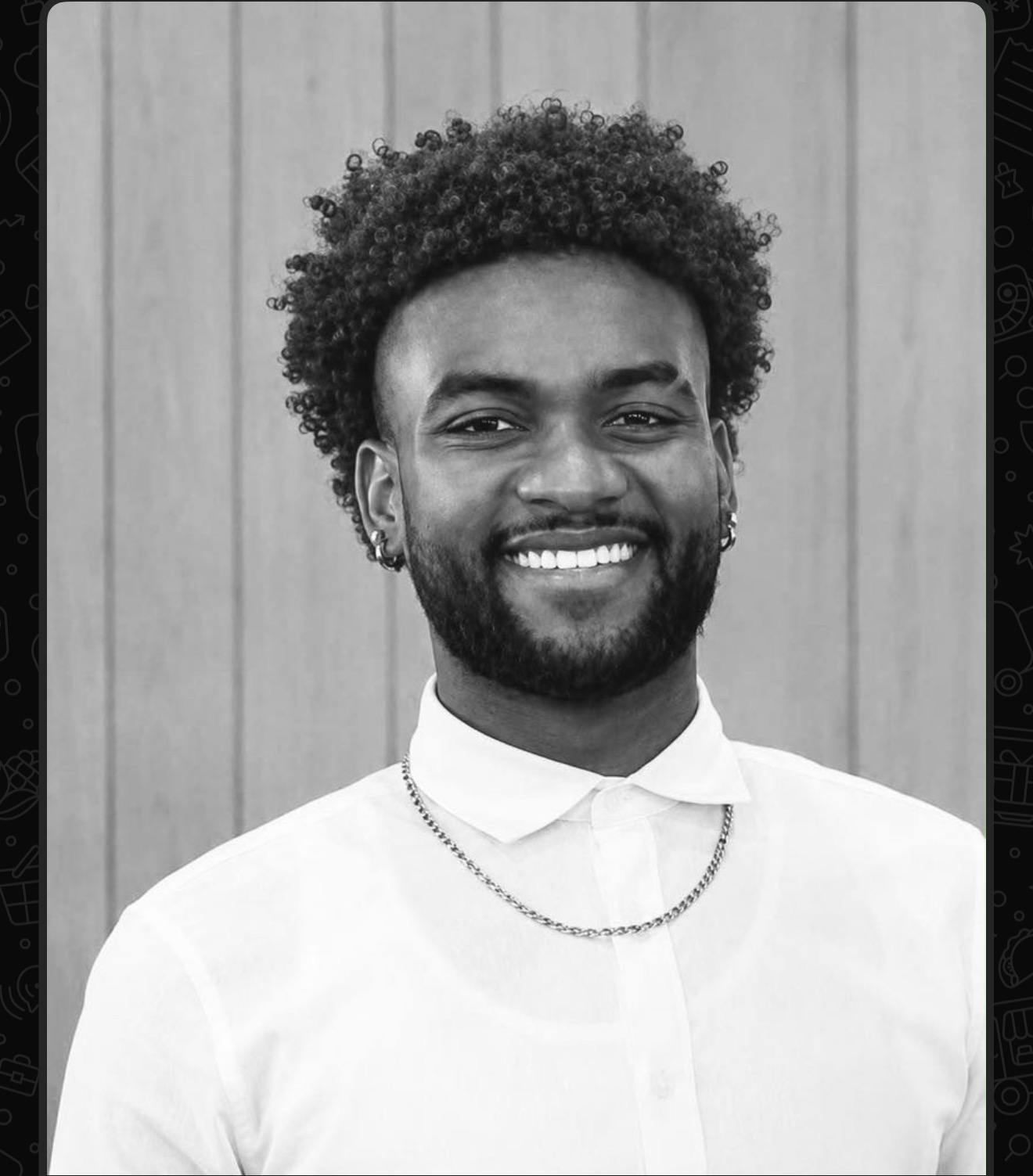
    On the evening of April 14, inside a quiet residential lane off Bridgetown’s Spruce Street, a family gathered to celebrate a quiet milestone: Daquan Robert’s grandmother had just turned 63, and the room filled with the sound of birthday singing. Daquan, 26, was a final-year law student at the University of the West Indies Cave Hill campus, poised to continue his legal training at the prestigious Hugh Wooding Law School. Before the song ended, a white van slowed at the edge of the lane, and multiple gunshots rang out. Daquan fled down the lane alongside his father, but he collapsed before he could reach safety. His grandmother watched him take his last breath, on her own birthday.

    By the time a reader finishes this column, another family across the Caribbean will already be walking through the same unthinkable grief. What was long framed as a localized problem confined to a few nations has spread into a systemic crisis across the region, turning what is globally known as a paradise into one of the deadliest areas on Earth.

    For generations, Caribbean leaders and publics framed widespread violent homicide as uniquely Jamaica’s challenge. Then Trinidad and Tobago saw its own grim surge, climbing from just 97 murders in 1998 to 625 by 2024. Today, the violence touches every corner of the region. Saint Vincent closed out 2024 with a homicide rate of 53.7 per 100,000 people. Barbados, long held up as the regional model of public safety and order, saw its murder count jump 138% in a single year, rising from 21 to 50. The Turks and Caicos Islands now hit a rate of 103 per 100,000, the highest in all of Latin America and the Caribbean. Across the region as a whole, homicide rates are many times higher than the global average of roughly 6 per 100,000; only Antigua & Barbuda and Grenada stand out as exceptions with consistently low murder rates, per 2023 UN Office on Drugs and Crime data.

    Firearms are responsible for the vast majority of these killings, and investigative tracing shows the overwhelming majority of these weapons flow into the region through illicit channels originating in the United States. Daquan’s death was not an isolated, random tragedy: it was the product of a regional system that is armed from outside, enabled by local complicity, and normalized by leaders who dismiss each killing as an individual tragedy while refusing to acknowledge the larger pattern of systemic collapse.

    Every homicide, at its core, is an attack on the legitimacy of the modern state. The foundational promise of any sovereign state is a monopoly on the legitimate use of violence: it asks citizens to surrender personal weapons, abide by the law, pay taxes, and trust its judicial systems, in exchange for guaranteed protection. Across the Caribbean, that promise lies broken. When a gunman opens fire on a grandmother’s birthday celebration from a moving van, he is explicitly declaring that the state’s authority does not extend to that space. He is building a parallel system of order, and he rules through fear. His own justice system has only one sentence: death. He takes life with impunity, with no regard for his own future or the lives of his victims.

    The damage of this crisis extends far beyond the human cost. The Inter-American Development Bank and World Bank estimate that violent crime costs the Caribbean region 3 to 4% of its total GDP every year. A state that cannot deliver basic law and order loses the moral authority to make any other demands of its citizens. How can a government tax a small shopkeeper, a public school teacher, or a hotel worker, when men with no verifiable legal income are able to build large homes, import luxury vehicles, and operate violent criminal networks in plain sight? Law and order is the foundation on which every other function of the state rests; without it, all other governance claims collapse.

    But it is wrong to frame this as solely a failure of the state. The killers are not foreign invaders: they are young men raised within our own communities, shaped by homes, schools and neighborhoods where authority, guidance, economic opportunity and accountability all failed at once. Many grew up in neighborhoods where the most visible, successful adult men were armed, feared, wealthy from crime, and never held to account. The collapse of Caribbean family structures, the systemic exclusion of young men from economic and social life, and the rising homicide crisis are not three separate problems. They are three symptoms of a single, interconnected national crisis.

    This is not a matter of blaming overstretched single mothers or romanticizing absent fathers. The home is the first and most effective crime prevention institution a society has. Consistent parenting, guidance, healthy boundaries, affection and accountability are not private, personal luxuries: they are core matters of national security. And communities can no longer afford to stay silent. A neighborhood cannot shelter a known shooter on Monday, turn out for his victim’s funeral on Friday, and then complain that the state has failed. Silence is not neutrality: when everyone in a community knows who carries the guns, who is protecting them, and how they fund their lifestyles, looking the other way makes the community complicit.

    Caribbean nations have a long, strong tradition of social democratic policy, but these existing programs were designed to address poverty, illiteracy and systemic exclusion, not the specific crisis of retaliatory gang violence, the drift of young men into criminal networks, witness protection, disruption of illicit financial flows, or rebuilding healthy male authority in communities. The existing social agenda is not obsolete, but it is incomplete. The traditional welfare state must evolve into a violence-prevention state: it must provide not just school meals and free education, but systems to flag at-risk young boys before they become homicide statistics, trauma care for survivors of violence, and support for children who grow up surrounded by fear before they ever learn basic math.

    Gangs did not seize power in a vacuum. Decades of neglect, denial, and active political collusion left public spaces open for criminal control. Reclaiming the state’s monopoly on legitimate force is a process of national reconstruction, not just a military war. Heavy-handed tactics like widespread militarization, curfews and states of emergency have only limited utility. On their own, they increase body counts but do not rebuild public trust in state authority.

    What works is far harder, slower, and demands greater accountability: intelligence-led policing carried out by small, trusted local units; expanded forensic capacity to raise the extremely low rate of solved homicides across the region; robust witness protection programs that do not force citizens to choose between staying silent and being killed; and the reclaiming of abandoned, underserved neighborhoods through public investment in street lighting, youth outreach, consistent community policing, recreational programming, mental health counseling and job creation.

    This work also requires explicit action to criminalize the links between political actors and criminal gangs. No government can credibly claim to fight gangs when its political culture rewards candidates who “control” neighborhoods through intimidation and violence. The Caribbean Community (CARICOM) must treat the cross-border illicit gun pipeline as what it is: a direct threat to regional sovereignty. Caribbean nations did not manufacture these weapons, but we are burying our children because of them.

    Gun violence has a clear financial trail. Weapons are purchased, drug shipments are moved, lawyers are hired, witnesses are bribed, politicians are courted, and legitimate property is bought with illicit proceeds. Any national homicide reduction strategy that does not prioritize following this financial trail is just chasing low-level trigger pullers while leaving the criminal infrastructure intact. Every Caribbean government needs a dedicated violence finance strategy, where tax authorities, customs, police, financial intelligence units, property registries and prosecutors coordinate to map and disrupt criminal networks. Unexplained wealth, hidden beneficial ownership of property, and suspicious real estate transactions all must be treated as core parts of homicide investigations. Al Capone was not ultimately brought down by his convictions for violence, but by following his money trail. If the trigger puller is the hand that pulls the trigger, illicit money is the bloodstream that keeps the entire criminal system alive.

    The state holds the monopoly on legitimate violence, but it does not control all the root causes of violence. Those causes take root in spaces that police cannot permanently occupy: family homes, school classrooms, and the silences that communities choose to keep.

    Fixing this requires an all-of-society compact. Families must raise boys who do not equate manhood with domination, easy money from crime, or carrying a weapon. Faith communities must refuse to offer moral blessing to politicians, donors and local strongmen who work with gunmen. Schools must stop pushing out at-risk boys who end up in the morgue instead of the graduation stage. The private sector must go beyond hiring private security for their own properties to create large-scale apprenticeship programs for unemployed young people, and stop laundering criminal respectability through awarding contracts to known gang leaders.

    Media outlets must abandon the sensationalism of printing daily body counts, and instead focus on investigative reporting that traces guns, follows the money, and holds the entire system accountable. Caribbean diaspora communities must be engaged as full partners in this work, not just asked to send remittances and donations.

    None of these proposals matter without accountability. Every Caribbean government must be required to publish a quarterly public dashboard tracking homicide reduction progress. A cabinet minister who cannot clearly explain these numbers and the government’s strategy does not deserve to hold office. A prime minister who cannot deliver sustained reductions in violence does not deserve re-election. This is the most fundamental test of the consent of the governed: if a state cannot protect its citizens, it has no right to ask for their loyalty.

    Critics will call this approach too soft, and demand more military helicopters, more soldiers, more curfews, more televised displays of toughness. But what is actually soft? The state that cannot protect a promising law student at his grandmother’s birthday party is soft. The politician who takes calls from known gang leaders before he calls the victim’s family is soft. The church that accepts donations from criminal actors and looks past the blood on their hands is soft. The government that taxes honest working people but fears confronting wealthy violent criminals is soft.

    True strength means rebuilding what has been broken: functional, fair courts; accountable, transparent police; schools that do not push out at-risk students; families that refuse to look away; churches that do not bless gunmen; and a region that speaks with one unified voice to demand an end to the illicit flow of weapons from outside. When we can provide safety, healing, opportunity and due process that is better than anything any gang can offer, the state’s monopoly on legitimate violence will be restored not through conquest, but through the consent of the people it protects. Anything less is just another gang, with better branding and nicer offices.

    Daquan Roberts should have walked across a graduation stage this year to accept his law degree. Instead, his classmates walked to a peace pole to honor his memory. We owe his grandmother, and every future family that could face this grief, far more than just condolences. We owe them a region where every family, community, church, business and government understands that a coffin in every neighborhood is not an inevitable fate. It is a choice, and it is a failure – one we have the power to fix.

  • Bicar charged in fatal Micoud stabbing

    Bicar charged in fatal Micoud stabbing

    A fatal street violence incident in the Saint Lucian district of Micoud has led to formal murder charges against a local man, following a week-long investigative process that concluded early this month. Thirty-five-year-old Jeremy Bicar stands accused of the killing of 44-year-old Lensley Samuel, who died moments after a violent altercation on Duke Street in Micoud on April 30.

    Law enforcement officials confirmed that Bicar was taken into police custody on the same day the stabbing occurred, and he remained in detention as investigators worked to piece together the full circumstances of the deadly encounter. On May 5, one week after the incident, a full post-mortem examination was carried out by forensic officials. The examination’s findings left no room for ambiguity: Samuel’s death was directly caused by multiple penetrating stab wounds to the chest.

    Hours after the post-mortem results were finalized, law enforcement upgraded Bicar’s initial holding to a formal murder charge. He made his first public court appearance at the Second District Court on Wednesday following the charge filing, where a judge ordered him to be remanded into custody at the Bordelais Correctional Facility to await his upcoming trial. No additional details about the motive for the stabbing or the prior relationship between Bicar and Samuel have been released by police as the investigation remains ongoing.

  • Omari Lewis to Be Buried Today as Antigua and Barbuda Mourns Teen’s Death

    Omari Lewis to Be Buried Today as Antigua and Barbuda Mourns Teen’s Death

    The small Caribbean nation of Antigua and Barbuda will come together Thursday as communities, loved ones, and ordinary residents unite to lay to rest 17-year-old Omari Lewis, a promising young life cut short by a fatal shooting in the Villa neighborhood that sent shockwaves across the country earlier this year.

    Lewis’ funeral service is scheduled to begin at 2 p.m. local time at the Beacon Light Nazarene Church, after which he will be formally interred. The teenager was killed on March 26, only a handful of days before he was set to celebrate his 18th birthday — a senseless loss that triggered overwhelming, nationwide grief and pushed long-simmering worries about gun violence and youth involvement in violent crime back to the forefront of national conversation.

    In the weeks following the shooting, messages of condolence and remembrance flooded in from across the island. Classmates, close friends, and extended family have recalled Lewis as a young person brimming with potential, poised to build a bright future. A formal funeral notice released by his family framed his too-short life as “a blessing” and the legacy he left behind as “a treasure” to all who knew him.

    Organizers and community leaders anticipate large crowds will turn out for Thursday’s service, as Antiguans and Barbudans from all walks of life come together to stand in solidarity with Lewis’ grieving family, who are navigating an unthinkable loss.

  • SCHOOLYARD BRAWLS

    SCHOOLYARD BRAWLS

    A wave of growing student indiscipline that has shaken Jamaica’s education system in recent weeks has reached St Elizabeth Technical High School (STETHS), triggering an immediate campus closure for most students on Thursday and leaving families uncertain about when regular classes will resume.

    The shutdown came after a day of escalating violent incidents at the Santa Cruz-based institution on Wednesday, according to unofficial sources familiar with the situation. Multiple physical altercations broke out across the campus, one of which reportedly involved a bladed weapon, leaving one student injured. The escalating chaos forced school administrators to call on local law enforcement to intervene to restore order mid-morning.

    Following the initial confrontation, additional fights flared up across the school grounds—some even unfolding directly in front of senior school leaders, sources confirmed to the Jamaica Observer. In a formal advisory sent to parents and guardians Wednesday, STETHS Principal Keith Wellington announced the suspension of classes, noting the move was implemented to safeguard the well-being of every student and staff member on campus, and to give administrators time to restore order and implement new disciplinary measures. When reached for comment by the Observer Thursday evening, Wellington declined to share further details, stating he would not address the situation publicly until his internal handling of the crisis was complete.

    Only students scheduled to sit external examinations were permitted to access the campus after the shutdown. Deputy Superintendent Owen Brown, operations head of the Jamaica Constabulary Force’s St Elizabeth Division, confirmed that police worked alongside school leaders and responding parents to bring the unrest under control. No students were taken into custody following the incident, Brown confirmed, adding that the situation was resolved through on-site coordination between law enforcement, school officials, and family members.

    Brown emphasized that STETHS is one of many local institutions participating in the police’s School Resources Officer (SRO) Programme, which places dedicated law enforcement officers on campus to prevent violence and mediate student conflicts. “One core goal of the SRO initiative is to teach students to work through their disagreements through dialogue rather than physical confrontation,” Brown explained. “We help them understand how to resolve conflicts amicably, instead of turning to violence.”

    The senior police official reaffirmed the force’s commitment to tackling school violence across the parish, extending beyond Wednesday’s incident at STETHS. “We have promised to work with every school in St Elizabeth, not just STETHS, to help foster orderly, safe learning environments for all students,” he said.

    Brown also called on parents to take a leading role in teaching conflict resolution skills to young people, noting that family socialization lays the foundation for how children behave in public spaces. “The home is the first and most important place children learn how to interact with others. We are urging parents to be more intentional about teaching basic social skills, especially how to handle disagreement,” he said. “A difference of opinion doesn’t have to end in a fight. If adults model healthy conflict resolution for children, they will carry those skills into their school and community interactions.”

    Wednesday’s shutdown is just the latest in a string of deadly and disruptive violent incidents at Jamaican schools since the start of 2024. At least two students have been killed in conflicts with peers this year, with multiple other assaults, fights, and bullying cases reported across the island. In March, 16-year-old Devonie Shearer was fatally killed during a dispute at Ocho Rios High School in St Ann; a 17-year-old classmate has been arrested and charged in connection with his death. Just last month, 13-year-old Seaforth High School student Kland Doyle was fatally stabbed during a confrontation with a peer in Morant Bay, St Thomas, resulting in the arrest of three other schoolboys. Also last month, Jamaica College drew widespread public criticism after a video showing one student being beaten by two classmates went viral on social media—the second high-profile incident of violence at the institution in as many months.

  • DBJ takes commitment to the classroom

    DBJ takes commitment to the classroom

    On the annual observation of Read Across Jamaica Day, the Development Bank of Jamaica (DBJ) brought its corporate social responsibility commitment to life by sending a team of trained volunteers to two local educational institutions: St Jude’s Primary School and Mona High School. The initiative was rooted in a clear mission: to ignite a lifelong passion for reading among young Jamaicans, open young minds to new ideas, and help students understand how continuous learning can unlock personal and professional opportunities long into the future.

    During their time on both campuses, DBJ volunteers stepped out of their usual professional roles to join students directly in classroom-based literacy activities. Rather than sticking to passive reading, they led dynamic, interactive sessions that encouraged students to ask questions, participate in discussions about story themes, and connect the texts they explored to their own lives. Volunteers read aloud to groups of students, modeling expressive reading and helping younger learners build fluency, while also facilitating peer-to-peer reading activities that boosted student confidence.

    Beyond interactive engagement with the student body, DBJ made tangible contributions to support long-term literacy development at both schools. The institution donated new reading materials and learning resources to the schools’ existing library hubs, expanding the collections available to students and strengthening the capacity of the schools’ resource centers to support teaching and independent reading.

    Charlene Wong, DBJ’s Manager of Public Relations and Corporate Communications, framed the event as a core investment in Jamaica’s future, noting that “Today’s readers are tomorrow’s business owners, innovators, and leaders.” She expanded on this perspective, explaining that literacy development extends far beyond basic reading and writing skills. Reading fosters creativity, builds self-assurance, sharpens critical reasoning abilities, and hones strong communication skills—all foundational competencies that will empower the next generation to build successful careers and contribute meaningfully to national development.

    Wong reaffirmed DBJ’s long-standing dedication to supporting community initiatives that invest in Jamaican human capital, aligning this literacy outreach with the bank’s broader mission of driving inclusive, long-term economic growth across the island. By investing in young people’s literacy today, the bank is laying the groundwork for a more skilled, innovative, and prosperous Jamaica tomorrow.

  • Children at St Ann’s Bay Hospital, Tarrant Primary get love from KFC Jamaica

    Children at St Ann’s Bay Hospital, Tarrant Primary get love from KFC Jamaica

    As Jamaica observes Child Month 2026, which centers the critical importance of children’s mental and emotional well-being, KFC Jamaica has turned the annual Read Across Jamaica Day into a heartfelt, community-focused initiative that reaches vulnerable young people in two very different settings: hospital paediatric wards and local primary schools.

    Far from a standard promotional event or one-off reading activity, the fast-food chain’s programme was designed around a core goal: to build safe, welcoming spaces where children can set aside stress, participate freely in shared activities, and develop positive associations with reading and connection. This year’s outreach brought the joy of storytelling and small acts of kindness to two groups of children: young patients receiving care at St Ann’s Bay Hospital, and Grade 2 and 3 students at Tarrant Primary School in St Andrew.

    At St Ann’s Bay Hospital, KFC Jamaica Marketing Officer Kandine West led a team of staff to host an interactive reading session in the ward’s dedicated playroom, specifically tailored to meet the needs of children who did not choose to be in a healthcare setting. The team prioritized creating a low-pressure, relaxed atmosphere that allowed young patients to go at their own pace, open up about their thoughts, and engage with stories on their own terms. Beyond the interactive reading experience, the KFC team also left lasting donations for the ward: a new collection of children’s books, plus food vouchers for the young patients, their attending nurses, and accompanying parents.

    In an interview after the session, West explained that bringing the Read Across Jamaica Day initiative to a hospital was a fully intentional choice. “This is not a place children choose to be, so it was important for us to create a moment where they could feel relaxed, engaged and simply enjoy themselves,” West said. “Even if just for a little while, if we can bring a sense of comfort and a few smiles that means a lot. Especially during Child Month, when the focus is on mental and emotional well-being, these small interactions can make a meaningful difference.”

    Debbie Ann Henry, operations manager at St Ann’s Bay Hospital, praised the initiative for its genuine care and positive impact on young patients. “Moments like these make a meaningful difference for our children. The team created an environment where they could relax, participate and simply enjoy the experience. We truly appreciate the time and care that went into this visit,” Henry said.

    The outreach continued at Tarrant Primary School in St Andrew, where KFC Jamaica Marketing Manager Andrei Roper led interactive reading and discussion sessions for second and third-grade students. Designed to nurture public confidence and a lifelong love of reading, the sessions encouraged active participation and open dialogue, aligning with the Child Month focus on holistic well-being.

    Roper emphasized that supporting children goes far beyond just encouraging reading skills. “Reading is an important part of that, but so is creating an environment where our children feel seen, heard and confident enough to participate. Especially during Child Month, those small moments of encouragement and connection can have a lasting impact,” Roper said.

    This year’s Read Across Jamaica Day engagement is just one part of KFC Jamaica’s broader commitment to 2026 Child Month activities. Roper confirmed the chain has invested JMD $1 million into the National Child Month Committee’s nationwide annual programme of child-focused initiatives. Beyond this financial contribution, KFC Jamaica maintains a long-standing, on-the-ground commitment to youth development across Jamaica, with ongoing programming spanning education support, mentorship opportunities, and direct community outreach that prioritizes meaningful connection with the communities the chain serves.

  • Story time with Canadian high commissioner

    Story time with Canadian high commissioner

    On the annual observance of Read Across Jamaica Day, a Jamaican basic school received a special visit that left young learners grinning from ear to ear. Mark Berman, Canada’s sitting High Commissioner to Jamaica, traveled to Jamaica House Basic School to take part in a community-focused reading session aimed at boosting early literacy engagement across the island.

    During the interactive event, Berman did not simply lead a silent reading activity—instead, he read stories aloud to the gathered students, stopping regularly to ask questions, invite discussion, and draw shy learners into the fun. Throughout the session, he repeatedly emphasized the transformative power of building strong reading skills during early childhood, noting that a solid literacy foundation opens doors to lifelong academic and professional opportunity. Beyond encouraging participation, Berman also worked to nurture a lasting, personal love of books among the students, framing reading not as a mandatory school task but as an exciting lifelong adventure.

    The visit was not limited to group activities and discussion. To leave a tangible, long-lasting impact on the school’s literacy programs, Berman presented a donation of hundreds of new storybooks covering a range of topics and reading levels, alongside essential classroom school supplies that will support daily learning for students and teachers alike. School administrators noted that the donation will fill critical gaps in the school’s library collection, giving students more options to explore new interests and practice their reading skills outside of structured lessons.

    The event aligns with ongoing literacy promotion efforts across Jamaica, which aim to reduce early childhood literacy gaps and ensure all young learners have access to the resources and support they need to thrive. For the students of Jamaica House Basic School, the day offered both a memorable interactive experience and a lasting boost to their learning environment, wrapping up with groups of happy students posing with their new books and the visiting commissioner.

  • Fun in the Son pre-Mother’s Day celebration set for Black River

    Fun in the Son pre-Mother’s Day celebration set for Black River

    In the hurricane-battered parish of St Elizabeth, Jamaica, a faith-centered pre-Mother’s Day celebration called Fun in the Son is set to bring warmth and encouragement to local residents this weekend, as the community continues its slow rebuilding process after last year’s devastating storm.

    The event will be hosted on Saturday at Black River Independent Baptist Church in the New Town neighborhood, with entry gates opening to attendees at 5:00 pm. Organized by Glory Music, a local group with deep roots in the parish, the gathering is designed to lift community morale and reinforce a message of resilience through faith, even amid ongoing recovery challenges.

    Tommy Cowan, a representative of Glory Music who was born in Newmarket, St Elizabeth, shared that the celebration is part of a sustained outreach effort to inspire local residents to trust in their own strength and choose faith over uncertainty. Drawing on decades of memory of the parish’s history of overcoming hardship, Cowan noted that St Elizabeth, an agriculturally rich region, has repeatedly bounced back from severe flood damage in the past, and he voiced confidence that the community will rise again this time, guided by faith.

    St Elizabeth was one of the parishes hardest hit when Hurricane Melissa swept through Jamaica in late October 2025, leaving widespread damage to homes, businesses, and agricultural land across the region. This is not the first community outreach event Glory Music has held in the area since the storm: the group hosted a Fun in the Son Christmas treat at Nightingale Grove Baptist Church last December, and Cowan said the progress organizers have seen in the months since has been deeply encouraging.

    “Crops are growing back, the market in Lewisville is vibrant, people are fixing and rebuilding their homes and businesses – it is just encouraging,” Cowan told Jamaica Observer in comments ahead of the upcoming celebration. Beyond supporting broader community recovery, the event also carries a special tribute to local mothers, ahead of the official Mother’s Day holiday. “With the Mother’s Day Celebration, we wish to remind the mothers that we love them and God loves them, unconditionally, and the values that mothers bring to our communities will never be forgotten,” Cowan added.

    The pre-Mother’s Day gathering will feature ministry leadership from Carlene Davis, alongside musical performances from the Brown Trio, Orville Sutherland, The Right Band, and Rushing Wind Band. Zeal Music will lead the event’s praise and worship segment, while the service will be hosted by co-pastors Rev Dr Audley Black and Donna Black. Organizers say they hope the event will not only honor local mothers but also reinforce the collective spirit that has carried the community through its hardest days in the aftermath of the hurricane.

  • Turning pages into play

    Turning pages into play

    Last Friday, the sprawling green lawns of Devon House became a vibrant, story-filled gathering space as the Supreme Ventures Foundation (SVF) hosted its much-anticipated second annual Reading Picnic, a signature community event marking Jamaica’s Reading Week. For the second consecutive year, this initiative brought 120 seven to nine-year-old Grade 3 students from across Kingston and St Catherine together for a full day of immersive learning, literary exploration, and child-centered fun.

    Participating students came from four local institutions: Waterford Primary School, Bridgeport Primary School, Melrose Primary & Junior High School, and John Mills Primary & Junior High School, all arriving ready to dive into a curated lineup of activities designed to reframe reading as an adventure rather than a chore. With experienced media personality Krystal Tomlinson at the helm as host, the entire event was built around a single core mission: nurturing a lifelong, lasting passion for reading among Jamaica’s younger generation.

    The day’s schedule packed a diverse range of literacy-focused activities to suit every young learner’s interests. Traditional oral storytelling sessions drew quiet, focused groups of wide-eyed children, while interactive reading competitions brought out friendly excitement and energetic engagement. The most beloved session for many attendees was the dynamic ‘Act-it-Out’ segment, where children got to step into the roles of their favorite story characters and bring narratives to life through movement and performance.

    The cultural highlight of the afternoon came from the acclaimed Ashe Company, which delivered a vibrant, dynamic reimagining of beloved traditional Anancy Stories, weaving Jamaican cultural heritage into the day’s literary programming. Chloleen Daley-Muschett, assistant vice-president for public relations and corporate affairs at Supreme Ventures Limited (SVL), shared that the children’s unscripted reactions to the day’s activities reinforced the value of this experiential approach to literacy promotion.

    “The children’s reactions today were absolutely priceless,” Daley-Muschett noted. “Watching their eyes light up during the Anancy storytelling sessions, and seeing the sheer joy they brought to Act-it-Out, was a powerful reminder of what happens when you make reading an experience rather than an exercise.”

    Beyond the planned activities, the event leaned on personal connection to inspire young readers, with more than a dozen members of the SVL leadership team stepping forward as volunteer guest readers to work directly with small groups of students. Senior leadership joining the effort included Heather Goldson, SVF director and SVL chief marketing officer; Stefan Miller, chief executive officer of SV Gaming; and Omar Dattadeen, assistant vice-president of marketing at SVL.

    To add extra excitement for the young attendees, a lineup of prominent Jamaican public figures and SVL brand ambassadors also joined the literacy drive. Professional race car driver and JustBet Ambassador Fraser McConnell, Tishauna Mullings of NexxStepp Educational Services (named SVF 2025 Community Hero), and national team netballer Adean Thomas all spent time reading one-on-one with students and joining in the day’s interactive games, making the experience feel even more special for the children in attendance.

    Goldson emphasized that the SVF Reading Picnic fills a critical role in supporting Jamaican children’s long-term success. “Literacy is the foundation upon which every Jamaican child’s future is built, and at Supreme Ventures Foundation, we believe that when a child falls in love with reading, we unlock a door to possibility that can never be closed,” she explained. “The SVF Reading Picnic was designed not just to promote literacy, but to show these children that reading can be an incredibly fun and interactive experience.”

    By the time the event wrapped up, every student carried home more than just new favorite stories and warm memories of a day outdoors. Full from picnic refreshments and gifted custom goodie bags full of reading-related treats, the children departed after a day that successfully merged literary education with playful, interactive community engagement. The event once again demonstrated how experiential, community-led programming can deliver the critical message of literacy empowerment in a supportive, fun, and unforgettable environment that resonates with young learners.