分类: society

  • Police Federation faces leadership change as McBean earns promotion to ASP

    Police Federation faces leadership change as McBean earns promotion to ASP

    A leadership transition is underway at the Jamaica Police Federation, after the body’s long-serving chair Sergeant Arleen McBean earned a promotion to the senior ranks of the Jamaica Constabulary Force (JCF) as an Assistant Superintendent of Police. McBean’s elevation to the senior command brings her tenure at the helm of the representative organization for rank-and-file police officers to an end, opening a top leadership vacancy that will be filled through an upcoming selection process.

    The promotion ceremony was held Thursday at JCF Commissioner Dr Kevin Blake’s office in St Andrew, where McBean was among multiple committed law enforcement officers recognized for advancement to higher ranks. Joining her in the round of promotions were Assistant Commissioner of Police DeVaughn Colquhoun, who heads the JCF’s Supernumerary Corporate Services division, Senior Superintendents Adrian Hamilton and Arielle Brown Blake, and Superintendents Keisha Oakley and Alfred McDonald. The JCF’s senior officer corps was further expanded with promotions to Deputy Superintendent for Howard Wilks, Nicholas Shorter and Arlene Robinson Johnson, while Robert Bailey earned a promotion to Assistant Superintendent.

    In an official statement following the announcement, the Jamaica Police Federation extended its warm congratulations to the newly promoted ASP McBean. The organization highlighted McBean’s decades of distinguished service across multiple leadership roles within the federation, noting that her work has delivered irreplaceable value advancing the welfare and quality of life for both current and former rank-and-file officers.

    The federation’s statement emphasized that McBean’s consistent dedication, steadfast commitment, and unyielding advocacy for the association’s membership have garnered widespread respect and admiration from colleagues across the entire Jamaica Constabulary Force. “We wish her every success in her new role and pray for God’s continued guidance, favour, and abundant blessings as she embarks on this new chapter of service,” the statement concluded.

  • COE expands green alert to 14 provinces due to heavy rainfall threat

    COE expands green alert to 14 provinces due to heavy rainfall threat

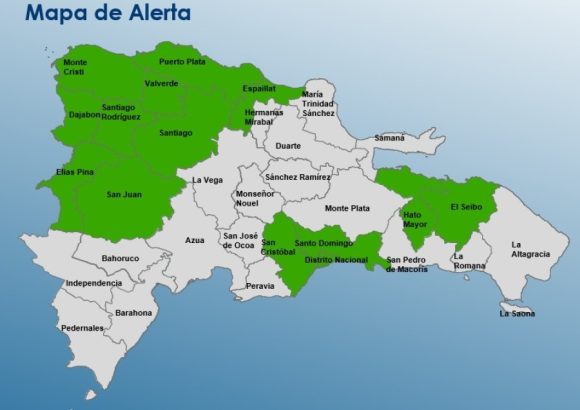
    In response to severe weather forecasts from the Dominican Institute of Meteorology (INDOMET), the Dominican Republic’s Emergency Operations Center (COE) has broadened a green-level weather alert to cover 14 provinces, including the nation’s capital National District. The warning comes as forecasters predict a range of hazardous conditions: moderate to intense rainfall, severe thunderstorms, sudden strong wind gusts, and the potential for isolated hail across the affected regions.

    Meteorological officials attribute the unstable weather pattern to two interacting atmospheric systems: a passing tropical wave and an upper-atmosphere trough. According to current projections, the intensity of rainfall will slowly taper off as evening progresses, bringing gradual improvement to conditions across the alert zone.

    The full list of areas placed under green alert includes Santiago Rodríguez, Puerto Plata, Elías Piña, Espaillat, Santiago, Valverde, San Juan, Dajabón, Montecristi, Hato Mayor, El Seibo, San Cristóbal, Santo Domingo Province, and the National District. As the most common alert level for potential hazardous weather, the green designation signals that conditions require close monitoring and precautionary action from residents and local officials.

    To reduce the risk of weather-related incidents, COE has issued clear safety guidance for communities in the affected regions. Residents are strongly advised not to cross swollen rivers, creeks, or ravines, as fast-moving high water poses a major risk of flash flooding and drowning. The agency also urges people to avoid all recreational water activities until the alert is officially lifted, as unstable weather can create unexpected dangers for outdoor recreation.

    Emergency management teams and meteorological staff are maintaining continuous surveillance of the evolving atmospheric conditions. Officials have reminded the public to only rely on official government communication channels for the latest updates, ensuring residents receive accurate, timely information to adjust their plans and stay safe throughout the weather event.

  • ‘Children should not be placed at risk’

    ‘Children should not be placed at risk’

    KINGSTON, Jamaica — Jamaica’s child welfare sector is grappling with profound grief following the tragic death of 13-year-old Kemelia Paul, a student at Excelsior High School, who died from stab wounds sustained while trying to break up a domestic conflict at her St. Andrew home. The Child Protection and Family Services Agency (CPFSA) has opened a public conversation about the fatal costs of unaddressed domestic violence, using the young girl’s death as a catalyst for nationwide action to protect at-risk children.

    In an official statement released Friday, CPFSA Chief Executive Officer Laurette Adams-Thomas extended heartfelt condolences to Paul’s family, friends, classmates, teachers, and every member of the school community touched by the unexpected loss. “The passing of Kemelia Paul is a devastating, deeply unsettling tragedy,” Adams-Thomas said. “We mourn the cut short of a young life full of so much unfulfilled promise, and we send our most sincere sympathies to her family and loved ones as they navigate this unimaginably hard time.”

    Beyond collective mourning, Adams-Thomas emphasized that the incident acts as a sharp, sobering wake-up call about how domestic violence inflicts irreversible harm on children and entire family units. “Children should never be forced into harm’s way in situations like this,” she noted. “We have to step back and examine the state of our family dynamics, and recognize how critical it is to protect children by building healthy, peaceful home environments. Children should never feel they have to step in to de-escalate conflict between adults — that is the opposite of how things should work: adults exist to protect children, not the other way around.”

    The CPFSA head stressed that creating safe, supportive environments where children can grow and flourish, free from fear and violence, is a shared responsibility that falls on every family across Jamaica. “Far too many of our children are exposed to conflict, abuse, and violence within the four walls of the very place they should feel safest: their home,” Adams-Thomas said. “As parents, guardians, and caregivers, we must do everything in our power to ensure our homes are spaces rooted in respect, peace, and protection for every child.”

    Adams-Thomas issued a clear urgent appeal to Jamaicans currently caught up in domestic disputes: seek professional support before tensions escalate into irreversible tragedy. This heartbreaking loss, she argued, must serve as a turning point that compels the nation to reject the dangerous normalization of violence within homes and local communities.

    Instead of turning a blind eye or accepting violence as an unavoidable part of life, Adams-Thomas said, “we must prioritize early intervention by reaching out for the help we need, making use of the free support resources already available to us, and reporting suspected abuse before it costs another life.”

    The CPFSA itself is one of multiple agencies ready to provide support: its Child and Family Support Unit offers specialized therapeutic interventions for families navigating conflict and trauma. Beyond the CPFSA, Adams-Thomas outlined a full range of accessible support options: the Dispute Resolution Foundation provides professional mediation services for family conflicts, the National Parenting Support Commission offers guidance for implementing positive parenting practices in households, and the Bureau of Gender Affairs provides counselling, resource connections, and access to emergency shelters for those experiencing gender-based violence. Individuals also can access low-cost or free mental health services at public hospitals and community health centres across the island.

    “Protecting children is not a responsibility that falls solely on government child protection agencies,” Adams-Thomas concluded. “It is a duty that belongs to every parent, every family, and every citizen across Jamaica.”

    To encourage proactive reporting of harm, the CPFSA has reminded the public of multiple confidential channels to report known or suspected cases of child abuse. The agency operates a 24-hour toll-free child abuse reporting hotline at 211. Reports can also be submitted via WhatsApp or phone at 876-878-2882 or 876-822-7031, via email to report@childprotection.gov.jm, or through direct messages to the CPFSA’s official social media accounts, @cpfsajm.

  • John Bethell, businessman and civic leader, dies at 81

    John Bethell, businessman and civic leader, dies at 81

    One of The Bahamas’ most respected long-serving business and community figures, John Frederick “Johnny” Bethell, passed away peacefully at his Eastern Road residence on June 3 at the age of 81. For more than six decades, Bethell stood at the helm of the family-owned Bethell Estates Ltd, leaving an indelible mark on both the nation’s business landscape and its civic institutions through decades of dedicated public service.

  • Munga freed of murder charge

    Munga freed of murder charge

    KINGSTON, Jamaica — Waves of celebration have swept through the support network of renowned Jamaican dancehall performer Munga Honourable, following a courtroom ruling that cleared him and his co-accused of all murder charges on Friday.

    The case centers on the 2017 killing of Cleveland Smith in the Ackee Walk neighborhood of St Andrew. Prosecutors on the case confirmed they would not present additional evidence against either Munga — whose legal name is Damian Rhodes — or his co-defendant Sheridan Gordon, leading the court to dismiss the charges and release the two men.

    According to information obtained by the Jamaica Observer, the acquittal came after major inconsistencies were uncovered in the testimony of the prosecution’s only eyewitness. The high-profile trial officially opened last week, with the eyewitness concluding her testimony before the court on Thursday. The gaps and contradictions in her account ultimately undermined the prosecution’s entire case against the two accused.

    Munga was represented in court by experienced defense attorneys Christopher Townsend and Chadwyk Berry, while Gordon’s legal team was led by King’s Counsel Peter Champagne alongside attorney Sayeed Bernard. Additional updates on the aftermath of this ruling are expected to emerge in the coming days.

  • St Catherine man charged with murder following death of fiancée

    St Catherine man charged with murder following death of fiancée

    A horrific domestic incident in St Catherine, Jamaica, has left a 29-year-old woman dead and her 51-year-old fiancé facing formal murder charges, local law enforcement has confirmed.

    Paul Stephenson, who also goes by the alias ‘Pablo’ and resides at Sunset Crescent in New Harbour Village I, Old Harbour, was taken into police custody following the violent altercation that unfolded at his residence on Saturday, May 9. The victim, identified as Tieah Singh, was a resident of Francis Avenue in Clarendon.

    According to initial police reports, the conflict erupted between the couple at approximately 10 a.m. that morning. As the argument escalated, Stephenson allegedly injected Singh with an undetermined toxic substance and also deployed pepper spray directly into her face, according to witness and investigative accounts.

    Immediately after the attack, Singh began experiencing severe adverse reactions to the toxic exposure. She was rushed quickly to a nearby medical facility for emergency treatment and was admitted in critical condition.

    Initially, Stephenson was taken into custody and charged with assault occasioning actual bodily harm, as Singh remained hospitalized. However, when Singh ultimately succumbed to her injuries days after the attack, prosecutors moved to upgrade the charge against the suspect to the more severe offense of murder.

    As of the latest update from law enforcement, court proceedings for Stephenson are still being arranged, with a formal hearing date expected to be announced in the coming days. The investigation into the exact type of toxic substance used and the full sequence of events leading up to the argument remains ongoing.

  • Anti-migrant violence leaves even South Africans living in fear

    Anti-migrant violence leaves even South Africans living in fear

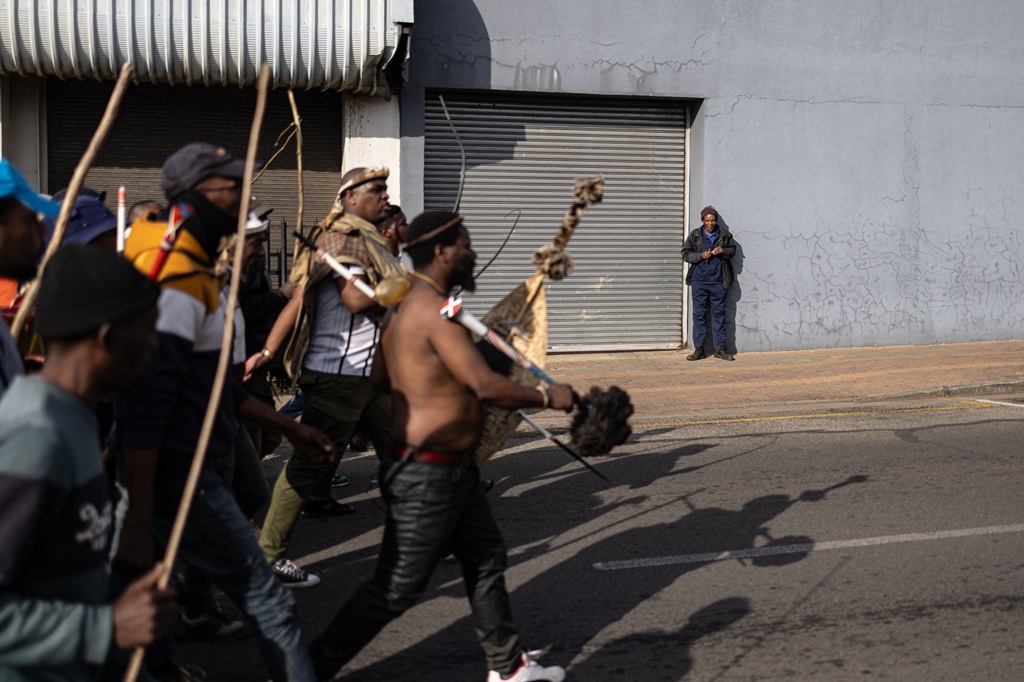
    Along the sun-scorched southern coast of South Africa, the informal Giyani settlement in Mossel Bay now bears the brutal scars of a wave of targeted violence that has pitted neighbor against neighbor, killed three people, and forced hundreds to flee their homes. What started as growing anti-migrant sentiment, stoked by a months-long campaign against undocumented foreign nationals, has exploded into open bloodshed, spilling over into neighboring coastal communities and sending waves of panic across the region.

    Walking through the settlement today, visitors are met with a landscape of charred, blackened remains of torched shacks, gutted structures stripped clean by looters, and skeletal frames of abandoned homes being dismantled by locals looking to seize the empty plots. On the flimsy wooden doors of a handful of surviving dwellings, a crude graffiti message marks them as off-limits to attackers: “I’m taken, Xhosa” — a signal that the home belongs to a member of South Africa’s Xhosa ethnic group, and should be spared.

    Even South African natives not belonging to the Xhosa group now find themselves targeted, caught up in the spreading unrest. A 30-something South African woman, too afraid to share her name but showing her official South African identity document to an AFP reporter, described how she was ordered to leave her corrugated metal shack just days after the initial violence broke out. Attackers falsely accused her of living with a Shangaan man, another South African ethnic group seen as an outsider by local attackers. “They said they don’t care about IDs,” she explained, her voice trembling. “Now it seems like nobody is safe. A lot of my neighbours, they are citizens, they just ran.”

    In total, 55 homes have been completely destroyed in the unrest, which erupted after a public protest targeting foreign nationals, who attackers falsely claim are stealing local jobs. In the days following the initial violence, locals told reporters that abandoned homes left empty by fleeing residents are dismantled daily, their materials taken and plots repossessed by local people.

    Official data from South Africa’s border management authority confirms that nearly 600 Mozambicans have fled Mossel Bay and crossed back into their home country since the violence began. Nearly a week after the worst of the clashes, around 100 foreign nationals from Malawi, Mozambique, and Zimbabwe remain crowded into a local community hall, their belongings piled around them, under constant police guard. Joining them are 17 South African natives from the northern province of Limpopo, who also face targeting because they speak Tsonga and are not ethnically Xhosa.

    “Seventeen South Africans were chased away from their house,” explained Ernest Sithole, who has been coordinating support for displaced people at the community hall since Sunday. He added that all those displaced spoke Tsonga, the majority language of their home province.

    The violence has already claimed three lives. Two Mozambican nationals, aged 27 and 43, were killed in the initial outbreak of unrest — making them the first known foreign casualties in a months-long national wave of anti-migrant sentiment that has seen mass protests across the country and a flood of xenophobic hate speech on social media. A 19-year-old South African Tsonga man was also stabbed to death the same night. While police have so far refused to officially link his killing to the anti-migrant and ethnic tensions, his stepfather is adamant the murder was a targeted attack.

    “I understand they killed my son because of a tribal war,” Steve Winston Kamwendo told AFP, standing beside his stepson’s coffin ahead of the young man’s burial in Limpopo.

    The violence comes after a citizen-led group opposing irregular migration recently issued a public ultimatum ordering all undocumented foreign nationals to leave South Africa by the June 30 deadline. In response, several African nations including Ghana, Mozambique, Malawi, and Nigeria have already repatriated hundreds of their citizens who chose to flee the growing hostility.

    Mossel Bay, long viewed as one of South Africa’s quieter coastal towns in the Western Cape province, has become the flashpoint for the worst violence to date, and the unrest has already spread to neighboring communities. Municipal authorities confirm that around 400 displaced foreign nationals are now sheltering in community centers in the towns of Kleinmond, Gansbaai, and Stanford, roughly 155 miles east of Mossel Bay. In Gansbaai, just one morning last week, around 100 local residents went door-to-door through the town’s informal settlement, issuing a blunt warning to all African-born foreigners: leave the town by the end of June, regardless of whether you hold valid documentation to live in South Africa.

  • Police Launch Operation Iron Grip to Disrupt Criminal Activity

    Police Launch Operation Iron Grip to Disrupt Criminal Activity

    Law enforcement agencies in Antigua and Barbuda have unveiled a groundbreaking proactive enforcement strategy aimed at closing the gaps that allow criminal offenders to operate unseen across the twin-island nation. Christened Operation Iron Grip, the new initiative centers on three core pillars: targeted intervention in high-crime areas, boosted police presence in public spaces, and coordinated efforts to block the movement of criminal groups across the country. Deputy Commissioner of Police Albert Wade, the official leading the rollout of the program, outlined the framework in an exclusive interview with Observer Radio’s *Voice of the People* segment. Wade explained that extensive internal analysis by the police force has revealed that the majority of offenses committed across Antigua and Barbuda follow consistent, traceable patterns. This insight has led leadership to pivot from traditional reactive law enforcement models to a proactive approach that goes far beyond the limited impact of routine random patrols. “Contrary to common perception, crime is not an unpredictable, random occurrence. We firmly believe it can be forecast and interrupted before it takes place,” Wade stated. Under the new operational model, officers will be strategically deployed to high-risk zones to disrupt potential criminal activity before any offense is committed. A key focus of the operation will be cracking down on opportunistic crimes, which account for a large share of everyday offenses across the nation. To achieve this, police will implement enhanced vehicle and pedestrian checks at critical transit points throughout the country. “Criminals will no longer be able to travel freely between hotspots: if you move through any key area, you can expect to be stopped and vetted by an officer,” Wade noted. Beyond increased enforcement, the Deputy Commissioner emphasized that the initiative also prioritizes deeper, more meaningful connections between police and the communities they serve. Operation Iron Grip will expand the country’s community policing framework by expanding the role of district liaison officers, who will be tasked with building closer working relationships with local residents and at-risk young people. According to police leadership, the overarching long-term goals of the new strategy extend beyond immediate crime reduction: the operation aims to strengthen national crime prevention infrastructure, repair and deepen trust between law enforcement and local communities, and drive a sustained reduction in all types of criminal activity across Antigua and Barbuda.

  • Zion Church Feeding Initiative Receives Major Appliance Donation

    Zion Church Feeding Initiative Receives Major Appliance Donation

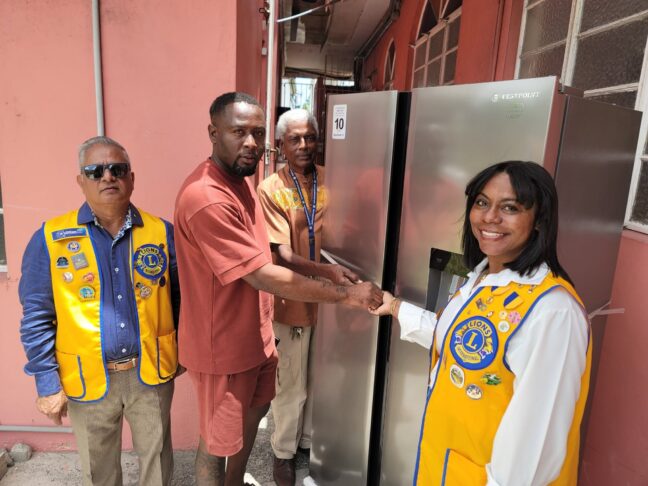
    For more than three and a half decades, the Zion Church of God in St. John’s, Antigua, has carried out a quiet but critical mission: rolling back food insecurity by serving hot, nutritious meals to vulnerable residents across the island. This long-running community outreach effort just received a meaningful upgrade, thanks to a generous joint donation from the Lions Club of Antigua and local business Cool & Smooth Store.

    The two organizations have gifted the church a brand-new refrigerator valued at 8,500 Eastern Caribbean dollars, officially handed over during a small presentation at the church’s North Street location. The new appliance will play a central role in the feeding programme, expanding the church’s capacity to safely store ingredients and keep prepared meals fresh before they reach community members in need.

    The partnership between the Zion Church of God and the Lions Club of Antigua is not a new one. For years, the service club has been a core supporter of the feeding initiative, contributing more than 21,000 Eastern Caribbean dollars to the programme every single year. Beyond financial backing, the club also supplies fresh, homegrown produce harvested from its own community garden on Upper Church Street, and its members regularly step in to help volunteers deliver meals across the community each week.

    On a typical Wednesday, church volunteers prepare more than 45 hot lunches for people experiencing food insecurity. With the added storage space and reliability of the new refrigerator, the programme will now be able to expand its reach, serving more vulnerable residents than ever before. Volunteers with the church expressed deep gratitude for the ongoing commitment of both the Lions Club and Cool & Smooth Store, noting that the donation advances shared work to cut hunger and support struggling members of the Antiguan community.

  • GNSA and GSWMA celebrate Blaze the Track — Smash the Trash Competition winners

    GNSA and GSWMA celebrate Blaze the Track — Smash the Trash Competition winners

    On June 2, 2026, two leading Grenadian public agencies joined forces to celebrate environmental leadership among the nation’s student communities, hosting an awards ceremony at the iconic Kirani James Athletic Stadium to honor schools that excelled in maintaining clean spaces and responsible waste practices during their annual school sports events. The ceremony capped off the relaunch of the “Blaze the Track — Smash the Trash Competition”, a community-focused initiative built to embed environmental accountability among students, school staff, and sports spectators alike.

    The decision to revive the decade-old program comes after growing concerns over post-event waste accumulation and damage to Grenada’s premier sporting infrastructure. First launched more than 10 years ago, the original initiative eventually faded without sustained institutional support. When recurring complaints about discarded litter left behind after school sports meets and other large-scale gatherings gained renewed attention, the Grenada National Stadium Authority (GNSA) moved to partner with the Grenada Solid Waste Management Authority (GSWMA) to bring the program back, with a shared goal of encouraging greater personal responsibility and proper waste disposal habits across all attendees of sporting events.

    At the awards ceremony, Randall Robinson, Deputy Chairman of GNSA, opened official remarks by praising the proactive effort and commitment shown by every school that took part in the 2026 competition. “The success of this competition is a direct reflection of the commitment and leadership of our schools,” Robinson noted. “When principals, teachers, students, and supporters all work toward a shared goal, they don’t just create a cleaner, more positive environment for sports — they help instill lasting values of responsibility and respect for our national facilities that will deliver benefits to generations of Grenadians to come.”

    Myrna Julien, Communications Manager at GSWMA, expanded on the far-reaching goals of the revived program, emphasizing that its impact extends far beyond keeping event venues tidy. “Blaze the Track — Smash the Trash is about more than just cleaning up after an event,” Julien explained. “It is about encouraging young people to build lifelong habits that support environmental responsibility, and helping them understand that every small action they take adds up to build a cleaner, healthier Grenada for everyone.”

    Organizers noted that two local schools were unable to join the 2026 competition, as their annual sports events had already concluded before the revived initiative was officially announced. Despite this small setback, both GNSA and GSWMA expressed strong optimism that the number of participating schools will grow in future iterations of the competition, as more institutions have time to plan for participation.

    Looking forward, the two agencies are already exploring opportunities to expand the collaborative model to other large-scale national events across Grenada, including the country’s world-famous Carnival celebrations, as part of broader island-wide efforts to embed environmental sustainability and proper waste management into all major public gatherings.

    After rigorous evaluation by an independent judging panel, the top performing schools of the 2026 competition were officially announced: J W Fletcher Catholic Secondary School took home first place, with the award presented by GNSA Deputy Chairman Randall Robinson. Second place was awarded to Westmorland School, with the prize presented by GSWMA Communications Manager Myrna Julien, while third place went to Alpha Junior School, with GSWMA Education Officer Simone Doughlin-Welsh presenting the award.

    In delivering the vote of thanks at the close of the ceremony, Doughlin-Welsh framed the revived competition as a meaningful and long-overdue update to a critical community initiative. She congratulated all participating schools for their widespread enthusiasm and dedication to the program’s goals, and extended gratitude to judges, event organizers, educators, students, and community stakeholders whose collaborative work made the 2026 launch a success.

    “We are delighted to see the return of this initiative and the incredible enthusiasm shown by the participating schools,” Doughlin-Welsh said. “This competition proves just how much we can achieve when we empower students to take ownership of their public spaces, and we cannot wait to see even greater participation and broader impact in the years ahead.”

    GNSA has reaffirmed its ongoing commitment to advancing responsible facility use, environmental sustainability, and community engagement across Grenada, through programs that strengthen the country’s beloved sporting culture while protecting its national infrastructure for future generations.