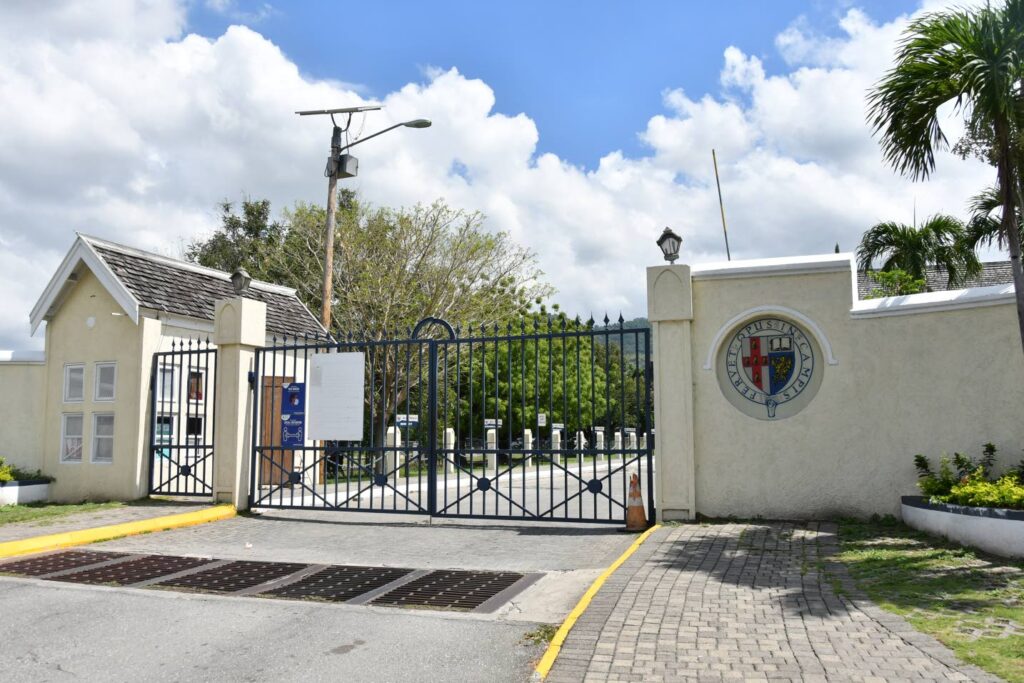
A wave of violent incidents involving high school students across Jamaica has sparked urgent alarm from senior law enforcement, who warn that physical and armed conflicts among young people are rising at an alarming rate despite ongoing proactive intervention efforts.
Acting Senior Superintendent Mark Harris, head of the St Andrew Central Police Division, outlined the growing crisis in an interview with Jamaica Observer on Friday, just one day after a 16-year-old student from elite all-boys school Jamaica College was formally charged with assaulting a peer. The teen faces charges of assault occasioning bodily harm and is scheduled to appear in juvenile court in the coming week.
Jamaica College has recently dominated local headlines for dual historic athletic and academic triumphs: in March 2026, the school claimed the Mortimer Geddes Trophy as boys’ national champion at the ISSA/GraceKennedy Boys’ and Girls’ Athletics Championships, and just days later ended a 39-year title drought to win the 2026 TVJ Schools’ Challenge Quiz championship. But the institution’s celebratory momentum has been overshadowed by a string of violent incidents on and off its campus. Just weeks after the championship wins, a March 24 assault left one student injured and a classmate under arrest. More recently, a viral video surfaced online showing two Jamaica College students repeatedly attacking a fellow student, sparking public outcry.
Jamaica College is not an isolated case. Just this month, the country was rocked by the fatal stabbing of 13-year-old Kland Doyle, a Seaforth High School student, who was killed by a classmate in Morant Bay, St Thomas. Harris also detailed a string of other recent violent incidents involving armed students across the St Andrew Central policing district. Four schoolboys were arrested and charged in Gordon Town after officers found them in possession of illegal offensive weapons. Three days before his interview, police intervened to break up a mass brawl between four students at Papine High School, where all four were found carrying knives, ice picks and machetes. While no assault charges were filed as none of the participants reported injuries, all four were charged for possession of prohibited weapons. Harris also recalled a near-fatal incident ahead of this year’s Boys’ and Girls’ Athletics Championships, where a 14-year-old Calabar High School student was stabbed and admitted to intensive care in critical condition; the suspect charged in that attack remains in police custody.
Harris acknowledged that the Jamaica Constabulary Force (JCF) has extensive experience responding to youth violence, but emphasized that the current frequency of incidents has reached unacceptable levels. “We are not strangers to treating with these things, but they are getting one too many, and that is what we want to reduce,” he said. A major unaddressed challenge, he added, is that many violent altercations between students are never reported to authorities, meaning the true scale of the crisis is likely higher than official data reflects.
To curb the trend, the JCF has partnered with the Ministry of Education and other local stakeholders to roll out targeted interventions, including pre-event tension mitigation that Harris said successfully reduced violence ahead of the 2026 athletics championships. The force’s Community, Safety and Security Branch maintains a permanent presence in schools across St Andrew Central, with dedicated school resource officers and territorial leads assigned to at-risk institutions, regular campus visits, and ongoing educational programming to teach students about the long-term consequences of violent behavior.
Harris warned that normalized violence in schools sets a dangerous foundation for adulthood, when criminal acts carry far more severe lifelong consequences. “These [students] will become adults in a few years and then the adult world is so different and demanding and even needs more discipline than in schools, because serious crime is not a joke, it has serious implications on persons if they commit these crimes,” he said. “We are working with other stakeholders and other agencies to assist these persons and to let them understand the implications of these senseless acts that end with them being arrested, charged, and taken before the court.”