分类: society

  • Caribbean Archbishop supports Archbishop of Canterbury in response to Project Spire criticism

    Caribbean Archbishop supports Archbishop of Canterbury in response to Project Spire criticism

    In a significant address to international religious leaders, Archbishop Philip Wright of the Church in the Province of the West Indies has championed the Church of England’s controversial Project Spire initiative while challenging the global Anglican community to move beyond symbolic gestures in addressing historical injustices.

    The Archbishop’s remarks came during the “Breaking the Chains of Injustice” International Consultation, convened by UK-based charity USPG (United Society Partners in the Gospel). The gathering brought together 40 Anglican leaders from 31 nations to examine the persistent impacts of colonialism on indigenous cultures, languages, and territories across the Caribbean region.

    Despite the formal abolition of slavery in the British Caribbean in 1834, Archbishop Wright emphasized that the region continues to grapple with profound economic disparities, social inequalities, and environmental degradation directly linked to this historical legacy. He positioned the Anglican Church at a “significant moral crossroads,” noting that while acknowledgment of institutional complicity in the transatlantic slave trade represents a transformative opportunity, empty rhetoric could ultimately prove more damaging than the original offense.

    The Archbishop’s endorsement of Project Spire—a £100 million reparative justice initiative launched by the Church of England in 2023—signals growing momentum within religious institutions to address historical wrongs. This development follows a decade of intensified reparations advocacy, including CARICOM’s 2013 “Ten Point Plan for Reparatory Justice” and the CPWI’s 2015 motion supporting Caribbean reparations claims.

    Archbishop Wright clarified that reparative justice seeks not retribution but recognition of harms caused by centuries of enslavement, requiring “deliberate and intentional redress.” He cited both Project Spire and USPG’s Codrington Project as pioneering efforts in this direction. The latter initiative, launched in 2024, addresses USPG’s historical entanglement with slavery through Christopher Codrington’s 1710 donation of a Barbados plantation. The project aims to transfer plantation ownership to descendants of enslaved individuals and commemorate burial sites of those enslaved.

    USPG General Secretary Duncan Dormor reinforced the moral imperative for action, stating that reparative justice lies “at the heart of Christian mission today.” He emphasized the Church’s deep involvement in “brutal, inhumane, and shameful activities” of the slave trade and called for work toward repair and reconciliation conducted with “openness, humility and constructive critical reflection.”

    When questioned about practical support for Caribbean communities, Archbishop Wright emphasized that meaningful change extends beyond financial compensation. He called for collaborative efforts to build schools and hospitals, enabling Caribbean peoples to “step out of the legacy of this horrendous period of history” while acknowledging the substantial good the Church has accomplished in the region over centuries.

    The gathering received encouraging words from Archbishop of Canterbury Sarah Mullally, who praised USPG’s “commitment to partnership, justice, and the flourishing of local churches” as continuing to bless the Anglican Communion in “profound and enduring ways.”


  • Social : Survey on deported Haitians in figures (2025)

    Social : Survey on deported Haitians in figures (2025)

    Haiti confronts one of its most severe migration emergencies as forced deportations surge dramatically, with over 270,000 individuals repatriated throughout 2025. This represents a staggering 36% increase compared to the previous year’s figures, intensifying the nation’s ongoing humanitarian and socio-economic challenges.

    According to a comprehensive survey conducted by the International Organization for Migration (IOM) in collaboration with the Migrant Protection Working Group, the National Migration Office, and the Support Group for Returnees and Refugees, the Dominican Republic accounted for 98% of all deportations (265,215 people). Other significant sources included the Turks and Caicos Islands (2,935), the United States (1,159), the Bahamas (756), and Jamaica (147).

    The demographic profile of deportees reveals alarming trends. While adult males continue to constitute the majority at 66%, other groups experienced disproportionate increases. Deportations of adult women skyrocketed by 92%, while girls and boys saw increases of 152% and 133% respectively, compared to a 16% rise for adult men.

    Border crossing points witnessed substantial shifts, with Belladère remaining the primary entry point (51% of deportations) followed by Ouanaminthe (27%). Notably, Malpasse recorded a 346% surge in deportations, while Anse-à-Pitres saw a 96% increase.

    The survey of 26,853 adult deportees revealed that 99% were born in Haiti, with primary origins in the Southeast, West, Artibonite, Central, and North departments. Economic desperation drove migration decisions, with 85% citing the search for better opportunities as their primary motivation. Alarmingly, 19% were already displaced in camps before leaving Haiti, and 32% reported possessing no identity documents.

    Educational and employment patterns varied by deportation origin. Those returned from the Dominican Republic demonstrated lower formal education levels but better employment access abroad, primarily in construction, commerce, and agriculture sectors.

    The cyclical nature of migration remains evident, with 60% of 2025 deportees having experienced multiple previous deportations. While only 11% overall planned to leave again within six months, this intention was significantly higher among those deported from the Turks and Caicos Islands (64%) and the United States (59%).

    Immediate needs upon arrival highlighted the precarious situation facing returnees: transportation to places of origin (92%), food assistance (72%), and temporary accommodation (27%) emerged as critical priorities.

  • Should Housing Rental Prices Be Regulated?

    Should Housing Rental Prices Be Regulated?

    A pressing housing affordability crisis is emerging in Belize’s tourism-dependent communities, prompting calls for government intervention. Gabriel Zetina, UDP caretaker for Belize Rural South, has advocated for comprehensive rental regulation legislation to address soaring housing costs that threaten workforce stability.

    Speaking at a Tuesday press conference, Zetina highlighted the particular challenges facing working-class families migrating to San Pedro for employment opportunities in the thriving tourism sector. “Many people coming to San Pedro are the working class. They migrate from Belize to here, again tying back to tourism, they come to work here,” Zetina explained, emphasizing how escalating rental prices are creating unsustainable living conditions that could undermine the local economy.

    The proposed solution involves creating formal regulatory frameworks through either a Property Act or Rent Act. “We need to start seeing if we can create a draft or a bill to regulate the rent fees. It has to be done,” Zetina stated with urgency. “If we can somehow create legislation to address this issue, I think that will be the first step for us to regulate it.”

    These calls for intervention coincide with concerning economic indicators from the Statistical Institute of Belize. The December 2025 Consumer Price Index recorded a national inflation rate of 0.3%, with housing, water, electricity, gas, and other fuels representing the primary drivers. Rental prices specifically increased by 0.8% compared to the previous year, compounding financial pressures on island residents.

    Local communities report that these escalating costs are creating severe affordability challenges, potentially destabilizing the essential workforce that sustains San Pedro’s critical tourism industry. The situation represents a growing tension between economic development in tourist destinations and housing accessibility for the workers who support these economies.

  • Cabinet Endorses US $10M Wastewater Project for Caye Caulker

    Cabinet Endorses US $10M Wastewater Project for Caye Caulker

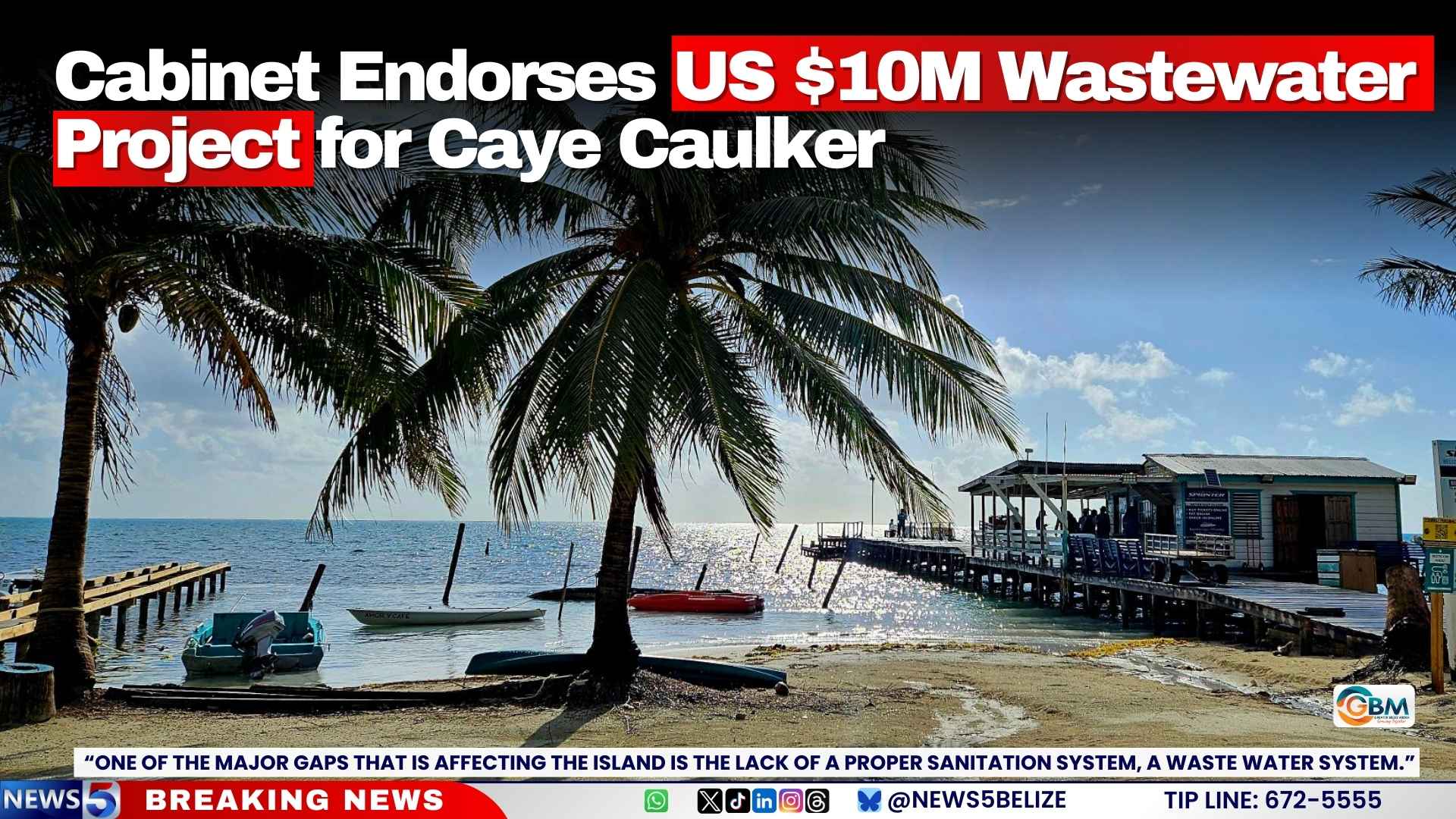
    The Belizean Cabinet has formally endorsed a major infrastructure initiative to address sanitation challenges on the island of Caye Caulker. Government officials will now seek legislative approval from the House of Representatives for a sovereign-guarantee agreement securing a US$10 million loan from the Inter-American Development Bank (IDB) to fund a comprehensive wastewater collection and treatment system.

    According to Ervin Flores, resident consultant engineer at Belize Water Services Limited (BWSL), the picturesque island currently lacks proper sanitation infrastructure despite having potable water access. “One of the major gaps affecting the island is the absence of a centralized wastewater system,” Flores noted, explaining that existing homes and businesses rely on individual septic tanks or small package plants that don’t provide coordinated treatment.

    The ambitious project will employ innovative vacuum pipe technology to transport wastewater from connected properties to a modern treatment facility. Flores emphasized that the system will “collect wastewater and treat it in a manner that exceeds effluent standards, ultimately enhancing environmental protection and public health outcomes for the community.”

    With a total project valuation of US$13 million—combining the IDB loan, BWSL contributions, and supplemental grants—the infrastructure development represents a significant investment in the island’s future. Implementation will commence with a six-month procurement phase to acquire necessary equipment, followed by an estimated three-year construction period involving extensive road trenching and pipe network installation.

    The initial phase will exclusively serve South Caye Caulker, the island’s more developed sector with higher population density and water consumption. North Caye Caulker will be considered for future expansion using potentially different, nature-based solutions due to budgetary constraints and the geographical challenge posed by the Split—a narrow water channel separating the two island sections.

    BWSL officials report successful public consultations and widespread community support from both residents and business operators. Pending government approvals and preparatory work, construction is anticipated to commence in the first quarter of next year, marking a transformative step toward sustainable development for the popular tourist destination.

  • “Bestie” Shares Life Behind the Screen as an Immigrant

    “Bestie” Shares Life Behind the Screen as an Immigrant

    Melvin Daniel Cortez, a 27-year-old social media personality known as “Bestie,” has emerged as an influential voice for immigrant rights in Belize after publicly recounting their challenging journey from undocumented childhood to documented adulthood. Cortez’s narrative reveals the multifaceted struggles faced by immigrants in the Central American nation, drawing widespread attention across digital platforms.

    Brought to Belize as a child by a parent fleeing difficult circumstances, Cortez endured years of instability that included sleeping on church floors and navigating economic survival by selling vegetables from a tricycle in Corozal’s streets. The journey from undocumented status to legal recognition represents a significant milestone that many immigrants never achieve, according to Cortez’s account.

    In an exclusive interview with News Five, Cortez detailed the dual challenges of social discrimination and systemic barriers. “Schoolchildren would routinely use derogatory terms like ‘yellow belly pania,’ ‘alien,’ or tell us to return to our countries,” Cortez revealed. “But the professional exclusion proved more damaging—employers consistently reject undocumented immigrants to protect their trade licenses, creating a cycle of poverty and exploitation.”

    As a trans woman, Cortez faced additional layers of discrimination while struggling to make ends meet through various informal sector activities, including selling chocolate bananas for less than $15 daily. This economic vulnerability, Cortez explained, makes undocumented immigrants particularly susceptible to workplace exploitation throughout Belize.

    Despite these challenges, Cortez maintained both hope and ethical integrity, guided by the philosophy encapsulated in the Spanish proverb: “Lo que siembras, cosechas” (You reap what you sow). This principle served as a moral compass against the temptation of quick but destructive solutions to financial desperation.

    The viral dissemination of Cortez’s story has sparked broader conversations about immigration reform, workplace protections, and social acceptance in Belize. The narrative has particularly resonated with Belize’s immigrant community, many of whom recognize similar patterns of struggle and resilience in their own experiences.

    News Five will feature Cortez’s complete story on their 6 o’clock broadcast, promising deeper insights into both the personal journey and the systemic issues affecting immigrants throughout the country.

  • National Workers Union to host annual congress of delegates

    National Workers Union to host annual congress of delegates

    The National Workers Union (NWU) will convene its pivotal Annual Congress of Delegates on February 20, 2026, adopting the resolute theme: “Preserving and Advancing Decades of Economic, Social, Political, and Industrial Achievements.” This gathering represents a critical juncture for the organization to reaffirm its commitment to protecting workers’ rights and consolidating past gains.

    In accordance with its constitutional mandate, the Congress will assemble at the NWU Headquarters located within the John Burke King Industrial Academy at Unity House, #7 Maurice Mason Avenue, Sans Souci, Castries. The proceedings will commence with an Open Session at 9:30 a.m., featuring a distinguished roster of speakers and participants.

    The ceremonial opening will be presided over by Chairperson Comrade Kimani Pompelis, with Comrade Nnamdi Obodoechina, Central Committee Member and Shop Steward at St. Jude Hospital, delivering the invocation. Secretary General Comrade Johann M. Harewood will set the strategic tone for the assembly through his Welcome Address.

    The Feature Address will be presented by Cletus Springer, a prominent figure in regional development who serves simultaneously as Chairman of the Caribbean Natural Resources Institute (CANARI) and Chairman of the Board of Governors of the Sir Arthur Lewis Community College. His extensive expertise in industrial relations is expected to provide valuable insights into contemporary labor challenges.

    The agenda also includes brief remarks from Emma Hippolyte, Minister for Labour, alongside solidarity messages from regional and international partner organizations. Following the Open Session, delegates will transition into a Closed Session to critically examine organizational reports and develop comprehensive work plans for the upcoming operational term.

  • Jury Sworn, Tight Security as Nigel Christian Murder Trial Opens

    Jury Sworn, Tight Security as Nigel Christian Murder Trial Opens

    A high-profile murder trial opened under stringent security protocols as three defendants faced charges for the abduction and killing of senior Customs official Nigel Christian. The proceedings commenced before Justice Rajiv Persaud with the selection of an eleven-member jury panel, comprising five men and six women, plus two alternates, following extensive vetting by both prosecution and defense teams.

    The accused—Lasean Bully, Wayne Thomas, and Saleim Harrigan—each entered not guilty pleas. The prosecution is led by Director of Public Prosecutions Clement Joseph and Curtis Cornelius, while the defense is represented by attorneys Sherfield Bowen, Michael Archibald, and Wendel Alexander.

    In an unusual security measure, all members of the public were subjected to searches before being permitted entry into the courtroom. Prosecutors outlined their case, alleging that on July 10, 2020, the defendants—wearing camouflage attire and impersonating police officers—forcibly took the 44-year-old Christian from his residence in McKinnons. His body was subsequently discovered in Thibou’s with fatal gunshot wounds.

    The trial is anticipated to extend over six weeks, with more than fifty witnesses scheduled to provide testimony. The case has drawn significant public attention due to the victim’s senior government role and the brazen nature of the crime.

  • MWAG gears up for 14th Annual Media Awards

    MWAG gears up for 14th Annual Media Awards

    The 14th Annual Media Awards in Grenada will feature prominent human rights attorney Jacqueline McKenzie as keynote speaker, bringing global perspective to critical discussions on press freedom. McKenzie, an internationally recognized advocate for the Windrush generation and named among Top 10 Most Influential Black Britons in 2022, will address the gathering under the theme ‘Press Freedom and Responsibility in a Time of Consequence.’

    Media Workers Association of Grenada (MWAG) President Calistra Farrier emphasized McKenzie’s selection as strategically aligned with current global challenges. ‘With all major global events unfolding, Ms. McKenzie’s international reach adds significant value to this year’s awards and expands MWAG’s outreach,’ Farrier stated, noting that journalists now operate amid democratic strains, climate instability, technological disruption, and widespread disinformation.

    This year’s ceremony introduces several innovations, including a custom-designed trophy selected through an open competition that will become the awards’ permanent symbol. The event has received 99 entries across 20 categories, with two new awards being introduced: The President’s Youth Award for journalists aged 25 and under, supported by the Ministry of Information and Ariza Credit Union, and the Press Freedom Award honoring late Grenadian journalist Leslie Pierre.

    Farrier described Pierre, who passed away in December 2014, as a pivotal figure in Grenadian journalism who trained dozens of media professionals and demonstrated remarkable fortitude in defending press freedoms. ‘He stood on the front lines for press freedom, willing to face any consequences in defence of all journalists,’ she noted.

    Additionally, the Impact Song of the Year Award, supported by Spicemas Corporation, will recognize music as a powerful communication medium. Breaking from tradition, this year’s awards will be held at Pier 57 instead of the Grenada Trade Centre Annex, generating anticipation within Grenada’s media community.

  • Sea Bridge Adds Early Morning Barbuda Departure to Ferry Schedule

    Sea Bridge Adds Early Morning Barbuda Departure to Ferry Schedule

    ST. JOHN’S, Antigua – In a significant boost to inter-island transportation, Sea Bridge Ferries has announced a comprehensive schedule expansion featuring a new early morning departure from Barbuda. The revised timetable, set to commence on Wednesday, February 25, 2026, introduces strategic changes designed to optimize travel efficiency between the sister islands.

    The updated operational plan includes a new midday departure from Crabb’s at 12 p.m., while introducing a revolutionary overnight stay protocol for ferries in Barbuda. This logistical enhancement enables a newly established 6:30 a.m. Thursday departure specifically tailored for passengers requiring early arrival in Antigua.

    Company representatives emphasized that this early morning sailing strategically addresses the needs of travelers with time-sensitive obligations including business meetings, medical consultations, and various professional commitments. The initiative represents Sea Bridge Ferries’ commitment to addressing both commercial transportation requirements and passenger convenience through improved scheduling flexibility.

    The transportation provider characterized these schedule modifications as part of their ongoing mission to enhance service quality for Antigua and Barbuda residents. Company officials expressed confidence that the optimized timetable would provide substantial practical benefits for regular commuters and commercial operators alike, while inviting passengers to experience the improved service under the newly implemented schedule.

  • GFNC: We’re Hiring – Communications Officer

    GFNC: We’re Hiring – Communications Officer

    The Grenada Food and Nutrition Council (GFNC) has announced an employment opportunity for a Communications Officer to spearhead public education campaigns promoting healthy nutritional practices throughout the tri-island nation. This strategic position within the Education & Promotion Division will be instrumental in shaping public health messaging across all parishes.

    The successful candidate will assume comprehensive responsibilities including developing and executing communication strategies, creating diverse content for press releases, social media platforms, newsletters, and informational brochures. The role additionally encompasses managing the organization’s digital presence through website maintenance and social media channels, serving as an official spokesperson, and providing support for community events. A critical component of the position involves conducting audience research and preparing analytical reports to measure campaign effectiveness.

    Applicants must possess a bachelor’s degree in Communications, Marketing, or a related discipline, complemented by demonstrated excellence in both written and verbal communication. The Council requires 2-3 years of professional experience in communications or marketing roles. This position offers a unique opportunity to contribute directly to public health advancement in Grenada.

    Interested professionals are invited to submit their applications via email to [email protected] before the deadline of February 27, 2026. The GFNC plays a vital role in addressing nutritional challenges and promoting wellness initiatives throughout Grenada, Carriacou, and Petite Martinique.