分类: society

  • Bestie’s Fight for Belonging Captivates Belize

    Bestie’s Fight for Belonging Captivates Belize

    In a nation where immigration debates typically dominate political discourse, one transgender woman’s personal struggle has captured Belize’s collective consciousness. Melvin “Bestie” Cortez, a 27-year-old social media phenomenon, has transformed from undocumented immigrant to national inspiration through her viral storytelling about Belize’s immigration challenges.

    Cortez’s digital ascent stems from her charismatic advocacy for LGBTQ inclusivity and immigrant rights, amassing a substantial following through her uplifting content. However, beneath the vibrant online persona lies a profound narrative of legal limbo that began when her mother brought her to Belize illegally in 2007 seeking protection from sexual violence.

    For two decades, Cortez navigated Belizean society without legal recognition—a reality she detailed in a viral video exceeding half-million views. Her testimony revealed how lacking a social security number barred access to education, employment, and basic dignity. Educational institutions charged exorbitant fees for undocumented students, with secondary education ultimately terminated due to financial constraints compounded by her immigration status.

    The employment landscape proved equally impenetrable, as employers universally rejected applicants without documentation regardless of qualifications. Cortez described how Belizean employers frequently exploit undocumented workers through subminimum wages, citing instances of $5/hour legal rates being replaced by $20 daily payments for exhaustive labor.

    Her turning point arrived through Belize’s 2022 Amnesty Program, which provided temporary legal status and transformative opportunities. Cortez has since secured employment, completed her Tourism Management degree at Centro Escolar Mexico, and emerged as a powerful advocate for Belize’s invisible immigrant population.

    From selling produce from a tricycle to becoming a graduate and influential voice, Cortez’s journey exemplifies both systemic barriers and human resilience. Her story has ignited national dialogue about immigration reform, workers’ rights, and the complex realities facing thousands living undocumented in Belize.

  • Port Loyola Families Get a Fresh Start With New Land Ownership

    Port Loyola Families Get a Fresh Start With New Land Ownership

    In a transformative ceremony on February 19, 2026, the Port Loyola community witnessed a landmark redistribution of land ownership that promises to reshape the socioeconomic landscape for hundreds of families. Three hundred residents received formal land certificates, marking a decisive shift from generations of housing insecurity toward sustainable property ownership.

    The distribution event transcended mere administrative formality, representing instead a fundamental restructuring of opportunity for a community historically marginalized regarding resource allocation. Area Representative Gilroy Usher contextualized the initiative’s significance through poignant personal testimony, recounting his own journey from precarious housing conditions to secured land ownership.

    Usher delivered a powerful cautionary address urging recipients to recognize the long-term value of their newly acquired assets. ‘Land constitutes an exceptionally precious and scarce commodity,’ Usher emphasized, drawing from his experience of initially building a temporary structure on relatives’ property before obtaining permanent land. He explicitly warned against short-term dispossession for immediate financial gain, stating: ‘Do not sell your land to anyone for quick money. You will regret that decision later.’

    The allocated parcels provide beneficiaries with multiple pathways toward stability—opportunities to construct permanent residences, establish agricultural ventures, and create intergenerational wealth transfer mechanisms previously inaccessible to many Port Loyola families. This government-led initiative addresses systemic challenges including predatory rental practices, forced displacements, and the psychological toll of housing uncertainty that have long characterized the region’s housing landscape.

    For participants, the certificates symbolize not merely legal documents but tangible foundations upon which to build educational opportunities for children, small business enterprises, and community infrastructure development—effectively resetting the area’s economic trajectory for coming decades.

  • Modern Wastewater System Coming to Caye Caulker

    Modern Wastewater System Coming to Caye Caulker

    The Belizean Cabinet has authorized a transformative wastewater management initiative for the island community of Caye Caulker, marking a pivotal advancement in public health and environmental conservation. Belize Water Services Limited (BWS) will spearhead this critical infrastructure project, which aims to replace the island’s outdated and inefficient septic tanks with a comprehensive modern sanitation system.

    Ervin Flores, Resident Consultant Engineer at BWS, revealed that this ambitious undertaking has been under development for approximately five years through collaboration with the Inter-American Development Bank (IDB). “While residents currently benefit from BWS’s potable water services,” Flores explained, “the absence of a proper wastewater collection and treatment system remains a significant deficiency affecting both community welfare and the delicate marine ecosystem.”

    Extensive preparatory work including feasibility studies, alternative analyses, and detailed engineering designs has culminated in a fully conceived system that will service both residential and commercial properties across the island. The recently approved $10 million USD loan arrangement, which requires final ratification by Belize’s House of Representatives, will enable the implementation of this comprehensive wastewater solution through a sovereign-guarantee agreement with the IDB.

    This infrastructure modernization represents a substantial investment in sustainable development for Caye Caulker, addressing long-standing environmental concerns while establishing foundational systems for the island’s future growth and ecological preservation.

  • Malecón section to close for National District Carnival preparations

    Malecón section to close for National District Carnival preparations

    Santo Domingo’s National District Mayor’s Office has implemented traffic restrictions along the Malecón waterfront in preparation for the highly anticipated DN Carnival celebrations. Effective Friday at 4:00 PM, George Washington Avenue will be closed to vehicular traffic between Pasteur Street and Palo Hincado Street to facilitate event preparations.

    The transportation advisory recommends motorists utilize alternate routes along Independencia Avenue and Simón Bolívar Avenue during the closure period. These measures precede the traditional carnival parade scheduled for Sunday afternoon at 3:00 PM, which promises to transform the city into a vibrant spectacle of cultural expression.

    This year’s festivities will showcase an impressive assembly of more than 70 carnival troupes and individual performers, representing the rich cultural heritage of the Dominican Republic. The celebration will culminate in a grand finale concert featuring renowned artists Toño Rosario, Omega, Jandy Ventura, Sexappeal, and Steffany Constanza.

    The carnival organization has collaborated closely with the Union of Carnival Performers of the National District to coordinate the event. This year’s parade carries special significance as it honors Dr. José Guillermo Mieses, affectionately known as “Pepe,” whose multifaceted contributions as a physician, athlete, folklorist, and founder of the award-winning comparsa Los Leones del Diablo have left an indelible mark on Dominican cultural traditions.

    Adding to the royal symbolism of the event, Francisco Taveras Benítez has been designated King of Carnival. His lifelong dedication to carnival traditions began in childhood and evolved through his founding of the comparsa Los Diablos de Franciquito, later renamed Los Cachos de Villa Francisca.

    The carnival monarchy is completed with the crowning of Santa Valdez as Carnival Queen, recognizing her substantial contributions since 2006. As founder of the African Blood troupe representing Los Pinos de Guachupita, Valdez has accumulated an impressive collection of at least 15 awards throughout her participation in the National District Carnival Parade.

  • Scratch & Win Jackpot in Belmopan

    Scratch & Win Jackpot in Belmopan

    A routine purchase at a Belmopan supermarket transformed into a life-altering event for one local resident who struck gold with a scratch-off lottery ticket. The fortunate individual discovered he had won a substantial $50,000 jackpot from a ticket acquired at Carrefour Supermarket, immediately catapulting his financial prospects into new territory.

    In an exclusive interview, the winner described the surreal moment of realization. “I was working essentially, and I couldn’t even believe I was a winner because I usually get the 20x times and such,” he recounted, expressing initial disbelief at his unexpected fortune. “I thought it was just a dollar ticket.”

    The newly minted winner has already formulated practical plans for his windfall, prioritizing financial responsibility over extravagant spending. His strategy includes eliminating outstanding debts, building a robust savings cushion, and celebrating modestly with family. When questioned about his intentions for the considerable sum, he emphasized: “Mainly get some bills paid and savings as well.”

    The celebration will include treating his family to a special meal at a quality restaurant, though the emphasis remains firmly on financial security rather than lavish expenditure. This approach demonstrates a thoughtful perspective on sudden wealth management that financial advisors frequently recommend.

    This incident marks another significant lottery victory for the Belmopan area, highlighting how ordinary daily routines can unexpectedly yield extraordinary outcomes. The winner’s grounded response to his newfound fortune serves as an inspiring example of financial prudence following unexpected monetary gains.

  • Weekly “Fish Fry” Coming to North Front Street?

    Weekly “Fish Fry” Coming to North Front Street?

    The Belizean government is moving forward with plans to establish a vibrant fish market and weekly culinary event on North Front Street, as announced by Tourism Minister Anthony Mahler. This long-discussed initiative aims to create a dedicated space where both residents and tourists can converge to enjoy authentic local cuisine and immerse themselves in Belizean culture.

    Minister Mahler revealed that the concept was inspired by his international travels, particularly observations of fish markets in the United States. “Whenever I travel, I make it a point to visit local fish markets,” Mahler stated. “This exposure sparked the idea that Belize should develop its own premium fish market destination for people to experience.”

    The envisioned market will feature numerous small booths offering freshly caught seafood alongside traditional Belizean favorites. According to Mahler, visitors will be able to enjoy local specialties including fry jacks, flour tortillas, and beans at any time of day within the fish market environment.

    A distinctive component of the project will be the introduction of a weekly “fish fry” event, drawing inspiration from Caribbean traditions where communities gather around fried fish and local dishes accompanied by music and entertainment. While the minister expressed enthusiasm for the cultural and economic potential of the initiative, specific operational details and an official opening timeline remain undetermined at this stage.

  • Environment : Risk Management Actions Three-Year Operational Plan 2024-2027

    Environment : Risk Management Actions Three-Year Operational Plan 2024-2027

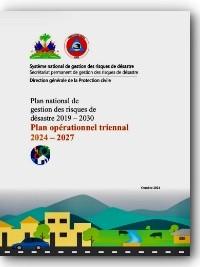
    Haiti has unveiled a comprehensive Three-Year Operational Plan (2024-2027) to address the nation’s escalating vulnerability to natural disasters and complex crises. This landmark initiative represents the first actionable framework derived from the National Disaster Risk Management Plan (2019-2030), emerging as the Caribbean nation faces increasingly frequent and overlapping environmental shocks that outpace community recovery efforts.

    The strategic blueprint, developed by Haiti’s National Disaster Risk Management System through its Permanent Secretariat and Directorate General of Civil Protection with international support, adopts a multi-hazard approach to safeguard vulnerable populations. With a sobering 7.2 INFORM risk index rating for 2024, the plan acknowledges that over 93% of Haiti’s territory and 96% of its population face exposure to at least two major hazards simultaneously, including hurricanes, floods, earthquakes, landslides, and droughts.

    This operational framework organizes disaster management around four strategic pillars: enhanced risk knowledge, improved risk governance, strategic risk investment and transfer mechanisms, and comprehensive preparedness and response systems. Unlike conventional development plans, this initiative focuses exclusively on integrating risk criteria into national planning while addressing all disaster management components from mitigation through recovery.

    The plan’s implementation will mobilize central government operational levels through specialized committees handling sectoral risk management and emergency response coordination via the National Emergency Operations Center. This coordinated approach becomes increasingly critical as Haiti’s deteriorating socio-economic conditions, including widespread armed violence and mass internal displacement, further exacerbate the population’s vulnerability to environmental threats.

    By adopting principles of gender equality, inclusion, human security, and good governance, the 2024-2027 plan aims to build collective and territorial resilience toward the 2030 vision of comprehensive protection for lives and property against Haiti’s multiple risk exposures.

  • Selling Iguana? Be Ready to Pay Up $10K

    Selling Iguana? Be Ready to Pay Up $10K

    Authorities in Belize have implemented stringent measures to protect the native iguana population during its critical breeding period, imposing fines of up to $10,000 for individuals caught trafficking or possessing iguana meat. The annual closed season, which extends from February 1 through June 30, represents a vital conservation window designated by the Belize Forestry Department to ensure species survival.

    Victoria Chi, Chief Forest Officer, emphasized that this protective ban coincides with the reptiles’ most vulnerable biological phase when they are actively reproducing to replenish their numbers. “This timeframe specifically aligns with their breeding cycle, which unfortunately also coincides with peak consumer demand for egg-bearing iguanas,” Chi explained, highlighting the ecological rationale behind the seasonal restriction.

    While the Forestry Department doesn’t conduct direct population monitoring, it maintains an active Iguana Conservation Program in partnership with the San Ignacio Hotel. This initiative provides rehabilitation services for injured iguanas frequently recovered from illegal hunting operations, with recovered specimens eventually reintroduced to their natural habitats.

    Enforcement efforts will be significantly intensified through coordinated patrols with national police departments, particularly targeting known wildlife trafficking hotspots including La Democracia, Hattieville, and Sandhill intersections. Chi urged public compliance with the seasonal ban, stating: “This closure exists for important ecological reasons. We must collectively learn to respect these conservation measures.”

    The department encourages citizens to report suspected illegal hunting activities through the dedicated tip line 610-1524 to support enforcement operations during this critical conservation period.

  • UDP says Caye Caulker No Longer Safe

    UDP says Caye Caulker No Longer Safe

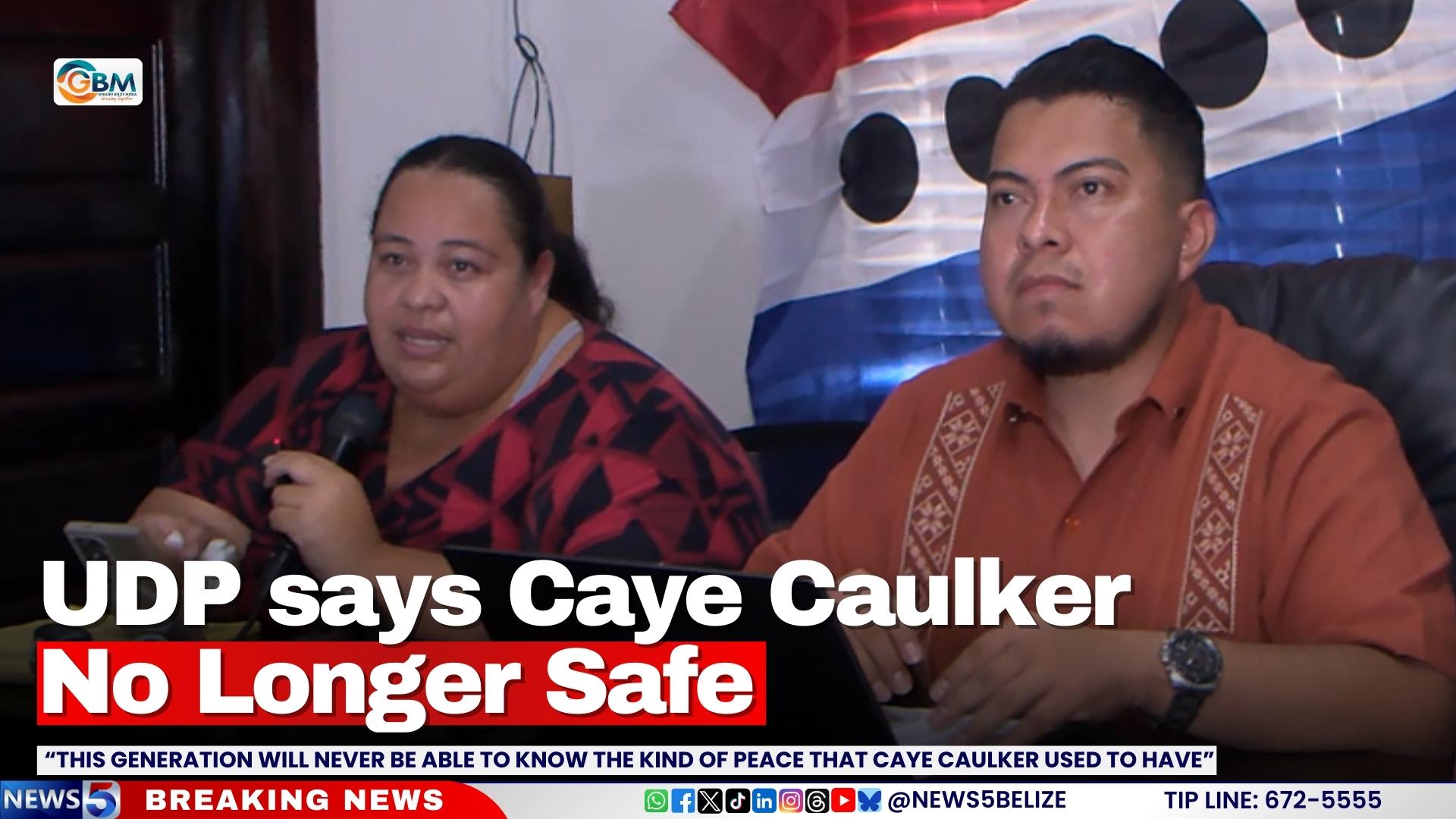
    The tranquil reputation of Belize’s Caye Caulker has been shattered by escalating violence, prompting urgent calls for enhanced security measures from concerned residents. At a recent press conference convened by UDP Senator Gabriel Zetina, community representative Samira Martinez delivered an emotional testimony about the island’s deteriorating safety conditions.

    Martinez, a long-time resident and member of the UDP Belize Rural South Team, revealed that the island’s transformation from peaceful haven to concerning crime hotspot has left families fearing for their children’s safety. “Caye Caulker used to be a safe zone where children could grow up in peace,” Martinez recounted. “This new generation will never experience the security we once took for granted.”

    The community advocate outlined specific demands including the permanent stationing of police officers on the island and the implementation of youth engagement programs. Martinez emphasized the vulnerability of young people, stating, “We need comprehensive programs that teach life skills and civic responsibility. Our youth are being targeted, and we must build harmonious relationships between police and community members.”

    These concerns follow a recent shooting incident that left one man injured and another in custody, highlighting the pressing need for intervention. The community’s appeal signals a critical juncture for the popular tourist destination as it struggles to balance its peaceful image with emerging security challenges.

  • Sarteneja Students Have Gone Years Without a School Building

    Sarteneja Students Have Gone Years Without a School Building

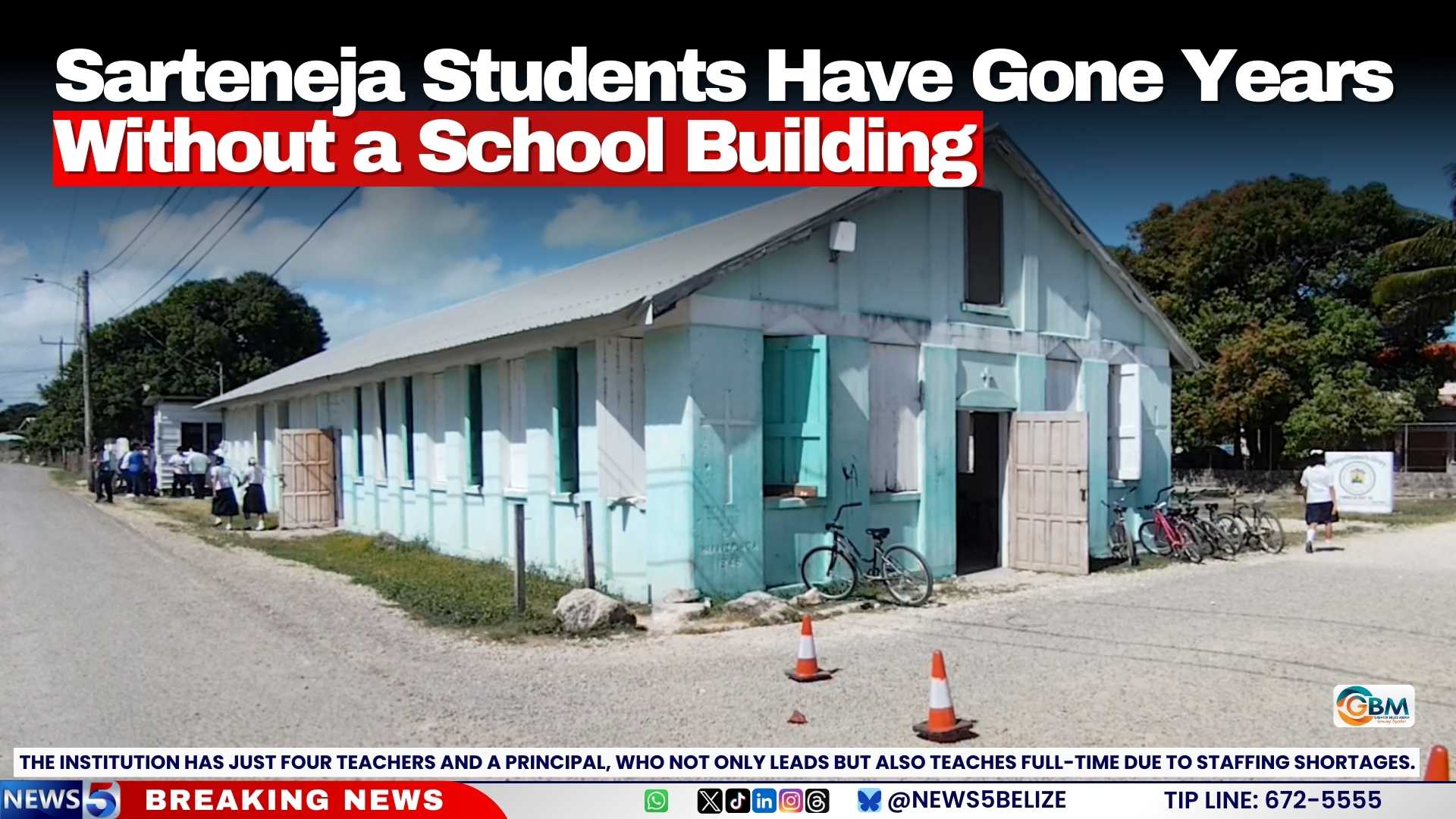
    In the Corozal District of Belize, Sarteneja Baptist High School represents a stark case of educational infrastructure neglect, having operated without a dedicated school building for more than four consecutive years. The institution’s 84 students receive their education under profoundly challenging circumstances, with some classes conducted in makeshift outdoor sheds constructed from donated materials.

    The school suffers from critical staffing shortages, maintained by just four teachers alongside a principal who performs dual roles as administrator and full-time instructor. The complete absence of specialized facilities—including science laboratories and computer labs—severely limits the educational experience offered to students.

    Darnel Cruz, Secretary of Sarteneja’s Village Council and a local primary school teacher, provided insight into the ongoing struggle. Community leaders identified a potential construction site near the airstrip, but development remains paralyzed by funding deficiencies. Currently, students utilize the community center as a temporary measure, though this solution falls far short of meeting educational requirements.

    With graduation numbers expected to exceed available spaces this June, parental concerns are mounting. Families are increasingly vocal in demanding governmental intervention and a sustainable, long-term resolution. School administration has maintained silence on the matter, while the community continues advocating for the construction of permanent facilities that would allow students to learn in a proper academic environment.