分类: society

  • Anderson is the 2025 UWI Global Campus valedictorian

    Anderson is the 2025 UWI Global Campus valedictorian

    Alex Anderson, an accomplished Jamaican educator, has been selected as the valedictorian for The University of the West Indies Global Campus Class of 2025. The virtual graduation ceremony, scheduled for January 10th, will feature Anderson addressing fellow graduates from across the region.

    Hailing from Montego Bay, St. James, Anderson brings eight years of primary school teaching experience to his new honor. His educational philosophy centers on transformative, student-focused approaches that foster confidence, curiosity, and academic excellence. Before pursuing his Bachelor of Education in Educational Leadership and Management at UWI Global Campus, Anderson earned a psychology degree from Canada’s University of Waterloo in 2012.

    Anderson’s teaching methodology transcends conventional academic metrics, emphasizing the development of critical thinking skills essential for success beyond classroom walls. He balances full-time teaching with academic rigor and family responsibilities, embodying perseverance and resilience—qualities he attributes to Walter Elliot’s philosophy about perseverance consisting of ‘many short races one after the other.’

    Beyond his professional accomplishments, Anderson maintains diverse personal interests including football, travel, music, and culinary arts—a passion nurtured alongside his mother in their family kitchen. His Christian faith profoundly influences both his personal and professional life, guided by principles from Philippians 2:3-4 emphasizing humility, compassion, and purposeful living.

    Dr. Francis O. Severin, Pro Vice-Chancellor and Principal of UWI Global Campus, expressed particular satisfaction that an educator received this recognition, noting it serves as motivation for teachers and education professionals whose contributions often go unrecognized despite being fundamental to student development.

    The university’s Senior Management Team has extended congratulations for Anderson’s academic achievement and best wishes for his future endeavors. The virtual ceremony will be broadcast on January 10th at 6:00 PM EC time through multiple platforms including UWItv.global, Facebook Live, and Flow EVO channels.

  • LETTER: Pre-Dawn Police Raids on Elderly Homes Raise Questions of Proportionality and Accountability

    LETTER: Pre-Dawn Police Raids on Elderly Homes Raise Questions of Proportionality and Accountability

    Recent law enforcement operations in Antigua have ignited serious constitutional debates regarding the balance between police authority and citizen protections. During the early hours of December 31, 2025, armed officers conducted simultaneous pre-dawn raids on two residential properties housing elderly occupants and young children, yielding no evidence of criminal activity despite the intrusive nature of the operations.

    The first incident involved a 63-year-old ailing woman and her caretaker daughters, whose home was entered by officers reportedly carrying military-style weapons around 3:00-4:00 a.m. The warrant sought illegal narcotics, firearms, and ammunition, but none were discovered. Simultaneously, a second residence occupied by a 70-year-old matriarch, her adult children, and young grandchildren operating a home-based business was searched under a separate warrant. Although this household had previous interactions with law enforcement, no illegal items were found.

    These events occur against the backdrop of Antigua and Barbuda’s legitimate anti-crime initiatives. In 2025, the Royal Police Force reported seizing over fifty illegal firearms and hundreds of ammunition rounds through targeted operations. The government had also implemented a National Gun Amnesty program encouraging voluntary surrender of weapons without prosecution.

    Constitutional experts emphasize that while search warrants require probable cause, the absence of recovered evidence doesn’t automatically invalidate authorization. However, multiple unsuccessful searches based on serious allegations naturally prompt public scrutiny of intelligence quality and authorization standards.

    The doctrine of proportionality emerges as a critical concern. The deployment of heavily armed units for pre-dawn raids in homes without known violent histories raises questions about appropriate restraint. Legal scholars note that even lawfully authorized searches must be executed reasonably according to circumstances.

    The incidents highlight systemic questions about post-search transparency and accountability mechanisms. What information are citizens entitled to receive when searches yield no evidence? What review processes exist for potentially erroneous intrusions? These questions touch upon the fundamental legal principle of ‘Ubi jus ibi remedium’ – where there is a right, there must be a remedy.

    While acknowledging law enforcement’s vital role in public safety, the article argues that true justice requires both the power to act and the wisdom to correct errors. A system worthy of public trust must demonstrate fairness, accountability, and commitment to protecting the dignity of innocent citizens alongside its crime-fighting responsibilities.

  • ABWU Mourns Passing of Greg Walter, Son of National Hero Sir George Walter

    ABWU Mourns Passing of Greg Walter, Son of National Hero Sir George Walter

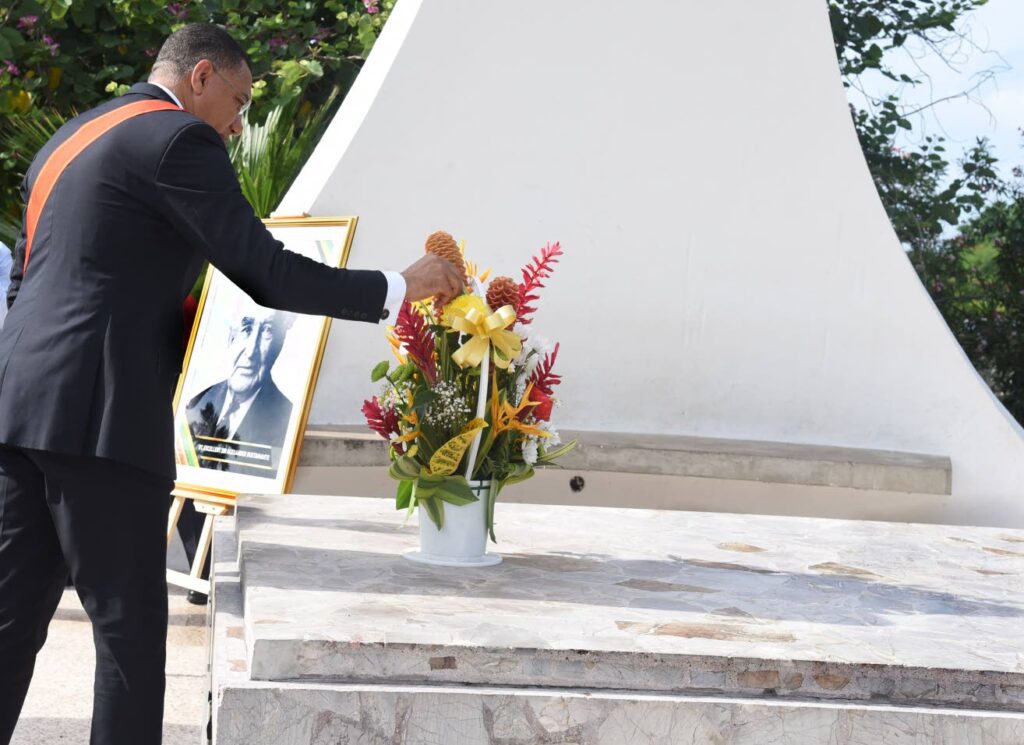
    The Antigua and Barbuda Workers’ Union (ABWU) has expressed profound sorrow following the passing of Greg Walter, descendant of National Hero Sir George Walter who served as the organization’s inaugural General Secretary.

    Greg Walter maintained a close relationship with the Union throughout his life, carrying forward the enduring legacy of public service and collective advocacy that his father had so distinguishedly established. While forging his own distinctive path, Walter upheld the family’s deep-rooted commitment to labor rights and social justice that characterized his father’s pioneering work.

    The ABWU leadership has issued official condolences to the Walter family and their extensive circle of friends during this period of collective mourning. Union representatives emphasized their shared sense of loss and commitment to standing in solidarity with the family as they commemorate and reflect upon his life’s contributions and personal significance.

    The statement concluded with traditional sentiments of respect, honoring Walter’s memory and expressing hopes for his peaceful rest, while acknowledging the profound impact of his family’s multi-generational dedication to workers’ rights and social advancement in Antigua and Barbuda.

  • 10 people convicted for online harassment after saying France’s first lady was born a man

    10 people convicted for online harassment after saying France’s first lady was born a man

    A Parisian judicial court delivered a significant verdict on Monday, convicting ten individuals for the coordinated cyber-harassment of Brigitte Macron, the First Lady of France. The defendants were found guilty of orchestrating a malicious online campaign that propagated the demonstrably false claim that she is a transgender woman born male.

    The long-standing conspiracy theory, which falsely alleges Brigitte Macron was born under the name Jean-Michel Trogneux—a name that actually belongs to her older brother—has plagued the presidential couple for years. While the Macrons had previously chosen to ignore the barrage of criticism focused on their 24-year age gap, this ruling signals a decisive shift in their legal strategy to confront such disinformation through the judicial system.

    This conviction represents a strategic legal victory for the Macrons, who are concurrently pursuing a separate, high-profile defamation lawsuit in the United States against right-wing commentator Candace Owens for repeating the same false allegations. The ten convicted individuals—eight men and two women—were found to have engaged in targeted harassment concerning the First Lady’s gender and sexuality, with some comments outrageously equating the couple’s consensual adult relationship to criminal behavior.

    The case unfolds against a backdrop of intensifying transatlantic debates on the boundaries of free speech and disinformation. The defendants’ argument that their malicious comments constituted protected satirical expression was firmly rejected by the court. One convicted individual, Bertrand Scholler, a 55-year-old gallerist, received a six-month suspended sentence and announced his intention to appeal, decrying the verdict as evidence of a societal drift away from free speech.

    In a powerful response, Brigitte Macron emphasized the profound personal impact of the harassment, pointing to the irrefutable evidence of her birth certificate. She framed her legal stance as a necessary example for vulnerable adolescents, stating, ‘A birth certificate is not nothing… I want to help adolescents to fight against harassment, and if I do not set an example, it will be difficult.’

  • Three Men Charged in Connection with Fraud Offences

    Three Men Charged in Connection with Fraud Offences

    In a significant development in financial crime enforcement, authorities in Antigua and Barbuda have formally charged three individuals in connection with an elaborate electronic fraud scheme. The Royal Police Force has taken decisive action against what appears to be a coordinated effort to illegally transfer funds from local banking institutions.

    The accused individuals have been identified as Jahari Adams, 28, of Golden Grove Extension; Judeah Francis, 25, of Golden Grove; and Kareem Davis, 19, of Cooks Extension. These three men face serious charges related to the unauthorized electronic transfer of $10,600 from a savings account at a financial institution based in the region. The alleged offense occurred on December 13, 2025, marking a concerning breach of financial security systems.

    The investigation gained momentum on January 2, 2026, when police officers intercepted a white Toyota Ractis vehicle traveling along Friendly Alley. The strategic interception led to the apprehension of all three suspects, with Francis operating the vehicle and Adams and Davis as passengers. This tactical move by law enforcement demonstrates the increasing sophistication of police operations in combating cyber-enabled financial crimes.

    Authorities have secured several crucial pieces of evidence believed to be instrumental to the investigation. Among the items confiscated were a silver HP laptop computer, a Digicel cellular phone, and a storage vault device. These technological artifacts are undergoing forensic analysis to establish their connection to the alleged fraudulent activities and potentially uncover additional evidence of digital wrongdoing.

    The case highlights the growing challenge that Caribbean nations face in combating electronic financial crimes as digital banking becomes more prevalent throughout the region. Law enforcement agencies are increasingly deploying specialized cybercrime units and forensic technology to address these modern criminal methodologies.

    The three accused individuals are scheduled to appear before the judicial system to answer to the charges brought against them. This case represents an important test of the nation’s legal framework for addressing digitally-facilitated financial crimes and may set precedents for future prosecutions of similar offenses in the region.

  • Saint Lucian students return to class this week

    Saint Lucian students return to class this week

    Educational institutions across Saint Lucia have resumed operations this week, marking the commencement of the second academic term following the Christmas intermission. The initial term concluded uniformly on December 11th across most schools, setting the stage for the new semester which officially commenced on Tuesday, January 6th.

    In preparation for the term’s launch, administrative and teaching personnel including principals, educators, and support staff were required to report to their respective institutions on Monday, January 5th. This preliminary day facilitated essential preparatory measures to ensure a seamless transition back to academic routines for students.

    Concurrently, the Ministry of Health has disseminated comprehensive guidance aimed at assisting parents and guardians in navigating the post-holiday period while prioritizing children’s wellbeing. Among the key recommendations are the implementation of structured bedtime schedules and the maintenance of an equilibrium between recreational activities and academic responsibilities.

    Additional advisories include procuring essential health supplies such as alcohol-based hand sanitizers and disinfectant wipes. The Ministry further emphasizes the nutritional aspect of education, urging families to provide balanced, health-conscious meals and snacks in packed lunches.

    The health authority reiterates the critical importance of respiratory hygiene practices, specifically proper cough etiquette. Furthermore, parents are strongly advised to keep symptomatic children at home or seek appropriate medical consultation to prevent potential illness transmission within educational environments.

  • Maria Browne calls for prayer and unity at National Thanksgiving Service

    Maria Browne calls for prayer and unity at National Thanksgiving Service

    In a powerful address following Antigua and Barbuda’s inaugural National Church Service for 2026, Works Minister Honorable Maria Browne delivered a compelling message of spiritual fortitude and national unity. The service, held on the first Sunday of the new year, became a platform for reflection and collective encouragement as the nation moves forward.

    Minister Browne drew profound inspiration from Apostle Andrews’ sermon, which centered on Micah chapter seven, verse eight—a biblical passage emphasizing hope during adversity. The Minister articulated how the religious message powerfully resonated with current national circumstances, emphasizing that temporary setbacks never signify permanent defeat and that illumination often emerges from periods of darkness.

    Characterizing the sermon as exceptionally timely, Browne highlighted its direct relevance to the psychological and spiritual needs of the Antiguan and Barbudan populace. She stressed the critical importance of maintaining faith and demonstrating perseverance amid challenges, framing these virtues as essential components of national character.

    Expanding her appeal beyond national borders, the Minister issued a regional call to action, urging citizens to sustain prayers not just for their homeland but for the entire Caribbean community. Her message specifically requested divine intervention for peace, stability, and strengthened unity throughout the region, recognizing the interconnectedness of Caribbean nations.

    The National Church Service represents a significant tradition within Antigua and Barbuda’s cultural and religious calendar, formally marking the commencement of each new year through collective worship and spiritual contemplation. This annual observance provides a moment for national introspection and reaffirmation of shared values before embarking on another year’s journey.

  • Why do libraries still matter today? Part 4

    Why do libraries still matter today? Part 4

    In an increasingly digitized world, libraries have transformed from traditional book repositories into vital institutions combating one of society’s most pressing challenges: the digital divide. This multifaceted gap separates those with access to digital technologies from the estimated 2.9 billion people worldwide who remain offline—approximately 37% of the global population.

    The digital divide extends beyond mere connectivity, creating sustained disadvantages in education, healthcare access, and employment opportunities. For perspective, this disconnected population equals nearly 30,000 times the entire population of Grenada, highlighting the staggering scale of the problem.

    Libraries have evolved to address this crisis through practical interventions. Public libraries now provide computer access to diverse communities while offering digital literacy programs tailored to both ‘digital refugees’ (those struggling with technology) and ‘digital immigrants’ (those who acquired digital skills as adults). Academic institutions like T.A. Marryshow Community College (TAMCC) Library have enhanced their technological infrastructure through initiatives like the National Telecommunications Regulatory Commission project, providing laptops and desktops for student and faculty use.

    Beyond hardware provision, libraries offer unique advantages in digital education. Their non-curricular environment creates comfortable learning spaces where students frequently seek technology assistance they might hesitate to request in formal classrooms. This flexible approach positions libraries as transdisciplinary support centers capable of addressing digital literacy across all subject areas.

    The International Federation of Library Associations and Institutions (IFLA), approaching its centennial anniversary, continues to champion this evolved library model through its vision of creating ‘sustainable future for all through knowledge and information.’ However, many libraries face significant challenges including limited funding and constrained vision, potentially hindering their ability to fully address contemporary digital needs.

    As noted by librarian Donna Chanderpaul-Singh, libraries remain growing organisms that must continuously adapt to serve modern society. Their expanded roles in promoting information literacy, supporting continuous learning, building communities, and reducing digital disparities make them more relevant than ever in our technology-dependent world.

  • “Plastics for Toys” returns to City Hall on January 11

    “Plastics for Toys” returns to City Hall on January 11

    Santo Domingo’s municipal government is set to host the sixth iteration of its innovative environmental program, ‘Plastics for Toys,’ on Sunday, January 11. Spearheaded by National District Mayor Carolina Mejía, the event will operate from 8:00 a.m. to 12:00 p.m. at City Hall, exclusively catering to residents of the National District.

    This community-driven initiative establishes a direct exchange mechanism where participants can trade cleaned and crushed plastic bottles, complete with their caps, for new toys. The program features a tiered exchange system: 500 bottles qualify for a bicycle, while 300 bottles can be redeemed for other assorted toys. To ensure equitable distribution, a limit of two toys per person will be enforced, requiring presentation of valid identification.

    Beyond the environmental exchange, Mayor Mejía has announced accompanying festivities including live children’s entertainment, musical performances, and refreshments. The municipal government emphasized the program’s dual significance, highlighting both its waste reduction achievements and its role in public education. Official data reveals that the ‘Plastics for Toys’ program, along with its sister initiative ‘Plastics for School Supplies,’ has successfully diverted over 33 million plastic bottles from streets and landfills. These efforts collectively represent one of the nation’s most substantial ongoing campaigns for environmental awareness and sustainable practice adoption.

  • Column: Hoop en verbondenheid in een onzekere wereld

    Column: Hoop en verbondenheid in een onzekere wereld

    As 2025 commenced, citizens worldwide embraced diverse resolutions encompassing both material aspirations and profound personal growth objectives. These ambitions ranged from revitalizing neglected relationships and fostering community connections to finally dedicating time to long-pending literary works and planning well-deserved vacations. Many sought the courage to pursue authentic life paths beyond societal expectations.

    The retrospective assessment of 2025 reveals a tapestry of human experience marked by both celebratory milestones and profound grief. Nations collectively mourned the passing of prominent societal figures while individuals faced personal losses of parents, siblings, children, and partners. The year proved particularly unforgiving to children caught in unprecedented humanitarian crises, reminding populations that life rarely unfolds according to predetermined plans.

    Amid these challenges, beacons of hope emerged through academic achievements, marital unions, newborn arrivals, and meaningful anniversaries. New professional and emotional bonds formed across communities, though these connections often went undervalued amidst daily pressures. Despite geographical dispersion, global citizens share celestial observations of the same sun and moon, albeit at different intervals, while exchanging thoughts through mechanisms that frequently defy full comprehension.

    National highlights included democratic elections, the 50th anniversary of Srefidensi celebrations, and the diplomatic visit of the Dutch royal couple. However, the dawn of 2026 presents formidable challenges following the seismic impact of American military actions in Venezuela that reverberated throughout Latin America, the Caribbean, and ultimately the global community.

    Economic interests continue driving both individual and national behaviors, with expansionist ambitions emerging from these financial imperatives. Worldwide tensions escalate as non-participating nations face coercive pressures, while international regulations suffer systematic violations. The global community seeks equitable responses to these developments, recognizing that interconnectedness, solidarity, and unified purpose among nations, organizations, and communities constitute our strongest defense against aggression.

    This new era demands heightened awareness of individual and collective responsibilities. Addressing contemporary challenges requires not merely political or diplomatic solutions but strengthened social cohesion. During periods of uncertainty and division, mutual support, active listening, and collaborative action become paramount.

    Critical questions emerge from these reflections: What lessons has 2025 imparted? How do we approach 2026 with clarity and purpose? In what manner do we perceive our fellow citizens and our shared national identity? What expectations define our collective vision, and most importantly, what concerted actions will we undertake to improve our shared existence?

    The new year presents an opportunity to pursue not only personal objectives but also to reinforce our collective future. Ultimately, it is through people connected by mutual respect and solidarity that meaningful change emerges.