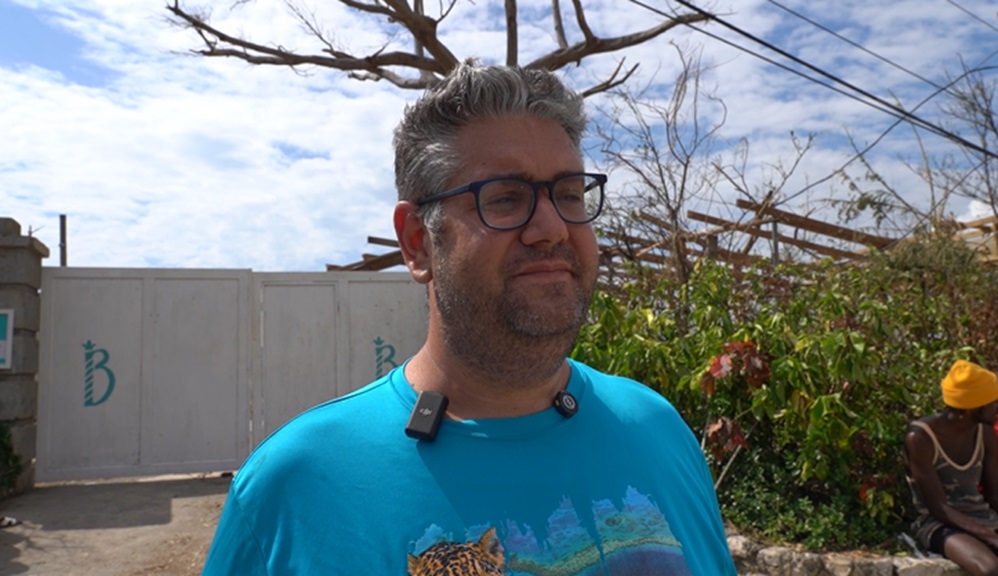
In the wake of Hurricane Melissa’s devastation, Houston Moncure, Managing Director of Bluefields Bay Villas, has shifted his focus from luxury hospitality to humanitarian aid. His primary mission now is to ensure the survival of the storm-ravaged community surrounding his resort. Moncure has repurposed his property into a critical relief hub, providing essential resources such as food, water, and internet access to residents and emergency responders. Despite significant damage to his own resort, including structural losses to several villas and suites, Moncure remains steadfast in his commitment to community recovery. He has equipped his vehicles with Starlink satellite systems to maintain connectivity during disasters, a strategy that proved invaluable during the hurricane. Moncure estimates the recovery process will take four to six months and cost millions of dollars, excluding additional landscaping repairs. He is also collaborating with NGOs and plans to convert shipping containers into temporary housing for displaced residents. Moncure emphasizes the importance of community support, stating, ‘Without the community, it’s not the experience that our guests have come to love.’ His efforts highlight the resilience and compassion needed in the face of natural disasters.
分类: society
-
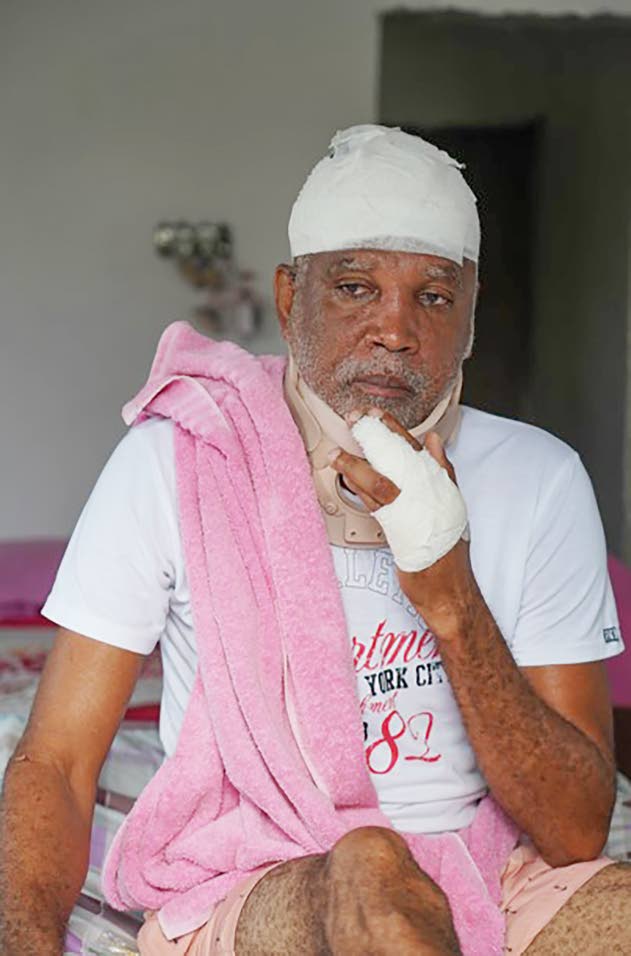
‘Mi house just lift up and carry mi gone’
For Junior Bowen, a 59-year-old resident of Petersfield, Westmoreland, the devastation wrought by Hurricane Melissa transcended the ferocious 185-mile-per-hour winds. His ordeal reached its peak when his home was torn from its foundation, lifting him into the air before hurling him into nearby bushes. The Category Five hurricane struck last Tuesday afternoon, leaving Bowen battered, buried, and helpless beneath the rubble until rescuers found him.
-

The fight against freedom
In the decade leading up to the Emancipation Act, Tobago’s planting community braced for the anticipated consequences of the anti-slavery movement. Fearing violent resistance from the African population, which they labeled as criminal, authorities implemented stringent measures to maintain control. These included harsher laws, an expanded and more regulated police force, and enhanced judicial facilities. A new courthouse was constructed above the marketplace, providing magistrates with larger spaces to operate. Simultaneously, the police forces in Scarborough and Plymouth were bolstered by a new law that introduced two additional magistrates to oversee law enforcement and address offenses. These magistrates were required to hold court sessions twice weekly, year-round, and were empowered to appoint constables to maintain order during market days and apprehend offenders. To accommodate the expected rise in incarcerations, the Scarborough Jail was expanded. The prison’s design was rooted in four key principles: the anticipated increase in prisoners due to societal tensions, the need to prevent escapes, the deterrence of external assistance to inmates, and the enforcement of labor as a core component of incarceration. The new facility, constructed by John H Noding, was a two-story structure designed to be escape-proof, with reinforced walls, iron gates, and secure partitions. A committee was established to oversee the project, ensuring its timely completion by June 1, 1824. Parallel to these developments, the militia was strengthened through a 1827 law that introduced strict regulations, mandatory enlistment for free men aged 16 to 55, and provisions for uniforms and weaponry. Notably, the law allowed for the inclusion of black and colored sergeants and corporals, a pragmatic move driven by the shortage of white men. However, racial distinctions persisted, with black and colored members positioned on the left during parades. Despite these efforts, the tide of history was against the planters, as the anti-slavery movement in Britain gained momentum, making the abolition of slavery in the colonies inevitable.
-

Masicka’s MADE Foundation to provide relief for those affected by Hurricane Melissa
Renowned dancehall artist Masicka has taken a proactive role in aiding communities devastated by Hurricane Melissa through his charitable organization, the MADE Foundation. The foundation has initiated the first phase of a comprehensive relief program aimed at supporting affected areas, with a particular focus on the parish of St Elizabeth. In an exclusive interview with Observer Online, Masicka emphasized the importance of community solidarity during times of crisis. “Jamaica is home. When the people are hurting, I feel that too,” he stated. “The MADE Foundation is about making a difference and showing that we care beyond the music.” Although Masicka’s immediate family was spared from the hurricane’s impact, he expressed deep concern for friends and supporters in St Elizabeth who suffered significant losses, including homes, farms, and access to basic utilities. Collaborating with local representatives, the MADE Foundation has identified urgent needs and is providing essential supplies such as food, building materials, steel, and cement. The initiative has also garnered support from Red Stripe and producer Mario Dunwell, who have joined the mission to bring aid and hope to affected communities. Masicka highlighted that this effort aligns with his long-standing commitment to philanthropy, which includes donating computers to schools, organizing back-to-school events, and supporting youth initiatives. The MADE Foundation, established to empower communities through education, mentorship, and crisis support, aims to create lasting change across Jamaica and the Caribbean. Masicka’s connection to St Elizabeth, where he performed early in his career, adds a personal dimension to the relief efforts. The foundation plans to expand its outreach to other parishes as part of an ongoing national recovery initiative.
-
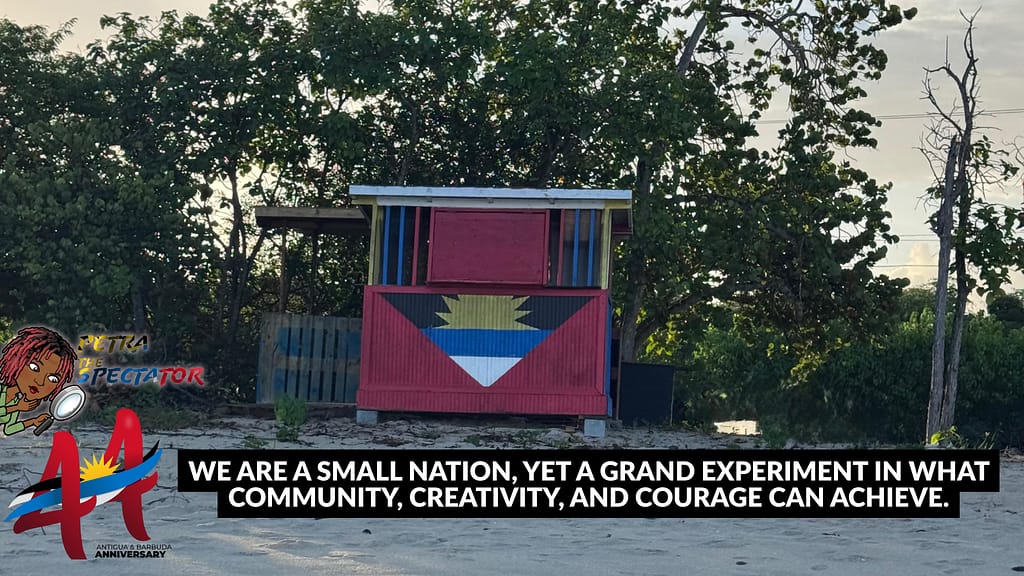
Solid. Stable. Soaring — Reflections on 44 Years of Independence
Standing beneath the national flag of Antigua and Barbuda, one cannot help but feel a profound sense of pride and purpose. The flag, with its vibrant colors and rich symbolism, encapsulates the essence of this twin-island nation. Red represents the dynamism of its people and the sacrifices of its forebears; black honors its African heritage and the fertile soil that sustains it. Blue signifies hope, while gold and white capture the sun, sea, and sand that make this Caribbean paradise truly unique. The golden sun heralds a new era, and the bold “V” shape stands for victory. Forty-four years after gaining independence, this emblem continues to inspire a renewed sense of responsibility and unity.
Antigua and Barbuda’s journey has been one of resilience and determination. From fishermen and farmers to teachers and entrepreneurs, ordinary citizens have carried forward the torch lit on November 1, 1981. This year’s Independence theme, ‘Solid, Stable, Soaring,’ invites reflection on the nation’s progress. The solid foundation is not just physical infrastructure but the enduring values and social bonds that hold the community together. Generations of hardworking individuals have transformed the nation from bondage to belonging, laying the groundwork for a society that values education, faith, and fearlessness.
Stability has been a hallmark of Antigua and Barbuda, achieved through endurance and adaptability. The economy has evolved from sugar production to a service-based model, weathering hurricanes, global recessions, and pandemics. In a world marked by instability, the ability to raise children in peace and gather under the national flag without fear is a privilege earned through vigilance.
Looking ahead, the nation aspires to soar by nurturing innovation, strengthening corporate governance, and fostering civic participation. The goal is to ensure growth without sacrificing identity or grace. Each citizen has a role to play in nation-building, whether through mentorship, entrepreneurship, or artistic expression.
As Antigua and Barbuda celebrates its 44th year of independence, the focus remains on being solid in values, stable in commitments, and soaring in ambitions. This small but significant nation continues to rise together, honoring its past while embracing the future.
-

OPINION: Independence Isn’t What You Think
Women have long fought for and achieved equal rights, securing their place in every sphere of society. They have celebrated their hard-won freedoms and continue to demand a voice in every forum. However, a seldom-discussed truth remains: the systems enabling this modern independence were constructed by men. From protective laws to accessible careers and everyday conveniences, these were built, maintained, and safeguarded by men for women. Yet, in contemporary society, respect for men has become optional, and gratitude has often been replaced by entitlement. Many speak as though societal structures emerged magically, ignoring the foundational efforts of men. Imagine a world where women vanished today. While the emotional, cultural, and moral loss would be profound, societal machinery would persist. Roads would remain paved, flights would continue, and systems would still function. Civilization would endure, though reproduction would cease. This underscores a vital lesson: true independence is not about longevity, rights, or appearances but understanding interdependence. It’s about respect, gratitude, and recognizing that men and women complete each other rather than compete. Men are not optional extras; they are the builders, protectors, and sustainers of society. When crises arise, it is often men who hold the scaffolding together. As we celebrate national independence, let’s also reflect on personal independence — the kind that acknowledges contributions rather than isolates. The balance between genders is essential. Until this is understood, claims of independence remain hollow, like flags waving in borrowed wind. Men are not competition; they are completion.
-

Independence Day Call: A Cleaner, Greener Antigua and Barbuda
On the occasion of Independence Day, Prime Minister Gaston Browne of Antigua and Barbuda emphasized the critical importance of environmental stewardship and cleanliness. In a compelling address, he urged citizens to actively take responsibility for maintaining their surroundings, framing it as an act of patriotism and civic duty. The Prime Minister’s call to action aligns with the National Solid Waste Management Authority’s ongoing island-wide clean-up campaign, which targets the removal of abandoned vehicles, dilapidated structures, and bulk waste. Strict measures are being enforced to curb illegal dumping, with violators facing legal consequences. ‘Cleanliness is godliness; it’s patriotism in action and discipline made visible,’ Browne remarked, highlighting that a pristine environment is a reflection of national pride and collective responsibility. This initiative underscores the government’s commitment to fostering a cleaner, more sustainable future for the nation.
-
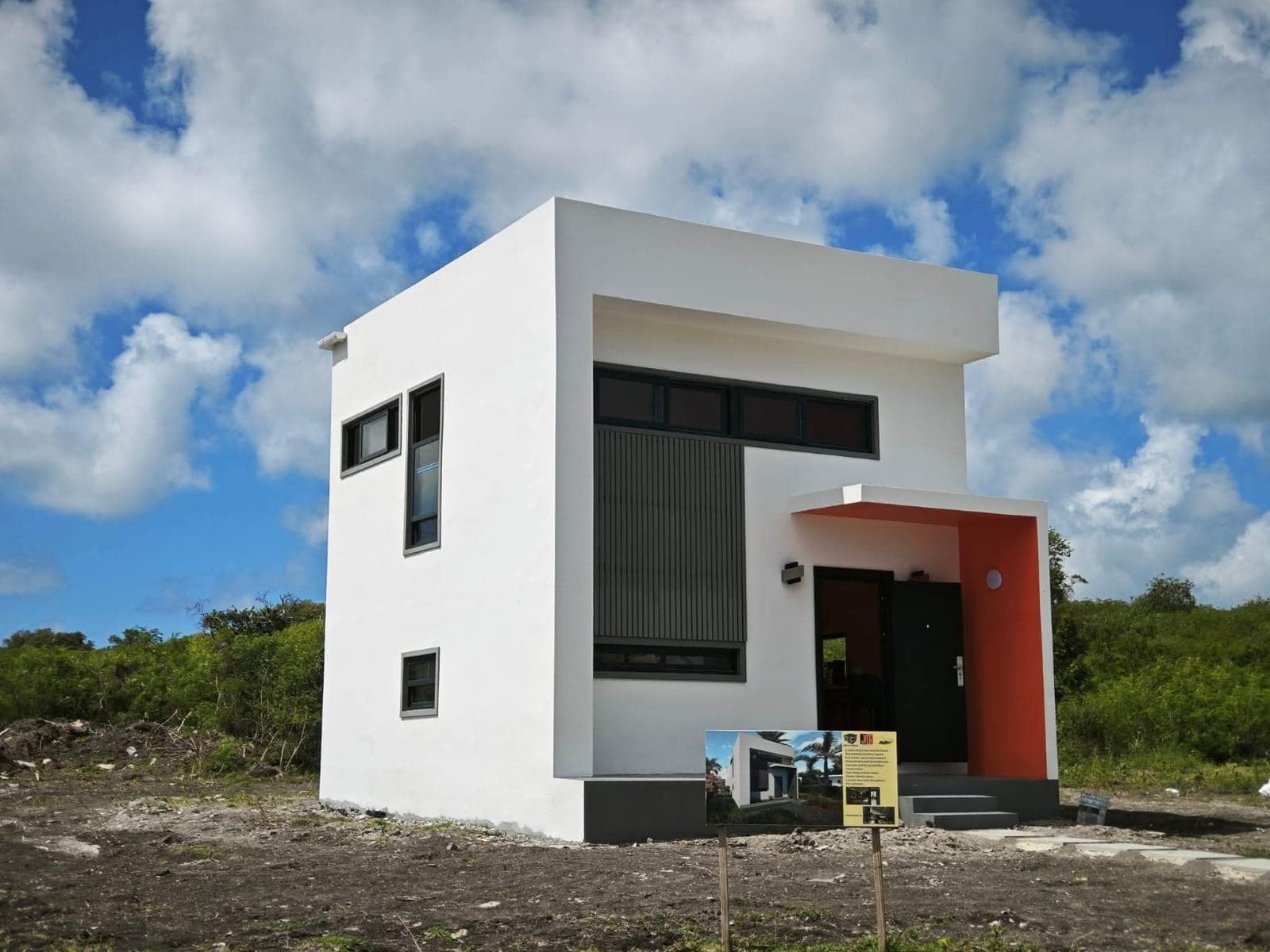
PM Browne Urges Youth to Build Homes and Secure Skills Through Housing Projects
During his address on Antigua and Barbuda’s 44th Independence Day, Prime Minister Gaston Browne emphasized the transformative impact of the Booby Alley Social Housing Project, a significant initiative funded by China. The project is set to deliver 150 two-bedroom condominium units to former residents, with an additional 100 homes planned for Bolans and Barbuda. Browne underscored the broader societal benefits of such projects, urging young citizens to acquire the necessary skills to participate in future developments. He highlighted that these housing initiatives not only address the critical need for shelter but also create employment opportunities, foster financial stability, and pave the way for generational wealth. ‘Each home we build is more than concrete and timber; it is a monument to dignity and belonging,’ Browne remarked, encapsulating the profound significance of the program. The Prime Minister’s speech resonated with a vision of empowerment and progress, positioning housing as a cornerstone of national development and social cohesion.
-

Police Urge Residents to Guard Against Theft of LPG Cooking Gas Cylinders
In response to a surge in theft incidents involving Liquefied Petroleum Gas (LPG) cooking cylinders, local law enforcement agencies have issued a stern warning to residents. Authorities are urging the public to remain vigilant and adopt precautionary measures to safeguard their property. The thefts, which have been reported across multiple neighborhoods, are believed to be driven by the increasing value of LPG cylinders in the black market. Police have emphasized the importance of securing cylinders in locked storage areas and reporting any suspicious activities immediately. Additionally, community awareness campaigns are being launched to educate residents on effective theft prevention strategies. This development comes as LPG remains a vital energy source for households, particularly in regions where alternative cooking fuels are scarce. The police have also pledged to intensify patrols and investigations to curb the rising trend of cylinder thefts.
-

PM Browne Tells Youth: ‘Gun Shot Can’t Run This Town’ on 44th Independence Day
Prime Minister Gaston Browne of Antigua and Barbuda has issued a stern warning against criminal activities, emphasizing that such behavior will not be tolerated. Speaking against the backdrop of the nation maintaining one of the lowest crime rates in the Caribbean, Browne called on the youth to steer clear of illegal pursuits and instead focus on personal growth and productivity. So far this year, the country has recorded nine homicides, a slight decrease from the previous year. However, a recent uptick in robberies has prompted law enforcement to intensify their efforts, leveraging advanced technology and intelligence to combat crime. In a direct appeal to young people, Browne stated, ‘To those who flirt with criminality, let me be clear: ‘Gun shot can’t run this town.’ He encouraged them to ‘Level up; dream bigger, aim far — be productive and invest in knowledge and skill.’ The Prime Minister’s message underscores the government’s commitment to maintaining public safety while fostering a culture of ambition and self-improvement among the younger generation.