分类: society

  • Husband, wife kidnapped off Monos Island – $2.5 million ransom demanded

    Husband, wife kidnapped off Monos Island – $2.5 million ransom demanded

    In a disturbing development on Monos Island, renowned former powerboat racer Derek ‘Stones’ Tardieu, 70, and his wife Clarabelle have been violently abducted from their residence. The couple was forcibly taken by armed kidnappers who subsequently contacted family members demanding a substantial ransom payment of $2.5 million for their safe release.

    According to investigative sources, the home invasion occurred while the Tardieus were present at their property. The assailants thoroughly ransacked the premises before departing with the elderly couple. Particularly concerning is Tardieu’s critical medical condition—the former athlete suffers from severe heart complications and a brain tumor requiring continuous medication, raising urgent concerns about his wellbeing in captivity.

    The kidnappers have provided chilling proof of life through a video recording showing Tardieu with a firearm pressed against his head while another individual brandishes a grenade. Initial contact was established around 9:44 AM when relatives received a voice message from an unrecognized number containing Tardieu’s apparent statement: ‘They have me and want US$2.5 million for my release.’

    The couple’s son, Phillip Tardieu, discovered the ransacked home after being alerted to the situation and found both parents missing. Subsequent attempts to reach his father via mobile phone proved unsuccessful. Law enforcement authorities and family representatives are urgently requesting public assistance, asking anyone with relevant information to immediately contact emergency numbers 555, 999, or the nearest police station.

  • 6 qualities a man uses to measure a woman’s market value

    6 qualities a man uses to measure a woman’s market value

    Conventional wisdom often reduces male attraction to mere physical appearance, but a deeper analysis reveals a far more complex evaluation process. When assessing a potential partner, men are subconsciously analyzing a suite of profound qualities that signal long-term compatibility and value, moving well beyond initial looks. This nuanced appraisal focuses on traits that promise a stable, resilient, and fulfilling partnership.

    The foundation of this evaluation is emotional fortitude. Men are instinctively drawn to women who demonstrate grace under pressure and the capacity to navigate life’s inevitable turmoil without excessive reactivity. A history of overcoming adversity—be it divorce, heartbreak, or the challenges of single motherhood—is not a liability but a testament to proven resilience. This ability to carry responsibility and emerge with an intact spirit is perceived as a prime indicator of maturity and a cornerstone for a stable future together.

    Closely linked is the undeniable power of self-worth and authentic confidence. A woman who possesses a clear sense of her own value and refuses to settle communicates a powerful message of self-respect. This is manifested not through arrogance, but through the establishment of healthy boundaries, clear communication of needs, and a purposeful direction in life. Such traits significantly elevate a woman’s perceived value far beyond any transient superficial attribute.

    Furthermore, life experience, often misconstrued as baggage, is reassessed as a badge of honor. The depth of responsibility demonstrated through raising children, managing a household, or building a career while healing from past wounds showcases capability, dependability, and strength. For a man seeking a true life partner, these are prized assets that signal a proven ability to handle real-world challenges.

    At the core of a serious commitment lies the non-negotiable element of character and spiritual alignment. A man with intentionality will meticulously measure a woman’s integrity, values, and inner maturity. He seeks a partner whose life reflects essential virtues like kindness, honesty, and patience—a true equal who can walk beside him in interdependence, not neediness.

    Contrary to the stereotype of stoic independence, men deeply desire emotional connection. They value a woman’s capacity for balanced love, care, and empathy—a nurturing spirit that provides support and encouragement while standing firm during difficult seasons. This is complemented by an appreciation for practical life management skills. A woman’s competence in handling finances, domestic affairs, and interpersonal relationships signals an ability to foster stability and adeptly solve problems, making her an invaluable partner.

    The ultimate conclusion is that while some may be deterred by a complex past, the right man will see beyond historical circumstances. He will measure the strength of character over the existence of scars, and the depth of person over any prior drama. A woman who truly understands her own worth does not seek validation; she embodies it, and in doing so, naturally attracts a partner who will not only recognize but fully invest in her immense value.

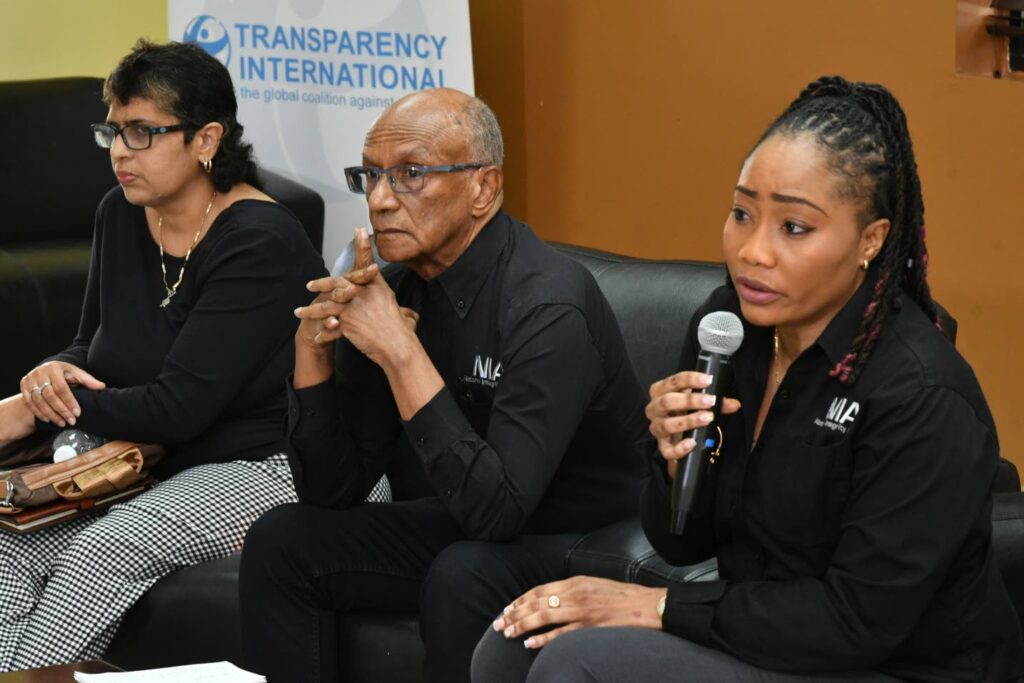
  • Danielle Archer resigns as NIA principal director

    Danielle Archer resigns as NIA principal director

    KINGSTON, Jamaica — Jamaica’s foremost anti-corruption organization, National Integrity Action (NIA), has announced the forthcoming departure of its principal director, attorney Danielle Archer, who will conclude her tenure on December 31, 2025.

    The organization confirmed Archer’s resignation in an official statement released Monday, highlighting her significant contributions to Jamaica’s governance reform efforts. NIA Chairperson Dr. Lynden Rose praised Archer’s transformative leadership, noting that her dedication to values-driven governance has left a lasting impact on institutional frameworks throughout Jamaica.

    “Miss Archer’s visionary leadership has been fundamental in shaping NIA’s reform agenda,” stated Dr. Rose. “Her exceptional ability to inspire meaningful change and her steadfast commitment to ethical governance will continue to influence the institutions she has engaged with.”

    In response to the announcement, Archer expressed gratitude for her service opportunity: “It has been an immense privilege to lead NIA in its crucial mission to cultivate cultures of integrity. I maintain my dedication to supporting Jamaica’s ongoing reform initiatives and advancing the principles of accountable governance throughout my future endeavors.”

    During her distinguished service, Archer provided strategic direction that strengthened accountability mechanisms, championed democratic safeguards, and established NIA as a trusted partner in national governance transformation. The organization acknowledged that her departure signifies the conclusion of a challenging period in its history.

    The NIA Board of Directors has initiated the process to identify a successor to ensure operational continuity and the advancement of the organization’s strategic priorities. Board members extended their profound appreciation for Archer’s service, recognizing that her contributions have permanently shaped Jamaica’s integrity landscape.

  • Caritas launches emergency appeal for Jamaica after Hurricane Melissa

    Caritas launches emergency appeal for Jamaica after Hurricane Melissa

    KINGSTON, Jamaica — In response to the catastrophic damage wrought by Hurricane Melissa, the global Catholic humanitarian network Caritas has initiated an extensive 12-month recovery operation across Jamaica. The organization has activated its international emergency response mechanisms to coordinate long-term support for the most vulnerable populations affected by what officials describe as unprecedented destruction.

    Marcia Haywood, Regional Director for Caritas based in St. Lucia, revealed that coordination with local dioceses in Kingston, Mandeville, and Montego Bay began even before the hurricane made landfall. The organization, representing over 30 Caribbean territories within a global confederation operating in 200 countries, has already distributed essential tarpaulins to more than 600 households in Magaty and Balaclava, with damage assessments ongoing in severely impacted Montego Bay.

    Critical supplies including food kits from Caritas Puerto Rico, solar-powered lanterns, hygiene packages, and children’s activity sets have been shipped from St. Lucia to address immediate needs. The recovery strategy incorporates innovative social protection mechanisms, including a one-time unconditional cash transfer program for the most vulnerable households, developed in partnership with Jamaica’s Ministry of Labour and Social Security.

    Haywood emphasized the program’s sophisticated approach: “We’re implementing a multipurpose cash intervention using a specialized social protection calculator tool developed last year. This system factors in existing government benefits to determine appropriate top-up support without creating dependency, ensuring those already receiving assistance get supplemental help while providing adequate support for those outside existing programs.”

    The director expressed particular concern about remote communities that remain inaccessible and persons with disabilities unable to reach distribution points. Having responded to multiple Category 5 hurricanes throughout the Caribbean, Haywood described the devastation in Montego Bay and Mandeville as “unequaled” in her experience.

    Caritas has deployed technical experts from its partner organization Catholic Relief Services (CRS) Empower and plans to hire local staff to ensure sustained recovery efforts throughout the coming year. The organization participates in both the national Cash Working Group and Shelter Working Group to coordinate effectively with government agencies and NGOs, preventing duplication of efforts.

    “We love Jamaica. We are so sorry that this has happened to our brothers and sisters, and we are committed to supporting the Jamaica recovery process,” Haywood stated, underscoring the organization’s dedication to the long-term rebuilding of affected communities.

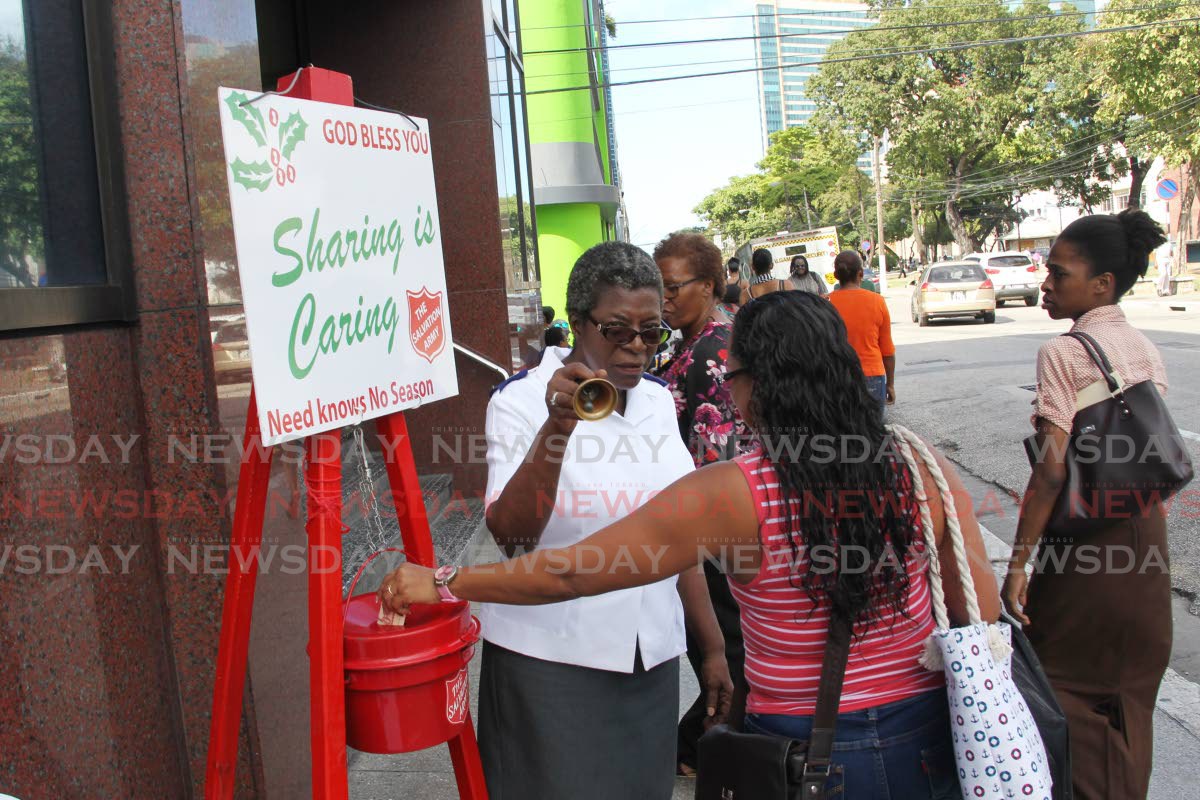
  • Salvation Army’s Kettle initiative: Ringing the bells of hope

    Salvation Army’s Kettle initiative: Ringing the bells of hope

    Across Trinidad and Tobago’s bustling shopping centers and public spaces, the familiar sight of bright red kettles and ringing bells heralds the arrival of the Christmas season—and a 124-year tradition of compassionate giving. The Salvation Army’s iconic fundraising campaign, launched locally in the early 1900s, continues to serve as a critical support system for vulnerable communities despite evolving challenges.

    Major Chris Matthias, divisional commander overseeing operations in TT, St. Vincent, and Grenada, reveals this year’s ambitious target: $600,000 TT through the Christmas Kettle Appeal. The campaign, running from November 7 to December 31, deploys 28 collection points nationwide (26 in Trinidad, 2 in Tobago), though volunteer availability remains a persistent constraint.

    The initiative’s origins trace back to 1891 San Francisco, where Salvation Army Captain Joseph McFee adapted a Scottish maritime charity tradition. Recalling Fishermen’s Wharf’s donation pot for families of lost sailors, McFee employed an iron crab pot to fund hot meals for the impoverished. This grassroots effort rapidly expanded across the Bay Area, evolving into the recognizable red-kettle phenomenon that eventually inspired the classic Christmas ballad Silver Bells.

    In Trinidad and Tobago, where The Salvation Army formally incorporated in 1915, the kettle program serves multiple humanitarian functions. Funds enhance Christmas food hampers beyond regular distributions, support children’s holiday parties, and provide personal care packages during institutional visits to five major medical facilities—including the traditional Christmas morning visit to Port of Spain General Hospital.

    Matthias emphasizes the program’s transformative impact, recounting how one recipient eventually secured employment and housing before returning to express gratitude. This exemplifies the organization’s philosophy of providing ‘hand-ups’ rather than mere handouts.

    Despite maintaining robust transparency through independently audited reports mandated by the Street Collections (Control) Act, the organization faces growing challenges. Donor bases have contracted at both individual and corporate levels, while demand has surged—particularly among single-parent households affected by recent nationwide layoffs.

    Safety protocols ensure volunteers receive training in public interaction, donation handling, and site security, with donors encouraged to place contributions directly into kettles. The organization continues seeking business partnerships similar to international models where corporations staff kettle locations as part of CSR initiatives—though such collaborations remain elusive locally.

    Matthias concludes with a poignant reminder: Need knows no season. While kettle donations peak during holidays, public support through food contributions remains vital year-round. The ultimate gift, he reflects, extends beyond material assistance—offering hope, joy, and love through practical compassion that transforms lives during the festive season and beyond.

  • Laroda: More families need to try to assist as leased shelter rooms hits limit

    Laroda: More families need to try to assist as leased shelter rooms hits limit

    NASSAU, BAHAMAS — The Bahamas’ government-operated shelter network has reached maximum occupancy as authorities grapple with escalating demands for emergency housing, Social Services Minister Myles Laroda revealed today. The ministry currently leases approximately 150 rooms from private entities, all of which are fully occupied, excluding additional capacity at the Poinciana Inn Shelter.

    Minister Laroda confirmed that officials are actively negotiating leases for two additional properties to address the growing crisis. The situation has created a complex balancing act between granting extensions to current residents and accommodating new arrivals seeking emergency shelter.

    “We have provided extensions to individuals whose circumstances haven’t improved sufficiently for independent living,” Laroda stated, emphasizing that each case receives individual assessment. However, these extensions inevitably reduce availability for newcomers to the shelter system.

    The minister clarified the fundamental difference between emergency shelter assistance and government housing programs, noting: “We consistently emphasize that this represents a temporary solution. Our objective involves providing financial and supportive assistance to help individuals achieve self-sufficiency.”

    Demographic analysis reveals varied resident profiles, including mothers escaping dangerous domestic situations, recently unemployed individuals, and Family Island residents seeking economic opportunities in New Providence. Shelter durations range from approximately one month for transitional cases to extended stays for those requiring comprehensive support.

    Laroda stressed the government’s commitment to avoiding assistance denials, even when residents exceed planned shelter durations. Simultaneously, he issued a compelling appeal for increased family involvement in supporting relatives experiencing hardship.

    “While government assistance remains available,” Laroda asserted, “we actively encourage family members to support relatives in need. Strengthening family units ultimately builds more resilient communities and a more robust nation.”

  • Claxton Bay woman killed by ex-boyfriend who dies by suicide

    Claxton Bay woman killed by ex-boyfriend who dies by suicide

    A devastating case of domestic violence culminated in dual fatalities on December 8 in Claxton Bay, concluding a turbulent relationship between two residents of Pranz Gardens. The victims have been identified as 43-year-old Angel Lutchman, an entrepreneurial mother of two, and 29-year-old technician Shazard Mohammed.

    The tragic sequence unfolded when Lutchman’s 12-year-old son returned from an overnight stay with relatives to discover the horrifying scene. His mother had been brutally attacked in her bedroom, suffering fatal stab wounds and a slit throat. Mohammed’s body was found nearby in the same room, having taken his own life following the murder.

    This lethal conclusion came despite Lutchman’s proactive measures for protection. Just two weeks prior to the incident, she had secured a restraining order against Mohammed, who resided merely a few houses away. The court order proved insufficient protection against the escalating violence that characterized their relationship.

    Family accounts reveal contrasting perspectives on the couple’s dynamic. Lutchman’s relatives described Mohammed as persistently abusive, noting that conflicts between the pair occurred with disturbing regularity. Conversely, Mohammed’s family acknowledged the frequent verbal and physical altercations while simultaneously characterizing the couple as ‘inseparable’ in their complex relationship dynamic.

    Lutchman, who operated an online business, leaves behind two children from a previous relationship. Mohammed was also a parent to one child, compounding the tragedy’s impact on multiple families within the community.

  • Esperance Soroptimists launches Cedros Mural Activism Project

    Esperance Soroptimists launches Cedros Mural Activism Project

    In a vibrant display of activism, Soroptimist International Esperance has launched the Cedros Mural Activism Project, marking the commencement of the global 16 Days of Activism Against Gender-Based Violence. The initiative, situated near Beaulieu Recreation Grounds and Cedros Secondary School, directly aligns with this year’s UN Women theme combating digital violence against women and girls.

    The striking orange mural serves as both artistic statement and practical resource, featuring six bilingual messages that address various dimensions of gender-based violence. These messages highlight non-physical abuse patterns, confront human trafficking realities, warn about online predators, advocate for victim support, and provide essential contact information for assistance services. This project extends the club’s previous efforts, including the installation of awareness benches addressing human trafficking in July.

    The launch event garnered significant governmental support, with Minister of People Social Development and Family Services Vandana Mohit declaring the initiative “a national symbol of resistance against abuse, exploitation and digital violence.” Minister Mohit emphasized national responsibility in breaking digital gender-based violence walls through policy measures, counseling services, grant support, and community interventions.

    Notably, the Soroptimists’ ‘Think Before You Click’ initiative previously received the Delegates Choice Best Practice Award at the Soroptimist International of Great Britain and Ireland Conference. The program, developed in partnership with the UN Office on Drugs and Crime (UNODC), educates secondary school girls about cybercrime protection and gender-based violence prevention.

    Director of The Counter Trafficking Unit Allan Meiguel endorsed the campaign while highlighting the urgent need for a dedicated service office in the vulnerable coastal community of Cedros. This sentiment was reinforced by Energy Minister and local MP Ernesto Kesar, who emphasized that gender-based violence constitutes a societal issue requiring collective condemnation and action.

    The event culminated in a powerful appeal urging legislative action against digital violence, increased investment in women’s organizations, and community commitment to challenging harmful online norms while supporting survivors.

  • Court sides with judge’s son: Illegal PBR use conviction quashed

    Court sides with judge’s son: Illegal PBR use conviction quashed

    In a landmark ruling that clarifies regulatory interpretation of transit privileges, Trinidad and Tobago’s Court of Appeal has unanimously overturned the conviction of a 17-year-old youth—the son of a sitting judge—who had been penalized for unauthorized use of the Priority Bus Route (PBR).

    The appellate panel, comprising Justices Peter Rajkumar, Geoffrey Henderson, and Ricky Rahim, determined that Master Tricia Bhagwandeen-Sadho committed a legal error by imposing an evidentiary requirement not supported by existing legislation. The case originated from an August 2020 incident when the teenager was stopped while operating his father’s vehicle on the PBR and presented a valid permit issued for the vehicle.

    Justice Rajkumar, authoring the decisive judgment, emphasized that the Highways Act and Classification of Highways Order explicitly authorize vehicles—not individual drivers—to utilize the bus route. The court found that the youth satisfactorily met his legal obligation by producing the legitimate PBR permit and affirming he had permission to use the vehicle, thereby shifting the burden of proof to prosecutors to demonstrate otherwise—a burden the state failed to discharge.

    Critically, the court rejected the lower court’s reliance on unpublished conditions printed on the permit’s reverse side, noting these conditions were never formally entered into evidence. The judgment further repudiated the Master’s concern about ‘absurd outcomes’ resulting from literal statutory interpretation, highlighting that the legislation already empowers the minister to impose additional conditions if necessary.

    The ruling establishes significant precedent regarding statutory construction principles and reinforces that courts cannot infer restrictions absent from legislative text. The Appeal Court consequently vacated all penalties associated with the conviction.

  • SRPs vs TTPS?

    SRPs vs TTPS?

    A contentious meeting between Special Reserve Police (SRP) officers and Trinidad and Tobago Police Service (TTPS) management has exposed significant challenges in implementing Homeland Security Minister Roger Alexander’s directive to integrate 800 reserve officers into the regular force.

    The December 3 gathering descended into chaos when senior TTPS officials cut microphone access following controversial comments from an SRP representative. The tension escalated particularly around the requirement for incoming officers to possess a CSEC pass in English Language, revealing deep divisions between the groups.

    Assistant Commissioner of Police Curt Simon attempted to restore order, emphatically stating that “The TTPS is not a market or a parlour,” emphasizing that selection for regular service constitutes a privilege rather than an entitlement. This declaration prompted several SRP members to exit the meeting in protest.

    This confrontation represents the latest development in a long-standing struggle for improved status among reserve officers. Only in July, following a judicial ruling by Justice Frank Seepersad, were SRPs and municipal police granted voting rights in police association elections.

    The current integration initiative, designed to address a staffing shortfall of 1,154 officers, marks the most substantial proposed change in SRP status since 2019. That year, authorities targeted integrating 500 reserve officers into full police roles.

    Deputy Commissioner Junior Benjamin subsequently assured media outlets of the service’s commitment to fulfilling the cabinet directive. However, this assurance comes with the recognition that elevating potentially unqualified or unprepared officers to full TTPS duty could significantly impact both police operations and public safety.

    The resistance to basic academic requirements suggests that SRP recruitment standards may have been considerably more flexible than those applied to regular officers. While Minister Alexander may personally know qualified SRPs who could transition effectively, identifying 800 such candidates presents a considerable challenge.

    Police leadership appropriately maintains that any integration process must include rigorous, transparent assessment protocols alongside provisions for remedial training where necessary. Experts suggest that reserve officers indicating interest in regular service should receive preparation from their initial deployment, ensuring they meet the functional standards required of all officers performing full police duties.