分类: society

  • Former SENASA Director Santiago Hazim sent to 18 months of pretrial detention in major corruption case

    Former SENASA Director Santiago Hazim sent to 18 months of pretrial detention in major corruption case

    In a landmark ruling that has sent shockwaves through the Dominican Republic’s public health sector, a National District court has mandated 18 months of pre-trial incarceration for former National Health Insurance (SENASA) director Santiago Hazim and six co-defendants. The decision comes in response to their alleged involvement in a sophisticated financial fraud scheme that reportedly defrauded the state-run insurer of over RD$15 billion.

    The Permanent Attention Office of the National District issued the detention order following extensive evidentiary presentations from the Public Prosecutor’s Office, which has characterized the case as one of the most significant corruption investigations in recent Dominican history. Prosecutors have identified Hazim as the purported mastermind behind a criminal network that operated undetected for approximately five years, employing falsified documentation and altered records to conceal systematic financial malfeasance within the health insurance system.

    In a contrasting development, the judicial authority demonstrated leniency toward three additional defendants who provided substantive cooperation with investigative authorities. These individuals received alternative restrictive measures including house arrest and international travel prohibitions rather than incarceration.

    According to official allegations, the organized network implemented elaborate mechanisms to divert public health funds while simultaneously creating complex financial structures to hide illegally acquired assets. The prosecution further contends that Hazim engaged in deliberate obstruction of justice through witness intimidation tactics designed to compromise the investigation’s integrity.

    This case has triggered intensified public scrutiny regarding the management of national health resources and amplified demands for enhanced transparency mechanisms within Dominican public institutions. The scale of the alleged fraud has prompted nationwide discussions about institutional accountability and governance reforms in the country’s public health administration.

  • Dozens protest at Palace of Justice over SENASA corruption and RD$15 billion embezzlement

    Dozens protest at Palace of Justice over SENASA corruption and RD$15 billion embezzlement

    SANTO DOMINGO – Public outrage erupted outside the Palace of Justice as dozens of demonstrators mobilized to demand accountability in a massive corruption scandal involving the National Health Insurance (SENASA). The protest coincided with judicial hearings to determine pretrial detention for individuals accused of embezzling over RD$15 billion from the state-run health insurer.

    Protesters carried placards calling for transparency and stringent anti-corruption measures, while civil society organizations emphasized that partial recovery of stolen funds would be meaningless without severe legal consequences. Police presence intensified around the courthouse to ensure order during proceedings that have captured national attention due to their implications for public health financing.

    The scandal, known as Operation Cobra, centers on former SENASA director Dr. Santiago Hazim and reveals a devastating financial collapse within the institution. According to newly released 2024 financial statements, SENASA’s net worth plummeted from a positive RD$2.9 billion in 2023 to a staggering negative RD$14.5 billion this year—a situation bordering on technical insolvency.

    Despite generating RD$75.4 billion in revenue, operating expenses surged to nearly RD$79 billion, resulting in losses exceeding RD$6.2 billion. This deficit was primarily driven by healthcare claim payments totaling RD$56.9 billion, alongside reinsurance and operational costs. With responsibility for providing health coverage to more than 7.6 million citizens, SENASA now faces urgent demands for financial restructuring and enhanced oversight mechanisms to prevent further mismanagement of public resources.

  • Arrest made in Brown University shooting in US, which left 2 dead, 9 injured

    Arrest made in Brown University shooting in US, which left 2 dead, 9 injured

    Rhode Island law enforcement authorities have apprehended a male suspect in his twenties following a devastating shooting at Brown University that resulted in multiple casualties on Saturday, December 13. The incident, which unfolded during an Economics class lecture, claimed the lives of two students and left nine others wounded.

    According to investigative reports, the alleged gunman entered the academic building in Providence during afternoon hours and opened fire on approximately sixty students attending the lecture. The swift law enforcement response led investigators to a hotel in Coventry, Rhode Island, where tactical operations were conducted in the early hours of Sunday morning.

    Law enforcement officials utilized cellular data tracking to identify and locate the suspect, who was reportedly found in possession of multiple firearms, including a revolver and a compact Glock handgun, within his hotel accommodations. Preliminary information indicates the detained individual originates from Wisconsin, though investigation into motives and circumstances remains ongoing.

    In response to the tragedy, Brown University administration has canceled all remaining academic activities, including final examinations, to prioritize community healing and support services. The City of Providence has organized a community vigil to honor victims and facilitate collective mourning.

    Providence’s mayor, who visited injured victims in local hospitals, expressed profound grief over the incident while drawing solemn comparisons to the Sandy Hook Elementary School shooting that occurred thirteen years prior. Community leaders have emphasized the need for renewed dialogue on campus safety measures and violence prevention strategies.

  • FLASH : Detailed Baccalaureate Exam Schedule Dec. 2025

    FLASH : Detailed Baccalaureate Exam Schedule Dec. 2025

    Haiti’s education sector has commenced a significant academic undertaking with the initiation of the December 2025 Baccalaureate retake examinations. Starting Monday, December 15, 2025, approximately 44,460 candidates who previously failed their NSA and Philosophy components are participating in this critical testing period.

    The Ministry of National Education has released comprehensive examination schedules covering multiple academic streams. The testing framework encompasses four primary series within the S4 Baccalaureate program: Life and Earth Sciences (SVT), Mathematical and Physical Sciences (SMP), Economic and Social Sciences (SES), and Literature and Arts (LLA). Additionally, specialized Philosophy series (Philo A, Philo C, Philo D) are undergoing their respective examinations.

    The examination structure follows an intensive four-day format from Monday through Thursday, with morning sessions commencing at 8:30 AM and afternoon sessions beginning at 1:00 PM. Each academic series features distinct subject combinations with varying coefficients reflecting their academic weight. Core subjects including Philosophy, Chemistry, History and Geography, and specialized discipline-specific examinations are administered according to meticulously planned timelines.

    Subject coefficients demonstrate the relative importance of each examination, ranging from 100 to 400 points. The scheduling accounts for diverse linguistic requirements with English, Spanish, and Creole language examinations integrated throughout the testing period. Science-focused streams emphasize technical subjects including Physics, Mathematics, and Biology, while humanities-oriented series prioritize Social Sciences, Arts, and Literature components.

    This organized retake opportunity represents a crucial mechanism for educational advancement, allowing thousands of students to pursue academic certification and future opportunities through standardized assessment protocols.

  • Student entrepreneurs shine at Mr Executive Market Day

    Student entrepreneurs shine at Mr Executive Market Day

    A transformative initiative is reshaping the future of young men in Barbados as over 60 students from 14 secondary schools participate in the Mr Executive 2026 Senior Boys Business Challenge. The program’s preliminary Market Day event at Sky Mall showcased emerging entrepreneurial talent while addressing critical developmental needs among Barbados’ youth.

    Founded in 2017 by veteran educator Winston Cumberbatch at St Leonard’s Boys’ School, the initiative has evolved from a local project into a national competition creating meaningful impact. The program specifically targets young males, providing practical business education that extends beyond conventional classroom learning.

    During Sunday’s Market Day, student-led ventures demonstrated remarkable innovation with diverse product offerings including artisanal food items, fashion accessories, beauty products, and children’s goods. Participants managed all business aspects from conceptualization to sales, operating under the guidance of mentors from Barbados’ business community.

    The challenge employs a unique two-phase structure beginning with team-based entrepreneurship activities followed by individual assessments. Top performers from each institution advance to finals where they undergo rigorous evaluation of leadership capabilities, communication skills, and ethical decision-making.

    Cumberbatch emphasizes the program’s significance in countering negative stereotypes about young men. “This challenge allows them to show that they are more than what they are sometimes labelled as,” he noted, highlighting participants’ demonstrated capacities for creative thinking and community contribution.

    The program’s effectiveness gained substantial reinforcement in 2022 when the Barbados Entrepreneurship Foundation joined as partner, adding specialized business modules focusing on ethics, strategic planning, and professional conduct. This collaboration has enhanced both the scope and quality of the entrepreneurial curriculum.

    Beyond business skills development, the initiative has produced documented social impact, with Cumberbatch citing examples of participants who redirected their lives through program involvement. The educator advocates for expanded support of such proven interventions, recognizing their potential to effect change at individual, familial, and societal levels.

    As Barbados invests in its future leadership, the Mr Executive Challenge represents a sustainable model for youth development that combines practical business education with character building and social responsibility.

  • Community gardeners honoured at national home and garden awards

    Community gardeners honoured at national home and garden awards

    The Ministry of Social Transformation’s Community Development and Citizens Engagement Division (CD&CED) hosted its prestigious 14th Community Home and Garden Festival awards ceremony on Wednesday evening at the American University of Antigua. The event recognized exceptional horticultural achievements across multiple categories despite participation challenges caused by adverse weather conditions.

    Initially attracting over 80 registrants for the 2025 competition, approximately 60 dedicated participants ultimately showcased their gardening prowess across six distinct categories: community gardens, residential gardens, business gardens, herbs and spices, fruits and vegetables, and ornamental displays.

    Fitches Creek in the East Zone claimed the coveted Best Kept Community title, with Five Islands in the West Zone securing second position in this category. Individual excellence was prominently displayed through multiple award recipients, with Rhyves and Nia Knowles of the East Zone emerging as standout performers by securing three first-place victories in residential categories along with substantial cash prizes.

    The competitive business category witnessed Indies Green from the West Zone achieving dual recognition for their exceptional flower and water gardens, while the Lions Club Community Garden earned distinction in the business herbs and spices classification. Foundation Faith Tutorial of the North Zone received both second place in Business Category Fruits and Vegetables and a $500 monetary award.

    CD&CED officials expressed profound gratitude to all participants, corporate sponsors, supporting government ministries, and stakeholders whose collaborative efforts ensured the continued success of this national initiative promoting environmental beautification and community engagement through horticultural excellence.

  • Participants Complete GARD Center Soap-Making Rehabilitation Programme

    Participants Complete GARD Center Soap-Making Rehabilitation Programme

    The GARD Center recently marked the successful completion of its intensive soap-making training program with a formal closing ceremony, celebrating inmates who demonstrated exceptional commitment to personal transformation. Running from November 4th, 2025, the program combined scientific principles with artisanal craftsmanship under the expert guidance of tutor Mrs. Cheryl Samuel.

    Participants engaged in comprehensive hands-on training, mastering chemical formulations, natural additive integration, scent development, and various production techniques. Beyond technical skills, the curriculum intentionally fostered discipline, collaborative teamwork, self-confidence, and emotional resilience—qualities essential for successful societal reintegration.

    The ceremony’s distinguished attendees highlighted institutional support for rehabilitation initiatives. Notable figures included Bishop Juan Miguel Simson (Board Chairman), Dame J.M. Eusalyn Lewis (Vice Chairman), Col. Trevor Pennyfeather (Prison Superintendent), and Ms. Janice Micheal (Permanent Secretary for Public Safety and Labour). Their collective presence signaled strong governmental and institutional endorsement for vocational training as a credible alternative to recidivism.

    Graduates honored included Kenworth Charles, Jay Marie Chin, Akeem Henry, Brittany Jno-Baptiste, Lindell Matthew, Corey Mills, George Thomas, and Kenisha Whyte. The program operates on the evidence-based principle that structured skills development, while not erasing past actions, provides tangible alternatives to previous behavioral patterns. By equipping participants with marketable skills and reinforced self-worth, such initiatives disrupt cyclical incarceration patterns and create meaningful pathways toward constructive citizenship.

  • Housing workers now building roads as government changes how projects are managed

    Housing workers now building roads as government changes how projects are managed

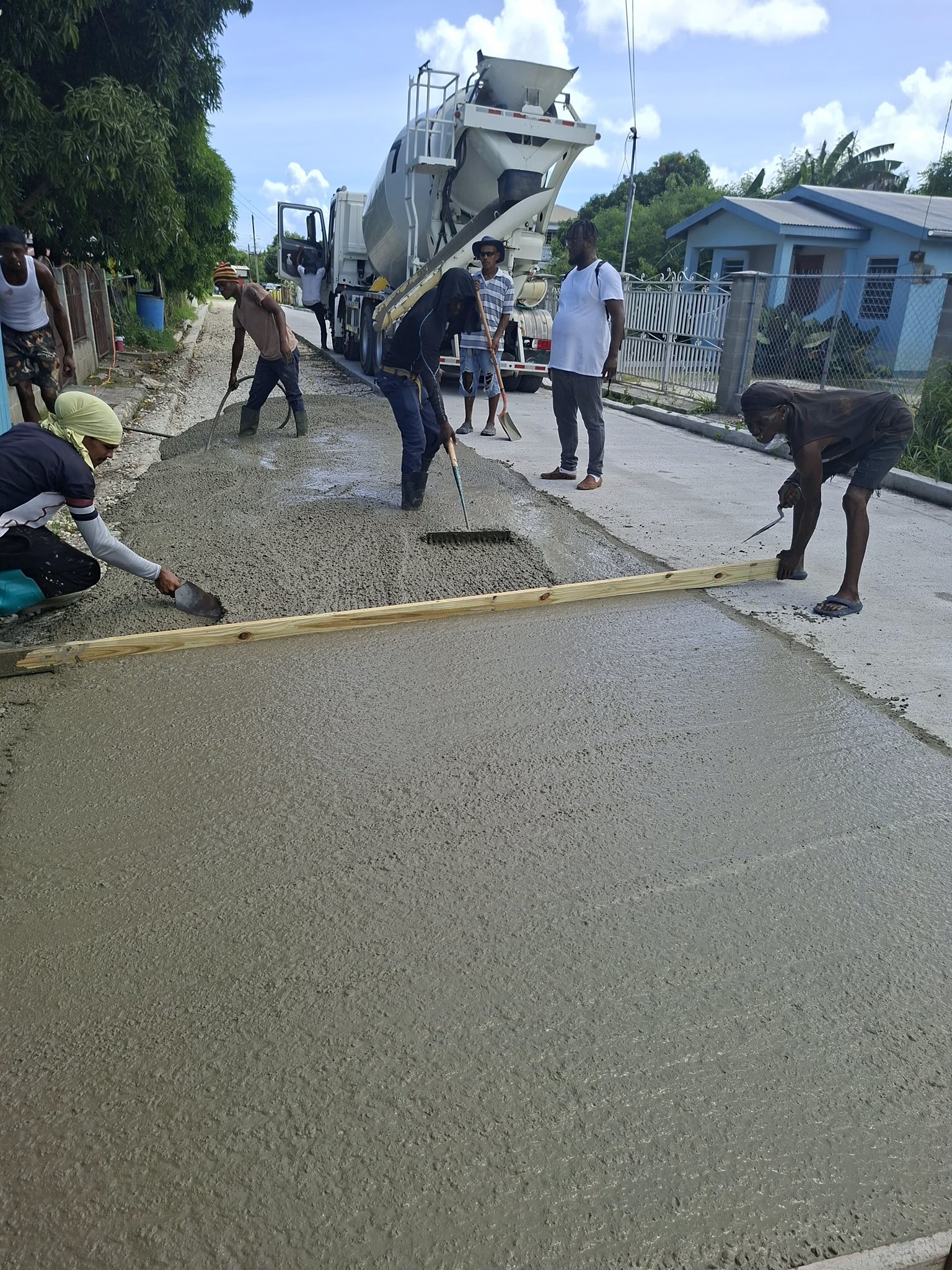
    In a strategic shift toward optimized infrastructure management, the government has implemented a novel approach to housing development by establishing a dedicated Roads Division within National Housing. This innovative program enables construction workers to be dynamically reassigned between housing projects and road construction tasks based on real-time workflow requirements.

    During the recent Budget Debate, Housing Minister Maria Browne detailed how this operational restructuring addresses the chronic issue of workforce idleness during transitional phases between housing construction cycles. Rather than maintaining workers on standby, the ministry now redeploys them to accelerate road infrastructure development within housing communities.

    This cross-functional workforce deployment model specifically targets the persistent challenge of delayed road completion in residential areas. By maintaining continuous employment for construction teams across complementary infrastructure projects, the government achieves dual objectives: maximizing labor efficiency and eliminating bottlenecks that traditionally leave new communities with unfinished access roads.

    The program has already demonstrated tangible progress in multiple housing developments. Construction crews have completed or are actively working on road networks in Cedar Valley and Pearns, addressing long-standing complaints from residents about inadequate road access to their communities.

    Government officials emphasize that this integrated approach eliminates bureaucratic delays associated with separate contracting processes for road construction. The in-house Roads Division enables National Housing to respond immediately to infrastructure needs without undergoing external procurement procedures.

    This initiative represents a fundamental rethinking of public works coordination, ensuring synchronized development of housing and supporting infrastructure. The model is projected to continue through at least 2026 as part of the government’s comprehensive infrastructure and housing development agenda.

  • New roofing material adopted after earlier sealant failed to stop leaks

    New roofing material adopted after earlier sealant failed to stop leaks

    In a significant policy shift, the government has overhauled its approach to repairing leaking roofs on public buildings after an initially deployed specialized sealant failed to meet performance expectations. The disclosure came from Housing and Works Minister Maria Browne during the recent Budget Debate, where she addressed ongoing concerns about mold and air quality issues plaguing government facilities.

    The ministry’s initial intervention involved applying a specific sealant compound to combat water intrusion identified as a primary contributor to moisture accumulation and mold proliferation. However, post-application assessment revealed the material’s performance was unsatisfactory, failing to provide the durable barrier required for long-term protection.

    This operational setback triggered a comprehensive review process that ultimately led to the adoption of a fundamentally different sealing compound. Technical experts within the Ministry of Works have endorsed the new material as substantially more effective in creating watertight seals that prevent moisture penetration. The upgraded compound has now been standardized across all government roof repair and remediation initiatives.

    The material substitution represents a critical component of the broader Public Sector Building Enhancement Programme, which aims to systematically address structural deficiencies and environmental hazards in government-owned properties. Rather than pursuing repetitive temporary patches, the revised protocol emphasizes sustainable solutions that extend structural longevity and improve indoor environmental conditions.

    With the 2026 infrastructure work programme approaching, officials emphasize that the revised methodology incorporates valuable lessons from previous repair campaigns. The adaptive approach demonstrates the government’s commitment to evidence-based maintenance strategies and continuous improvement in public asset management.

  • Government focus in 2026 is on building homes instead of just selling land

    Government focus in 2026 is on building homes instead of just selling land

    The Antiguan government has initiated a transformative policy shift in its housing strategy, moving from primarily distributing land parcels to directly constructing completed homes for citizens. Housing Minister Maria Browne announced this fundamental reorientation of the Central Housing and Planning Authority (CHAPA) during the recent Budget Debate, signaling a new approach to addressing the nation’s housing challenges.

    This strategic pivot responds to a persistent problem where numerous working families acquired land through government programs but found themselves unable to build homes due to financial constraints. Skyrocketing construction expenses, restricted access to affordable financing, and prohibitive interest rates have left countless distributed plots undeveloped despite years of land allocation efforts.

    Minister Browne emphasized that CHAPA has recognized land ownership alone cannot resolve housing inadequacies. While property acquisition represented progress, the absence of viable construction options meant many families remained without adequate shelter. The new methodology specifically targets middle-income residents who fall between eligibility for heavily subsidized housing programs and ability to finance private construction.

    This policy evolution represents a concerted effort to bridge the gap between property ownership and habitable housing, particularly benefiting long-term renters seeking stability but facing market barriers. Government officials indicate the revised approach aims to align housing initiatives more directly with citizens’ actual living conditions—focusing not merely on land possession but on delivering functional residences.

    The housing strategy overhaul is anticipated to integrate into a comprehensive 2026 national housing plan, featuring innovative low-cost home designs and expanded construction initiatives across multiple communities. This holistic approach addresses both infrastructure development and financial accessibility, potentially establishing new benchmarks for affordable housing solutions in the Caribbean region.