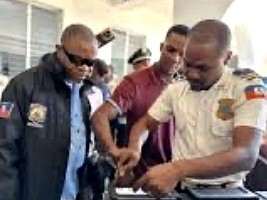
In a significant move to improve public service accessibility, the Central Directorate of the Judicial Police (DCPJ), led by Inspector General Justin Marc, unveiled a new regional office in Les Cayes on November 12, 2025. This facility, established within the Southern Departmental Directorate, is specifically designed to issue police certificates to residents of the Greater South region. The initiative aims to eliminate the need for long, expensive, and perilous trips to Port-au-Prince, offering a local alternative that saves time, money, and effort for southern residents. The opening ceremony was attended by prominent local figures, including Government Commissioner Wilnair Dormevil, Les Cayes Mayor Claire Daphnée France, Court Dean Jocelyn Lucian, Bar Association President Wousevel Louis, and Marc Gregor of the Anti-Narcotics Brigade (BLTS). This development underscores the Haitian National Police’s (PNH) dedication to enhancing service quality, fostering better citizen relations, and advancing modern, efficient, and accountable police governance.
分类: society
-

Gloria Walsh wins Super 6 Jackpot
Gloria Walsh, Director of the ‘Love One, Teach One’ Foundation based in Bath Estate, has emerged as the latest winner of the Super 6 Jackpot, taking home a substantial prize of $270,000. The fortunate event unfolded late one evening when Walsh, after hearing widespread congratulations directed at Dominica, decided to check her lottery ticket. Despite her initial reluctance to turn on the lights, she used her phone’s flashlight to verify the numbers. To her delight, the numbers matched perfectly, confirming her win. Overwhelmed with joy, Walsh expressed her elation and shared her plans to allocate a portion of her winnings towards her retirement, ensuring a wise and thoughtful use of the funds. Meanwhile, Ken George, Marketing Manager of the Dominica National Lottery, highlighted the success of the Super 6 game, which has disbursed over $1.7 million in prizes across the Windward Islands. Dominica, in particular, has seen two jackpot winners, with the highest payout reaching $1.19 million. George emphasized the growing popularity of combo plays among customers, encouraging more players to participate with the assurance that they, too, can win.
-

Beijings Olympische Parels: Het kloppend hart van stadions en symbolen
Beijing’s Olympic venues, including the iconic Bird’s Nest, Ice Ribbon, and Water Cube, continue to stand as symbols of architectural brilliance and Olympic legacy. These structures, initially built for the 2008 Summer Olympics and later utilized for the 2022 Winter Games, remain functional hubs for sports, culture, and entertainment. The Bird’s Nest, officially known as the National Stadium, is renowned for its unique steel lattice design resembling a bird’s nest. Designed by the Swiss-Japanese duo Herzog & de Meuron and Chinese artist Ai Weiwei, it hosted both the opening and closing ceremonies of the 2008 and 2022 Olympics. With a seating capacity of 80,000, expandable to 91,000, it’s a marvel of energy-efficient and eco-friendly architecture. The Ice Ribbon, or National Speed Skating Oval, is another engineering feat, designed to resemble a flowing ribbon of ice. It’s one of the fastest skating tracks globally, thanks to advanced ice production and climate control systems. The Water Cube, or National Aquatics Center, features a bubble-like exterior inspired by water molecules and was a key venue for swimming events in 2008. Today, these venues are repurposed for public use, hosting events ranging from concerts to recreational activities, ensuring their legacy endures beyond the Olympics.
-
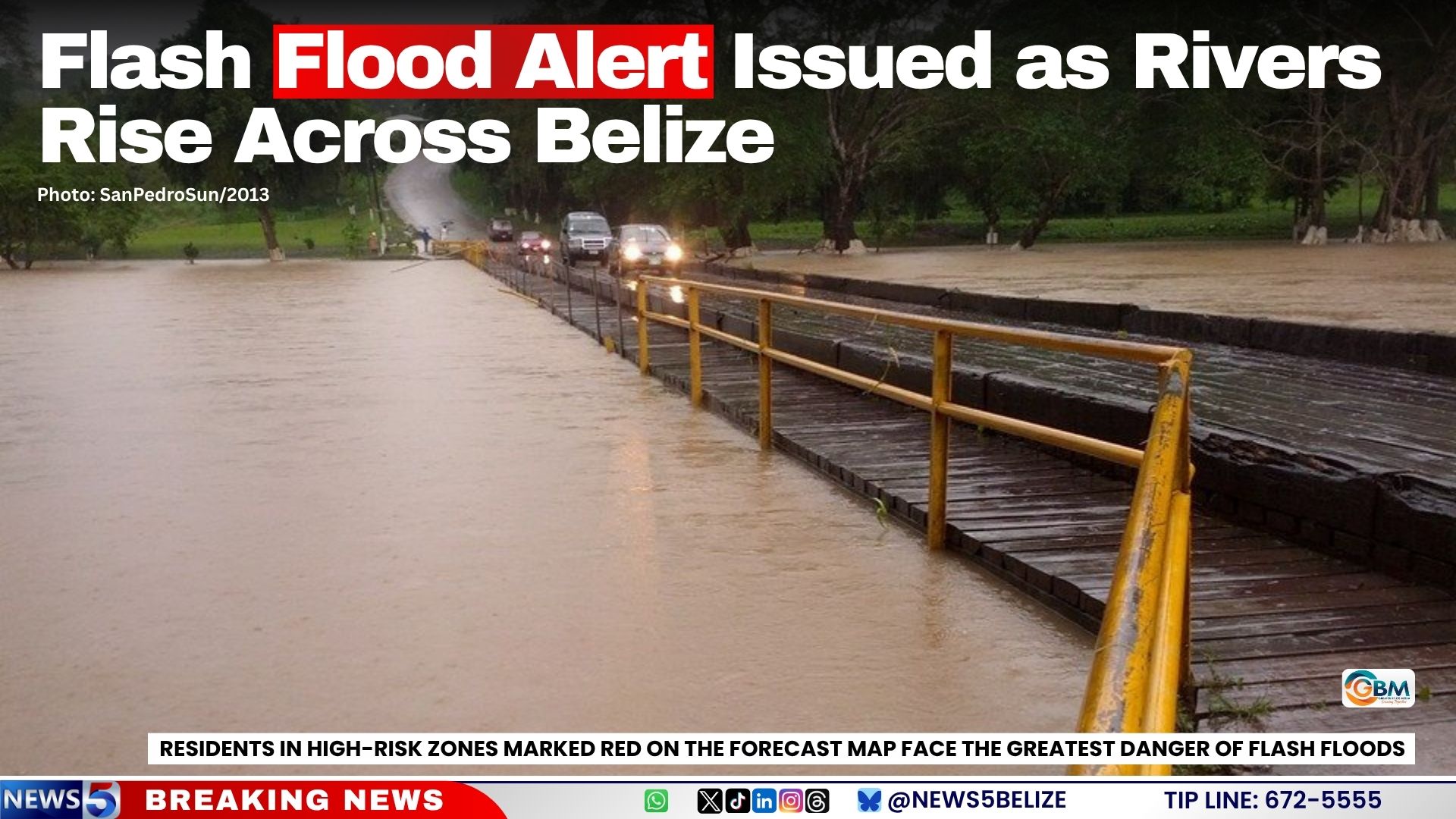
Flash Flood Alert Issued as Rivers Rise Across Belize
Belize is grappling with escalating flood risks as torrential rains persist across the nation, prompting the government to issue a Flash Flood Alert. The warning, now in effect, covers inland West, central regions, the central coast, and inland southern areas of Belize. Authorities have identified critical flood-prone zones, including the Belize River at More Tomorrow and downstream communities, the Sibun River at Freetown Sibun, and the Sittee River at Kendal. The Golden Stream River at Hellgate in Region 11 is also under threat. Reports indicate that river levels are surging, with the Mopan River near Benque Viejo Town and the Macal River at the Vaca Facility already spilling over. The Belize River is nearing flood stage at More Tomorrow, while the Sibun River has surpassed flood levels. The Sittee River is at bankfull stage, signaling imminent overflow. High-risk zones marked red on the forecast map face the most severe danger, while orange areas have medium to high potential. Communities in lime-green-yellow zones are advised to remain vigilant despite lower risks. Officials are urging residents to stay updated on weather developments and avoid travel near rivers and low-lying areas. The situation underscores the urgent need for preparedness as the country braces for potential devastation.
-

Bexon shooting claims life of mother of 2
A tragic incident unfolded in Bexon on the evening of November 12, resulting in the death of 35-year-old Finola McLauren. Emergency services were dispatched at around 8:17 p.m. following reports of a gunshot wound. Upon arrival, McLauren was discovered in the driver’s seat of a vehicle, showing no signs of life. Despite immediate life-saving efforts and transportation to a medical facility, she succumbed to her injuries. McLauren, a mother of two, leaves behind a heartbroken family, including her son and daughter. Her sisters, who chose to remain anonymous, expressed their profound grief and disbelief. One sister described McLauren as a vibrant and selfless individual, always ready to support her family and friends. The family is now calling for justice and an end to the violence that claimed her life. The incident has sparked outrage on social media, with some comments suggesting political motives, which the family vehemently denies. The community is united in their demand for a thorough investigation and accountability.
-

Josh Matthias Charged with Marrying Two Wives, Granted Bail
A 35-year-old man from Cassada Gardens, Josh Matthias, has been granted bail in a high-profile bigamy case. Matthias appeared before Magistrate Andrew Mighty earlier this week, where he was released on a $5,000 bail with no cash deposit required. The court imposed strict conditions for his release, including the provision of two sureties, the surrender of all travel documents, and a prohibition on contacting the alleged victim. Authorities claim that Matthias participated in a wedding ceremony with another woman at Fort James on April 9, 2025, despite still being legally married to his first wife. Following a thorough investigation, he was arrested and formally charged with bigamy. The case has been adjourned and is set to resume on December 17, 2025, as the legal proceedings continue.
-
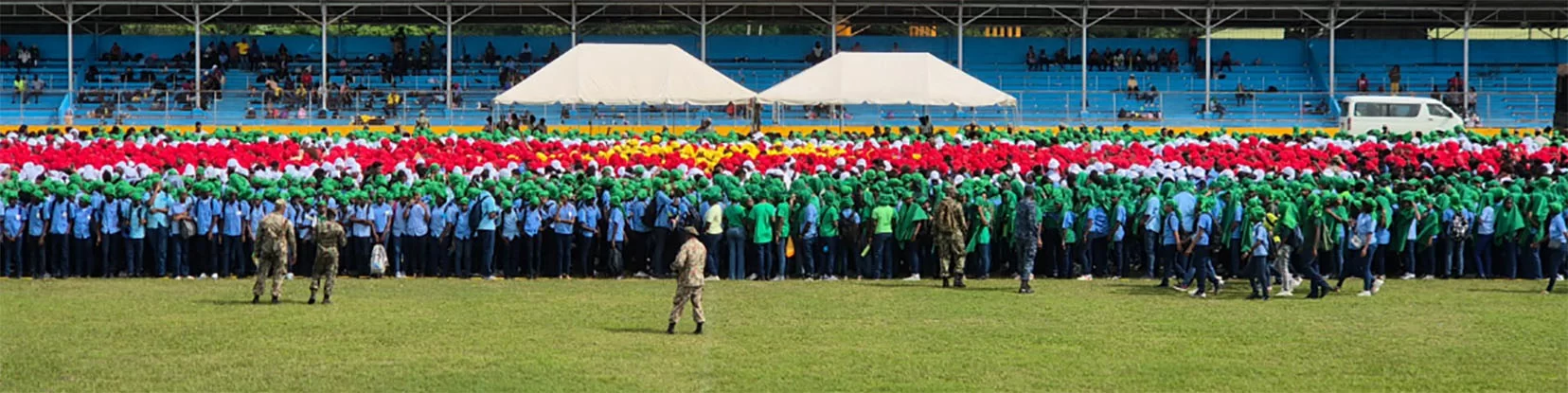
Duizenden scholieren oefenen voor Surinaamse vlag Onafhankelijkheidsdag
On Wednesday, thousands of students gathered at the André Kamperveen Stadium to rehearse a large-scale formation of the Surinamese flag in celebration of Independence Day. While the practice session showed promising results, organizers emphasized that there is still room for improvement. Major Eleen Simson and her team were kept busy attending to students who struggled with the sunny weather. After brief breaks, many returned to the field with smiles, ready to continue. Coordinator Melvin Groenfelt expressed confidence in the students’ enthusiasm and preparation, stating, ‘There are still a few details to iron out, but they already know what to do. The final result will be unveiled on Sunday.’ The grand performance is scheduled to take place on November 16 at Independence Square. Officer Faried Ilahibaks reflected on past celebrations, noting that the first such event occurred in 1975, coinciding with Suriname’s independence. Smaller exercises were held in 1985, while larger-scale performances took place in 2005 and 2010. Major Simson reported that over 20 students required medical attention during the rehearsal, primarily due to dizziness and nausea, often caused by insufficient food or water intake. She offered practical advice to participants and their parents: ‘Eat and drink well, but avoid heavy meals right before the event. Ensure adequate rest and go to bed early. Avoid staying up late or spending too much time on your phone on Saturday night.’
-

Budna Investigation: ‘Too Late to Put the Genie Back in the Bottle’
The Joseph Budna abduction case has taken a contentious turn, with Attorney Arthur Saldivar accusing the State of irreversible mismanagement and deliberate concealment of critical information. Saldivar likened the situation to “trying to put the genie back in the bottle,” emphasizing that the government’s actions have created a pattern of secrecy that the court must now address. He revealed that the government has filed two strikeout applications, a move he described as a standard tactic to delay or dismiss the proceedings. Saldivar further asserted that the State has withheld essential evidence, including unaltered video footage, and highlighted the failure of police officers to act as a significant part of the case. “When individuals with a legal duty fail to act, it constitutes an offense,” he stated. The case regained public attention this week when Director of Public Prosecutions Cheryl-Lynn Vidal confirmed receiving the case file from Prime Minister John Briceño. Vidal described the file as “less than nothing,” noting that it lacks sufficient evidence to warrant any arrests. Saldivar argued that the file should have been sent to the DPP immediately after the August 23 incident, which would have mitigated the ensuing controversy. Budna, abducted in Orange Walk in August, remains imprisoned in Guatemala, while Constable Barrington Flowers, accused of aiding the abduction, denies all allegations and is currently on full-pay suspension.
-

Investigation Continues into Kahleel Simon’s Fatal Police Shooting
Authorities are intensifying their probe into the fatal police shooting of 18-year-old Kahleel Simon, who tragically lost his life on his birthday, August 27. Acting Police Commissioner Everton Jeffers informed state media that law enforcement officials are meticulously collecting evidence and witness testimonies. A comprehensive file is being prepared for submission to the Magistrate, preceding a coroner’s inquest. Jeffers also confirmed that an autopsy on Simon’s body has been completed. The incident has ignited widespread community protests, with Simon’s relatives and local residents vehemently claiming that excessive force was employed and that he was not afforded an opportunity to comply before being shot. The case has raised significant concerns about police conduct and the use of force, prompting calls for transparency and accountability in the ongoing investigation.
-
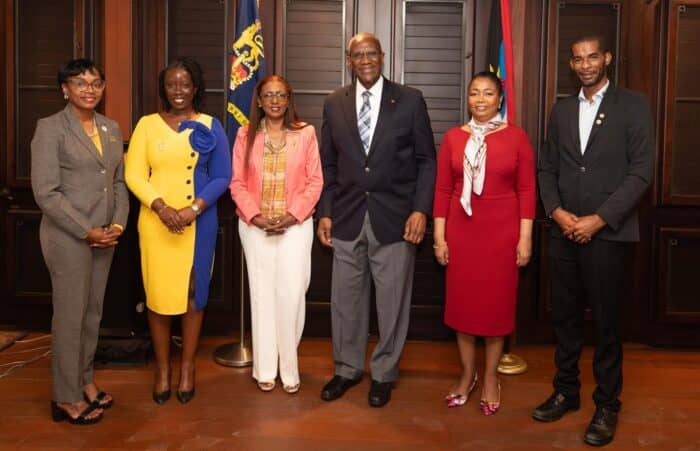
Rotary District Governor pays Courtesy Call to Governor General and Lady Williams
Mrs. Soraya A. J. Warner-Gustave, the Rotary District Governor of District 7030, which encompasses the Southern Caribbean and South America, recently made an official visit to Antigua and Barbuda. During her trip, she paid a courtesy call to His Excellency Sir Rodney Williams, the Governor General of Antigua and Barbuda, and Her Excellency Lady Sandra Williams, the Governor General’s Goodwill Emissary. The visit underscored the longstanding relationship between Rotary International and the twin-island nation. Sir Rodney warmly welcomed Mrs. Warner-Gustave and commended the Rotary Clubs for their impactful contributions, particularly in youth development, their support for the Sir Lester Bird Mount St. John’s Medical Centre, and their unwavering commitment to humanitarian service and peacebuilding. The District Governor also spotlighted the upcoming Rotary Youth Leadership Awards (RYLA), set to take place in Antigua and Barbuda this weekend. The event will bring together over 150 regional participants and approximately 100 local Interact members for a three-day youth development workshop. Lady Sandra Williams, President of the Halo Foundation, extended an invitation to the Rotary team to continue their collaborative efforts, referencing past joint initiatives such as the ‘Meals on Wheels’ program. The Rotary Club of Antigua has enjoyed the patronage of Their Excellencies since 2014. Mrs. Warner-Gustave was accompanied by Assistant Governor Jonah Ormond, along with representatives from the Rotary Club of Antigua, including President Elisa Graham, and President Nicole Stevens of the Rotary Club of Antigua (Sundown).