分类: society

  • Convict’s application for leave to appeal adjourned until March

    Convict’s application for leave to appeal adjourned until March

    In a significant development within Barbados’ judicial system, the Court of Appeal has postponed convicted murderer Haniyfa Reza White’s leave to appeal application until March 2026, granting her legal team additional time to rectify procedural deficiencies in their submission.

    While White received her criminal sentence in a nearby courtroom, appellate proceedings encountered a temporary halt as Chief Justice The Most Honourable Leslie Haynes identified multiple substantive issues requiring resolution. The court demonstrated judicial flexibility by allowing White’s attorney, Lalu Hanuman, to reorganize the application framework and ensure proper documentation of all case filings.

    White seeks to challenge the Caribbean Court of Justice’s endorsement of the Court of Appeal’s May 13th ruling, which previously dismissed her attempt to stay criminal proceedings in the No. 5 Supreme Court. The defendant, represented by Hanuman, has pursued multiple legal avenues including constitutional motions arguing that extensive trial delays—dating back to the 2007 murder of Julene Bryan—have compromised her right to a fair hearing.

    Principal State Counsel Jared Richards represented the prosecution during these proceedings. The court has established a revised timeline requiring White’s legal team to file written submissions by February 13, 2026, with the state’s response due by February 27th. The case will reconvene on March 19, 2026.

    This development follows earlier judicial disagreements regarding trial continuity. Justice Corlita Babb-Schaefer previously recommended case dismissal due to constitutional violations, while Justice Pamela Beckles elected to proceed with trial proceedings—a decision upheld by the appellate court comprising Chief Justice Haynes and Justices Francis Belle and Jacqueline Cornelius-Thorne.


  • Instelling beheersraad centraal bij overleg over Waterkant

    Instelling beheersraad centraal bij overleg over Waterkant

    Suriname’s Presidential Tourism Commission has initiated decisive action to address the deteriorating conditions at Waterkant, the capital’s prominent waterfront tourist area. During a recent stakeholder assembly, commissioners unanimously advocated for establishing a formal management authority to oversee the district’s rehabilitation and sustainable development.

    Commission Chair Rachel Pinas revealed that the organization has received numerous complaints regarding Waterkant’s declining state. Local residents, vendors, artisans, and business operators have reported widespread vandalism, inadequate waste management, insufficient lighting, and lack of security patrols throughout the area.

    The meeting highlighted how fragmented responsibilities among various agencies have hindered effective management. Minister Raymond Landveld of Transport, Communication, and Tourism has been formally requested to establish a Waterkant Management Council that will centralize oversight and coordination.

    This new governing body will serve as the central contact point for all stakeholders, coordinate between involved institutions, and develop unified policies for maintenance, security, and aesthetic enhancement. Pinas emphasized that such centralized authority is essential for preserving Waterkant’s tourism value and ensuring its sustainable protection. She expressed hope that the council could be operational before year’s end.

    Participants also agreed to organize a follow-up session with all involved parties to develop a comprehensive action plan. The commission chair appealed to the public to exercise greater care for the waterfront area, stating, “Let us be loving and good to our country.”

    The stakeholder meeting included representatives from multiple government entities including the Ministry of Transport, Communication and Tourism, SMS Pier, Public Green Spaces and Waste Management, the Paramaribo Middle District Commission, the Paramaribo Urban Rehabilitation Program, and local residents.

  • George Price Highway Set for Modern Transformation

    George Price Highway Set for Modern Transformation

    The Belizean government has initiated a comprehensive modernization project for the critical George Price Highway, addressing long-standing infrastructure deficiencies through a multi-faceted engineering approach. Chief Engineer Evondale Moody of the Ministry of Infrastructure Development and Housing (MIDH) presented detailed technical specifications to both senators and media representatives this week.

    The ambitious renovation encompasses multiple strategic interventions along the entire corridor. Within urban sections, the project will implement hot mix overlays on Cemetery Road and complete drainage system overhauls to mitigate chronic flooding issues. The Western Avenue approach will be transformed into a four-lane boulevard with new concrete sidewalks and dedicated drainage channels to address Mirab catchment flooding.

    Significant geotechnical challenges require innovative engineering solutions, particularly near Old Belize where differential settlement has caused pavement instability. The remediation plan includes installing pile raft systems and board piles to establish rigid foundation support. Critical bridge infrastructure will see complete replacement of the structurally compromised Burdon Canal crossing, requiring temporary bridge construction during rehabilitation.

    The scope extends beyond urban centers through Hattieville, featuring construction of retaining walls, box culverts, and roundabout reconstruction. The Hector Creek Bridge will be fully replaced as part of the comprehensive resilience upgrade. This infrastructure enhancement represents one of Belize’s most substantial roadway modernization initiatives, targeting improved transportation reliability, flood resilience, and long-term structural integrity for a vital national artery.

  • Crackdown in Lake-I: Officers Flood Streets After Attacks

    Crackdown in Lake-I: Officers Flood Streets After Attacks

    Belize City has launched a comprehensive security mobilization in response to a disturbing escalation of gang-related violence in the Lake Independence district. The heightened police activity comes after a series of shootings that shocked the community, including an incident on December 10th where three civilians—two minors and a sixty-year-old woman—were wounded by gunfire near La Croix Boulevard. This violence occurred merely one week after the tragic killing of fifteen-year-old Eric Reyes on Park Street.

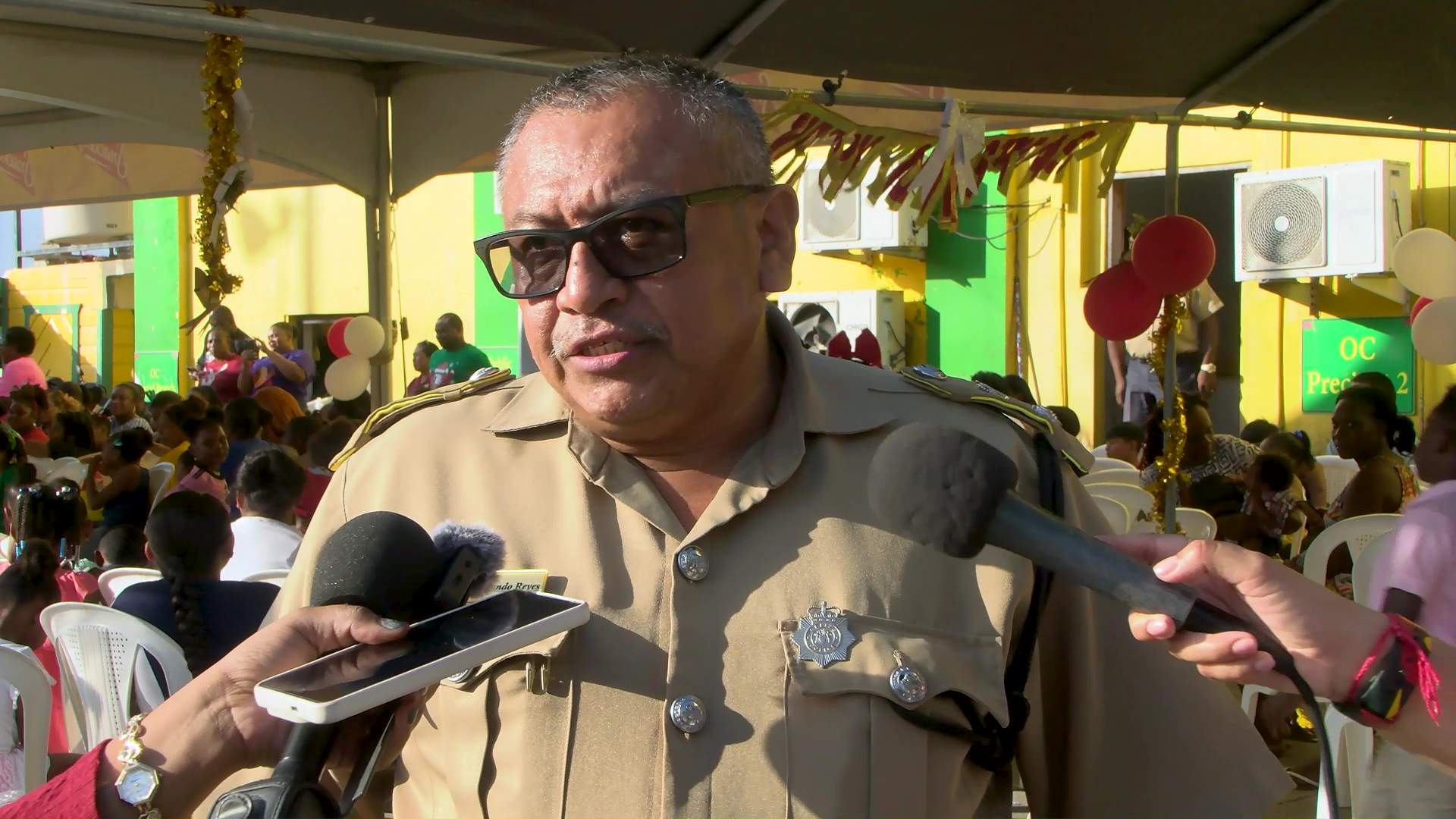
    In an exclusive interview, Eastern Division Commander Senior Superintendent Reymundo Reyes outlined the strategic response to the crisis. “Our operational recalibration extends beyond Lake Independence to encompass the entire city,” Reyes stated. “We have reorganized our patrol patterns and significantly increased ground operations to ensure resident safety.”

    The security crackdown involves a multi-unit approach combining regular police forces with specialized teams. The Belize Defense Force (BDF) has been deployed to high-risk areas, working alongside the Gang Operation Unit, Special Patrol Unit, and Mobile Interdiction Unit. Tactical operations include systematic searches of vacant properties aimed at disrupting criminal networks and seizing illegal firearms and narcotics.

    Superintendent Reyes confirmed the operations are yielding positive results, noting that a small criminal element remains responsible for most violence. “We are targeting these specific individuals on a daily basis,” he emphasized. The security initiative will continue through the remainder of the year as authorities work to restore public safety and community stability.

  • Julius Espat Calls for Unity to Protect Chiquibul Forest

    Julius Espat Calls for Unity to Protect Chiquibul Forest

    Belizean parliamentarian Julius Espat has issued a compelling appeal for national unity regarding the ongoing conservation efforts in the critically important Chiquibul Forest region. The Cayo South Area Representative’s intervention follows recent Senate proceedings that revealed significant tensions between environmental groups and governmental authorities.

    The political discourse emerged after NGO Senator Janelle Chanona openly criticized the administration for allegedly obstructing the operations of Friends for Conservation and Development (FCD), a prominent environmental organization. This accusation appears connected to a comprehensive statement released by Bulridge Limited, a forestry enterprise that holds legal concessions in the area. The company vigorously defended its sustainable forest management practices while simultaneously drawing comparative assessments of FCD’s conservation methodologies.

    Espat, adopting a conciliatory stance, acknowledged the valuable contributions of both entities involved in the dispute. “I have personally accompanied FCD personnel into the Chiquibul wilderness and witnessed their exceptional dedication firsthand,” the legislator stated. “Similarly, Bullridge appears to be fulfilling their operational responsibilities effectively.”

    The representative drew an analogy to familial dynamics, suggesting that internal disagreements should ultimately yield to collective national interest. “Much like siblings debating portion sizes at the dinner table, these conservation stakeholders require parental guidance—in this case, governmental leadership—to foster cooperation rather than competition,” Espat elaborated. He emphasized that all decisions must prioritize Belize’s long-term environmental security and sustainable development, while clarifying his non-involvement in the immediate conflict resolution process.

    This development highlights the complex interplay between economic interests, environmental protection, and governance in managing Belize’s precious natural resources, particularly within the ecologically significant Chiquibul Forest ecosystem that represents a vital component of the Mesoamerican Biological Corridor.

  • Police Presence on George Price Highway Reduces Considerably

    Police Presence on George Price Highway Reduces Considerably

    BELIZE CITY – The noticeable reduction of police presence along the George Price Highway has prompted public inquiry into law enforcement operations. Regular commuters have observed the absence of previously consistent checkpoints, particularly at the mile four location, raising questions about permanent closure.

    Senior Superintendent Reymundo Reyes, Eastern Division Commander, has clarified the situation in an official statement. Contrary to public speculation about abandoned operations, the Belize Police Department is implementing a strategic reallocation of resources. “We are limiting the checkpoints being conducted in the area,” Reyes explained. “Both assigned police officers remain available for immediate deployment.”

    The revised operational approach maintains readiness for rapid response scenarios rather than maintaining constant visible presence. Superintendent Reyes emphasized that personnel will mobilize promptly when specific intelligence indicates criminal activity, particularly involving drug trafficking, firearms transportation, or vehicle interception requirements following robbery incidents.

    This tactical adjustment represents a shift toward intelligence-driven policing rather than routine checkpoint maintenance. Law enforcement officials stress that the change enhances operational efficiency while maintaining security capabilities. The Eastern Division confirms that this strategic modification allows for optimized resource distribution across multiple crime prevention initiatives without compromising public safety objectives along critical transportation corridors.

  • Convicted killer given 30-year starting sentence

    Convicted killer given 30-year starting sentence

    In a landmark ruling at the No. 5 Supreme Court, Justice Pamela Beckles has sentenced Haniyfa Reza White to 23.5 years imprisonment for the 2007 killing of her former friend and neighbor Julene Bryan. The sentence represents the remainder of a 30-year starting term after accounting for mitigating circumstances and an extraordinary 18-year delay in bringing the case to trial.

    The court established that on May 14, 2007, White deliberately armed herself with a knife and went to Bryan’s residence in Six Men’s, St. Peter following an earlier altercation. Evidence presented during proceedings revealed that White initiated the confrontation by throwing a rock at Bryan’s home before fatally stabbing the victim in the neck, severing her carotid artery in front of her residence.

    Justice Beckles delivered a compelling address to the convicted killer, stating: ‘The location of this injury would suggest that your intention was clearly to kill or cause serious bodily harm. Yet you see yourself and your children as the victims, even though you were there to love and care for them. The deceased’s children were deprived of this because of your actions that day.’

    The judge identified several aggravating factors including the premeditated nature of the attack, the use of a lethal weapon, and the traumatic impact on Bryan’s four children who witnessed the violence outside their home. The court also considered mitigating circumstances including White’s lack of prior criminal record, favorable pre-sentencing reports indicating low recidivism risk, and substantial trial delays.

    White testified that she had endured ongoing harassment from Bryan and associates following the dissolution of their friendship. She claimed the stabbing occurred during a physical struggle after Bryan allegedly attacked her with a metal object. The court ordered White to serve 8,659 days at Dodds Prison with recommendation for counseling programs addressing interpersonal relationships and societal reintegration.

    Legal representatives included Acting Deputy Director of Public Prosecutions Krystal Delaney for the state and defense counsel Safiya Moore for White.

  • Government House Restoration Nears Completion, Senator Says

    Government House Restoration Nears Completion, Senator Says

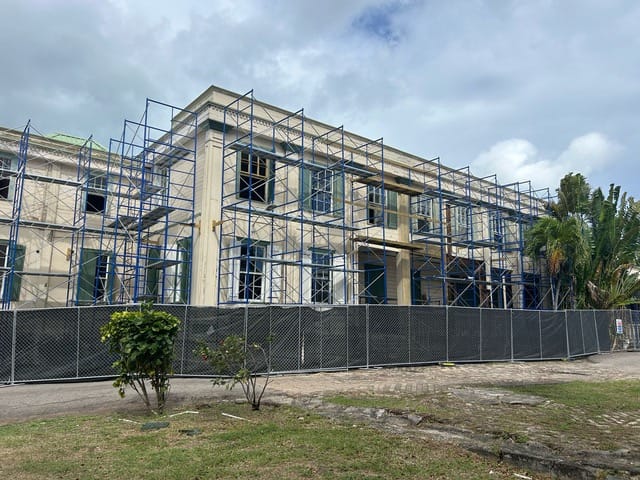
    Antigua and Barbuda’s landmark Government House is undergoing a transformative restoration projected for completion by mid-2026, according to Senator Jamilla Kirwan’s recent address to the Upper House. The independent senator revealed during the 2026 budget debate that the preservation initiative has successfully secured over EC$7 million in funding since its inception in 2017.

    The ambitious project, spearheaded by the Antigua and Barbuda Heritage Trust, aims to convert the historic property into a multifunctional cultural center while maintaining its official role as the Governor-General’s workplace. The restored complex will feature a living museum chronicling the nation’s political evolution, an art gallery displaying repurposed royal portraits and historical artworks, and versatile event spaces for public use.

    Senator Kirwan emphasized the restoration’s national significance, characterizing it as a profound commitment to cultural stewardship and sustainable legacy building. Beyond architectural preservation, the project intends to stimulate revitalization of adjacent historic districts and establish precedents for future heritage protection laws.

    The funding model exemplifies successful cross-sector collaboration, with substantial contributions from individual donors, nonprofit organizations, and corporate partners. Kirwan particularly acknowledged the Halo Foundation—the Governor-General’s charitable arm—for its complementary decade-long work supporting vulnerable populations, illustrating the interconnection between physical heritage conservation and social development.

    The senator utilized the restoration update to advocate for strategic long-term asset management, stressing that consistent maintenance planning supersedes reactive emergency repairs. This approach ensures national treasures endure for future generations while serving contemporary civic needs.

    The project timeline anticipates a formal public unveiling no later than the second quarter of 2026, marking the culmination of nearly a decade of concerted preservation efforts.

  • President en VWPU werken aan structurele oplossing

    President en VWPU werken aan structurele oplossing

    In a significant development for Suriname’s education sector, the Scientific Staff Union of Anton de Kom University (VWPU) has emerged from productive negotiations with President Jennifer Simons with renewed optimism. The Wednesday meeting at the Presidential Cabinet marked a resumption of dialogue after a period of stalled communications, focusing on systemic challenges within higher education.

    Led by VWPU Chairman Aroenprekash Badal, a physics professor and faculty coordinator, the union delegation engaged in what both sides described as open and respectful discussions. President Simons provided comprehensive context regarding the nation’s current socioeconomic difficulties while union representatives detailed the specific concerns affecting academic staff members.

    A crucial outcome of the meeting was the establishment of a clear timeline for resolution. President Simons formally requested the union to submit concrete proposals in the immediate term, with both parties committing to achieve definitive solutions to existing problems by March 2026. This deadline creates a structured framework for addressing long-standing issues that have affected the university’s academic community.

    Following the presidential engagement, the VWPU has initiated internal consultations with its membership to develop a unified position and craft proposals that address both immediate concerns and long-term structural improvements. The renewed dialogue represents a positive step toward stabilizing Suriname’s higher education system amid broader national challenges.

  • Employers urged to adopt sign language in the workplace

    Employers urged to adopt sign language in the workplace

    Barbados is spearheading a transformative workplace inclusion initiative, with government officials and disability advocates urging employers to integrate sign language training as a standard organizational requirement. The campaign gained momentum during a specialized Disability Sensitivity Training session hosted by the Ministry of Labour, Social Security and Third Sector in collaboration with the United Nations, held Wednesday at Courtyard by Marriott in Hastings, Christ Church.

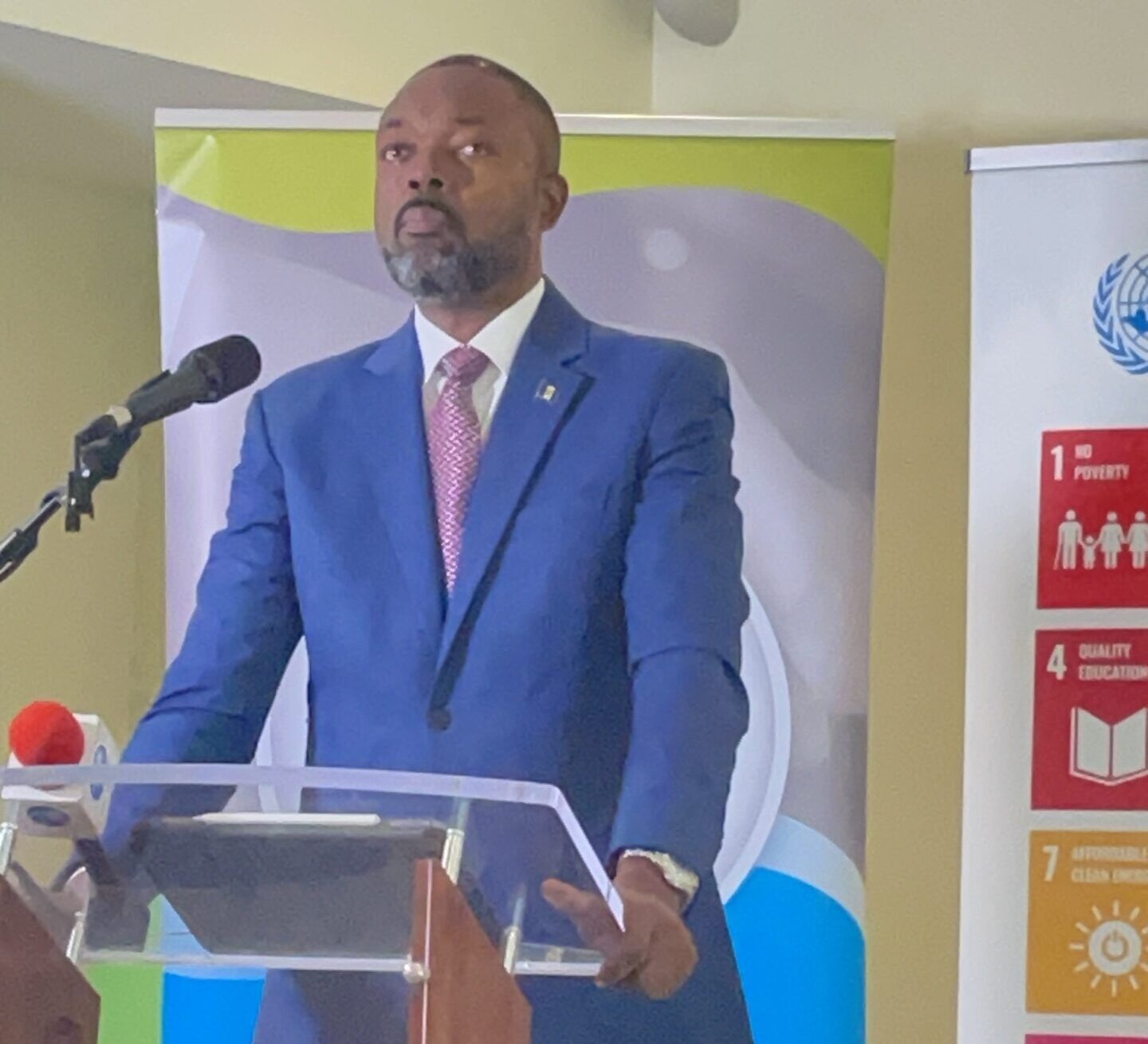
    Minister Colin Jordan articulated a strategic vision for organizational accessibility, proposing that sign language proficiency should mirror established workplace safety protocols. “Similar to CPR and first-aid requirements, we need designated staff members equipped with sign language skills across all departments,” Jordan emphasized. He clarified that while universal training remains impractical, creating communication access points through trained personnel is both feasible and essential.

    The training session revealed profound communication challenges facing the deaf community, with Barbados Council for the Disabled representative Heather Gazette-Corbin detailing the isolating nature of hearing impairment. “Hearing loss creates profound isolation—individuals experience internal struggles they cannot verbally express,” she explained, noting critical safety implications including limited emergency service access.

    Gazette-Corbin addressed prevalent misconceptions, clarifying terminology preferences within the community: “deaf” for congenital hearing loss and “hard of hearing” for acquired conditions, while strongly discouraging outdated terms like “dumb.” She dismantled the myth of lip-reading reliability, demonstrating how even common phrases can be misinterpreted without contextual clues.

    The presentation introduced the concept of the “deaf nod”—a social adaptation where individuals pretend comprehension to avoid disruption—and provided practical communication guidelines including maintained eye contact, clear visual access to mouths, and information rephrasing.

    Addressing safety concerns frequently cited by employers, Gazette-Corbin presented counterintuitive findings: “Deaf individuals often detect emergencies through vibrations and visual cues before hearing colleagues become aware. Fire alarms can be supplemented with flashing light systems that benefit all employees, especially as age-related hearing decline occurs.”

    The representative concluded with compelling testimony about workplace capabilities: “Deaf employees demonstrate exceptional commitment and productivity when provided appropriate accommodations. Their performance consistently exceeds expectations when communication barriers are removed.”

    This training initiative represents a cornerstone in Barbados’ broader strategy to implement inclusive employment practices, with additional sensitization sessions planned nationwide to improve accessibility for people with disabilities.