分类: society

  • Ignite Talent Show participants, winners still not paid

    Ignite Talent Show participants, winners still not paid

    A concerning situation has emerged in St. Vincent and the Grenadines regarding the Ignite Talent Show, an event organized under the Prime Ministerial Advisory Council on Youth. Despite delivering exceptional performances that captivated the nation approximately two months ago, numerous young creatives ranging from early teens to young adults remain uncompensated for their participation and prize winnings.

    The event, designed to showcase the country’s artistic potential, has instead revealed administrative failures that have left participants facing financial hardship and emotional distress. Multiple attempts by these young performers to obtain clear communication about payment timelines have been met with inconsistent responses, shifting instructions, and what appears to be a dismissive attitude from organizers.

    Most strikingly, even the competition winner—promised EC$20,000 for her achievement—has not received payment, as confirmed by her father’s public social media statements. This development raises serious questions about the management of public funds and the treatment of creative talent by governmental advisory bodies.

    The situation reflects a broader pattern of administrative neglect toward artists in St. Vincent and the Grenadines, with some participants reporting similar payment delays from cultural projects predating the current government. The emotional impact on young creatives who invested limited resources and heartfelt effort into their performances cannot be overstated, with many depending on these funds to support themselves and their families during the recent holiday season.

    Organizational responsibility appears to rest primarily with the Chairman of the SVG Prime Ministerial Advisory Council on Youth, who has become the focal point for participant frustrations. The absence of transparent communication and accountable leadership in resolving these payment delays undermines public trust in institutions meant to nurture and protect creative talent.

    The concerned citizen who brought this matter to public attention did so anonymously, citing legitimate fears of victimization in the small island society when speaking openly about authority figures. This silence-breaking act highlights the power dynamics at play and the urgent need for institutional accountability and reform in how creative contributions are valued and compensated at the governmental level.


  • Cuevas del Pomier receive official recognition as cultural heritage

    Cuevas del Pomier receive official recognition as cultural heritage

    Santo Domingo – In a significant cultural preservation move, the Dominican Senate has unanimously endorsed legislation designating the Borbón Caves, commonly referred to as the Pomier Caves, as the official “Rock Art Capital of the Dominican Republic.” This parliamentary action represents the final approval stage for the bill, which seeks to elevate both domestic and international awareness of this extraordinary archaeological treasure situated in the Borbón sector of San Cristóbal province.

    The legislative proposal was championed by Senator Gustavo Lara Salazar, who emphasized the site’s unparalleled anthropological significance during parliamentary deliberations. The Pomier Caves Anthropological Reserve stands as one of the Caribbean’s most substantial archaeological complexes, safeguarding evidence of prehistoric human habitation spanning over a millennium. This preservation provides crucial understanding into the earliest cultural manifestations throughout the Antilles archipelago.

    Encompassing 55 separate caverns distributed across four square kilometers, the reserve features subterranean passages extending up to 1,000 meters beneath the surface. Scientific documentation reveals approximately 6,000 ancient pictographs portraying animal and human forms, complemented by roughly 500 intricate petroglyphs. These artistic creations are primarily attributed to the Taíno and Igneri civilizations that flourished prior to European colonization in 1492, highlighting the location’s exceptional historical and scientific value for anthropological research and Caribbean cultural heritage.

  • Environment Ministry authorizes import of exotic species for National Zoo

    Environment Ministry authorizes import of exotic species for National Zoo

    Santo Domingo – In a carefully evaluated decision, the Dominican Republic’s Ministry of Environment and Natural Resources has sanctioned the importation of select exotic animals for the National Zoological Park (ZOODOM). This authorization, granted through the Vice Ministry of Protected Areas and Biodiversity, follows a comprehensive technical review process aimed at balancing educational objectives with ecological protection.

    The approved shipment includes six rhesus monkeys (Macaca mulatta) and two spectacled caimans (Caiman crocodilus) sourced from Puerto Rico’s Department of Natural Resources. These animals are destined to enhance ZOODOM’s conservation initiatives and public engagement programs, with officials confirming the zoo’s compliance with stringent biosecurity protocols and habitat management standards.

    Conversely, the ministry rejected ZOODOM’s parallel request to import ringneck parrots (Psittacula krameri), citing their invasive species classification. Scientific assessment determined these birds pose substantial risks to native biodiversity through resource competition and potential agricultural damage.

    The selective approval demonstrates the government’s science-based approach to wildlife management, emphasizing that all species introduction decisions undergo rigorous environmental impact analysis. This case establishes a precedent for responsible exotic animal acquisition that prioritizes ecosystem protection while supporting legitimate conservation education efforts.

  • JCE presents new Dominican ID card design

    JCE presents new Dominican ID card design

    The Central Electoral Board (JCE) of the Dominican Republic has officially unveiled the design for its next-generation national identity card, marking a significant leap in identification technology. The comprehensive modernization initiative will commence nationwide registration starting April 8, 2026, introducing cutting-edge security features that blend physical and digital protection mechanisms.

    While maintaining the traditional horizontal format familiar to citizens, the new ID card incorporates sophisticated anti-fraud technologies including grayscale laser printing, halftone security screens, and multiple optical elements. These features include a honeycomb pattern integrated into the primary photograph, a ghost image, and inverted visuals that only become visible from specific angles, creating a multi-layered security approach.

    The card’s front display showcases the Dominican coat of arms alongside the gold JCE logo, with the ID number presented in high relief to enable immediate visual detection of tampering attempts. All security specifications adhere to rigorous international standards established by the International Civil Aviation Organization (ICAO).

    A revolutionary component of the new design is the embedded contactless chip, which will facilitate electronic identity verification and accelerate access to both administrative services and digital platforms. The JCE emphasized that the implementation will proceed through a carefully structured nationwide rollout, with additional logistical details and timelines to be communicated in the coming months. This initiative represents the Dominican Republic’s commitment to creating a secure, modern, and digitally integrated identification system aligned with global best practices.

  • Minister Phillip updates the nation on the status of the Cayon Community Centre

    Minister Phillip updates the nation on the status of the Cayon Community Centre

    BASSETERRE, SAINT KITTS – Senator the Honourable Isalean Phillip, Minister of State within the Ministry of Social Development, delivered a detailed progress report on the protracted closure and remediation of the Cayon Community Centre during her 2026 Budget Debate address on December 17, 2025.

    The facility, which also accommodates the Cayon Post Office, was initially shuttered in 2022 following conclusive air quality assessments that detected hazardous mold contamination across both levels of the structure. This decisive action was undertaken by the government to safeguard the wellbeing of public servants and community members utilizing the center’s services, initiating a temporary closure to facilitate extensive corrective measures.

    Minister Phillip catalogued the multifaceted remediation strategy executed over the past three years. These interventions encompassed structural repairs including the complete repair and recapping of a compromised roof, professional mold eradication procedures, and the installation of modernized appliances and climate control systems. Supplementary enhancements involved comprehensive deep cleaning, repainting of interior spaces, perimeter fence restoration, cistern reconnection, and the wholesale replacement of all wooden doors, furniture, and compromised fixtures.

    Despite these considerable efforts, subsequent air quality evaluations conducted by the Saint Kitts and Nevis Bureau of Standards persistently indicated mold concentrations exceeding acceptable thresholds, necessitating further intervention. In response, the ministry initiated collaborative consultations with environmental health specialists and industrial cleaning experts to reassess the situation.

    The investigation concluded that residual moisture infiltration from the roof structure remains the primary catalyst for recurrent mold proliferation. Consequently, the Public Works Department has formulated a technical specification for applying an additional concrete layer to the roof, designed to optimize water drainage and eliminate moisture accumulation.

    This conclusive phase of structural modification is scheduled for implementation in early 2026. Minister Phillip extended profound apologies to Cayon residents for the prolonged inconvenience, while reaffirming the government’s unwavering commitment to restoring full community access to the facility upon verification of complete compliance with all health and safety protocols.

  • Trauma, fractured families driving crime and mental health crisis, say survey

    Trauma, fractured families driving crime and mental health crisis, say survey

    A groundbreaking government-commissioned study has identified fractured family structures and unaddressed psychological trauma as the primary drivers behind Barbados’ escalating crisis of violence, substance abuse, and mental health disorders. Conducted over eight months with Prime Minister Mia Mottley’s endorsement, the comprehensive research audited 25-30 high-risk communities across the island nation.

    Pastor Eliseus Joseph, the Ministry of Empowerment and Elder Affairs consultant who spearheaded the investigation, revealed alarming findings about attachment trauma—the disruption of secure emotional bonds during childhood—as a critical factor in the nation’s social deterioration. The research encompassed approximately 2,000 young participants from Generation Z (ages 14-29) and Millennials (30-44), providing unprecedented insights into the psychological underpinnings of antisocial behavior.

    Joseph contextualized the crisis by referencing sobering crime statistics: Barbados recorded over 450 homicides between 2015-2020, an exceptionally high rate for a small island nation. However, he emphasized that quantitative data alone cannot capture the full complexity of the situation.

    The study identified distinct trauma response patterns along gender lines. Young males predominantly externalize their trauma through violence, aggression, and addiction, while females typically internalize suffering through self-critical behavior, self-harm, and substance abuse as coping mechanisms.

    Joseph clarified that absent father figures represent just one component of a multifaceted problem, noting that the absence of consistent male influence creates significant developmental challenges for both genders. The research establishes a clear progression from underlying mental health issues to addiction and ultimately to violent behavior, with anxiety, depression, and substance dependence forming a destructive triad.

    The findings advocate for a paradigm shift in crime prevention strategies, emphasizing that traditional law enforcement approaches cannot resolve what fundamentally constitutes a public health crisis. Effective solutions must prioritize trauma healing, mental health support, and family strengthening through collaborative efforts involving government agencies, civil society, faith-based organizations, and local communities.

    The research was presented during the Forum of Ideas for Youth Mentorship Village Builders Breakfast Meeting at the Lloyd Erskine Sandiford Centre, signaling the government’s commitment to developing evidence-based, holistic intervention strategies focused on early prevention and community-supported mentorship programs.

  • Six month bond for farmer

    Six month bond for farmer

    A 22-year-old agricultural worker from St. Michael, Barbados, has been placed on a six-month judicial bond after confessing to multiple cannabis-related violations in Bridgetown’s District ‘A’ Magistrates’ Court. Donte Rudolph Leroy Forde of Cutting Road, Haggatt Hall, admitted guilt regarding possession, trafficking, and intent to distribute 217 grams of the illicit substance seized on December 10.

    According to Station Sergeant Chrisna Williams’ courtroom testimony, the infraction occurred during a coordinated operation involving both the Barbados Police Service and Barbados Defence Force personnel. Officers intercepted Forde while he was driving through the Haggatt Hall area, immediately detecting the potent odor of cannabis emanating from his vehicle. Following consent for a search, authorities discovered multiple transparent plastic bags containing the drug within a blue string bag positioned on the floorboard.

    The defendant voluntarily acknowledged ownership of the substances, stating unequivocally to law enforcement: ‘That is my marijuana.’ The confiscated cannabis carried an estimated street valuation of BDS $1,085.

    Chief Magistrate Ian Weekes delivered a combined sentencing arrangement: Forde received a formal reprimand and discharge for the possession and intent to supply charges, while the trafficking violation resulted in a six-month bond. The court stipulated that any breach of this bond would necessitate an immediate payment of BDS $1,000 or alternatively incur a 120-day incarceration period.

  • The youth of Latin America and the Caribbean deserve to have books in their hands, not just in display cases

    The youth of Latin America and the Caribbean deserve to have books in their hands, not just in display cases

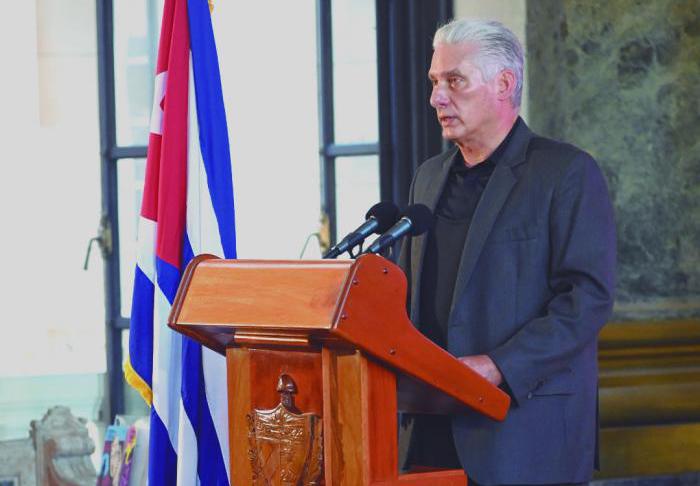
    In a significant cultural initiative bridging Latin American nations, Cuban President Miguel Díaz-Canel has officially launched “Project 25 for 25” from Havana’s National Capitol, simultaneously with Mexican President Claudia Sheinbaum’s parallel ceremony in Mexico City. The ambitious literacy project aims to distribute 25 classic Latin American books to young readers aged 15-30 across the region completely free of charge.

    The project, conceived by the Mexican government and coordinated through Cuba’s Casa de las Américas cultural institution, represents a strategic effort to combat the dominance of digital entertainment and social media among younger generations. President Díaz-Canel emphasized the initiative’s importance in preserving printed literature as a fundamental tool for knowledge acquisition and cultural preservation.

    The Cuban leader drew historical parallels to Fidel Castro’s revolutionary literacy campaigns, noting how Cuba’s first cultural institution established in 1959 was the National Printing House. Its inaugural publication was Cervantes’ “Don Quixote,” followed by educational materials for the nationwide Literacy Campaign that eliminated illiteracy within a year.

    The selected works include 20th century Latin American literary classics, with Gabriel García Márquez’s documentation of Cuba’s African engagements among the featured titles. Distribution will occur through educational institutions, cultural centers, and public reading spaces across participating countries, deliberately bypassing commercial channels to ensure accessibility regardless of economic barriers.

    President Díaz-Canel characterized the project as a “bridge of paper and ink” strengthening historical ties between Mexico and Cuba, nations that have shared centuries of cultural exchange and parallel revolutionary struggles. The initiative specifically targets youth who have never owned physical books by Latin American authors, providing tangible access to literary works that explore regional identity, historical memory, and social justice themes.

    The Cuban government has committed to integrating the collection into educational programs, reading workshops, and community discussion groups, framing literature as both a right and tool for critical thinking rather than merely academic obligation.

  • Homicides In Saint Kitts And Nevis Falls Sharply As Public Health Approach To Crime Takes Hold – The St Kitts Nevis Observer

    Homicides In Saint Kitts And Nevis Falls Sharply As Public Health Approach To Crime Takes Hold – The St Kitts Nevis Observer

    The Federation of Saint Kitts and Nevis is witnessing a remarkable transformation in public safety, with official data revealing a dramatic 78% reduction in homicides during 2025. This significant achievement stems from the government’s pioneering implementation of a public health approach to crime prevention, which has fundamentally reshaped the nation’s security landscape.

    According to the Royal St. Christopher and Nevis Police Force, the current year has recorded only six homicides—a stark contrast to the 28 cases documented throughout 2024. This impressive decline positions the small Caribbean nation favorably against larger Western Hemisphere counterparts in terms of violent crime reduction. Law enforcement authorities have additionally confiscated 20 illegal firearms this year, while overall reported crime decreased by 11% at the end of 2024 compared to the previous year.

    Prime Minister and Minister of National Security, Dr. Terrance Drew, celebrated these developments during his recent Budget Address on December 16, 2025. He reflected on the nation’s progress from once being labeled ‘the murder capital of the world’ to now achieving the most substantial homicide reduction in two decades. The Prime Minister emphasized that this turnaround demonstrates the effectiveness of collaborative governance and community engagement.

    The groundbreaking public health strategy addresses crime through scientific methodology, focusing on underlying social determinants including poverty, unemployment, mental health challenges, and educational disparities. This holistic framework encourages society-wide participation and promotes proactive solutions rather than purely reactive measures.

    Central to this success is the Elevate program, which has provided former gang members and at-risk individuals with practical opportunities to develop skills, secure employment, or launch businesses. Prime Minister Drew highlighted that these initiatives have transformed previous offenders into productive economic contributors, while maintaining that sustainable peace requires continued collective effort without resorting to corrupt practices.

    The national security leader extended gratitude to security personnel for their dedicated service and acknowledged citizens for their ongoing participation in crime reduction efforts, underscoring that community involvement remains essential to maintaining this positive trajectory.

  • TDC partners with Excess J’Ouvert Troupe for Sugar Mas 54

    TDC partners with Excess J’Ouvert Troupe for Sugar Mas 54

    In a strategic move to bolster cultural preservation, the St. Kitts Nevis Anguilla Trading and Development Company Limited (TDC) has formalized its sponsorship agreement with the Excess J’Ouvert Troupe for Sugar Mas 54 celebrations. The partnership was cemented during a ceremonial event at TDC’s Home and Building Depot on Frigate Bay Road on December 18, 2025.

    Ms. Jhanelle Brown, TDC’s Client Relations and Marketing Manager, presented the silver package sponsorship to Troupe Co-Founders Mr. Eustace Hobson Jr. and Mr. Danya Phillip. This collaboration marks the second consecutive year of TDC’s support for the carnival group, following their initial partnership in 2024.

    Brown emphasized the thematic synergy between the troupe’s ‘Road Work’ concept and TDC’s core business operations as a leading construction materials supplier. ‘Our support extends beyond financial assistance to encompass operational needs for creating exceptional entertainment experiences during Sugar Mas,’ Brown stated during the presentation.

    Hobson expressed profound appreciation for TDC’s continued investment in carnival arts, acknowledging the sponsorship as validation of the company’s dedication to local talent development and cultural authenticity. The corporate backing enables the troupe to enhance their artistic offerings while maintaining traditional carnival elements that define the Federation’s cultural identity.

    This sponsorship reflects TDC’s broader corporate philosophy of community engagement and cultural stewardship, demonstrating how private sector support can effectively preserve and evolve traditional celebrations while fostering creative innovation among carnival participants.