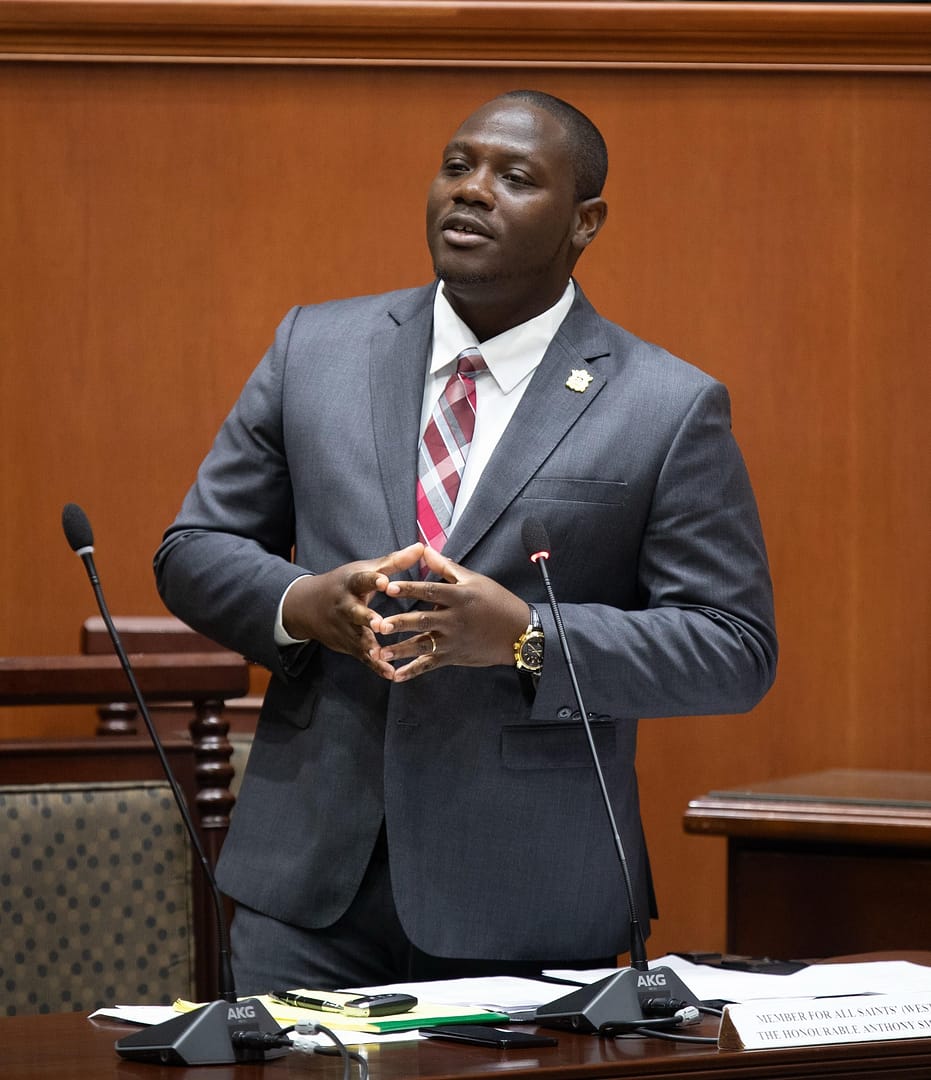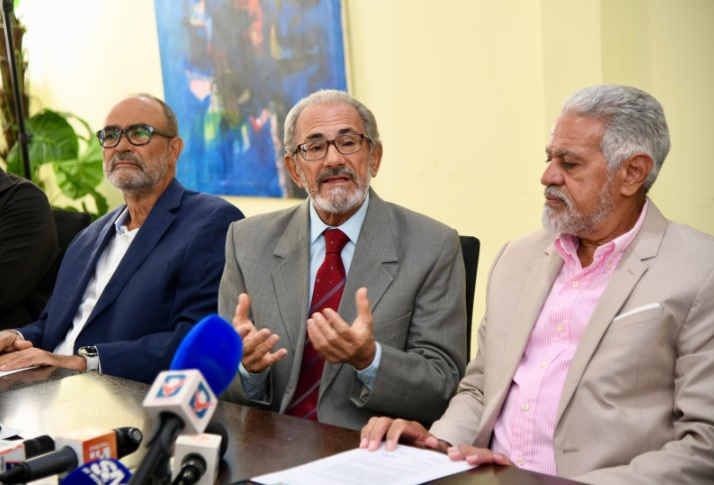
A coalition of former Caribbean Community (CARICOM) Heads of Government has issued a joint statement urging a reduction in military escalation in the region, citing threats to peace, stability, and development. The signatories include prominent figures such as Kenny Anthony of Saint Lucia, Baldwin Spencer of Antigua and Barbuda, and Bruce Golding of Jamaica, among others. The statement highlights concerns over the increased presence of nuclear vessels and aircraft in the Caribbean, warning that such actions could drag the region into conflicts not of its making. The leaders specifically addressed the escalating tensions between the United States and Venezuela, with the US deploying naval assets and conducting military exercises in Caribbean waters, while Venezuela has mobilized forces along its coastline in response. The former leaders emphasized the importance of maintaining the Caribbean as a zone of peace, upholding national sovereignty, and resolving disputes through diplomacy rather than force. They also referenced past US requests to station military assets in the region, which Caribbean states have historically resisted. Trinidad and Tobago’s former Prime Minister Keith Rowley endorsed the statement, criticizing current regional actions that deviate from long-standing principles of unity and diplomacy. His stance contrasts with that of current Prime Minister Kamla Persad-Bissessar, who has supported US military deployments in the fight against drug cartels but denied formal involvement in operations against Venezuela.
分类: politics
-

Norton blisters US over military airstrikes of alleged narco-traffickers in Caribbean sea
Aubrey Norton, leader of the People’s National Congress Reform (PNCR), has strongly criticized the United States military for conducting airstrikes on vessels allegedly involved in drug trafficking in the Caribbean Sea. Norton, a former Foreign Service Officer and Political Scientist, expressed his disapproval during a press conference on Friday, October 24, 2025. He argued that the US has the capability to apprehend suspected traffickers and bring them to trial rather than resorting to lethal force. Norton emphasized the importance of upholding the rule of law both domestically and internationally, stating that the PNCR opposes drug trafficking but insists on legal measures to combat it. His remarks followed a statement by 11 former Caribbean Community (CARICOM) leaders, who suggested that the Ship-Rider Agreement with the US should be utilized to pursue drug traffickers through legal channels. The US has conducted 10 airstrikes so far, resulting in 43 fatalities, including two Trinidad and Tobago nationals. While the Trinidad and Tobago government has supported US actions, Guyana has advocated for the Caribbean to remain a zone of peace, endorsing efforts to combat narco-trafficking while preserving sovereignty. The deployment of the USS Gerald Ford and additional military assets to the region has raised concerns about potential US intentions to influence regime change in Venezuela.
-

APNU’s parliamentary leader is a PNCR member; not foisted on party- Norton
Dr. Terrence Campbell, the leader of A Partnership for National Unity’s (APNU) 12 parliamentarians, has been confirmed as a member of the People’s National Congress Reform (PNCR). However, PNCR leader Aubrey Norton declined to specify when Dr. Campbell joined the party, stating that such details were irrelevant. Norton also dismissed claims that Dr. Campbell, a city businessman, was imposed on the party as a senior parliamentary figure despite being a newcomer compared to long-standing members. Norton emphasized that Dr. Campbell’s selection was based on his business acumen and commitment to the party’s cause, noting that he had been actively engaged with the PNCR for over two years. Norton further explained that the APNU parliamentary group comprises a balanced mix of six newcomers and six experienced individuals, a strategic decision aimed at fostering effective leadership. Dr. Campbell’s political journey includes his departure from A New and United Guyana (ANUG) and the civic group Reform, Inform, Sustain, Educate (RISE) in 2019, following calls to boycott his fast food business. He was also considered as a consensus presidential candidate by the Alliance For Change (AFC) and claimed to have been invited by Dr. Irfaan Ali to be his prime ministerial running mate in the 2020 elections, a claim Ali denied. Norton revealed that, except for Dr. David Hinds of the Working People’s Alliance, all other APNU parliamentarians are PNCR members. Reflecting on the recent general elections, Norton attributed APNU’s poor performance to alleged voter bribery by an unnamed political party. The People’s Progressive Party Civic (PPPC) secured 36 seats, while APNU won 12. Norton chose not to return to the National Assembly, opting instead to focus on his role as PNCR leader and prepare for the party’s upcoming internal elections.
-

Election campaign finance reporting must prohibit disclosure of donors- Norton
In a recent press conference, Aubrey Norton, Chairman of A Partnership for National Unity (APNU), emphasized the necessity of maintaining donor confidentiality in election campaign finance reporting. Despite the Representation of the People Act mandating political parties to submit post-election financial reports to the Guyana Elections Commission (GECOM), Norton argued that such disclosures could deter potential donors who fear government retribution. He highlighted the need for campaign financing reforms that ensure donor anonymity, stating, ‘Many contributors explicitly do not want their identities publicized due to societal fears of government.’ Norton also questioned the historical adherence to these reporting requirements, suggesting that new laws should be developed with stakeholder involvement to guarantee confidentiality. He further criticized Guyana’s state-dominated economy, noting that the government is the primary allocator of resources, with limited private sector activity. The United States-based Carter Center has urged all political parties to comply with the Representation of the People Act, emphasizing the importance of transparency and accountability in the electoral process. Other international observer missions have echoed these concerns, particularly regarding the misuse of state resources during election campaigns.
-

Belize Calls for Caribbean to Remain “Zone of Peace” Amid U.S. Strikes
In the wake of recent U.S. military strikes in Caribbean waters, Belize has called for the region to remain a ‘zone of peace.’ The strikes, which targeted vessels allegedly involved in drug trafficking, have resulted in numerous fatalities and raised concerns among CARICOM nations. Belize’s Minister of Foreign Affairs, Francis Fonseca, expressed deep concern over these actions, describing them as ‘extrajudicial’ and emphasizing the need for adherence to international law. Fonseca highlighted the importance of maintaining peace in the Caribbean, a sentiment echoed by other CARICOM members. He stressed that while drug and human trafficking are serious issues, any response must respect legal processes and international conventions. Meanwhile, Trinidad and Tobago has confirmed the arrival of the USS Gravely, a U.S. Navy guided-missile destroyer, for a five-day visit. The ship, carrying approximately 300 sailors, will engage in joint training exercises with the Trinidad and Tobago Defence Force. This deployment coincides with increased U.S. security activity in the region, further intensifying concerns over regional stability.
-

Experts: Trinidad and Tobago aligning with US policy in Latam
In a significant shift in foreign policy, Trinidad and Tobago (TT) has joined the United States and six Latin American countries in endorsing Rodrigo Paz Pereira as Bolivia’s new president. The joint statement, issued on October 21, two days after Bolivia’s elections, marks a notable alignment of TT with US government interests, according to international relations experts. The statement expressed the signatories’ readiness to support the incoming administration in stabilizing Bolivia’s economy, reinforcing democratic institutions, and enhancing international trade and investment. Caribbean Policy Consortium co-founder Prof Anthony Bryan noted that this move represents a departure from TT’s traditional policy of neutrality and its efforts towards a coordinated Caricom foreign policy. Dr Evan Ellis, a research professor at the US Army War College, viewed the joint statement as a positive initiative, reflecting the emergence of a new group of US-friendly governments in the region. He emphasized the collective recognition of Paz’s victory and the hope for Bolivia’s constructive direction under his leadership, particularly in economic policy, anti-drug efforts, and anti-corruption activities.
-

PM’s mixed rhetoric on jobs
Prime Minister Kamla Persad-Bissessar’s National Recruitment Drive has garnered significant attention, with over 110,000 applications received, highlighting a long-standing demand for such initiatives. However, the program’s success is overshadowed by unresolved concerns regarding unemployment support, funding, and sustainable job creation. Without addressing these issues, the initiative risks being perceived as merely a public relations exercise. The Prime Minister’s contradictory statements on October 23 about cuts to Cepep and URP programs further complicate matters. During her visit to the National Cycling Centre in Couva, Ms. Persad-Bissessar portrayed herself as a savior, criticizing Cepep jobs for their inability to provide financial stability, likening them to “hand-to-mouth feeding” and even invoking the term “slavery.” Yet, her administration’s abrupt termination of workers without prior notice contradicts her professed empathy. The government’s broad accusations of nepotism and corruption within these programs also raise questions about their selective targeting. Additionally, the lack of clarity on funding sources for new hires and salary increases adds to the uncertainty. While the recruitment drive aims to fill 20,450 positions, it falls short of addressing the broader unemployment crisis. Ms. Persad-Bissessar must provide a comprehensive plan during the Senate budget debate to create new opportunities, not just fill existing vacancies. As a leader elected to serve the people, this remains her fundamental responsibility.
-

Opposition sounds alarm over ‘war games’ in region
The arrival of the USS Gravely, a US Navy guided-missile destroyer, at the Port of Spain in Trinidad and Tobago (TT) has ignited a wave of political and public discourse. The vessel’s visit, scheduled from October 26-30, coincides with joint training exercises between the US 22nd Marine Expeditionary Unit and the TT Defence Force. While the Ministry of Foreign and Caricom Affairs framed the visit as part of longstanding bilateral cooperation, Opposition Leader Penelope Beckles expressed unease, drawing parallels to the 1983 US invasion of Grenada during Operation Urgent Fury. Beckles called for greater transparency, urging the Minister of Foreign Affairs to provide detailed explanations to the public. Government ministers, however, dismissed concerns as fearmongering, emphasizing the visit’s focus on goodwill, humanitarian aid, and training. Minister of Works and Infrastructure Jearlean John highlighted the US military’s assistance to local schools and the TTDF, while Minister of Homeland Security Roger Alexander described the visit as routine. Opposition MPs, including Diego Martin Central MP Symon De Nobriga, countered that the geopolitical tensions between the US and Venezuela have heightened public anxiety, necessitating clear communication from the government. The USS Gravely, armed with advanced weaponry, arrives amid escalating US-Venezuela tensions, with US Secretary of War Pete Hegseth deploying additional naval assets to the region. Venezuelan President Nicolas Maduro has appealed for peace, while US Embassy Chargé d’Affaires Dr. Jenifer Neidhart de Ortiz reaffirmed the partnership’s focus on addressing shared threats like transnational crime. Public opinion remains divided, with some citizens expressing confidence in peaceful resolutions, while others remain cautious about potential regional repercussions.
-

A call for decency in Parliament
The Editor: The ongoing erosion of decorum and respect within the highest echelons of our republic is a matter of grave concern. Parliament, once revered as a sanctuary for constructive debate and national advancement, has increasingly devolved into a platform for hostility, personal vendettas, and blatant disregard for the electorate. Both sides of the political spectrum have exhibited behavior unworthy of the nation’s leaders. The pervasive bitterness, arrogance, and verbal aggression not only reflect a lack of mutual respect but also a profound disrespect for the public, including schoolchildren and citizens who observe these proceedings with growing disillusionment. Parliament is intended to embody service, accountability, and exemplary conduct. However, when elected officials prioritize theatrics over substantive discourse, they undermine public trust and weaken the democratic foundation of our society. The refusal to address legitimate inquiries, the cacophony of shouting across the floor, and the apparent unwillingness to engage in meaningful dialogue all contribute to the degradation of our republic’s dignity and the principles our forebears valiantly defended. The citizenry deserves leaders who embody grace, humility, and respect—leaders capable of disagreeing without dishonor, debating without disdain, and representing without ridicule. It is imperative that Parliament reverts to a culture of decency, maturity, and national responsibility. Our children are watching, and the future of our nation hinges on the examples we set today. Nicholas Ashby, via e-mail.