分类: politics

  • T&T Appeal Court denies Jamaican lawyer’s bid to go before Privy Council

    T&T Appeal Court denies Jamaican lawyer’s bid to go before Privy Council

    PORT OF SPAIN, Trinidad – The Trinidad and Tobago Court of Appeal has delivered a significant ruling denying Jamaican-born King’s Counsel Vincent Nelson permission to challenge his 2019 corruption conviction before the London-based Privy Council, the nation’s highest judicial authority.

    In a decisive oral judgment delivered by Justice Nolan Bereaux on behalf of Justices James Aboud and Ricky Rahim, the appellate court concurred with state prosecutors that Nelson’s application concerned procedural matters rather than substantive constitutional issues warranting Privy Council intervention. The court determined that the Director of Public Prosecutions (DPP) had not violated Nelson’s constitutional rights and that all due process safeguards had been properly observed during the plea agreement proceedings.

    This ruling follows a July decision where the same judicial panel found Nelson failed to demonstrate prosecutorial misconduct and had exceeded acceptable time limits for filing his appeal. The court emphasized that Nelson, a UK-based tax attorney, had voluntarily entered into a plea agreement in 2019 while represented by senior counsel and had ample opportunity to disclose any alleged improper inducements during the original proceedings.

    The case stems from Nelson’s June 2019 guilty plea to conspiracy charges involving corruption and money laundering related to a legal-fee kickback scheme. He received a TT$2.25 million fine in March 2020 after agreeing to testify against former Attorney General Anand Ramlogan and former government senator Gerald Ramdeen. Those prosecutions were ultimately discontinued in 2022 when Nelson refused to testify pending resolution of a TT$95 million civil claim, which has since been dismissed by the High Court.

    In his appeal application, Nelson contended that former Attorney General Faris Al-Rawi had promised him immunity, a pardon, and payment of legal fees in exchange for his self-incriminating statement. However, Justice Geoffrey Henderson noted Nelson failed to provide sworn evidence from the attorney who allegedly conveyed these promises, and the court record indicated Nelson acted voluntarily throughout the plea process.

    The court also highlighted the extraordinary delay in Nelson’s appeal filing—submitted more than four years after conviction and three years after sentencing, far exceeding the standard 14-day deadline. Justices rejected Nelson’s explanations of illness and anticipated pardon as insufficient justification for the delay.

    Represented by King’s Counsel Edward Fitzgerald, Nelson’s legal team argued their client had been ‘tricked’ into providing evidence with false promises of protection. Conversely, Senior Counsel Ian Benjamin, representing the DPP, characterized Nelson as a seasoned legal professional who strategically delayed his challenge for leverage purposes, describing Nelson’s affidavit as ‘contradictory and self-serving.’ Nelson remains obligated to pay the outstanding TT$2.25 million fine imposed by the court.
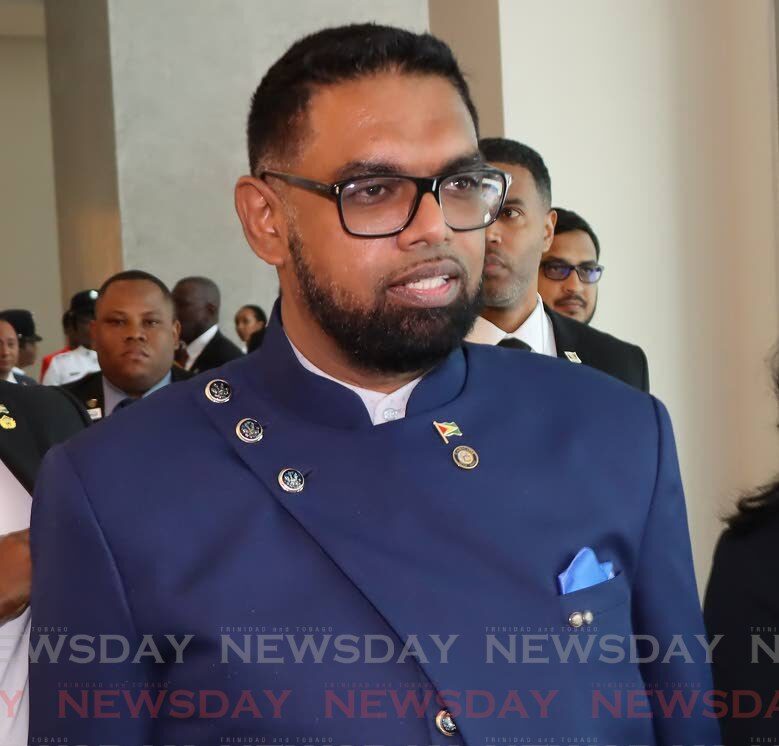
  • Brilliant proposal by Irfaan

    Brilliant proposal by Irfaan

    In a bold geopolitical maneuver, Guyana President Dr. Irfaan Ali has garnered significant praise for his resolute pursuit of a cooperative agreement with the United States. This strategic partnership emerges against a backdrop of prolonged territorial tensions with Venezuela, which have intensified following renewed claims over the oil-rich Essequibo region.

    The historical context traces back to the 1899 Paris Arbitral Award, which definitively recognized Guyana’s sovereignty over Essequibo. Despite this settled matter, Venezuela has recently revitalized its expansionist ambitions, creating regional instability. The letter writer emphatically supports President Ali’s diplomatic approach, characterizing Venezuela as the Caribbean’s primary aggressor that has systematically engaged in moral brutality against Guyana while allegedly serving as a major conduit for narcotics and arms trafficking throughout the region.

    A particularly strategic proposition suggests incorporating a US military installation within the disputed territory as a permanent deterrent against Venezuelan aggression. Such presence would establish a definitive frontera—both physical and symbolic—protecting Guyana’s sovereignty while ensuring regional stability. This perspective gains credibility following Trinidad and Tobago’s recent acceptance of US radar infrastructure at Tobago airport, which has already demonstrated operational success through a landmark $171 million drug interdiction in the Caroni Swamp.

    The emerging US-Caribbean security architecture represents a pragmatic realignment against Venezuelan expansionism, with the author concluding that American partnership offers superior regional security outcomes compared to enduring Venezuelan threats. This geopolitical calculus positions military cooperation as essential for safeguarding Caribbean sovereignty and maintaining peace through demonstrated deterrence capabilities.

  • Jearlean: Cabo Star replacement will arrive on time

    Jearlean: Cabo Star replacement will arrive on time

    The Trinidad and Tobago government has moved to reassure citizens that maritime transport services between the islands will continue uninterrupted despite the impending expiration of the MV Cabo Star’s contract on January 12th. Works and Infrastructure Minister Jearlean John confirmed in a December 22nd telephone interview that arrangements are already underway to secure a replacement vessel for the critical inter-island connection.

    Minister John maintained that ‘the replacement vessel will be here’ when needed, though she acknowledged that no formal contract has been finalized with any specific provider. When pressed for details regarding the identified replacement or its source, the minister declined to provide further information, stating simply ‘We have not contracted’ before terminating the interview.

    The situation has drawn attention from Tobago House of Assembly (THA) officials, who have been engaged in discussions with the central government since June. THA Deputy Chief Secretary Dr. Faith Brebnor revealed that while the assembly was aware of the lease expiration, they were surprised to learn the vessel had been sold. She emphasized that maintaining the steady flow of essential goods and products to Tobago remains a paramount concern for the THA.

    Dr. Brebnor indicated that the THA expects to receive a comprehensive action plan from the Ministry of Works by December’s end, noting that since the contract expiration was known for months, the ministry should be fully prepared for the January 12th transition. The MV Cabo Star, a roll-on/roll-off cargo and passenger ferry, has served as the backbone of TT’s inter-island seabridge since 2017, making its replacement crucial for maintaining economic and social connectivity between the islands.

  • Justice Seepersad warns against speculation amid regional security concerns

    Justice Seepersad warns against speculation amid regional security concerns

    In a significant address blending legal insight with moral guidance, High Court Justice Frank Seepersad has called for measured assessment of recent geopolitical developments in the Caribbean Sea and Pacific Ocean. Speaking to media representatives after delivering his Christmas sermon at Marabella Presbyterian Church on December 21, Justice Seepersad emphasized that state sovereignty entails both the authority and responsibility to act in citizens’ best interests, even when requiring difficult decisions and strategic alliances.

    The jurist articulated that national sovereignty empowers nations to legislate and govern for their people’s welfare, yet this mandate frequently involves balancing domestic priorities with regional stability requirements, economic partnerships, and occasionally military or strategic cooperation to sustain growth and viable international trade.

    Addressing specific concerns about recent military actions, Justice Seepersad referenced approximately 28 US missile strikes since September 2 that resulted in over 100 fatalities in Caribbean and Pacific waters. While American authorities maintain these targeted vessels were transporting narcotics, no concrete evidence has been publicly presented to substantiate these claims. The judge noted that much commentary surrounding the legality of these actions remains speculative, emphasizing that natural justice principles require comprehensive evidence assessment before reaching conclusions.

    Seepersad highlighted pressing regional challenges including what he described as the largest hemispheric migration from Venezuela within the past decade and statements threatening Guyana’s territorial integrity. He characterized these developments as indicators of deeper systemic problems requiring policy reassessment and governance realignment rather than dismissal.

    The judge simultaneously delivered a powerful message of communal responsibility during his Christmas sermon, themed ‘Christmas: A Call to Christ and Community.’ He framed Christ’s humility, sacrificial love, and service model as a blueprint for both personal conduct and public life, urging citizens to transcend individualism and actively rebuild communities grounded in spiritual principles.

    Drawing from his judicial experience, Seepersad identified widespread familial dysfunction, domestic violence, workplace conflicts, and social erosion caused by envy, greed, and unresolved grudges. He connected these patterns to societal departure from Christ-like behavior and diminishing moral foundations.

    Regarding national development, the justice cautioned against excessive polarization and the tendency to blame political leaders exclusively. He emphasized every citizen’s role in building a productive state, calling for enhanced accountability particularly within public service sectors. While acknowledging recent salary improvements for workers, he advocated for viewing employment as more than financial compensation, stressing the need for renewed work ethic, integrity, and productivity.

    Justice Seepersad concluded by encouraging citizens to become ‘ambassadors of reconciliation’ by forgiving past wrongs, dismantling stereotypes, and collectively working toward peace and prosperity, carrying Christmas’s transformative message beyond the season into daily life.

  • Syria dismantles ISIS terrorist network near Damascus

    Syria dismantles ISIS terrorist network near Damascus

    Syrian security authorities have successfully neutralized a significant terrorist cell in Damascus-County Province following an extensive intelligence operation. Internal Security Chief Ahmed Al-Dalati confirmed that security forces targeted and dismantled a hideout utilized by extremist organization members, culminating in the arrest of the network’s leader and six additional operatives.

    The meticulously planned operation, which involved sustained surveillance of the cell’s activities, resulted in the confiscation of substantial weaponry and ammunition. Official statements indicate this successful mission represents a critical component of Syria’s broader counterterrorism strategy, which aims to eliminate terrorist infrastructure and safeguard national security interests.

    This development occurs within the context of an expanded security initiative launched by Syria’s Ministry of Interior in early November. The nationwide campaign, conducted in coordination with the General Directorate of Intelligence, targets extremist cells operating across multiple provinces.

    Recent operations under this security umbrella include the November 26 dismantling of a Daesh-affiliated cell in Afrin (Aleppo province), which allegedly planned destabilization operations in northern regions. Earlier in November, security forces eliminated another Daesh-linked network in Kanaker, located west of Damascus, demonstrating the ongoing intensity of Syria’s counterterrorism efforts.

  • Russian President is willing to talk with French counterpart

    Russian President is willing to talk with French counterpart

    The Kremlin has expressed cautious optimism regarding potential diplomatic engagement between Russian President Vladimir Putin and his French counterpart Emmanuel Macron. Kremlin spokesman Dmitry Peskov confirmed to journalists that both leaders have demonstrated reciprocal interest in establishing communication channels, though he emphasized that any meaningful dialogue must be founded on mutual political willingness rather than confrontational posturing.

    Peskov elaborated that productive discussions require both parties to move beyond didactic approaches and instead strive for genuine comprehension of each other’s positions. The spokesperson characterized Putin as consistently prepared to provide detailed, coherent, and sincere explanations of Russia’s standpoint to international counterparts when engaged in proper diplomatic discourse.

    This development follows a period of diplomatic silence between the two nations’ leadership, with the most recent telephone conversation between Putin and Macron having occurred on July 1st. The Kremlin’s statements suggest a potential thaw in communication channels while maintaining that substantive dialogue requires constructive engagement from both sides rather than unilateral concessions or predetermined conditions.

  • EDITORIAL: Civil society, please stand up

    EDITORIAL: Civil society, please stand up

    Saint Lucia’s political landscape has undergone a dramatic shift following the December 1 general election, which reduced the opposition’s presence in the House of Assembly from two members to a single representative. This electoral outcome has sparked urgent conversations about the mechanisms for maintaining democratic checks and balances in the absence of a robust parliamentary opposition.

    The nation operates under a winner-take-all majoritarian representation system that grants absolute power to the party securing the most votes in each electoral district. This structure has previously produced lopsided results (16-1) and now threatens the possibility of a complete parliamentary sweep (17-0) in future elections unless systemic reforms are implemented.

    With constitutional amendments addressing this power imbalance remaining pending, concerns mount about citizen representation when governments control all state resources and face no requirement for supermajority approval on legislation. This democratic deficit highlights the crucial role that civil society organizations, community leaders, and influential citizens must play in safeguarding governance accountability.

    In developed democracies, such independent voices provide impartial analysis of national issues, demand governmental transparency, recommend anti-corruption measures, promote social justice, and facilitate dialogue between citizens and their representatives. However, Saint Lucia has witnessed significant erosion of its civil society framework in recent years.

    Many citizens now hesitate to engage with media on pertinent issues, fearing marginalization or partisan labeling. Dissenting opinions are frequently mischaracterized as opposition alignment, creating a chilling effect on public discourse. Meanwhile, social media and radio talk shows have increasingly become platforms for vitriolic attacks against those holding differing viewpoints.

    Prime Minister Philip J. Pierre addressed these concerns during his December 5 swearing-in ceremony, calling for reduced negativity and intolerance in society, particularly online. He emphasized that platforms should not serve as vehicles for vilification through slander, malicious rumors, or disinformation campaigns.

    This appeal for civil discourse extends to all societal segments, including those in positions of power whose words and actions often exacerbate social divisions. There is growing consensus that civil society organizations, independent thinkers, and community influencers must consistently engage in national dialogue rather than emerging only during crises or when pressured for commentary.

    Trade unions, the National Youth Council, Saint Lucia Chamber of Commerce, Bar Association, Christian Council, environmental advocates, human rights activists, cultural organizations, and community groups are being urged to amplify their voices on pressing national matters. Their contributions should reflect reasoned analysis rather than self-interest, prioritizing representation for voiceless, disenfranchised, and marginalized communities.

    Ultimately, Saint Lucia must foster an environment where elected officials truly serve all constituents and genuine power resides with citizens. This vision requires embracing respectful disagreement as a democratic virtue rather than a source of enmity, echoing former Prime Minister Sir John Compton’s 2006 appeal for unity after political contests conclude.

    The path forward demands collaborative efforts among government, civil society, and citizens to build a society where tolerance prevails, and love and unity guide national development. Only through such collective commitment can the nation fully realize the ideals expressed in its anthem: ‘May our people live united, strong in soul and strong in arm. Justice, truth and charity, our ideals forever be.’

  • Dr Eudelle praises Senator Kiz Johnson’s leadership at JCI 2025 YEP Awards

    Dr Eudelle praises Senator Kiz Johnson’s leadership at JCI 2025 YEP Awards

    Senator Kiz Johnson has emerged as a transformative voice for emerging business leaders following her keynote address at the prestigious JCI 2025 Young Entrepreneur Programme Awards ceremony. The event, designed to celebrate innovation and leadership among young visionaries, witnessed Senator Johnson delivering what attendees described as a profoundly impactful message that resonated throughout the entrepreneurial community.

    According to Dr. Eudelle, an esteemed participant at the gathering, Senator Johnson’s presentation provided a masterclass in purposeful leadership that created lasting impressions on all attendees. The senator challenged the audience to transcend conventional boundaries by pushing beyond their comfort zones, maintaining unwavering discipline in their pursuits, and completely rejecting any form of mediocrity in their professional and personal endeavors.

    In a formal statement released after the ceremony, Dr. Eudelle characterized the address as both deeply motivating and re-energizing, noting that it sparked renewed commitment among attendees toward achieving excellence, pursuing continuous personal development, and creating meaningful impact within their communities.

    The JCI YEP Awards represent a significant initiative that acknowledges exceptional young leaders and entrepreneurs who demonstrate outstanding innovation, exemplary leadership qualities, and dedicated commitment to both national progress and community development. Senator Johnson’s participation underscores the growing collaboration between political leadership and entrepreneurial ecosystems in fostering the next generation of change-makers.

  • Venezuela denounces hijacking of private vessel carrying national oil

    Venezuela denounces hijacking of private vessel carrying national oil

    The Venezuelan government has issued a formal diplomatic condemnation accusing United States military personnel of committing an act of maritime robbery in international waters. Executive Vice President Delcy Rodríguez, in an official statement, characterized the incident as a serious violation of multiple international treaties and conventions.

    According to the Venezuelan administration, this operation represents a blatant breach of Article 3 of the 1988 Convention for the Suppression of Unlawful Acts against the Safety of Maritime Navigation, effectively constituting an act of piracy under international law. The statement further alleges that the incident violates fundamental principles of the United Nations Charter, specifically Article 2, which governs peaceful relations between sovereign states.

    The Venezuelan government contends that additional violations include transgressions against Article 2 of the Geneva Convention on the High Seas and the Declaration on Principles of International Law concerning Friendly Relations and Cooperation among States. Rodríguez condemned what she described as a colonialist model that the United States government allegedly seeks to impose through such practices, asserting that this approach would be defeated by the resilience of the Venezuelan people.

    Despite these allegations, Venezuela reaffirmed its commitment to continued economic growth through its fourteen economic engines and the independent development of its hydrocarbon industry. The Bolivarian Republic has declared that these acts will not remain without consequence, pledging to pursue all appropriate diplomatic and legal channels. This includes formal complaints to the United Nations Security Council, various multilateral organizations, and governments worldwide.

  • Uruguay: Oscar Andrade elected PCU General Secretary

    Uruguay: Oscar Andrade elected PCU General Secretary

    The recently constituted Central Committee of Uruguay’s Frente Amplio (Broad Front) coalition has finalized its executive leadership appointments during its inaugural session. The newly elected 18-member Executive Committee will operate under the guidance of Andrade, whose leadership was confirmed by the congressional body.

    Key organizational roles have been allocated to prominent figures within the coalition. Guillermo Rehermann has been officially ratified as organizational coordinator, while Representative Ana Olivera has been designated to head the Political Unity division, signaling the coalition’s commitment to internal cohesion.

    The international relations portfolio will be managed by Juan Castillo, who brings substantial experience from his previous tenure as General Secretary and Minister of Labor and Social Security. This appointment underscores the coalition’s focus on maintaining robust international connections.

    In significant labor movement representation, Marcelo Abad, current president of the PIT-CNT trade union confederation, will assume leadership of the Secretariat of Union Affairs. Simultaneously, Viviana Rodriguez has been appointed to direct the Secretariat of Gender Affairs, highlighting the coalition’s dedication to gender equality initiatives.

    The confirmation process also solidified Natalia Díaz’s position as head of the Union of Communist Youth (UJC), following her recent election as general secretary of the organization. This appointment reinforces the coalition’s connection with youth political movements and ensures generational continuity within the leadership structure.