分类: politics

  • IGAD rejects Israeli recognition of Somaliland as a State

    IGAD rejects Israeli recognition of Somaliland as a State

    The Intergovernmental Authority on Development (IGAD) has issued a definitive statement reinforcing Mogadishu’s status as a sovereign member state within the regional bloc. The declaration emphasizes that Somalia’s unity, sovereignty, and territorial integrity remain fully protected under established international legal frameworks.

    IGAD’s communiqué explicitly stated that any unilateral recognition attempts directly contravene foundational international agreements, including the United Nations Charter, the African Union Constitutive Act, and the organization’s own establishment treaty. The regional body called upon all international partners and stakeholders to uphold these legal standards while promoting diplomatic engagement that advances regional peace and stability.

    The Secretariat further expressed unwavering solidarity with both the Somali government and its citizens, reiterating its dedication to inclusive political processes and enhanced regional cooperation. This commitment aims to foster sustainable peace and prosperity throughout Somalia and the broader IGAD region.

    This development follows Israeli Prime Minister Benjamin Netanyahu’s announcement on social media platform X regarding a diplomatic agreement signed between Israel’s Foreign Ministry and Somaliland leader Abdirahman Mohamed Abdallah. The arrangement, reportedly facilitated through former US President Donald Trump’s initiative, has sparked renewed attention to regional sovereignty issues.

  • LETTER TO THE EDITOR: CBI accountability cannot be deflected by blaming U.S. systems

    LETTER TO THE EDITOR: CBI accountability cannot be deflected by blaming U.S. systems

    A critical examination of Dominica’s Citizenship by Investment (CBI) program has challenged recent attempts to deflect responsibility for its shortcomings onto United States information-sharing policies. The analysis identifies fundamental structural flaws within the program itself, arguing that design, incentive structures, and administration practices—not external factors—create systemic vulnerabilities.

    The central critique focuses on Dominica’s profound fiscal dependence on CBI revenue, which accounts for a majority of government income. This economic reality creates an inherent conflict of interest: when passport issuance becomes the state’s primary revenue stream, approval rates and processing speed inevitably receive priority over rigorous vetting. The program’s dominant role in national finances undermines claims that citizenship decisions remain insulated from financial pressures.

    Contrary to arguments presented in defense of the program, the analysis emphasizes that information gaps in applicant backgrounds demand enhanced scrutiny—not complacency. International anti-money laundering and counter-terrorism financing standards explicitly require heightened due diligence when dealing with applicants demonstrating identity complexity, legal name changes, or fragmented personal histories. These are global compliance norms, not exclusively American requirements.

    The response further challenges the notion that the United States bears responsibility for ‘fixing its databases’ to accommodate CBI programs. Border security begins with the sovereign act of granting citizenship, wherein the issuing nation vouches for the holder’s identity and trustworthiness. This fundamental responsibility cannot be outsourced or deflected to other nations.

    The analysis concludes that credible defense of Dominica’s CBI program requires confronting uncomfortable truths: excessive reliance on passport revenue, structural conflicts of interest, and the treatment of citizenship as a transactional commodity rather than a sovereign trust. Accountability must begin with domestic reforms rather than attempts to shift blame internationally.

  • Former Jamaican Ambassador slams T&T, Caribbean leaders

    Former Jamaican Ambassador slams T&T, Caribbean leaders

    In a striking geopolitical alert, former Jamaican ambassador Curtis Ward has issued a grave warning that Trinidad and Tobago has become a potential military target due to its unequivocal alignment with United States operations against Venezuela. The seasoned diplomat, who previously served as Jamaica’s deputy permanent representative to the United Nations, contends that the twin-island nation has dangerously elevated its status from security partner to active collaborator in Washington’s regime change strategy.

    Ward’s analysis, published in a sharply critical December 26 commentary, asserts that the installation of a US military radar system at Piarco International Airport has effectively transformed vital civilian infrastructure into a legitimate military objective. Contrary to official claims of maritime monitoring purposes, Ward maintains the system functions as an integrated component of anti-missile warfare networks that would become a priority target for Venezuelan forces in any escalation.

    The former ambassador particularly criticized Prime Minister Kamla Persad-Bissessar’s administration for what he characterized as placing “a military target on the backs of the country and the people.” He projected that Trinidad and Tobago could suffer disproportionate casualties compared to American interests in potential conflict scenarios, with the nation’s economy and infrastructure facing existential threats.

    Beyond the immediate national security concerns, Ward delivered a sweeping indictment of Caribbean leadership broadly, accusing regional governments of cowardice in confronting Washington’s policies. He noted a conspicuous absence of diplomatic opposition to US actions, suggesting most CARICOM leaders remain silent due to fears of retaliation from the Trump administration. This climate of apprehension, Ward argued, has compromised regional sovereignty and dignity while pushing the Caribbean basin toward destabilizing military confrontation.

    Despite the alarming assessment, Ward emphasized that armed conflict remains avoidable. He called upon Caribbean citizens, governments, and the Trinidad and Tobago diaspora to advocate vigorously for peaceful dialogue and de-escalation, maintaining that “war is not the answer, war is not the only option, and war is not inevitable.”

    The warning comes amid Prime Minister Persad-Bissessar’s public endorsement of US naval operations targeting drug trafficking vessels from Venezuela, which she claims have already yielded positive impacts on regional security.

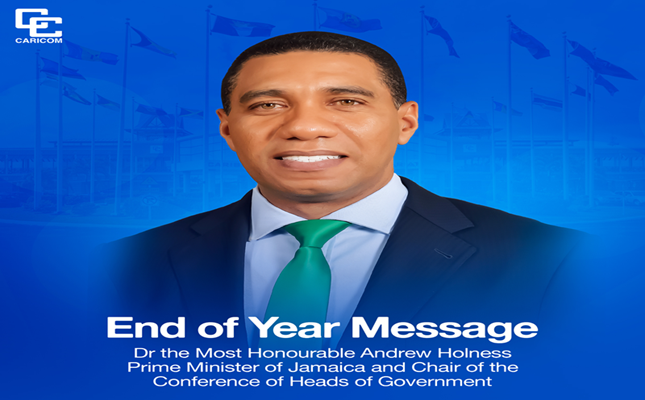
  • END OF YEAR MESSAGE: Outgoing Chair of the Caribbean Community (CARICOM) Dr the Most Honourable Andrew Holness, Prime Minister of Jamaica

    END OF YEAR MESSAGE: Outgoing Chair of the Caribbean Community (CARICOM) Dr the Most Honourable Andrew Holness, Prime Minister of Jamaica

    In his concluding address as outgoing Chair of the Caribbean Community (CARICOM), Jamaican Prime Minister Dr. Andrew Holness delivered a comprehensive assessment of the regional body’s accomplishments and challenges throughout 2025. Speaking from the CARICOM Secretariat in Guyana on December 27, Holness emphasized the remarkable solidarity demonstrated during Hurricane Melissa’s devastating impact, which showcased the Caribbean family’s unwavering support system.

    The political leader highlighted landmark achievements in regional integration, particularly the historic decision by Barbados, Belize, Dominica, and St. Vincent and the Grenadines to implement full free movement of citizens among themselves effective October 2025. This ‘concentric circles’ approach represents a pragmatic evolution of integration models, allowing progressive cooperation while maintaining accessibility for other member states.

    Holness detailed CARICOM’s successful economic advocacy through coordinated efforts with the CARICOM Private Sector Organization and strategic international partners. These collaborations yielded expanded air connectivity, enhanced trade mechanisms, and strengthened food security initiatives across the region.

    On the global stage, CARICOM maintained a unified diplomatic presence through high-level engagements at the UN General Assembly, G20 Summit, and CELAC-EU Summit. The outgoing Chair acknowledged progress at COP30 in Belém but emphasized that climate outcomes remained inadequate for vulnerable Small Island and Low-lying Coastal Developing States. He commended regional agencies including the Caribbean Community Climate Change Centre and CDEMA for their critical work in climate resilience.

    The address noted deepened Africa-CARICOM relations through the Second Africa-CARICOM Summit, establishing an ‘Atlantic Bridge’ for development cooperation. Holness also highlighted CARICOM’s sustained advocacy for Haiti, resulting in UN Security Council action against gang violence and optimistic preparations for 2026 elections.

    Emphasizing CARICOM’s commitment to the Caribbean as a Zone of Peace, Holness articulated principles of sovereignty, international law, and peaceful dispute resolution while acknowledging member states’ occasional differing perspectives as natural within a community of sovereign nations.

    As geopolitical tensions intensify globally, Holness called for strategic discipline and cohesion, affirming that CARICOM’s credibility rests on managing differences through diplomacy rather than division. The outgoing Chair expressed confidence in the community’s future as he prepares to hand leadership to St. Kitts and Nevis and Saint Lucia, concluding with wishes for a peaceful and prosperous 2026.

  • Voormalig UNC-lid waarschuwt voor steun aan Amerikaanse militaire aanwezigheid

    Voormalig UNC-lid waarschuwt voor steun aan Amerikaanse militaire aanwezigheid

    Rodney Charles, former United National Congress parliamentarian and Trinidad and Tobago’s ex-ambassador to the United Nations, has issued a stern warning to his government regarding its support for US military operations in the southern Caribbean region. Through a detailed Facebook post on December 20, the seasoned diplomat expressed profound concerns about the implications of this security cooperation and the broader foreign policy direction of Trinidad and Tobago.

    Charles, who served as UN ambassador from May 2010 to September 2015 under Prime Minister Kamla Persad-Bissessar’s first administration and subsequently as shadow minister for Foreign Affairs and CARICOM matters until April 2025, emphasized that his critique stems from strategic considerations rather than anti-American sentiment. He referenced his personal connections with the United States, including White House and State Department internships, and family members serving in the US military. “I am not anti-American. I still believe in the spirit and intent of the American Constitution. It’s just that I love Trinidad and Tobago more,” Charles stated.

    The former politician articulated deep concerns about what he perceives as a lack of sophisticated, nuanced foreign policy strategy serving the nation’s long-term interests. He cautioned that Trinidad and Tobago risks embarking on a dangerous path by aligning too closely with unpredictable US military strategies, particularly given potential power shifts following the November 2026 US midterm elections.

    This warning emerges amid recent developments: the Trinidadian government authorized temporary use of Piarco and Tobago airports by US military aircraft for logistical purposes in early December 2025. Additionally, Prime Minister Persad-Bissessar confirmed in late November that US Marines are actively working on Tobago, primarily enhancing airport infrastructure. Critics view these measures as steps toward regional militarization.

    Charles warned that this close cooperation with the US, coupled with insufficient regional consultation, could exacerbate tensions within CARICOM. He pointed to public disagreements between Prime Minister Persad-Bissessar and other CARICOM leaders regarding the Caribbean as a zone of peace and condemnation of US military presence. According to Charles, this dynamic could undermine trust within the Caribbean community and potentially lead to new forms of economic domination by former colonial powers perceiving the region as divided and vulnerable.

    The diplomat also highlighted the growing isolation of nations like Antigua and Barbuda and Dominica, alongside negative travel advisories affecting Barbados, Grenada, and Saint Lucia—measures that could damage tourism-dependent economies. Simultaneously, he warned of latent anti-American sentiment spreading across Latin American nations including Mexico, Colombia, and Brazil, partly fueled by recent US policies and rhetoric toward Venezuela.

    Charles further referenced the resurgence of the Monroe Doctrine under US President Donald Trump through the 2025 National Security Strategy document, which outlines plans to mobilize global allies in support of US policy objectives. He emphasized that Trinidad and Tobago’s current foreign policy rests on three precarious assumptions: the perpetual dominance of Trumpism in US politics, anticipated regime changes in Venezuela, and the expectation that future Venezuelan leaders would abandon nationalist convictions.

    These developments and Charles’ warnings illustrate the complex geopolitical landscape where national interests, regional cooperation, and international power dynamics intersect. The former ambassador calls for a comprehensive reevaluation of foreign policy approaches, advocating for strategies that better serve the long-term interests of both Trinidad and Tobago and the broader Caribbean region.
  • Parmessar betreurt vrijwel volledige vervanging Deviezencommissie

    Parmessar betreurt vrijwel volledige vervanging Deviezencommissie

    Opposition leader Rabin Parmessar of Suriname’s National Democratic Party (NDP) has expressed serious concerns regarding the government’s decision to appoint an almost entirely new Foreign Exchange Commission. This development comes despite previous parliamentary consensus to align the commission with the Central Bank of Suriname (CBvS) to strengthen financial oversight.

    The restructuring, initially implemented nearly two years ago, was specifically designed to regulate gold exports, monitor land sales through foundations, and address recommendations from the Caribbean Financial Action Task Force (CFATF) regarding money laundering and terrorism financing. Parmessar emphasized that significant progress had been made through collaborative efforts between parliament and the Central Bank, including the appointment of current chairman Arun Sankatsing through established channels.

    While acknowledging the potential competence of proposed new members—including prospective chairman Robert Huiswoud and returning member Ravin Soerdjbalie—Parmessar warned that the overhaul could create opportunities for creative individuals with substantial interests in the gold sector to continue operations without proper oversight.

    The NDP leader had previously urged authorities to maintain continuity by retaining some existing members and avoiding appointments of individuals representing powerful financial interests. He revealed that various measures had been implemented to strengthen financial supervision, particularly in the gold sector, including stricter requirements for notaries regarding money transfers and enhanced administration for gold companies.

    Additional reforms included eliminating administrative backlogs, imposing stricter requirements on gold provenance and sales, and mandating that gold only be sold to certified companies with relevant data provided to the Foreign Exchange Commission. A new draft regulation, already approved by the Central Bank, awaits presentation to the Finance Minister.

    Parmessar expressed surprise at the timing of these appointments, as completed reforms were scheduled for presentation to Finance Minister Adelien Wijnerman and President Chan Santokhi in January. He fears these developments could undermine months of progress and intends to raise these concerns with relevant authorities.

  • Politic : Launch of the digital retirement portal (video)

    Politic : Launch of the digital retirement portal (video)

    In a significant stride toward administrative modernization, Haiti’s Ministry of Economy and Finance has officially launched a comprehensive digital retirement portal designed to transform how public servants manage their pension benefits. The innovative platform, accessible at https://dpc.mef.gouv.ht/, represents a cornerstone of the national digitalization policy for public services.

    The initiative was formally introduced during an information session held in Les Cayes on November 28, where a delegation led by Ms. Ester Musac, Director of Civil Service Pensions, engaged with public employees from the Nippes, Grand’Anse, and South departments. The event, themed ‘Understanding Retirement: Meaning, Preparation, and Challenges,’ provided crucial guidance on retirement planning while demonstrating the new digital tools.

    This technological advancement enables civil servants and retirees to perform multiple functions electronically, including tracking pension file statuses, updating personal information, and receiving secure notifications. The system covers various pension-related procedures such as registration, transfer requests, and survivor’s pension applications.

    Ms. Musac emphasized the portal’s significance, stating: ‘This portal exemplifies our commitment to creating a more efficient, citizen-centric administration. We aim to ensure every retiree can access their information with ease and security.’ The digital solution not only enhances transparency by allowing real-time file monitoring but also reduces administrative delays, minimizes physical travel requirements, and improves data management efficiency.

    This development marks a pivotal advancement in Haiti’s public service reform agenda, demonstrating the government’s dedication to leveraging technology for improved citizen services and more effective retirement management systems.

  • China sanctioneert 20 Amerikaanse defensiebedrijven voor massale wapenverkopen aan Taiwan

    China sanctioneert 20 Amerikaanse defensiebedrijven voor massale wapenverkopen aan Taiwan

    In a significant escalation of geopolitical tensions, China has imposed comprehensive sanctions against 20 American defense corporations and 10 senior executives in response to Washington’s recently announced $10 billion arms package to Taiwan. The punitive measures, announced by China’s Foreign Ministry on Friday, include asset freezes within Chinese territory and comprehensive business prohibitions for both individuals and organizations dealing with the sanctioned entities.

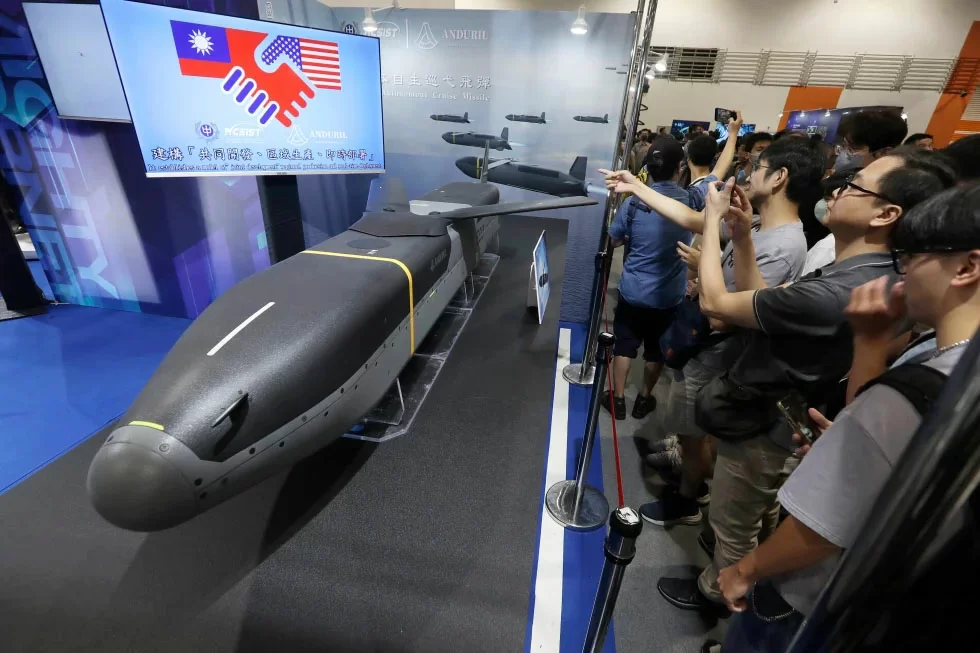
    Among the targeted corporations are major defense contractors Northrop Grumman Systems Corporation, L3Harris Maritime Services, and Boeing’s St. Louis division. Notably, Palmer Luckey, founder of defense technology firm Anduril Industries, faces personal sanctions including travel bans to China and frozen assets within East Asia. Anduril had previously collaborated with Taiwan’s National Chung-Shan Institute of Science and Technology to develop the Barracuda 500 autonomous cruise missile, recently displayed at Taipei’s Aerospace & Defense Technology Exhibition.

    The Chinese Foreign Ministry characterized Taiwan as “the core of China’s fundamental interests” and “the first red line that must not be crossed in China-US relations.” Officials warned that “any enterprise or individual involved in arms sales to Taiwan will inevitably pay the price for their mistaken actions,” while urging the United States to cease what Beijing describes as “dangerous steps of arming Taiwan.”

    This development occurs against the backdrop of intensified Chinese military operations around Taiwan, with near-daily joint exercises involving warships and fighter jets in adjacent airspace and waters. The situation represents a critical flashpoint in US-China relations, with analysts expressing concern about potential escalation into military conflict between the two global powers.

    The $10 billion arms package, which would represent the largest US weapons transfer to Taiwan if approved by Congress, violates previous diplomatic agreements between Washington and Beijing according to Chinese officials. This confrontation further strains already tense bilateral relations complicated by ongoing disputes over trade, technology, and human rights issues.

  • Azruddin Mohamed’s sister, husband facing several traffic charges

    Azruddin Mohamed’s sister, husband facing several traffic charges

    A high-profile traffic stop involving the sister of a Guyanese opposition leader has escalated into allegations of political persecution against President Irfaan Ali’s administration. Hana Mohamed, sister of We Invest In Nationhood (WIN) party leader and parliamentarian Azruddin Mohamed, was intercepted by police on Eccles Public Road, East Bank Demerara, while driving a Toyota Land Cruiser (license PAB 3000) on Christmas Day.

    The Guyana Police Force confirmed multiple traffic violations including failure to comply with police directives, failure to produce driving documentation, and prohibition of tinted glass. According to official statements, the situation intensified when Parliamentarian Mohamed reportedly approached the vehicle and instructed his sister to drive home rather than to the police station.

    The vehicle was subsequently traced to 789 Republic Park, where police attempted to immobilize it with a wheel clamp. Maksim Dmitriyev of Eccles presented ownership documents identifying himself as the registered owner. Dmitriyev was processed at Providence Police Station and released on recognizance to reappear on December 29, 2025.

    Hana Mohamed presented a contrasting narrative, asserting that all vehicle documents were ‘fully up-to-date and compliant’ following verification. She described the incident as coordinated political harassment, claiming most officers appeared sympathetic and embarrassed by their actions. ‘This is coming from the very top. For those who know Irfaan personally, this is from the playbook of the president,’ Mohamed stated, alleging the administration was using law enforcement to target opposition figures during the holiday period.

    The Guyana Revenue Authority’s verification of engine and chassis numbers remains undisclosed by police, creating unresolved questions about the legitimacy of the traffic stop versus the claims of political motivation.

  • Gov’t exploring ways to ease pressure caused by $3.1 billion national debt

    Gov’t exploring ways to ease pressure caused by $3.1 billion national debt

    Prime Minister Godwin Friday has revealed his newly elected administration is confronting a substantial national debt of EC$3.1 billion while simultaneously working to fulfill its campaign promises. In multiple radio interviews this week, the Prime Minister, who also serves as Finance Minister, detailed the challenging fiscal landscape his New Democratic Party (NDP) government inherited just three weeks after taking office.

    Despite the significant debt burden, PM Friday emphatically committed to honoring all electoral pledges. He confirmed a salary bonus will be distributed in January and announced that social welfare payments will increase to EC$500 beginning in February. When questioned about funding sources for these initiatives, the Prime Minister responded, “You let me worry about that.”

    The scale of the debt means over one-third of government revenue is currently allocated to debt servicing, creating substantial pressure on public finances. Friday described the economic situation as “eleven” on a scale of one to ten in terms of severity.

    The Prime Minister explained the debt comprises obligations to foreign nations, the Caribbean Development Bank, and various financial instruments floated to cover expenditures. Additionally, he acknowledged significant unpaid obligations to local businesses that the previous administration had accumulated.

    Rather than commissioning immediate audits, the NDP government is conducting its own assessment of wastage and inefficiencies. Friday cited the recent Emancipation cricket tournament as an example of misplaced priorities, noting its cost equaled a full year of the proposed baby bonus program.

    The administration plans to implement stricter financial controls, improve efficiency in development projects, and stabilize public finances while maintaining investments in economic growth. Friday emphasized this approach represents a return to proper fiscal governance rather than austerity, stating his government aims to “bring hope to people” through responsible financial management.