分类: politics

  • Angola: 300 prisoners granted pardon for 50 years of independence

    Angola: 300 prisoners granted pardon for 50 years of independence

    In a landmark move commemorating five decades of sovereignty, Angola’s presidential administration has issued its most substantial clemency decree of the year. The executive order, released on Tuesday, strategically aligns with the nation’s Liberation Day observances on November 11th—the historic date marking Angola’s emancipation from colonial rule.

    The presidential proclamation emphasized that this humanitarian initiative directly supports national objectives of fostering social harmony, leniency, and fraternal unity during the golden jubilee independence celebrations. The carefully structured amnesty program specifically targets incarcerated individuals who have demonstrated exemplary behavioral rehabilitation and present no discernible threat to public safety, facilitating their reintegration into familial and community structures.

    This represents the third institutional pardon enacted in 2025, significantly surpassing the earlier amnesty granted to 51 individuals at the year’s commencement. The escalating scale of clemency measures reflects the government’s commitment to restorative justice principles while honoring the symbolic importance of the nation’s semicentennial independence milestones. Correctional authorities have begun implementing comprehensive screening protocols to identify eligible beneficiaries based on stringent behavioral and risk-assessment criteria.

  • Cuba commemorates the International Day of Solidarity with Palestine

    Cuba commemorates the International Day of Solidarity with Palestine

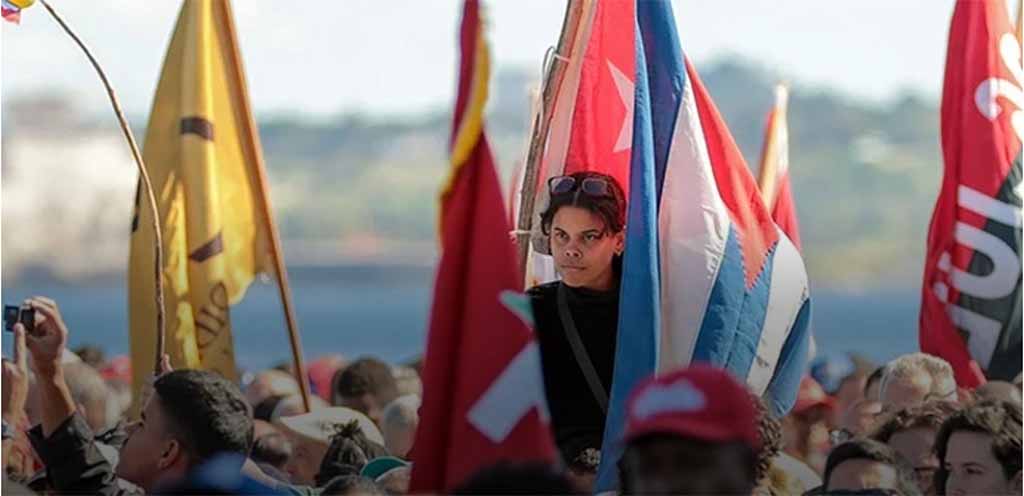
    Senior Cuban officials have issued forceful declarations of support for Palestinian sovereignty, aligning with global observances of the International Day of Solidarity with the Palestinian People. Through official communications on social media platform X, Cuban leadership articulated an unequivocal endorsement of Palestine’s claim to statehood within pre-1967 borders, with East Jerusalem as its designated capital.

    The statements included severe condemnation of Israeli military operations in Gaza, with Cuban officials employing the term ‘genocide’ to characterize Israel’s actions. The rhetoric further accused the ‘Zionist regime’ of conducting what was described as ‘extermination operations’ in the contested territory.

    This demonstration of solidarity coincides with the annual United Nations observance held every November 29th, a date commemorating the 1947 UN General Assembly resolution that initially proposed the establishment of two independent states within the Palestinian mandate. Roberto Morales, Organization Secretary of the Central Committee of the Communist Party of Cuba, explicitly commemorated this historical context while reaffirming Cuba’s perpetual alliance with the Palestinian cause.

    The International Day of Solidarity has been recognized for 48 consecutive years, serving as a platform for nations to express diplomatic positions on one of the world’s most protracted geopolitical conflicts. Cuba’s latest pronouncements reinforce its longstanding foreign policy orientation toward the Israeli-Palestinian conflict, emphasizing Palestinian self-determination and harsh criticism of Israeli military tactics.

  • Cuban President receives minister from the Republic of Congo

    Cuban President receives minister from the Republic of Congo

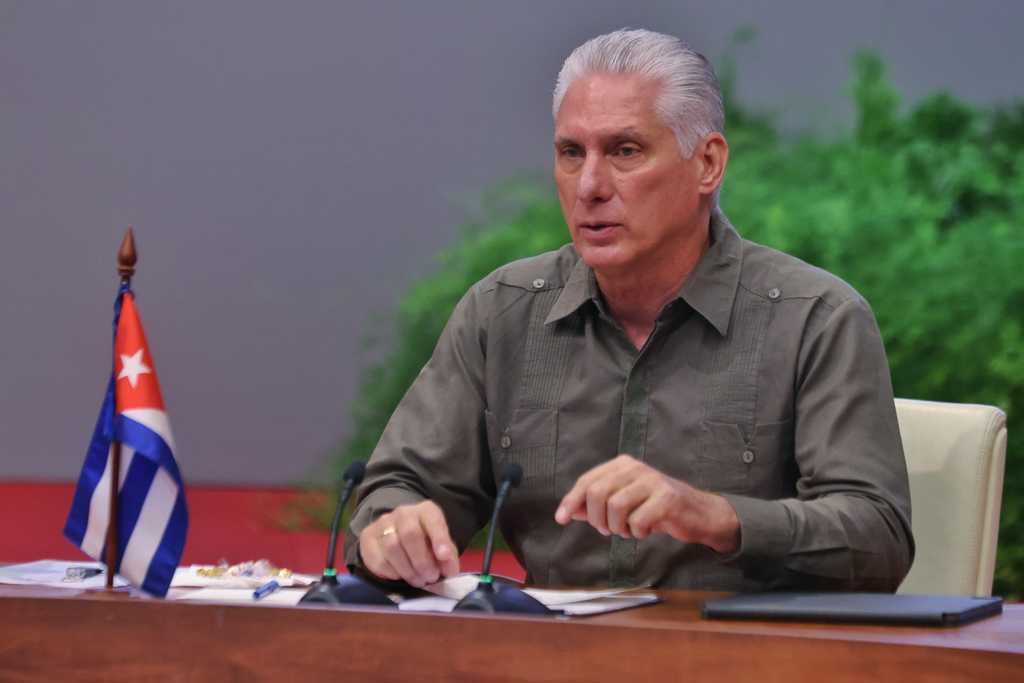
    In a significant diplomatic engagement, Cuban officials and Congolese representatives have reinforced their longstanding bilateral relations through mutual acknowledgments of solidarity and shared historical struggles. The discourse, prominently shared via official government channels on social media platform X, highlighted the profound personal connections between the nations’ leaderships, particularly recalling the camaraderie between the historic leader of the Cuban Revolution and President Denis Sassou Nguesso of the Republic of the Congo.

    Cuban representatives paid tribute to the resilience demonstrated by the Cuban people throughout decades of economic constraints imposed by the United States’ embargo, framing it within a narrative of unwavering national spirit. This acknowledgment was met with reciprocal appreciation from the Congolese delegation, which expressed a steadfast desire for continued mutual support and unity between the two populations.

    The meeting served as a platform to celebrate and further solidify the fraternal bonds and cooperative framework existing between Havana and Brazzaville. Both parties emphasized the importance of enhancing their commercial and diplomatic partnerships, viewing this strengthened alliance as crucial for navigating contemporary global challenges. The dialogue underscored a common vision for future collaboration, rooted in a history of cooperation and a shared commitment to sovereignty and international solidarity.

  • Constituencies to watch; The election deciders (Part 2)

    Constituencies to watch; The election deciders (Part 2)

    With the pivotal 2025 General Election approaching, St. Lucia stands at a political crossroads that will define its governance for the coming five-year term. Political analysts are examining the complex voter dynamics that could disrupt traditional party strongholds across the island nation.

    Political observer Rhyesa Joseph identifies multiple factors influencing voter behavior, noting that “constituency level politics vary throughout the island, and there are different kinds of voters.” Key considerations include assessments of national leadership, parliamentary representation quality, opposition candidate appeal, and overall trust in political affiliations.

    Several constituencies emerge as critical battlegrounds that may signal the national outcome:

    Gros Islet, a tourism-centric region, features a contest between incumbent Youth and Sports Minister Kenson Casimir and entrepreneur Marcella Johnson. Political commentator Rahym Augustin-Joseph highlights this constituency’s historical significance: “History has told us that a government must win Gros Islet if they want to win the elections.” The area’s growing population and history of political alternation make it a crucial indicator of national sentiment.

    Micoud North represents a remarkable political transformation, having shifted from decades as a United Workers Party (UWP) stronghold to electing Labour’s Jeremiah Norbert in 2021. Development professional Ajani Lebourne notes this constituency’s traditional tendency to return to UWP, making the incumbent’s project delivery record essential. With fishing and farming as primary industries, candidate performance on infrastructure and market access will significantly influence voter decisions.

    Dennery North presents Education Minister Shawn Edward seeking his fourth term against community leader Bradley Marcelle Fulgence. Lebourne characterizes this as a closely contested race between candidates of “similar profile and stature,” noting Edward’s historically narrow victory margins. The constituency’s response to government policies in education and agriculture, particularly their impact on youth opportunities and farming communities, may prove decisive.

    Vieux Fort North and Laborie remain traditional Labour strongholds, with veterans Moses Jn Baptiste and Alva Baptiste facing challenges from police officer Callix Xavier and entrepreneur Laura Jn Pierre-Noel respectively. Augustin-Joseph suggests these constituencies will test Labour’s continued dominance, potentially indicating whether national momentum might favor UWP despite historical voting patterns.

    These contested regions collectively form a political barometer that will measure St. Lucia’s governing direction for the next parliamentary term.

  • Unity as SVG enters new chapter

    Unity as SVG enters new chapter

    St. Vincent and the Grenadines has entered a transformative political era following the conclusion of the 24-year governance by the Unity Labour Party (ULP), with the New Democratic Party (NDP) securing electoral victory. This democratic transition underscores the nation’s robust political institutions while presenting an urgent imperative for transcending partisan divisions to pursue collective national advancement.

    In this critical juncture, all Vincentian professionals—irrespective of political alignment—are summoned to contribute to national development initiatives. The nation’s progress fundamentally depends on unified purpose, collaborative engagement, and shared responsibility rather than political fragmentation.

    This appeal extends globally to the Vincentian diaspora dispersed throughout the Caribbean, North America, Europe, Asia, Africa, and beyond. SVG actively seeks the expertise, innovative capacities, professional networks, and advocacy of its international community. Overseas Vincentians remain integral to the national fabric, with opportunities for contribution spanning mentorship programs, strategic investments, cross-border partnerships, policy advisory roles, skills transfer initiatives, and international representation.

    Nation-building transcends single-party agendas or governmental administrations, constituting instead a collective mission demanding the comprehensive engagement of Vincentians worldwide. As the nation embraces this new beginning, the National Anthem’s invocation—’What e’er the future brings, our faith will see us through’—provides philosophical guidance, emphasizing that national progress hinges on unity rather than division.

    The commentary concludes with a call for respectful, professional, and purposeful collaboration, advocating for the suspension of political differences in favor of shared developmental vision. St. Vincent and the Grenadines’ national identity surpasses any political organization, with its future prosperity contingent upon domestic cohesion and global diaspora solidarity. This historical moment demands unified action toward building a more resilient and prosperous nation.

  • Friday sworn in as St. Vincent and Grenadines’ 5th PM, Gonsalves to become Opposition Leader

    Friday sworn in as St. Vincent and Grenadines’ 5th PM, Gonsalves to become Opposition Leader

    St. Vincent and the Grenadines witnessed a historic political transition on November 28, 2025, as Dr. Godwin Friday took the oath of office to become the nation’s fifth Prime Minister. The ceremony marked the culmination of a dramatic electoral shift that ended the 25-year governance of the Unity Labour Party (ULP).

    Addressing the nation after his swearing-in, Dr. Friday expressed profound humility at assuming leadership, declaring his intention to govern as “a Prime Minister for all the people of this country.” The New Democratic Party (NDP) leader outlined his vision for national unity, emphasizing the need for citizens to embrace their shared identity as Vincentians while pooling resources and intellect for collective advancement.

    The transition follows the NDP’s unprecedented electoral triumph on November 27, where the party secured 14 of the 15 parliamentary seats—a result Dr. Friday characterized as a decisive mandate for “major, transformational changes.” The Prime Minister-elect pledged to dedicate “every sinew in our body” to fulfilling campaign commitments, with particular focus on elevating living standards, reinforcing moral values, and restoring national hope. While his cabinet appointments will be finalized next week, Dr. Friday immediately encouraged community-level participation, assuring citizens that “brighter days ahead” await the nation.

    Concurrently, former Prime Minister Dr. Ralph Gonsalves confirmed he would assume the role of Opposition Leader after his party’s devastating electoral performance. The ULP veteran, who maintained his own seat but witnessed his party’s collapse, asserted that “Labour is strong and alive” despite the setback. Dr. Gonsalves announced plans to convene with ULP leadership to select two senators who will join him on the opposition benches.

    Notably absent from the political transition was any public congratulatory message from the outgoing Prime Minister to the victorious NDP—a silence that underscored the profound shift in the nation’s political landscape after a quarter-century of continuous ULP governance.

  • Godwin Friday sworn in as St. Vincent and Grenadines’ 5th PM, Gonsalves to become Opposition Leader

    Godwin Friday sworn in as St. Vincent and Grenadines’ 5th PM, Gonsalves to become Opposition Leader

    In a historic political transition, Dr. Godwin Friday assumed office as the fifth Prime Minister of St. Vincent and the Grenadines on November 28, 2025, following his New Democratic Party’s (NDP) landslide electoral victory. The swearing-in ceremony marked the culmination of a decisive electoral outcome that saw the NDP capture 14 of the 15 parliamentary seats in the November 27 general election.

    Addressing the nation after taking his oath of office, Prime Minister Friday expressed humility at his new role and committed to governing as a leader for all citizens. “I am humbled by the trust and honor given to me to serve as Prime Minister,” he declared, emphasizing his administration’s dedication to national unity and comprehensive progress.

    The newly inaugurated leader outlined his vision for transformative governance, pledging to elevate living standards, strengthen moral values, and fulfill the aspirations of Vincentians. He called for collective national effort, urging citizens to embrace their shared identity and contribute their resources and intellect toward national development. Friday characterized the electoral outcome as a clear mandate for substantial change and promised to work with “every sinew in our body” to implement campaign commitments.

    Meanwhile, former Prime Minister Dr. Ralph Gonsalves, whose Unity Labour Party (ULP) held power for 25 years, confirmed he would assume the role of Opposition Leader. Gonsalves, who was the sole ULP candidate to retain a parliamentary seat, acknowledged his party’s defeat while maintaining that “Labour is strong and alive.” He announced plans to convene with the ULP executive to select two senators to join the opposition bench.

    Notably absent from the political transition was any public congratulatory message from Gonsalves to the victorious NDP, signaling a quiet conclusion to his lengthy tenure as head of government. The new administration is expected to announce its cabinet composition in the coming week.

  • Guyana’s airspace open despite neighbouring Venezuela’s closure

    Guyana’s airspace open despite neighbouring Venezuela’s closure

    Guyana’s aviation authorities have confirmed uninterrupted flight operations despite neighboring Venezuela’s airspace closure declared by US President Donald Trump. The Guyana Civil Aviation Authority (GCAA) Director-General Retired Lt. Col. Egbert Field assured that both domestic and international flights remain unaffected by the US policy targeting “airlines and flights engaged in illegal activities” above Venezuelan territory.

    Flight tracking services show normal air traffic over Guyana while Venezuelan airspace appears empty, demonstrating the practical implementation of Trump’s declaration posted on his Truth Social platform. The US President stated: “To all Airlines, Pilots, Drug Dealers, and Human Traffickers, please consider THE AIRSPACE ABOVE AND SURROUNDING VENEZUELA TO BE CLOSED IN ITS ENTIRETY.

    Regional aviation adjustments have been implemented smoothly, with flights to Trinidad and Colombia successfully rerouted through alternative paths. Field emphasized that even domestic flights to interior destinations near the Guyana-Venezuela border continue normally, as all Guyanese airstrips remain within national airspace boundaries under different flight information regions (FIR).

    The Trinidad and Tobago Ministry of Defence corroborated this stability, confirming that commercial airlines continue operations without disruption. Defence Minister Wayne Sturge reassured the traveling public to maintain normal flight plans.

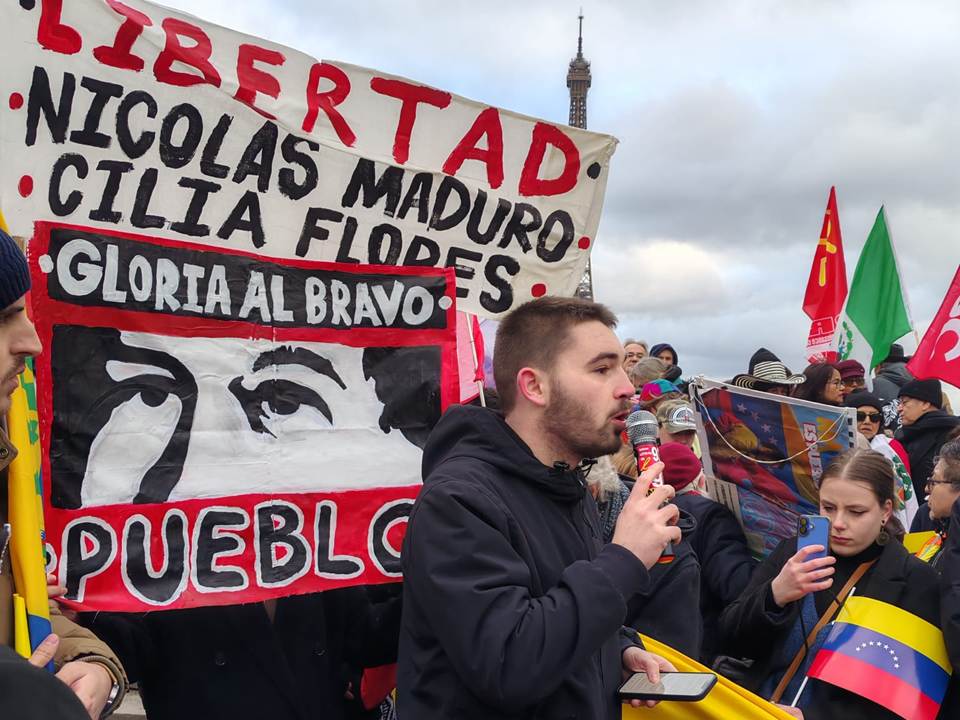
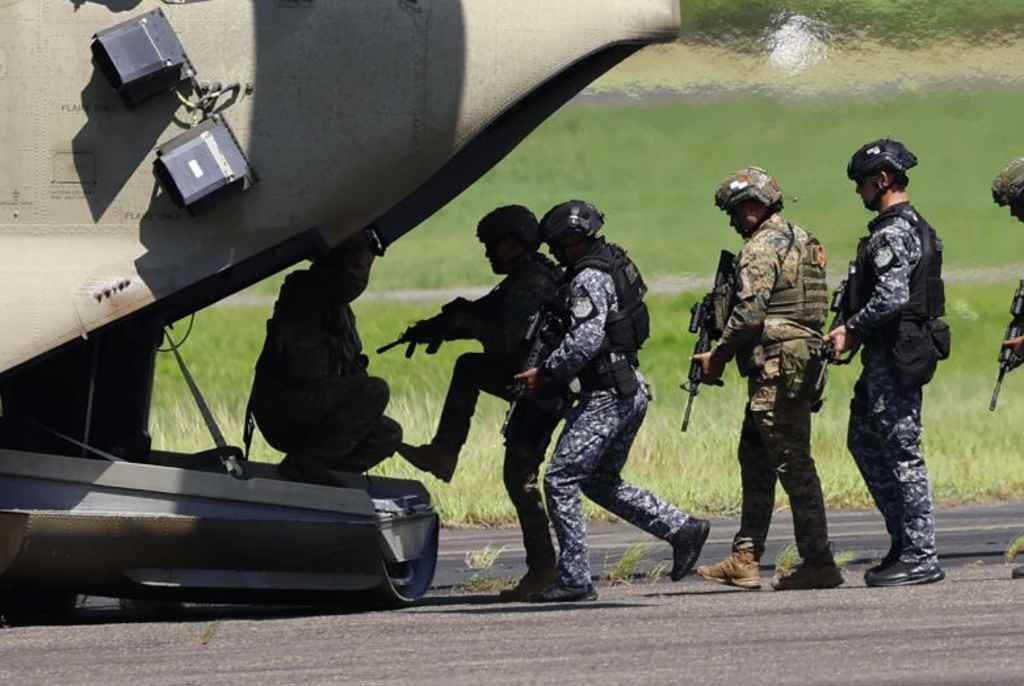
    This aviation scenario unfolds against heightened military tensions, with Trump threatening potential ground operations against “narco-terrorists and narco-traffickers” in Venezuela. The US administration has labeled Venezuelan President Nicolás Maduro and associated cartels as narcoterrorists, though legal experts question the justification for deadly force amid absent concrete evidence of narcotics transportation in 21 strikes that have killed 83 people to date.

  • Trump administration announces pause on asylum decisions after National Guardsmen shooting

    Trump administration announces pause on asylum decisions after National Guardsmen shooting

    The Trump administration has implemented an immediate suspension of all asylum adjudications in response to the fatal shooting of two National Guard members in Washington, D.C. this week. U.S. Citizenship and Immigration Services Director Joseph Edlow announced the comprehensive pause, stating the measure will remain until “every alien is vetted and screened to the maximum degree possible.”

    This security-driven policy shift follows President Trump’s Thursday declaration of intent to “permanently pause migration” from unspecified “Third World Countries.” Concurrently, the State Department instituted an immediate visa issuance ban for all Afghan passport holders. Secretary of State Marco Rubio affirmed this action through social media, emphasizing that “The United States has no higher priority than protecting our nation and our people.”

    The administration’s response continues restrictive immigration patterns established in June when Trump issued a proclamation banning travel from twelve predominantly African and Middle Eastern nations. In his recent statements, the president outlined aggressive measures including terminating “all of the millions of Biden illegal admissions,” removing individuals deemed “not a net asset to the United States,” ending federal benefits for noncitizens, and deporting foreign nationals considered security risks.

    The policy changes directly respond to Wednesday’s attack by Rahmanullah Lakanwal, a 29-year-old Afghan national who entered the U.S. in 2021 and received asylum approval in April 2025. Investigation sources reveal Lakanwal previously served in Afghanistan’s Zero Unit, an elite force collaborating with CIA and Joint Special Operations Command personnel while targeting U.S. counterterrorism objectives.

    President Trump has characterized the incident as underscoring “the greatest national security threat facing our nation,” prompting deployment of National Guard troops to Washington and several Democrat-led cities including Chicago and Portland. These actions have historically faced opposition from Democratic lawmakers and immigration advocates who argue the administration exaggerates security concerns while rejecting vulnerable families seeking protection.

  • What a whopper!

    What a whopper!

    In a dramatic political upheaval that defied conventional expectations, Vincentian voters have delivered a powerful verdict against entrenched power structures and political entitlement. The election outcome represents far more than a simple transfer of power—it constitutes a fundamental rejection of perceived arrogance and unaccountability that had gradually permeated the ruling party’s culture.

    Political analysts note that the former administration’s decline stemmed from a growing perception that its representatives and their families had developed an aura of invincibility and privilege. The former prime minister’s leadership style increasingly came under scrutiny, particularly his apparent reluctance to hold ministers and even his own sons accountable for controversial actions. His response to the Yugge Farrel matter, advocating for ‘dignified silence’ rather than transparency, particularly resonated as emblematic of this problematic approach.

    The ‘Revelations’ episode, intended to demonstrate strong leadership, instead backfired spectacularly by reinforcing public perceptions of systemic corruption, nepotism, and entitlement. Specific cases such as Carlos James’s alleged misconduct and the disturbing allegations of violence against women further eroded public trust, creating an impression of political figures considering themselves beyond reproach.

    Agricultural communities expressed particular discontent with figures like Saboto Caesar, who appeared to be competing with the very farmers he was meant to serve—echoing the critical fable of ‘All for me, and some for you.’ This sentiment extended to the troubling behavior of political families who seemed to operate with impunity due to their connections.

    The election ultimately transformed from traditional party loyalty to a broader movement rejecting bullying, entitlement, and fear-based politics. Ironically, the former administration inadvertently educated an entire generation about their democratic power, which they decisively exercised at the polls.

    Camillo Gonsalves’s gracious concession speech demonstrated reflective maturity, while Curtis King’s dramatic defeat reflected public dissatisfaction with perceived weaknesses and his wife’s controversial behavior. The message to the victorious NDP remains clear: this represents conditional trust rather than blind loyalty, with voters ready to hold them to the same standards of accountability they demanded from their predecessors.

    This political shift marks both a season of change and a powerful reminder that in democracy, ultimate power resides with the people.