分类: politics

  • Carib Cement says ‘contributions’ made to both JLP and PNP, no ‘fees’ paid

    Carib Cement says ‘contributions’ made to both JLP and PNP, no ‘fees’ paid

    Caribbean Cement Company Limited has addressed recent allegations regarding political contributions, emphasizing that its donations to Jamaica’s major political parties were voluntary and compliant with local laws. The clarification comes after reports surfaced that its parent company, Mexico-based Cemex, disclosed a payment of US$201,538 to the ruling Jamaica Labour Party (JLP) in a filing with the United States Securities and Exchange Commission (SEC). Initially described as ‘fees’ in the filing, the reference was later removed in an amended version. In a statement released on Thursday, Carib Cement asserted that the contributions adhered to legal and regulatory standards and clarified that the amendment to the SEC filing was merely a correction of the original report. The Opposition People’s National Party (PNP) has called for transparency, with PNP General Secretary Dr. Dayton Campbell expressing concerns over the reported payment and its implications.

  • Padarath: No plan to fire WASA workers

    Padarath: No plan to fire WASA workers

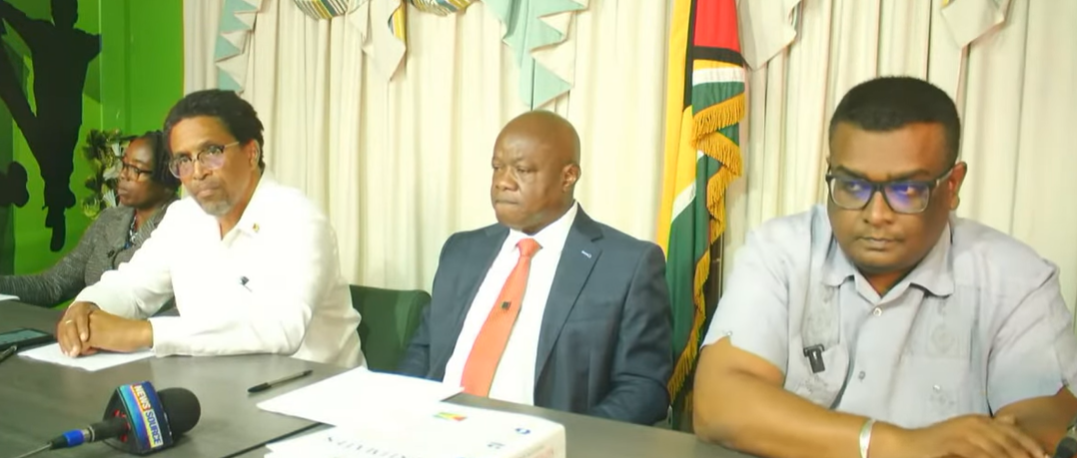
    In a heated session before the Standing Finance Committee of the House of Representatives, Public Utilities Minister Barry Padarath assured that the government has no intention of dismissing workers at the Water and Sewerage Authority (WASA). This declaration came as the committee approved a substantial budgetary allocation of $3.27 billion to the Ministry of Public Utilities. Padarath emphasized the administration’s commitment to retaining WASA employees and enhancing the authority’s financial viability, stating, ‘This administration is hell-bent on keeping WASA employees in their jobs.’ He also highlighted collaboration with the Public Services Association (PSA), which represents the majority of WASA workers and is aligned with the ruling United National Congress (UNC).

    Opposition Chief Whip Marvin Gonzales, a former public utilities minister, criticized the UNC’s past actions, recalling that the People’s Partnership coalition, led by the UNC, had planned to lay off 30,000 workers during the 2010-2015 period. He credited the People’s National Movement (PNM) with thwarting this plan upon assuming office in 2015 and implementing a transformation strategy that improved water supply for many citizens. Padarath, however, dismissed these claims, asserting that the PNM’s efforts yielded no significant results and instead led to questionable state contracts benefiting certain individuals.

    The session grew contentious as opposition MPs, including Stuart Young and Colm Imbert, questioned Padarath about potential job cuts at WASA, particularly in light of a review of National Insurance System (NIS) contributions. Padarath maintained that the review would not result in job losses, but Young expressed skepticism, accusing the government of planning significant workforce reductions. The debate escalated into personal jabs, with Padarath suggesting Imbert consult a psychiatrist and Imbert dismissing Padarath’s remarks as irrelevant. Speaker Jagdeo Singh intervened multiple times to restore order.

    Padarath also addressed concerns about a $50 million reduction in contract employment at WASA, asserting that vacant positions would be filled through the government’s National Recruitment Drive, which aims to create 20,000 jobs in its initial phase. Finance Minister Davendranath Tancoo, in his recent budget presentation, announced the termination of the Cepep and URP programs, pledging to replace them with better-paid, full-time employment opportunities funded by a $475 million Employment Fund. The government’s focus remains on ending state funding of criminal gangs and improving public utility services.

  • Trinidad PM says she will not engage in tit-for-tat with Venezuelan VP

    Trinidad PM says she will not engage in tit-for-tat with Venezuelan VP

    Trinidad and Tobago’s Prime Minister Kamla Persad-Bissessar has sought to downplay potential tensions with Venezuela regarding the Dragon gas project. This follows remarks by Venezuelan Vice President Delcy Rodriguez, who warned that Trinidad and Tobago’s economy would falter without a gas deal with Venezuela. Rodriguez emphasized that any gas exports to Trinidad and Tobago must be paid for, dismissing claims that the U.S. would facilitate free access to Venezuelan gas. She accused Persad-Bissessar of being misled by U.S. Secretary of State Marco Rubio, likening her to a “puppet” and warning of dire economic consequences if Venezuela halts gas exports. Persad-Bissessar, however, refrained from engaging in a public dispute, stating she had no official communication from Venezuela and remained focused on advancing Trinidad and Tobago’s economy. She also dismissed fears of regional conflict, urging citizens to remain calm. Earlier this month, Trinidad and Tobago secured a six-month U.S. license to negotiate the Dragon gas project with Venezuela, a move criticized by former Energy Minister Stuart Young for its short-term nature and lack of transparency. The project, previously declared “dead” by the current government, remains a contentious issue in bilateral relations.

  • New Chief Justice’s pledge: I will do my best

    New Chief Justice’s pledge: I will do my best

    Justice of Appeal Ronnie Boodoosingh has officially assumed the role of Trinidad and Tobago’s ninth Chief Justice, succeeding Ivor Archie, who retired on October 22. Boodoosingh was sworn in by acting President Wade Mark at a ceremony held at the President’s House in St. Ann’s. The appointment followed the constitutional process outlined in Section 102, requiring consultation with the Prime Minister and the Leader of the Opposition. While Prime Minister Kamla Persad-Bissessar expressed support, Opposition Leader Pennelope Beckles criticized the consultation process as flawed. Boodoosingh, a seasoned jurist with over three decades of legal experience, pledged to serve with humility, diligence, and integrity. He paid tribute to Archie, highlighting his contributions to modernizing the judiciary, including the introduction of electronic filing and virtual courtrooms. Boodoosingh also acknowledged the sacrifices made by Archie’s family and expressed gratitude for his own family’s support. The ceremony was attended by key government officials, including Attorney General John Jeremie and Homeland Security Minister Roger Alexander. Acting President Wade Mark praised the seamless transition, emphasizing the stability and independence of the judiciary. Boodoosingh’s appointment has been widely welcomed by the legal fraternity, with hopes that his leadership will enhance access to justice and restore public confidence in the judiciary.

  • A humble CJ amid bacchanal

    A humble CJ amid bacchanal

    Ronnie Boodoosingh officially commenced his tenure as Chief Justice on October 22, delivering a heartfelt and unscripted address that underscored his humility and dedication to the judiciary. Speaking extemporaneously, Boodoosingh emphasized his commitment to hard work and humility, setting a reassuring tone for his leadership. He paid tribute to his predecessors, including former Chief Justice Ivor Archie, and acknowledged the support of his family, stating, ‘They make me a better person.’

    The swift transition following Archie’s departure was met with relief, though the televised swearing-in ceremony appeared rushed, with key guests arriving late and logistical hiccups such as the absence of glasses during a toast. Behind the scenes, acting President Wade Mark faced objections from Opposition Leader Pennelope Beckles, who advocated for a more senior judge to act as Chief Justice. Despite these tensions, the Constitution grants the President the authority to appoint the Chief Justice after consulting with the Prime Minister and Opposition Leader.

    Boodoosingh’s recent ruling in the Court of Appeal, which affirmed a constitutional right to return home after international travel, highlights his focus on human rights. This commitment, coupled with his sponsorship of a human rights award at the Hugh Wooding Law School, suggests that fundamental rights will be a cornerstone of his tenure. As the dust settles, the nation looks forward to a judiciary led by a Chief Justice known for sound judgment, fairness, and dedication.

  • Spencer Recommends Staff Rotation to Strengthen Oversight and Prevent Corruption

    Spencer Recommends Staff Rotation to Strengthen Oversight and Prevent Corruption

    Hazel Spencer, a former Cabinet Secretary, has proposed that rotating staff across government departments could significantly enhance accountability and curb corruption. Drawing from his extensive experience as a customs officer, Spencer highlighted the benefits of regular reassignment, a practice that was standard during his tenure in the Customs Department. He shared these insights during the question-and-answer segment of the Vehicle Gate town hall meeting, emphasizing the detrimental effects of allowing employees to remain in the same position for extended periods. According to Spencer, such stagnation fosters familiarity, complacency, and, in some cases, collusion. “In my days in the Customs Department, we were rotated,” Spencer recalled. “Sometimes you end up down at the distillery, sometimes at the airport, sometimes you board a ship — all different functions in customs. You could not get too comfortable in one place.” Spencer suggested that reintroducing this practice across various departments, especially those managing public finances and procurement, could strengthen oversight and prevent scandals like the alleged EC $17 million vehicle procurement controversy currently under investigation. He stressed that internal safeguards, such as staff rotation, complement broader financial controls mandated by law. Earlier in the session, Spencer outlined the critical roles of Cabinet approval, Finance Ministry verification, and Treasury oversight in maintaining accountability. He warned that corruption thrives when any link in this chain fails. “People talk about systems failing,” he said. “But systems only fail when people stop doing what they are supposed to do. Rotation helps remind everyone that public office is about service, not comfort.” Spencer’s remarks align with a broader call from panelists at the town hall for institutional reform, transparency, and stricter enforcement of financial regulations. He underscored that good governance is not merely about rules on paper but also about the daily discipline of those tasked with enforcing them.

  • Former Cabinet Secretary says vehicle controversy could have been avoided with proper checks and balances

    Former Cabinet Secretary says vehicle controversy could have been avoided with proper checks and balances

    Former Cabinet Secretary Hazel Spencer has asserted that the alleged $17 million government vehicle scandal in Antigua and Barbuda could have been prevented had the nation’s financial oversight mechanisms operated as intended. Speaking at the ‘Vehicle Gate’ town hall meeting, Spencer meticulously outlined the standard procedures for capital expenditure, emphasizing the critical role of Cabinet approval, Treasury verification, and ministerial oversight in ensuring fiscal accountability. She expressed astonishment that such a substantial sum could be allocated for vehicle purchases without raising red flags within the Ministry of Finance or Treasury, labeling the oversight as ‘scandalous.’

    Spencer detailed the step-by-step process that should govern capital projects: initial Cabinet approval, inclusion in national estimates, parliamentary budget approval, and the preparation of a general warrant by ministries. This warrant must then be scrutinized and signed by the Minister of Finance before funds are disbursed. ‘The Treasury must verify that all is in order before releasing any payments,’ she stressed, highlighting that these safeguards are designed to prevent unauthorized spending.

    She further emphasized the ethical responsibilities of public servants and government ministers, urging them to remain vigilant, honest, and committed to upholding integrity. ‘When officials bypass rules or coerce civil servants into approving dubious transactions, the entire governance structure crumbles,’ Spencer warned. She also reminded attendees that civil servants are legally protected from arbitrary dismissal, empowering them to resist improper directives without fear of reprisal.

    Spencer’s insights were part of a broader panel discussion examining how lapses in oversight, political interference, and weak enforcement enabled the alleged vehicle purchases. Her analysis provided an insider’s perspective on how adherence to procedural safeguards could have averted what she and other panelists described as a ‘catastrophic failure of accountability.’

  • OPINION: Square Pegs in Round Holes vs Willful Neglect

    OPINION: Square Pegs in Round Holes vs Willful Neglect

    In a candid admission, Antigua and Barbuda’s Prime Minister Gaston Browne has publicly acknowledged the pervasive corruption within his government, attributing it to mismanagement and deliberate neglect. Browne likened the corruption to a malignant cancer, spreading across all levels of the public service, with private sector influence deeply entrenched in government operations. This revelation, coming from the Minister of Finance and Corporate Governance, underscores the gravity of the situation, particularly as it highlights a decade-long embezzlement scheme under his administration.

    Key infrastructure such as the Airport and Port are now under scrutiny, with calls for immediate independent audits. These sites have become hotspots for corruption, where customs controls are allegedly bypassed in favor of influential business operators. A recent incident at the airport involved the displacement of a long-standing local company to accommodate a prominent businessman seeking greater control over operations.

    Antigua’s reputation for corruption is not new. The island has been internationally recognized for its high levels of corruption, with notable cases such as that of Allen Stanford, who exploited the airport’s secure zones to facilitate a global financial crime syndicate. Despite the exposure of these activities, the government has failed to address the violations of International Civil Aviation Organization (ICAO) rules for over two decades.

    In a bid to rectify these issues, Antigua has enlisted the expertise of an international aviation specialist, tasked with overhauling the airport within three months. This initiative aims to restore the country’s Category 1 status with ICAO and implement necessary regulatory measures to secure the airport’s perimeter, ensuring compliance with international aviation standards.

  • LETTER: Hands Off Maria! Part 1

    LETTER: Hands Off Maria! Part 1

    In a robust defense against recent media allegations, the author, under the pseudonym Nomad, has issued a detailed rebuttal to claims made by Harold Lovell and D. Gisele Isaac. Lovell’s article, titled ‘Chain Gang Exposed: Gaston’s Culture of Creating Enrichment Blows Wide Open,’ and Isaac’s piece, ‘Ask What Your Country Can Do for You,’ have sparked significant controversy. While acknowledging Lovell’s eloquence, Nomad criticizes his lack of veracity, accusing him of habitual falsehoods. Specifically, Lovell’s assertion that Prime Minister Gaston Browne and his son profited from a land deal at Long Bay is categorically denied. Nomad clarifies that the transaction was a private treaty and not involving government land, with all details verifiable through the Register of Lands. Furthermore, Lovell’s claim that Browne became a millionaire solely through this deal is dismissed as an egregious lie, with Nomad pointing to Browne’s transparent declaration of his wealth under the Integrity in Public Life Act 2004. The rebuttal also addresses Lovell’s allegations of corruption in the ‘shadowy WIOC share deal’ and the ‘Antigua Airways fiasco,’ questioning the basis of these claims. Nomad highlights that it was Prime Minister Browne who initially exposed the ‘chain gang scandal’ and emphasizes the government’s ongoing audit to ensure financial oversight. The call for an independent inquiry is scrutinized, with Nomad arguing that the current audit suffices to uncover any irregularities. Additionally, Nomad defends Minister Maria Browne against accusations of involvement in the scandal, noting her role in bringing the issue to light and the longstanding nature of the illegal activities. The rebuttal concludes with a promise to address Gisele Isaac’s accusations in a forthcoming Part 2.

  • Grenada in no rush to provide a response

    Grenada in no rush to provide a response

    In response to a request from the Donald Trump US Administration to install temporary radar at Maurice Bishop International Airport (MBIA) and deploy military assets in or near Grenada, Prime Minister Dickon Mitchell announced that he will provide an update to Parliament on October 28. The Lower House of Parliament, initially set to meet on October 24, rescheduled its session to accommodate this update. Mitchell clarified that his statement will not announce a government decision but will instead inform the public about the ongoing consideration of the request, which was received in August 2025. He emphasized that the matter is highly technical and requires extensive input from experts. Mitchell also noted that Grenada has historically received similar national security requests from regional and international partners, including the US, Trinidad, and France. He assured the public that the government is taking its time to deliberate on the issue, as there is no urgency to respond. The Prime Minister’s update will be delivered during his weekly social media program, ‘DMs with the PM,’ ensuring transparency and public awareness.