分类: politics

  • A fracture in Caribbean unity

    A fracture in Caribbean unity

    Prime Minister Kamla Persad-Bissessar of Trinidad and Tobago has stirred significant regional discord by endorsing US military expansion near Venezuela and advocating for lethal measures against drug traffickers. This stance has not only fractured Caribbean unity but also drawn sharp criticism from both citizens and regional leaders. The Caribbean Community (Caricom) has promptly distanced itself from Persad-Bissessar’s position, emphasizing its commitment to non-interference and respect for sovereignty. Her assertion that Caricom was ‘already divided’ has been labeled as dismissive and divisive, further exacerbating existing tensions. The implications of this controversy are far-reaching: diplomatically, it undermines Caricom’s collective voice and weakens its global credibility; geopolitically, it risks provoking retaliation from Venezuela and destabilizing regional relations; domestically, it threatens to incite civic unrest due to the lack of democratic consultation; and ethically, it raises concerns about the blurring of lines between law enforcement and extrajudicial violence. Critics argue that Persad-Bissessar’s foreign policy is influenced by narrow identity politics, which could alienate diverse constituencies and undermine democratic norms. This episode represents a significant rupture in Caribbean diplomacy, jeopardizing Trinidad and Tobago’s legacy as a peaceful, sovereign nation and straining Caricom’s already fragile unity.

  • No increase for HDC homes despite budget cut

    No increase for HDC homes despite budget cut

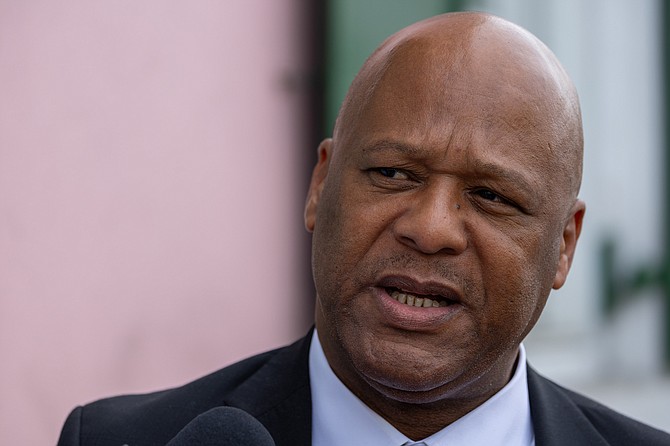
    Despite a significant reduction in the Housing Ministry’s budget for the 2025/2026 fiscal year, Minister David Lee has assured the public that the cost of government homes will remain unchanged. Speaking to reporters outside Parliament on October 23, Lee revealed that the ministry’s allocation had been reduced from $750 million in 2024 to $600 million, marking a 20% decrease. However, he emphasized that this cut would not hinder the ministry’s ability to fulfill its housing commitments. Lee attributed this confidence to a strategic shift toward public-private partnerships, which aims to diversify funding sources and reduce reliance on government guarantees or loans. Over the past five months, Lee has collaborated with the Ministers of Finance and Planning to secure international funding, ensuring the sustainability of housing projects. When questioned about potential increases in housing costs due to this new model, Lee firmly denied the possibility, stating, ‘We will be much more efficient. There was a lot of wastage under the previous government, but I will be running a very tight ship.’ He also promised citizens greater value for money, criticizing the previous administration for failing to deliver on this promise. Lee expressed frustration at not being able to fully contribute to the parliamentary debate, hinting at undisclosed information regarding contracts and past housing arrangements. He also criticized the opposition’s lack of depth in their questioning during the Standing Finance Committee deliberations, which are expected to conclude by October 25.

  • Venezuela defence minister vows any CIA operation against country ‘will fail’

    Venezuela defence minister vows any CIA operation against country ‘will fail’

    CARACAS, Venezuela — Venezuela’s Defense Minister Vladimir Padrino issued a stern warning on Thursday, asserting that any covert operations by the U.S. Central Intelligence Agency (CIA) against his nation would be unsuccessful. This statement came in response to U.S. President Donald Trump’s recent authorization of clandestine CIA activities targeting Venezuela. Padrino emphasized that while the CIA’s presence in the country is acknowledged, any attempts to destabilize Venezuela through covert means would be met with failure. Trump’s decision to greenlight such operations follows his earlier announcement of considering strikes against alleged drug cartels on land, complementing an ongoing maritime campaign against suspected drug-trafficking vessels. The escalating tensions between the two nations underscore the deepening geopolitical rift, with Venezuela firmly positioning itself against perceived U.S. interference.

  • Spencer Recommends Staff Rotation to Strengthen Oversight and Prevent Corruption

    Spencer Recommends Staff Rotation to Strengthen Oversight and Prevent Corruption

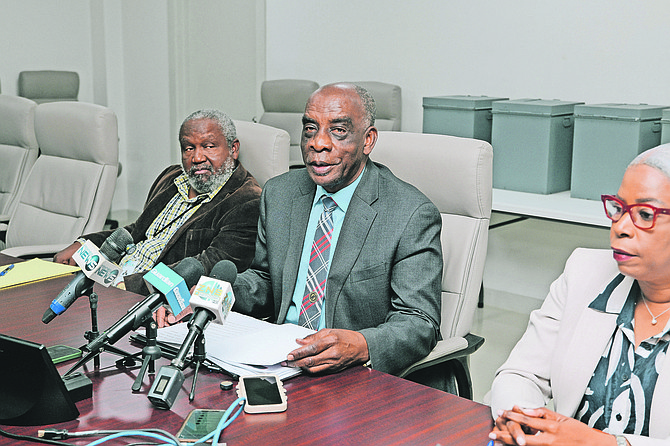
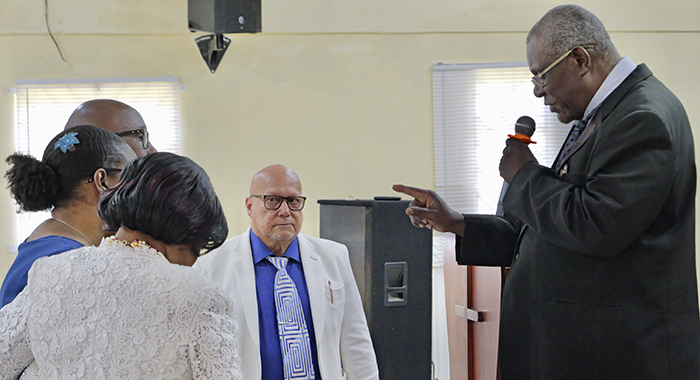
    Hazel Spencer, a former Cabinet Secretary, has proposed that rotating staff across government departments could significantly enhance accountability and curb corruption. Drawing from his extensive experience as a customs officer, Spencer highlighted the benefits of regular reassignment, a practice that was standard during his tenure in the Customs Department. He shared these insights during the question-and-answer segment of the Vehicle Gate town hall meeting, emphasizing the detrimental effects of allowing employees to remain in the same position for extended periods. According to Spencer, such stagnation fosters familiarity, complacency, and, in some cases, collusion. “In my days in the Customs Department, we were rotated,” Spencer recalled. “Sometimes you end up down at the distillery, sometimes at the airport, sometimes you board a ship — all different functions in customs. You could not get too comfortable in one place.” Spencer suggested that reintroducing this practice across various departments, especially those managing public finances and procurement, could strengthen oversight and prevent scandals like the alleged EC $17 million vehicle procurement controversy currently under investigation. He stressed that internal safeguards, such as staff rotation, complement broader financial controls mandated by law. Earlier in the session, Spencer outlined the critical roles of Cabinet approval, Finance Ministry verification, and Treasury oversight in maintaining accountability. He warned that corruption thrives when any link in this chain fails. “People talk about systems failing,” he said. “But systems only fail when people stop doing what they are supposed to do. Rotation helps remind everyone that public office is about service, not comfort.” Spencer’s remarks align with a broader call from panelists at the town hall for institutional reform, transparency, and stricter enforcement of financial regulations. He underscored that good governance is not merely about rules on paper but also about the daily discipline of those tasked with enforcing them.

  • Former Cabinet Secretary says vehicle controversy could have been avoided with proper checks and balances

    Former Cabinet Secretary says vehicle controversy could have been avoided with proper checks and balances

    Former Cabinet Secretary Hazel Spencer has asserted that the alleged $17 million government vehicle scandal in Antigua and Barbuda could have been prevented had the nation’s financial oversight mechanisms operated as intended. Speaking at the ‘Vehicle Gate’ town hall meeting, Spencer meticulously outlined the standard procedures for capital expenditure, emphasizing the critical role of Cabinet approval, Treasury verification, and ministerial oversight in ensuring fiscal accountability. She expressed astonishment that such a substantial sum could be allocated for vehicle purchases without raising red flags within the Ministry of Finance or Treasury, labeling the oversight as ‘scandalous.’

    Spencer detailed the step-by-step process that should govern capital projects: initial Cabinet approval, inclusion in national estimates, parliamentary budget approval, and the preparation of a general warrant by ministries. This warrant must then be scrutinized and signed by the Minister of Finance before funds are disbursed. ‘The Treasury must verify that all is in order before releasing any payments,’ she stressed, highlighting that these safeguards are designed to prevent unauthorized spending.

    She further emphasized the ethical responsibilities of public servants and government ministers, urging them to remain vigilant, honest, and committed to upholding integrity. ‘When officials bypass rules or coerce civil servants into approving dubious transactions, the entire governance structure crumbles,’ Spencer warned. She also reminded attendees that civil servants are legally protected from arbitrary dismissal, empowering them to resist improper directives without fear of reprisal.

    Spencer’s insights were part of a broader panel discussion examining how lapses in oversight, political interference, and weak enforcement enabled the alleged vehicle purchases. Her analysis provided an insider’s perspective on how adherence to procedural safeguards could have averted what she and other panelists described as a ‘catastrophic failure of accountability.’

  • OPINION: Square Pegs in Round Holes vs Willful Neglect

    OPINION: Square Pegs in Round Holes vs Willful Neglect

    In a candid admission, Antigua and Barbuda’s Prime Minister Gaston Browne has publicly acknowledged the pervasive corruption within his government, attributing it to mismanagement and deliberate neglect. Browne likened the corruption to a malignant cancer, spreading across all levels of the public service, with private sector influence deeply entrenched in government operations. This revelation, coming from the Minister of Finance and Corporate Governance, underscores the gravity of the situation, particularly as it highlights a decade-long embezzlement scheme under his administration.

    Key infrastructure such as the Airport and Port are now under scrutiny, with calls for immediate independent audits. These sites have become hotspots for corruption, where customs controls are allegedly bypassed in favor of influential business operators. A recent incident at the airport involved the displacement of a long-standing local company to accommodate a prominent businessman seeking greater control over operations.

    Antigua’s reputation for corruption is not new. The island has been internationally recognized for its high levels of corruption, with notable cases such as that of Allen Stanford, who exploited the airport’s secure zones to facilitate a global financial crime syndicate. Despite the exposure of these activities, the government has failed to address the violations of International Civil Aviation Organization (ICAO) rules for over two decades.

    In a bid to rectify these issues, Antigua has enlisted the expertise of an international aviation specialist, tasked with overhauling the airport within three months. This initiative aims to restore the country’s Category 1 status with ICAO and implement necessary regulatory measures to secure the airport’s perimeter, ensuring compliance with international aviation standards.

  • LETTER: Hands Off Maria! Part 1

    LETTER: Hands Off Maria! Part 1

    In a robust defense against recent media allegations, the author, under the pseudonym Nomad, has issued a detailed rebuttal to claims made by Harold Lovell and D. Gisele Isaac. Lovell’s article, titled ‘Chain Gang Exposed: Gaston’s Culture of Creating Enrichment Blows Wide Open,’ and Isaac’s piece, ‘Ask What Your Country Can Do for You,’ have sparked significant controversy. While acknowledging Lovell’s eloquence, Nomad criticizes his lack of veracity, accusing him of habitual falsehoods. Specifically, Lovell’s assertion that Prime Minister Gaston Browne and his son profited from a land deal at Long Bay is categorically denied. Nomad clarifies that the transaction was a private treaty and not involving government land, with all details verifiable through the Register of Lands. Furthermore, Lovell’s claim that Browne became a millionaire solely through this deal is dismissed as an egregious lie, with Nomad pointing to Browne’s transparent declaration of his wealth under the Integrity in Public Life Act 2004. The rebuttal also addresses Lovell’s allegations of corruption in the ‘shadowy WIOC share deal’ and the ‘Antigua Airways fiasco,’ questioning the basis of these claims. Nomad highlights that it was Prime Minister Browne who initially exposed the ‘chain gang scandal’ and emphasizes the government’s ongoing audit to ensure financial oversight. The call for an independent inquiry is scrutinized, with Nomad arguing that the current audit suffices to uncover any irregularities. Additionally, Nomad defends Minister Maria Browne against accusations of involvement in the scandal, noting her role in bringing the issue to light and the longstanding nature of the illegal activities. The rebuttal concludes with a promise to address Gisele Isaac’s accusations in a forthcoming Part 2.

  • Grenada in no rush to provide a response

    Grenada in no rush to provide a response

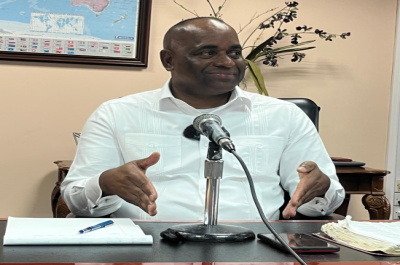
    In response to a request from the Donald Trump US Administration to install temporary radar at Maurice Bishop International Airport (MBIA) and deploy military assets in or near Grenada, Prime Minister Dickon Mitchell announced that he will provide an update to Parliament on October 28. The Lower House of Parliament, initially set to meet on October 24, rescheduled its session to accommodate this update. Mitchell clarified that his statement will not announce a government decision but will instead inform the public about the ongoing consideration of the request, which was received in August 2025. He emphasized that the matter is highly technical and requires extensive input from experts. Mitchell also noted that Grenada has historically received similar national security requests from regional and international partners, including the US, Trinidad, and France. He assured the public that the government is taking its time to deliberate on the issue, as there is no urgency to respond. The Prime Minister’s update will be delivered during his weekly social media program, ‘DMs with the PM,’ ensuring transparency and public awareness.

  • LETTER: A Response to Chet Greene

    LETTER: A Response to Chet Greene

    In the wake of Chet Greene’s article, ‘UPP’s Politically Motivated Memo Aimed at Undermining Anti-Corruption Reforms Unmasked,’ a pressing demand for transparency and accountability has emerged. The article underscores the necessity of a thorough reckoning before any meaningful reform can be achieved. To address systemic failures, critical questions must be answered: Were Treasury controls inadequate? Was procurement oversight lacking? Did Cabinet supervision falter? Without clarity on these issues, any anti-corruption efforts risk being superficial. The concerns extend beyond the Ministry of Public Works, raising alarms about potential irregularities in other government ministries shielded by secrecy and political influence. What is urgently needed is an independent, wide-ranging investigation, not a meticulously crafted public relations campaign. Prime Minister Gaston Browne’s reluctance to initiate such an inquiry has fueled speculation about potential conflicts of interest, particularly concerning his Ministry of Finance and his wife, Minister Maria Browne. The current narrative, framed as reform, is perceived by many as damage control masquerading as leadership. True accountability requires exposing all involved parties without bias, paving the way for genuine solutions. The people of Antigua and Barbuda deserve the truth, not political spin. The focus must shift from partisan blame to a steadfast commitment to integrity and transparency.

  • Gajadien pleit bij IPU voor rechtvaardige klimaathulp

    Gajadien pleit bij IPU voor rechtvaardige klimaathulp

    At the 151st General Assembly of the Inter-Parliamentary Union (IPU) in Geneva, Asis Gajadien, a prominent member of Suriname’s National Assembly and leader of the VHP party, urged the international community to bolster support for nations actively contributing to global climate protection. Gajadien highlighted Suriname’s unique position as one of the few countries worldwide with a net-negative carbon footprint, yet it faces severe humanitarian challenges due to climate change, including floods, coastal erosion, and the displacement of inland communities.

    ‘For Suriname, climate change is not a debate; it is a harsh reality. People are losing their homes and livelihoods. Humanitarian action must include climate financing,’ Gajadien asserted. He called for greater accessibility to climate funds like the Green Climate Fund for smaller nations, emphasizing the need for grants over loans. ‘No country should be forced into debt to protect the planet,’ he added.

    Gajadien also underscored the critical role of parliaments in ensuring transparent use of resources for disaster prevention, climate adaptation, and safeguarding vulnerable communities. ‘Solidarity is not charity—it is justice,’ he concluded. ‘Suriname is ready to work with other nations to transform compassion into concrete action.’

    The Surinamese parliamentary delegation, led by Rabin Parmessar (NDP party leader), is participating in the IPU assembly and related meetings in Geneva from October 19 to 23. The delegation includes Geneviève Jordan (ABOP) and is supported by Agatha Ramdass, Deputy Clerk of the National Assembly. Clerk Ruth de Windt is also attending the conference of clerks.