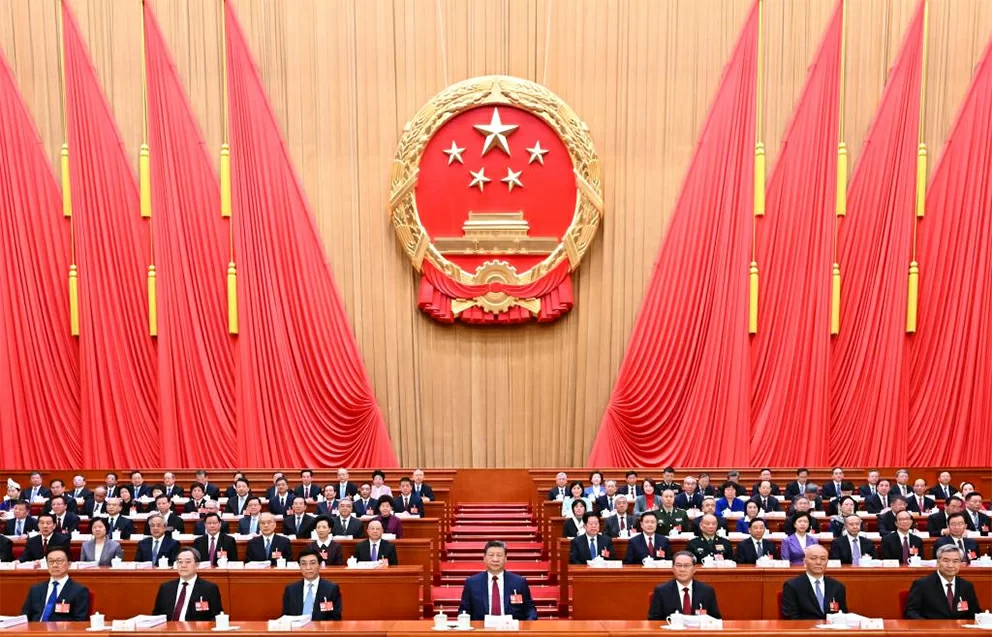
YAOUNDE, Cameroon—Paul Biya, the 92-year-old leader of Cameroon, has extended his 43-year presidency by winning an eighth term in office. The Constitutional Council declared on Monday that Biya secured 53.7% of the vote, outpacing his closest rival, Issa Tchiroma Bakary, who garnered 35.2%. Biya’s campaign was notably subdued, with minimal public appearances, earning him the nickname ‘the sphinx’ for his secretive nature. Instead of traditional campaigning, Biya relied heavily on social media, including a campaign launch video on September 27 that critics claim used AI-generated imagery. His X account featured recycled photos and quotes, with his sole in-person appearance occurring late in the campaign in Maroua, a region traditionally loyal to him. Biya, who assumed power in 1982 during the Reagan era, has maintained a firm grip on Cameroon, appointing and dismissing officials at will and suppressing opposition. Despite international criticism and rumors of declining health, Biya has weathered social unrest, economic inequality, and separatist violence. Since 2018, when opposition parties alleged election fraud, Biya has limited his public engagements to pre-recorded speeches and family events with his wife, Chantal, and their three children.
分类: politics
-

US axes website for reporting human rights abuses by US-armed foreign forces
The US State Department has recently taken down an online portal designed to report alleged human rights violations by foreign military units equipped with American weapons. Known as the Human Rights Reporting Gateway (HRG), this platform served as a formal “tip line” for the US government, offering the only publicly accessible channel for organizations or individuals to directly inform authorities of potential serious abuses by US-armed foreign forces. The removal of this portal has drawn sharp criticism from human rights advocates and a senior congressional aide who played a key role in drafting the legislation that mandated its creation. Despite the backlash, the State Department maintains that it continues to comply with the law. The HRG was established in 2022 under pressure to enforce updated provisions of the Leahy Law, named after former US Senator Patrick Leahy. This law requires the government to facilitate the receipt of information regarding alleged gross human rights violations by military units supported by Washington. Tim Rieser, a former senior aide to Senator Leahy who authored the 2011 amendment mandating such information gathering, expressed concern to the BBC, stating that the gateway’s removal indicates the State Department is “clearly ignoring the law.” Rieser warned that this move could lead to the US supporting foreign security forces involved in heinous crimes without accountability, thereby reducing the incentive for foreign governments to bring perpetrators to justice. In response, the State Department emphasized its ongoing efforts to receive reports of gross human rights violations and its engagement with credible organizations on a wide range of human rights issues, asserting that it remains committed to fulfilling its legal obligations.
-

Somohardjo vraagt spoedoverleg met Rekenkamer en GBB over gronduitgifte
Bronto Somohardjo, Chairman of the Permanent Committee on Land Policy and Forest Management (GBB) in Suriname’s National Assembly, has called for an emergency meeting with the Court of Audit and the Ministry of Land Policy following a damning report on land allocations in 2023. The report, which Somohardjo described as containing \”a stark and undeniable conclusion,\” reveals that land distributions were conducted unlawfully, leaving the public as victims of improper governance.
-

Suriname en Venezuela verkennen verdieping landbouw, energie en visserij
On Friday, President Jennifer Simons of Suriname welcomed Venezuelan Ambassador Ayerim Flores Rivas for an introductory and exploratory meeting at the Cabinet of the President. The discussions reaffirmed the longstanding friendly relations between the two nations and explored avenues to enhance bilateral cooperation. Key areas of focus included agriculture, fisheries, oil and gas, with additional interest in cultural and health-related exchanges. Minister of Foreign Affairs, International Business, and Cooperation, Melvin Bouva, who attended the meeting, emphasized Venezuela’s role as a significant economic partner. ‘We discussed the involvement of Venezuelan companies in Suriname’s fish processing and export sectors,’ Bouva stated. He also highlighted the strategic importance of the oil and gas industry, noting Venezuela’s valuable expertise in this domain. Bouva reiterated Suriname’s commitment to maintaining South America as a zone of peace, grounded in dialogue and mutual respect. The Communications Service of Suriname reported that the country will continue to advocate for regional stability. Ambassador Flores Rivas described the meeting as constructive and underscored the historical ties between the two nations. ‘Our relationship spans over fifty years. We see tremendous opportunities for collaboration, especially as Suriname develops its energy economy,’ the diplomat remarked.
-

Ali awaits Norton’s word on substantive appointment of Chancellor, Chief Justice; Norton unlikely to agree
Guyana’s political landscape is currently embroiled in a tense standoff over the substantive appointments of key judicial positions. President Irfaan Ali has proposed the appointments of Justice Roxane George-Wiltshire as Chancellor and Justice Navindra Singh as Chief Justice, a move that requires the concurrence of Opposition Leader Aubrey Norton. However, sources indicate that Norton is unlikely to support the proposal, citing concerns over the circumstances surrounding the early retirement of Justice Yonette Cummings-Edwards, the former Chancellor. Norton had previously expressed support for the appointments of George-Wiltshire and Cummings-Edwards in their respective roles. President Ali announced on Friday that Cummings-Edwards would be proceeding on pre-retirement leave, with George-Wiltshire and Singh continuing in their acting capacities. Efforts to reach Norton for comment on Saturday were unsuccessful, and Attorney General Anil Nandlall also remained unreachable. A source within the People’s National Congress Reform (PNCR) suggested that Norton might defer the decision to the incoming Opposition Leader, expected to be Azruddin Mohamed, leader of the We Invest in Nationhood (WIN) party. Under Guyana’s constitution, the Opposition Leader retains their position until the National Assembly’s opposition parliamentarians elect a new leader following general and regional elections.
-

King, Fevrier, Stiede: Three-way race for Castries North
The upcoming general election in Saint Lucia is shaping up to be a historic event, with Castries North emerging as the focal point of national attention. This constituency, once a stronghold of the United Workers Party (UWP), is now a battleground for three formidable candidates: the seasoned incumbent Stephenson King, UWP’s rising star Stephen Fevrier, and independent newcomer Marcellus Stiede. The race is emblematic of a broader clash between experience, innovation, and grassroots leadership. Stephenson King, a political stalwart with a career spanning over four decades, has been a dominant figure in Castries North. However, his decision to leave the UWP in 2021 and run as an independent candidate marked a turning point in his career. Despite his long-standing influence, King now faces stiff competition from Fevrier, a globally experienced diplomat, and Stiede, a former professional basketball player turned community advocate. Fevrier, with his international background and vision for economic revitalization, promises to bring fresh perspectives to the constituency. Meanwhile, Stiede emphasizes youth development and transparency, critiquing the culture of political dependency. The election has sparked widespread debate, with voters weighing the merits of King’s legacy against the transformative potential of his challengers. As Saint Lucia prepares for this pivotal moment, Castries North stands as a microcosm of the nation’s political evolution, where tradition meets the promise of change.