分类: politics

  • Venezuela moves to liberalize oil sector, in boost for Trump

    Venezuela moves to liberalize oil sector, in boost for Trump

    Venezuela’s National Assembly has initiated legislative proceedings to dismantle the state’s monopoly on its oil industry, marking a dramatic reversal from two decades of socialist energy policy. The proposed legislation would permit privately-owned companies registered in Venezuela to conduct independent oil exploration and extraction operations without mandatory partnerships with state-owned PDVSA.

    This transformative shift follows the January 3rd ouster of socialist leader Nicolás Maduro, whose government maintained rigid state control over the country’s vast petroleum resources. The legislation is being advanced under the leadership of acting president Delcy Rodríguez, who served as Maduro’s vice president but has rapidly moved to normalize relations with the United States.

    In a significant demonstration of warming diplomatic ties, the United States has appointed Laura F. Dogu, a seasoned diplomat with experience as ambassador to Nicaragua and Honduras, as charge d’affaires to Venezuela. This appointment signals the potential restoration of full diplomatic relations, which were severed following Maduro’s disputed 2019 reelection.

    The Rodríguez administration has already taken concrete economic measures, injecting $300 million from a U.S.-brokered oil sale to stabilize the collapsing bolivar currency. While this initial intervention temporarily strengthened the national currency, economists emphasize that sustained economic recovery will require substantial foreign investment and continuous dollar inflows.

    Concurrently, the new government has begun addressing human rights concerns by releasing dozens of political prisoners, including the son-in-law of opposition leader Edmundo González Urrutia, who was serving a 30-year sentence on terrorism charges. These actions appear designed to garner domestic support and international legitimacy following years of economic collapse and political repression under Maduro.

    The geopolitical implications extend beyond Venezuela, with the Trump administration leveraging the situation to increase pressure on Cuba by threatening to cut off the island nation’s access to subsidized Venezuelan oil that has sustained its economy for years.

  • WATCH: Gov’t will provide the necessary budget for body-worn cameras, says Holness

    WATCH: Gov’t will provide the necessary budget for body-worn cameras, says Holness

    KINGSTON, Jamaica — In a significant move toward police modernization and accountability, Prime Minister Andrew Holness has pledged complete governmental funding for body-worn cameras across all necessary units of the Jamaica Constabulary Force (JCF). The announcement was delivered during his keynote address at the passing-out ceremony for batches 161 and 167 at the National Police College of Jamaica in Twickenham Park, St. Catherine.

    Prime Minister Holness confirmed that approximately 1,000 cameras have already been secured, with additional units currently in the procurement pipeline. He unequivocally stated, “The Government will supply the necessary budget to ensure that all formations that require the use of body-worn cameras are so equipped.” This initiative is a cornerstone of the administration’s strategy to foster transparent policing and establish a reliable process for data capture during police operations.

    Emphasizing the comprehensive nature of the government’s investment, Holness highlighted that advancements in technology are being pursued alongside rigorous training and administrative overhauls. “We are investing heavily in technology to make sure that we have a 21st-century policing force,” he asserted. While acknowledging the JCF’s proactive efforts in seeking the best technological platforms, the Prime Minister also noted that the force must navigate standard public procurement regulations.

    Alongside the technological pledge, Holness issued a direct charge to the 287 new constables graduating that day, demanding they treat every citizen with utmost dignity and respect for their rights, regardless of socioeconomic status. This call for reform aligns with mounting pressure from human rights advocacy groups, including Jamaicans for Justice (JFJ), which has been vocally demanding the implementation of body cameras amid a troubling rise in fatal shootings by security forces.

  • 250 more ex-Caroni workers get land leases

    250 more ex-Caroni workers get land leases

    The Trinidadian government has significantly intensified its initiative to resolve longstanding land tenure issues for former employees of the defunct Caroni (1975) Ltd., with a recent distribution event in Couva marking a major milestone in this ongoing effort.

    On January 21, Land and Legal Affairs Minister Saddam Hosein presided over the distribution of land leases to 250 beneficiaries at the Dennis P Ramdhan Complex in McBean Village. This event represents the third such distribution ceremony conducted within nine months by the administration led by Prime Minister Kamla Persad-Bissessar, who assumed office in April of last year.

    Minister Hosein emphasized the administration’s commitment to fulfilling campaign promises, noting that nearly 600 leases have been distributed since taking office—a achievement he contrasted with the previous 22 years of inaction. Despite this progress, Hosein acknowledged that substantial work remains, with approximately 3,000 residential leases and 1,751 agricultural plots still awaiting distribution, alongside necessary remedial land works.

    The historical context traces back to 2003 when Caroni (1975) Ltd. was shuttered under a PNM administration. Subsequent legal battles ensued as the state failed to honor voluntary separation packages, culminating in a court ruling that affirmed workers’ entitlement to land leases. The previous administration appealed this decision, but Persad-Bissessar’s government dropped the appeal upon assuming power.

    In a related development, Hosein revealed that the government has agreed to a $130 million compensation package for former private sugarcane farmers as final settlement for transition payments following the sugar industry’s 2007 collapse. The payment structure involves three tranches—$27 million, $75 million, and $28 million—with only the first installment paid during the People’s Partnership administration in July 2015.

    Hosein further alleged that European Union funds totaling 8 million euros ($63.55 million), intended for worker compensation during the PNM’s tenure, were diverted from their designated purpose. He characterized these actions as both unlawful and unethical during a press conference at the UNC Headquarters.

    Public Utilities Minister Barry Padarath, who also addressed attendees, praised Persad-Bissessar’s leadership and commended Hosein’s determined efforts to resolve what he described as a “legacy matter languishing for years under previous administrations.”

    Among the recipients was 75-year-old Allan Manichand, a former mechanic with 35 years of service who plans to bequeath the land to relatives, and 69-year-old Roshad Ali, who expressed satisfaction at finally receiving his due entitlement after years of waiting.

  • Panday criticises PM for attack on independent senators

    Panday criticises PM for attack on independent senators

    In a striking political confrontation, Mickela Panday, prominent opposition figure, has publicly denounced Prime Minister Kamla Persad-Bissessar for her vehement criticism of independent senators regarding the contentious Law Reform (Zones of Special Operations) Bill, 2026. The legislative battle centers on a security bill that would empower the Prime Minister, as National Security Council chair, to designate special security zones for up to 180 days in consultation with police and military leadership.

    The parliamentary mathematics reveals the government’s challenge: the bill requires 19 votes in the Senate for passage, yet the ruling party controls only 15 seats against the opposition’s 6 and independents’ 9. This arithmetic has intensified the political stakes, prompting Persad-Bissessar’s reported characterization of independent senators as ‘shameless,’ ‘bootlickers,’ and individuals who ‘had no courage to contest any election.’

    Panday’s rebuttal presents a constitutional defense of the Senate’s structure, noting that all senators—government, opposition, and independent—hold appointed rather than elected positions. She highlights the constitutional provisions whereby government and opposition senators are appointed by the President on advice of the Prime Minister and Opposition Leader respectively, while nine independents are appointed without consultation with either office.

    The critique extends beyond procedural matters to fundamental democratic principles. Panday warns that attacking oversight institutions and treating constitutional roles as obstacles represents the ‘early stages of a creeping dictatorship.’ She challenges the Prime Minister to pursue formal constitutional reform rather than condemn appointment mechanisms while simultaneously relying on them, noting her late father, former Prime Minister Basdeo Panday, long advocated for constitutional modernization.

    The Senate debate, which began January 20th and continues through January 23rd, has thus evolved from a legislative discussion into a broader examination of democratic governance and the proper role of appointed officials in a parliamentary system.

  • Caribbean Conference Condemns US Attack

    Caribbean Conference Condemns US Attack

    In an unprecedented show of regional solidarity, political leaders, jurists, and civil society representatives from across the Caribbean and Latin America have issued a forceful condemnation of United States military operations against Venezuela. The collective denunciation emerged from the inaugural Regional Conference: The Voices of the Caribbean in Defence of Venezuela and International Law, convened on January 21, 2026.

    The landmark gathering assembled more than 180 delegates from over 20 nations, including Belize, Jamaica, Cuba, Guyana, and Trinidad and Tobago. The conference centered on reaffirming Latin America and the Caribbean as a Zone of Peace while opposing external interventions perceived as threats to regional sovereignty.

    Participants attributed responsibility for a January 3, 2026 bombing incident in Venezuela to the administration of former U.S. President Donald Trump. According to conference statements, the military operation resulted in approximately 100 casualties and involved the extraordinary capture of Venezuelan President Nicolás Maduro and First Lady Cilia Flores.

    Delegates unanimously endorsed the creation of a regional solidarity network and committed to pursuing coordinated legal and diplomatic initiatives aimed at influencing foreign policy across Caribbean states. The conference declaration emphasized that this gathering represents the commencement of sustained legal action, public advocacy, and international engagement to preserve regional unity and peace principles.

    The joint statement concluded with a powerful affirmation: ‘The Caribbean stands together against external threats and for lasting peace,’ signaling a new chapter in regional cooperation and resistance to foreign intervention.

  • Friends of Democracy aims to fill opposition gap, rejects coalition

    Friends of Democracy aims to fill opposition gap, rejects coalition

    A new political force has entered Barbados’ electoral arena as the Friends of Democracy (FOD) party announced its candidacy for the February 2026 general elections. The party’s central platform challenges what it describes as seven years of diminished democratic oversight under the ruling Barbados Labour Party’s uninterrupted governance.

    FOD President Karina Goodridge, in an exclusive interview following Prime Minister Mia Mottley’s announcement of the February 11 polling date, articulated her party’s mission to restore political equilibrium and institutional accountability. Despite the party’s recent formation, Goodridge emphasized their commitment to delivering a straightforward campaign message centered on governmental transparency and citizen representation.

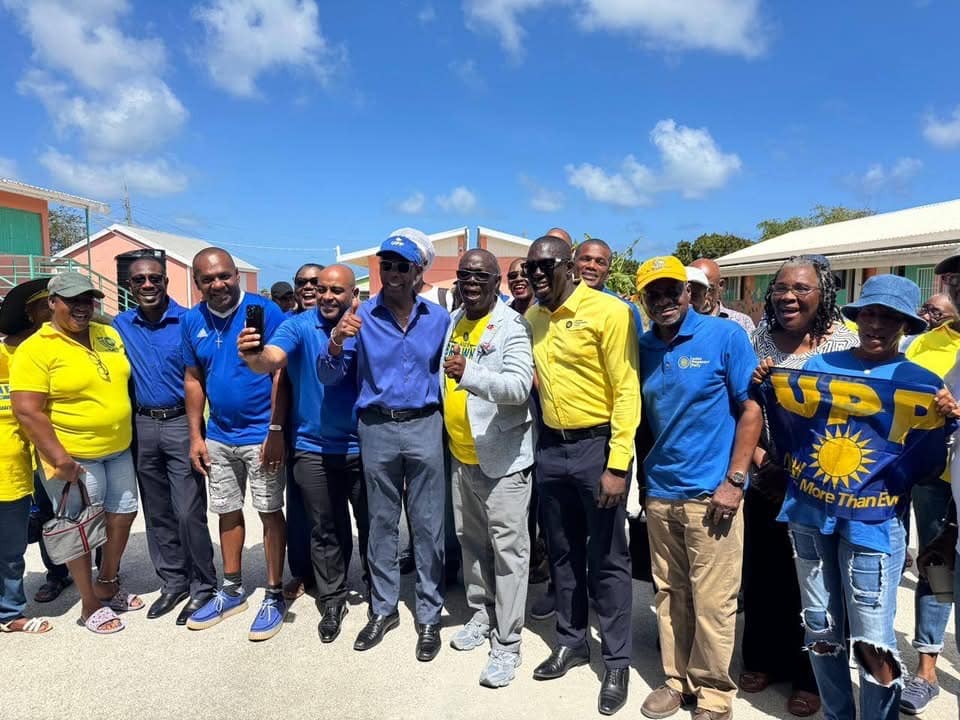
    The political newcomer firmly rejected any potential coalition arrangements with other opposition groups, including the newly formed People’s Coalition for Progress alliance comprising the United Progressive Party, New National Party, and Conservative Barbados Leadership Party. Goodridge asserted that FOD’s philosophy is rooted in principle rather than political convenience.

    Goodridge highlighted the concerning democratic deficit resulting from the BLP’s consecutive electoral sweeps in 2018 and 2022, which left Parliament without an official opposition voice. She argued that this political monopoly has led to rushed legislative processes and inadequate public consultation on major bills, ultimately eroding public trust in governance institutions.

    The FOD leader outlined her party’s commitment to rigorous fiscal oversight, promising to ‘question every dollar spent’ and demand full disclosure on all major government projects. She emphasized that their approach would prioritize factual analysis and people-centered policies over political theatrics.

    Goodridge concluded that the upcoming election represents a critical juncture for Barbadian democracy—not merely about selecting a governing party but about reinstating balanced governance, protecting democratic institutions, and restoring citizens’ voices in the political process.

  • Snap election call sparks voter doubt and apathy

    Snap election call sparks voter doubt and apathy

    A palpable sense of voter disillusionment and political detachment is sweeping through Barbados as citizens react to the announcement of an unexpected snap election. At Skymall in Haggatt Hall, shoppers voiced profound concerns about democratic participation, with many questioning whether their ballots would yield any meaningful impact given the compressed timeframe and perceived lack of substantive policy alternatives.

    Steven Tutu articulated constitutional concerns regarding the accelerated electoral timeline, suggesting it undermines informed decision-making. “The results appear predetermined,” he remarked, criticizing opposition parties for focusing on governmental shortcomings rather than presenting distinctive policy visions. “I need to understand what alternative approaches you propose, not merely what the incumbent administration is doing incorrectly.”

    George Lowe exemplified deeper disengagement, declaring complete political neutrality rooted in historical disappointment. Recalling the devastating 1970 floods that destroyed his possessions, he recounted empty promises from visiting politicians. “They offered sympathy but delivered no substantive assistance. Consequently, I remain detached from electoral proceedings—my daily responsibilities persist regardless of political developments.”

    David Walkes characterized the election announcement as simultaneously anticipated and startling. He emphasized the electorate’s insufficient preparation period, analogizing the situation to “being invited to lunch without knowledge of the menu.” His primary concerns involved Barbados’s global economic positioning and domestic business contraction, noting, “Numerous enterprises are disappearing from our commercial landscape. We require comprehensive strategies addressing these economic challenges.”

    Among other shoppers, perspectives ranged from blunt disinterest to cautious optimism. Jason Best dismissed voting’s personal relevance while one anonymous woman maintained hope that participation might catalyze desired changes. A retired respondent prioritized jigsaw puzzles over polling stations, suggesting political engagement diminishes with age. Ronald Best, a long-term U.S. resident, praised Prime Minister Mottley’s leadership despite his ineligibility to vote.

    The collective sentiment reveals a democratic system experiencing significant stress, with voters expressing frustration over procedural transparency, substantive policy debates, and tangible electoral outcomes.

  • St Peter: Jordan cites progress amid water, waste woes

    St Peter: Jordan cites progress amid water, waste woes

    As Barbados enters a period of intense electoral campaigning, incumbent St Peter representative Colin Jordan has declared his candidacy with robust confidence, citing a portfolio of tangible accomplishments both within his constituency and at the national level. The Barbados Labour Party (BLP) stalwart articulated his re-election platform during an address at Coleridge and Parry School’s annual speech day, framing his bid as a continuation of proven leadership and measurable progress. Jordan’s campaign narrative is fundamentally anchored in extensive infrastructure enhancements, enumerating a comprehensive list of roadways that have undergone significant upgrades, including Station Hill, Clarke’s Gap, Chapel Street, Garden Alley, Black Bess, and Skeetes Road. While acknowledging that certain projects remain ongoing, the MP emphasized the transformative impact of these developments. Beyond transportation networks, his report to constituents highlighted critical advancements in environmental initiatives and the resolution of protracted land tenure disputes in areas like Maynards. Utility modernization formed another pillar of his report, with the installation of new water pipelines in the Boscobel area cited as a key achievement. Economic revitalization, particularly through tourism, featured prominently in Jordan’s remarks. He pointed to the successful refurbishment and reopening of a local jetty, now in its second full operational season, and heralded the commencement of new construction at Penry and anticipated development work by Sandals at Heywoods as catalysts for local economic activity. Bridging his national ministerial role with local impact, Jordan connected broad policy reforms—including the introduction of paternity leave, extended maternity leave, and the establishment of a national minimum wage—to their direct benefits for St Peter families and workers. He framed the upcoming election as a referendum on this seven-and-a-half-year partnership, asking constituents to judge his performance on this track record. However, the dialogue also surfaced persistent constituent concerns, particularly regarding intermittent water supply and unreliable garbage collection services. In response, Jordan provided detailed explanations for water discoloration issues in Boscobel and Six Men’s, attributing them to ongoing pipe replacement projects in northern St Lucy and St Peter. He outlined broader challenges within the water infrastructure system, including pressures on the Allendale well and reservoirs, but assured residents that work at the Hope site in St Lucy is expected to deliver relief in the near future. On waste management, the MP acknowledged collection delays, citing high demand, vehicle availability constraints, and access difficulties in smaller communities like Mount Brevitor, but expressed confidence that imminent solutions are being finalized. St Peter remains a historically significant BLP stronghold, previously represented by the late Prime Minister Owen Arthur.

  • The continuous American sneeze and the Caribbean cold (Part I)

    The continuous American sneeze and the Caribbean cold (Part I)

    Recent US policy directives have placed Caribbean nations at a critical juncture, compelling regional leaders to navigate complex diplomatic and sovereignty challenges. Key developments include American requests for third-country deportee acceptance, withdrawal from international organizations, and the controversial suspension of visa categories for several Caribbean states.

    This geopolitical dynamic revives the adage that ‘when America sneezes, the Caribbean catches cold,’ highlighting the region’s vulnerability to US policy fluctuations. The current situation reflects not merely policy disagreements but fundamental questions about neocolonial practices and power asymmetry. Historical doctrines like the Monroe Doctrine and Roosevelt Corollary appear to persist through modern mechanisms that potentially compromise Caribbean sovereignty.

    The Citizenship by Investment (CBI) programs frequently cited as justification for US actions demonstrate questionable relevance, as data reveals no substantial evidence linking these programs to increased migration threats or security concerns. Countries without CBI programs face similar treatment, suggesting broader geopolitical motivations beyond stated immigration concerns.

    Caribbean leaders face a dilemma between ideological consistency and economic pragmatism. Saint Lucia’s Prime Minister recently signed a memorandum understanding deportee acceptance, illustrating the practical compromises smaller economies must consider. Meanwhile, Trinidad and Tobago’s energy-based alignment with US interests has spared it from certain restrictions, creating regional divisions that undermine integration efforts.

    The fundamental tension centers on whether Caribbean nations can maintain sovereign decision-making while acknowledging economic dependencies on US tourism, trade relationships under the Caribbean Basin Initiative, and remittance flows. Professor Justin Robinson’s framework emphasizes preserving the region’s ‘deep bonds driven by geography, family, culture, and shared values’ while navigating these complex international relations.

  • Dems’ Greaves steps up ‘grassroots’ campaign in St James South

    Dems’ Greaves steps up ‘grassroots’ campaign in St James South

    In the politically volatile constituency of St James South, Democratic Labour Party candidate Pedro Greaves is executing an aggressive grassroots campaign strategy ahead of Barbados’ forthcoming general election. The sports administrator and finance manager has intensified his door-to-door outreach following official ratification at the party’s annual conference in August 2025, though he emphasizes community engagement began as early as March of that year.

    Greaves’ campaign leverages substantial pre-existing relationships with local organizations, including the Haynesville Community Youth Group, Melbourne Youth Cricketers teams, St James Stilettos netball team, and cricket programs at West Terrace Primary School and Good Shepherd Primary School. His most visible initiative—a debushing program—employs residents to clear overgrown areas, addressing both environmental aesthetics and public safety concerns, particularly in communities with significant elderly populations.

    The candidate reports overwhelming voter engagement, having personally contacted nearly 6,000 constituents. Residents consistently raise pressing national issues including crime escalation, gun violence, cost-of-living pressures, underemployment, and inadequate public transportation—specifically citing the absence of bus service in West Terrace.

    As one of the DLP’s younger candidates, Greaves acknowledges mentorship from party leader Ralph Thorne, emphasizing “true representation” as the campaign’s cornerstone. His policy priorities mirror constituent concerns: intensified law enforcement against crime, economic measures to reduce living costs, preservation of public transportation, and comprehensive education reform.

    The campaign received a significant endorsement from former area MP Donville Inniss, who dismissed claims of DLP unpreparedness while defending the party’s low-profile strategy: “If you need posters for constituents to recognize you, you’ve been a successful failure as an MP.” Inniss characterized Greaves as an energetic, committed candidate who understands community needs, urging voters to assess both government performance and opposition alternatives amid concerns about voter apathy.

    St James South represents a critical bellwether constituency, having alternated between Democratic Labour Party and Barbados Labour Party representation consistently since its establishment in the 1980s. The current election pits Greaves against incumbent Sandra Husbands of the BLP, a strategic communications specialist and community advocate, in what remains one of Barbados’ most politically competitive districts.