分类: politics

  • Ali downplays impact of CARICOM’s differences

    Ali downplays impact of CARICOM’s differences

    In a significant address to Belize’s National Assembly on Monday, Guyana’s President Irfaan Ali reframed internal disagreements within the Caribbean Community (CARICOM) not as a weakness, but as a fundamental strength of the 15-member regional bloc. Speaking during a three-day state visit, President Ali articulated a vision where divergent perspectives are essential for robust decision-making, directly addressing recent tensions among member states.

    The President’s remarks arrive amidst a backdrop of visible policy splits, particularly concerning regional security. He implicitly referenced the recent positions of Guyana and Trinidad & Tobago, which endorsed United States-led actions against narco-terrorism in the Caribbean Sea. This stance contrasted with the traditional regional aspiration of maintaining a ‘zone of peace,’ a concept recently questioned by Trinidadian Prime Minister Kamla Persad-Bissessar, who had previously labeled CARICOM as ‘not a reliable partner.’

    Emphasizing CARICOM’s five-decade resilience, Dr. Ali called for a renewed commitment to strengthen the community. ‘It is now incumbent upon us to make the community stronger, more responsive, and better equipped to serve both the collective and national interests of our peoples,’ he stated, underscoring the necessity for the bloc to adapt to a complex global landscape.

    To illustrate the benefits of regional cooperation, President Ali pointed to the recently concluded partnership between the European Union and MERCOSUR (the Southern Common Market). He presented this inter-regional agreement as a model, demonstrating how such collaborations can expand market access, bolster economic resilience, and amplify the influence of participating states in response to global uncertainties. His visit to Belize culminated in the signing of several bilateral agreements focused on tourism, technology, education, and agricultural cooperation.

  • Belize PM calls for talks to prevent Cuban humanitarian crisis

    Belize PM calls for talks to prevent Cuban humanitarian crisis

    Belizean Prime Minister John Briceño has issued a compelling appeal for immediate diplomatic dialogue to prevent an impending humanitarian crisis in Cuba, where critical petroleum supplies are rapidly diminishing. The Prime Minister’s declaration came during a joint session of Belize’s National Assembly, convened in honor of Guyanese President Irfaan Ali’s state visit.

    Briceño emphasized the urgent need for good faith negotiations to forestall a manufactured humanitarian disaster, stating such an outcome would be neither moral nor lawful. He reaffirmed Belize’s unwavering solidarity with the Cuban people during this period of escalating energy insecurity.

    The current fuel shortage traces its origins to recent geopolitical developments involving Venezuela. The capture and extradition of Venezuelan President Nicolás Maduro and his wife by United States military forces has disrupted oil shipments to Cuba, creating a precarious supply situation. Maduro faces trial in New York on charges related to drug trafficking and weapons possession.

    In contrast to the growing pressure from Washington to isolate Cuba, Mexican President Claudia Sheinbaum has announced her government’s intention to dispatch humanitarian assistance to the island nation this week.

    Meanwhile, Guyana’s position appears increasingly complex. Despite historical benefits from thousands of Cuban scholarships and healthcare personnel, the South American nation has recently strengthened ties with the United States. This strategic realignment includes moves to terminate the Cuban medical brigade program, responding to US concerns that such agreements potentially facilitate human trafficking. Guyana’s foreign policy shift occurs amid ongoing territorial disputes with Venezuela over the Essequibo Region and adjacent Atlantic waters.

  • Guyana President Calls for Deeper Ties with Belize

    Guyana President Calls for Deeper Ties with Belize

    In a significant diplomatic engagement, Guyana’s President Dr. Mohamed Irfaan Ali addressed a joint session of Belize’s Parliament on February 2, 2026, advocating for strengthened bilateral cooperation across multiple sectors. The presidential appearance at Belize’s recently renovated National Assembly marked a pivotal moment in Caribbean relations, emphasizing mutual respect between sovereign nations.

    President Ali articulated a comprehensive vision for collaboration, highlighting three primary areas of engagement: political coordination, economic partnership, and environmental stewardship. He emphasized the countries’ shared responsibility to strategically monetize their abundant natural resources while ensuring equitable distribution of benefits to their citizens. ‘The world in turn has a responsibility to ensure that economic value is passed on to the peoples of our countries,’ President Ali asserted during his parliamentary address.

    The Guyanese leader identified several pressing challenges requiring joint action, including climate change mitigation, food security enhancement, energy independence, and combating transnational criminal networks. He particularly stressed the necessity of reforming regional trade mechanisms, advocating for the elimination of bureaucratic obstacles and artificial trade barriers that disadvantage local farmers and agricultural systems.

    The two-day presidential visit, which commenced on Sunday, includes high-level dialogues with Belizean officials and culminates in the signing of three bilateral Memoranda of Understanding. These agreements will formalize cooperation in defense coordination, educational exchange programs, and tourism development initiatives, establishing a structured framework for ongoing partnership between the Caribbean nations.

  • Tracy Panton Says BTL–Smart Acquisition is “Corruption at the Highest Level”

    Tracy Panton Says BTL–Smart Acquisition is “Corruption at the Highest Level”

    BELIZE CITY – Senior figures within Belize’s United Democratic Party (UDP) have launched a fierce condemnation of the proposed acquisition of telecommunications provider Speednet (Smart) by state-owned Belize Telemedia Limited (BTL), labeling the arrangement as a blatant act of corruption and a financial bailout for private interests.

    During a recent appearance on the ‘Open Your Eyes’ program, UDP Leader Tracy Panton delivered a scathing assessment of the transaction. ‘Regardless of how attractively this proposal is packaged, it represents corruption at the highest level, executed brazenly before the public eye,’ Panton asserted. She projected that the acquisition would impose a substantial financial burden on Belizean taxpayers, estimating costs between $80 and $100 million, while suggesting the primary beneficiaries would be the Briceno family.

    Mesopotamia Area Representative Lee Mark Chang echoed these concerns, accusing BTL of consistently ‘moving the goalposts’ to manufacture public acceptance. Chang highlighted critical transparency deficits, revealing that UDP officials have been denied access to corporate financial records and valuation documentation. ‘We demand full disclosure of the accounting books and concrete financial figures,’ Chang insisted.

    The opposition parliamentarian characterized BTL’s evolving proposal as ‘increasingly sweetened’ to gain approval, while questioning the ethical standing of securing endorsement from within the governing party. Chang advocated for democratic resolution through a national referendum.

    Both politicians raised alarms about potential anti-competitive consequences and market monopoly creation. Panton specifically referenced the competitive threat posed by SpaceX’s Starlink satellite internet service, noting Belize’s technological limitations in matching such advanced infrastructure. ‘This acquisition essentially constitutes a bailout operation designed for private benefit rather than public interest,’ Panton concluded.

    Chang further criticized regulatory oversight mechanisms, describing both the Public Utilities Commission and BTL’s board as ineffectual entities comprised of ‘handpicked’ representatives.

    The UDP leadership defended their recent protest demonstration at BTL headquarters as legitimate ‘good trouble’ and necessary civil disobedience to demand governmental transparency. ‘We remain committed to continuing lawful protests and advocacy efforts to maintain pressure on this administration,’ Panton affirmed.

  • Laura Fernández wins Costa Rica presidency

    Laura Fernández wins Costa Rica presidency

    Costa Rica has elected Laura Fernández of the governing conservative Sovereign People’s Party as its new president in a decisive first-round victory. The 39-year-old former chief of staff secured approximately 48% of the vote with over 88% of ballots counted, comfortably exceeding the 40% threshold required to avoid a runoff election.

    Fernández’s triumph reflects the electorate’s growing concerns about escalating crime rates in a nation traditionally considered one of Central America’s safest havens. Her campaign centered on strengthening the hardline security policies of outgoing President Rodrigo Chaves, who personally selected her as his political successor.

    The president-elect has committed to implementing states of emergency in regions dominated by transnational gangs and completing construction of a high-security prison modeled after El Salvador’s Cecot facility. Fernández emphasized that her security approach would remain firmly grounded in constitutional principles while addressing the drug-related violence that dominated campaign discussions.

    In her victory address, Fernández promised to govern through “dialogue and national harmony” while continuing her predecessor’s policies. She simultaneously criticized opposition parties for parliamentary obstructionism. Her party secured a legislative majority with 30 of 57 seats, providing stronger congressional support than President Chaves enjoyed during his term.

    Fernández is anticipated to maintain Costa Rica’s close diplomatic relationship with the United States, particularly regarding migration control and anti-narcotics cooperation. She will become the nation’s second female president when sworn in on May 8, following Laura Chinchilla’s 2010-2014 administration.

  • Brunswijk: onafhankelijkheid pg mag niet worden uitgehold

    Brunswijk: onafhankelijkheid pg mag niet worden uitgehold

    In a significant parliamentary address today, Ronnie Brunswijk, Vice-Chairman of Suriname’s National Assembly and leader of the ABOP faction, issued a stern warning regarding proposed reforms to the country’s Public Prosecution Service. The prominent politician asserted that current legislative proposals risk undermining the independent position of the Attorney General, potentially compromising the nation’s judicial integrity.

    Brunswijk, serving on the committee of rapporteurs, articulated deep concerns during the parliamentary debate about measures that would weaken existing safeguards surrounding the appointment, authority, and continuity of the Attorney General’s position. He emphasized that the Public Prosecution Service was deliberately structured as a single, hierarchical entity led by a lifetime-appointed Attorney General specifically to shield prosecution decisions from political interference.

    The proposed elimination of institutional filters in the Attorney General’s appointment process drew particular criticism, with Brunswijk highlighting how such changes could jeopardize the legitimacy, authority, and internal stability of the entire prosecutorial system. While acknowledging the necessity of judicial reform, the parliamentarian insisted that changes to the judicial system and Public Prosecution Service must be approached comprehensively rather than through fragmented legislative proposals.

    Additional concerns were raised regarding proposals to lower the retirement age for Public Prosecution Service members and measures that would place time pressure on the Court of Justice during appointment advisory processes. Brunswijk argued these changes would undermine institutional continuity, experience, and balance within the judicial framework.

    Although expressing support for the introduction of cassation jurisprudence, the ABOP leader cautioned that essential choices regarding supervision, composition, and competencies remain inadequately anchored in the proposed reforms. He further questioned the establishment of a College of Attorneys General, suggesting this structure is ill-suited to Suriname’s scale and could create ambiguous responsibilities.

    Brunswijk concluded by calling for judicial reforms to incorporate lessons from other legal systems, emphasizing that respect for independence, political restraint, and clear division of responsibilities must form the foundation of any constitutional democracy.

  • Guyana, Belize to sign agreements on tourism, agriculture, technology

    Guyana, Belize to sign agreements on tourism, agriculture, technology

    In a significant move to strengthen regional cooperation, the Caribbean Community (CARICOM) nations of Guyana and Belize have announced a comprehensive partnership agreement spanning tourism development, agricultural collaboration, and technological advancement. The landmark announcement was made by Belizean Prime John Briceño during a joint session of the National Assembly attended by Guyanese President Irfaan Ali as part of his official state visit.

    Prime Minister Briceño revealed that Belize will extend its expertise in tourism development to assist Guyana in building its tourism infrastructure, capitalizing on their shared geographical similarities as countries with abundant water resources. In reciprocity, Guyana will provide technological assistance to support Belize’s digital transformation initiatives, leveraging Guyanese experience in digitization processes.

    The agricultural sector forms a critical component of the new partnership, with both nations committing to combined efforts in achieving CARICOM’s food security objectives. The leaders emphasized the importance of utilizing the Revised Treaty of Chaguaramas as the legal framework for facilitating free movement of agricultural goods within the regional bloc. Both countries, which share historical economic foundations in sugar production dating back to colonial eras, pledged to guarantee regional sugar supplies through refined sugar production facilities being established in both nations with American investment partnerships.

    Multiple Memoranda of Understanding are scheduled for signing, covering diverse sectors including education, tourism, digitization, and agricultural cooperation. President Ali emphasized the necessity of removing artificial trade barriers and establishing fair trading systems while advocating for substantial investments in human, financial, and technological resources to achieve regional food security leadership.

    The agreements represent a strategic alignment between two CARICOM members with complementary strengths, creating frameworks for knowledge sharing, private sector investment facilitation, and mutual economic benefit through structured collaboration across key socioeconomic sectors.

  • Iran Considers Talks with U.S. to Ease Tensions

    Iran Considers Talks with U.S. to Ease Tensions

    In a significant diplomatic development, Iran’s foreign ministry confirmed on Monday that it is actively evaluating conditions for potential negotiations with the United States. This announcement comes amid heightened military posturing and suggests a possible breakthrough in the longstanding diplomatic stalemate between the two nations.

    According to Reuters, preliminary discussions are underway for a high-level meeting between U.S. Special Envoy Steve Witkoff and Iran’s Foreign Minister Abbas Araghchi, with Turkey emerging as the likely venue for these talks within the coming week.

    The diplomatic overtures occur against a backdrop of escalating regional tensions. The United States Navy has substantially reinforced its presence near Iranian territorial waters following last month’s violent suppression of anti-government protests within Iran. President Donald Trump has simultaneously issued warnings about potential military intervention while continuing to pressure Tehran to return to nuclear agreement negotiations.

    Previously disclosed preconditions from the Trump administration include three central demands: complete cessation of uranium enrichment activities, limitations on Iran’s ballistic missile program, and termination of support for regional armed groups. Iranian officials have historically rejected these conditions as violations of national sovereignty, though recent statements suggest potential flexibility regarding uranium enrichment levels while maintaining firm opposition to constraints on their missile capabilities.

    Regional mediators, particularly Turkey, are actively encouraging both nations to pursue diplomatic solutions. Turkish officials emphasize that renewed dialogue could serve as a critical mechanism for de-escalation and potentially avert further military confrontation in the volatile region.

  • Antigua and Barbuda to Attend Commonwealth Law Ministers Meeting in Fiji

    Antigua and Barbuda to Attend Commonwealth Law Ministers Meeting in Fiji

    Legal representatives from across the Commonwealth will assemble in Nadi, Fiji from February 9-12, 2026, for a crucial ministerial meeting addressing the global deterioration of rule of law principles. The gathering will bring together law ministers and attorneys general to confront mounting concerns about how weakening legal frameworks undermine democratic institutions, economic stability, and public security.

    The conference, chaired by Fiji’s Minister for Justice and Acting Attorney General Siromi Turaga, will operate under the thematic banner “Anchoring Justice in a Changing Tide: Strengthening the Rule of Law for a Resilient Future.” Delegates will examine mechanisms through which robust legal systems can safeguard democratic rights, ensure equitable economic opportunities, and build more secure communities.

    Commonwealth Secretary-General Shirley Botchwey emphasized the growing global pressures on judicial integrity, noting that ordinary citizens bear the heaviest burden when legal protections become compromised or inconsistently applied. “Our focus remains on cooperative solutions and tangible actions,” Botchwey stated, “particularly those shielding vulnerable populations from emerging challenges like climate change.”

    The agenda will incorporate diverse perspectives through side events featuring youth leaders, individuals with direct justice system experience, and disability rights advocates. Anticipated outcomes include concrete commitments to enhance access to justice and fortify legal institutions worldwide.

    These deliberations are expected to directly inform discussions at the forthcoming Commonwealth Heads of Government Meeting, scheduled to be hosted by Antigua and Barbuda later this year.

  • UDP Condemns US Pressure to Choke Cuba as “Collective Punishment”

    UDP Condemns US Pressure to Choke Cuba as “Collective Punishment”

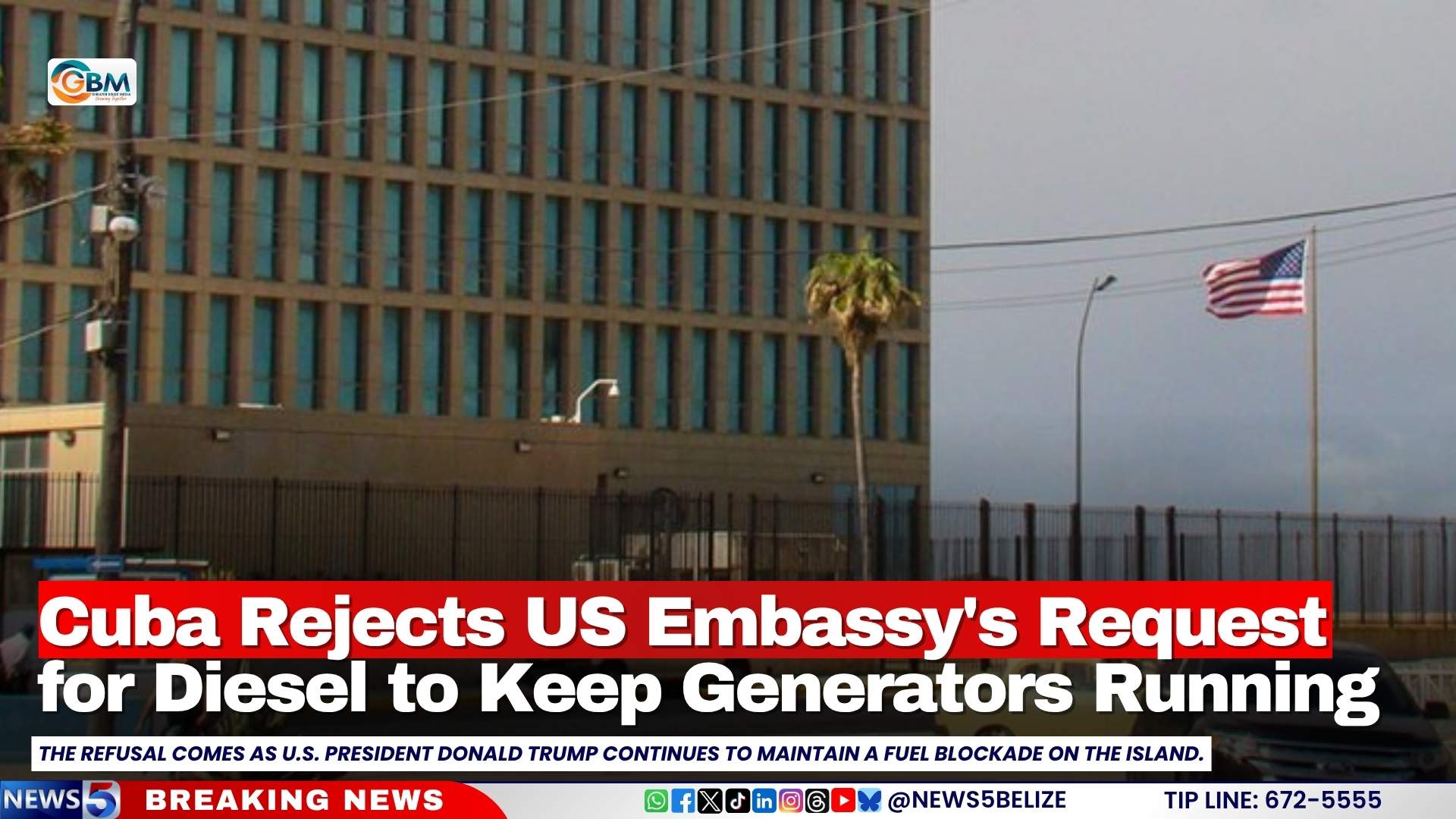
    Regional political forces are mobilizing against renewed United States efforts to sever Cuba’s energy supply lines, with opposition figures condemning the strategy as humanitarian coercion. Tracy Panton, a prominent opposition leader, characterized Washington’s pressure campaign to disrupt oil shipments to Havana as an act of ‘collective punishment’ that threatens devastating civilian consequences.

    The emerging confrontation escalated over the weekend when former US President Donald Trump publicly urged regional fuel suppliers to terminate petroleum exports to Cuba. This directive targets the island nation’s most critical infrastructure needs, potentially crippling healthcare systems, water purification facilities, food refrigeration networks, and transportation services.

    Panton emphasized that energy deprivation strategies inherently lack precision, arguing that ‘measures designed to cut off an entire population from power resources constitute indiscriminate collective punishment rather than targeted sanctions.’ The political leader warned that normalizing such coercive tactics creates dangerous precedents that could eventually threaten other nations.

    Mexico, currently serving as Cuba’s primary petroleum provider, confirmed Sunday its commitment to delivering humanitarian assistance while advocating for diplomatic resolution. Panton urged Belize to join regional allies in demanding negotiated solutions that prioritize civilian protection, stating that ‘political disputes must never be pursued through policies that risk mass human suffering.’

    The opposition leader called for coordinated action through the Caribbean Community (CARICOM) framework while reaffirming solidarity with both Cuban citizens and government institutions. This developing situation highlights growing regional resistance to extraterritorial sanctions policies and sets the stage for renewed diplomatic tensions in the Western Hemisphere.