分类: politics

  • Mexico president confident of deal with US on water dispute

    Mexico president confident of deal with US on water dispute

    MEXICO CITY—Mexican President Claudia Sheinbaum expressed optimism on Tuesday regarding the resolution of a bilateral water-sharing conflict with the United States, despite recent sanctions threats from former President Donald Trump. Speaking at a press conference, Sheinbaum emphasized her confidence in reaching a mutually beneficial agreement, drawing parallels to previous successful negotiations between the two nations.

    The dispute centers on the 1944 water treaty, which mandates cross-border water exchanges between the Colorado River and the Rio Grande. Trump alleged that Mexico has failed to deliver approximately 800,000 acre-feet of water owed to the U.S., demanding immediate repayment of a quarter of this volume by year-end under the threat of imposing a new 5% tariff.

    Mexican officials are scheduled to meet with U.S. counterparts to address the issue. While acknowledging delays in water deliveries over the past five years, Mexico attributes the shortfall to severe drought conditions in 2022 and 2023. Sheinbaum highlighted logistical constraints, noting that existing pumping infrastructure cannot physically accommodate the rapid water transfer demanded by Trump.

    The tension arises alongside Trump’s announcement of a $12 billion aid package for U.S. farmers affected by his trade policies. This marks the second time Trump has threatened economic repercussions over water issues, following a similar incident in April that prompted immediate Mexican action.

    Currently, Mexican exports face a 25% tariff unless exempted under the United States-Mexico-Canada Agreement (USMCA), a trade deal negotiated during Trump’s first term and slated for renegotiation in 2026.

  • Countries urged to guarantee and safeguard human rights of citizens

    Countries urged to guarantee and safeguard human rights of citizens

    In a significant joint statement marking the International Day of Human Rights Defenders, the Inter-American Commission on Human Rights (IACHR) and the UN Human Rights Office for Latin America have issued a stark warning regarding the deteriorating environment for civic engagement across the Americas. The organizations are calling for urgent state action to protect and guarantee open civic spaces free from intimidation and reprisal.

    The IACHR, an autonomous organ of the Organization of American States (OAS), collaborating with its Special Rapporteurship for Freedom of Expression, expressed profound concern over a coordinated trend of actions designed to curtail fundamental rights. These include systematic efforts to limit freedom of association, freedom of expression, and meaningful participation in democratic decision-making processes.

    A primary concern highlighted is the escalating violence targeting activists, which encompasses killings, enforced disappearances, and direct threats intended to instill fear and forcibly halt human rights work. Beyond physical violence, the report details a concerning rise in the strategic use of legal and bureaucratic mechanisms to stifle dissent.

    This includes the arbitrary application of stringent new laws governing the registration and operation of non-governmental organizations. These laws often impose conditions not found in existing legal frameworks, creating a climate of legal uncertainty. Furthermore, states are enacting burdensome financial controls, including strict oversight of international funding sources and the imposition of severe tax penalties that are difficult for civil society groups to meet. In some cases, governments have explicitly restricted the use of foreign grants for essential activities like legal representation, critically hampering access to justice for vulnerable communities.

    The consequences of these measures are severe and tangible. Many organizations have been forced to reduce or completely suspend their activities, close offices, or practice self-censorship. Some defenders have chosen exile as a means of self-protection, while others abstain from participating in international forums for fear of criminalization upon their return.

    The joint statement also condemns the deliberate public delegitimization of human rights work by state actors, who frequently label defenders as ‘terrorists,’ ‘enemies of the state,’ or ‘defenders of criminals.’ This rhetoric further exacerbates risks and validates hostility towards activists.

    The IACHR and UN Human Rights remind states of their binding international obligations. While acknowledging a state’s right to regulate organizations, they emphasize that such regulations must not prevent, delay, or restrict their creation or operation. They explicitly affirmed that the right to freedom of association includes the right to seek, receive, and utilize resources—including foreign funding—without prior authorization or undue impediments.

    The organizations concluded that the protection of human rights defenders is ultimately a test of political will and institutional capacity, underscoring that their work is indispensable for strengthening democracy and the rule of law across the hemisphere.

  • ‘Knockout blow’

    ‘Knockout blow’

    In a decisive ruling with significant implications for Jamaica’s electoral integrity, the Supreme Court has dismissed a judicial review application filed by Paul Buchanan, a People’s National Party (PNP) parliamentary aspirant. The case centered on Buchanan’s challenge of the September 3, 2025 General Election results in St Andrew West Central, where he lost to incumbent Prime Minister Andrew Holness by approximately 2,000 votes.

    Presiding Justice Sonya Wint-Blair delivered the landmark judgment, emphasizing that Buchanan’s application was fundamentally undermined by procedural delays that violated Jamaica’s strict electoral timelines. The court determined that the 13-day gap between the election and Buchanan’s formal complaint to the Constituted Authority—the body responsible for investigating electoral irregularities—constituted a critical failure to adhere to statutory requirements.

    Buchanan had alleged substantial electoral malpractices including double voting, voter intimidation, and compromised ballot integrity—particularly in PNP strongholds. He further claimed that election officials surreptitiously altered agreed-upon transportation routes for ballot boxes, directing them to ‘volatile and hostile’ areas. Additionally, he cited organized disruptions by opposing supporters who allegedly blared music near polling stations to intimidate voters.

    The Constituted Authority had previously rejected Buchanan’s request on September 30, 2025, determining that the alleged irregularities failed to meet the threshold established under Section 37(e) of the Election Petitions Act. Buchanan subsequently sought judicial review of this decision on October 8, 2025.

    Justice Wint-Blair’s ruling highlighted several crucial aspects of Jamaican electoral law: The Authority must apply to the Election Court within 28 days of polling, while candidates have merely 21 days after results declaration to file petitions. The judge noted that Buchanan’s legal team provided no justification for their delayed action, rendering their application ‘statute-barred’ and effectively futile.

    The court also addressed broader constitutional principles, noting that electoral matters require finality to protect the legitimacy and certainty of democratic outcomes. While acknowledging the seriousness of electoral fraud allegations, Justice Wint-Blair emphasized that procedural compliance cannot be compromised even when substantive claims are raised.

    Legal representatives for both sides presented extensive arguments. Buchanan’s attorney Hugh Wildman contended that the Authority applied incorrect standards of proof and that delay shouldn’t preclude judicial review. However, Deputy Solicitor General Lisa White successfully argued that Buchanan had ‘imported a procedure not contemplated by the Act’ and that the judicial review sought would constitute merely ‘an academic exercise’ given the expired statutory deadlines.

  • Members of Parliament to receive training on filing statutory declarations

    Members of Parliament to receive training on filing statutory declarations

    In a significant move to bolster governmental transparency, Jamaica’s House of Representatives will conduct mandatory training for all Members of Parliament on Tuesday, December 16th. Speaker Juliet Holness announced the session will commence at 10:00 AM in the parliamentary chamber, following collaborative discussions with the Integrity Commission.

    The comprehensive training initiative aims to provide detailed guidance for completing statutory financial declarations, which all parliamentarians must submit by the statutory deadline of December 31st, 2025. Holness emphasized that the program is designed to strengthen compliance mechanisms and ensure every representative is thoroughly prepared to fulfill their legal obligations accurately.

    ‘This session will provide essential guidance for the proper completion of statutory declarations due December 31st,’ Holness stated. ‘This initiative supports transparency, strengthens compliance, and ensures all members are fully equipped to meet the requirements set before us.’

    The training assumes particular importance for first-term parliamentarians who may lack previous experience with the declaration process. However, the Speaker noted that even seasoned legislators would benefit from refreshed guidance, providing ‘greater certainty regarding how we complete these declarations and conduct our reporting.’

    Statutory declarations serve as critical anti-corruption instruments, requiring detailed disclosure of assets, income, liabilities, and financial interests. The Integrity Commission has consistently advocated for enhanced compliance and more precise reporting from public officials in recent years.

    This training initiative emerges amid heightened public scrutiny of political accountability mechanisms across the Caribbean region. Recent corruption allegations have intensified demands for stronger oversight of elected officials, making the parliamentary session particularly timely. Holness concluded that Parliament must ‘lead by example’ in demonstrating commitment to ethical governance and financial transparency.

  • All procuring entities now required to publish emergency contract details

    All procuring entities now required to publish emergency contract details

    KINGSTON, Jamaica — In a significant move toward governmental accountability, Jamaica has instituted rigorous transparency protocols requiring full public disclosure of contracts awarded during crisis situations. Effective November 12, 2025, all procuring entities must now publish comprehensive Emergency Contract Award Notices through the Government of Jamaica Electronic Procurement System (GOJEP).

    This regulatory shift emerges from recent amendments to the Public Procurement Act, establishing a mandatory 30-day publication window following any emergency contract award. The initiative specifically targets scenarios requiring rapid response—such as natural disasters or public health emergencies—where standard procurement procedures might be bypassed due to urgency.

    Each disclosure must contain detailed specifications including: contractual identity, awarded contractor information, selection rationale, financial value, implementation timeline, current operational status, and a thorough description of both the procured items/services and the justifying circumstances. By centralizing this information on GOJEP’s digital platform (www.gojep.gov.jm), the government ensures equitable access for citizens, media outlets, and civil society organizations.

    The Ministry of Finance and Public Service emphasizes that while emergency conditions necessitate expedited decision-making, they should not compromise fundamental governance principles. This mechanism reinforces integrity, fiscal responsibility, and equitable treatment in public expenditure during critical periods. Supplementary implementation guidelines are available through Guidance Note 2 of 2025 on the Office of Public Procurement Policy’s official portal (www.procureja.gov.jm).

  • Top directies en onderdirecties opzij in omvangrijke herschikking MinOWC

    Top directies en onderdirecties opzij in omvangrijke herschikking MinOWC

    The Ministry of Education, Science and Culture (MinOWC) in Suriname has implemented a comprehensive administrative restructuring, resulting in the removal of eight senior officials from their positions. This significant reorganization affects multiple directorates including General Education, Higher and Scientific Education, Technical Services, and Personnel Affairs.

    The ministerial decision follows an extensive review of both policy frameworks and administrative structures within the education sector. Internal assessments and recent Quick Scan evaluations revealed structural inefficiencies necessitating strategic realignment of leadership positions.

    Among those relieved of their duties are: the Director of General Education, Acting Director of Higher and Scientific Education, three deputy directors (Technical Services, General & Personnel Affairs, and Development Service), the Deputy Director of Vocational Education, and the Acting Head of Personnel Affairs. Additionally, the Director of Culture has been reassigned to an international diplomatic post.

    Interim appointments have been made to ensure operational continuity:
    – Gracia Ormskirk assumes role as Acting Director of General Education
    – Haidy Lindveld appointed Acting Director of Higher and Scientific Education
    – Johannes Abielie named Acting Deputy Director of Technical Services
    – Lindsay Vrij takes position as Acting Deputy Director of General and Personnel Affairs
    – Farcia Sastrowitomo appointed Acting Deputy Director of General Education
    – Rubiëlla van Hekelen assumes role as Acting Head of Basic Education Bureau

    The ministry has announced internal recruitment procedures will soon commence for two critical vacancies: Deputy Director of Development Service and Deputy Director of Vocational Education. This restructuring represents one of the most significant administrative overhauls within Suriname’s education sector in recent years, signaling a transformative period for the nation’s educational governance.

  • Everton Jeffers Confirmed as Commissioner of Police

    Everton Jeffers Confirmed as Commissioner of Police

    In a significant law enforcement leadership transition, the Royal Police Force of Antigua and Barbuda has formally appointed Mr. Everton Jeffers as its Commissioner of Police. The confirmation, announced on December 8, 2025, solidifies a position he had occupied in an acting capacity since November 21, 2025.

    Commissioner Jeffers assumes command following the retirement of his predecessor, Atlee Rodney, who concluded a distinguished forty-year career with the police force earlier this year. Mr. Rodney, who served six years as Commissioner after his appointment in November 2019, has transitioned to a new role as Deputy Director of the Regional Security System (RSS).

    Marking a historic milestone, Jeffers becomes the eleventh individual to hold the esteemed position of Commissioner. His appointment is backed by an impressive four-decade tenure within the Force, characterized by exceptional professionalism and an unwavering dedication to national security and public welfare.

    In his inaugural address, Commissioner Jeffers expressed profound humility at his selection. “I am truly humbled to be given this task to lead this noble organization,” he stated, adding, “I can assure the people of this nation that I am committed to continue giving my best service to the nation of Antigua and Barbuda.”

    The newly confirmed Commissioner extended gratitude to his family, colleagues, and supporters for their steadfast encouragement during his provisional leadership. He also paid tribute to Retired Commissioner Rodney for his exemplary national service and wished him success in his regional security position.

    Concurrent with this appointment, the Police Administration announced the promotion of Superintendent Louisa Benjamin Quashie to Deputy Commissioner of Police, effective the same date. This elevation was part of broader organizational realignments that included several other senior officer promotions within the force’s command structure.

    The police leadership has formally congratulated Commissioner Jeffers, Deputy Commissioner Benjamin Quashie, and all newly promoted officers, expressing confidence in their capabilities to uphold national security and serve the citizens of Antigua and Barbuda effectively.

  • High Court rules in favour of Edison James against Magistrate Michael Laudat

    High Court rules in favour of Edison James against Magistrate Michael Laudat

    In a significant judicial development, former Dominican Prime Minister Edison James has secured a landmark High Court ruling affirming the violation of his constitutional rights by Magistrate Michael Laudat. The case stemmed from James’ incarceration without a bail hearing during ongoing legal proceedings against opposition figures.

    The 80-year-old statesman, who led Dominica from 1995 to 2000, is currently facing incitement charges alongside United Workers Party (UWP) leaders Lennox Linton and Dr. Thomson Fontaine. The allegations concern events dating back to February 7, 2017, when prosecutors claim James encouraged actions potentially endangering public peace following demands for Prime Minister Roosevelt Skerrit’s resignation.

    During Friday’s proceedings, Magistrate Laudat ordered James detained pending possible bail consideration, resulting in his temporary placement in a holding cell at Roseau’s Magistrate’s Court. This action prompted the immediate constitutional challenge that led to the High Court’s intervention.

    James emphasized the principle-driven nature of his legal battle, stating, ‘This matter was never about monetary compensation but rather the fundamental protection of citizens’ rights. The law explicitly provides for bail consideration before deprivation of liberty, a right that was disregarded in my case.’

    The former prime minister expressed concern over judicial overreach, noting that the ruling serves as a crucial reminder of the judiciary’s obligation to uphold constitutional protections. ‘When judicial officers violate citizens’ rights, it not only causes individual harm but imposes significant costs on the state apparatus,’ James observed.

    Beyond the immediate legal context, James connected the case to broader governance issues, referencing ongoing debates about development projects including the controversial new airport initiative. He stressed that all governmental actions must operate within legal frameworks with appropriate public consultation.

    James was represented by Queen’s Counsel Thomas in the High Court proceedings, with Attorney Gildon Richards handling the magistrate’s court case. The legal team successfully argued that the detention without bail consideration constituted a fundamental rights violation.

    In a related development, James addressed separate ongoing litigation regarding quarry operations near his Korsha property. Having previously obtained an interim order limiting operational hours of a crushing plant due to residential disruption, James has now filed for judicial notice of a newly installed crusher in Stonefield that contradicts claims about the Korsha facility’s uniqueness.

    ‘This action seeks not to impede development but to mitigate the nuisance of industrial operations immediately adjacent to residential property,’ James clarified. ‘We await the court’s determination on achieving reasonable balance between development and residential rights.’

  • Budget Debate to Resume Monday With Major Sector Reforms on Agenda

    Budget Debate to Resume Monday With Major Sector Reforms on Agenda

    Antigua and Barbuda’s Parliament is poised to recommence deliberations on the landmark 2026 national budget this coming Monday, with government ministers preparing to unveil comprehensive policy overhauls across critical sectors. The upcoming parliamentary session follows Thursday’s presentation of what Cabinet officials have characterized as a transformative, people-centered fiscal plan emphasizing economic stability, social welfare, and climate resilience.

    During Friday’s post-Cabinet media briefing, Director General of Communications Maurice Merchant revealed that ministers will elaborate on initiatives initially introduced during the Prime Minister’s budget address. These include unprecedented fiscal achievements, sector-wide modernization efforts, and numerous innovative social and development programs designed to bolster national progress.

    The ministerial lineup features significant announcements: Sports Minister Daryl Matthew will detail the newly approved national sports development framework, incorporating a state-of-the-art Center of Excellence and the strategic conversion of rural athletic fields into specialized training facilities. Simultaneously, Agriculture Minister Anthony Smith is scheduled to introduce a groundbreaking program focused on enhancing food security, providing substantial support to agricultural workers, and implementing contemporary farming methodologies.

    Further ministerial presentations will address wide-ranging reforms discussed in Cabinet sessions, including substantial healthcare enhancements such as the scheduled reopening of the national cancer treatment facility in early 2026. Additional medical advancements comprise the establishment of a specialized chest and cardiac center through a collaborative partnership with China, alongside the implementation of a National Health Insurance system.

    The budget debate will also feature updates on government initiatives to distribute construction materials to economically vulnerable households, expand nationwide broadband access via APUA’s innovative WITS program, and accelerate preparatory measures for the 2026 Commonwealth Heads of Government Meeting. Opposition parliamentarians, led by opposition leader Jamale Pringle, are expected to deliver their formal responses to the proposed budgetary measures during the session.

  • PM Challenges Opposition to Submit Names of Unemployed Skilled Workers as New Wave of Foreign Labour Set to Arrive

    PM Challenges Opposition to Submit Names of Unemployed Skilled Workers as New Wave of Foreign Labour Set to Arrive

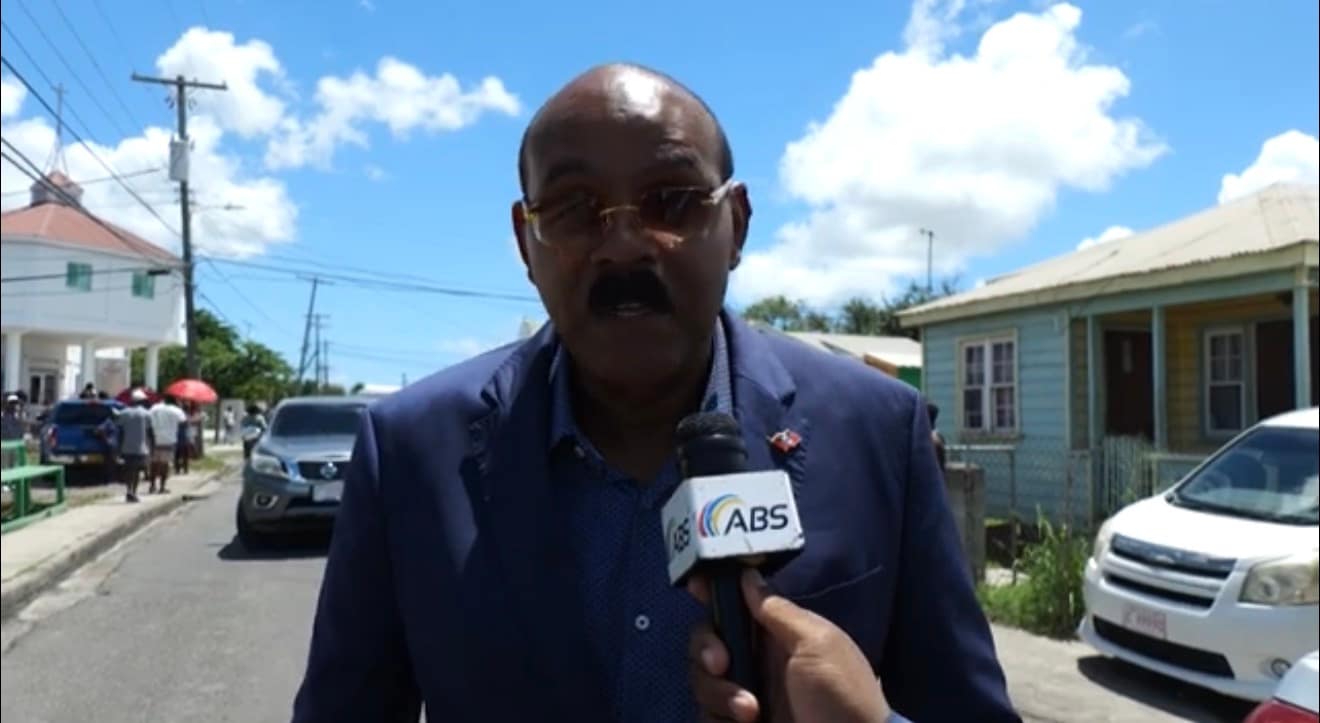
    Prime Minister Gaston Browne has publicly challenged opposition parties in Antigua and Barbuda to substantiate their claims about unemployed skilled workers as his administration moves forward with plans to recruit foreign tradesmen. The Prime Minister made these remarks during a recent appearance on Pointe FM, where he addressed the nation’s development agenda and current labor shortages in the construction sector.

    With the government preparing to accelerate major housing and infrastructure projects scheduled for 2026, Browne emphasized the critical need for additional skilled labor. The administration has signaled its intention to recruit foreign workers including carpenters, masons, electricians, and plumbers to meet the rising construction demands driven by ongoing housing developments and reconstruction initiatives.

    The Prime Minister directly addressed opposition claims that local tradesmen remain unemployed, stating that no credible evidence has been presented to support these allegations. Browne issued a formal invitation to opposition figures to compile and submit verifiable lists of any skilled citizens currently without work, pledging that such individuals would receive immediate employment priority over foreign recruits.

    The government maintains that its decision to import additional workers stems from a demonstrated shortage of local labor capacity to meet current project timelines. Officials argue that the construction boom requires more specialized tradespeople than are currently available within the domestic workforce, necessitating international recruitment to maintain development momentum.

    This development highlights the ongoing tension between the government’s ambitious infrastructure agenda and opposition concerns about local employment opportunities. The administration has reiterated its commitment to prioritizing Antiguan and Barbudan workers provided that verifiable evidence of available skilled labor is presented through proper channels.