分类: politics

  • UN rep: Trinidad and Tobago ‘equally committed’ to US, Venezuela

    UN rep: Trinidad and Tobago ‘equally committed’ to US, Venezuela

    In a pivotal address to the United Nations Security Council on January 5, Dr. Neil Parsan, Trinidad and Tobago’s Permanent Representative to the UN, articulated his nation’s balanced diplomatic stance toward both the United States and Venezuela during an emergency session. The meeting was convened following the dramatic January 3rd military operation where US forces apprehended Venezuelan President Nicolas Maduro and First Lady Cilia Flores in Caracas, extraditing them to New York to face narcotics trafficking allegations, to which they entered pleas of not guilty.

    Speaking as a representative of a Caribbean neighbor and a historical proponent of peaceful coexistence, Dr. Parsan acknowledged the gravity of recent developments. He expressed gratitude to the Security Council for its swift response while outlining Trinidad and Tobago’s nuanced position. The ambassador confirmed his government’s awareness of the US military intervention and reiterated commitment to US-led cooperative initiatives aimed at dismantling transnational criminal networks that plague regional security and stability.

    However, Ambassador Parsan emphasized that Port of Spain’s cooperation with Washington does not diminish its equally vital relationship with Caracas. He explicitly stated Trinidad and Tobago’s dedication to maintaining a ‘constructive and respectful relationship with the Bolivarian Republic of Venezuela,’ underscoring continued peaceful relations with the Venezuelan people. This diplomatic balancing act reflects the nation’s aspiration to collaborate with all partners toward a safer and more prosperous hemisphere.

    The emergency session also featured a statement from UN Secretary-General António Guterres, who expressed profound concern that the US military action disregarded established principles of international law. Guterres warned that this ‘grave’ action could establish a dangerous precedent for future inter-state relations, highlighting the broader implications of the event that triggered the council’s meeting.

  • Gov’t to safeguard integrity of Overseas Employment Programme

    Gov’t to safeguard integrity of Overseas Employment Programme

    KINGSTON, Jamaica — The Jamaican government has declared a zero-tolerance stance against fraudulent activities targeting its Overseas Employment Programme, with Minister of Labour and Social Security Pearnel Charles Jr. vowing to prosecute offenders. The Minister’s stern warning came during a send-off ceremony for seasonal agricultural workers departing for Canada, held at the Ministry’s Overseas Employment Centre on January 6.

    Minister Charles revealed he had received anonymous WhatsApp messages and TikTok videos falsely portraying him as offering unauthorized access to the farmwork programme. He characterized these attempts as direct attacks on the programme’s integrity and announced immediate coordination with relevant authorities to pursue legal action against perpetrators. “Consider this a final warning… you will find yourself behind bars,” Charles stated emphatically.

    The Minister emphasized the programme’s critical importance, particularly following Hurricane Melissa’s devastating impact on western Jamaican parishes. He highlighted how overseas employment provides essential livelihood support through “gainful, lawful employment” that enables workers to sustain their families and communities.

    This year marks the 60th anniversary of the Jamaica-Canada seasonal agricultural partnership, which has enabled thousands of workers to fund their children’s tertiary education. Charles encouraged both new and experienced participants to remain focused despite potential distractions, while urging veterans to guide newcomers.

    Recent statistics demonstrate the programme’s growing impact: since January 1, 2025, a total of 15,156 workers have secured employment in Canada and the United States—representing an increase of 687 compared to 2024. The breakdown shows 59% participated in the Seasonal Agricultural Workers Programme, 3% in the Low-Skilled Programme, and 38% in the United States Programme.

    Charles concluded by reframing these statistics as representations of “livelihoods, children that have been supported, and communities that have been strengthened,” underscoring the human impact behind the numbers.

  • Browne: No one knows what US will do

    Browne: No one knows what US will do

    The dramatic capture of Venezuelan President Nicolás Maduro and First Lady Cilia Flores by US military forces from a fortified Caracas compound on January 3rd has triggered extensive geopolitical analysis. Former finance minister Mariano Browne questions what leverage mechanisms the United States will employ to advance its agenda in Venezuela following this unprecedented intervention.

    President Donald Trump’s January 5th declaration that the US intends to temporarily govern Venezuela underscores Washington’s determined stance. During media interactions, Trump asserted that American oil corporations would enter Venezuela to repair its ‘broken infrastructure’ and generate revenue, though he provided limited operational details.

    Browne, responding via WhatsApp, emphasized the inseparable relationship between politics and economics in global affairs. He characterized the operation as fundamentally concerning regime change rather than narcotics trafficking, noting Trinidad and Tobago’s significant trade relationship with the US makes these developments particularly consequential.

    The former minister analyzed that America’s approach demonstrates resource constraints preventing conventional warfare, instead favoring asymmetric strategies involving limited engagements for maximum leverage. Despite Maduro’s capture, his administrative structure remains intact with Vice President Delcy Rodríguez assuming interim leadership while maintaining Maduro’s legitimate presidency.

    Browne raised critical questions about whether Venezuela’s existing state institutions would align with Washington’s directives. This follows Trump’s dismissal of Rodríguez’s long-term political viability, despite her subsequent diplomatic overture seeking ‘balanced and respectful’ bilateral relations.

    Trump simultaneously expressed skepticism about exiled opposition figure María Corina Machado’s capacity to lead, citing her insufficient domestic support. The administration is currently designating alternative leadership candidates for Venezuela.

    Browne highlighted that Trump’s order intercepting ‘sanctioned oil tankers’ reveals broader objectives beyond regime change, identifying China as the primary target. Venezuela’s discounted oil exports constitute a crucial component of China’s energy import strategy, elevating the confrontation to global financial markets where the US holds advantageous position.

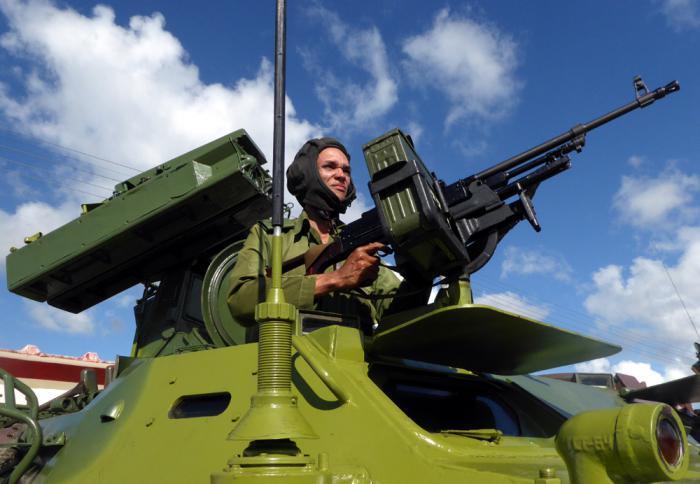
    This event signals potential implications for other Western Hemisphere nations, particularly those previously criticized by Trump including Colombia and Cuba. Colombia’s deployment of border troops following the operation, coupled with Trump’s provocative comments about Colombian leadership, suggests regional instability may intensify.

  • Tensions boil over at PLP meeting for Southern Shores

    Tensions boil over at PLP meeting for Southern Shores

    Political tensions reached a boiling point outside the Progressive Liberal Party (PLP) headquarters as members of the Southern Shores branch convened for a contentious meeting to evaluate potential election candidates Clint Watson and Obie Roberts. The gathering, which excluded media representatives, nearly descended into physical confrontation upon its conclusion, requiring repeated intervention to prevent violent outbreaks among supporters.

    The atmosphere grew increasingly volatile as attendees exited the building, with heated verbal exchanges quickly replacing what had initially been complaints about meeting procedures. Despite the visible division, multiple voices called for party unity, emphasizing their shared affiliation with the PLP.

    According to participants, both candidates presented their visions for the constituency during the meeting, though the absence of a question-and-answer session drew criticism. Merbin Darling, a Watson supporter, praised Watson’s ‘effective living agenda’ focused on aiding disadvantaged communities, establishing homework centers, and addressing crime and security issues. However, Darling alleged significant irregularities within the branch, including the presence of ineligible members and branch elections conducted outside the constituency boundaries.

    These claims were vehemently disputed by Roberts supporters. Wellington Porter emphasized that only financially current members were eligible to participate, while Tevin Ferguson highlighted Roberts’ extensive track record within the party structure and his adherence to constitutional procedures.

    Notable figures including professional boxer Tureano Johnson expressed concerns about the ethical implications of the selection process, noting that proper protocol adherence reflects a political party’s morality. Both candidates declined to comment following the event, and PLP Chairman Fred Mitchell did not respond to media inquiries.

  • Trinidad and Tobago denies claims airspace has been restricted

    Trinidad and Tobago denies claims airspace has been restricted

    PORT OF SPAIN, Trinidad – The Trinidad and Tobago Ministry of Defence has formally refuted circulating social media claims suggesting the nation’s airspace has been subjected to restrictions. Defence Minister Wayne Sturge issued an official statement asserting that all aviation operations continue normally without disruption.

    Minister Sturge addressed public concerns stemming from a misinterpreted excerpt from Notice to Air Missions (NOTAM) A0010/26, clarifying that the document was presented in a sensationalized and misleading manner. He emphasized that the notice represents nothing more than a routine aviation security advisory.

    ‘The Government of Trinidad and Tobago remains committed to safeguarding national sovereignty, aviation safety and public confidence,’ Sturge stated, adding that any legitimate changes to aviation protocols would be communicated through proper official channels.

    The Ministry clarified that NOTAM A0010/26 was issued exclusively by the United States Federal Aviation Administration (FAA) and applies solely to US-registered aircraft operators. Such advisories, they explained, constitute standard security measures routinely implemented by sovereign states and do not reflect any safety assessment of Trinidad and Tobago’s airspace.

    Aviation authorities confirmed that the Piarco Flight Information Region (TTZP) and all national airports continue to operate normally, accommodating both commercial and private air traffic without restrictions. The Ministry further noted that local aviation and national security authorities maintain continuous monitoring of airspace in accordance with International Civil Aviation Organization (ICAO) standards.

    The statement concluded with an appeal for responsible reporting, cautioning that the dissemination of incomplete or misleading information could erode public trust and generate unnecessary alarm.

  • Former UN ambassador, Crispin Gregoire: CARICOM must find its voice amid Venezuela crisisis

    Former UN ambassador, Crispin Gregoire: CARICOM must find its voice amid Venezuela crisisis

    In a striking development that has sent shockwaves through international diplomatic circles, former Dominican UN Ambassador Crispin Gregoire has issued an urgent appeal for Caribbean Community (CARICOM) leaders to break their silence regarding Venezuela’s escalating political crisis. This follows the dramatic capture of President Nicolás Maduro by U.S. forces in what Gregoire describes as a meticulously executed operation that has left Venezuela’s military and political establishment in disarray.

    Gregoire, expressing profound disappointment with what he characterizes as the region’s ‘timid’ response, emphasized that Caribbean leaders must demonstrate unity and engage directly with Washington during this critical juncture. The former ambassador revealed astonishing operational details, indicating that U.S. intelligence had successfully penetrated Maduro’s innermost security circle, allegedly relocating family members of his personal guards to the United States under new identities prior to the operation.

    The actual extraction, conducted by Delta Force operatives, reportedly unfolded with military precision—completing Maduro’s seizure along with his wife within a remarkable twelve-minute window. This operation has triggered profound legal and political questions regarding sovereignty violations and the bypassing of conventional diplomatic protocols.

    Maduro now confronts an extensive 700-page indictment in U.S. courts that portrays him as a central figure in international drug trafficking networks. Gregoire drew compelling parallels to the case of Panama’s Manuel Noriega, raising fundamental questions about the legitimacy of trying a foreign head of state apprehended under such controversial circumstances.

    The ambassador further highlighted the severe destabilization risks within Venezuela, where armed factions including Colombian groups and Maduro’s colectivos militia remain heavily armed and operational. Compounding regional concerns are emerging reports suggesting possible connections between Caribbean politicians and Maduro’s alleged narcotics network, with recent cocaine seizures in Dominica and investigations into energy officials fueling speculation about regional involvement.

    Gregoire’s central argument maintains that CARICOM’s continued silence represents a dangerous abdication of regional leadership that could ultimately compromise the Caribbean’s political sovereignty and international standing. He criticized regional leaders for what he perceives as their subdued response to the Trump administration’s actions, suggesting they have been ‘whipped into submission’ for political survival.

    This crisis transcends Venezuela’s immediate future, presenting a critical test of the Caribbean’s ability to assert its geopolitical interests amid great power intervention. Gregoire’s statement serves as a potent reminder that in moments of international upheaval, neutrality carries significant consequences.

  • China underscores willingness to deepen ties with Venezuela

    China underscores willingness to deepen ties with Venezuela

    In a firm diplomatic stance, China has denounced recent U.S. military operations in Venezuela while reaffirming its strategic partnership with the South American nation. Foreign Ministry Spokesperson Lin Jian declared that China’s legitimate interests in Venezuela would be legally protected, emphasizing Beijing’s commitment to international law and sovereign equality.

    The Chinese government expressed strong condemnation of what it termed the ‘abduction’ of Venezuelan President Nicolas Maduro and First Lady Cilia Flores following U.S. military airstrikes. Spokesperson Lin reiterated China’s position of respecting Venezuela’s sovereignty and independence, expressing confidence that Caracas would manage its internal affairs in accordance with its constitutional framework.

    Foreign Minister Wang Yi articulated Beijing’s rejection of unilateralism in international relations, explicitly criticizing the concept of any nation assuming the role of ‘world policeman’ or acting as a global judiciary. This statement reflects China’s broader foreign policy approach that prioritizes multilateralism and non-interference in sovereign states’ domestic affairs.

    The bilateral relationship between China and Venezuela was characterized as an ‘unwavering strategic partnership’ with comprehensive cooperation across multiple sectors including energy, infrastructure, and finance. This longstanding alliance has involved significant Chinese investment in Venezuela’s oil industry and development projects.

    Beijing has formally called upon the United States to immediately release President Maduro and his wife while ceasing what China describes as attempts to destabilize Venezuela’s constitutional order. The statement represents one of the most direct confrontations between Beijing and Washington regarding Western Hemisphere affairs in recent years.

  • AU prepares for Assembly of Heads of State and Government

    AU prepares for Assembly of Heads of State and Government

    The African Union (AU) has officially disclosed the comprehensive timeline for its forthcoming leadership summit, with high-level assemblies scheduled to culminate in February 2026. The detailed agenda was formally announced through the continental body’s official social media channels.

    The preparatory phase will commence with the 51st Ordinary Session of the Permanent Representatives’ Committee, convening from January 12 to 30. This crucial preliminary meeting will assemble ambassadors from member states alongside senior AU officials. Their primary mandate involves conducting thorough analyses of draft reports and meticulously formulating the agenda for the subsequent Executive Council session.

    Following this diplomatic groundwork, the 48th Ordinary Session of the Executive Council is slated for February 11-12. This ministerial-level gathering will bring together foreign ministers and other designated high-ranking officials from across the continent. The Council’s agenda focuses on substantive discussions regarding issues forwarded from the preparatory committee, alongside critical evaluations of policy implementation measures previously ordained by the Assembly. Participants will also dedicate significant effort to crafting detailed session agendas and drafting formal decisions for higher-level consideration.

    The entire process will reach its apex with the 39th Ordinary Session of the Assembly of Heads of State and Government on February 14-15, 2026. This premier gathering of African leaders represents the highest decision-making organ within the AU structure, where heads of state will convene to deliberate on and ultimately ratify decisions shaping the continent’s strategic direction.

  • Sri Lanka condemns US kidnapping of Maduro as piracy

    Sri Lanka condemns US kidnapping of Maduro as piracy

    The Communist Party of Sri Lanka (CPSL) has issued a strong condemnation of military actions targeting Venezuela, drawing explicit parallels to historical interventions by the United States. In a formal statement, the party characterized recent operations involving the deliberate bombing of civilian infrastructure as severe violations of international law that meet the criteria for war crimes.

    The CPSL analysis highlighted that these operations primarily targeted facilities essential to the daily lives and well-being of Venezuelan citizens, resulting in civilian casualties and creating severe humanitarian hardship. The party’s statement noted a ‘disturbing resemblance’ between these tactics and the systematic destruction of civilian infrastructure carried out in Iraq prior to the 2003 invasion.

    Contextualizing current events within broader historical patterns, the Sri Lankan political party referenced previous acts including the 2004 kidnapping of Haitian President Jean-Bertrand Aristide and the 1961 assassination of Patrice Lumumba, Prime Minister of the Democratic Republic of Congo. The CPSL framed these actions as part of a consistent pattern of imperialist objectives historically pursued by the United States to seize natural resources and wealth from sovereign nations.

    The party reiterated its firm rejection of these interventions and expressed unwavering solidarity with the Venezuelan people, praising their continued resistance against foreign interference and their defense of national sovereignty. The statement concluded by emphasizing the need for international accountability for actions that violate established international legal standards.

  • Afgezette Venezolaanse president Maduro voor Amerikaanse rechtbank

    Afgezette Venezolaanse president Maduro voor Amerikaanse rechtbank

    In a landmark legal proceeding, deposed Venezuelan President Nicolás Maduro made his inaugural appearance before a United States federal court in Manhattan today. The embattled leader, accompanied by his wife Cilia Flores, faces serious charges of narco-terrorism that previously justified his extraordinary arrest and extradition to New York during the Trump administration.

    The high-profile defendants arrived under intense security measures following an elaborate transport operation from Brooklyn’s detention facility. Surveillance footage captured Maduro displaying a noticeable limp as he transferred from a helicopter to an armored vehicle for final transport to the courthouse.

    This preliminary hearing initiates what promises to be an extended legal confrontation regarding jurisdictional authority over a sovereign leader. Maduro’s defense team is anticipated to invoke diplomatic immunity protections, mirroring unsuccessful arguments previously employed by Panamanian strongman Manuel Noriega during his 1990 U.S. prosecution.

    The American government maintains its non-recognition of Maduro’s controversial 2024 re-election legitimacy. Interim President Delcy Rodríguez has simultaneously demanded his repatriation while adopting unexpectedly conciliatory tones through social media channels, even extending cooperation invitations to Washington.

    Federal prosecutors allege systematic collaboration between Maduro’s administration and international drug cartels, accusing the Venezuelan leadership of facilitating thousands of tons of cocaine shipments to American soil. The indictment further encompasses grave accusations including kidnappings, torture, and targeted eliminations of drug trade competitors.

    Saturday’s military operation that secured Maduro’s capture primarily targeted regime criminal enterprises according to U.S. officials. Secretary of State Marco Rubio clarified temporary control objectives focused predominantly on enforcing petroleum embargo measures.

    President Trump concurrently articulated expansionist ambitions within the Western Hemisphere, launching verbal assaults against Colombian leader Gustavo Petro whom he accused of cocaine trade involvement.

    The comprehensive charges against Maduro, his spouse, and numerous Venezuelan officials span narcotics trafficking, weapons violations, and criminal conspiracy. Notably, while accusations involve the notorious Tren de Aragua criminal syndicate, U.S. intelligence assessments previously found no definitive government-gang collaboration.

    Additional corruption allegations detail bribery acceptance schemes wherein Maduro and Flores allegedly protected and facilitated drug traffickers operations for financial gain.