分类: politics

  • Maduro says Venezuela has 5,000 Russian anti-aircraft missiles to counter US

    Maduro says Venezuela has 5,000 Russian anti-aircraft missiles to counter US

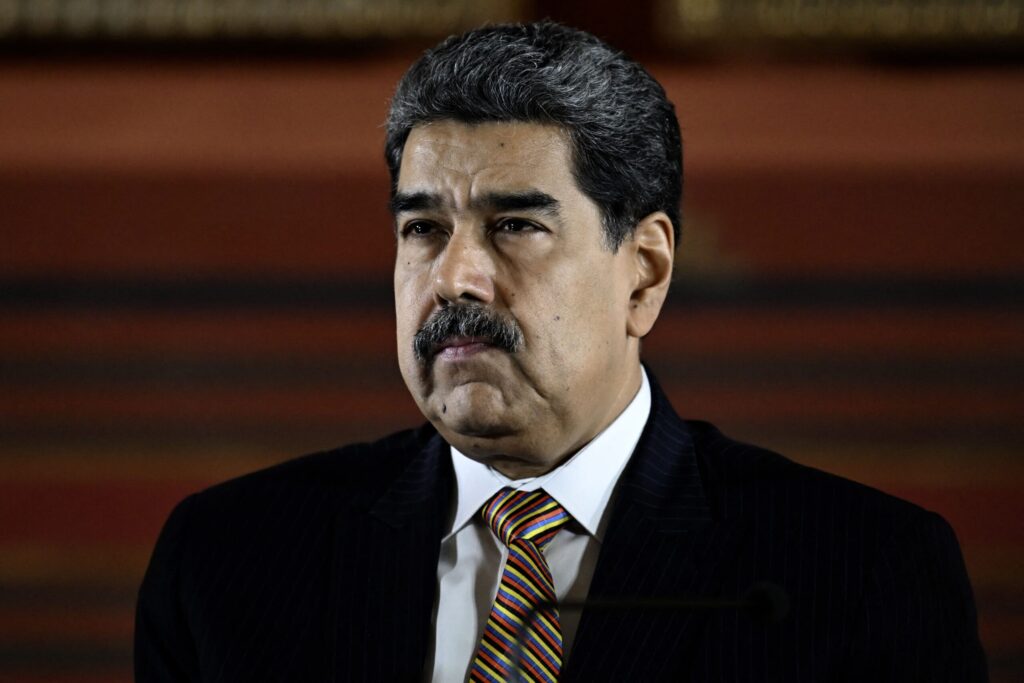
    CARACAS, Venezuela — In a bold move to counter escalating tensions with the United States, Venezuelan President Nicolas Maduro announced on Wednesday that the nation has acquired 5,000 Russian-made Igla-S man-portable surface-to-air missiles. These short-range missiles, designed to target low-flying aircraft, have been strategically positioned across key air defense locations to ensure national security and peace, Maduro stated during a televised ceremony with senior military officials.

    The announcement comes in response to the US military’s recent deployment of stealth warplanes and Navy ships in the Caribbean, which Washington claims are part of counter-narcotics operations. However, Venezuela views these actions as a prelude to a potential operation aimed at ousting Maduro, whom the US accuses of leading a drug cartel. The US has already destroyed at least eight vessels allegedly smuggling drugs from Venezuela to the United States.

    The Igla-S missiles have been integrated into military exercises ordered by Maduro, reflecting Venezuela’s readiness to defend its sovereignty. This development has further inflamed regional tensions, with Latin American leaders expressing outrage over the US military presence. The Pentagon has labeled Latin American drug cartels as terrorist groups and described suspected smugglers as ‘unlawful combatants,’ justifying its aggressive stance.

    Meanwhile, diplomatic relations between Colombia and the US have soured, with Colombia recalling its ambassador to Washington following a heated exchange between Colombian President Gustavo Petro and US President Donald Trump. Trump defended the US deployment, claiming it has significantly reduced drug trafficking by sea and is prepared to extend operations to land-based traffickers.

    Experts warn that the US’s summary killings of suspected traffickers, even if confirmed, may violate international law. As tensions continue to rise, the region braces for further geopolitical instability.
  • New Chief Justice to be sworn in at 2 pm on October 22

    New Chief Justice to be sworn in at 2 pm on October 22

    In a significant development for Trinidad and Tobago’s judicial system, Acting President Wade Mark is set to appoint the new Chief Justice at 2 pm on October 22. This appointment comes in the wake of Chief Justice Ivor Archie’s retirement, which took effect today, leaving the nation’s highest judicial position vacant. Archie, who assumed office in 2008, served for over 17 years, marking a notable era in the country’s legal history. The Office of the President has confirmed that the appointment process adheres to Section 102 of the Constitution of the Republic of Trinidad and Tobago. This section mandates that the President appoint the Chief Justice after consulting with the Prime Minister and the Leader of the Opposition. The swearing-in ceremony will be exclusively covered by the state-owned Trinidad and Tobago Television (TTT), ensuring the event is accessible to the public. This transition underscores the importance of maintaining a robust and transparent judicial system in the country.

  • Ameen: 847 Local Government vacancies being gradually filled

    Ameen: 847 Local Government vacancies being gradually filled

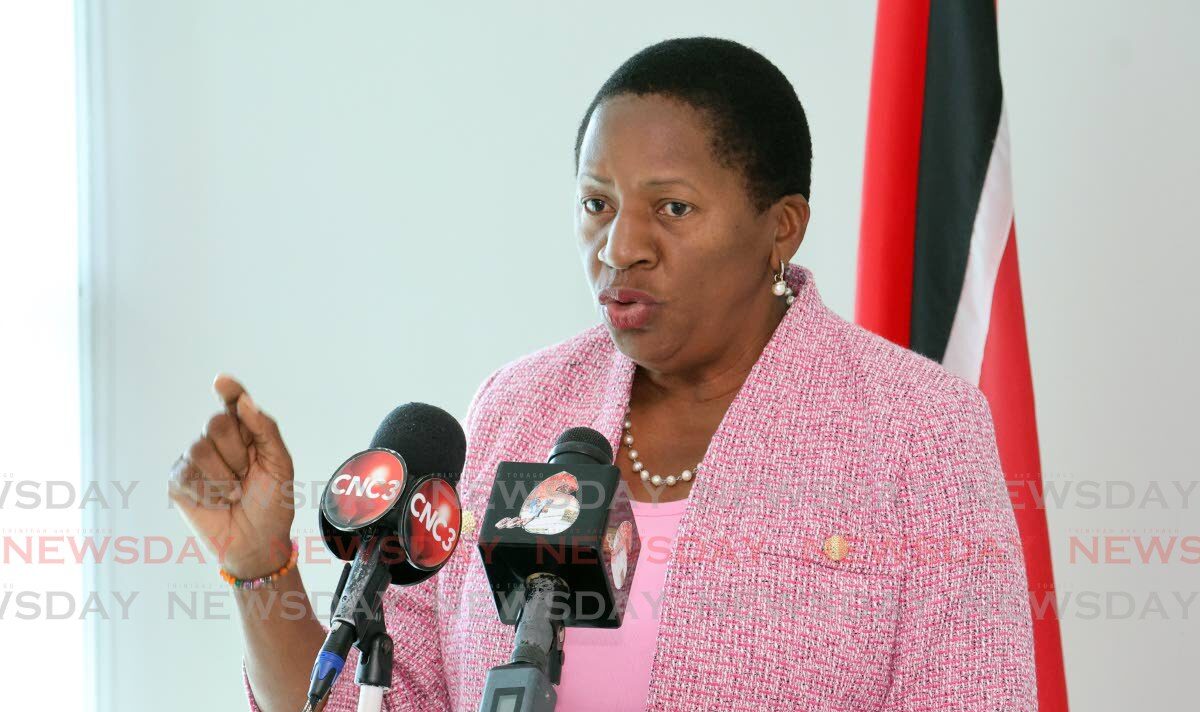
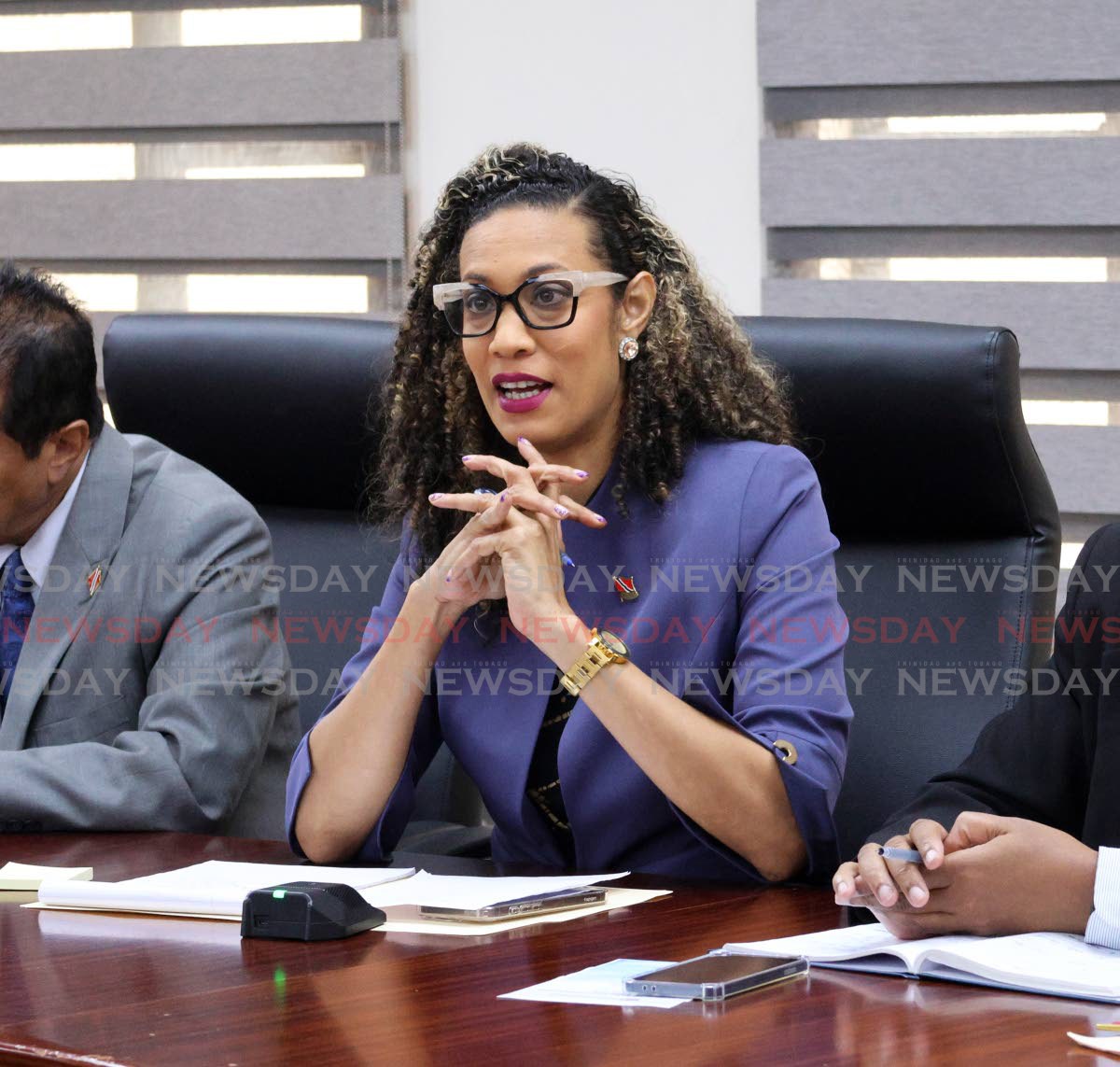
    During a session with the House of Representatives’ Standing Finance Committee on October 21, Minister of Rural Development and Local Government Khadijah Ameen disclosed that her ministry currently has 847 vacancies. She elaborated on the ongoing efforts to fill these positions, emphasizing the role of the Public Services Commission (PSC) in the recruitment process. Ameen projected that approximately 50-60 positions across various salary ranges would be filled this fiscal year, though she expressed uncertainty about the funding adequacy for these roles. Diego Martin North East MP Colm Imbert questioned the $3 million budget allocation, deeming it insufficient for the intended hires. Ameen clarified that the PSC would handle the recruitment of these positions, with partial funding from the ministry’s short-term vote. She also highlighted that 157 out of 438 contract positions remain vacant, with interviews underway for some. Additionally, 50 municipal police officers have been recently hired. The discussion also touched on the conversion of temporary posts to permanent ones, with Ameen noting the variability based on program durations. Opposition MPs raised concerns about the impact of new surcharges on local government spending, with Ameen anticipating landlords leasing to the government to absorb the costs. San Fernando East MP Brian Manning questioned the increased budget allocation for electricity, which Ameen clarified was intended to address past arrears.

  • Opposition Leader calls on acting President to halt Chief Justice appointment

    Opposition Leader calls on acting President to halt Chief Justice appointment

    In a significant political development, Opposition Leader Pennelope Beckles has formally requested Acting President Wade Mark to suspend any immediate appointment of a substantive Chief Justice. In a letter dated October 22, Beckles proposed that Justice of Appeal Prakash Moosai be appointed as the acting Chief Justice instead. This recommendation follows a series of correspondences between Beckles and the acting President over the past 24 hours, as well as prior communications from President Christine Kangaloo on October 14, which endorsed Moosai for the role in the absence of Chief Justice Ivor Archie. Archie, who announced his retirement on October 21, had previously expressed his intention to step down after a distinguished 17-year tenure as Chief Justice during the opening of the law term on September 16. Beckles emphasized the need to adhere to constitutional provisions, specifically Sections 102 and 103 of the Constitution of the Republic of Trinidad and Tobago, and urged the acting President to prioritize the appointment of an acting Chief Justice. She cited legal advice and previous letters to substantiate her appeal. This unfolding situation marks a critical juncture in the nation’s judicial leadership.

  • Tancoo, Manning clash over query about 10% hike

    Tancoo, Manning clash over query about 10% hike

    A tense exchange unfolded between Finance Minister Davendranath Tancoo and San Fernando East MP Brian Manning during a Standing Finance Committee meeting on October 21, as the committee reviewed a $6,012,215,208 budgetary allocation for the Social Development Ministry. The focal point of the debate was the government’s promise in the 2025/2026 budget to grant public servants a ten per cent wage increase. Manning, a former finance minister in the PNM administration, questioned whether the budget included provisions for this wage hike and if negotiations would conclude before the fiscal year’s end. Tancoo dismissed the inquiry, stating it had already been addressed and urged Manning to focus on the presented figures. Manning persisted, arguing that his question remained unanswered, prompting Speaker Jagdeo Singh to intervene and reiterate that the matter had been clarified. The exchange escalated as Tancoo accused opposition MPs of seeking headlines, while Manning emphasized his commitment to holding the government accountable. The meeting also touched on proposed increases to the National Insurance System (NIS) contribution rate, with Tancoo outlining a phased approach to raise the rate by three per cent in 2026 and another three per cent in 2027, extending the retirement age for full NIS pensions from 60 to 65 over the next decade. Diego Martin North/East MP Colm Imbert later contested whether the ministry’s allocations accounted for these NIS adjustments. The committee is set to continue its deliberations from October 22-25, with the House expected to pass the budget by October 25 and the Senate commencing its debate on October 27. Leader of Government Business Barry Padarath expressed confidence that Parliament would conclude the budget debate before October 31, ensuring the President has sufficient time to assent to the budget.

  • Gonsalves: Caribbean economy, security in trouble

    Gonsalves: Caribbean economy, security in trouble

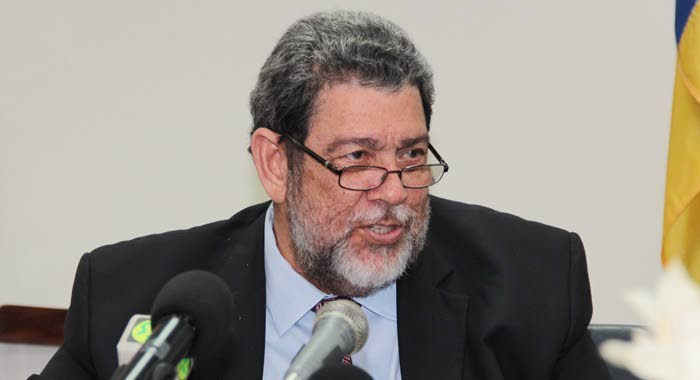
    Dr. Ralph Gonsalves, Prime Minister of St Vincent and the Grenadines, has raised significant concerns about the Caribbean Community’s (Caricom) ability to coordinate its foreign policy effectively. Speaking at the University of the West Indies (UWI) Vice Chancellor’s Forum on October 21, Gonsalves criticized the bloc’s inability to agree on fundamental issues, such as defining a “zone of peace.” He specifically questioned Trinidad and Tobago’s stance on labeling the Caribbean and Latin America as a zone of peace, calling it a “misguided notion” that requires urgent reconsideration. The forum, titled *Promises, Passports and Possibilities: Free Movement, the CSME and the Caribbean Regionalisation Project*, was streamed live and attended both in person and online. Gonsalves emphasized that a zone of peace, as defined by international law, refers to state actors agreeing not to intervene in or threaten one another. However, he clarified that this concept does not extend to non-state actors like drug traffickers, arms dealers, or human traffickers. His remarks followed comments by Trinidad and Tobago’s Prime Minister Kamla Persad-Bissessar, who, at the 80th United Nations General Assembly, argued that the Caribbean could no longer be considered a zone of peace due to rising transnational crime. Gonsalves highlighted Caricom’s inconsistent response to tensions between the US and Venezuela, warning that any external intervention in Venezuela could lead to mass migration and security crises in the Caribbean. Drawing parallels to Europe’s migration challenges, he cautioned that Venezuelan refugees could overwhelm neighboring countries like Trinidad and Tobago, Grenada, and St Vincent. Gonsalves urged regional leaders to approach these issues with calm, patience, and maturity, emphasizing the need for practical and principled decision-making. He also called for deeper Caricom integration, stressing the importance of the Caribbean Court of Justice (CCJ) in interpreting Caricom law and the need for comprehensive rights for migrants, including access to education and healthcare. Gonsalves lamented the limited implementation of free movement rights among Caricom member states, criticizing efforts to restrict movement as counterproductive to addressing demographic and labor challenges. He also highlighted ongoing trade, currency, and airspace disputes, particularly with Trinidad and Tobago, as barriers to regional progress. Gonsalves concluded by warning that unresolved issues could deepen regional tensions and hinder Caricom’s integration efforts.

  • PNM, UNC tit-for-tat over national employment drive

    PNM, UNC tit-for-tat over national employment drive

    A heated four-hour debate unfolded in the House of Representatives on October 21, as government and opposition MPs clashed over the National Recruitment Drive, ministry vacancies, and budgetary allocations for the Ministry of People, Social Development, and Family Services. The Standing Finance Committee ultimately approved a budget of $6,012,215,208 for the ministry, but not without intense exchanges. Social Development Minister Vandana Mohit revealed approximately 634 vacancies in her ministry, sparking questions from opposition MPs about the recruitment drive’s purpose and qualifications for advertised posts. Opposition MPs, including Stuart Young and Keith Scotland, pressed Mohit for clarity, leading to repeated interruptions and appeals for order from Speaker Jagdeo Singh. Mohit emphasized that the recruitment drive was not designed to fill positions under the service commissions’ purview, while government MPs defended the allocations as sufficient. The session also saw personal jabs, with MPs accusing each other of childish behavior and political bias. The debate highlighted the ongoing tensions between the government and opposition, with Singh cautioning MPs against creating a ‘Potemkin village’—a facade masking deeper issues.

  • Port of Spain MPs upset over reduced garbage disposal budget

    Port of Spain MPs upset over reduced garbage disposal budget

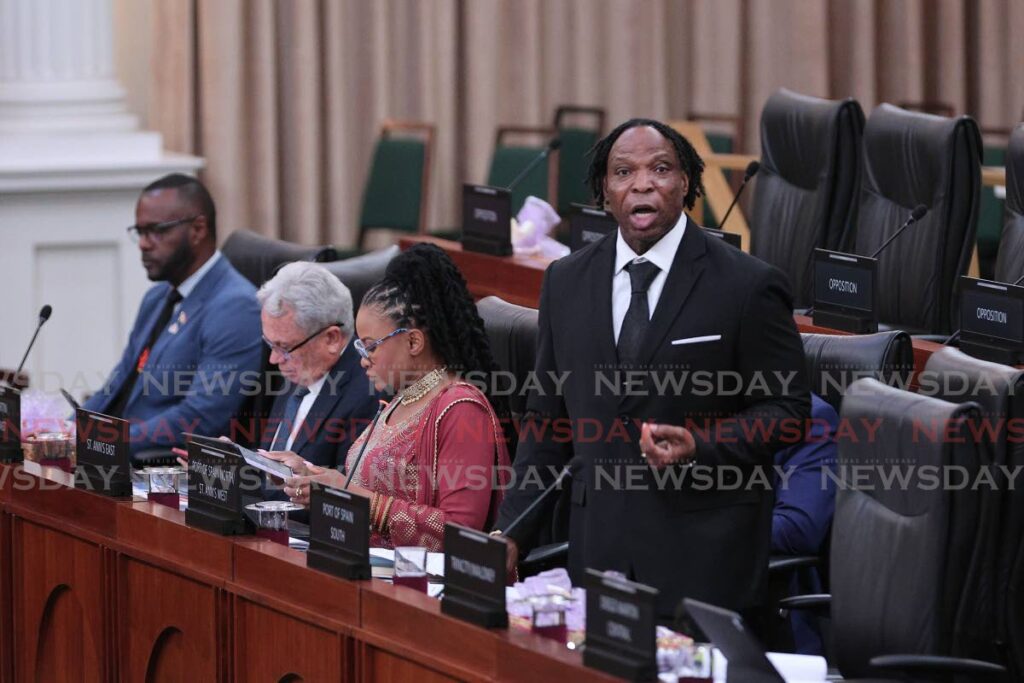
    Tensions flared during a recent session of the Standing Finance Committee of the House of Representatives as opposition MPs raised concerns over an $8 million reduction in the budget allocation for garbage collection and other services in Port of Spain. The debate, which took place on October 21, saw Port-of-Spain North/St Ann’s West MP Stuart Young leading the charge, asserting that the cuts would significantly hamper the capital city’s ability to manage waste effectively. Minister of Local Government Khadijah Ameen countered these claims, stating that the allocation was sufficient and could be supplemented if necessary. She accused the opposition of creating unnecessary panic and seeking headlines rather than focusing on the facts. Ameen emphasized that the line item in question covered multiple services, not solely garbage collection. However, Young and other MPs, including Port of Spain South MP Keith Scotland and Diego Martin North East MP Colm Imbert, remained unconvinced, pointing to broader reductions in the Port of Spain City Corporation’s budget for goods and services, which had decreased by $20 million over the past year. St Ann’s East MP Dr. Nyan Gadsby-Dolly and Arouca/Lopinot MP Marvin Gonzales also pressed Ameen for clarity on where additional funding might come from, to which she reiterated her earlier responses. The session highlighted growing concerns over the financial management of essential services in the capital.

  • New Chief Justice Ronnie Boodoosingh

    New Chief Justice Ronnie Boodoosingh

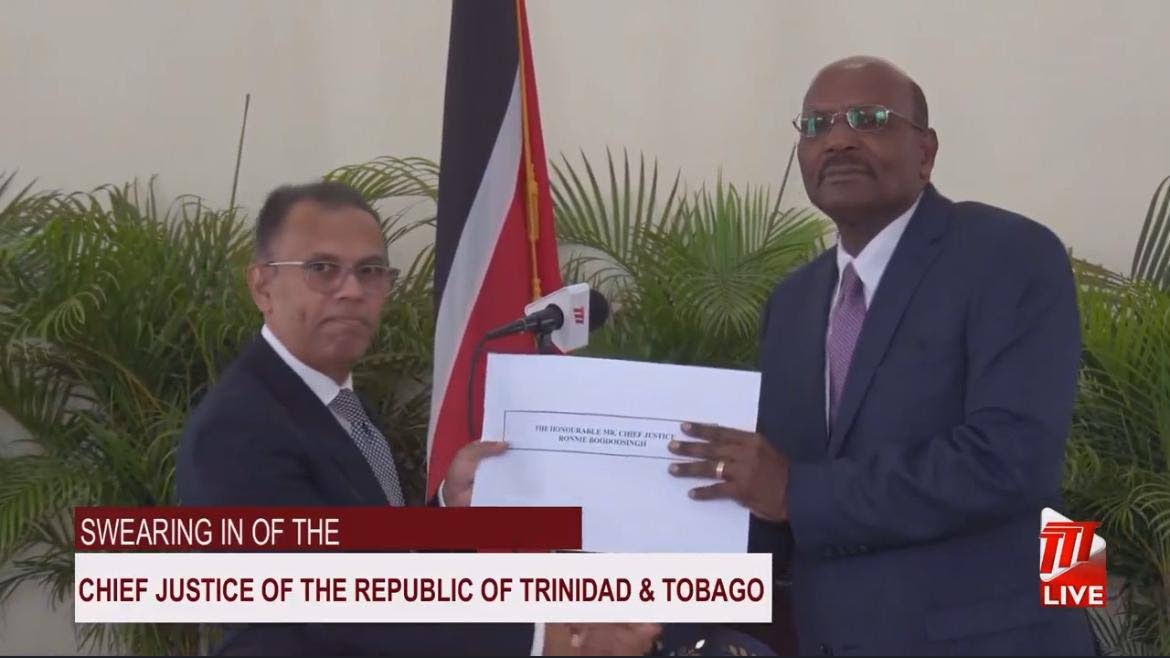
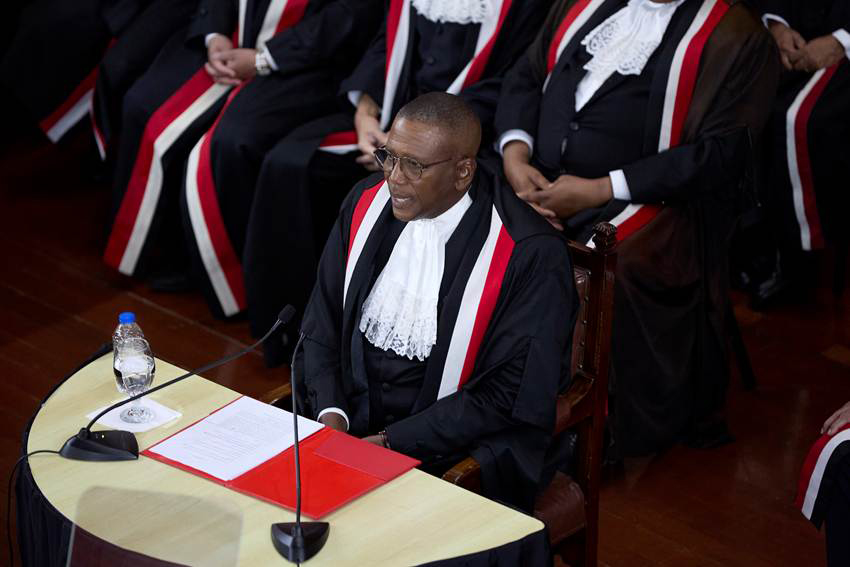
    In a significant development for Trinidad and Tobago’s judiciary, Justice Ronnie Boodoosingh has been officially appointed as the new Chief Justice. The ceremony took place on October 22 at the Office of the President, where acting President Wade Mark presented Boodoosingh with his instrument of appointment. This appointment follows the retirement of former Chief Justice Ivor Archie, who served in the role for 17 years. Boodoosingh, a seasoned legal professional, brings a wealth of experience to the position. He was first appointed as a Justice of Appeal in 2020 and has a distinguished career spanning over three decades. His journey began in 1992 when he was admitted to practice as an attorney, after which he worked as an advocate at JD Sellier and Company. He later joined the Office of the Director of Public Prosecutions, where he served for seven years at various jurisdictional levels. In 2001, Boodoosingh transitioned to academia, becoming a lecturer at the Hugh Wooding Law School. There, he directed the trial advocacy programme and taught ethics, while also establishing the Human Rights Law Clinic. Beyond his academic contributions, Boodoosingh has conducted extensive training programmes for legal professionals, law enforcement personnel, and educators. He holds a Master of Laws degree specializing in International Dispute Resolution from the University of London and is certified in adult education, advocacy, and judicial training by prestigious institutions. Additionally, he is the author of four books, including a textbook on trial advocacy, and continues to tutor at the UWI Law Faculty. His expertise in settlement conferencing and mediation further underscores his qualifications for the role of Chief Justice.

  • 55 vie for TPP candidacy for THA elections

    55 vie for TPP candidacy for THA elections

    The Tobago People’s Party (TPP) has announced that 55 individuals have submitted their nominations to stand as candidates in the upcoming Tobago House of Assembly (THA) elections. TPP leader Farley Augustine revealed this during a press briefing at Shaw Park on October 21. Augustine confirmed that the nomination process has concluded, and a committee is now rigorously vetting the nominees to ensure they meet the party’s membership and eligibility criteria.