分类: politics

  • Government eyes placing parts of electricy grid underground

    Government eyes placing parts of electricy grid underground

    In a significant address at the JPS Hunt’s Bay Power Plant, Jamaican Prime Minister Andrew Holness announced the initiation of high-level Cabinet discussions with Jamaica Public Service Company (JPS) to underground critical portions of the nation’s electricity infrastructure. This strategic move forms the cornerstone of a comprehensive effort to transform Jamaica’s power grid into a storm-resilient system capable of withstanding future climate challenges.

    The Prime Minister’s declaration came during a ceremony marking the deployment of 175 specialized utility vehicles—including bucket trucks, diggers, and pole trailers—to accelerate restoration efforts in communities still without power since Hurricane Melissa struck on October 28, 2025. This latest addition brings the total fleet of recovery vehicles to 247, substantially enhancing operational capacity during the critical final phase of restoration.

    Holness framed the crisis as an opportunity for transformative change, emphasizing that mere restoration would be insufficient. “The opportunity comes when we look at the poles we are putting up and say: How do we put up stronger poles? How do we introduce microgrids? How do we put some of our lines underground?” he stated, revealing that preliminary cost assessments have already been presented to the government.

    While acknowledging the substantial financial investment required, the Prime Minister presented a compelling economic argument for resilience, questioning: “What is it that we lose by not having resilience in the grid?” He detailed how prolonged outages cripple hospitals, security services, businesses, and overall economic activity, justifying the government’s approach to treating electricity as an essential public good.

    This perspective underpinned the administration’s controversial decision to facilitate a US$150-million loan to the privately-owned JPS, which Holness defended as necessary for protecting public interest. He explicitly separated this emergency financing from ongoing license renegotiations with the utility company, assuring citizens that their interests would be safeguarded in both processes.

    Current restoration statistics indicate approximately 90% of the island has regained power, with the hardest-hit parishes reaching nearly 70% recovery—a pace Holness described as creditable compared to international benchmarks following major storms.

    The Prime Minister linked these recovery efforts to broader economic resilience, citing recent Planning Institute of Jamaica data showing over 5% growth in the last quarter. He characterized resilience as the product of deliberate policy choices rather than chance, stating: “It requires planning, and therefore, the reason why you are seeing the economy displaying resilience is because the government that you elected took decisions that contributed to that outcome.”

    As restoration enters its final phase, Holness committed to prioritizing citizenship over cost-benefit calculations, envisioning a rebuilt Jamaica that emerges stronger than before. The strategy specifically targets strengthening critical corridors in western Jamaica and Kingston to ensure faster recovery when future storms inevitably strike.

  • US strikes Venezuela, captures Maduro and his wife

    US strikes Venezuela, captures Maduro and his wife

    In an unprecedented military operation early Saturday, the United States executed a large-scale strike in Venezuela resulting in the capture and extraction of President Nicolás Maduro and his wife. President Donald Trump announced the mission via social media, confirming that the Venezuelan leader was apprehended at his residence within the Fort Tiuna military compound and transported via the U.S.S. Iwo Jima to face criminal prosecution in New York.

    The Justice Department unsealed a comprehensive indictment accusing Maduro of orchestrating a corrupt regime that systematically leveraged state power to facilitate international drug trafficking. The document alleges direct collaboration between Maduro’s government and violent narco-terrorist organizations to flood American markets with cocaine, enriching Venezuela’s political and military elite through criminal enterprise.

    International reaction was swift and critical. The United Nations expressed profound alarm, characterizing the intervention as a dangerous violation of international law that establishes a concerning precedent for sovereign nations. China’s Foreign Ministry issued a forceful condemnation, denouncing the operation as hegemonic aggression that violates Venezuela’s sovereignty and threatens regional stability.

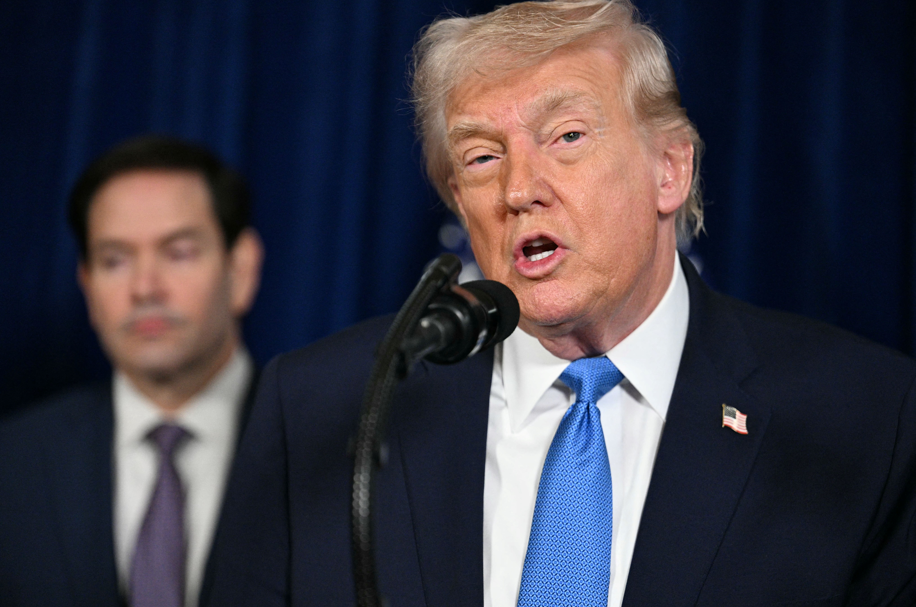
    President Trump defended the operation during television appearances, acknowledging minor U.S. casualties and helicopter damage while celebrating the mission’s success. He dismissed congressional criticism about constitutional authorization, labeling Democratic opponents as ‘weak, stupid people’ while asserting the operation’s necessity. The administration simultaneously imposed temporary airspace restrictions over Puerto Rico due to security concerns stemming from the Venezuelan military activity.

    In subsequent remarks, Trump revealed previously undisclosed proposals to Mexican President Claudia Sheinbaum regarding U.S. military action against cartels, suggesting continued regional security interventions might be forthcoming. The White House has commenced planning for Venezuela’s political future, with Trump emphasizing significant U.S. involvement in determining the country’s post-Maduro governance structure.

  • Civil society group to protest US attack on Venezuela

    Civil society group to protest US attack on Venezuela

    Civil society organizations in Trinidad and Tobago are mobilizing for a demonstration outside the US Embassy in Port of Spain on January 4th, denouncing what they characterize as an illegal military intervention in Venezuela. The protest comes in response to US forces’ capture of Venezuelan President Nicolás Maduro and his wife Cilia Flores during a large-scale operation on January 3rd.

    Movement for Social Justice (MSJ) leader David Abdulah issued a forceful statement condemning the action as “a gross violation of national sovereignty” that contravenes international law and the UN Charter. The coalition labeled the operation “an act of imperialism” designed to assert US hegemony throughout Latin America and the Caribbean.

    The groups particularly criticized Prime Minister Kamla Persad-Bissessar’s administration for its alleged complicity in facilitating US military activities in the region. They pointed to several concerning developments: her government’s support for US military deployment in the Southern Caribbean initiated last August, establishment of a US radar system at Tobago’s ANR Robinson International Airport, and granting unlimited transit permissions to US military aircraft at Trinidad’s major airports.

    While Persad-Bissessar asserted that Trinidad and Tobago is “not a participant in any of these ongoing military operations,” she reiterated her longstanding refusal to recognize Maduro as Venezuela’s legitimate leader. This position contrasts sharply with most CARICOM nations, which have collectively advocated for maintaining the Caribbean as a zone of peace and opposed US military action against alleged narco-trafficking operations.

    The Prime Minister recently questioned CARICOM’s reliability as a security partner while affirming that the United States represents Trinidad and Tobago’s sole credible protector against external threats.

  • Regime change by force in Venezuela

    Regime change by force in Venezuela

    In a dramatic escalation of tensions, United States military forces initiated a covert operation in Venezuela during the early hours of Saturday, resulting in the capture of President Nicolás Maduro. The intervention began with precision airstrikes targeting key Venezuelan military installations including La Guaira port, Higuerote airport, La Cariota airport, and the Fuerte Tiuna military complex. Notably, the country’s critical oil infrastructure remained untouched throughout the operation.

    Eyewitnesses reported explosions illuminating the night sky over Caracas as military helicopters patrolled the capital. The strategic strikes appear to have served as a diversion for the primary objective: the extraction and detention of President Maduro, who was transported with his wife, Cilia Flores, to the USS Iwo Jima naval vessel.

    The operation culminates years of mounting pressure on Maduro’s administration, which faced indictment by U.S. authorities in 2020 on multiple charges including corruption and drug trafficking. The State Department had previously offered a $50 million reward for information leading to his arrest or conviction.

    Following the military incursion, Attorney General Pam Bondi declared that Maduro would face ‘American justice on American soil in American courts.’ With Maduro’s capture, constitutional power has transferred to Vice President Delcy Rodríguez, who was swiftly sworn in as interim leader.

    The action represents a significant evolution from previous U.S. military interventions in the region, notably the 1989 Operation Just Cause in Panama which required several days to capture General Manuel Noriega. That operation drew widespread international condemnation and resulted in substantial civilian casualties.

    This intervention occurs against the backdrop of a newly articulated ‘Trump Corollary’ to the Monroe Doctrine, which advances a doctrine of American preeminence and flexible realism as pillars of foreign policy. During a recent press conference, President Trump explicitly connected the operation to Venezuela’s substantial oil reserves, suggesting the newly installed leadership would cooperate with U.S. economic interests.

  • Gaston Browne aims to meet Kamla to discuss Clico

    Gaston Browne aims to meet Kamla to discuss Clico

    Antigua and Barbuda’s Prime Minister Gaston Browne has announced his intention to seek bilateral discussions with Trinidad and Tobago’s Prime Minister Kamla Persad-Bissessar regarding outstanding compensation commitments for victims of the CLICO and BAICO insurance collapses. The meeting is anticipated to occur during the upcoming CARICOM Heads of Government Meeting scheduled for February in St. Kitts and Nevis.

    The insurance crisis originated in 2009 when Colonial Life Insurance Company (CLICO), a Trinidad-based financial conglomerate with diversified interests across energy, beverages, and construction, experienced severe liquidity problems following the global financial crisis. The subsequent collapse affected thousands of policyholders throughout the Eastern Caribbean region, with many investors losing substantial portions of their life savings and investments.

    According to Prime Minister Browne, the Trinidad and Tobago government had previously pledged US$100 million toward a regional relief initiative but has only disbursed approximately 40% of this commitment to date. “With the commitment that was made, we still have a significant amount outstanding,” Browne stated, emphasizing the ongoing financial hardship faced by hundreds of affected residents in his nation and thousands more throughout the Eastern Caribbean.

    Browne expressed optimism about the prospects for resolution, noting that Persad-Bissessar’s previous administration had demonstrated serious intent to address the matter. “I am very thankful that her administration had shown seriousness about the issue in the past,” he remarked. “From this standpoint, I hope she remains consistent and we can bring further relief to the CLICO-BAICO situation.”

    While some regional governments have negotiated partial settlements and implemented restructuring measures over the past decade, many policyholders continue to await full recovery of their funds. Browne has vowed to continue advocating for affected citizens and expects Trinidad and Tobago, as the home jurisdiction of the failed insurance conglomerate, to honor its financial commitments in full.

  • China ‘strongly condemns’ US strikes on Venezuela

    China ‘strongly condemns’ US strikes on Venezuela

    BEIJING — The Chinese government issued a forceful condemnation on Saturday against United States military operations in Venezuela that resulted in the capture of Venezuelan leader Nicolás Maduro. In an official statement from the Ministry of Foreign Affairs, China characterized the American actions as a flagrant violation of international legal standards and an infringement upon Venezuela’s national sovereignty.

    The statement expressed profound shock at what it termed ‘hegemonic behavior’ by the United States, warning that such military aggression threatens regional stability throughout Latin America and the Caribbean. Chinese officials emphasized their firm opposition to unilateral military interventions against sovereign states, regardless of the circumstances.

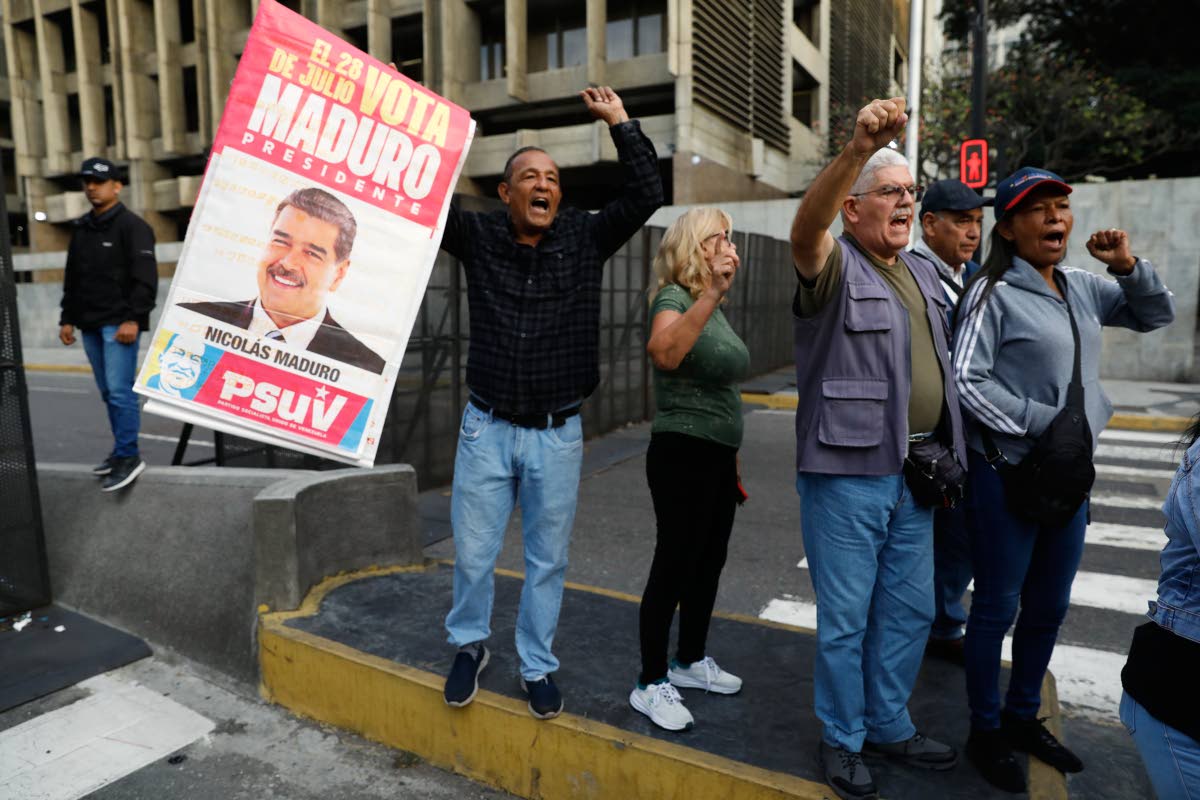
    The development comes amid dramatic scenes in both Venezuela and abroad. In Caracas, supporters of President Maduro gathered in the streets following news of his capture by US forces. Simultaneously, Venezuelan expatriates in Madrid celebrated the military operation that targeted Maduro’s government.

    President Donald Trump confirmed on January 3, 2026, that American forces had successfully captured Maduro following extensive airstrikes on Caracas and other Venezuelan cities. This military action represents the culmination of a prolonged geopolitical confrontation between the Trump administration and the Venezuelan leadership.

    China’s statement reflects growing international concern over the precedent set by military intervention in sovereign nations and highlights the deepening diplomatic divisions between global powers regarding appropriate responses to political crises.

  • Venezuelans in Trinidad and Tobago hopeful for change

    Venezuelans in Trinidad and Tobago hopeful for change

    The Venezuelan diaspora in Trinidad and Tobago has responded with both celebration and concern following the unprecedented US military operation that resulted in the capture and removal of President Nicolás Maduro on January 3rd. US President Donald Trump confirmed at a Mar-a-Lago press conference that a “large-scale strike” had been executed, resulting in Maduro and his wife being transported to the United States to face criminal charges.

    Trump announced that the United States would temporarily administer Venezuela through an unspecified group while explicitly stating his intention to access the country’s substantial oil reserves. He outlined plans for US oil companies to invest billions in rebuilding Venezuela’s energy infrastructure with the goal of exporting “large amounts of oil to other countries.”

    Former photojournalist Grevic Alvarado expressed cautious optimism, describing Maduro’s removal as “the first step towards freedom” while acknowledging concerns about family members remaining in Venezuela. “We are hopeful, but at this moment we need to understand what is happening,” Alvarado stated, emphasizing the need for calm until more information becomes available from US authorities and Venezuelan opposition leaders María Corina Machado and Edmundo González.

    Human rights activist Yesenia González characterized the development as “a very happy and emotional day” for Venezuelans who have endured years of economic collapse, shortages of basic necessities, and political repression. While not celebrating violence, she expressed hope for national renewal, institution rebuilding, and the eventual return of millions of displaced Venezuelans.

    González specifically thanked Trinidadian Prime Minister Kamla Persad-Bissessar for supporting US actions and praised Trump’s leadership, asserting that a “free, stable and democratic Venezuela” would benefit both Venezuelans and the broader region by reducing forced migration and fostering cooperation.

    However, dissenting voices emerged from within Venezuela. Political analyst Jesús Enrique Rojas described the atmosphere as “tense” following what he called a “big surprise” that sparked widespread indignation. Rojas reported civilian and military casualties from the strikes and emphasized that neither the public nor Vice President Delcy Rodríguez knew Maduro’s precise whereabouts or condition.

    Rojas condemned the operation as a violation of international law and Venezuelan sovereignty, warning that installing an opposition figure like Machado could trigger civil war. He insisted that constitutional protocols must be followed, with Vice President Rodríguez assuming leadership pending Maduro’s return or a Supreme Court decision regarding new elections.

    The professor called for unified action among Venezuelans to restore their democratically elected leader and normalcy to the nation, asserting that “We decide who is going to be our President because we have our own laws.”

  • France condemns US operation to capture Maduro; Russia ‘strongly urges’ release

    France condemns US operation to capture Maduro; Russia ‘strongly urges’ release

    PARIS, France — The French government issued a stern condemnation on Saturday regarding the United States-led military operation that resulted in the capture of Venezuelan President Nicolas Maduro, denouncing it as a violation of fundamental international legal principles. Concurrently, Russia demanded the immediate release of the detained Venezuelan leader and his wife.

    French Foreign Minister Jean-Noel Barrot articulated the nation’s position through a formal statement on social media platform X, acknowledging Maduro’s record of human rights violations against Venezuelan citizens while simultaneously condemning the American intervention. Minister Barrot emphasized that the operation “contravenes the principle of non-use of force, which serves as a cornerstone of international law.”

    The French diplomatic statement further cautioned that escalating violations of this fundamental principle by permanent members of the United Nations Security Council would inevitably yield “serious consequences for global security, sparing no nation.” Barrot underscored that sustainable political resolutions cannot be externally imposed, reflecting France’s commitment to diplomatic norms and multilateral governance structures.

    Meanwhile, the Russian Foreign Ministry issued multiple statements expressing profound alarm over the development, characterizing the American operation as “an act of armed aggression against Venezuela.” Russian officials dismissed Washington’s justifications for the intervention as “untenable,” asserting that “ideological hostility has triumphed over businesslike pragmatism” in American foreign policy decision-making.

    The Kremlin demanded immediate clarification regarding the circumstances surrounding Maduro’s apprehension and called for the unconditional release of both the Venezuelan president and his spouse. Russia, which had reaffirmed its support for Maduro following his controversial re-election in 2024 and remains Venezuela’s principal strategic ally in South America, stopped short of explicitly committing military assistance to Caracas in potential confrontations with the United States.

    The coordinated responses from both European and Russian diplomatic channels highlight growing international concern over unilateral military actions and their implications for global security architecture. The developments mark a significant escalation in the ongoing Venezuelan political crisis that has drawn in major world powers with competing geopolitical interests.

  • Venezuelan capital quiet, streets empty after US strike

    Venezuelan capital quiet, streets empty after US strike

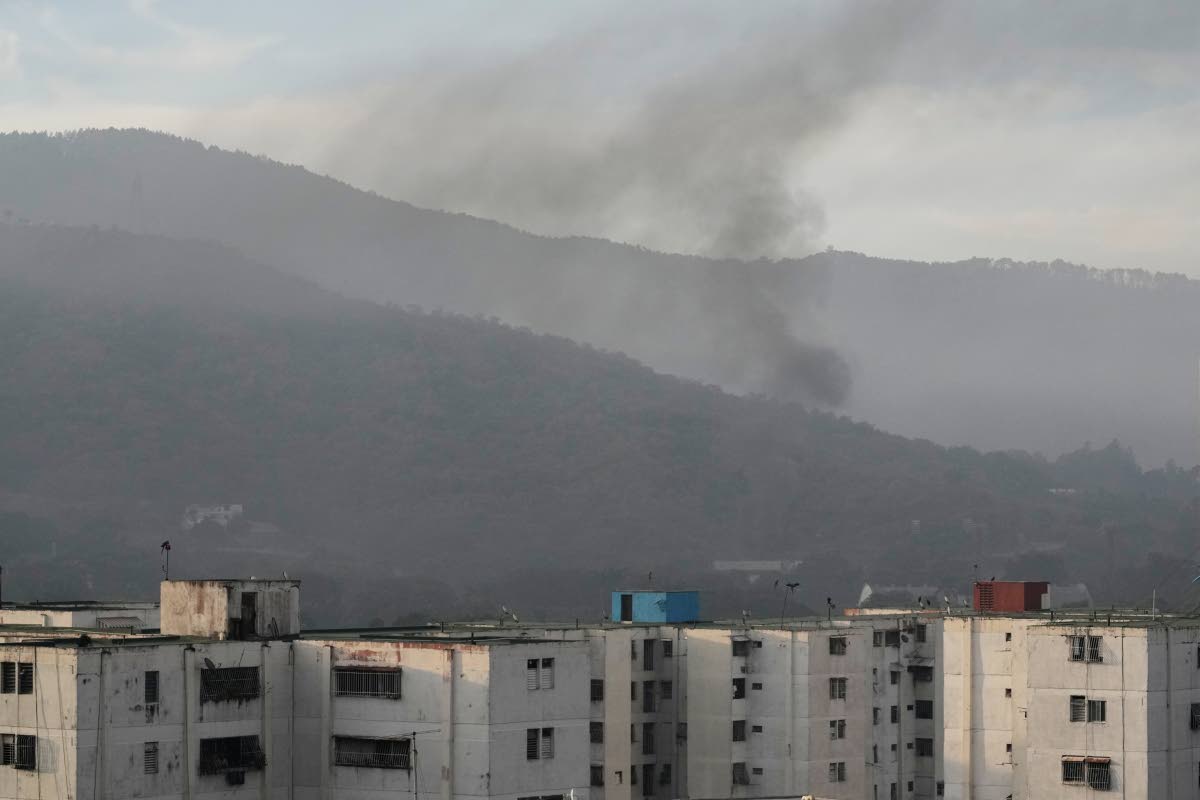
    CARACAS, Venezuela — The Venezuelan capital awoke to a transformed political reality Saturday following a pre-dawn U.S. military operation that resulted in the capture and removal of longstanding leader Nicolás Maduro. The city remained under a tense calm, with the distinct odor of explosives permeating the air as residents processed the dramatic overnight events.

    Beginning approximately at 2:00 AM local time, a series of powerful detonations rocked the city of six million, initially mistaken by some residents for fireworks. The strikes generated substantial shockwaves that rattled windows throughout the metropolitan area, prompting many citizens to rush onto terraces and balconies as military aircraft conducted operations overhead.

    Maria Eugenia Escobar, a 58-year-old Caracas resident, described the traumatic experience: “The explosion force literally threw me from my bed. In that terrifying moment, I thought ‘My God, the day has finally arrived,’ and I simply broke down crying.”

    Strategic military installations including the extensive compound in the Coche neighborhood, La Guaira’s airport and port facilities, along with targets in Maracay and Higuerote, sustained significant damage. Eyewitnesses reported observing substantial smoke columns rising from multiple locations across the city, eventually creating a dense, haze-like blanket over the urban landscape.

    U.S. President Donald Trump confirmed that American special operations forces successfully apprehended Maduro, who now faces transport to New York for judicial proceedings. The President emphasized that no American casualties occurred during the operation, though Venezuelan military and civilian casualties remain unverified.

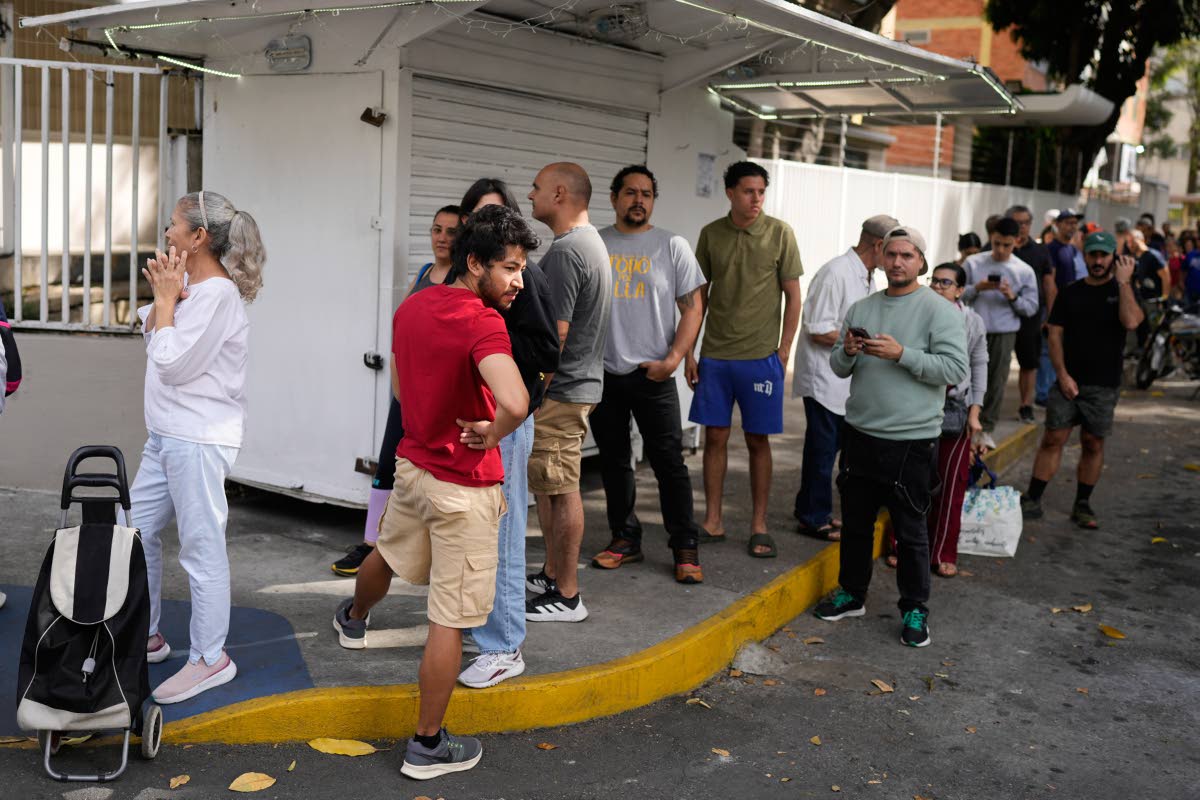
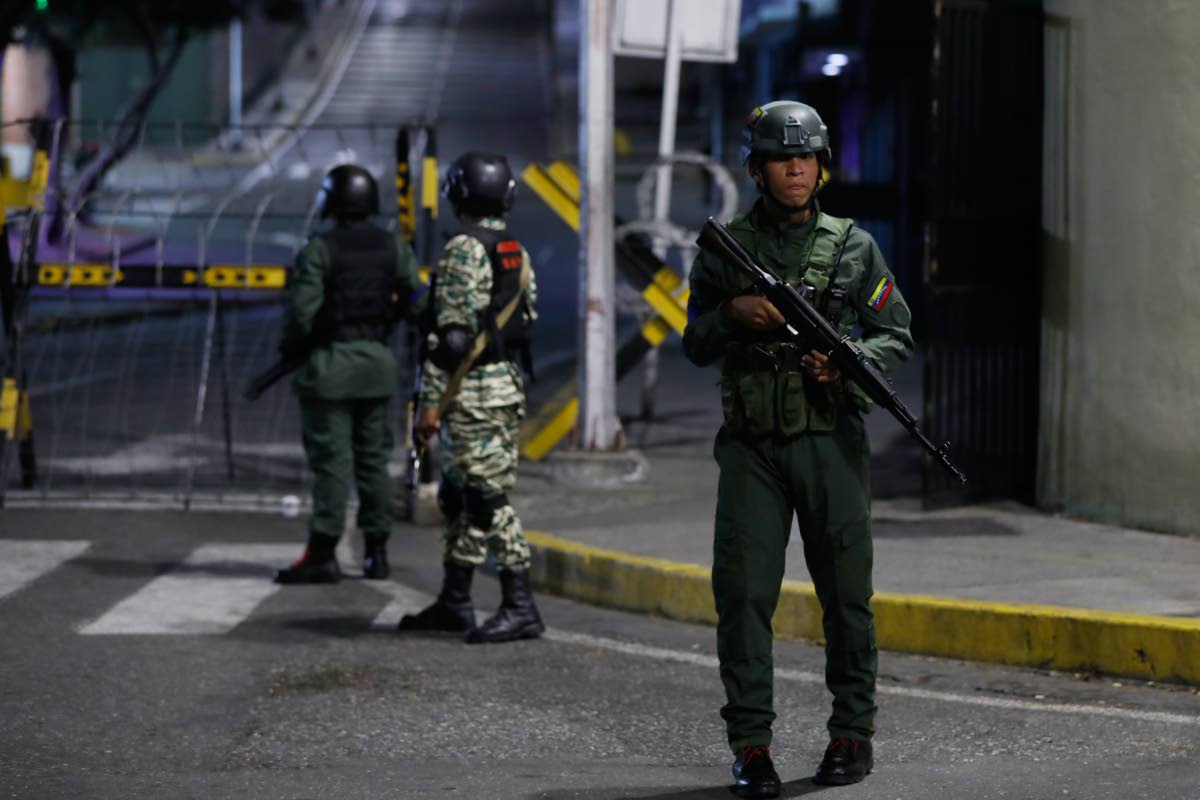
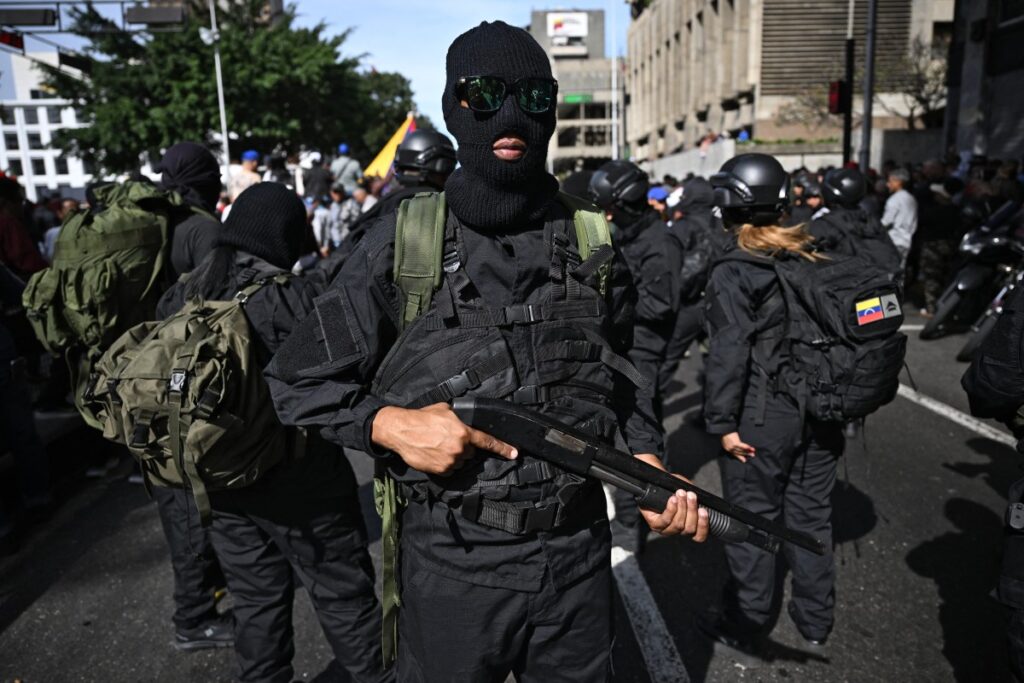
    The city’s typically vibrant streets remained predominantly deserted throughout the day, with occasional vehicles passing through areas monitored by heavily armed security personnel in black uniforms. While numerous establishments chose to remain closed, limited commercial activity resumed at select locations implementing controlled customer entry.

    Approximately several hundred dedicated Maduro supporters congregated at an improvised demonstration site, demanding information regarding their leader’s whereabouts and current condition. The gathering featured revolutionary music amplified through makeshift speaker systems alongside chants of “Long live Nicolás Maduro!”

    Katia Briceno, a 54-year-old university professor participating in the protests, condemned the American intervention as “barbaric,” questioning the legitimacy of foreign powers removing a national leader. Meanwhile, Defense Minister General Vladimir Padrino López accused U.S. forces of deploying missile and rocket attacks against civilian residential zones from combat helicopters.

    President Trump indicated readiness for potential additional military measures, stating he remained “unafraid of boots on the ground” while suggesting the possibility of “significantly expanded” subsequent strikes if warranted. The administration committed to overseeing Venezuelan governance until completing an appropriate political transition.

    Opposition leader Maria Corina Machado advocated for Edmundo Gonzalez Urrutia—whom opposition groups recognize as the legitimate winner of July 2024’s contested elections—to immediately assume presidential authority. However, Trump dismissed Machado’s leadership potential, instead expressing willingness to collaborate with Maduro’s deputy Delcy Rodriguez, whom he described as receptive to necessary reforms.

  • US aviation regulator shuts Caribbean airspace amid Venezuela action

    US aviation regulator shuts Caribbean airspace amid Venezuela action

    The United States Federal Aviation Administration (FAA) issued a significant airspace advisory on Saturday, directing commercial carriers to avoid portions of Caribbean airspace. The directive cited an ongoing ‘potentially hazardous situation’ linked to U.S. military operations, which culminated in the capture of Venezuelan President Nicolás Maduro.

    The aviation alert specifically warned of ‘safety-of-flight risks associated with ongoing military activity,’ effectively creating a no-fly zone for commercial aviation in the specified region. This precautionary measure underscores the scale and sensitivity of the military action undertaken.

    U.S. President Donald Trump publicly confirmed the successful capture of the Venezuelan leader, describing it as the result of a ‘large-scale strike’ conducted on Venezuelan territory. This decisive military intervention represents a dramatic escalation in a prolonged campaign of pressure against Maduro’s government.

    The operation follows an extensive period where the U.S. applied intensifying economic sanctions and diplomatic isolation tactics targeting Maduro’s socialist regime and its oil-dependent economy. Notably, this military action occurred just 48 hours after Maduro had extended an overture to the Trump administration, proposing bilateral cooperation on critical issues such as narcotics trafficking and illegal migration control.