分类: politics

  • Pinder defends record as he announces his intention to exit frontline politics

    Pinder defends record as he announces his intention to exit frontline politics

    In a significant political development from The Bahamas, John Pinder, the Member of Parliament for Central and South Abaco, has formally declared he will not seek re-election. Pinder stated his decision stems from a belief that he can contribute more effectively “behind the front lines” rather than building a long-term political career.

    Pinder’s announcement occurs against a backdrop of reported dissatisfaction among senior members of his ruling Progressive Liberal Party (PLP) in Abaco. Concerns were allegedly raised during a branch meeting attended by Prime Minister Philip Davis, where constituents criticized the MP’s perceived lack of visibility and a dismissive attitude toward local issues. Questions were also directed at the pace of post-disaster recovery efforts on the island.

    In defense of his tenure, Pinder pointed to substantial achievements in revitalizing Abaco’s economy and tourism sector. He emphasized that his primary focus upon entering office was to restore economic activity and reinstate Abaco as a key destination on the tourism map, a status he claimed was neglected by the previous Free National Movement (FNM) government.

    His international advocacy, he reported, successfully rebuilt global confidence, catapulting Abaco to become the nation’s second-largest stopover visitor destination after Nassau. On the infrastructure front, Pinder highlighted the completion or near-completion of critical Public Works projects, including road paving in Pelican Road and Central Pines, and the finalization of contracts for Sweeting’s Tract Water and Road works.

    A particular focus was placed on Moore’s Island, which received long-awaited investments such as rebuilt and extended fishing docks, a completed front street seawall, and an imminent start on a new clinic.

    Pinder confirmed that three individuals are vying for the party nomination to succeed him, and he expressed support for one candidate, whose identity he will disclose after the candidate selection committee concludes its meetings. Reflecting on his service, Pinder expressed “absolutely no regrets,” stating it was a “profound honor” to represent his constituency and reaffirming his unwavering dedication to Abaco’s advancement, albeit from a non-electoral role.

  • TPP’s Pollard: I could have done more for Tobago

    TPP’s Pollard: I could have done more for Tobago

    In a remarkable admission of underperformance, Tobago People’s Party (TPP) candidate Ian “Whitey” Pollard has publicly conceded his failure to fully deliver on development promises for the Mason Hall North/Moriah electoral district. The Secretary of Settlements, Public Utilities and Rural Development offered his apology during a December 9th constituency meeting, marking a significant moment in Tobago’s political landscape.

    Pollard assumed full responsibility for the development shortfalls while simultaneously attributing the challenges to financial constraints imposed by what he termed “the wicked PNM regime” over the past three years and four months. This dual acknowledgment of personal responsibility coupled with political blame-setting creates a complex narrative of accountability in Tobago’s governance structure.

    The housing crisis emerged as a central issue, with discussions highlighting Tobago’s growing demand for diversified housing solutions beyond traditional single-family units. The TPP has leveled serious allegations against the PNM, accusing them of withholding funds from an Inter-American Development Bank loan specifically designated for the Riseland housing project—a claim that adds layers to the ongoing political friction.

    Prime Minister Kamla Persad-Bissessar’s November 4th announcement regarding the project’s imminent commencement contrasts sharply with Pollard’s portrayal of systematic fund withholding, creating competing narratives about the project’s status.

    With the January 12th elections approaching, Pollard delivered an impassioned plea for voter support, urging constituents to decisively remove the PNM from power. His appeal addressed potential voter apathy, acknowledging that internal governance realities often differ from campaign promises while maintaining that change must come through electoral participation rather than abstention.

    Pollard will face PNM’s Kwesi DesVignes, the former Secretary for Infrastructure, Quarries, and Environment, in what promises to be a closely contested battle that reflects broader political tensions affecting Tobago’s development trajectory.

  • Alexander: More radars needed across Trinidad and Tobago

    Alexander: More radars needed across Trinidad and Tobago

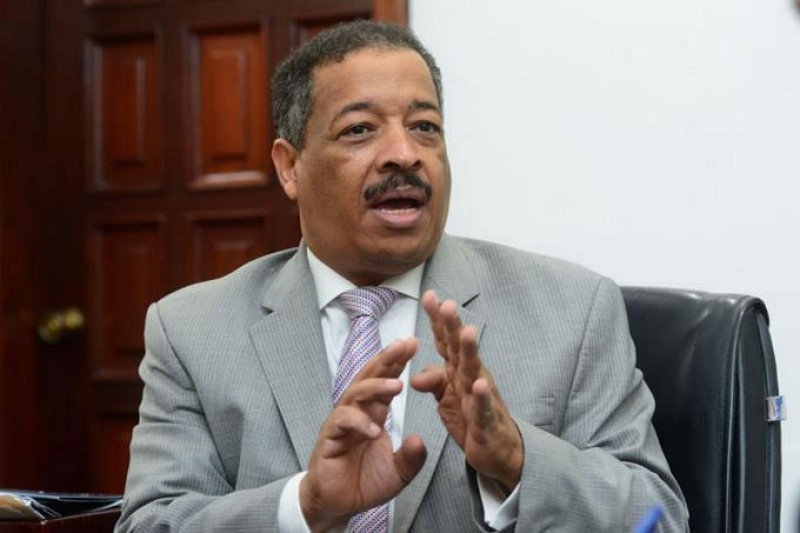
    Trinidad and Tobago’s Homeland Security Minister Roger Alexander has vigorously defended the recent deployment of radar technology in Tobago, asserting that additional systems should be implemented nationwide to enhance security measures. The minister’s comments came during a December 9 media briefing outside Parliament, addressing heightened security concerns following the abduction of businessman Derek Tardieu and his wife Clarabelle from their Monos Island residence on December 6.

    The couple remains missing with kidnappers demanding a $2.5 million ransom for their release. Minister Alexander emphasized that advanced radar technology could substantially improve protection for citizens residing in the archipelago’s outlying islands. “We must take a definitive stance against such criminal activities,” Alexander stated. “These perpetrators potentially arrived by vessel… to abduct citizens of our nation.”

    Rejecting a return to normalcy amid ongoing security challenges, Alexander revealed, “We witness similar incidents daily with unauthorized vessels entering our waters undetected. This precisely why we’re strategically deploying cutting-edge technology to prevent such occurrences.” The minister expressed personal commitment to encircling the nation with protective technologies if given sole authority.

    When questioned about potential United States military utilization of the radar system amid tensions with Venezuela, Alexander remained evasive, noting only that Trinidad and Tobago would “benefit from the situation” regarding foreign entities entering the country with malicious intent. Pressed on data-sharing arrangements, the minister described all operations as “joint ventures in and around TT” without providing specific details.

    Prime Minister Kamla Persad-Bissessar, separately addressing journalists, redirected technical inquiries to Defense Minister Wayne Sturge. While confirming Trinidadian military personnel access to radar data, she acknowledged unspecified external parties might have access but deemed such information potentially “too sensitive for public disclosure.” The Prime Minister emphasized that Minister Sturge possesses the comprehensive details regarding data-sharing protocols.

  • Roberts predicts TPP sweep in THA elections

    Roberts predicts TPP sweep in THA elections

    In a bold political forecast, Housing Minister Anil Roberts has projected a comprehensive electoral triumph for the Tobago People’s Party (TPP) in the forthcoming Tobago House of Assembly (THA) elections scheduled for January 12. The prediction emerged during Senate deliberations on the Finance Bill 2025 on December 9, where Roberts engaged in heated exchanges with Opposition senators.

    Roberts systematically dismantled claims by PNM senators that the United National Congress (UNC) government had performed poorly since its April 28 general election victory. The UNC secured 26 parliamentary seats compared to PNM’s 13, with the TPP capturing two seats—creating an unconventional seating arrangement where TPP legislators occupy government benches despite no formal coalition agreement.

    The minister employed sharp sarcasm when referencing PNM’s electoral prospects, stating: ‘I expect the people of Tobago on January 12 will bring the PNM back’—a remark met with knowing laughter from government benches. He contextualized his prediction by recalling the PNM’s devastating 14-1 defeat by the Progressive Democratic Patriots (PDP) in the 2021 THA elections, noting that most PDP representatives subsequently defected to form the TPP in August 2023.

    Roberts attributed the anticipated TPP landslide to public disillusionment with PNM’s governance approach, accusing them of prioritizing ‘friends, family and financiers’ over public welfare. He vehemently defended Prime Minister Kamla Persad-Bissessar against claims of ethnic bias, praising her inclusive cultural policies and broad popular support.

    The political theater intensified as Roberts addressed temporary Opposition Senator Mustapha Abdul-Hamid—returning to Parliament after a 15-year absence—declaring that even the symbolic resurrection of PNM founder Dr. Eric Williams would fail to revitalize the party. Government senators expressed vigorous approval through desk-thumping applause as Roberts concluded that the population would never permit another PNM administration.

  • Russia vows support for Venezuela’s sovereignty ‘struggle’

    Russia vows support for Venezuela’s sovereignty ‘struggle’

    In a significant display of diplomatic solidarity, Russian President Vladimir Putin and Venezuelan President Nicolás Maduro convened an urgent telephone conversation on December 11th, directly responding to the US Navy’s interception of a Venezuelan oil tanker in Caribbean waters. The high-stakes dialogue occurred amidst escalating tensions between Caracas and Washington, with the Venezuelan government condemning the US operation as “an act of international piracy.”

    The comprehensive discussion reinforced the strategic alliance between Russia and Venezuela, with both leaders celebrating the recent signing of 19 bilateral agreements across multiple sectors through the High-Level Intergovernmental Commission. These agreements demonstrate the deepening comprehensive alliance between the nations, with preparations already underway for the next commission meeting scheduled in Caracas for 2026.

    President Putin explicitly reaffirmed his unwavering support for Maduro’s administration in its efforts to maintain political stability, economic development, and social protection for the Venezuelan people. The Russian leader pledged continued diplomatic backing for Venezuela’s sovereignty and commitment to international law throughout Latin America.

    The timing of this strategic communication carries particular significance, coming just weeks after Maduro’s unexpected revelation of a “respectful and cordial” telephone conversation with US President Donald Trump approximately ten days prior to December 3rd. Maduro had characterized that exchange as potentially opening doors for diplomatic dialogue between the historically adversarial nations.

    During the Putin-Maduro call, special emphasis was placed on enhancing air and maritime connectivity between the two countries, with both leaders acknowledging the importance of existing direct routes to Moscow and St. Petersburg for strengthening economic, tourism, and cultural exchanges.

    Maduro shared Venezuela’s economic progress projections, including the country’s anticipated regional leadership with 9% growth this year. President Putin received comprehensive updates on these developments and extended congratulations to the Bolivarian government for its economic achievements.

    The alliance, initially established over two decades ago under late President Hugo Chávez, continues to strengthen, with both leaders reaffirming their commitment to the Joint Development Plan towards 2030. President Putin emphasized that direct communication channels between the nations remain permanently open, ensuring continuous diplomatic coordination amid ongoing geopolitical challenges.

  • UNC 28 nomatch forPNM 13

    UNC 28 nomatch forPNM 13

    For the second time in recent weeks, Trinidad and Tobago’s parliamentary proceedings have been marked by controversy as the ruling United National Congress (UNC) government abruptly terminated debate on critical financial legislation. The Finance Bill 2025 discussion was cut short last Friday despite opposition members from the People’s National Movement (PNM) awaiting their turn to speak.

    This procedural maneuver represents a significant departure from established parliamentary conventions, where the chief whip typically communicates speaking arrangements to both government business leaders and the Speaker. The unexpected closure of debate has raised serious concerns about democratic transparency within the nation’s highest legislative body.

    The current administration’s actions mirror similar tactics employed during the 2025/2026 budget debate approximately one month prior. These developments appear particularly contradictory given the UNC’s historical emphasis on governmental accountability while previously serving in opposition roles.

    Political analysts suggest these maneuvers indicate the UNC’s apparent reluctance to subject its financial policies to rigorous opposition scrutiny. Despite holding a substantial majority with 28 Members of Parliament versus the PNM’s 13 representatives, the governing party appears cautious when confronting the opposition’s financially astute members.

    The PNM’s effective performance during last month’s finance committee meeting, where they challenged numerous governmental financial approaches, may have contributed to the UNC’s defensive parliamentary strategy. Prominent PNM figures including Colm Imbert (Diego Martin North/East), Brian Manning (San Fernando East), Stuart Young (Port of Spain North/St Ann’s West), Marvin Gonzales (Arouca/Lopinot) and Dominic Romain (Malabar/Musica) have demonstrated particular proficiency in financial matters.

    Observers note that the ongoing parliamentary tensions reflect deeper political divisions, with the opposition receiving no procedural assistance from the Speaker’s chair, effectively shifting the political battleground beyond the parliamentary floor.

  • Putin reaffirms support for Venezuela’s Maduro over US tensions

    Putin reaffirms support for Venezuela’s Maduro over US tensions

    MOSCOW—In a significant display of geopolitical alignment, Russian President Vladimir Putin has reinforced his nation’s strategic partnership with Venezuela during a high-level telephone discussion with President Nicolás Maduro. The Kremlin confirmed Thursday’s diplomatic exchange emphasized Moscow’s unwavering support for Caracas amid mounting international pressures.

    The conversation follows a dramatic escalation in regional tensions after United States military forces executed a high-seas interception of a Venezuelan-flagged oil tanker. US special operations personnel conducted a helicopter-borne boarding operation, seizing the vessel in what Washington characterizes as anti-narcotics enforcement.

    This latest incident represents merely one facet of the complex confrontation between the Maduro administration and Western powers. The Venezuelan leader has consistently rejected allegations from US authorities that his government participates in narcotics trafficking, countering that these accusations serve as pretext for intervention motivated by Venezuela’s substantial petroleum reserves.

    Russia and Venezuela have cultivated increasingly robust bilateral relations throughout recent years, cemented by Maduro’s official visit to Moscow earlier this year. During that summit, the two nations ratified a comprehensive partnership agreement and the Venezuelan president participated in Russia’s annual military parade, signaling deepening defense cooperation.

    According to official Kremlin readouts, President Putin explicitly expressed solidarity with the Venezuelan populace and endorsed Maduro’s sovereign policies against external pressure. The Russian leadership’s statement emphasized support for Venezuela’s right to protect national interests and maintain political autonomy.

    The geopolitical standoff has intensified with the Trump administration deploying naval assets within operational range of Venezuelan territory. Maritime surveillance data indicates at least 22 vessel engagements in the Eastern Pacific and Caribbean regions, resulting in numerous casualties according to regional reports.

  • ‘Not about cashing in’ – FNM open to Fox joining party

    ‘Not about cashing in’ – FNM open to Fox joining party

    Free National Movement (FNM) leader Michael Pintard has acknowledged ongoing discussions with former NBA champion and actor Rick Fox regarding potential political collaboration. The revelation came during a press briefing outside the House Assembly, where Pintard expressed his party’s admiration for Fox’s accomplishments and his positive representation of The Bahamas on the global stage.

    Pintard revealed that conversations with Fox began during his tenure as sports minister, focusing on substantial investments exceeding $300 million in the sports sector. While not confirming a formal recruitment offer, the opposition leader emphasized the FNM’s openness to engaging with talented Bahamians both domestically and abroad who wish to contribute to national development.

    The political landscape has grown increasingly complex as Fox currently serves as Ambassador at Large for sports within the incumbent Davis administration. Tensions emerged after Fox publicly criticized the governing Progressive Liberal Party while refusing to resign his diplomatic post. In a recent Facebook statement, Fox asserted that his allegiance lies with the Bahamian people rather than any political party, challenging conventional expectations of ambassadorial conduct during election periods.

    The situation has drawn additional controversy after Deputy Prime Minister Chester Cooper questioned Fox’s nationality, apparently unaware of his dual Canadian-Bahamian citizenship. Fox was born in Canada to a Bahamian father and Italian mother but spent his formative years in The Bahamas.

  • Motion to remove deputy mayor of Savanna-la-Mar denied

    Motion to remove deputy mayor of Savanna-la-Mar denied

    A monthly assembly of the Westmoreland Municipal Corporation (WMC) in Jamaica was thrust into procedural turmoil as Councillor Lidden Lewis of the Frome Division initiated an unexpected motion to remove Deputy Mayor Devon Thomas from his appointed role. The proceedings, which unfolded during the Thursday meeting, highlighted significant internal friction within the municipal leadership.

    Councillor Lewis presented a formal notice of motion, contending that Deputy Mayor Thomas, who represents the Savanna-la-Mar North Division, had demonstrated a persistent failure in ensuring accountability and transparency within the corporation. “There has been a conspicuous lack of accountability and transparency at the Westmoreland Municipal Corporation,” Lewis asserted. “The deputy mayor has neglected his duty to drive meaningful change and provide adequate support to WMC operations.”

    The motion, seconded by Julian Chang of the Savanna-la-Mar Division, was abruptly halted by Mayor Danree Delancy. The mayor ruled the notice inadmissible due to procedural improprieties, specifically its submission outside the mandated timeframe required for such motions.

    Following several minutes of deliberation regarding the motion’s legality, Lewis voluntarily withdrew his proposal but indicated his intention to reintroduce it in January. He further requested an explanation from WMC Chief Executive Officer Andre Griffiths regarding why the notice was included in the December meeting agenda if it was destined for rejection. This request was denied.

    In a related development, a secondary motion was introduced—and subsequently seconded by Councillor Warren Lyttleton of the Grange Hill Division—proposing that parochial funding allocations for councillors be distributed as a percentage-based model rather than a fixed sum. The outcome of this proposal remains pending future discussion.

    Lewis ultimately conceded that a new notice would need to be submitted to the CEO at least eight days prior to the next meeting, in full compliance with established procedural guidelines.

  • PNM stalwart ‘Ferdie’ Ferreira dies

    PNM stalwart ‘Ferdie’ Ferreira dies

    The political landscape of Trinidad and Tobago has been diminished by the passing of Ferdinand “Ferdie” Ferreira, a foundational figure within the People’s National Movement (PNM) and former key advisor to the nation’s inaugural Prime Minister Dr. Eric Williams. Ferreira passed away on Thursday at the age of 93, leaving behind a legacy of profound political service.

    Opposition Leader and PNM political head Pennelope Beckles-Robinson confirmed the news in a heartfelt tribute shared on her official Facebook page. Her statement, issued on December 11th, framed Ferreira’s death not just as a party loss, but as a national moment of reflection. “As we mourn the passing of Ferdinand ‘Ferdie’ Ferreira,” she wrote, “we take solace in knowing that a life lived in service, integrity and devotion is honoured by God Himself.” She described him as now being “at rest, free from the cares of this world and embraced by the everlasting peace of our Heavenly Father.”

    Beckles-Robinson, who serves as the Member of Parliament for Arima, elaborated on Ferreira’s immense historical significance. Born in 1932 on Dundonald Street in Port of Spain, Ferreira was revered as one of the nation’s preeminent political archivists. His expertise was unparalleled; he was one of the few individuals who could speak with definitive authority on the entire arc of Trinidad and Tobago’s political evolution. His deep knowledge encompassed the PNM’s founding principles, its philosophical underpinnings, and its intricate history, as well as the broader political narrative of the nation, spanning both the pre-colonial and post-colonial eras. His death, she noted, represents a “profound loss” for the country’s institutional memory and political heritage.