
The government of Trinidad and Tobago (TT) has sparked widespread debate and criticism for its aggressive policies centered around state-sanctioned killing. Since assuming office six months ago, Prime Minister Kamla Persad-Bissessar has prioritized executions, advocating for the resumption of the death penalty for prisoners on Death Row. This stance has been further reinforced by Defence Minister Wayne Sturge’s promotion of ‘shoot first, kill first’ legislation, framed as a stand-your-ground policy. Most recently, the PM has aligned TT with the United States’ controversial strategy of targeting small boats in the Caribbean Sea, a move that has been described by international observers as a ‘kill them all violently’ approach to foreign policy. Critics argue that these measures lack empirical evidence to support their efficacy. The global trend has shifted away from the death penalty, with studies showing it does not deter crime. Similarly, stand-your-ground laws in the U.S. have led to increased violence rather than reduced crime. The U.S. government’s tactic of extrajudicial killings at sea to combat drug trafficking has also been widely criticized as ineffective and counterproductive. Mexico’s ongoing cartel violence, with over 30,000 homicides annually, serves as a stark reminder that murder does not equate to peace. The TT government’s reliance on such medieval solutions raises questions about its legitimacy and effectiveness. As the U.S. reportedly destroys nine small boats, killing 37 people, including two TT citizens, the Prime Minister has yet to define what constitutes success in this brutal anti-drug policy. Attorney General John Jeremie’s lamentation of TT’s high murder rate and near ‘state of anarchy’ further highlights the irony of a government attempting to curb violence through more violence. This approach not only undermines the social contract but also risks plunging society into deeper chaos, as even political philosopher Thomas Hobbes acknowledged that a government’s legitimacy hinges on its ability to protect, not threaten, its citizens.
分类: politics
-
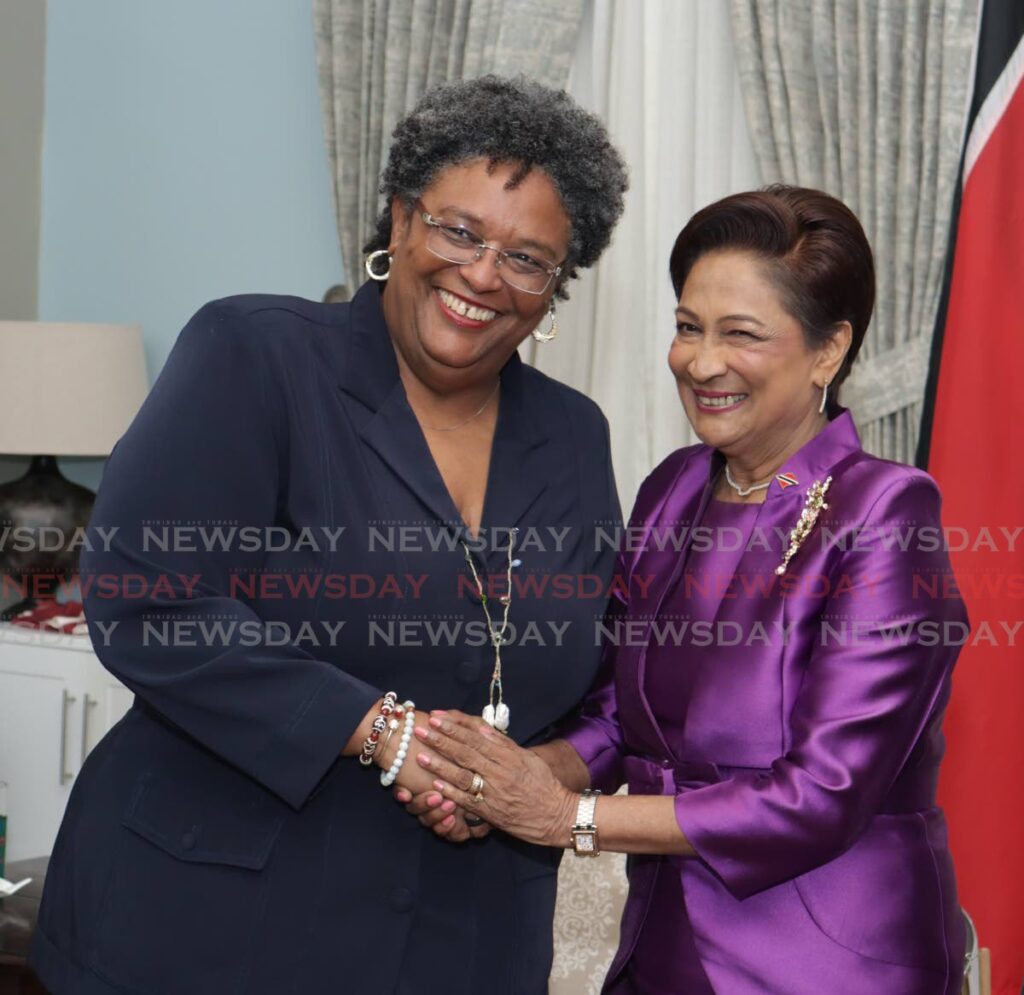
Mottley: US military threatening regional peace
Barbados Prime Minister Mia Mottley has strongly criticized recent US military airstrikes in the southern Caribbean, labeling them as a threat to regional peace. Speaking at the Barbados Labour Party’s annual conference on October 25, Mottley emphasized that disputes should be resolved through the United Nations rather than unilateral military actions. Her remarks were later shared by former Trinidad and Tobago Prime Minister Dr. Keith Rowley on his Facebook page on October 26. Mottley argued that extra-judicial killings, even of suspected criminals, violate the rule of law and undermine regional stability. She urged the US to share intelligence with Caribbean nations if there is an immediate threat, stressing that dialogue and negotiation are essential to prevent conflicts. Mottley’s comments came shortly after an Al Jazeera report where Trinidad and Tobago’s Defence Minister Wayne Sturge defended the US actions, stating that the US has the prerogative to interpret and act against perceived terrorist threats in international waters. Mottley countered that almost all wars in history have been resolved through dialogue, advocating for preemptive discussions to avoid violence.
-

CWU disagrees with JTUM’s budget endorsement
The Communications Workers’ Union (CWU) has publicly distanced itself from the Joint Trade Union Movement’s (JTUM) endorsement of the 2026 national budget, asserting that it cannot support a fiscal plan that prioritizes financial stability over the immediate needs of workers. In a statement released on October 24, the CWU emphasized its independence and dissenting views on the budget, despite remaining a member of JTUM. The union criticized the government’s focus on balance sheets, arguing that the budget fails to address the rising costs of living, stagnant wages, and the struggles of working-class citizens. The CWU also highlighted the lack of meaningful provisions to restore workers’ purchasing power, which has been eroded by inflation and currency devaluation. Additionally, the union condemned the government’s neglect of the productive sector, pointing to insufficient allocations for manufacturing, agriculture, and industrial diversification. CWU Secretary General Joanne Ogeer clarified that the union’s stance was issued to correct misconceptions after parliamentary discussions referenced its earlier budget analysis. Ogeer reiterated the CWU’s commitment to holding any government accountable, regardless of its affiliation with JTUM or political parties.
-
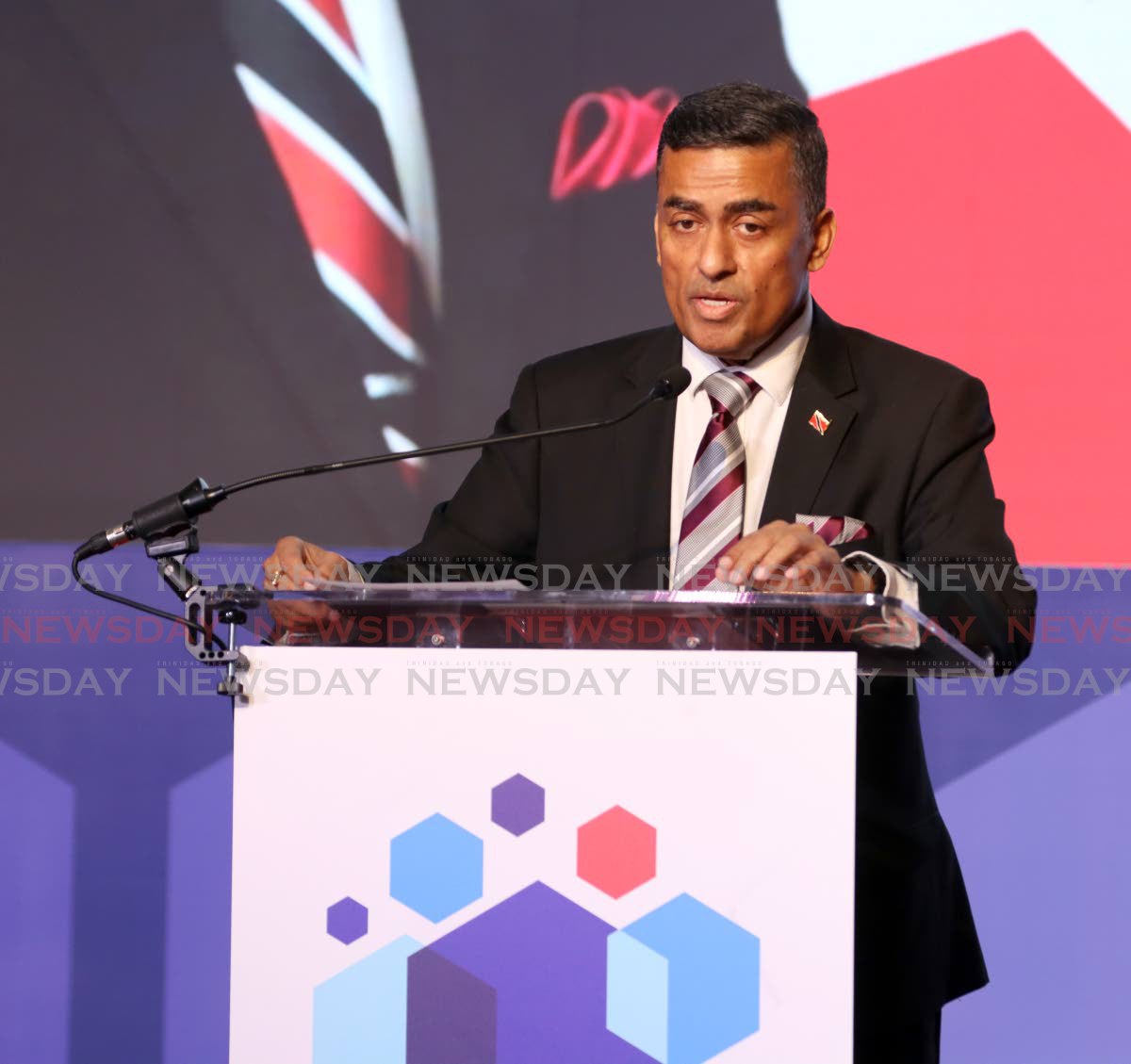
Why still pay TTRA employees?
The recent repeal of the Trinidad and Tobago Revenue Authority (TTRA) Act by the new UNC government has sparked significant debate over the continued employment and funding of its hierarchy within the Ministry of Finance. Despite the repeal, the TTRA’s top officials, who were hired under the previous administration, remain on the payroll, costing taxpayers substantial sums. Finance Minister Davendranath Tancoo faces mounting questions regarding the rationale behind this financial burden on taxpayers.
The TTRA, a politically charged entity, saw its top officials earning over $150,000 monthly. Established under a prior administration’s policy agenda, the TTRA’s alignment with the current government’s priorities is now in question. Critics argue that continuing to fund such an entity undermines democratic accountability and represents a misallocation of public resources.
Governments are elected to implement their own policy objectives and allocate resources accordingly. Funding legacy entities that no longer serve the current administration’s goals is seen as wasteful, especially when these entities may have been established without proper feasibility studies or governance structures. The current administration is urged to assess the legal constitution, effectiveness, and necessity of these personnel before continuing payments.
Efficient and transparent use of public funds is a fundamental duty of any government. Paying for an entity that may no longer be operational, relevant, or producing measurable results contradicts sound fiscal management. Instead, funds should be redirected toward current national priorities or more impactful programs that align with present needs.
The current administration should not automatically inherit financial responsibility for organizations created by a previous government unless these entities continue to serve a clear, lawful, and strategic national purpose. Continued funding without such justification represents poor governance, weak accountability, and a misallocation of public resources.
Nizam Ganga, via e-mail
-

PNM Tobago urges Barbados PM to speak with Persad-Bissessar
Amid escalating geopolitical tensions in the Caribbean, PNM Tobago leader Ancil Dennis has called on Barbados Prime Minister Mia Mottley to engage in dialogue with Trinidad and Tobago’s Prime Minister Kamla Persad-Bissessar, urging for “cool heads” to prevail. Dennis likened the current conflict involving the US, Venezuela, and Trinidad and Tobago to a game of all-fours, cautioning that while Persad-Bissessar may feel empowered, the situation remains unpredictable. His appeal follows Venezuela’s accusation that Trinidad and Tobago is collaborating with the CIA, a claim that arose after the USS Gravely, a US warship, arrived in Trinidad for a five-day military exercise with the TT Defence Force. The Ministry of Foreign Affairs defended the visit, stating it aims to combat transnational crime and enhance security cooperation. Dennis emphasized the Caribbean’s historical commitment to peace, rooted in its struggles against colonization and its dedication to sovereignty and non-interference. He highlighted the region’s preference for cultural and sporting rivalries over militarized conflicts, warning against the dangers of being drawn into external wars. Dennis urged Mottley to remind Persad-Bissessar of the Caribbean’s values, advocating for diplomacy and creative solutions to regional challenges. He concluded with a call for unity, stressing that the Caribbean’s strength lies in its ability to prioritize peace over conflict.
-

LETTER: The Conflict of Interest Surrounding an Independent Senator’s Political Candidacy
A recent controversy has emerged surrounding the political candidacy of an independent senator, sparking debates over potential conflicts of interest. The senator, who has long championed transparency and ethical governance, now faces scrutiny for simultaneously holding a legislative role while running for a higher political office. Critics argue that this dual position could compromise impartiality, as legislative decisions might be influenced by campaign ambitions. Supporters, however, contend that the senator’s independence and track record of integrity mitigate such concerns. The situation has reignited discussions about the need for clearer ethical guidelines in political candidacies, particularly for those in non-partisan roles. As the election approaches, the senator’s ability to navigate this ethical minefield will likely become a focal point of public discourse.
-
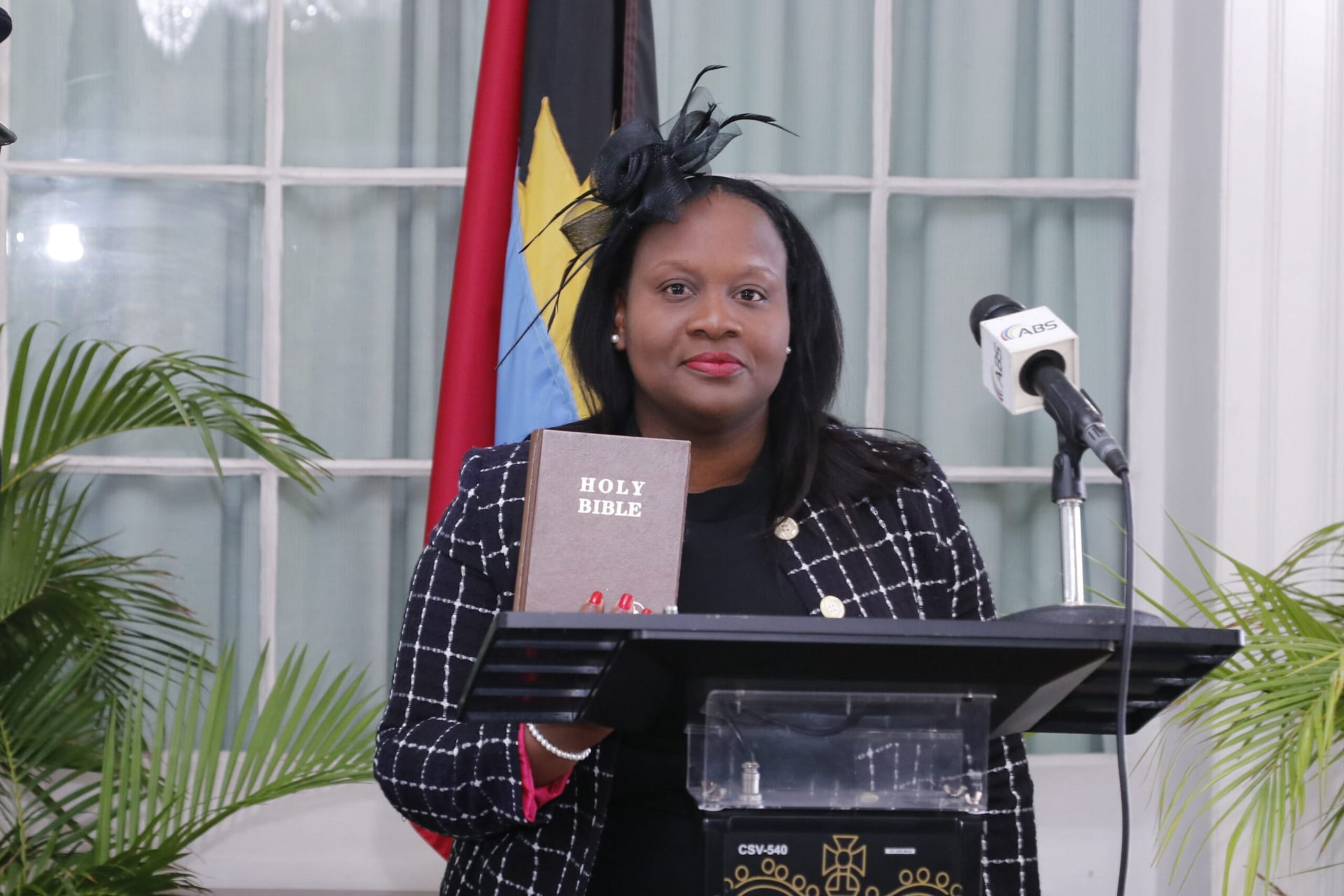
COMMENTRY: Beyond Ambition—The Price of an ‘Independent’ Seat and the Need for True Public Service
The recent revelation that an Independent Senator in Antigua and Barbuda is seeking nomination to contest a seat for the ruling Antigua and Barbuda Labour Party (ABLP) in St. Phillip’s South has sparked a heated debate about the integrity of public service appointments. While personal ambition is not inherently problematic, the blurring of lines between impartial roles and partisan politics raises significant concerns about the credibility of governance.
-
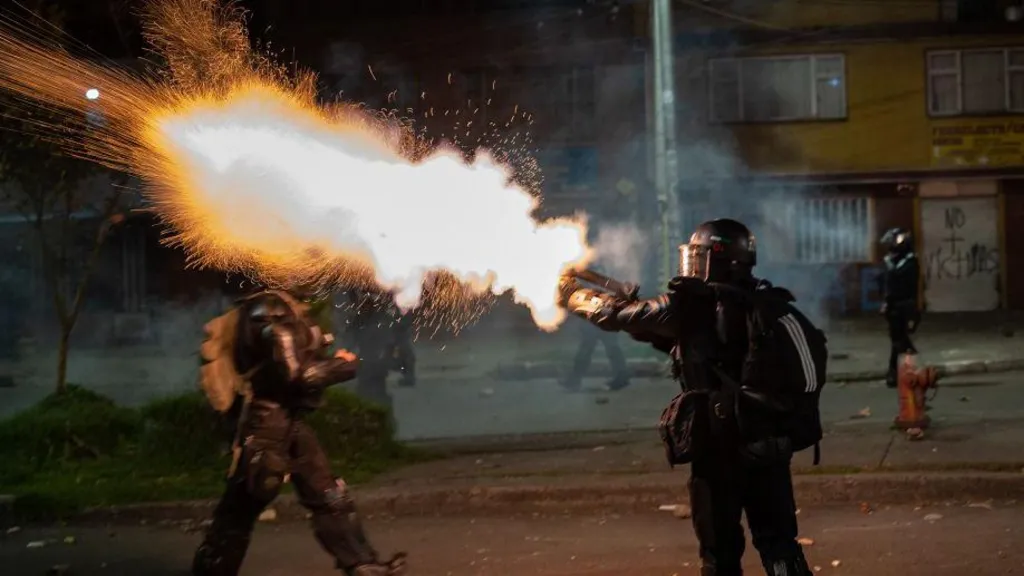
US axes website for reporting human rights abuses by US-armed foreign forces
The US State Department has recently taken down an online portal designed to report alleged human rights violations by foreign military units equipped with American weapons. Known as the Human Rights Reporting Gateway (HRG), this platform served as a formal “tip line” for the US government, offering the only publicly accessible channel for organizations or individuals to directly inform authorities of potential serious abuses by US-armed foreign forces. The removal of this portal has drawn sharp criticism from human rights advocates and a senior congressional aide who played a key role in drafting the legislation that mandated its creation. Despite the backlash, the State Department maintains that it continues to comply with the law. The HRG was established in 2022 under pressure to enforce updated provisions of the Leahy Law, named after former US Senator Patrick Leahy. This law requires the government to facilitate the receipt of information regarding alleged gross human rights violations by military units supported by Washington. Tim Rieser, a former senior aide to Senator Leahy who authored the 2011 amendment mandating such information gathering, expressed concern to the BBC, stating that the gateway’s removal indicates the State Department is “clearly ignoring the law.” Rieser warned that this move could lead to the US supporting foreign security forces involved in heinous crimes without accountability, thereby reducing the incentive for foreign governments to bring perpetrators to justice. In response, the State Department emphasized its ongoing efforts to receive reports of gross human rights violations and its engagement with credible organizations on a wide range of human rights issues, asserting that it remains committed to fulfilling its legal obligations.
-
Somohardjo vraagt spoedoverleg met Rekenkamer en GBB over gronduitgifte
Bronto Somohardjo, Chairman of the Permanent Committee on Land Policy and Forest Management (GBB) in Suriname’s National Assembly, has called for an emergency meeting with the Court of Audit and the Ministry of Land Policy following a damning report on land allocations in 2023. The report, which Somohardjo described as containing \”a stark and undeniable conclusion,\” reveals that land distributions were conducted unlawfully, leaving the public as victims of improper governance.
-
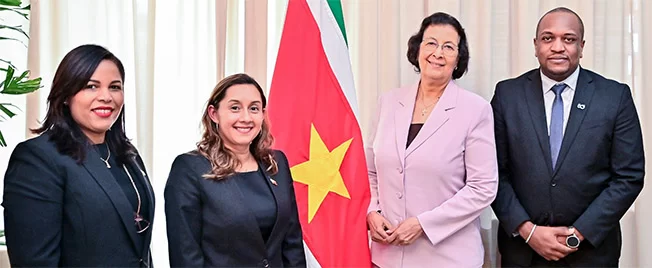
Suriname en Venezuela verkennen verdieping landbouw, energie en visserij
On Friday, President Jennifer Simons of Suriname welcomed Venezuelan Ambassador Ayerim Flores Rivas for an introductory and exploratory meeting at the Cabinet of the President. The discussions reaffirmed the longstanding friendly relations between the two nations and explored avenues to enhance bilateral cooperation. Key areas of focus included agriculture, fisheries, oil and gas, with additional interest in cultural and health-related exchanges. Minister of Foreign Affairs, International Business, and Cooperation, Melvin Bouva, who attended the meeting, emphasized Venezuela’s role as a significant economic partner. ‘We discussed the involvement of Venezuelan companies in Suriname’s fish processing and export sectors,’ Bouva stated. He also highlighted the strategic importance of the oil and gas industry, noting Venezuela’s valuable expertise in this domain. Bouva reiterated Suriname’s commitment to maintaining South America as a zone of peace, grounded in dialogue and mutual respect. The Communications Service of Suriname reported that the country will continue to advocate for regional stability. Ambassador Flores Rivas described the meeting as constructive and underscored the historical ties between the two nations. ‘Our relationship spans over fifty years. We see tremendous opportunities for collaboration, especially as Suriname develops its energy economy,’ the diplomat remarked.