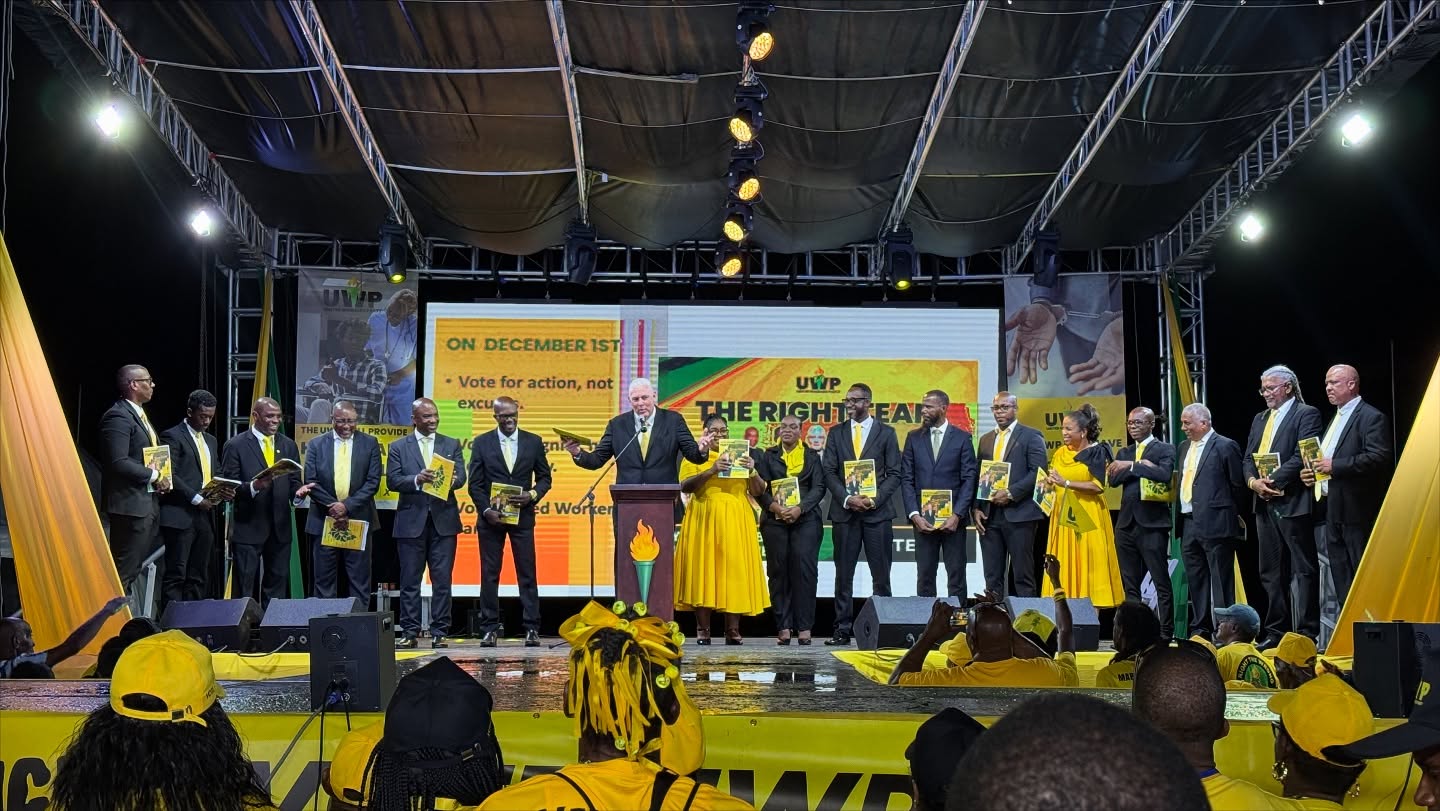
Allen Chastanet, the Political Leader of the United Workers Party (UWP), has provided a glimpse into his prospective Cabinet should the party emerge victorious in the upcoming elections. Speaking at the UWP manifesto launch last weekend, Chastanet emphasized the party’s determination to reclaim four key constituencies: Dennery North, Dennery South, Micoud North, and Micoud South. He assured supporters that the candidates representing these areas would secure prominent roles in his Cabinet. Chastanet outlined specific ministerial assignments, including Bradley Marcelle Fulgence (Dennery North) as Minister for Agriculture and Gaming, Benson Emile (Dennery South) as Minister for Health, and Elisha Norbert (Micoud North) as Minister for Education. For his own constituency, Micoud South, Chastanet confidently declared, “Of course, the people of Micoud South, you will have the PM, your PM.” Throughout the event, Chastanet underscored the importance of unity within the UWP, asserting that only a cohesive party could effectively lead the nation. His remarks exuded confidence in the UWP’s ability to triumph on December 1, with the presented team poised to govern and guide Saint Lucia into its next chapter.
分类: politics
-
Former AG: By-Election a boost for Pintard, ‘knock in the head’ for PLP
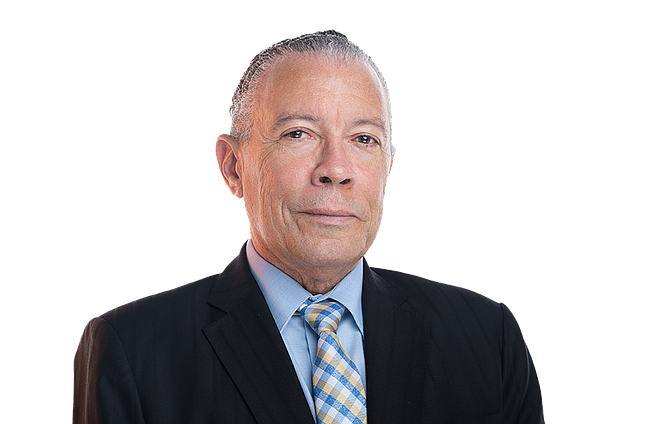
The recent Golden Isles by-election has sparked significant political discourse, with former Attorney General Sean McWeeney, KC, offering a nuanced analysis of the results. While the Progressive Liberal Party (PLP) emerged victorious with candidate Darron Pickstock securing 1,873 votes, the Free National Movement (FNM) led by Michael Pintard demonstrated notable strength by winning more polling divisions, capturing 1,636 votes. The Coalition of Independents (COI) trailed far behind with 348 votes, and independent candidate Karen Butler received a mere 16 votes. McWeeney highlighted that despite the PLP’s win, the FNM’s performance has bolstered Pintard’s leadership credibility, describing it as a political boost for the FNM leader. He emphasized that the FNM’s ability to secure a majority of polling divisions (8-6) underscores Pintard’s viability as a leader of a resurgent party. Conversely, McWeeney characterized the PLP’s narrow victory as a ‘knock in the head,’ particularly given the substantial resources deployed by the government. He cautioned the PLP against complacency, pointing to the national trend of one-term governments over the past two decades. McWeeney also critiqued the COI’s underwhelming performance, noting their failure to meet the legal threshold of 16.6 percent and their role as potential spoilers in future elections. He praised Pickstock’s campaign, acknowledging his rapid rise from a virtual unknown to a victorious candidate in just 41 days. Overall, McWeeney’s analysis suggests that the by-election results should serve as a wake-up call for the PLP while solidifying Pintard’s position within the FNM.
-
Opposition demands clarity on Government’s US$150m loan to JPS
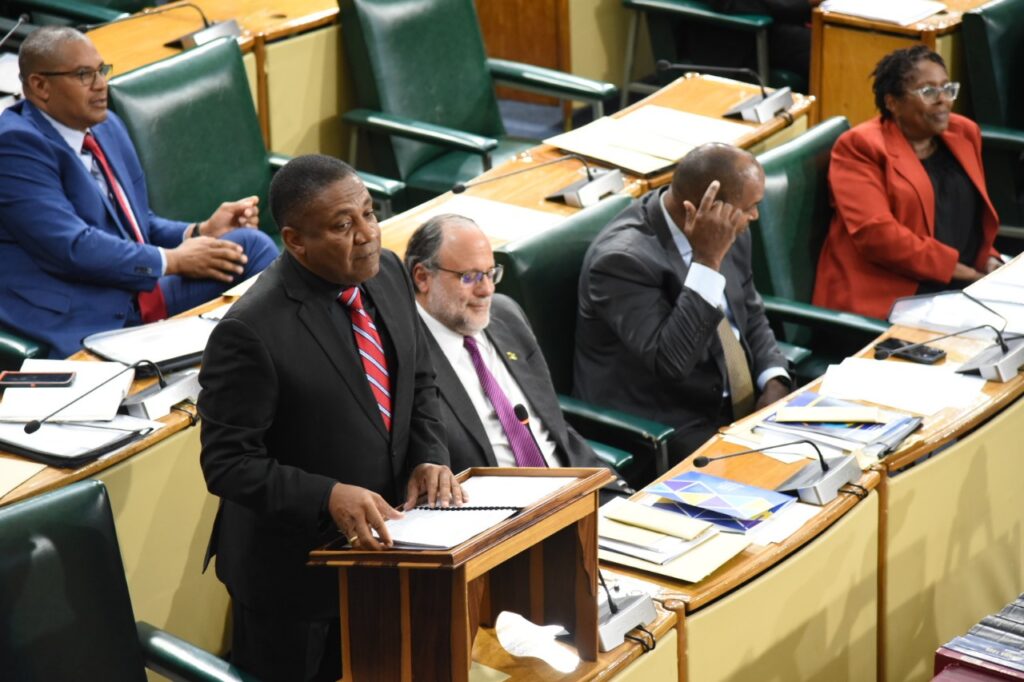
KINGSTON, Jamaica — The People’s National Party (PNP), Jamaica’s primary opposition party, has issued a stern call for the government to provide full transparency regarding a contentious $150 million (J$24 billion) loan extended to the Jamaica Public Service Company (JPS) and its handling of the company’s license negotiations. The PNP’s Spokesperson on Energy and Telecommunications, Phillip Paulwell, voiced significant concerns over the lack of critical details surrounding the loan in a statement released on Wednesday. Paulwell emphasized that the government has failed to address key questions, including the risks to taxpayers, the valuation of JPS assets, and the interest rate attached to the loan. He criticized the administration for committing such a substantial sum without disclosing terms that safeguard public interest. Paulwell further revealed that if the loan remains unpaid within two years, the government plans to convert the debt into equity, effectively acquiring JPS assets. He questioned the current valuation of these assets and whether such an assessment has been completed. Additionally, Paulwell raised concerns about JPS’s ability to secure the remaining $200 million of the $350 million it claims is necessary for full service restoration. He demanded clarity on which state agency will oversee the loan disbursement. The opposition also criticized the government for creating instability by sending JPS a letter hinting at a possible termination of its license in 2027. Paulwell urged the government to release the letter in full, asserting that Jamaicans deserve to understand the rationale behind such a destabilizing move. He highlighted the urgency of restoring power to thousands of Jamaicans and recommended leveraging the loan to secure concessions from JPS, including suspending its monopoly during national emergencies and allowing alternative energy sources to supply nearby households. Paulwell also warned of potential electricity price hikes and stressed the need for transparency on the restoration of liquefied natural gas (LNG) generation, which offers cost advantages over heavy fuel oil and diesel. The PNP reiterated its willingness to support responsible and transparent strategies to restore electricity and strengthen Jamaica’s energy resilience but vowed to oppose decisions that unduly burden taxpayers.
-
‘Playing politics’
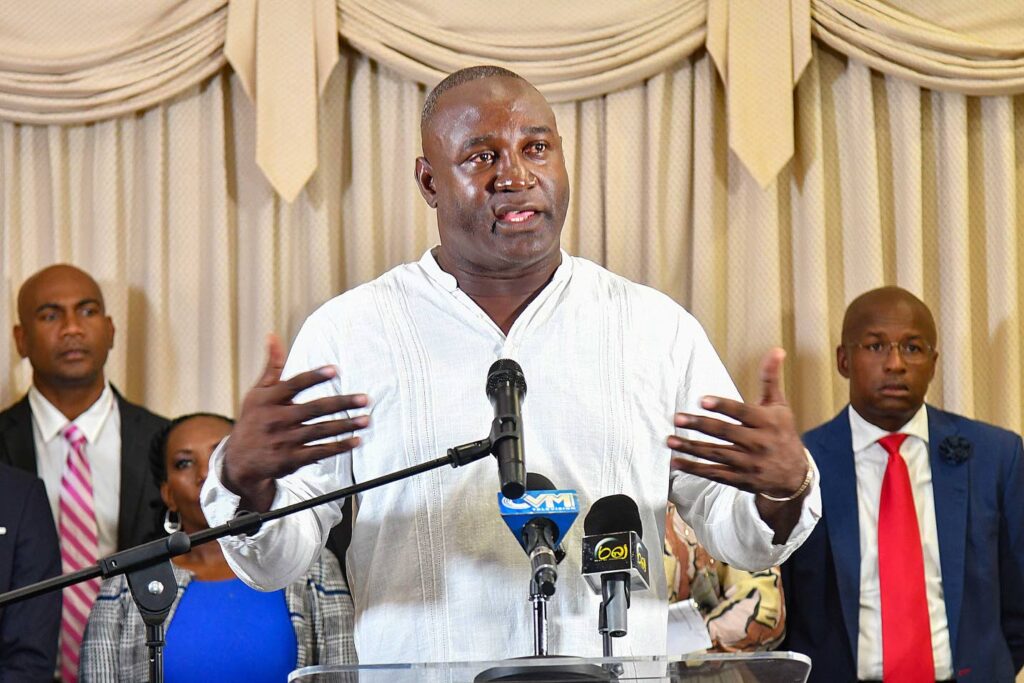
Members of Parliament (MPs) from the People’s National Party (PNP) have voiced strong criticism against the Jamaican Government’s handling of the recovery process following Hurricane Melissa. At a press conference held at the Office of the Leader of the Opposition, PNP legislators from Westmoreland and Hanover expressed their frustration over the widespread homelessness and suffering experienced by thousands of Jamaicans. Dr. Dayton Campbell, MP for Westmoreland Eastern, highlighted the extensive damage, estimating that approximately 5,000 houses were completely destroyed, with many others suffering significant damage to infrastructure. He praised the efforts of private sector entities and non-governmental organizations for stepping in to provide relief, but criticized the Government’s response as inadequate, delayed, and politically motivated. Campbell emphasized the need for urgent intervention to provide temporary housing for displaced individuals and called for greater involvement of elected officials in the distribution of aid. Other MPs, including Duane Vaz, Ian Hayles, Heatha Miller-Bennett, and Andrea Purkiss, also expressed disappointment with the Government’s approach, citing issues with shelter conditions, relief distribution, and the under-reporting of devastation in their constituencies. They urged the Government to take more decisive action to address the humanitarian crisis and ensure that affected communities receive the support they need.
-
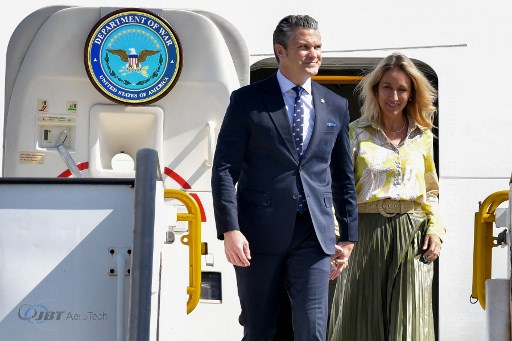
Dominican Republic to allow US to use facilities for anti-drug ops
The Dominican Republic has authorized the United States to utilize restricted areas at the San Isidro Air Base and Las Americas International Airport for logistical operations, including refueling and the transport of equipment and personnel. This decision, announced by President Luis Abinader during a press conference, comes as part of the US’s intensified efforts to combat alleged drug trafficking networks, which have reportedly resulted in over 80 fatalities. The announcement coincided with a visit by US Defense Secretary Pete Hegseth to Santo Domingo, where he emphasized Washington’s commitment to counter-narcotics missions, describing them as a critical step toward regional security. Hegseth stated that the US is prepared to take aggressive measures to dismantle narco-terrorist operations, which he claims threaten stability in the Caribbean and beyond. This development follows the US designation of Venezuela’s alleged Cartel de los Soles as a foreign terrorist organization, providing legal justification for expanded military actions against Venezuelan authorities. The US has already conducted strikes on suspected drug smugglers, destroying more than 20 vessels allegedly used for trafficking. However, critics argue that these operations lack transparency, as Washington has not publicly disclosed evidence linking the targets to narcotics smuggling. The US has also deployed significant military assets to the region, including the world’s largest aircraft carrier and strategic bombers, escalating tensions with Venezuelan President Nicolas Maduro, who accuses the US of using anti-drug efforts as a pretext for regime change. Maduro denies any involvement in drug cultivation, asserting that Venezuela is merely a transit route for Colombian cocaine. Meanwhile, the Dominican Republic has actively collaborated with US anti-drug initiatives, recently seizing 500 kilograms of cocaine in a joint operation.
-
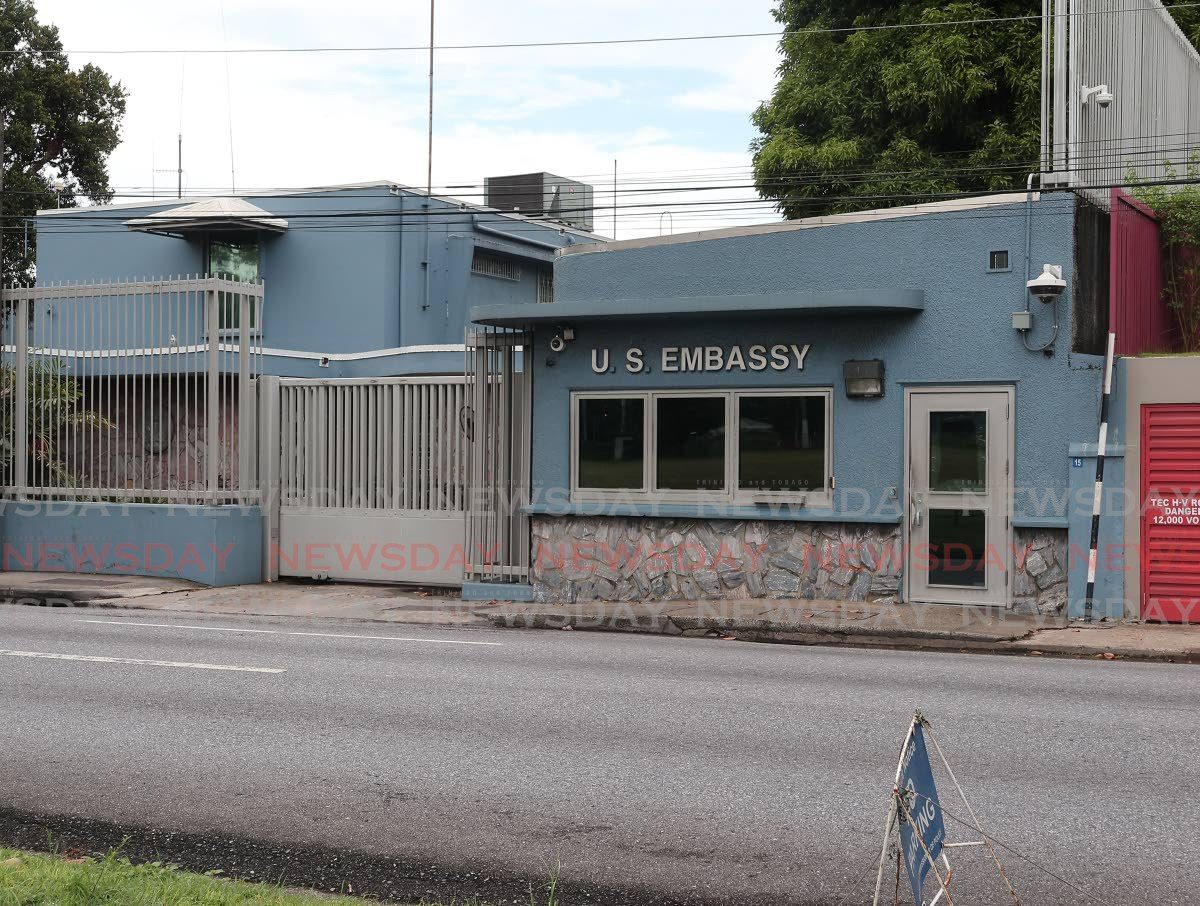
US embassy denies external influence in visas
The US Embassy in Port of Spain has issued a definitive statement clarifying that no foreign government influences its visa approval, denial, or revocation processes. This announcement follows reports that Trinidad and Tobago’s Minister of Homeland Security, Roger Alexander, had requested the embassy to deny and revoke visas of citizens allegedly spreading defamatory and misleading narratives about joint security operations in the region. In a media release dated November 26, the embassy emphasized that visa decisions are solely made by the US government, based on individual merits and adherence to US laws. The statement underscored that visas are not revoked due to the exercise of free speech, a fundamental American value, but may be denied or revoked in cases involving criminal activity. The controversy gained traction after Gary Aboud, corporate secretary of Fishermen and Friends of the Sea, revealed on November 21 that his US visa had been revoked. Aboud speculated that his vocal opposition to US missile strikes in the Southern Caribbean and Pacific, which have reportedly killed over 80 alleged drug traffickers since September 2, led to the decision. He further accused the Trinidad and Tobago government of influencing the visa revocation. However, Prime Minister Kamla Persad-Bissessar has firmly denied any involvement by her administration in the matter.
-
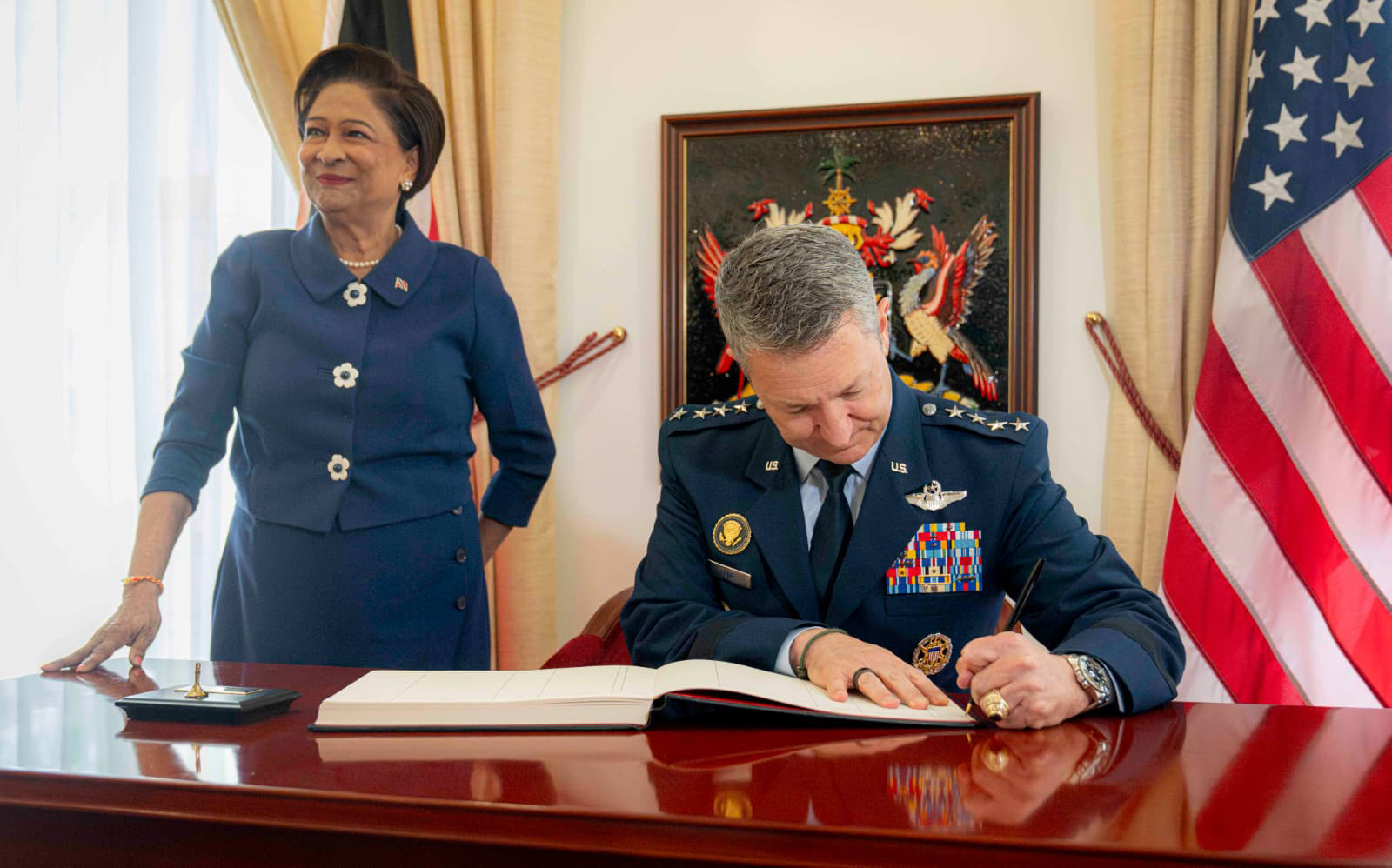
Gen Caine, Kamla discuss regional crime
In a significant diplomatic engagement, General Dan Caine, Chairman of the US Joint Chiefs of Staff, made a brief but impactful visit to Trinidad and Tobago on November 25. The high-profile meeting with Prime Minister Kamla Persad-Bissessar underscored the enduring alliance between the two nations, particularly in addressing regional security challenges. Caine, who had initially planned to visit Puerto Rico to engage with US troops stationed there, altered his itinerary to include a stop in Port of Spain. The meeting, held at the Diplomatic Centre in St Ann’s, also included key Trinidadian officials such as Attorney General John Jeremie, Homeland Security Minister Roger Alexander, and Defence Minister Wayne Sturge. Lasting less than two hours, the discussions focused on combating narco-trafficking, human trafficking, and transnational crime, reaffirming both nations’ commitment to regional stability. Following the meeting, Caine departed in a heavily guarded convoy, emphasizing the high-security nature of the visit. Meanwhile, Suriname has voiced concerns over US aggression towards Venezuela, with Venezuelan Foreign Minister Yván Gil and Surinamese President Jennifer Geerlings-Simons jointly condemning US military actions in the Caribbean. This development highlights the complex geopolitical dynamics in the region, as nations navigate alliances and tensions.
-
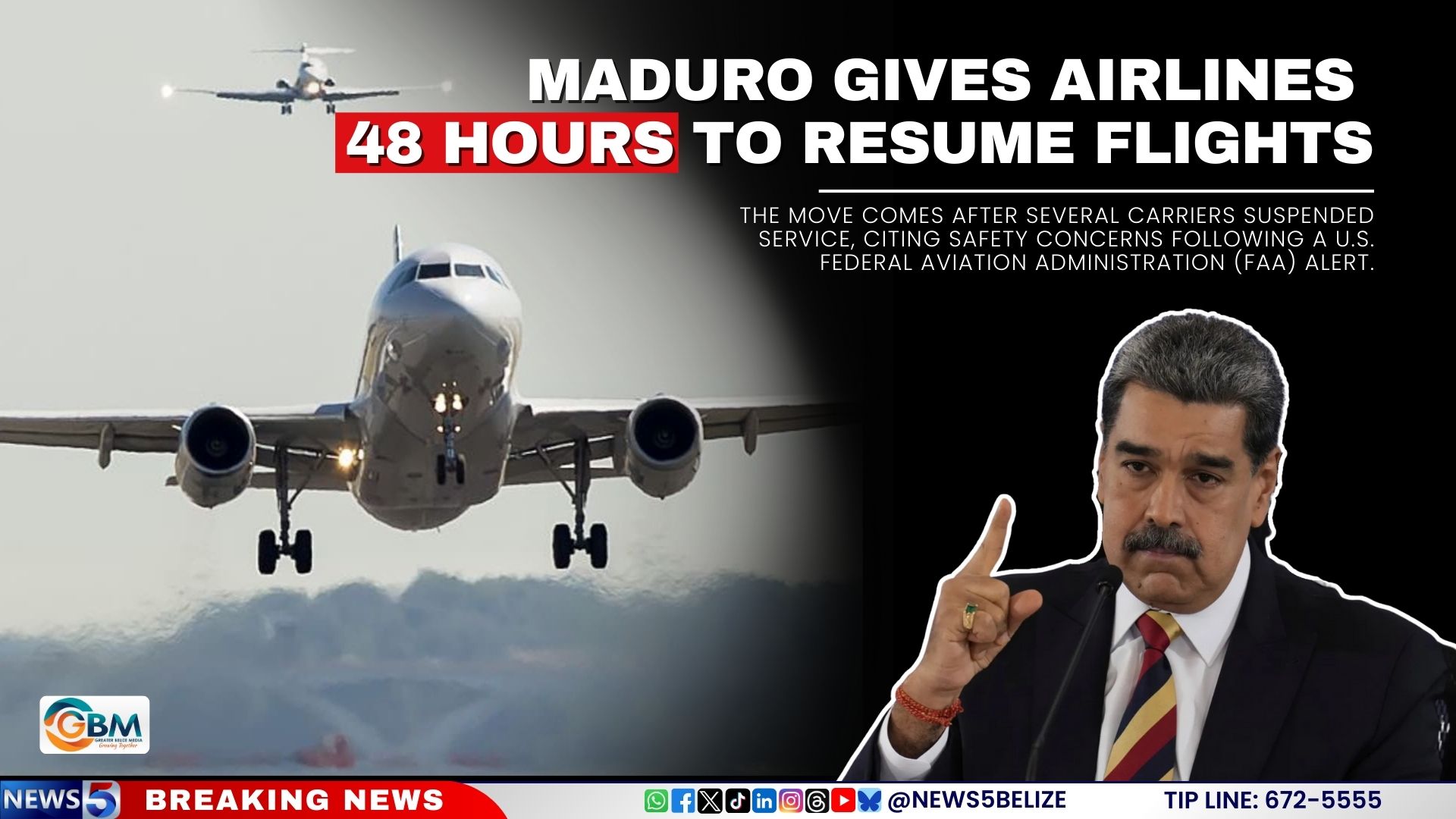
Maduro Gives Airlines 48 Hours to Resume Flights
Venezuela’s aviation authority has imposed a stringent 48-hour deadline on international airlines to resume flights to the country, threatening to revoke their traffic rights if they fail to comply. This directive follows the suspension of services by several carriers, including Iberia, Turkish Airlines, and Avianca, in response to a U.S. Federal Aviation Administration (FAA) safety alert. The FAA’s warning highlighted escalating security risks and increased military activity in Venezuela’s Maiquetía Flight Information Region, urging pilots to exercise extreme caution during all phases of flight, including overflights, arrivals, and departures. While local carriers such as Caribbean Airlines have temporarily halted operations to evaluate risks, Venezuelan airlines continue to operate unaffected. The International Air Transport Association (IATA) has emphasized the need for improved coordination between authorities and airlines, cautioning that Venezuela’s ultimatum could exacerbate the already critical reduction in air connectivity. Meanwhile, the U.S. has escalated tensions by designating Venezuelan President Nicolás Maduro and his allies as members of a foreign terrorist organization, paving the way for stricter sanctions and potential military actions. Maduro has vehemently denied all allegations.
-
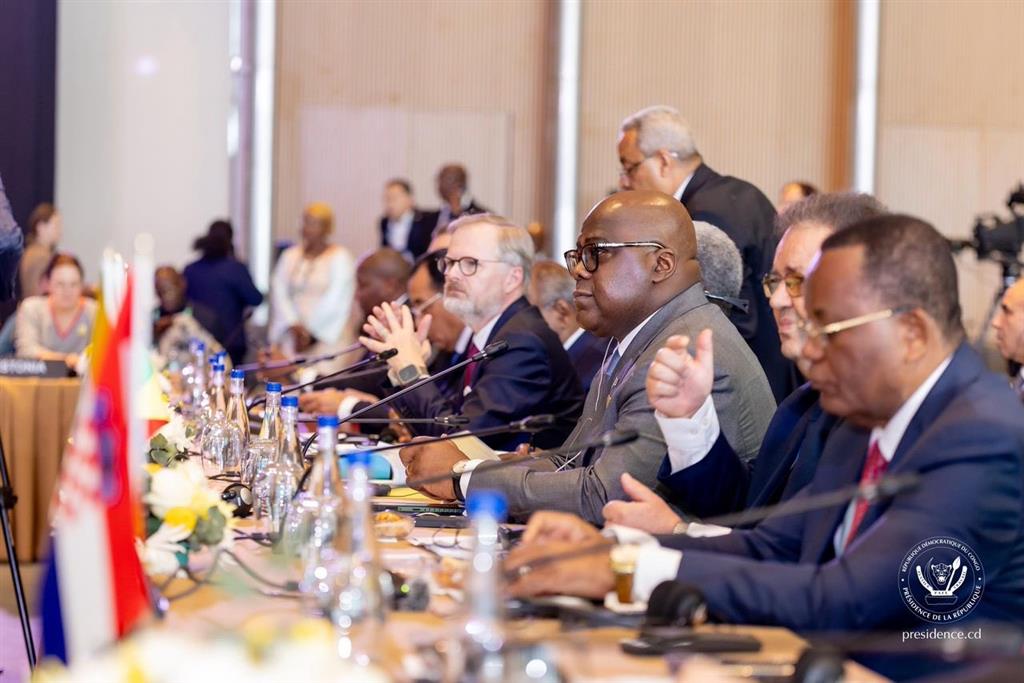
DRC calls for more balanced and progressive AU-EU partnership
During his participation in the debate on Peace, Security, Governance, and Multilateralism, President Félix Tshisekedi of the Democratic Republic of Congo (DRC) emphasized the critical need to address pressing issues that hinder prosperity and development. Speaking at the AU-EU Summit, Tshisekedi highlighted that peace and security are foundational to any discussion on trade, investment, and human mobility. He described the current situation in the DRC as a ‘critical emergency,’ marked by massacres, sexual violence, forced displacement, and persistent insecurity. Tshisekedi argued that sustainable economic agendas and migration projects cannot succeed if they overlook these human tragedies. He called for a renewed commitment to multilateralism, stressing the importance of transparency, cooperation, and genuine solidarity in addressing global challenges. The president expressed optimism that the summit would mark a turning point in AU-EU relations, fostering concrete actions that prioritize peace, human dignity, and shared prosperity in their collaborative efforts.
-

Venezuela-Cuba Friendship Movement pays tribute to Fidel Castro
In a heartfelt tribute to the late Cuban Commander-in-Chief, Fidel Castro, a prominent solidarity organization hailed him as a ‘universal reference of dignity, justice, and resistance.’ The statement emphasized Castro’s pivotal role not only in spearheading a revolution that reshaped the lives of millions in Cuba but also in serving as a guiding light for dignity across Latin America and the globe. His unwavering commitment to sovereignty and independence, the organization noted, demonstrated that unity, consciousness, and solidarity can achieve monumental victories. Castro’s influence transcended national boundaries, inspiring movements against imperialism, exploitation, and inequality worldwide. In Venezuela, his legacy endures through collaborative projects, life-saving medical brigades, youth education programs rooted in liberation principles, and the enduring bond of brotherhood between Cuba and Venezuela. Nine years after his passing, the organization reaffirmed its dedication to preserving his vision and advancing the creation of a more just, humane, and united world. The Movement underscored that Castro’s teachings on genuine friendship and solidarity remain inseparable from the fight for emancipation, sovereignty, and dignity.