分类: politics

  • Vincentians vote as Gonsalves vies for 6th stint in gov’t

    Vincentians vote as Gonsalves vies for 6th stint in gov’t

    KINGSTOWN, St. Vincent — A decisive general election unfolds today in St. Vincent and the Grenadines, with over 103,000 eligible voters heading to 250 polling stations. This electoral contest is widely viewed as a potential watershed moment that might conclude the extensive political tenure of Prime Minister Dr. Ralph Gonsalves, the Caribbean Community’s (CARICOM) longest-serving head of government.

    The 79-year-old leader is steering his ruling Unity Labour Party (ULP) into the fray, aiming for an unprecedented sixth consecutive term in office. However, the main opposition New Democratic Party (NDP), led by 66-year-old attorney Dr. Godwin Friday, is mounting a formidable challenge to dismantle the ULP’s quarter-century dominance and bring the party out of its prolonged political exile.

    Electoral competition spans all 15 constituencies, with both the ULP and NDP contesting every seat. The political landscape also features smaller players, including the National Liberation Movement (NLM). Its leader, Dr. Doris Charles, is vying for the South Leeward constituency. She is joined by independent candidate Kenna Questelles, who is contesting the West St. George seat, adding further diversity to the ballot.

    The outcome remains highly uncertain. The previous general election resulted in a ULP victory, securing nine of the 15 parliamentary seats. Political analysts are closely monitoring whether the electorate will grant Dr. Gonsalves another mandate or usher in a new political chapter under Dr. Friday’s leadership, signaling a profound shift in the nation’s governance.
  • Opposition NDP sweeps Gonsalves’ ULP out of power in St Vincent election

    Opposition NDP sweeps Gonsalves’ ULP out of power in St Vincent election

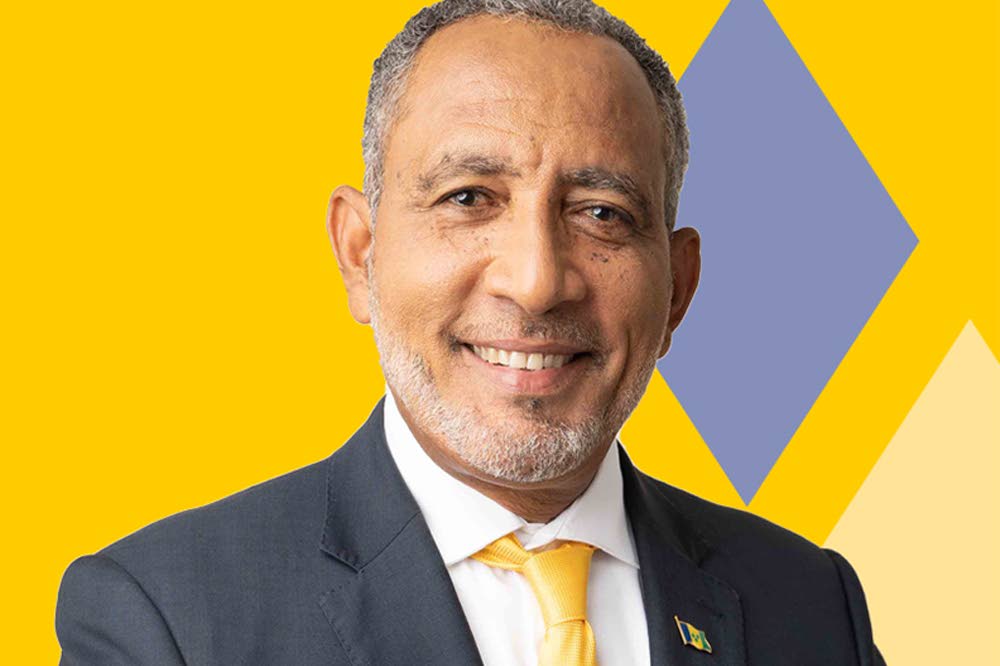
    In a landmark political shift, St. Vincent and the Grenadines has elected Dr. Goodwin Friday and his New Democratic Party (NDP) to power, ending Prime Minister Ralph Gonsalves’ 24-year administration. Preliminary results from the November 27 general election indicate the NDP secured a decisive victory, capturing 11 of the 15 parliamentary seats and preventing Gonsalves from achieving an unprecedented sixth consecutive term.

    Dr. Friday, 66, a political science doctorate holder and 23-year parliamentary veteran representing North Grenadines, will assume leadership following this electoral upset. The victory mirrors regional political patterns, notably Trinidad and Tobago’s recent transition where Kamla Persad-Bissessar’s UNC party similarly moved from opposition to government last April.

    Persad-Bissessar publicly congratulated Friday, stating on social media: “I commend the citizens of Saint Vincent for upholding the highest ideals of democracy. May God bless the newly elected government as they begin this new chapter of service.”

    The campaign was marked by significant controversy as Gonsalves, 79, alleged foreign interference attempts. Two days before voting, he accused Trinidadian lawyers of collaborating with the NDP to ‘rig’ the election and warned about unauthorized foreign campaigners. These claims emerged alongside domestic scandals involving Gonsalves’ family property acquisitions in Trinidad, currently under investigation by housing authorities.

    Reuters reports the election presented a “clear ideological contrast” between parties. While Gonsalves’ Unity Labour Party advocated maintaining existing foreign policies, including support for Venezuela’s Maduro regime, Friday’s NDP campaigned on strengthening ties with China and implementing Citizenship by Investment programs.

    Despite his party’s overall defeat, Gonsalves reportedly retained his personal parliamentary seat in the Windward constituency, ensuring his continued political presence despite the broader administration change.

  • Chief Sec in dark about US troops in Tobago

    Chief Sec in dark about US troops in Tobago

    Chief Secretary Farley Augustine of the Tobago House of Assembly (THA) has confirmed that a US Air Force aircraft refueled at the ANR Robinson International Airport in Tobago on November 26, but he remains unaware of any broader US military presence on the island. The aircraft’s early morning departure at 5:53 am from Crown Point airport startled local residents, with one anonymous source describing the loud noise as initially mistaken for rain. Augustine stated that he is investigating the incident, emphasizing that he only learned of it through social media and WhatsApp groups. He acknowledged ongoing collaboration between the Trinidad and Tobago (TT) government and the US but sought further details on the aircraft’s purpose. Meanwhile, Prime Minister Kamla Persad-Bissessar clarified that there are no US military forces or assets in TT, and her government has not been asked to support any military action against Venezuela. This statement came amid speculation following recent joint training exercises with US troops, which were scheduled to end on November 21. Persad-Bissessar also addressed concerns about US military vessels, stating they are in international waters. She reiterated her administration’s focus on anti-trafficking cooperation with the US and denied any discussions about Venezuela during her meeting with General Dan Caine, Chairman of the US Joint Chiefs of Staff. The Prime Minister dismissed fears of regional instability, urging calm and emphasizing her government’s commitment to the people of Venezuela. Venezuelan activist Yesenia González, who presented Persad-Bissessar with a bouquet of flowers, expressed confidence in US protection for TT, stating, ‘America will protect Trinidad. They will never allow anything bad to happen here.’

  • Why crowd sizes still matter in politics

    Why crowd sizes still matter in politics

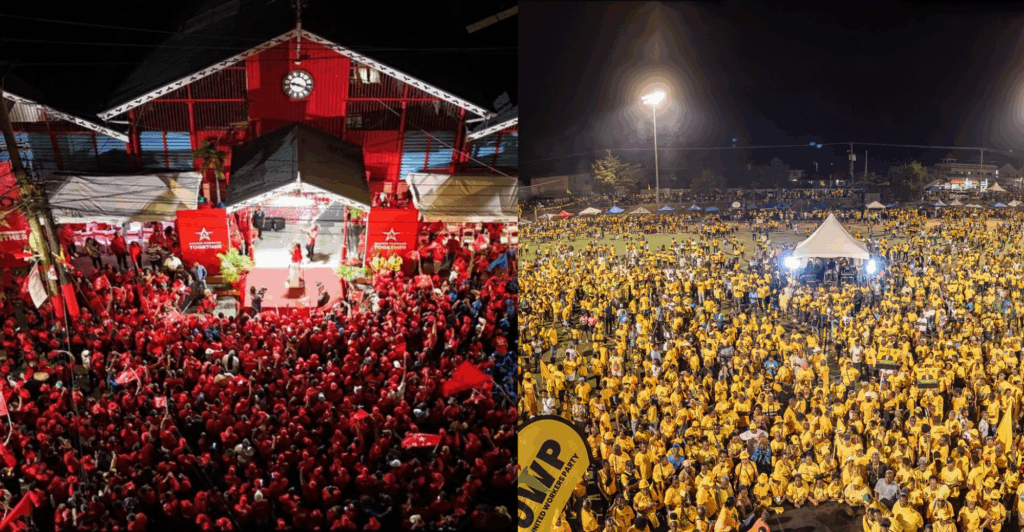
    As Saint Lucia’s election campaign gains momentum, the debate over the significance of crowd sizes in determining electoral success has intensified. Political analysts and candidates alike are divided on whether large rallies translate into votes, with some dismissing them as irrelevant while others see them as a crucial indicator of popularity. This discourse highlights the complex interplay between perception and reality in electoral politics. On one side, politicians boast about their ability to draw massive crowds, while opponents argue that such gatherings do not guarantee victory. Meanwhile, many voters remain indifferent, believing that elections are decided at the ballot box, not at rallies. However, the truth lies somewhere in between. Crowd size does matter, but its impact depends on how it is interpreted within the broader context of a campaign. Elections are not just about votes; they are also about mobilizing support, generating enthusiasm, and shaping public perception. In Caribbean politics, where energy and excitement are vital, large crowds serve as a visible manifestation of a candidate’s ability to connect with voters. They create a sense of momentum and legitimacy, influencing both participants and observers. Behavioural science explains this phenomenon, noting that people are drawn to groups they perceive as successful. The ‘bandwagon effect’ plays a significant role, as individuals often align themselves with what appears to be the popular choice. Crowds also provide emotional validation and social cohesion for supporters, boosting campaign morale. However, relying solely on crowd size can be misleading, as history has shown that even massive rallies do not always translate into electoral victories. Ultimately, while crowd size shapes perception, it is the ballot box that determines the outcome. The challenge for politicians is to strike a balance between generating visible support and addressing the substantive issues that truly matter to voters.

  • Thursday, Friday and beyond: Why SVG must quantum leap now

    Thursday, Friday and beyond: Why SVG must quantum leap now

    St. Vincent and the Grenadines (SVG) stands at a pivotal moment in its history, poised to break free from decades of political stagnation and economic mismanagement. After nearly 25 years under a government marred by corruption and self-enrichment, the nation is awakening to the possibility of a brighter future. The Vincentian people, particularly the critical thinkers and long-silent masses, are now asking: What kind of nation do we want to become? The answer may lie in the example set by Taiwan, a small nation that transformed itself into a global powerhouse through inclusive institutions, transparent governance, and technological innovation. SVG, rich in natural resources and a resilient agrarian culture, has the potential to emulate Taiwan’s success. By adopting integrity legislation, fostering meritocracy, and investing in education and technology, SVG could become the agricultural innovation hub of the Caribbean within 5 to 10 years. The upcoming election on November 28, 2025, represents a critical juncture for the nation. It is not merely about changing leadership but about ushering in an era of governance that prioritizes national interest over partisan survival. SVG’s transformation must also include a cultural renaissance, recognizing the contributions of its artists, farmers, and diaspora, and addressing the long-overdue recognition of its national heroes, particularly women. By thinking in decades rather than election cycles, SVG can craft a long-term vision for its future, ensuring that it becomes a model of success for small nations worldwide. The choice before SVG is clear: to rise from the ashes of mismanagement and claim a future defined by discipline, integrity, and progress.

  • Lashley’s party switch keeps pressure on struggling DLP — analysts

    Lashley’s party switch keeps pressure on struggling DLP — analysts

    The recent defection of Michael Lashley from the Democratic Labour Party (DLP) to the ruling Barbados Labour Party (BLP) has sparked intense political debate, with analysts highlighting the deepening crisis within the DLP. Prime Minister Mia Mottley confirmed Lashley’s move over the weekend, fueling speculation about his potential new role in the BLP. Lashley, a three-time winner of the St Philip North seat under the DLP banner, has long been seen as a significant figure in Barbadian politics. Political analyst Devaron Bruce noted that Lashley’s departure was unsurprising, given the DLP’s struggles over the past two years. ‘The DLP has faced significant challenges, including internal splits, voluntary exits, and forced removals, leading to widespread disinterest and disassociation,’ Bruce explained. He suggested that Lashley’s move was likely driven by the BLP’s efforts to recruit him, viewing him as one of the DLP’s last remaining talents. Bruce also speculated that Lashley’s shift could lead to a significant political elevation, possibly involving a ministerial role or a Senate position. Peter Wickham, Director of Caribbean Development Research Services (CADRES), echoed these sentiments, emphasizing the DLP’s inability to retain talent. ‘This continues a long-standing issue for the DLP, which has struggled to attract and hold onto capable individuals,’ Wickham stated. While both analysts agreed on the broader implications of Lashley’s defection, they differed on his future role. Bruce suggested Lashley might contest his traditional St Philip North seat, potentially displacing the current MP, while Wickham doubted this scenario, citing the incumbent MP’s strong position. The analysts also commented on the recent resignation of Shaquani Hunte, a former DLP candidate and Young Democrats president, viewing it as further evidence of the party’s declining appeal. Wickham concluded that the DLP’s ongoing challenges have made it an unattractive option for aspiring politicians, with the BLP increasingly seen as the party of choice for advancing political careers.

  • Brathwaite talks up St Joseph chances

    Brathwaite talks up St Joseph chances

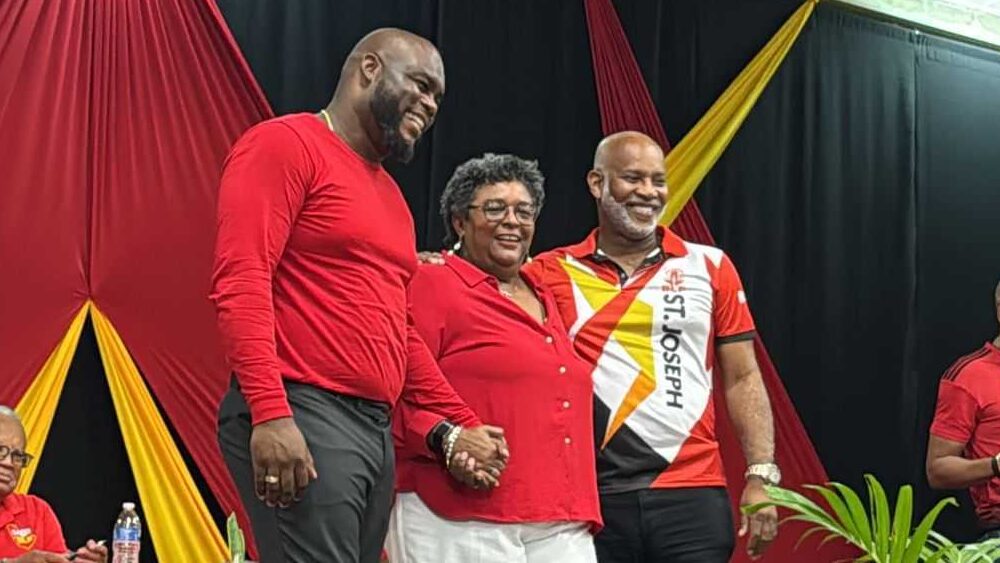
    Ryan Brathwaite, the newly endorsed Barbados Labour Party (BLP) candidate for St Joseph, has expressed unwavering confidence in retaining the rural constituency for the ruling party. Brathwaite, a prominent businessman, emphasized the significance of ongoing infrastructure projects, including roadworks and bridge repairs, in solidifying the BLP’s stronghold in the area. His nomination, formalized at Grantley Adams Memorial School, followed the announcement that current MP and Attorney General Dale Marshall would not seek re-election. Brathwaite highlighted the overwhelming support from party members and constituents, noting the active participation of over 1,400 branch members during the uncontested nomination process. He described the turnout as a clear message of readiness for the upcoming elections. Brathwaite pointed to recent infrastructural developments, such as the completion of Laynes Bridge and ongoing projects in Airy Hill, as tangible evidence of the government’s commitment to St Joseph. He also addressed broader concerns, including the need for youth development, entrepreneurial opportunities, and the preservation of cultural practices amidst tourism growth. Brathwaite assured constituents that future developments would respect traditional access rights, particularly in light of the recent high court ruling upholding public access at Joe’s River. He remains optimistic about the BLP’s prospects, citing the party’s dedication to the constituency and the active engagement of its residents.

  • VIDEO: Gonsalves begs for a 6th term

    VIDEO: Gonsalves begs for a 6th term

    In a fervent appeal to voters, 79-year-old Prime Minister Ralph Gonsalves urged former supporters of his Unity Labour Party (ULP) to grant the party a sixth consecutive term in office during the upcoming general election this Thursday. The plea came during the closing moments of a 50-minute speech delivered at Arnos Vale Playing Field, where Gonsalves emphasized the party’s achievements and vision for the future. His address aimed to rekindle support among disillusioned voters, highlighting the ULP’s commitment to national development and stability. The election, seen as a critical juncture for St. Vincent and the Grenadines, will determine whether the ULP continues its two-decade-long governance or faces a shift in political leadership.

  • Bevriende naties willen bilaterale samenwerking met Suriname uitbreiden

    Bevriende naties willen bilaterale samenwerking met Suriname uitbreiden

    Suriname marked its 50th anniversary of statehood with a series of high-profile bilateral discussions, as President Jennifer Simons welcomed representatives from allied nations to the Presidential Palace on November 25, 2025. Among the distinguished guests were Dutch Prime Minister Dick Schoof, CARICOM Secretary-General Carla Barnett, Prefect of French Guiana Antoine Poussier, Barbados’ Education Minister Sandra Husbands, and Brazil’s Minister of Planning, Budget, and Management Simone Tebet. Each conveyed their governments’ congratulations and expressed a shared commitment to deepening cooperation with Suriname.

    Brazil’s Minister Tebet highlighted the potential for a ‘development boom’ in Suriname by 2027, emphasizing the need for strategic preparation. Brazil pledged to enhance collaboration in healthcare, energy, logistics, and cross-border connectivity between northern Brazil, Guyana, Suriname, and French Guiana. Meanwhile, Prefect Poussier discussed the finalization of a border treaty clarifying the Suriname-France boundary, which is expected to strengthen bilateral ties and address challenges faced by border communities.

    CARICOM’s Barnett focused on agriculture, food security, and climate change, urging increased climate financing and regional transport improvements. Dutch Prime Minister Schoof reaffirmed the Netherlands’ commitment to fostering an equal and respectful partnership with Suriname, particularly in oil and gas exploration, tourism, and education initiatives, leveraging their shared linguistic heritage.

  • Trinidad’s UNC denies sending Makamillion to campaign in Saint Lucia

    Trinidad’s UNC denies sending Makamillion to campaign in Saint Lucia

    The United National Congress (UNC) of Trinidad and Tobago has firmly denied authorizing entertainer and local government councillor John Michael Alibocus, popularly known as Makamillion, to influence or campaign in Saint Lucia’s upcoming elections. The controversy arose after a video surfaced online showing Makamillion performing in Saint Lucia while wearing a UNC T-shirt and using the party’s slogan, “Yellow is the Code.” This slogan, adopted by the UNC in 2023, has reportedly been utilized by Saint Lucia’s United Workers Party (UWP) during their campaign. The footage also allegedly featured Makamillion endorsing the UWP and its leader, Allen Chastanet. A voice note attributed to Makamillion further suggested he was “mandated” to campaign in Saint Lucia and Saint Vincent, both of which are heading to the polls in December and November, respectively. UNC Public Relations Officer Kirk Meighoo and Acting Foreign Affairs Minister Barry Padarath both refuted these claims, emphasizing that no government directive was issued. Padarath clarified that while the UNC respects the sovereignty of other nations, it cannot restrict its members from individual activities. He also highlighted the widespread use of similar political colors across the Caribbean, noting that the slogan “Yellow is the Code” had gained popularity beyond Trinidad and Tobago. Padarath reiterated the importance of respecting the democratic will of voters in each country, stating that election outcomes must reflect the people’s choice, not external influence. Meanwhile, Opposition Leader Pennelope Beckles raised concerns about potential indirect involvement in regional elections, referencing prior statements by Housing Minister Anil Roberts regarding state-subsidized homes owned by Vincentian Prime Minister Ralph Gonsalves and his family in Trinidad.