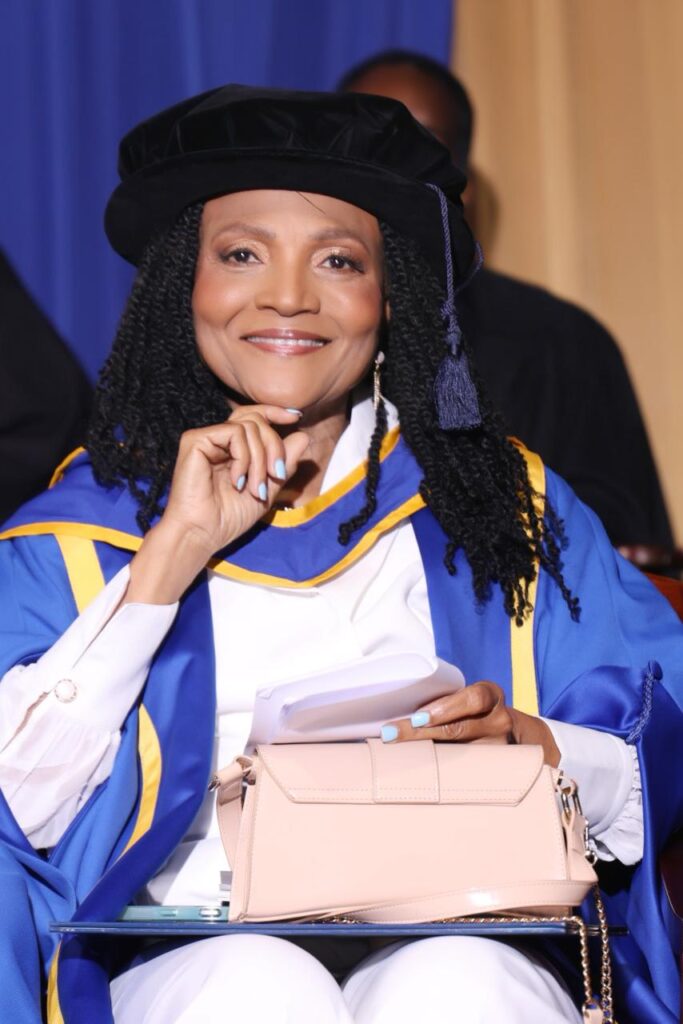
KINGSTON, Jamaica — The University of Technology (UTech) has bestowed gospel music luminary Dr. Carlene Davis-Cowan with an Honorary Doctor of Letters (Honoris Causa) degree during its rescheduled graduation ceremony for the Class of 2025 this Sunday. The event, originally planned for November, was deferred due to Hurricane Melissa’s impact on the region.
UTech’s highest honor recognizes Davis-Cowan’s extraordinary legacy across multiple domains: her transformative musical career, dedicated ministerial service, and profound humanitarian contributions. The award adds another doctoral distinction to her credentials, as she already holds a PhD in pastoral counseling.
With a career spanning decades, Davis-Cowan has crafted an extensive discography that has fundamentally shaped Jamaica’s gospel music landscape. Her seminal works include the critically acclaimed albums ‘Paradise’ (produced by Olivia ‘Babsy’ Grange), ‘Yesterday Today Forever,’ ‘Taking Control,’ the self-titled ‘Carlene Davis (Dial My Number),’ ‘No Bias,’ ‘Songs of Freedom,’ and ‘Echoes of Love.’
Her musical repertoire features numerous chart-dominating singles that have become cultural touchstones, including the anthemic ‘Going Down to Paradise,’ the heartfelt ‘It Must Be Love,’ the nostalgic ‘Like Old Friends Do,’ and her tribute works ‘Winnie Mandela’ and ‘Welcome Home Mr Mandela’ that captured significant historical moments.
The conferral ceremony was presided over by UTech Chancellor Ambassador Lloyd Carney and University President Dr. Kevin Brown, who jointly celebrated Davis-Cowan as both an artistic pioneer and a national treasure whose work transcends musical boundaries to inspire social change and spiritual reflection.