分类: culture

  • COMMENTARY: Cultivating Community through Art

    COMMENTARY: Cultivating Community through Art

    Art has captivated human imagination for centuries, rooted in a linguistic history stretching back to ancient Rome. The term ‘art’ traces its origins to the Latin word ‘ars’, meaning skill, craft, or creative expression, with its first recorded use appearing in 13th-century European manuscripts. Far more than a niche academic discipline or elite pastime, art is fundamentally a deeply personal reflection of an artist’s perspective, whose meaning is shaped by the unique interpretations of every viewer. This inherent subjectivity is what gives art its enduring intrigue: no two people will ever draw the exact same meaning from a single work, making every encounter with art a new, personal experience. Beyond individual interpretation, art acts as a powerful cross-cultural bridge, capable of connecting people across generations, ethnic divides, and different religious backgrounds. When interpreted within its proper cultural context, art fosters shared dialogue rather than division, embodying a natural neutrality that transcends social and political boundaries.

    In recent decades, education leaders have increasingly recognized art’s transformative role in holistic learning, moving beyond outdated models that framed art as an extracurricular afterthought. The integration of art into core curricula through initiatives like STEAM (Science, Technology, Engineering, the Arts, and Mathematics) education has redefined how students learn, turning creative expression into a tool to drive inquiry, critical thinking, and cross-disciplinary problem-solving. Research and educational practice have shown that this interdisciplinary approach boosts reading proficiency and sharpens cognitive acuity, benefiting students across all subject areas, not just creative pursuits. The United Nations Educational, Scientific and Cultural Organization (UNESCO) reinforces this perspective, noting that art nurtures global creativity, innovation, and cultural diversity, while acting as a catalyst for knowledge sharing, curiosity, and open dialogue. To protect these inherent benefits, UNESCO emphasizes that societies must actively promote and defend artistic freedom; when artists are able to create without constraint, art becomes a foundational building block for more free, peaceful, and inclusive global communities.

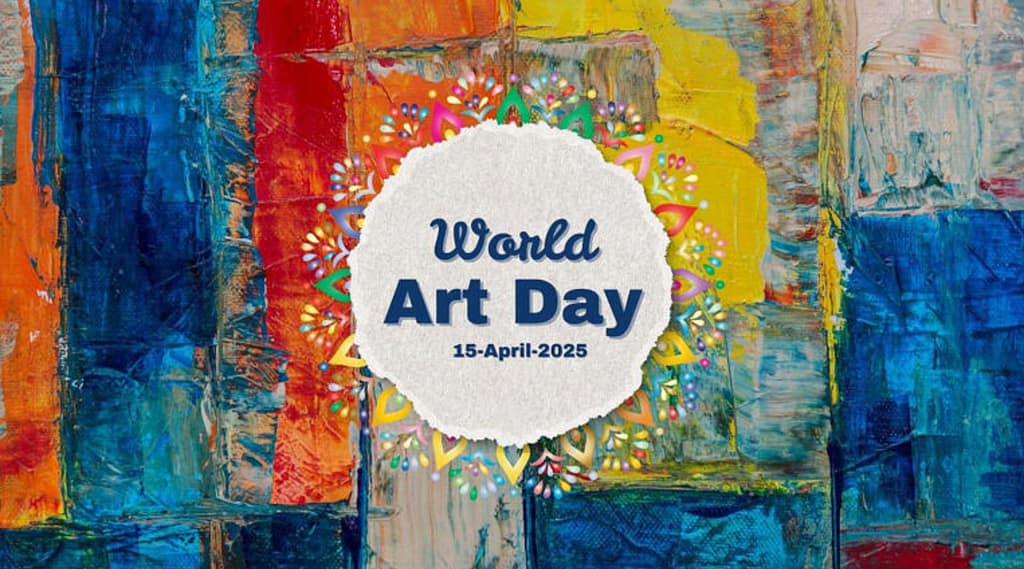
    In 2019, UNESCO formalized this global commitment to art by proclaiming April 15 as World Art Day, a global observance designed to celebrate artistic creation, expand access to creative expression, and strengthen the ties between art and society. The date of April 15 was intentionally selected to honor Leonardo da Vinci, one of history’s most iconic creative visionaries, who remains a global symbol of freedom of expression, tolerance, and universal brotherhood. Each year, the observance highlights artists’ indispensable contributions to sustainable development, raises awareness of the diversity of global artistic expressions, and spotlights the critical role of arts education in building inclusive, equitable school systems. For 2026, World Art Day has adopted the theme “A Garden of Expression: Cultivating Community Through Art”, which frames art as a collective, growing practice: just as a garden flourishes when tended by a whole community, art thrives when it is shared and nurtured collectively, fostering connection, unity, and shared cultural belonging among groups of people with common purpose.

    Celebrating World Art Day is accessible to everyone, regardless of whether one identifies as a professional artist or a casual art enthusiast. One of the most common ways to mark the day is to visit local art exhibitions or museums, many of which host special themed events or offer discounted admission to welcome new audiences. For those inclined toward hands-on participation, World Art Day is the perfect opportunity to explore personal creativity, whether that means experimenting with painting, drawing, sculpture, photography, or any other medium that sparks curiosity. Even first-time creators often find the process of making art to be deeply fulfilling, as iconic American artist Georgia O’Keeffe once captured: “I found I could say things with color and shapes that I couldn’t say any other way – things I had no words for.” For those looking to learn and connect, local art studios and community centers frequently host special workshops and classes for World Art Day, giving attendees the chance to build new creative skills, refine existing techniques, and build connections with other creators in their local area.

    As societies continue to grapple with division and polarization, the case for greater public investment in art and arts education grows ever stronger. When we prioritize art—whether in our schools, our communities, or our public policy—we don’t just support creators; we nurture the qualities that help peaceful, free societies flourish: curiosity, creativity, dialogue, and belonging.

  • BAM: Safeguard Foreday Morning

    BAM: Safeguard Foreday Morning

    As Barbados’ beloved annual Crop Over festival approaches, a leading cultural organization is sounding the alarm over growing threats to one of the celebration’s most iconic centerpieces, calling for urgent regulatory action to safeguard the island’s cultural and tourism heritage.

    Bryan Worrell, head of the Barbados Association of Masqueraders (BAM), has renewed his organization’s appeal to national cultural authorities to protect the legacy of Foreday Morning and other signature Crop Over events, amid mounting concerns that unregulated private parties are siphoning attendees away from the flagship j’ouvert celebration. These concerns are widely shared among the roughly 40 official Foreday Morning band leaders, who have formally submitted a petition to the National Cultural Foundation (NCF) and the Ministry of Culture to address the issue. Since the petition was filed, Worrell confirmed that ongoing discussions are underway to develop a formal, long-term solution to the mounting pressure on official events.

    At the core of BAM’s proposal is the creation of a national registry for official cultural events on Barbados’ national calendar. Worrell argues that key fixtures including Foreday Morning, Grand Kadooment and Bridgetown Market deserve special protected status to limit direct competition from private events. He warned that the current threat to Foreday Morning is not an isolated issue: without intervention, other major Crop Over attractions could face the same erosion of attendance in coming years.

    “What’s to say that in another year or two that Grand Kadooment doesn’t come under the same threat that Foreday Morning is?” Worrell posed in an interview with reporters. He emphasized that BAM’s objection centers on private events holding their activities on the exact same night as official Foreday Morning, which splits the reveller base and undermines the long-standing traditional celebration.

    While much of the recent public attention has focused on Twisted Entertainment, the organizer of the popular Tipsy Music Festival that launched a competing private jump this year, Worrell stressed that the problem is systemic. Over the past several years, there has been a steady rise in the number of private foreday-style events, with another new private gathering, Stain’d, announced for this year backed by Vida by Esquire (VXE) and other local partners.

    Worrell explained that two potential paths forward exist to resolve the conflict: establishing the protected national event registry, or updating national legislation to formalize protections for official cultural events. In the near term, however, BAM is focused on brokering a voluntary agreement to shift competing private events to different dates, an arrangement that would protect the livelihoods of the dozens of small businesses and band leaders that organize the official Foreday Morning celebration each year.

    Addressing a common talking point from supporters of private events – claims that official Foreday Morning is unsafe for attendees – Worrell pushed back firmly, noting that there is no empirical evidence to back up these assertions. He pointed to more than a decade without any major reported safety incidents at the official event, and outlined the layered security framework that is already in place to protect participants.

    “Each registered band has its own security, along with the police service, along with the BDF on the route, along with excellent lighting… ambulance services are there to respond, so we have everything in place that will make your event safe and sound,” Worrell explained.

    Beyond preserving cultural tradition, Worrell emphasized that Foreday Morning is a critical economic and tourism asset for Barbados, drawing large numbers of international visitors who specifically travel to the island to experience the authentic cultural event. “That’s why we feel so strongly about it…as one of the highlighted events on the calendar that it should [have] that additional protection to ensure that it lives on,” he said.

    When reached for comment on the ongoing negotiations between BAM and cultural authorities, Akil Franklin, corporate communications specialist at the NCF, declined to provide any statement on the status of talks.

  • Lotto chair urges CDC to treat Vincymas as a business

    Lotto chair urges CDC to treat Vincymas as a business

    Vincymas, St. Vincent and the Grenadines’ premier cultural festival, will retain its largest backer in the National Lotteries Authority (NLA), but organizers will need to adopt a more business-oriented, financially accountable approach to secure the event’s long-term growth, according to the body’s newly appointed chair.

    Luann Hadaway, who made history earlier this year as the first woman to lead the NLA board since the organization’s founding in 1984, used the platform of this year’s festival media launch to reaffirm the authority’s long-standing partnership with the annual celebration. Founded to fund national sports and cultural initiatives, the NLA counts its Vincymas sponsorship as its single largest financial commitment, a reflection of the event’s outsized importance to the island nation.

    “Our sponsorship is not simply about funding an event, it is about preserving our heritage, strengthening our creative industries and creating real opportunities for our people,” Hadaway told attendees. She emphasized that the NLA’s new board takes its fiduciary responsibility seriously as stewards of public funds, requiring all sponsorship recipients to adhere to strict standards of prudent spending, robust governance and full transparency.

    “With that responsibility comes a clear obligation to ensure that every dollar is managed with care, integrity and purpose,” she said. “This is essential, not only for transparency, but for the long-term sustainability and credibility of institutions and events we support.”

    Given the scale of the NLA’s investment, Hadaway argued that Vincymas must meet consistent standards of value, impact and operational excellence. Most critically, she said, the festival must be reframed as a year-round business venture rather than a one-off annual celebration, capable of generating consistent revenue to build self-sustaining reserves for future events. This business model, she added, will expand long-term opportunities, deepen private-sector partnerships and foster the financial independence the festival needs to thrive for generations.

    Hadaway also pushed for the festival to expand its scope as a launchpad for local talent, calling for greater opportunities for young, emerging creators to perform alongside established industry figures. “It must remain a platform that truly showcases the depth of talent we have right here at home,” she said. “As we continue to invest, we also encourage a shared commitment to excellence, ensuring that Vincymas develops in a way that is sustainable, well organised and impactful for all.”

    Beyond celebration, Hadaway noted that Vincymas is a core economic driver for the country, supporting local livelihoods, boosting broader economic activity and nurturing widespread national pride.

    Speaking at the same launch event, Minister of Culture and Creative Industries Kaschaka Cupid echoed the message that cultural events like Vincymas deliver meaningful financial benefits to St. Vincent and the Grenadines. He pointed out that the festival has helped local artists earn recognition at the national, regional and international level, and pledged the government’s ongoing support to the Carnival Development Corporation, the state-owned entity tasked with organizing Vincymas.

    Cupid also issued a public call for additional corporate sponsors to join the NLA in backing the festival, highlighting the creative sector’s growing role in driving national economic growth. “And I am here as Minister of Culture … to assure you that our government is here to support you, not just financially, but we are going to create opportunities for our artistes to grow and develop their special talents,” he said.

    The minister also revealed that he has recently held discussions with Prime Minister Godwin Friday and Minister of Foreign Affairs Dwight Fitzgerald Bramble about a new initiative to deploy cultural ambassadors to promote St. Vincent and the Grenadines on the global stage. Cupid, who noted he had not attended Vincymas for roughly 20 years, said his tenure as culture minister has sparked a new appreciation for the country’s unique cultural heritage, and he plans to attend this year’s event both as a minister and a long-time culture lover.

  • COMMENTARY: Why fiction feels more honest than real life

    COMMENTARY: Why fiction feels more honest than real life

    Across decades of working as both a nonfiction writer of sharp commentary and incisive interviews and a fiction author crafting stories of entirely made-up people, I have long observed a striking, counterintuitive shift: as digital and social mediation reshapes everyday human interaction, real life has grown steadily more artificial, while fictional worlds now often feel far more genuine to audiences and readers alike.

    This gap does not stem from fiction becoming more realistic in its crafting. Instead, it arises because modern real life has pushed ordinary people to adopt unnatural, polished personas tailored to algorithmic approval and risk-free public engagement. Fictional storytelling, by contrast, preserves the raw, unvarnished human qualities that contemporary social norms increasingly sand down: clear emotional honesty, consistent core motivations, and unfiltered self-expression.

    Consider a well-crafted fictional character: a grizzled, plain-spoken “good ol’ boy” with a startlingly sharp intellect that cuts through pretense. This imagined figure feels far more authentic than the carefully curated personalities many of us encounter in daily public life. Even a deliberately drawn brute, strong as an ox and unapologetically simple, carries a coherence that many real public personas lack. In modern real life, far too many people operate under the unspoken rule that any attention is better than none, leading them to perform for attention rather than show their true selves.

    Fictional characters are written to be fully, unapologetically themselves, making them feel like the last truly unmediated humans standing. Authors strip away the meaningless noise, contradictory social posturing, and vague half-truths that clutter modern real-world interaction. Fictional characters say what they actually mean, their life arcs follow clear consequences for their choices, and every decision they make reflects their core values — a coherence real life rarely grants modern people. It is this authenticity that makes fictional characters resonate and endure: they give audiences exactly what they crave: sincerity, courage, vulnerability, clear consequence, and genuine meaning.

    In recognition of this dynamic, I created the invented island-nation of St. Tosia, a whimsical, offbeat Caribbean setting where folklore, civic tradition, and gentle social satire weave together to frame everyday life. St. Tosia is a tapestry of music, gentle mischief, mythic charm, and warm magical realism — a space that feels familiar to readers while remaining entirely its own, a refuge for unfiltered human truth.

    At its core, this shift is not a failure of real life, nor an argument that we should retreat entirely into the worlds we invent. Fiction acts as a mirror, holding up the genuine human qualities we have misplaced in our modern rush to curate and perform. The real solution is to reclaim those lost parts of ourselves that fiction reminds us we still can embody: emotional clarity, courage, radical honesty, uncurbed curiosity, and the willingness to be seen exactly as we are.

    If we fail to do this, the only truly authentic humans left will be the ones we invent. When real people become artificial works of performance, fiction is the only medium that still tells the truth. As the iconic essayist and humorist Mark Twain once put it: “The only difference between reality and fiction is that fiction needs to be more credible.”

  • Prescod urges Landship ‘rebirth’, slams ‘commercialisation’

    Prescod urges Landship ‘rebirth’, slams ‘commercialisation’

    One of Barbados’ most cherished, centuries-old community cultural institutions is facing an identity crisis as growing commercialization for tourism pulls it away from the working-class grassroots roots that gave it life, the island’s Minister for Pan-African Affairs and Heritage Trevor Prescod has warned.

    Prescod shared his concerns Wednesday during a cultural heritage workshop hosted by the Pinelands Creative Workshop (PCW), arguing that the core spiritual essence of the Barbados Landship can only survive when anchored in the rural village communities that spawned the movement more than 160 years ago.

    Originating in 1863 in Licorish Village, My Lord’s Hill, the Landship is a one-of-a-kind cultural tradition modeled after a seafaring vessel, featuring naval-style hierarchical ranks, community parades, and choreographed movement sequences designed to simulate a ship sailing across dry land. Beyond its performative elements, the movement was originally founded as a mutual aid society for working-class Barbadians: it provided members with collective fellowship, cooperative savings programs, and funeral support, while using immersive music, dance, and ceremonial practice to strengthen and preserve Afro-Barbadian cultural identity and local community bonds. The tuk band music that accompanies Landship performances even carries layered historical roots, adapted from the drum-and-fife marching traditions of the 19th century British military.

    Prescod, who represents Licorish Village as part of his St Michael East constituency, notes this small community remains one of the only places where the Landship still operates according to its original community-focused model. Today, by contrast, the tradition has shifted dramatically: from being woven seamlessly into the fabric of daily village life, it now exists primarily as a curated spectacle for national civic events and international tourists.

    “I still believe that the landship should go back to the village occasionally. That’s where the spirit and the dynamics of the life that formed the landship itself emerge,” Prescod said, reflecting on the rich, informal grassroots cultural life that once sustained local community bonds. He recalled a bygone era when neighborhoods were filled with spontaneous street performances, including the familiar sound of a penny whistle player busking early in the morning beneath residential windows — casual, community-rooted expression that shaped the Landship from its earliest days.

    In a subsequent interview with Barbados TODAY, Prescod expanded on his concerns, explaining that the Landship’s historic role as a self-sustaining community support network has eroded significantly amid the shift to commercial tourism-focused performance. The movement once operated as a formal economic and social safety net for working-class members: it ran collective savings schemes known locally as “susu” or “meeting turn” that helped members fund home construction, and offered practical and financial support to families grieving the loss of a loved one.

    “It has been commercialised and because it has been commercialised, it is losing its indigenous value,” he told the outlet.

    Despite these growing challenges, efforts to safeguard the tradition are already underway. The Barbados Landship Association is currently working to expand public engagement with the movement through school education programs and social development community projects. Just recently, the tradition earned international recognition when UNESCO added it to the 2003 Convention List of Intangible Cultural Heritage in Need of Urgent Safeguarding, a designation that draws global attention to at-risk cultural practices.

    Still, Prescod emphasized that international recognition alone is not enough to preserve the Landship’s core identity. He warned that modern commercial adaptation must not erase the tradition’s original purpose and cultural meaning, and called on the Pinelands Creative Workshop to support efforts to revive its grassroots roots. For the minister, the work ahead goes far beyond simple preservation of the status quo.

    “It’s not even a case of retaining it now,” he said. “We have to give it a rebirth.”

  • Culture : Support for artistic creation, Call for Projects

    Culture : Support for artistic creation, Call for Projects

    In response to Haiti’s escalating security crisis, UNESCO’s Port-au-Prince office has initiated a comprehensive support program for the nation’s cultural sector. The project, titled “Support for Artistic Creation, the Resumption of Cultural Events, and Access to Cultural Life in Haiti in the Face of the Security Crisis,” leverages resources from UNESCO’s Emergency Fund for Cultural Heritage to assist cultural professionals severely impacted by ongoing instability.

    The initiative specifically targets creative individuals and organizations operating in security-compromised regions, with particular focus on the capital region. Eligible beneficiaries include musicians, visual artists, writers, actors, creative collectives, cultural operators, performing arts technicians, and cultural mediators from areas most affected by violence.

    This cultural stabilization program operates through two distinct mechanisms. The first component provides financial backing for cultural projects that address community expression, resilience, and social mobilization in crisis-affected zones. The second component delivers specialized training in crisis management, offering participants strategic modules on risk assessment, emergency resource mobilization, strategic planning, and effective communication during turbulent periods.

    UNESCO has announced substantial support opportunities, with grants of up to $8,000 available for qualifying artistic creation projects and cultural events. The application portal is currently active through an online submission system, with a strict deadline of March 20, 2026. This intervention underscores UNESCO’s continued commitment to cultural resilience in Haiti and its support for the creators and institutions essential to preserving the nation’s vibrant cultural identity during challenging times.

  • Belize Celebrates UNESCO Recognition of Krismos Bram and Sambai

    Belize Celebrates UNESCO Recognition of Krismos Bram and Sambai

    In a landmark achievement for cultural preservation, Belize has secured international recognition for two of its most cherished Creole traditions. UNESCO officially inscribed Krismos Bram and Sambai onto its Representative List of the Intangible Cultural Heritage of Humanity during ceremonies in New Delhi, India, on December 9, 2025.

    The announcement marks the culmination of a decade-long effort by Belizean cultural authorities and community representatives. The recognition places these centuries-old traditions alongside Belize’s Garifuna language, music, and dance as globally protected cultural treasures.

    Krismos Bram, a vibrant Christmas procession unique to the village of Gales Point Manatee, involves community members moving from house to house during Christmas and Boxing Day celebrations. The tradition features rhythmic drumming, spirited dancing, communal feasting, and storytelling that dates back to 18th-century Maroon settlements of formerly enslaved Africans.

    Sambai, its complementary tradition, involves participants forming dynamic circles around bonfires, maintaining rhythmic connection through generations. Both practices represent profound cultural resilience, transforming historical hardship into enduring artistic expression.

    Cultural leaders from Gales Point emphasized the traditions’ significance. Master Drummer Emmeth Young noted, ‘Krismos Bram evolved from the slave people that used to settle in my village, making it very important in our culture.’ Master Dancer Sharlene Andrewin added, ‘Only in Gales Point will you find the real thing—live Braming and Sambai that continues today.’

    The UNESCO designation brings more than prestige. Rolando Cocom, Director of the National Institute of Culture and History (NICH), highlighted how the recognition strengthens preservation efforts and youth engagement. Selene Solis of the National Kriol Council emphasized how this ‘elevates the visibility of cultural events from small communities that aren’t often recognized for their value.’

    The achievement prompted nationwide celebrations, with villagers in Gales Point gathering at dawn for a watch party. Political leaders across parties offered congratulations, with UDP Leader Tracy Panton specifically acknowledging the late cultural ambassador Myrna Manzanares and her mother Iris Abraham for their lifelong advocacy.

    This UNESCO recognition ensures international support for safeguarding these traditions while amplifying Belize’s cultural contributions on the world stage.

  • Belize Celebrates Gales Point Traditions on UNESCO Heritage List

    Belize Celebrates Gales Point Traditions on UNESCO Heritage List

    The vibrant cultural traditions of Gales Point Manatee village in Belize have achieved global recognition as UNESCO officially inscribed the community’s Krismos Bram and Sambai practices on its Representative List of the Intangible Cultural Heritage of Humanity. The announcement emerged from the 20th session of UNESCO’s Intergovernmental Committee convening in New Delhi, India on December 9, 2025.

    This prestigious designation celebrates generations of cultural preservation through distinctive musical and dance traditions that form the community’s cultural heartbeat. The Krismos Bram and Sambai represent more than artistic expression—they serve as living connections to ancestral heritage, bringing together villagers and diaspora members annually for communal celebrations featuring traditional food, drink, and house-to-house dancing.

    Rolando Cocom, Director of the Institute for Social and Cultural Research, described the recognition as “a remarkable day for our communities to celebrate and enjoy the shared culture we have in Belize.” He emphasized that “the international community agreed with us that the living heritage of the Manatee Village is part of the shared human culture that we should all share and protect.”

    Selene Solis of the National Kriol Council highlighted the significance for the small community, noting the designation “elevates the visibility of this cultural event and brings visibility to a small community that isn’t often seen.” She added that the recognition affirms that “our Belize, our Gales Point, our Krismos Bram, and our Sambai have universal value” and represent “pillars of safeguarding” for future generations.

    The UNESCO acknowledgment validates decades of dedication by Gales Point families, elders, and cultural leaders who have maintained these traditions against modernization pressures, ensuring their continuity as pillars of Belizean cultural identity.

  • Gales Point’s Bram and Sambai Earn UNESCO Nomination

    Gales Point’s Bram and Sambai Earn UNESCO Nomination

    The centuries-old Bram and Sambai tradition from Gales Point Village, Belize, has achieved a landmark recognition through its nomination for UNESCO’s Representative List of the Intangible Cultural Heritage of Humanity. This vibrant cultural expression—characterized by dynamic drumming patterns, interactive folk singing, and energetic communal dancing—represents a profound legacy of ancestral heritage and community solidarity.

    Originally practiced exclusively by adults in private settings, the tradition has transformed into a celebrated public manifestation of cultural identity and historical resilience. The ritual was transported to the peninsula following the abolition of slavery, evolving into a house-to-house celebration that incorporates singing, dancing, and communal feasting.

    A Belizean delegation is currently in India awaiting Tuesday’s decisive announcement from UNESCO. Shermadine Andrewin, Principal of Gales Point Government School, recalls her personal journey with the tradition: “In my youth, participation was restricted, but as I matured, I recognized its cultural significance and actively embraced it from age fifteen.”

    Emmett Young, a Master Drummer, emphasizes the historical continuity: “These call-and-response folk songs and rhythms were inherited directly from our ancestors, preserving our heritage through generations.”

    The nomination highlights global recognition of Belize’s living cultural traditions and their enduring significance in contemporary community life.

  • Belize Submits Krismos Bram, Sambai for UNESCO Intangible Heritage Recognition

    Belize Submits Krismos Bram, Sambai for UNESCO Intangible Heritage Recognition

    The Central American nation of Belize has formally presented its traditional Krismos Bram and Sambai celebrations for potential inclusion on UNESCO’s prestigious Representative List of the Intangible Cultural Heritage of Humanity. This significant cultural submission originates from Gales Point “Malanti” Village, a community renowned for preserving unique Creole traditions.

    The nomination dossier will undergo rigorous evaluation during the upcoming 20th Session of UNESCO’s Intergovernmental Committee, scheduled to convene in New Delhi, India. A dedicated Belizean delegation comprising representatives from the Institute for Social and Cultural Research (ISCR-NICH), the National Kriol Council, and cultural custodians from Gales Point will advocate for the tradition’s international recognition.

    Krismos Bram represents a vibrant Christmas-season celebration deeply embedded in Creole heritage, featuring distinctive Brokdong music, rhythmic drumming, traditional dancing, and communal house-to-house visits. The festivities commence with the resonant call of the Gombay or Sambai drum, summoning community members to participate. The celebrations typically extend throughout the evening, culminating in the Sambai—a ritual dance form that anthropological research suggests maintains connections to African courtship, harvest, and fertility customs.

    Cultural preservationists attribute the remarkable continuity of Bram traditions in Gales Point to the village’s geographical isolation and robust cultural identity. Annually, both current residents and migrated community members return to their ancestral home during Christmas and Boxing Day to engage in the Bramming festivities.

    Should UNESCO approve the nomination, Krismos Bram and Sambai would become Belize’s second cultural element inscribed on the Intangible Heritage list, following the precedent set by the Garifuna Language, Music and Dance recognition.