The Statistics Division, operating under the Ministry of Finance and Corporate Governance, has released the Consumer Price Index (CPI) data for May 2025, revealing a continued downward trend in inflation. Over the twelve months ending in May, the CPI declined by 0.6%, following a 1.2% drop in April. Similarly, the All Items Less Food and Energy index fell by 1.4% during the same period. These declines were primarily driven by reductions in housing, water, electricity, gas, transport, and household maintenance costs. Notably, the index for Furnishings, Household Equipment, and Routine Household Maintenance plummeted by 5.1%, while Transport Services saw a significant 13.0% decrease. Collectively, these categories account for 45.7% of the All Items Less Food and Energy index. On a monthly basis, the CPI decreased by 0.6%, with the Food and Non-Alcoholic Beverages Index dropping by 0.3%. The Food Index experienced a slight decline of 0.4%, with six out of nine major supermarket food groups recording decreases. Key contributors to this decline included Milk, Cheese and Eggs (-3.1%), Bread and Cereals (-2.5%), and Vegetables (-1.0%). However, Meat and Meat Products and Fish and Seafood saw increases of 3.4% and 1.1%, respectively. The Non-Alcoholic Beverage Index rose by 1.5%, driven by a 5.7% increase in Fruit and Vegetable Juices. The CPI, a key measure of inflation, tracks the average price changes of goods and services purchased by households. Prices are collected monthly and quarterly from supermarkets and other suppliers, with expenditure patterns derived from household budget surveys. For more detailed methodology and access to the full CPI report for May 2025, visit the Statistics Division’s official website at www.statistics.gov.ag.
分类: business
-

Antiguan Miguel Southwell Takes Charge at Airport
The Antigua and Barbuda Airport Authority (ABAA) has announced the engagement of Brakkam Aviation Management, LLC (Brakkam) to provide interim executive leadership and strategic support during the transition period following the departure of its permanent Chief Executive Officer. This collaboration aims to ensure operational continuity and enhance the efficiency, safety, customer experience, financial sustainability, and environmental stewardship of the airports managed by ABAA. Brakkam will also assist in the recruitment of a new CEO and advise on improvements to meet international aviation standards. ABAA, established under the Airport Authority Act of 2006, oversees the V.C. Bird International Airport in Antigua and the Barbuda International Airport in Barbuda. This partnership comes at a crucial juncture as ABAA prepares for the 2026 ICAO audit and certification of both airports. ABAA Chairman Rolston Potter emphasized the importance of this engagement, stating, ‘Brakkam’s proven expertise in global aviation management will position ABAA to exceed international standards and solidify its role as a key international hub.’ Brakkam, headquartered in Atlanta, Georgia, boasts a distinguished portfolio, having worked with major clients such as the World Bank Group, the Guangdong Airport Authority in China, and the Airports Authority of Jamaica. The firm has also provided consultancy services to the governments of St. Lucia and the British Virgin Islands. Miguel Southwell, founder and principal of Brakkam, has been appointed as the project leader and Interim CEO of ABAA, effective September 29, 2025. With over four decades of aviation experience, Southwell’s career highlights include leadership roles at Hartsfield-Jackson Atlanta International Airport, the world’s busiest passenger airport, and Miami International Airport. His extensive contributions to the aviation sector include advisory roles for CARICOM on regional air connectivity and leadership positions within the Airports Council International (ACI). Southwell’s appointment is expected to bring a wealth of knowledge and strategic vision to ABAA, ensuring its continued growth and success in the global aviation landscape.
-

Jamaica spends four times more on imports than it earns from exports – STATIN
Jamaica’s trade imbalance has significantly worsened, with the country spending four times more on imports than it earned from exports during the first five months of 2025, according to the Statistical Institute of Jamaica (STATIN). The data reveals that Jamaica’s total import expenditure reached US$3,161.5 million, while export earnings stood at a mere US$773.0 million. This represents a 3.6% increase in import value compared to the same period in 2024, driven by higher spending on raw materials, consumer goods, and fuels. On the other hand, exports declined by 6.9%, primarily due to a sharp 26.8% drop in mineral fuel revenues. Jamaica’s major trading partners included the USA, China, Brazil, Nigeria, and Japan, with import costs from these nations rising by 9.8%. Meanwhile, export revenues to top destinations such as the USA, Russia, Iceland, Canada, and the Netherlands fell by 0.7%, further exacerbating the trade deficit.
-
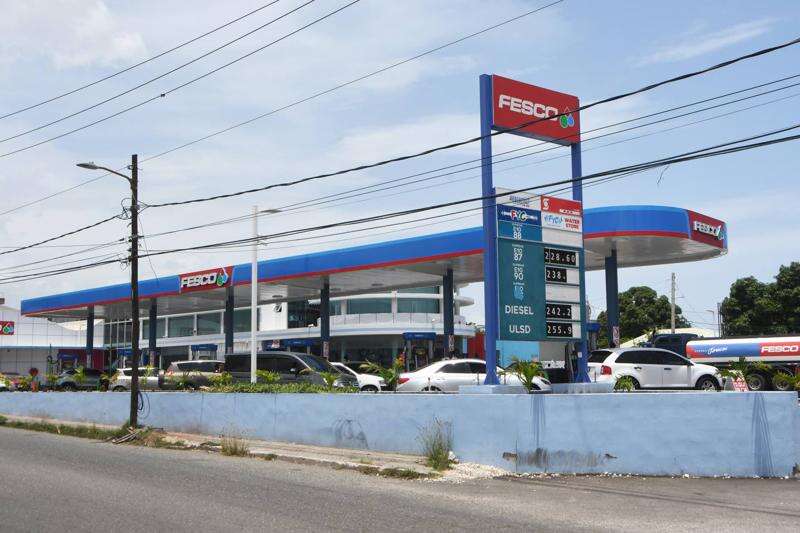
Apology to Fesco and CEO Mr Jeremy Barnes
The Jamaica Observer has issued a formal apology for incorrectly attributing a statement about Fesco’s market position to Mr. Jeremy Barnes, the company’s CEO, in a recent BusinessWeek article titled ‘Fesco Fuel Sales Surge 7.4%’. The publication acknowledged that Mr. Barnes did not make the quoted remark and expressed regret for the error and any resulting confusion among its readers. As part of its corrective measures, the Observer has removed the misattributed quote from all its published materials. This incident highlights the importance of accurate reporting and the potential consequences of misinformation in business journalism. The Observer has reaffirmed its commitment to upholding journalistic integrity and ensuring the reliability of its content moving forward.
-

Antigua Prepares for Busy Cruise Season With Hundreds of Calls Scheduled
Antigua and Barbuda is poised for an exceptionally vibrant 2025–2026 cruise season, with a staggering 540 ship calls scheduled between October 2025 and April 2026, as revealed in the latest calendar update from Antigua Cruise Port. Published on September 25, 2025, the schedule features a diverse array of cruise operators, including industry giants such as Royal Caribbean International, Princess Cruises, Celebrity Cruises, MSC Cruises, Disney Cruise Line, and Cunard. While the majority of these vessels will dock in St. John’s, the ports of Falmouth and Barbuda are also set to welcome a significant number of arrivals. The season will encompass a mix of transit stops, homeport operations, and overnight stays, catering to vessels of varying sizes—from intimate boutique luxury ships carrying fewer than 200 passengers to colossal megaships accommodating over 4,000 travelers. With multiple days expected to host two or more ships simultaneously, the upcoming season is anticipated to be one of the busiest in recent memory. Although the schedule outlines maximum vessel capacities, actual occupancy rates may vary. Antigua Cruise Port has emphasized that all berthing assignments and times remain subject to change, reflecting the dynamic nature of cruise operations. This surge in maritime activity is expected to provide a substantial boost to the local economy, particularly in tourism and related sectors.
-

From Burritos to Breakthroughs: Lessons from Chipotle’s Turnaround for Caribbean Entrepreneurs and Business Owners.
In the realm of business, few narratives are as inspiring as a remarkable comeback. Chipotle Mexican Grill’s resurgence under CEO Brian Niccol stands as a testament to strategic innovation and bold leadership. For entrepreneurs in Antigua and Barbuda, Niccol’s journey offers invaluable insights into revitalizing and future-proofing businesses. Here are five key lessons distilled from Chipotle’s transformation.\n\n**Lesson 1: Embrace Digital Transformation**\nWhen Niccol assumed leadership in 2018, Chipotle was grappling with food safety scandals and a damaged reputation. His immediate focus was on digitization. By introducing mobile ordering and drive-through “Chipotlanes,” he streamlined the customer experience. This digital leap propelled Chipotle’s revenue from \$4.8 billion to \$9.9 billion in just five years. The takeaway for local businesses is clear: digital convenience is no longer optional. Investing in mobile platforms, online booking, and loyalty apps can enhance accessibility and customer satisfaction.\n\n**Lesson 2: Operational Efficiency as a Growth Driver**\nNiccol’s strategy extended beyond digitization to operational optimization. He implemented second “make lines” for online orders, automated food preparation, and streamlined kitchen processes. These changes, though unglamorous, were transformative. For Caribbean businesses, this underscores the importance of addressing internal inefficiencies before pursuing expansion. Auditing and improving processes can build trust and loyalty, which are essential for sustainable growth.\n\n**Lesson 3: Innovate the Customer Experience**\nRather than overhauling the menu, Niccol focused on reimagining how customers interacted with Chipotle. He introduced lifestyle bowls for niche diets and made certain items app-exclusive, driving digital engagement. For instance, the app-only quesadilla led to a 37% surge in loyalty sign-ups within a week. Entrepreneurs can draw inspiration from this approach by exploring ways to enhance customer interaction, such as offering exclusive online deals or creating personalized experiences.\n\n**Lesson 4: Balance Growth with Brand Integrity**\nWhile Niccol’s strategies boosted profits, they also raised concerns about declining customer experience, including smaller portions and reduced human interaction. This serves as a cautionary tale for Caribbean businesses: as you scale, ensure that growth amplifies your brand’s core values rather than eroding them. Protecting what makes your business unique—whether it’s customer service or artisanal quality—is crucial.\n\n**Lesson 5: Leadership Requires Courageous Change**\nNiccol’s success was rooted in his willingness to challenge traditions and make bold decisions. His ability to execute transformative strategies with resilience highlights the importance of courageous leadership. For business leaders in Antigua and Barbuda, this is a call to embrace change, pivot business models, and invest in long-term transformation.\n\n**Universal Applicability**\nThese lessons transcend industries and borders. Whether in hospitality, financial services, or education, the principles of digital transformation, operational excellence, customer-centric innovation, and courageous leadership are universally applicable. By fostering a culture of learning and adaptation, Caribbean businesses can position themselves for success in an evolving global landscape.
-

VIDEO: Government denies borrowing money from Social Security
Government denies borrowing money from Social Security
-

Antigua and Barbuda strongly condemns all attempts to discredit the President of Venezuela
Antigua’s most visited news platform is now offering businesses a unique opportunity to elevate their digital presence through fully customizable and flexible marketing packages. Designed to cater to diverse advertising needs, these packages allow brands to connect with a broad audience in a dynamic and engaging manner. Businesses looking to amplify their reach can collaborate with the platform’s expert team to craft tailored campaigns that align with their goals. For inquiries and to explore the available options, interested parties are encouraged to contact the platform via email at [email protected]. This initiative underscores the platform’s commitment to supporting local and international businesses in achieving their marketing objectives while leveraging its extensive readership and digital influence.
-

Marine Exports See Boost in August 2025
Belize’s export performance in August 2025 remained largely stagnant, with marine products emerging as the sole standout in an otherwise flat trade landscape, according to the Statistical Institute of Belize (SIB). The SIB reported a significant $1.3 million increase in marine export revenues, climbing from $4.5 million in August 2024 to $5.7 million this year. This growth was primarily driven by heightened international demand for lobster meat, a key foreign exchange generator for the nation. Marine exports, encompassing shrimp, conch, whole lobster, and various fish species, have traditionally been a cornerstone of Belize’s export economy. However, the sector has encountered persistent challenges in recent years, including the collapse of the farmed shrimp industry and intensifying competition in global seafood markets. Despite these obstacles, lobster continues to hold its ground as a prized commodity, with steady demand from markets in the United States and Europe. The recent revenue boost signals a potential recovery for the industry, which plays a vital role in supporting the livelihoods of coastal communities and small-scale fishers across Belize.
-
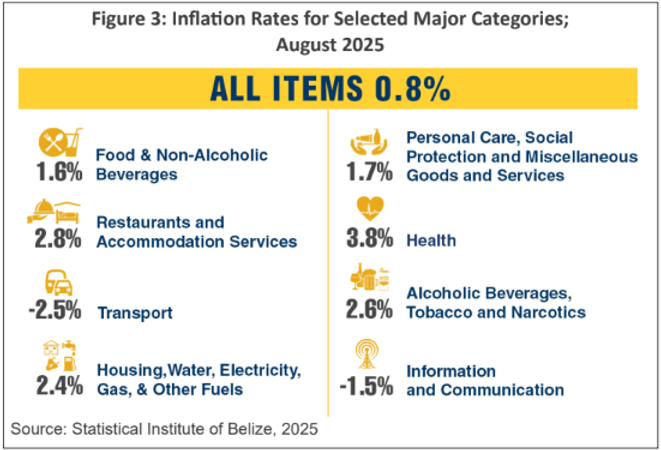
Food, Rent, and Gas Push Inflation Up 0.8% in August; Fuel Prices Ease Burden
In August 2025, Belizeans experienced a mixed economic landscape as rising costs in essential sectors like food, housing, and liquefied petroleum gas (LPG) were partially offset by declining fuel prices, resulting in an overall inflation rate of 0.8 percent compared to the previous year. According to the Statistical Institute of Belize, the Consumer Price Index (CPI) rose to 120.7, up from 119.7 in August 2024. The most significant contributors to this increase were the ‘Housing, Water, Electricity, Gas and Other Fuels’ category, which surged by 2.4 percent, and ‘Food and Non-Alcoholic Beverages,’ which climbed by 1.6 percent. Together, these categories represent nearly half of household expenditures, amplifying their impact on consumers. Housing costs were driven by a $12.24 year-over-year increase in the price of a hundred-pound LPG cylinder, reaching $130.04, alongside a 1.7 percent rise in home rental prices. Food inflation was fueled by higher prices for bread, bakery products, and meats, with beef steak and chicken breast prices soaring by 10.7 and 8.5 percent, respectively. Non-alcoholic beverages also saw a 4.4 percent increase, primarily due to higher costs for purified water, juices, and soft drinks. Additional notable price hikes included health services (up 3.8 percent), restaurants and accommodation (up 2.8 percent), and personal care items like deodorants and lotions (up 1.7 percent). Alcoholic beverages and tobacco rose by 2.6 percent, led by cigarette prices. However, these increases were partially mitigated by a 2.5 percent decline in transport costs, driven by lower gasoline and diesel prices. Regular gasoline dropped by $0.90 per gallon, diesel by $0.67, and premium gasoline by $0.62. Information and communication costs also fell by 1.5 percent, reflecting cheaper cell phones. Inflation varied significantly across municipalities, with Punta Gorda experiencing the steepest rise at 2.7 percent due to broad-based increases in food, LPG, and personal care items. In contrast, Orange Walk recorded a slight decline of -0.2 percent, benefiting from lower fuel, garment, and vegetable prices. Month-to-month, consumer prices increased by 0.2 percent between July and August 2025, primarily due to higher diesel, vehicle, and restaurant costs. Year-to-date inflation for the first eight months of 2025 stood at 1.3 percent, largely influenced by rising food, housing, and personal care expenses, while transport and communication costs trended downward.