
NH International (Caribbean) Ltd (NH), a prominent local contractor, is taking a proactive stance against an escalating fraud threat targeting merchants during the high-volume Christmas season. The company has developed comprehensive fraud prevention guidelines and is collaborating with the TT Chamber of Industry and Commerce and regional chambers to disseminate these materials widely. This initiative follows NH’s identification of a sophisticated impersonation scheme where criminals forged NH documents and counterfeit cheques to defraud businesses. In October 2025 alone, a merchant lost TT$377,000 in one such incident. While NH itself has not suffered financial losses, the company views protecting the broader business community as a corporate responsibility, especially during the peak fraud period from October to December. Emile Elias, NH’s executive chairman, emphasized the urgency of the situation, stating, ‘This isn’t about legal obligation—NH is the victim of identity theft. But when our name is being weaponized against fellow businesses, silence isn’t an option.’ The fraud scheme has evolved beyond counterfeit cheques, with criminals now depositing fraudulent instruments directly into merchant accounts, creating false confidence that payments have cleared. By the time banks detect the fraud—typically within three to five business days—goods have been collected, and perpetrators have vanished. NH’s security manager, Antonio Ventour, highlighted the critical timing of the initiative, noting that merchants handling peak holiday volumes face compressed decision windows, which fraudsters exploit. The company’s Fraud Alert Reference Sheet provides specific protocols for businesses to protect themselves without slowing legitimate operations. Key measures include contacting NH’s main line to verify transactions directly with the procurement manager and never releasing goods until payments fully clear—even for manager’s cheques, which can be counterfeit despite their authentic appearance. NH is also coordinating with law enforcement and urging businesses to report suspected fraud immediately to the Fraud Squad while preserving all documentation. The company’s Fraud Alert Guidelines are available through NH’s main office and will be distributed via chamber networks as partnerships are confirmed. ‘This affects our entire commercial ecosystem,’ Elias said. ‘We’re choosing transparency and collective protection. The Christmas season should be about legitimate commerce thriving, not merchants getting victimized.’
分类: business
-

Williams appointed CEO of Pan-American Insurance
The Pan-American Life Insurance Group (PALIG), a leading provider of life, accident, and health insurance across the Americas, has named Winston S Williams as its new CEO for the Caribbean region, effective November 1. Williams, a seasoned insurance professional with over 40 years of experience, takes over from Youil Homsi, who significantly enhanced PALIG’s Caribbean operations during his tenure. Williams’ extensive background includes leadership roles at Sagicor Life Inc, Colonial Life Insurance Company Ltd, and Caribbean Atlantic Life Insurance Company Ltd. As the former agency manager of PALIG’s Port of Spain and San Fernando offices, he achieved 12 consecutive years of growth, fostering robust relationships with producers and customers. José S Suquet, PALIG’s chairman and CEO, highlighted Williams’ deep market understanding and strong client relationships as key factors in his appointment. Dan Costello, PALIG’s executive vice president for international markets, emphasized that Williams’ leadership marks a pivotal step in the group’s Caribbean expansion strategy. Following regulatory approvals in Trinidad and Tobago, Williams will also serve as CEO of Pan-American Life Insurance Company of TT Ltd. In his new role, Williams aims to focus on culture, collaboration, and performance, driving innovation and strengthening risk protections to deliver exceptional value to customers.
-

Unicomer Group donates $75 million for Hurricane Melissa relief efforts
KINGSTON, Jamaica – In a significant move to aid recovery efforts following the devastation caused by Hurricane Melissa, the Unicomer Group, which operates prominent retail brands such as Courts in Jamaica, has announced a $75 million contribution. This substantial financial commitment will be directed towards both government-led and community-based recovery initiatives, as well as providing direct assistance to employees affected by the storm.
-

Melissa damage to Jamaica up to US$7 billion in preliminary estimate, says Holness
The economic aftermath of Hurricane Melissa has been preliminarily assessed at a staggering $6 to $7 billion, a figure that represents approximately 28 to 32 percent of the nation’s projected gross domestic product (GDP) for the 2024/2025 fiscal year. This estimate was disclosed by Prime Minister Dr. Andrew Holness during a statement delivered in the House of Representatives on Tuesday. Dr. Holness emphasized the anticipated short-term economic slowdown, particularly in the most severely affected regions. The agricultural sector is expected to face a decline in output as farmers work to replant crops and livestock operations recover. Meanwhile, the tourism industry, known for its resilience, is making swift efforts to reopen but will require targeted support to restore its capacity and rebuild consumer confidence. Additionally, small and medium-sized enterprises (SMEs) across retail, manufacturing, services, and the creative industries have incurred substantial losses. These businesses will need liquidity assistance and recovery programs to rebuild inventories, repair damaged facilities, and resume operations. The government’s focus is now on implementing measures to mitigate the long-term economic impact and support affected sectors in their recovery efforts.
-

“A true taste of the Caribbean” – GCG opens Bistro Vibes at Antigua’s V.C. Bird International Airport
In a move that promises to elevate the travel experience, GCG has unveiled its latest venture, Bistro Vibes, at Antigua’s V.C. Bird International Airport. This new dining establishment aims to encapsulate the essence of Caribbean culture, offering passengers a genuine taste of the region’s rich culinary heritage. Strategically located within the airport, Bistro Vibes is designed to cater to both departing and arriving travelers, providing a unique blend of local flavors and international appeal. The menu features a curated selection of traditional Caribbean dishes, crafted with locally sourced ingredients to ensure authenticity. This initiative not only enhances the airport’s amenities but also serves as a cultural ambassador, introducing visitors to the vibrant gastronomy of the Caribbean. GCG’s investment in Bistro Vibes underscores its commitment to promoting regional tourism and supporting local economies. By integrating cultural experiences into the travel journey, the company is setting a new standard for airport dining worldwide.
-

PM Browne says new luxury investments will raise wages and diversify tourism product
Prime Minister Gaston Browne has unveiled ambitious plans to transform Antigua and Barbuda into the Caribbean’s foremost luxury tourism destination. During his weekly radio program, Browne emphasized the nation’s strategic shift from traditional all-inclusive resorts to high-end tourism projects designed to attract affluent travelers and generate higher-paying jobs.
-

WIOC Pays Over $170 Million to Government in Taxes and Dividends
Prime Minister Gaston Browne has hailed the West Indies Oil Company (WIOC) as a paragon of public-private partnership, emphasizing its substantial contributions to Antigua and Barbuda’s economy. During his weekly radio program, Browne revealed that the government has amassed approximately $170 million in taxes and dividends from WIOC, marking it as the nation’s most successful collaborative venture.
-

Government to Partner in New Beer and Distillery Ventures
Prime Minister Gaston Browne has unveiled ambitious plans to bolster Antigua and Barbuda’s economy through the establishment of a new brewery and the expansion of the Antigua Distillery. These initiatives, backed by a recently approved loan secured via a public-private partnership with the government, signify a strategic shift toward economic diversification and reduced dependence on tourism. Speaking on his weekly radio program, ‘Browne and Browne,’ the Prime Minister emphasized the significance of these investments in broadening the nation’s production base. ‘From next year, we may have a beer factory,’ Browne revealed, highlighting the collaborative effort between the government and Antigua Distillery. The Prime Minister noted that while tourism remains a vital sector, its contribution to GDP has decreased from 70 percent to approximately 55 percent due to the growth of other industries. ‘Banking, manufacturing, and services such as medical education and insurance are now playing a more substantial role in our economy,’ he explained. This diversification has enabled Antigua and Barbuda to achieve record economic growth, maintain fiscal surpluses, and reduce national debt. Browne also underscored the importance of joint ventures in agriculture, distilling, and financial services, which aim to enhance local ownership and economic participation. The Citizenship by Investment Programme, contributing around 10 percent of GDP, continues to complement these efforts. The Prime Minister’s announcement reflects a broader vision to strengthen the country’s economic resilience and ensure sustainable development.
-

Dominican Republic welcomes ten new cruise ships
In a significant boost to its tourism and port industry, the Dominican Republic has welcomed ten cruise ships visiting the country for the first time. The vessels—Aida SOL, Cel Xcel, Brilliant Lady, Brilliant OTS, Rhapsody, Carnival Legend, Majestic Princess, Coral Princess, NCL Getaway, and NCL Joy—are operated by globally renowned cruise lines such as Aida, Celebrity Cruises, Virgin Voyages, MSC Cruises, Royal Caribbean, Carnival, Princess Cruises, and Norwegian Cruise Line. This milestone underscores the Dominican Republic’s growing appeal as a premier travel destination. Jean Luis Rodríguez, Executive Director of the Dominican Port Authority (APORDOM), emphasized that this development reflects the confidence major cruise companies have in the country’s ports and coastal offerings. He noted that the nation’s diverse maritime experiences continue to attract international attention. For November, 67 cruise ships are scheduled to dock, marking the second-highest monthly figure this year. Taíno Bay will host 40 ships, Amber Cove 23, and Cabo Rojo 4. While arrival dates may be adjusted due to weather or itinerary changes, the outlook signals a thriving and expanding cruise season for the Dominican Republic.
-
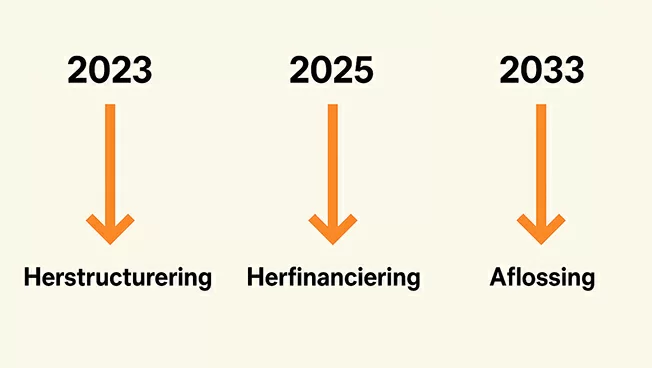
Regering herfinanciert buitenlandse schuld: geen nieuwe lening, wel ademruimte
Suriname has successfully raised approximately $1.6 billion through an international capital market operation, marking a significant milestone in its financial recovery journey. Facilitated by BofA Securities (Bank of America), this refinancing initiative aims to restructure existing state bonds and signifies Suriname’s return to the global capital market. While the final settlement is expected on November 6, the transaction is already being hailed as a pivotal step in restoring financial confidence in the country.
This operation is not a new loan but a refinancing of the 7.95% Cash/PIK Notes due 2033, issued following the 2023 debt restructuring. Investors were invited to tender their existing bonds at a fixed price of $1,002.50 per $1,000 nominal value. The proceeds from the new bond issuance will be used to repay older, more expensive debts, thereby shifting payment obligations to a later period when Suriname anticipates increased revenue from its oil sector. The primary goal is to alleviate budgetary pressure in the coming years without adding to the nation’s total debt burden.
A senior government official emphasized that the operation is designed to ‘create breathing space for the state’s finances,’ allowing Suriname time to grow rather than merely delay borrowing. The transaction was meticulously planned, with the invitation to tender issued on October 23 and results finalized on October 30. The operation was executed through the Automated Tender Offer Program of the U.S. DTC, ensuring transparency and compliance with market regulations.
The refinancing offers immediate liquidity benefits by replacing high-interest bonds with lower-rate, longer-term debt, reducing annual interest expenses. This creates fiscal flexibility for government spending in the coming years. However, experts caution that the strategy’s sustainability hinges on the timely realization of oil revenues and the government’s ability to channel freed-up resources into productive investments.
The successful $1.6 billion raise underscores restored investor confidence, bolstered by Suriname’s improved credit rating. While the exact interest rate remains undisclosed, it is reportedly favorable compared to previous issuances. Notably, the refinancing was conducted independently of an IMF program, though the country continues to receive technical assistance from the fund.
While the operation is a technical and diplomatic triumph, analysts warn that refinancing is not a structural solution but a temporary relief. Its success depends on budgetary discipline, political stability, and the timely inflow of oil and tax revenues. The government has pledged to release further details on the bond’s terms and repayment structure this week, providing clarity on the next steps in Suriname’s financial policy.
Symbolically, this operation represents Suriname’s first independent access to the international capital market since the 2023 restructuring, signaling regained credibility in financial management. It aligns with broader efforts to drive structural economic reforms and strengthen ties with international financial institutions and investors.
The challenge now lies in leveraging this financial breathing space to foster sustainable growth, ensuring future governments are not compelled to refinance old debts. This operation underscores that financial recovery begins not with loans but with trust—a trust that, once regained, must be carefully nurtured.