
In a landmark ruling, the Caribbean Court of Justice (CCJ) has determined that the Bank of Nova Scotia is legally responsible for withholding tax on cross-border payments. The decision, which carries significant implications for international banking operations, underscores the growing scrutiny of tax compliance in global financial transactions. The case originated from allegations that the bank failed to adhere to tax regulations when processing payments across borders, leading to potential revenue losses for the involved jurisdictions. The CCJ’s verdict emphasizes the importance of financial institutions maintaining rigorous compliance with tax laws, particularly in an era of increasing cross-border economic activities. This ruling is expected to set a precedent for similar cases, prompting banks to reassess their tax withholding practices and ensure adherence to international tax standards. Legal experts suggest that the decision could lead to heightened regulatory oversight and potential reforms in cross-border payment systems.
分类: business
-

New Rules for Mailing to the U.S.
Starting November 2025, individuals and businesses in Belize planning to send packages to the United States must adhere to a new customs declaration process. The Belize Postal Service has introduced the Customs Declaration System (CDS), requiring all senders to complete a detailed form before mailing goods to the U.S. This change follows the U.S. government’s Executive Order 14324, issued in July 2025, which eliminated the “duty-free de minimis” rule that previously allowed goods valued under $800 to enter the U.S. tax-free. Now, every package must declare its contents, value, and country of origin, and all are subject to applicable tariffs. To ensure public compliance, the Belize Postal Service has launched a nationwide roadshow to educate customers on the updated requirements. The CDS, developed by the Universal Postal Union, enables electronic transmission of customs data to U.S. Customs and Border Protection. While Belize temporarily suspended U.S. mail services to align with the new regulations, officials anticipate resuming shipments by the end of November. Importantly, regular postage fees remain unchanged, with only the added customs duties mandated by the U.S. government. These duties are calculated based on the item’s origin and the corresponding tariff rate, payable at the time of shipment.
-

Saint Lucia’s Cocoa Sector Ripe for Development, FAO Finds
A recent mission by the Food and Agriculture Organisation of the United Nations (FAO) has highlighted Saint Lucia’s pivotal role in the Eastern Caribbean’s specialty cocoa sector, demonstrating how even limited production can drive a thriving value-added market. From August 6 to 26, 2025, FAO’s cocoa market analysis team, led by specialist Gustavo Ferro, conducted an extensive assessment of the cocoa industries in Saint Lucia, Dominica, Grenada, and Saint Vincent and the Grenadines. The mission aimed to identify sustainable growth strategies for the region’s cocoa sector, which is rich in flavor and entrepreneurial spirit, and eager to carve out a niche in premium international markets. In Saint Lucia, smallholder farmers and local processors are already capitalizing on opportunities through bean-to-bar chocolate production, artisanal cocoa products, and cocoa-based tourism experiences. Ferro emphasized that even modest production can sustain a vibrant market, particularly when integrated with Saint Lucia’s robust tourism sector. This synergy between agriculture and tourism has positioned the island as a prime candidate for niche market development, with traditional cocoa tea, boutique chocolate tours, and locally crafted products attracting international buyers seeking authenticity and unique flavors. Across the four islands, the FAO mission identified key opportunities to enhance competitiveness, including strengthening farmer networks and logistics, fostering value-added innovation, leveraging agro-tourism potential, and promoting sustainable practices such as biodiversity and agroforestry systems. Ferro praised Grenada’s fine-flavor cocoa and entrepreneurial farmers, commended Saint Vincent and the Grenadines for preserving cocoa traditions, and highlighted Dominica’s biodiversity and cooperative energy. The mission’s findings will inform a comprehensive roadmap for the Eastern Caribbean cocoa sector, with country-specific analyses and strategies to strengthen positioning in fine-flavor markets. These insights will be presented at the Subregional Dialogue on the Specialty Cocoa Sector in November 2025 in Trinidad and Tobago. FAO’s efforts align with the broader project “Strengthening the Foundations for a Specialty Cocoa Sector in the Caribbean,” underscoring cocoa’s potential to bolster local economies and improve rural livelihoods.
-

TTMA unveils plans for convention centre, exports, SMEs
The Trinidad and Tobago Manufacturers’ Association (TTMA) recently hosted its annual President’s Dinner and Awards at the Hyatt Regency in Port of Spain, celebrating the resilience, innovation, and economic contributions of the nation’s manufacturing sector. The event, held on November 5, 2025, highlighted the industry’s pivotal role in national development, with TTMA President Dale Parson emphasizing its employment of over 60,000 people and its status as a key economic stabilizer. Parson also revealed that the TTMA, in partnership with the government, raised over $5 million in goods and cash within 24 hours to support Jamaica’s recovery efforts following Hurricane Melissa. The manufacturing sector accounts for approximately 18% of Trinidad and Tobago’s Gross Domestic Product (GDP), making it the second-largest employer after the state. Small and medium-sized enterprises (SMEs) were recognized as the backbone of the industry, comprising nearly 65% of manufacturers nationwide. Parson outlined initiatives to enhance SME export readiness, including participation in trade conventions, international missions, and collaboration with the Eximbank. Looking ahead, the TTMA has proposed redeveloping the Caroni Racing Complex into a world-class convention center, aiming to position Trinidad and Tobago as a regional manufacturing and trade hub. The event also featured calls for deeper bilateral collaboration between Trinidad and Tobago and Guyana, with Guyana Manufacturing and Services Association President Rafeek Khan urging the resolution of trade barriers to unlock regional opportunities. Trade Minister Satyakama Maharaj commended manufacturers for their role in economic diversification, announcing ambitious targets to expand exports by $5 billion and attract $9 billion in investments over the next five years. The evening concluded with awards recognizing industry leaders, including Angostura Ltd, which won Exporter of the Year (Large Category), and Novo Farms Ltd, honored as Manufacturer of the Year (Medium Category).
-

Is AI taking our jobs or not?
The rise of artificial intelligence (AI) is fundamentally transforming the global workforce, challenging traditional job structures and reshaping industries. While the phrase ‘AI won’t take your job – but someone using AI will’ offers a sense of optimism, the reality is far more complex. Companies worldwide are increasingly citing AI as a reason for cutting thousands of white-collar roles. Amazon’s CEO, Andy Jassy, recently highlighted that AI enables teams to achieve more with fewer people, signaling a shift in workforce dynamics.
Jobs are not monolithic but rather collections of tasks. Research from McKinsey & Company reveals that AI can perform 30 to 70 percent of these tasks, altering the economic viability of many roles. When AI handles half of a job’s workload more efficiently, companies face three choices: eliminate the role, merge it with another function, or redesign it into an AI-assisted position. This gradual erosion of tasks is particularly evident in routine cognitive work, such as data entry, report writing, and document review, which AI now manages with near-professional precision.
Gartner predicts that by 2026, 20 percent of organizations will use AI to flatten their hierarchies, eliminating half of their middle-management layers. AI systems are now capable of handling coordination, analytics, and communication—functions traditionally overseen by managers. This shift is creating what McKinsey terms the ‘agentic organization,’ where small human teams supervise networks of AI agents, resulting in leaner companies and faster decision-making.
While AI is automating many tasks, it is also driving job transformation. In medicine, surgeons use AI to enhance decision-making during operations. In law, AI tools save lawyers an estimated 240 hours annually by handling contract analysis and legal research. In marketing, generative AI has reduced content creation costs by 30 to 50 percent. AI acts as a copilot, handling repetitive work so humans can focus on creativity and judgment. However, companies often fail to replace eliminated tasks with new creative roles, leading to workforce reductions.
AI is also reshaping income distribution. According to PwC’s Global AI Jobs Barometer (2025), industries like finance, IT, and professional services are experiencing productivity growth five times faster than sectors like manufacturing or transport. Workers with advanced AI skills command a 56 percent wage premium, while routine professional roles face decline. This dynamic is compressing the middle class and rewarding those who can direct, train, or govern AI systems.
One of the most pressing concerns is the hollowing-out of the career ladder. AI is automating entry-level tasks that once provided young professionals with learning opportunities. Simultaneously, firms are adopting ‘AI-first’ hiring policies, deploying automation before opening new roles. This trend raises questions about how the next generation of managers and specialists will be trained.
Governments are responding differently to these challenges. The European Union’s AI Act classifies workplace AI as ‘high-risk,’ demanding transparency and safety protocols, which slows innovation but protects workers. In contrast, Singapore is rapidly building an AI-fluent workforce through national upskilling initiatives and a government-backed ethics framework called AI Verify.
In conclusion, AI is not eliminating all jobs but is dismantling the structure of work as we know it. Tasks are being automated, hierarchies flattened, and entry points erased. The future will favor individuals and nations that master AI literacy, creative judgment, and the ability to design systems rather than merely operate within them. As companies in the Caribbean and beyond adopt digital tools more aggressively, the question is no longer if AI affects our jobs, but how quickly we adapt. When half of your tasks vanish, what remains is a test of the true value of the human element in your work.
-

First Citizens doubles Neo Achievers student awards
First Citizens Bank has recently celebrated the academic excellence of 16 young achievers through its Neo Education Awards. This annual event, held to honor student account holders nationwide, underscores the bank’s dedication to fostering youth empowerment and financial literacy. The Neo account, a savings product tailored for individuals from birth to age 25, aims to instill sound financial habits early in life. This year, the bank doubled the number of awardees from eight in 2024 to 16, reflecting its growing commitment to education and youth development. Recipients received cash prizes directly deposited into their Neo accounts, ranging from $1,000 for Secondary Entrance Assessment (SEA) achievers to $6,000 for top tertiary-level performers. CSEC and CAPE students were awarded $2,500 and $3,000, respectively. Lyndon Balkran, Acting Senior Manager for Market Development, Intelligence, and Promotions, praised the awardees, emphasizing the bank’s belief in nurturing a financially confident generation. Parents and students expressed gratitude, viewing the ceremony as both a celebration of academic success and a motivation to pursue excellence. The Neo Education Awards are a key component of First Citizens’ strategy to promote lifelong financial awareness, bridging academic achievement with responsible money management.
-

The struggles to establish a regional air carrier
In a decisive move to safeguard over 700 jobs and maintain vital air connections across the Caribbean and the eastern United States, the Trinidad and Tobago (TT) government, under the leadership of Premier Dr. Eric Williams, took control of British West Indian Airways (BWIA) in 1961. This action was prompted by the British Overseas Airways Corporation’s (BOAC) proposed austerity measures, which threatened significant staff retrenchments and disruptions to regional air services. Premier Williams, addressing the House of Representatives on March 23, 1962, highlighted the government’s intervention to acquire BWIA, emphasizing the need to preserve employment and sustain air links. BOAC, in a letter dated June 16, 1961, valued BWIA at £1,034,036 (BWI$5,445,726), but independent technical advice was sought to facilitate negotiations. The TT government engaged C.S. Sundaram, a consultant from the International Civil Aviation Organisation (ICAO), whose report on September 27, 1961, influenced the decision to acquire BWIA on October 3, 1961. The TT government’s acquisition plan included purchasing BWIA as a going concern, negotiating pooling arrangements with BOAC, and offering BOAC a 20% equity stake. The final agreement, concluded on October 7, 1961, saw BOAC agree to the acquisition for $2.5 million, less than half the initial valuation. This strategic move underscored the TT government’s commitment to regional connectivity and employment stability, independent of broader federal plans.
-

Positioning Trinidad and Tobago for the AI economy
As the global economy increasingly relies on cutting-edge technologies like artificial intelligence (AI) and robotics, Trinidad and Tobago (TT) faces a critical question: Is the nation prepared to seize the opportunities these innovations present? The answer, unfortunately, is far from reassuring. Recent data paints a troubling picture of TT’s declining performance in global innovation benchmarks. On the 2024 Global Innovation Index, TT ranked 108th, a significant drop from its peak at 68th in 2008. Similarly, the UNCTAD Frontier Technology Readiness Index shows TT slipping to 86th in 2025, down from 75th in 2021. These rankings highlight systemic weaknesses in industrial capacity and research and development (R&D), with TT scoring 122nd and 130th globally in these areas, respectively. The nation’s R&D expenditure remains below 0.5% of GDP, and patent filings are alarmingly low, averaging just one per year. Despite these challenges, there are glimmers of hope. Ramps Logistics’ AI-driven solution, MAWI, is revolutionizing customs brokerage and generating foreign exchange, while Carib Brewery’s $200 million smart manufacturing initiative marks a bold step toward industrial modernization. These successes underscore the potential for TT to tap into the $2.5 trillion global frontier technology market, projected to grow to $16.4 trillion by 2033. To bridge the innovation gap, TT must prioritize R&D and industrial capacity, strengthen governance frameworks, and support SMEs in adopting advanced technologies. The urgency of these reforms cannot be overstated, as failure to act risks leaving TT behind in the rapidly evolving global economy.
-
Guardian Group pledges US$312k hurricane relief
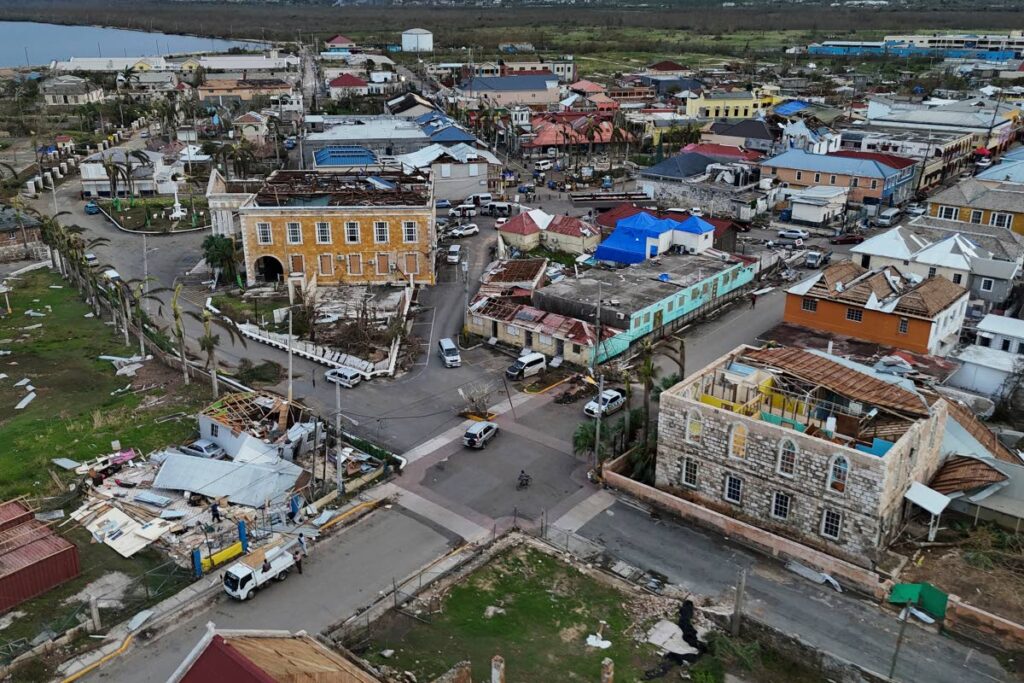
In a significant move to aid Jamaica’s recovery from the devastation caused by Hurricane Melissa, the Guardian Group Charitable Foundation has committed US$312,000. This donation, one of the largest single contributions from Trinidad and Tobago (TT), is part of the broader ‘Building a Better Jamaica Fund,’ a coordinated recovery initiative led by the National Commercial Bank Jamaica Ltd (NCB) and managed by the NCB Foundation. The fund has already raised approximately US$2.8 million, including an initial US$1.25 million from NCB, supplemented by partner contributions and Guardian Group’s substantial donation. Hurricane Melissa, which struck Jamaica on October 28, left widespread destruction across the island, damaging infrastructure, agriculture, and housing, and displacing thousands of residents. The Jamaican government declared a national disaster, prompting a large-scale relief and reconstruction effort supported by regional governments, businesses, and aid agencies. Guardian Group’s contribution will support both immediate relief and long-term rebuilding, working through experienced partners such as the American Friends of Jamaica, Food for the Poor Jamaica, Unicef Jamaica, and the Global Empowerment Mission. Shinelle Grant-Sealey, Guardian Group’s vice-president for environment, social and governance, emphasized the organization’s regional commitment to recovery and resilience, stating that the donation is an immediate investment in stability for affected families and institutions. Guardian Group has also provided care packages and internal support for its employees in Jamaica impacted by the storm. With operations across TT, Jamaica, Barbados, and the Dutch Caribbean, the group remains dedicated to helping Caribbean communities rebuild and recover.
-

Shaping a sustainable bioeconomy for Caricom
The Caribbean’s economic narrative has long been shaped by its exports—oil, gas, tourism, and rum. However, the region’s future prosperity hinges on empowering its women, innovators, and small enterprises. This was the central message delivered by Vashti Guyadeen, CEO of the TT Chamber of Industry and Commerce and President of Caribbean Women in Trade (CWIT), at the Caribbean Women in Trade conference in Saint Lucia.