分类: business

  • IMF ziet harde waarschuwing voor Suriname op weg naar 2028

    IMF ziet harde waarschuwing voor Suriname op weg naar 2028

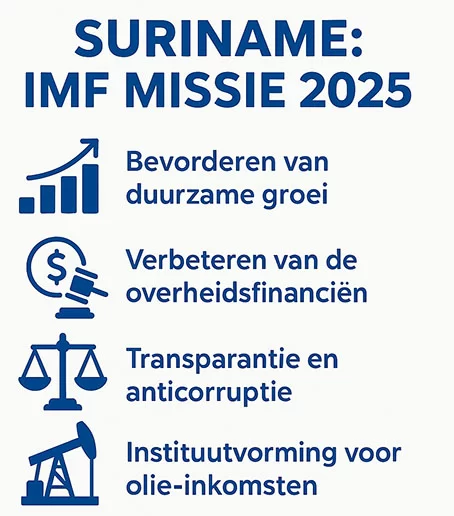
    Suriname, marking fifty years of independence, stands on the brink of a historic turning point, according to the International Monetary Fund (IMF). In its Staff Concluding Statement following the annual Article IV mission, the IMF highlights the nation’s progress in stabilizing its economy and strengthening institutions. However, with the imminent commencement of large-scale oil exploitation, the IMF emphasizes the urgent need for swift and targeted reforms to responsibly manage future revenues and improve citizens’ quality of life. The report warns that the hard-earned economic stability is showing signs of strain.

    The IMF mission focused on economic developments, fiscal policy, the foreign exchange market, the role of state-owned enterprises, and preparations for expected revenues from the offshore oil field Block 58. While Suriname has a unique opportunity to transform its economy for future generations, the IMF cautions that delays in reforms could squander this potential.

    Economic growth has remained modest but stable, with 1.7% in 2024 and 1.3% in 2025, projected to rise to nearly 4% by 2026. Despite a disappointing gold production this year, the development of the Block 58 oil project remains on track. The project’s construction phase will lead to increased imports and current account deficits from 2026 to 2028, financed by foreign investments. Oil production is expected to begin in 2028, potentially doubling the economy by 2030.

    However, macroeconomic stability is under threat. Although Suriname achieved primary fiscal surpluses between 2022 and 2024, 2025 saw a deterioration due to election-related spending and a surge in overdue payments to suppliers. This has depleted government cash reserves and increased pressure on the exchange rate. Inflation rose from 6% to over 10% in 2025, prompting the Central Bank of Suriname to intervene in the foreign exchange market while allowing money supply growth to exceed targets.

    The IMF stresses the need for robust fiscal discipline in 2026–2027, recommending measures such as restoring budgetary discipline, maintaining clear spending limits, strengthening public finances, and addressing supplier arrears. Social spending in education, healthcare, utilities, and infrastructure should be increased gradually to ensure effective implementation.

    Key recommendations include restoring automatic electricity tariff indexing, phasing out subsidies, and reallocating resources to social programs and investments. The IMF also calls for stronger tax collection, addressing gold smuggling, and enhancing governance to ensure oil revenues benefit the population. Transparency in state-owned enterprises, stricter monetary policies, and operationalizing a legal framework for bank resolution are also urged.

    The IMF concludes that timely and consistent reforms are essential for Suriname to leverage its oil revenues for sustainable development. The coming years will be pivotal in shaping the nation’s economic future.

  • CCJ Upholds Government’s LPG Market Reforms

    CCJ Upholds Government’s LPG Market Reforms

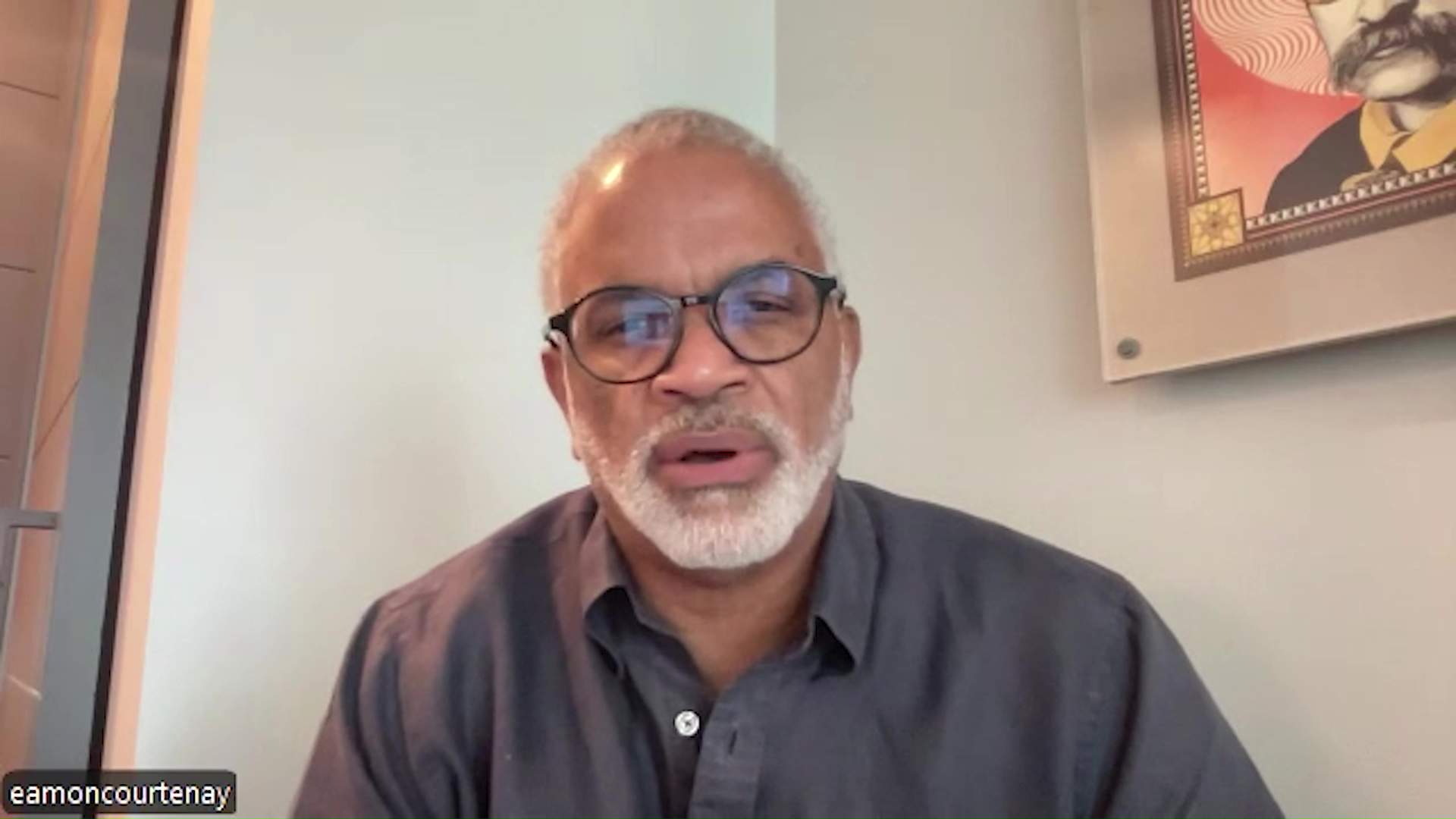
    In a landmark decision on November 20, 2025, the Caribbean Court of Justice (CCJ) upheld the Belizean government’s restructuring of the Liquefied Petroleum Gas (LPG) market, marking the culmination of a years-long legal battle. The ruling validates the transition from a system of multiple importers to a streamlined model featuring a single main importer and local distributors. This reorganization, deemed constitutionally sound by the court, effectively shields the government from a $60 million claim previously pursued by private gas companies. Senior Counsel Eamon Courtenay emphasized the significance of the judgment, stating that the legislation is now confirmed as constitutionally compliant. He further clarified that the court’s decision underscores the continued existence of goodwill among gas companies, despite their claims of financial losses. The ruling not only resolves a major legal dispute but also sets a precedent for the future organization of Belize’s LPG market, ensuring stability and clarity for industry stakeholders.

  • Abinader arrives in California to attend Semiconductor Annual Meeting

    Abinader arrives in California to attend Semiconductor Annual Meeting

    San Jose, California – President Luis Abinader of the Dominican Republic arrived in San Jose, California, at 1:19 p.m. local time yesterday, marking the start of a pivotal two-day visit centered around the Semiconductor Annual Meeting. The visit underscores the Dominican Republic’s strategic push to position itself as a key player in the global semiconductor supply chain. Abinader’s itinerary is packed with high-profile engagements, including exclusive meetings with top executives from leading global semiconductor companies and bilateral discussions aimed at fostering stronger partnerships.

  • Fi We Boledo’s First Year Generates Over $16.7M in Net Earnings

    Fi We Boledo’s First Year Generates Over $16.7M in Net Earnings

    In a significant financial milestone, Belize’s national lottery system, Fi We Boledo, has reported impressive earnings in its first year of operation. Prime Minister John Briceño announced during a recent House Meeting that the rebranded lottery generated $123.2 million in sales from April 2024 to March 2025, with $105 million returned to the public as winnings. After accounting for expenses, the government recorded a net profit of $16.7 million. Briceño highlighted that this achievement marks a turning point after the lottery system was previously managed by a ‘UDP crony’ for over a decade, depriving the nation of substantial revenue. The Prime Minister also projected that net earnings could exceed $20 million in the second year, further bolstering public funds. Additionally, the Belize Lottery Limited (BGLL) has contributed $22 million to the National Health Insurance programme, supporting the expansion of healthcare services across the country. This financial success underscores the government’s commitment to reclaiming and optimizing national assets for public benefit.

  • Major Win for GOB at CCJ

    Major Win for GOB at CCJ

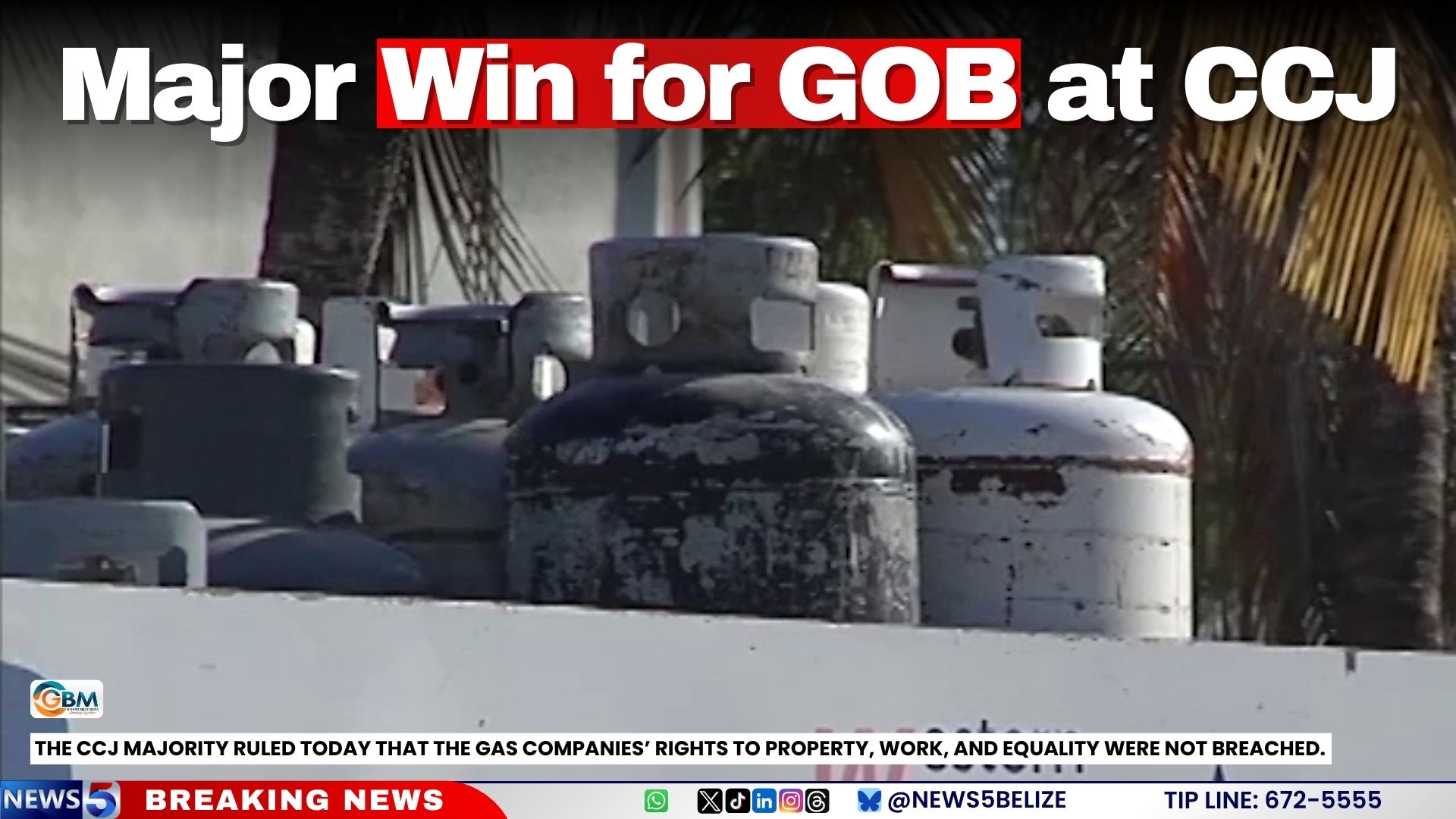
    In a landmark decision, the Caribbean Court of Justice (CCJ) has ruled in favor of the Government of Belize, ending a protracted legal battle with private gas companies over the importation of liquefied petroleum gas (LPG). The dispute centered on the government’s establishment of the National Gas Company (NGC) in 2020, which centralized LPG imports through Big Creek, effectively granting NGC a monopoly. Private companies, including Western Gas and Zeta Gas, argued that this move dismantled their business models and deprived them of their ‘goodwill.’ The case escalated through Belize’s judicial system before reaching the CCJ. Senior Counsel Eamon Courtney, representing the government, emphasized that the companies failed to prove damages or a breach of their rights. The CCJ’s majority ruling overturned a previous $60 million damages award to the companies, stating that their rights to property, work, and equality were not violated. Justice Jamadar dissented, arguing that the companies suffered immediate losses. The ruling validates the NGC’s monopoly and absolves the government of liability, marking a significant victory for Belize’s energy policy.

  • Foreign Affairs Minister: Unemployment at 7.5%

    Foreign Affairs Minister: Unemployment at 7.5%

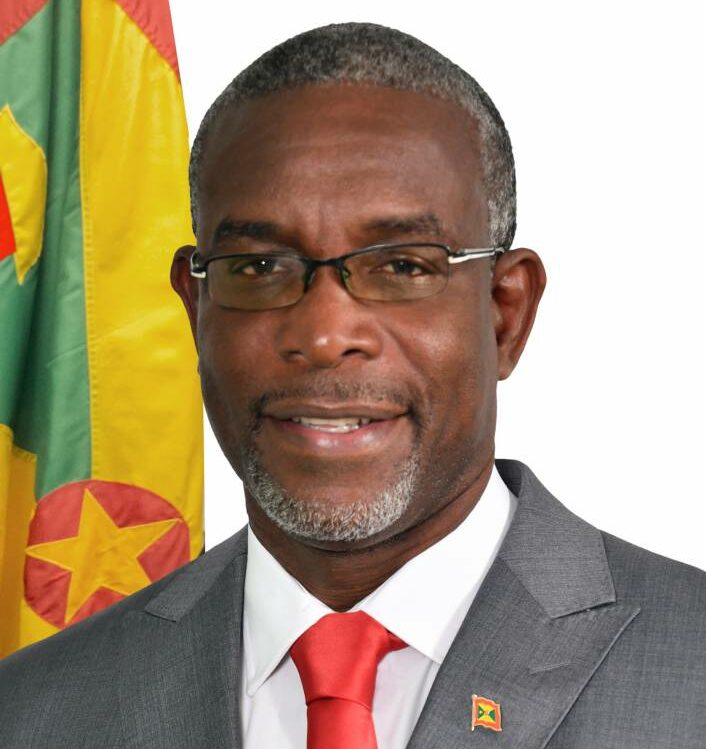
    Grenada’s unemployment rate for the second quarter of 2025 has been reported at 10.8%, according to the latest labour force survey published by the Central Statistics Department. This figure stands in stark contrast to the claims made by Foreign Affairs Minister Joseph Andall, who recently asserted that the unemployment rate had reached a historic low of 7.5%. Andall attributed the low unemployment rate to individuals either being unqualified for available jobs or choosing not to seek employment voluntarily. He even drew a historical parallel, stating that the only period in Grenada’s history with lower employment levels was during the era of slavery or forced labour. The survey, however, reveals that the economically active labour force, comprising individuals aged 15 to 65 and above, stood at 57,359, while the economically inactive population was 32,366. The total working-age population was recorded at 89,745. Economically inactive individuals include those not seeking employment due to reasons such as education, caregiving, retirement, or long-term illness. This discrepancy between government claims and official statistics raises questions about the accuracy of public statements regarding the nation’s economic health.

  • Barbuda Now a ‘Net Contributor’ After Decades of Underdevelopment, Governor General Says

    Barbuda Now a ‘Net Contributor’ After Decades of Underdevelopment, Governor General Says

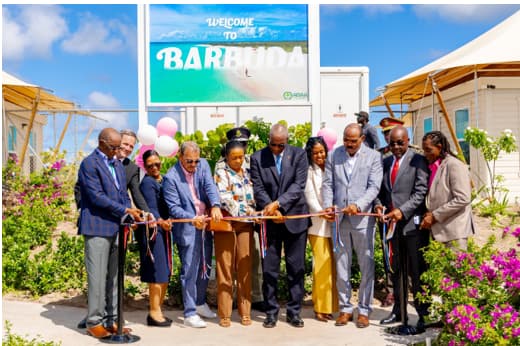
    Barbuda has undergone a remarkable economic transformation, evolving from a state of chronic underdevelopment to becoming a net contributor to the national economy, as announced by Governor General Sir Rodney Williams during the Throne Speech at the opening of Parliament on Thursday. Sir Rodney described Barbuda as ‘a diamond in the rough for more than 60 years,’ but emphasized that a wave of significant investments since 2014 has reshaped its economic landscape. Key developments include high-profile hospitality projects such as PLH, Rosewood, Louie Hill, and Nobu, alongside substantial infrastructure upgrades like paved roads, street lighting, and new public facilities. These initiatives, according to Sir Rodney, have propelled Barbuda into a position of net economic contribution—a milestone never achieved since the establishment of the Barbuda Council. The Governor General also highlighted the island’s new international airport, the Burton-Nibbs Airport, as a cornerstone of this transformation. He outlined further plans, including a new seaport for container ships, expanded road networks, green energy plants, freshwater production facilities, and housing projects to rebuild after Hurricane Irma. A pivotal factor in this progress has been the resolution of long-standing land tenure issues. Sir Rodney explained that the repeal of the 2007 land law and its replacement with a fairer system granting land titles to long-term residents has addressed a historical injustice and unlocked new opportunities for investment. The nation’s apex court affirmed that all non-privately owned land in Antigua and Barbuda belongs to the Crown, providing a secure foundation for development. Sir Rodney attributed this success to the unwavering vision of national leadership and their commitment to implementing long-delayed reforms. With additional projects, such as the planned seaport, Barbuda is poised for sustained economic growth, marking a historic shift in its modern development trajectory.

  • interCaribbean partners with Virgin Atlantic for single-ticket, interline agreement

    interCaribbean partners with Virgin Atlantic for single-ticket, interline agreement

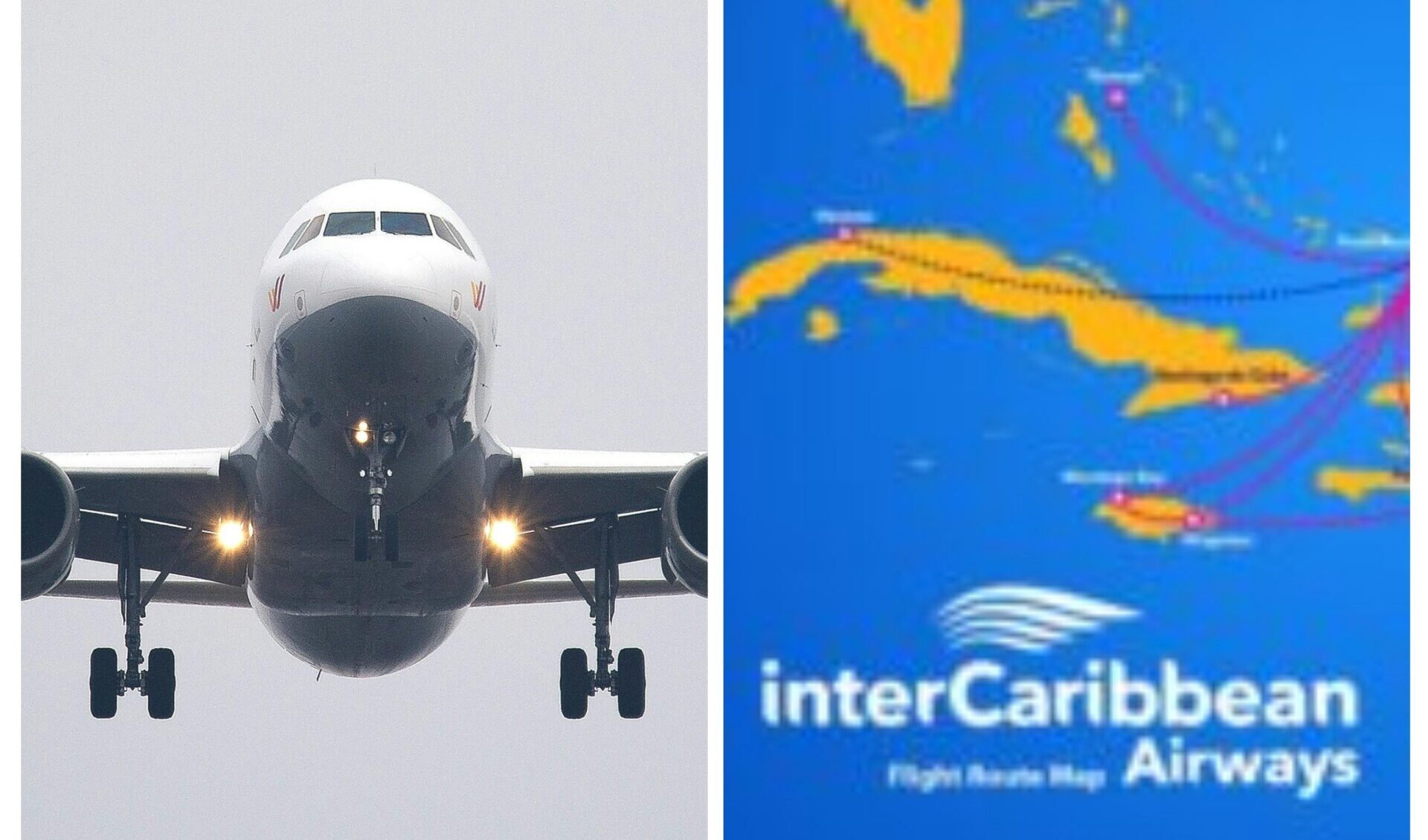
    interCaribbean Airways has unveiled a groundbreaking interline partnership with Virgin Atlantic, marking a significant step in enhancing travel connectivity between the Caribbean and the United Kingdom. The collaboration, centered around key hubs in Barbados and Antigua, aims to streamline travel for passengers by offering seamless connections to Virgin Atlantic’s global network. According to an official statement from interCaribbean, this alliance will enable travelers to book a single ticket for their entire journey, simplifying the check-in process and ensuring smooth transfers at designated connection points. Passengers will benefit from interCaribbean’s regional routes while gaining access to Virgin Atlantic flights to London and other international destinations. Trevor Sadler, CEO of interCaribbean Airways, hailed the partnership as a pivotal moment in the airline’s mission to bolster Caribbean connectivity. He emphasized that the collaboration with Virgin Atlantic not only expands travel options for Caribbean residents but also invites Virgin Atlantic customers to explore the Caribbean’s rich cultural and natural diversity. Additionally, the partnership is poised to create new opportunities for Caribbean diaspora communities in the UK, facilitating easier visits to family and friends across the region.

  • Ariza Credit Union launches “Triple R Promise”

    Ariza Credit Union launches “Triple R Promise”

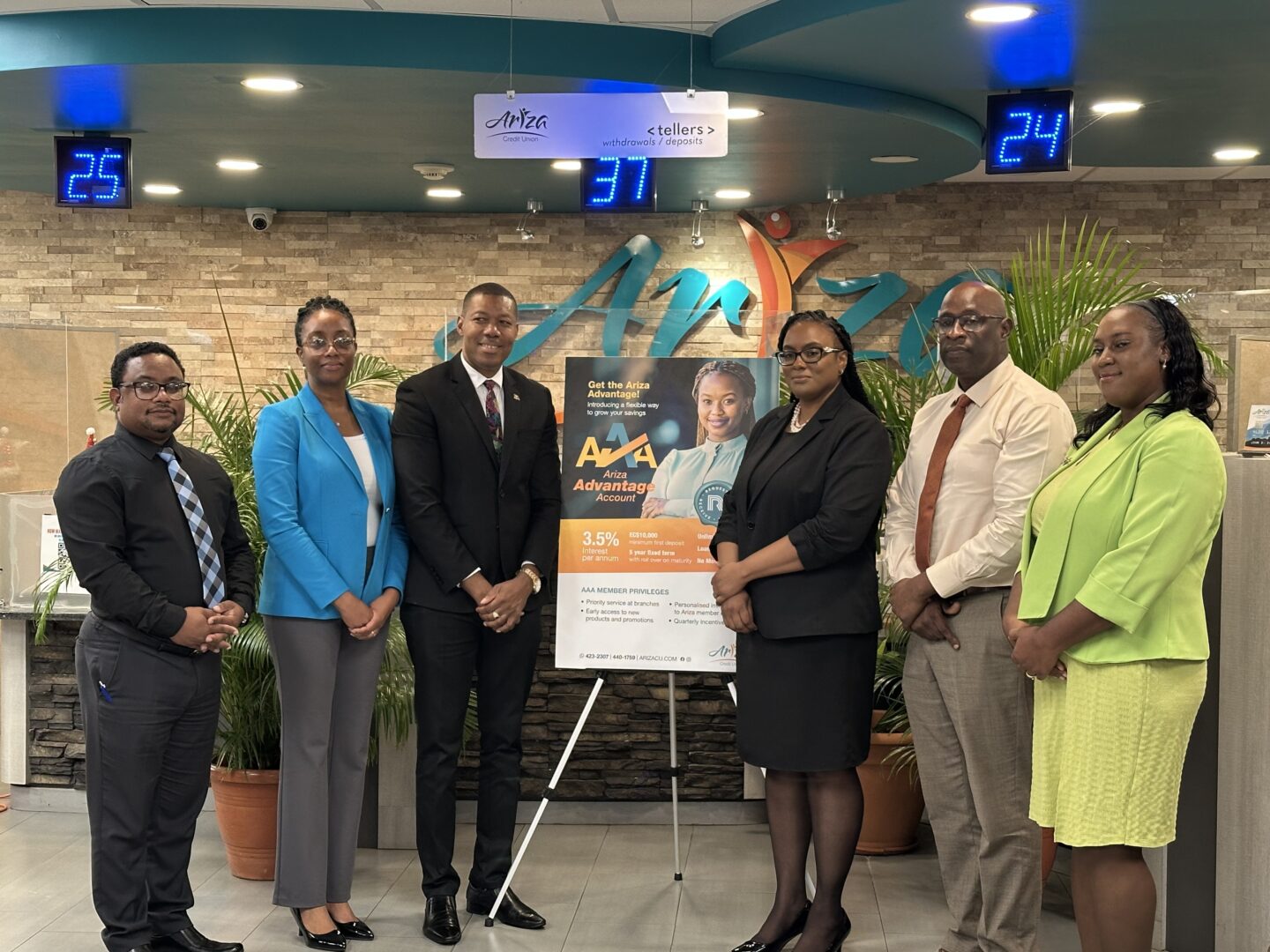
    In a significant step toward prioritizing its members’ needs, Ariza Credit Union has introduced the ‘Triple R Promise,’ a comprehensive suite of benefits crafted in direct response to member feedback. The initiative, announced by CEO Mervyn Lord at a press conference, underscores the credit union’s commitment to enhancing mortgage and savings products based on member suggestions. ‘Our goal is not merely to maximize profit but to maximize the quality of life for our members,’ Lord emphasized. The Triple R Promise includes lower mortgage rates, increased deposit interest, and new savings products, reflecting Ariza’s dedication to sharing its success with its members. In 2024, the credit union plans to return over $2 million to members through dividends and interest. A key feature of the initiative is the reintroduction of the Switch Mortgage, offering interest rates as low as 3.99%, 100% financing, and reduced fees. Additionally, Ariza has expanded vehicle loan options and increased interest rates across various savings products, including secondary savings (2%), lifetime savings (3%), and retirement savings (4.25%). The newly launched Ariza Advantage Account, a long-term savings product, allows members to start with $10,000, earn 3.5% interest quarterly, and secure loans. Lord also highlighted the importance of service enhancement, promising daily efforts to improve member experience. The Triple R Promise marks a new chapter in Ariza’s member-centered approach to financial services.

  • Gov’t, investor sign deal for US$100m redevelopment of Palm Island

    Gov’t, investor sign deal for US$100m redevelopment of Palm Island

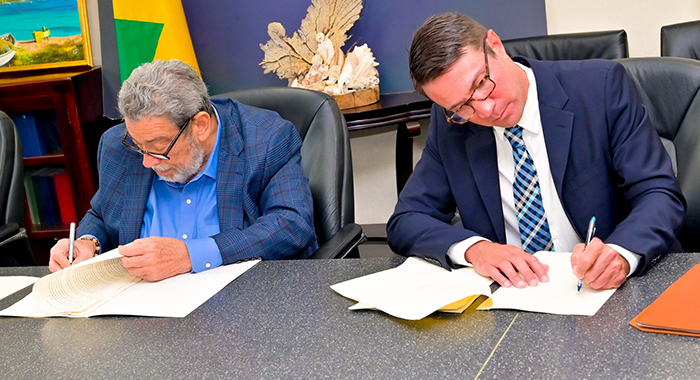
    The government of St. Vincent and the Grenadines has finalized a landmark $100 million agreement with a UK-based investor for the comprehensive redevelopment of Palm Island, a private resort island severely impacted by Hurricane Beryl in July 2024. Prime Minister Ralph Gonsalves announced the partnership with Palm Island Resorts Ltd. during a signing ceremony in Kingstown, emphasizing the project’s potential to transform the island’s tourism and economic landscape. The investment will span 20 to 30 months, focusing on rebuilding and expanding the Palm Island Resorts and Spa, as well as the Anchorage Yacht Club on Union Island. The redevelopment will feature 34 freestanding bungalows, 31 private villas, and a range of luxury amenities, including restaurants, swimming pools, a spa, and aquatic activity centers. The Anchorage Resort will be upgraded to a four-star bohemian luxury property, complete with a kite surfing school. The project is expected to generate over 200 full-time jobs and significantly boost the local economy by sourcing agricultural products, seafood, and other inputs from Vincentian businesses. Additionally, the government has granted duty-free concessions on construction materials and equipment, along with a 15-year tax holiday under the Hotel Aids Act. Prime Minister Gonsalves highlighted the project’s role in revitalizing the Southern Grenadines and enhancing the country’s tourism appeal. Investor Zachary Bayman praised the resilience of the Vincentian people and expressed commitment to preserving Palm Island’s legacy while delivering lasting benefits to the region.