
China has solidified its position as the global leader in electric vehicle (EV) production and the associated supply chains. According to a report by the International Energy Agency (IEA), China manufactured approximately 12.4 million electric vehicles in 2024, accounting for over 70% of global production. Additionally, China dominates the battery production sector, with around 80% of all EV battery cells originating from Chinese factories.
分类: business
-

The country has exported more than 291,000 pounds of larimar this year
The Dominican Republic has witnessed a remarkable surge in larimar exports, with figures skyrocketing from 85,480 pounds in 2024 to 291,340 pounds this year, as reported by Joel Santos Echavarría, the Minister of Energy and Mines. Santos emphasized the importance of integrating larimar into the nation’s tourism offerings, stating, “We are a tourist country, and larimar must be part of that Dominican tourist product.” He also underscored the stone’s protection under the International Registration of the Larimar Barahona Origin Designation and celebrated the establishment of the first Artisanal Mining Emergency Response Brigade as a significant milestone. These remarks were made during a promotional fair in Barahona province, marking National Larimar Day, where miners, artisans, designers, and brigade members were honored for their contributions to the mineral’s industrialization. Rolando Muñoz Mejía, the Mining Director at the Ministry of Energy and Mines, highlighted that approximately 950 workers are engaged daily in larimar extraction. However, the industry faces challenges, as voiced by miners and artisans. They pointed to the lack of financial resources, low market prices for raw and crafted larimar, and insufficient promotion as critical areas needing attention. Fernando González, a seasoned miner with over four decades of experience, noted that while a pound of larimar currently sells for RD$4,000 to RD$5,000, its unique value could command higher prices. Similarly, artisan Alexander Vargas called for increased promotion and financial support to enhance extraction methods and boost international awareness of larimar’s uniqueness.
-
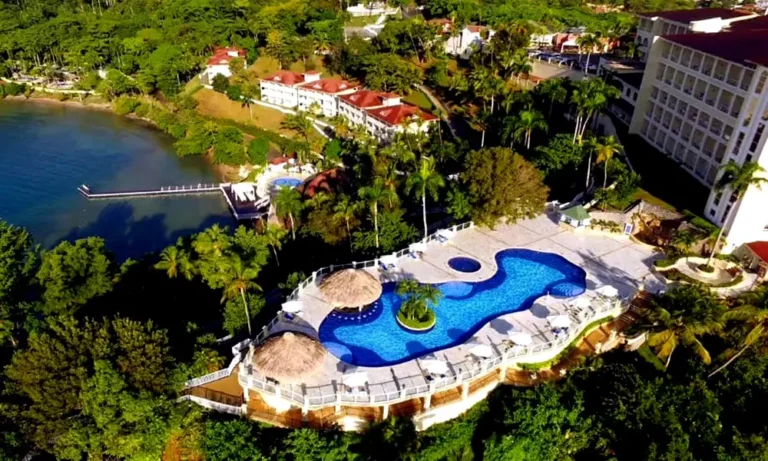
Daypass tourist booking platform begins operations in the Dominican Republic
Daypass, the premier digital platform for booking day-access experiences across Latin America and Spain, has officially launched operations in the Dominican Republic. This strategic expansion marks a significant milestone in the company’s mission to transform hospitality accessibility throughout the region.
Within just two months of operation, the platform has demonstrated remarkable market traction, issuing over 1,000 day passes and establishing a diverse portfolio of more than 120 unique experiences across the country. The catalog continues to expand weekly, showcasing growing demand for flexible tourism options.
The innovative platform serves as a digital bridge connecting consumers with premium hospitality venues including luxury resorts, spa facilities, and exclusive beach clubs. By eliminating the traditional requirement for overnight accommodation, Daypass enables both visitors and local residents to access amenities previously reserved exclusively for hotel guests.
CEO and Co-founder Rafa Gómez expressed enthusiasm about the platform’s reception: ‘We are profoundly encouraged by the rapid adoption in the Dominican Republic. The trust from venue partners and strong booking activity from customers demonstrates genuine interest in diversified tourism experiences.’
This business model represents a paradigm shift in tourism infrastructure utilization, allowing hotels and resorts to optimize their existing facilities while forging stronger connections with local communities. The expansion into key destinations including Punta Cana, Bayahibe, Puerto Plata, and Santo Domingo promotes more inclusive and flexible tourism options nationwide.
For the Dominican Republic’s tourism sector, Daypass introduces multiple strategic benefits: strengthening domestic tourism during off-peak seasons, creating additional revenue streams for hospitality providers, and positioning the country as an innovative leader in regional tourism technology. The platform’s growth signifies evolving consumer preferences toward experience-based travel and more accessible luxury offerings.
-

Melkcentrale herstelt langzaam na miljoenenfraude
The Milk Central, a state-owned enterprise, is on a path to recovery following a devastating financial fraud scandal that has caused an estimated loss of over SRD 350 million (approximately $350 million) over three years. The revelations came to light during a recent company meeting, where a new management team was appointed to steer the organization back to stability. The fraud case, uncovered six weeks ago, has led to the arrest of twelve individuals and a comprehensive restructuring of the company. The fraudulent activities were exposed through an internal investigation conducted by the Ministry of Agriculture, Livestock, and Fisheries (LVV), which subsequently filed a formal complaint. The Herman E. Gooding Police Bureau’s Criminal Investigation Unit is currently handling the case, with a recent visit to the company as part of the ongoing criminal probe. Among those detained are former director Dewkoemar Sitaram, Deputy Director of Administrative Services Dharma Hardayal, and Deputy Director of Operations Guillamo Marlan, all of whom have been dismissed for negligence, integrity violations, and harming the company’s interests. In response to the scandal, a new Board of Commissioners was established under the leadership of President-Commissioner Monché Atompai, who has successfully restored calm and stability within the organization. Employees have shown renewed motivation and readiness to work. Additionally, the company is making strides in reducing its debt burden, having negotiated payment arrangements with both national and international suppliers. To date, over 45% of local debts have been repaid. During the recent meeting, a new executive team was appointed, with Atompai taking on the role of General Director, Larissa Bardan as Director of Operations, and Ritshik Adelaar as Deputy Director of Administrative Services. The Board of Commissioners is now chaired by Anushka Sardjoe.
-

The woman behind RealTV – Zelisa’s vision, courage, will to rise
Zelisa Boodoosingh Rupani, the founder of ZM Network Ltd and the driving force behind RealTV and the acclaimed talk show ‘Conversations with Zelisa,’ has carved a remarkable path in the media industry. As the sole female media house owner in Trinidad and Tobago and the first woman of Indian descent to achieve this feat, Rupani’s journey is a testament to resilience and determination. Born in Santa Cruz and raised in a business-oriented family, she credits her parents and grandmother for instilling in her the values of hard work and perseverance. Her educational journey took her to the University of Sydney, where she pursued a degree in import-export management, followed by stints in the US and Canada before returning to Trinidad over two decades ago. A pivotal moment came when a short broadcasting course, encouraged by her sister, set her on an unexpected career trajectory. Starting with a midnight shift at Radio Shakti, Rupani quickly rose through the ranks, working with industry legends and honing her skills as a host and producer. Her career spans notable roles at Radio and TV Jaagriti, Government Information Services Ltd, and Synergy TV, among others. A scholarship to study mass communications in India further enriched her expertise. Despite personal tragedies, including the loss of her husband, Rupani emerged stronger, founding ZM Network and launching RealTV, which has grown into a multi-platform media powerhouse. Her show, ‘Conversations with Zelisa,’ is celebrated for its focus on inspiring real-life stories, respect, and empathy. Balancing her roles as a producer, presenter, businesswoman, and single mother, Rupani emphasizes discipline, faith, and time management. With plans to expand her media brand regionally and internationally, she remains committed to empowering others and imparting knowledge. Her message to aspiring entrepreneurs, especially women, is clear: persevere, set high standards, and never compromise on integrity.
-
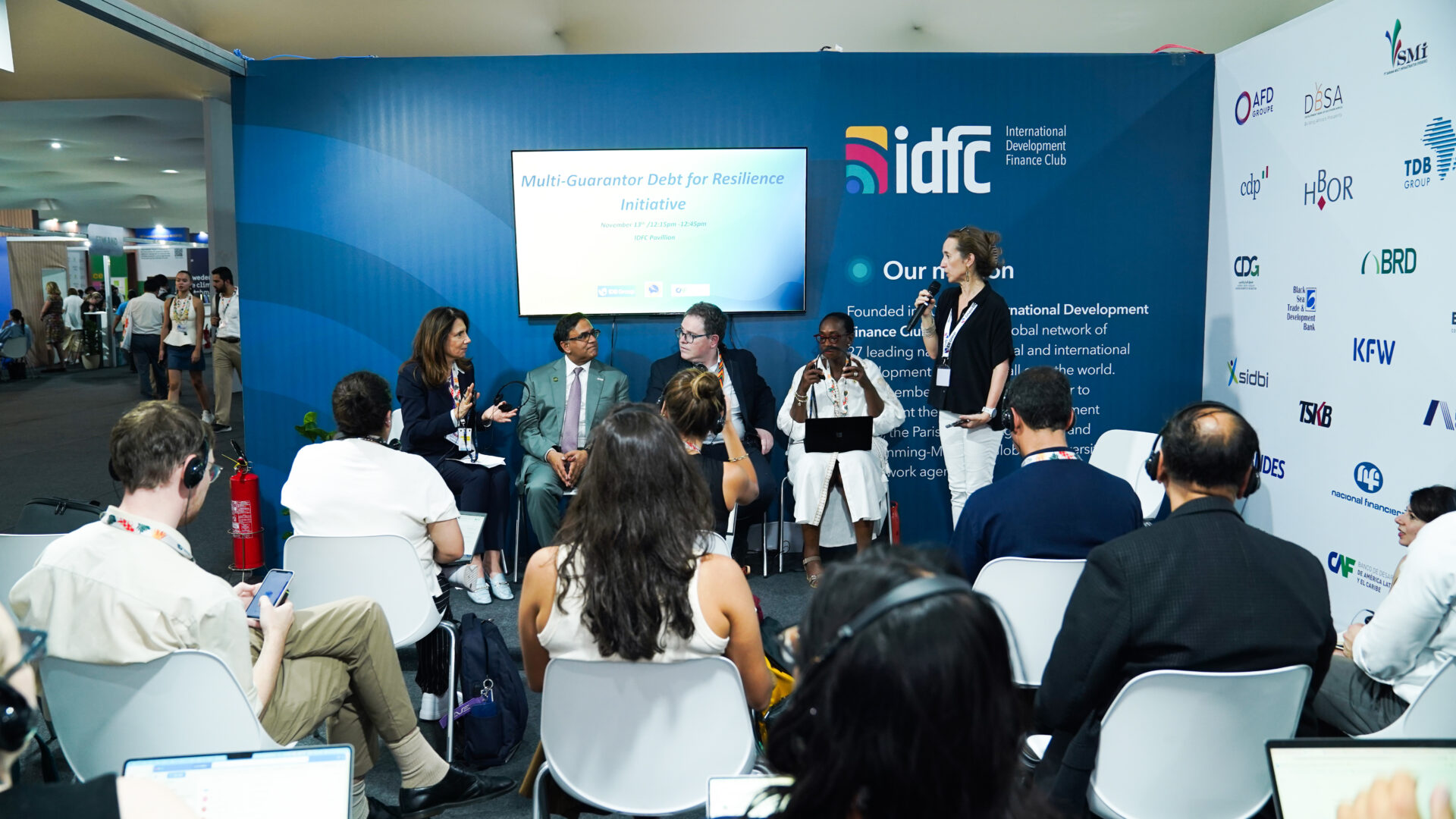
Regional development banks launch debt-for-resilience initiative at COP30
In a landmark move to enhance disaster resilience and alleviate debt burdens, the Inter-American Development Bank (IDB), CAF – Development Bank of Latin America and the Caribbean, and the Caribbean Development Bank (CDB) have unveiled the Caribbean Multi-Guarantor Debt-for-Resilience Joint Initiative. Announced during COP30, this regional program aims to leverage guarantees from multilateral development banks (MDBs) and private sector partners to create fiscal space for Caribbean nations, enabling investments in resilience measures without escalating debt levels. The initiative focuses on three core objectives: scaling up debt-for-resilience swaps, strengthening coordination among MDBs, governments, and private sector partners, and improving transparency and monitoring standards to attract further investment. A dedicated facility under a Framework Agreement will be established to coordinate guarantors in debt-for-resilience swap transactions, ensuring alignment with national development priorities and sovereign debt management strategies. The initiative also plans to develop common principles for guarantee terms, shared taxonomies, and key performance indicators (KPIs) for resilience investments, aligned with global benchmarks. By simplifying multi-guarantor debt swaps, the program aims to attract new guarantors, reduce costs, and accelerate execution. Each transaction will include a regional public-goods component to bolster collective resilience across the Caribbean. The IDB, CAF, and CDB, with their extensive experience in sustainable development and regional integration, are well-positioned to drive this transformative initiative.
-
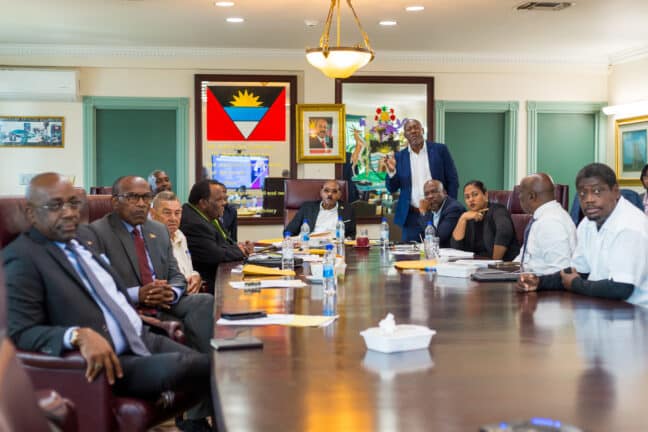
Cabinet Meets 14 Contractors in First-of-Its-Kind Session; New Support Unit and Sector Reforms Announced
In a groundbreaking session, the Antigua and Barbuda government convened a high-level meeting with 14 local contractors, marking a pivotal moment in the nation’s construction sector. The meeting, held on Wednesday, was attended by Prime Minister Gaston Browne, Works Minister Maria Bird Browne, and senior ministry officials. The dialogue focused on addressing long-standing industry challenges and introducing transformative reforms to enhance the sector’s competitiveness and modernization. Contractors lauded the government’s direct engagement, describing it as a critical step toward fostering a robust local industry. They also commended the Works Ministry for its improved communication, organizational efficiency, and consistent payment practices under Minister Browne’s leadership. Prime Minister Browne acknowledged decades of persistent issues, including cash-flow constraints, cost overruns, project delays, and weak management practices. He emphasized the need for modernization to empower local contractors to operate at international standards while meeting national timelines and budget requirements. As part of the reforms, the Ministry of Works will establish a Contractor Support Unit to assist firms with bid preparation, costing, administrative systems, technical support, and training aligned with global benchmarks. The unit will also prepare local companies for major tenders, including projects funded by the Caribbean Development Bank in Barbuda. The ministry will launch its first bid-preparation workshop on Monday at the John E. St. Luce Centre. Additionally, the government reaffirmed its commitment to timely payments and promoted joint contracting arrangements between local firms and established regional or international companies to facilitate knowledge transfer, management capacity, and access to working capital. This meeting is the first in a series, with further sessions planned with contractors, farmers, and supermarket operators. Both the government and contractors agreed that the session marked a significant stride toward building a more competitive, modern, and resilient construction sector in Antigua and Barbuda.
-
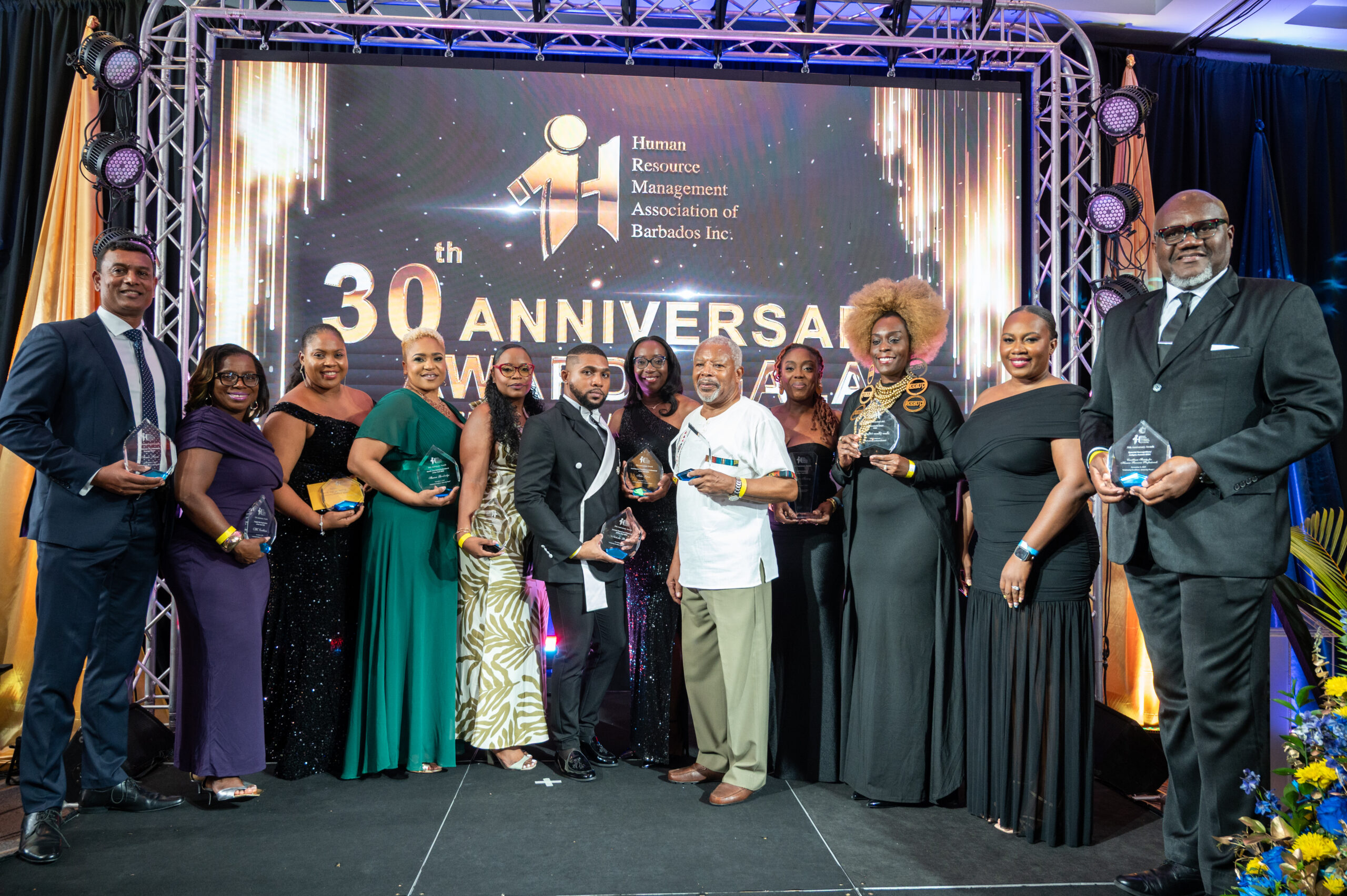
HR professionals awarded and challenged
At the HRMAB 30th Anniversary Awards Gala, held at the Sandals Resort Ballroom under the theme ‘Celebrating Excellence: Advancing People,’ Dr. Allyson Leacock issued a compelling challenge to human resource professionals. She urged them to take bold actions within the next 90 days to create a workforce that is less fearful of the future, more skilled, inclusive, and prepared for upcoming challenges. Dr. Leacock emphasized the global evolution of work, highlighting the growing demand for analytical and creative thinking, AI proficiency, and data literacy. However, she also underscored the enduring importance of human skills such as leadership, empathy, and lifelong learning. She advocated for a shift towards valuing skills and ongoing certifications over traditional degrees, job titles, and tenure, stating, ‘Skills are the new currency.’ Dr. Leacock encouraged HR professionals to develop dynamic skills taxonomies, recognize micro-credentials, and benchmark roles based on competencies rather than titles. She also stressed the need for continuous learning, supported by data from the World Economic Forum, which predicts the reskilling of many workers by 2027. Dr. Leacock called for a cultural shift from compliance to high performance and growth, emphasizing the importance of clear goals, continuous feedback, fair rewards, and visible growth pathways. She warned against the mindset of ‘everything is awesome,’ which fosters mediocrity, and reminded the audience that ‘potential is not perfection.’ Wayne Sobers, Chief Labour Officer, echoed these sentiments, highlighting the transformative impact of globalization, technological advancements, and economic changes on the workforce. He proposed targeted training, leadership development programs, ethical HR practices, and continuous learning as essential initiatives for workforce development. Sobers emphasized that effective human resource management is crucial for sustainable enterprises and national progress, aligning HRMAB’s efforts with the government’s vision for social and economic transformation. HRMAB President Tisha Peters also called for HR professionals to become strategic partners and change agents within their organizations. She urged them to leverage data, align with organizational goals, and lead proactively. Peters emphasized the importance of mentorship for preserving the profession’s legacy and announced the launch of the ‘HRMAB Arni Walters Scholarship for Human Resource Excellence’ in honor of the late HRMAB trustee. The scholarship, sponsored by the Inter-American Development Bank, will be administered by the University of the West Indies Cave Hill Campus starting in 2026.
-

Antigua to Get Modern Private Jet Lounge Under New UAE Deal
On November 20, 2025, during the prestigious Dubai Airshow, the Embassy of Antigua and Barbuda to the United Arab Emirates (UAE) announced a groundbreaking strategic partnership. A Memorandum of Understanding (MOU) was signed between Jetex, a global leader in executive aviation, and Diplomatic Solutions, a strategic advisory firm. This agreement focuses on the development of a state-of-the-art Fixed Base Operation (FBO) at VC Bird International Airport in Antigua and Barbuda.
The collaboration signifies a transformative step in bolstering the aviation infrastructure of the twin-island nation. The new FBO will feature premium lounges, concierge services, and efficient handling for private jet clients, positioning Antigua and Barbuda as a premier destination for luxury private aviation. The project aims to harmonize world-class amenities with the natural allure of the Caribbean islands.
Adel Mardini, Founder and CEO of Jetex, expressed enthusiasm for the venture, stating, ‘We are excited to bring the Jetex experience to Antigua. Drawing inspiration from the island’s rich heritage, our bespoke FBO will enhance its luxury hospitality offerings and attract discerning international travelers.’
Jetex is renowned for its excellence in executive aviation, offering services such as FBO management, trip planning, ground handling, and aviation fuel. Diplomatic Solutions specializes in fostering private-public partnerships, making this collaboration a strategic alignment of expertise and vision.
This initiative is expected to significantly boost tourism and economic growth in Antigua and Barbuda, further cementing its status as a luxury travel hub.
-
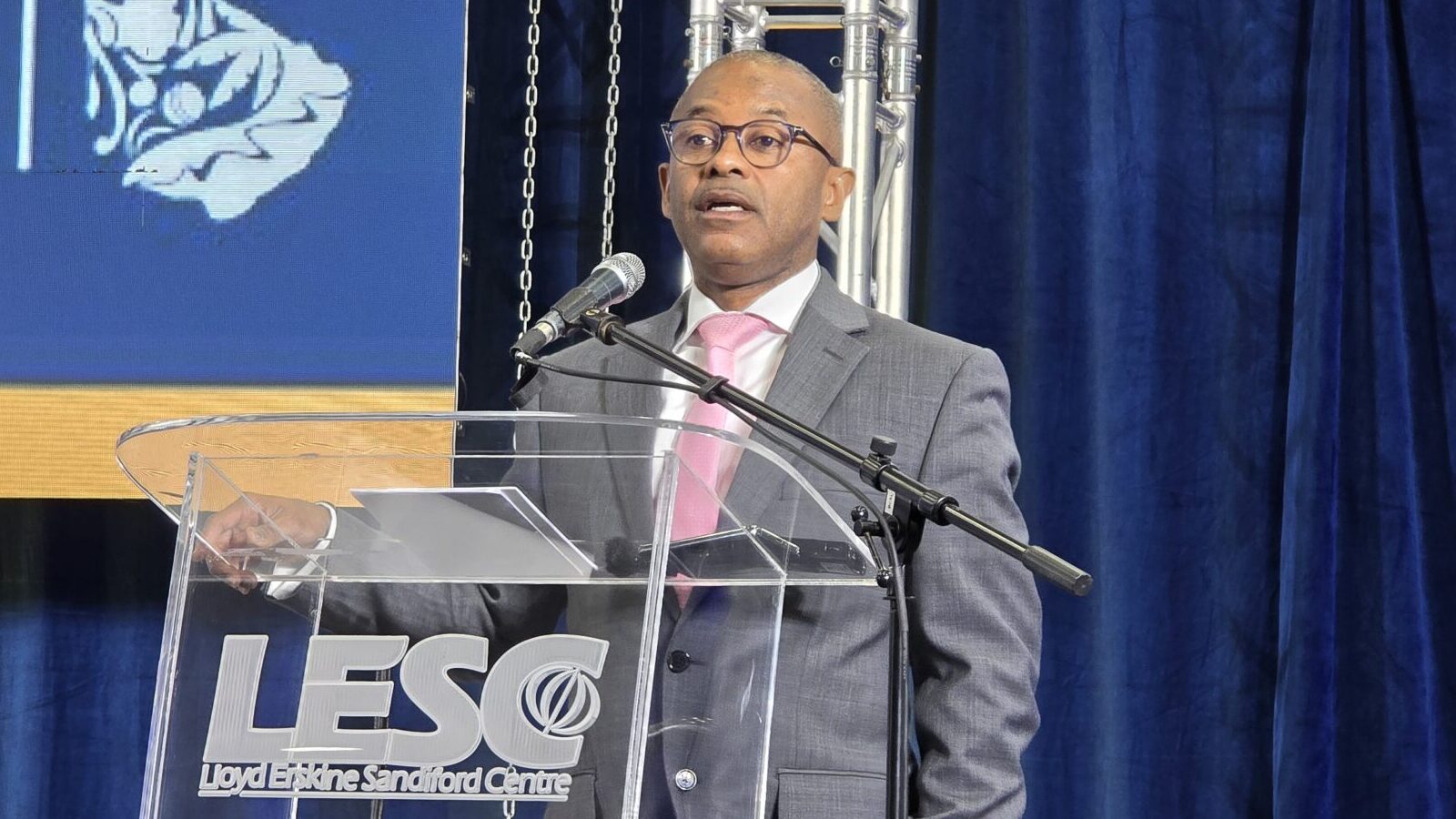
Over 1 600 new rooms ‘by 2029’ as investors back tourism biz — minister
Barbados is witnessing an unprecedented surge in its tourism sector, with over 1,600 new hotel rooms slated for completion by 2029 and earnings already skyrocketing. The island nation is aggressively enhancing its global appeal through strategic investments and innovative marketing approaches. Minister of Tourism and International Transport, Ian Gooding-Edghill, highlighted the multifaceted improvements driving this growth, including enhanced air connectivity, upgraded airport facilities, and better ground services such as taxis and car rentals. Additionally, significant upgrades in hotels and restaurants are contributing to the sector’s robust performance. Gooding-Edghill emphasized the critical role of tourism in generating foreign exchange and creating employment opportunities, stating, ‘If that is not a signal of confidence in the tourism sector, then I ask you what is.’ The financial impact is already evident, with tourism earnings increasing by $418.7 million in 2024 compared to the previous year, totaling $2.7326 billion. Looking ahead, further growth is anticipated in 2025. The minister also stressed the importance of revitalizing existing properties and tourism-related activities to maintain Barbados’ strong international brand. He called for continuous reinvestment in various tourism-led activities, from hotels to local attractions and restaurants, to ensure the island remains a top-tier destination. Andrea Franklin, CEO of the Barbados Tourism Marketing Inc. (BTMI), urged hoteliers and restaurateurs to forge deeper partnerships with local businesses, such as farmers and fisherfolk, to incorporate more local produce into their offerings. Franklin also advocated for enhanced collaboration across all source markets to sustain growth. Furthermore, Gooding-Edghill underscored the need for modernized marketing strategies leveraging artificial intelligence to boost global brand recognition. He acknowledged that while Barbados has a strong brand, there is significant room for improvement in global recognition, which will be a key focus for the BTMI moving forward.