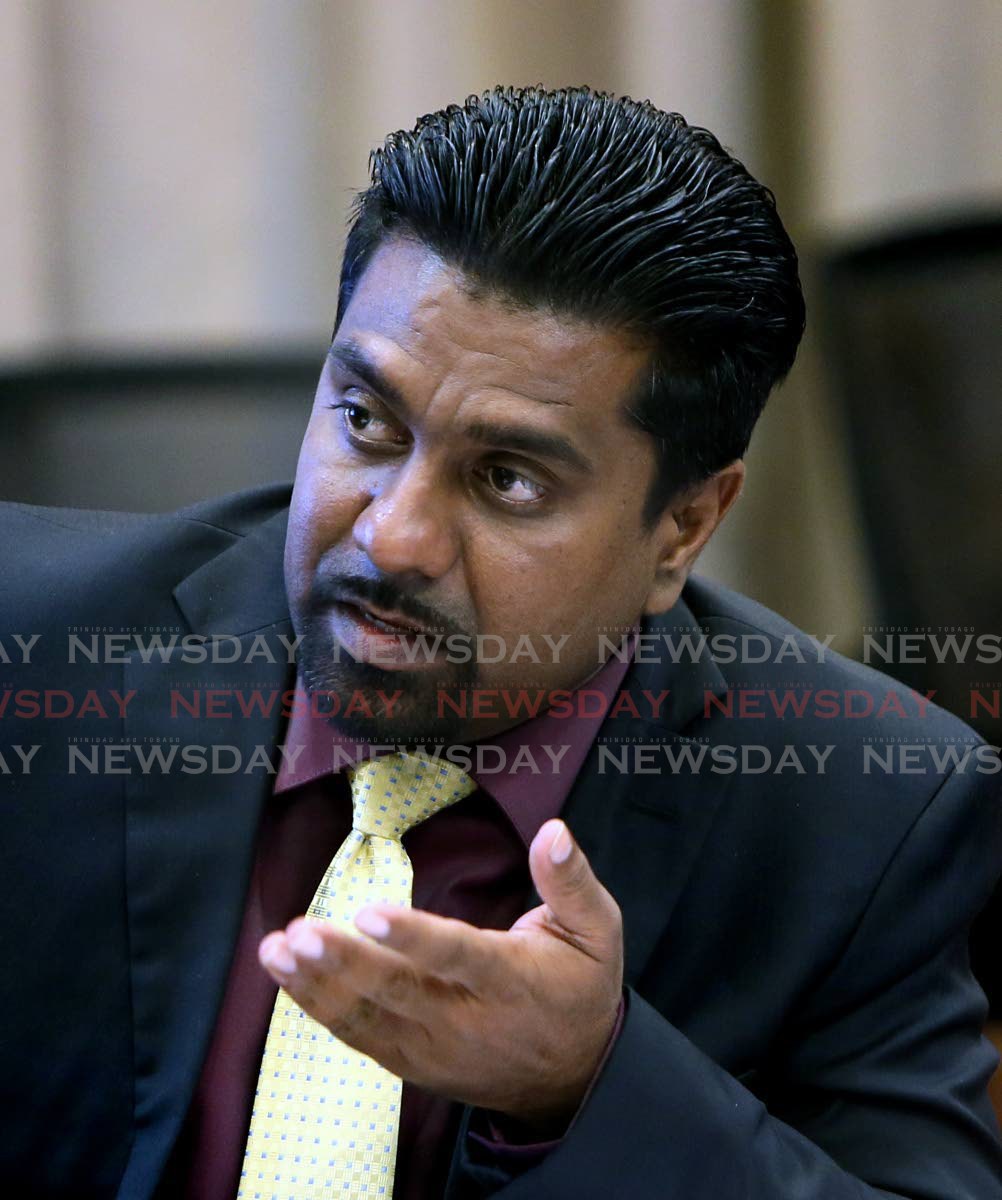
In a significant development, the Trinidad and Tobago government has intervened to halt the controversial sale of Trincity Mall, a move hailed by businessman Carlton Reis as “the start of justice” and a long-overdue crackdown on white-collar crime. Reis, who controls a majority of the voting rights in CL Financial Ltd (CLF), praised the government’s action, emphasizing the need for accountability in the liquidation process of the once-dominant conglomerate. The injunction, granted by Justice Kevin Ramcharan on October 13, stopped the sale just minutes before its completion, following years of alleged mismanagement and irregularities. Reis, representing Dalco, CLF’s largest shareholder, revealed that his group had previously urged a criminal probe into the sale of CLF assets, including Trincity Mall, which was reportedly sold for $505 million—nearly half its 2021 court-approved valuation of $900 million. He criticized the liquidation process as lacking transparency, accusing state-appointed overseers of “corporate dismantling” and selling assets below value. Reis also highlighted missed opportunities, such as a proposed medical tourism and retirement hub in Tobago, which could have spurred economic growth. He expressed hope for dialogue with the government, particularly with the Prime Minister, Attorney General, and Finance Minister, to rebuild CL Financial and contribute to national development. The High Court will resume discussions on the injunction’s terms on October 27. Reis further lauded the recent election victory of the United National Congress (UNC) under Kamla Persad-Bissessar, describing it as a turning point for accountability and reform.
分类: business
-

Howai heads delegation at World Bank, IMF meeting
Central Bank Governor Larry Howai is currently in Washington, DC, participating in the 2025 annual meetings of the World Bank Group, the International Monetary Fund (IMF), and the Inter-Governmental Group of Twenty Four on International Monetary Affairs and Development (G-24). The meetings, which span from October 13 to 18, bring together global financial leaders to discuss pressing economic issues. Howai is leading the Trinidad and Tobago (TT) delegation, which includes key figures such as Delvin Cox, advisor to the executive director of the World Bank Group; Kimberly Roberts, TT’s IMF representative; Zarah Mohammed, manager of debt management; and Stephanie Toolsie, assistant manager of debt management at the Ministry of Finance. During his address to the G-24 group on October 14, Howai emphasized the urgent need for international cooperation to eliminate tariff and non-tariff barriers that hinder trade and disproportionately impact developing economies. He stressed that restoring confidence in a fair and transparent multilateral trading system is crucial for revitalizing global demand, encouraging investment, and supporting economic diversification across all regions.
-

Banks, insurance companies await details of new tax/levy
The Bankers Association of Trinidad and Tobago (BATT) has adopted a cautious stance regarding the government’s newly proposed 0.25% levy on assets held by banks and insurance companies. Announced by Finance Minister Davendranath Tancoo on October 13, the levy is set to take effect on January 1, 2026, and is projected to generate $575 million annually. Tancoo justified the measure by highlighting the robust financial health of these institutions, citing their sustained earnings, high liquidity ratios, and strong asset base growth, while lamenting the ‘unreasonably high fees and near-zero returns’ faced by average citizens. Prime Minister Kamla Persad-Bissessar assured the public that the government would prevent banks from passing the levy’s cost onto customers, emphasizing her administration’s readiness to address such practices. BATT, in its response, expressed a desire for detailed discussions on the levy’s implementation, seeking exemptions or reduced rates for government securities and inter-bank placements, as well as clarity on its deductibility from corporate income tax. The association stressed the importance of balancing the government’s revenue needs with the stability and growth of the banking sector. Consultant Paul Traboulay noted that similar levies are already in place in Barbados and Jamaica, with Jamaica’s 0.25% levy applying to all assets of insurers, regardless of location. Barbados, meanwhile, imposes a 0.35% levy exclusively on domestic assets held in the national currency. Audit firms PriceWaterhouseCooper (PWC) and Ernst and Young (E&Y) observed that the levy aligns with a growing regional trend of fiscal reform, though PWC warned of potential increases in insurance premiums. Critics, including MP Stuart Young, have raised concerns about the levy’s inflationary impact, predicting that the costs will ultimately be borne by consumers.
-

75 NGOs benefit from Republic Bank’s PMAD programme
Republic Bank has officially launched the 2025/2026 cohort of its flagship corporate social responsibility (CSR) initiative, the Power to Make a Difference (PMAD) programme. The announcement was made on October 9, marking the third year of the bank’s ambitious five-year $125 million commitment to social development, spanning from 2023 to 2028. This year, 75 non-governmental organisations (NGOs) focused on driving positive social change have been selected as partners for the programme. These NGOs will collaborate with Republic Bank to advance initiatives in education, healthcare, environmental preservation, inclusion, culture, sports, youth development, poverty alleviation, and entrepreneurship. Speaking at the launch event, Vice President Richard Sammy emphasized the bank’s determination to make this year the most impactful yet. He highlighted the importance of strengthening partnerships, fostering innovation, and ensuring that collective efforts create lasting ripple effects across communities. The PMAD programme, which was first introduced in 2003, aligns with Republic Bank’s environmental, sustainability, and governance (ESG) objectives. It also supports the United Nations’ principles for responsible banking and contributes to the achievement of sustainable development goals. Over the years, the programme has expanded beyond Trinidad and Tobago to include Barbados, the Eastern Caribbean, Grenada, Guyana, and Suriname. This expansion underscores Republic Bank’s dedication to building stronger, more resilient communities across the region.
-

Alcohol, tobacco duties to apply locally first
In a significant fiscal move, Trinidad and Tobago has announced a 100% increase in customs duties on alcohol, beer, and tobacco, effective immediately. Finance Minister Davendranath Tancoo unveiled this decision during the presentation of the 2025-2026 national budget on October 13. Contrary to widespread assumptions, the hike applies equally to both locally produced and imported goods, marking a substantial shift in the country’s taxation policy.
-

Obika: Budget heavy in rhyme but hollow economically
Economist and former senator Taharqa Obika has delivered a scathing assessment of the United National Congress (UNC) administration’s inaugural $59.2 billion national budget, labeling it as “heavy in rhyme but hollow in economic reason.” Obika, who once served as a UNC senator before defecting to the People’s National Movement (PNM), criticized Finance Minister Davendranath Tancoo’s budget presentation for its lack of substantive economic direction despite its rhetorical flair. Speaking to Newsday via WhatsApp, Obika remarked that while Tancoo’s delivery was energetic and even poetic, it failed to address critical economic challenges. He argued that the budget missed the opportunity to establish a robust foundation for the country’s recovery over the next five years, leaving “gaping holes” in areas such as revenue generation, pension reform, and taxation policy. Obika, who holds an MBA in Finance and a BSc in Economics, highlighted the absence of concrete strategies to meet expenditure targets, particularly in revenue collection. He warned that the lack of detail could indicate the government’s inability to balance the books without resorting to devaluing the TT dollar. Obika also criticized the proposed replacement of the Value Added Tax (VAT) system with a sales tax, calling it “a mere statement rather than a well-developed policy intervention.” He cautioned that tampering with VAT, which accounts for over 10% of government spending, without a clear replacement plan is “fiscally reckless.” Additionally, he condemned the decision to raise the National Insurance System (NIS) pension age from 60 to 65, phased between 2028 and 2036, which he said would place undue strain on workers. Obika also predicted that the new landlord tax would lead to rent increases of at least 3.6%, further burdening citizens. He concluded that the budget, rather than inspiring confidence and guiding investment, “reads more like a poem than a plan.”
-

JMMB real estate arm turns profit
JMMB Real Estate Holdings Limited, the property development subsidiary of the JMMB Group, is forging ahead with two significant commercial projects in Kingston, marking a strategic expansion into the non-financial sector. The developments, located on Harbour Street in downtown Kingston and Haughton Avenue in New Kingston, are currently in the tender phase, with contractors being selected. While the company has not disclosed the exact costs, it confirmed that construction is slated to begin in the fourth quarter of the 2025/26 financial year. The Harbour Street project is expected to take 18 to 20 months, while the Haughton Avenue development will require 22 to 24 months to complete. Both projects received statutory approvals earlier this year and are part of JMMB’s broader strategy to monetize its $4-billion land bank through high-value commercial real estate. The Harbour Street development will renovate 35,000 square feet of office space, while the Haughton Avenue project will feature a 10-storey building with parking and 45,000 square feet of modern offices. The latter currently houses JMMB’s head office, JMMB Bank (Jamaica) Limited, and JMMB Investments. JMMB has set a profit hurdle rate of 15% for each project, reflecting its focus on market-based returns rather than passive asset appreciation. The company plans to finance the projects independently, seeking partnerships and funding on favorable terms. Upon completion, the properties will either be sold floor-by-floor or leased on medium-term agreements, aligning with JMMB’s long-term investment strategy. This approach has already proven successful at the company’s first completed project at 102 Hope Road and 1 Liguanea Avenue, which began generating rental income last financial year. JMMB Real Estate reported a net profit of $332 million for the 2024/25 financial year, contributing $760 million in income to the group through rental earnings, property sales, and revaluation gains. Group CEO Keith Duncan highlighted the subsidiary’s self-sufficiency, emphasizing its role as a growth engine for the JMMB Group. With design work underway for additional projects in Mandeville and Montego Bay, JMMB Real Estate is poised to play a pivotal role in the group’s diversification strategy.
-

NCB says services restored after system challenges
KINGSTON, Jamaica — The National Commercial Bank (NCB) has successfully restored its services across all platforms following significant system disruptions earlier on Wednesday. The bank confirmed the resolution after being contacted by Observer Online, addressing widespread complaints from customers who faced difficulties accessing their accounts via the NCB mobile app and website.
-

Buitengewone AVA Staatsolie op het laatste moment afgeblazen
The highly anticipated Extraordinary General Meeting (EGM) of Staatsolie, scheduled for today, was abruptly canceled at the last minute. The meeting, convened by Board Chairman Gonda Asadang and the Ministry of Natural Resources (NH), was set to address critical governance changes within the company. Notably, the Ministry of Oil & Gas, which oversees policy in the sector, appeared conspicuously absent from the discussions. The primary agenda items included the resignation of current Board of Commissioners (BOC) members and the appointment of new appointees: Rudolf Elias (Chairman), Sergio Akiemboto (Chief of Staff at the President’s Office), Aroon Samjhawan, Ewald Poetisi, Rudie Chin Jen Sem, Chantal Doekhie, and Edgar Caffé. Staatsolie’s Managing Director, Annand Jagesar, confirmed to Starnieuws that the management was informed of the cancellation this morning. ‘We were notified that the EGM will not proceed today. Beyond that, the management is unaware of the reasons behind this decision,’ Jagesar stated. According to Staatsolie’s statutes, an EGM must be convened at least 15 days in advance, though deviations can be approved during the meeting itself. The reasons for the postponement and the new date for the meeting remain undisclosed, leaving stakeholders in the dark about the future of the company’s leadership.