分类: business

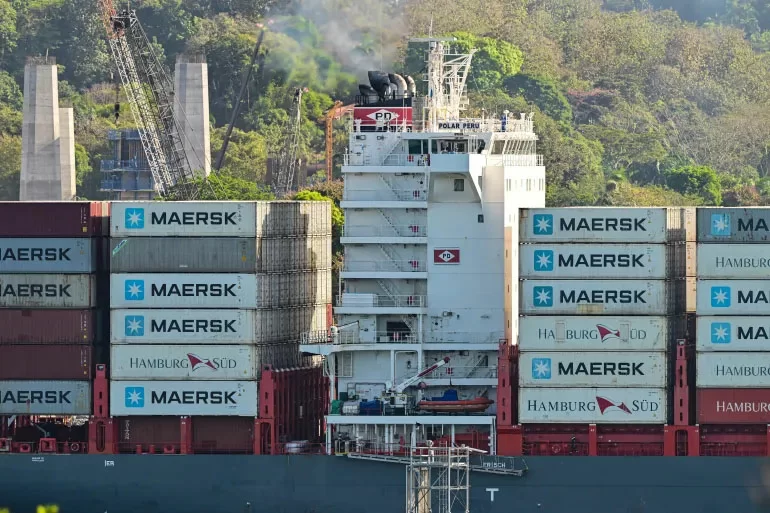
  • Maersk neemt tijdelijk beheer Panama-kanaalhavens over na rechterlijke uitspraak

    Maersk neemt tijdelijk beheer Panama-kanaalhavens over na rechterlijke uitspraak

    In a significant geopolitical shift for global maritime trade, Danish shipping giant Maersk has assumed temporary control of two strategic Panama Canal ports after Panama’s Supreme Court invalidated concession contracts held by Hong Kong-based CK Hutchison. The ruling follows repeated warnings from former U.S. President Donald Trump regarding Chinese influence over the critical waterway.

    The Panama Maritime Authority (AMP) announced Friday that Maersk’s subsidiary APM Terminals will administer the Balboa and Cristobal ports, which occupy crucial positions at both Atlantic and Pacific entrances to the canal. These facilities handle substantial portions of global container traffic passing through the interoceanic corridor.

    CK Hutchison, operating through its local subsidiary Panama Ports Company (PPC), had managed these terminals since 1997 under a concession extended in 2021 for an additional 25 years. The court determined the contract exhibited “disproportionate bias” favoring the Hong Kong conglomerate, prompting its termination.

    The 82-kilometer artificial waterway processes approximately 40% of U.S. container traffic and 5% of global trade. Panama assumed full control in 1999 after the United States, which financed and constructed the canal between 1904-1914, transferred administration.

    The United States government welcomed the judicial decision, while Chinese Foreign Ministry spokesperson Guo Jiakun warned Beijing would “take all necessary measures to protect the legitimate rights and interests of Chinese companies.” PPC condemned the ruling as “lacking legal basis” and expressed concerns about potential impacts on thousands of Panamanian families’ livelihoods.

    Despite allegations, Panama continues to deny that China exercises control over the canal, which remains predominantly utilized by vessels from the United States and China.


  • Banks DIH Holdings Inc to appeal High Court injunction on capping share capital, voting rights

    Banks DIH Holdings Inc to appeal High Court injunction on capping share capital, voting rights

    In a significant corporate governance development, Banks DIH Holdings Inc. has announced its intention to appeal a High Court injunction that prevented the implementation of a controversial cap on shareholder voting rights. The ruling, issued on Friday, January 30, 2026, temporarily blocked the company from proceeding with amendments that would limit any single entity’s voting power to 15% of total shares, regardless of their actual shareholding percentage.

    Company Chairman and Managing Director Clifford Reis addressed shareholders during Saturday’s Annual General Meeting at Thirst Park, East Bank Demerara, confirming the company’s compliance with the court order while simultaneously preparing an appeal. ‘As a law-abiding and responsible corporate citizen, we will comply with the judge’s order. However, the company proposes to appeal this matter to the Full Court for the discharge of this injunction,’ Reis declared, flanked by legal counsel.

    The legal challenge was initiated by stock brokerages Guyana Americas Merchant Bank Inc and Beharry Stockbrokers Limited. Reis emphasized that Guyana Americas Merchant Bank does not currently hold shareholder status in Banks DIH Holdings, having missed the registration cutoff for the AGM.

    The proposed Amendment to By-Law Article 8 represents a substantial shift in corporate governance policy. It would establish a strict 15% ceiling on voting rights, even for shareholders possessing larger stakes. The amendment broadly defines ‘person’ to include corporate entities, partnerships, trusts, and any coordinated groups acting in concert. Should any entity exceed this threshold, their excess votes would be rendered invalid during shareholder meetings.

    Banks DIH Holdings has raised procedural objections to the injunction process, claiming Corporate Secretary Kavorn Kyte-Williams was denied the opportunity to file an opposing affidavit. The company further contends that Justice Sandil Kissoon’s judgment referenced non-existent ‘Articles of Association’ rather than the actual governing documents—Articles of Incorporation and By-Laws—fundamentally undermining the legal basis of the ruling.

    Concurrently, Reis unveiled an ambitious initiative to expand shareholder participation, setting a target of 20,000 individual shareholders—a nearly 200% increase from current levels. ‘We want to see 20,000 small shareholders in this company—drivers, service workers, farmers, teachers, plant operators,’ he stated, distributing enrollment forms to attendees.

    The proposed amendment includes provisions for appointing a Special Registrar to monitor compliance and enforce disclosure requirements aligned with Section 115 of Guyana’s Securities Industry Act. The outcome of the appeal will significantly influence corporate governance structures and shareholder democracy within one of Guyana’s prominent publicly traded companies.

  • RO ondersteunt jonge ondernemers via PKF Level-UP krediet

    RO ondersteunt jonge ondernemers via PKF Level-UP krediet

    Suriname’s National Development Bank (NOB) has officially launched the PKF Level-UP credit program, specifically designed to empower young entrepreneurs aged 18 to 27. The initiative, introduced on Friday, provides convertible loans from the Production Credit Fund (PKF) to support business establishment, financing, and expansion within the manufacturing and tourism industries.

    Named ‘Wan Okasi Gi Den Jongu Basi’ (An Opportunity for Young People to Advance), the program offers favorable-term microloans to both startup founders and existing young business owners. During the ceremonial launch event, President Jennifer Simons urged youth to actively leverage this opportunity, emphasizing the program’s potential to facilitate the transition from poverty to production and prosperity.

    The launch ceremony saw participation from key government officials including Finance and Planning Minister Adelien Wijnerman, Economic Affairs, Entrepreneurship and Technological Innovation Minister Andrew Baasaron, PKF board members, and NOB Director Sandy Cameron with her team.

    Managed collaboratively by the NOB and the PKF oversight board, the program receives crucial operational support from the Ministry of Regional Development (RO). Sharma Betterson-Leefland, PKF board secretary and RO representative, highlighted the ministry’s pivotal role in program success, noting that RO’s nationwide district presence enables effective outreach and education for young entrepreneurs about the Level-UP credit opportunities.

    Originally established in 2023, the PKF aims to stimulate growth and development among small and medium-sized producers of goods and services across all districts, excluding direct trade, agriculture, livestock, and fishing operations. However, businesses in these excluded sectors may qualify for funding when engaged in processing industries.

    The fund’s strategic objectives include enhancing production capacity, promoting exports, replacing imports, creating business spin-offs, and generating employment opportunities, with particular emphasis on strengthening the position of young Surinamese entrepreneurs in the national economy.

  • Hebridean Sky makes inaugural call to Port Soufrière, new jetty in progress

    Hebridean Sky makes inaugural call to Port Soufrière, new jetty in progress

    The picturesque town of Soufrière has entered a transformative phase in its tourism development with the dual milestone of welcoming the expedition cruise vessel Hebridean Sky and launching construction on a major waterfront infrastructure project. The inaugural port call on January 16th served as both a celebration and strategic planning session, bringing together the Soufrière Regional Development Foundation (SRDF), parliamentary representatives, and port authorities aboard the vessel for high-level discussions.

    According to SRDF Corporate Communications and Marketing Manager Lovely Saint-Aimé Joseph, extensive consultations with Saint Lucia Cruise Port have culminated in tangible progress on the long-anticipated L-shaped jetty project. Marine users have been advised to observe enhanced safety protocols during the construction phase, which commenced shortly after the January 16th meeting.

    Local Member of Parliament Emma Hippolyte characterized these developments as signaling “a new dispensation” for the constituency, confirming construction was scheduled to begin on January 19th. The parliamentary representative emphasized the administration’s commitment to stakeholder engagement and safety throughout the transformation process.

    Saint Lucia Cruise Port officials project substantial benefits from the L-jetty initiative, anticipating both aesthetic enhancements to the waterfront and significant economic advantages for local entrepreneurs. Port representatives specifically highlighted the anticipated positive impact on taxi operators, vendors, and the broader business community, noting that improvements would elevate the experience for both residents and international visitors.

    Tourism officials believe the enhanced infrastructure and expanded cruise capacity will unlock new economic opportunities while allowing more visitors to discover what they describe as “the gem that Soufrière truly is.” The simultaneous occurrence of the inaugural vessel call and construction commencement marks a strategic acceleration of Soufrière’s positioning within the competitive Caribbean cruise tourism market.

  • No Merger Can Happen Without PUC’s Written Approval

    No Merger Can Happen Without PUC’s Written Approval

    A proposed acquisition of Belize’s second-largest telecommunications provider Speednet (SMART) by market leader Belize Telemedia Limited (BTL) has sparked significant regulatory and public debate regarding competition safeguards. The critical hurdle remains Section 19(5) of Belize’s Telecommunications Act, which mandates that no transfer of control can occur without prior written approval from the Public Utilities Commission (PUC).

    Former PUC chairman John Avery, who led the regulator for over twelve years, has issued a stark warning that eliminating Belize’s only telecommunications competitor would fundamentally violate both the spirit and letter of the telecommunications law. Avery contends this acquisition would reverse decades of progress toward competitive markets and potentially trigger anti-competition penalties that could jeopardize operating licenses.

    The political dimension adds complexity to the regulatory process. Prime Minister John Briceño has broken months of silence by characterizing the potential deal as a possible financial lifeline for BTL while maintaining official neutrality. However, the Prime Minister’s appointment authority over PUC commissioners and BTL’s board, combined with potential familial financial interests in the outcome, has raised concerns about procedural independence.

    Current PUC Chairman Dean Molina offers a different legal interpretation, noting that the Telecommunications Act acknowledges various market structures through Section 26, including single-operator and dominant-operator scenarios. Molina clarifies that Section 42(4) regarding anti-competitive behavior doesn’t apply to merger approvals, making Section 19(5) the exclusive regulatory gateway.

    As BTL actively lobbies business groups, unions, and social security authorities for support, broader societal institutions including business associations, religious organizations, and civil society groups are demanding transparency and caution. Senators have called for independent valuation assessments and warned against returning to de facto monopoly conditions. BTL maintains that no final decision has been made and commitments to adhere to both legal requirements and the PUC’s ultimate determination.

  • Consumer advocacy group urges targeted VAT relief

    Consumer advocacy group urges targeted VAT relief

    The Barbados Consumer Empowerment Network (BCEN) has presented a comprehensive policy framework urging government action to alleviate mounting economic pressures on households. Executive Chairman Maureen Holder articulated specific fiscal measures designed to provide immediate relief while maintaining fiscal discipline.

    Central to BCEN’s proposal is the implementation of strategic value-added tax reductions on essential commodities including staple foods, pharmaceutical products, and basic household necessities. The organization recommends compensating for potential revenue shortfalls by maintaining or increasing VAT rates on luxury imports and non-essential goods.

    Holder emphasized the need for complementary support mechanisms including direct cash transfers and utility subsidies, advocating for dynamic policy monitoring to ensure balance between consumer relief and fiscal responsibility. The proposal comes despite Barbados’ ongoing economic restructuring under the Barbados Economic Recovery and Transformation (BERT) 3.0 program.

    BCEN’s analysis draws comparative insights from international precedents where countries including the United Kingdom, Germany, Hungary, Ireland, and India successfully implemented targeted VAT reductions without compromising fiscal stability. These nations typically combined tax adjustments with direct support mechanisms for vulnerable populations.

    The consumer advocacy group acknowledges that previous government interventions—including temporary price controls, utility subsidies, and selective VAT adjustments—provided limited relief but failed to match the pace of inflation and rising living costs. Holder criticized theoretical objections to VAT reductions, noting the absence of alternative concrete solutions from academic circles addressing Barbados’ cost-of-living challenges.

    BCEN characterizes its recommendations as a targeted, sustainable approach that balances immediate household financial relief with long-term economic stability, urging policymakers to transition from economic debate to practical implementation.

  • CEOs warn against fragmentation as global trade turns inward

    CEOs warn against fragmentation as global trade turns inward

    Amid escalating global trade fragmentation and mounting protectionist pressures, Caribbean corporate executives are issuing urgent calls for enhanced regional integration, framing it as an economic imperative rather than merely strategic ambition. This consensus emerged during pivotal addresses at the Jamaica Stock Exchange’s Regional Investments and Capital Markets Conference, where industry leaders outlined the critical need for coordinated action.

    Jerome Smalling, Chief Executive of JMMB Bank, highlighted how geopolitical tensions and evolving trade policies threaten to fracture Caribbean cohesion without deliberate coordination efforts. “Our focus must remain on mitigating the detrimental effects of a potentially divided Caribbean,” Smalling asserted. “A unified regional approach, facilitating the seamless movement of capital, talent, and services, proves fundamental to the area’s sustainable growth and development.”

    Smalling cautioned that regional fragmentation would undermine the Caribbean’s capacity to attract investment and navigate economic shocks, particularly as global capital adopts increasingly selective allocation strategies. These concerns intensify against a backdrop of rising tariffs, remittance taxes, and policy uncertainties that elevate cross-border transaction costs.

    Frank James, Group Chief Executive of GraceKennedy, confirmed that multinational corporations already experience tangible impacts from growing trade friction. “New tariffs and remittance taxes are creating operational challenges, increasing trade expenses, and generating transaction barriers,” James reported.

    James explained that these pressures, compounded by climate-related disruptions and geopolitical volatility, compel Caribbean enterprises to reconfigure supply chain architectures and market access strategies. For GraceKennedy, this has translated into aggressive diversification across regional markets and supply networks to avoid over-reliance on individual nations.

    “Recent crises demonstrate how disruptions rapidly propagate between markets,” James observed, emphasizing the necessity of building operational flexibility. This strategic shift has motivated GraceKennedy to invest in robust regional supply chains and accelerated market pathways throughout the Caribbean.

    Smalling advocated for expanding integration beyond merchandise trade to encompass capital markets, financial services, and export-focused small and medium enterprises. He positioned financial institutions as crucial enablers of cross-border investment and regional operational support.

    “A robust, inclusive, and efficient capital market remains indispensable for development,” Smalling stated, noting rising demand for cross-border financial solutions as businesses and households seek risk management and regional opportunity access.

    Both executives concurred that the Caribbean’s response to global uncertainty will define its economic resilience through the next decade. James urged businesses and policymakers to distinguish between uncontrollable global forces and strengthenable regional systems.

    “We derive optimism from comprehending immutable factors while concentrating on alterable elements,” James remarked.

    Smalling framed the situation as ultimately concerning coordination: “Economies thrive when businesses and households prosper,” he concluded, maintaining that cross-border cooperation proves essential for sustaining growth.

    As global trade turns inward, Caribbean leadership concludes that the region’s optimal defense resides not in fragmented national reactions but in deepened integration across capital, services, and markets.

  • Buy-and-hold investing weighs on market liquidity

    Buy-and-hold investing weighs on market liquidity

    Financial experts at the 21st Jamaica Stock Exchange Investments and Capital Markets Conference have identified a significant structural challenge facing the nation’s capital markets: an entrenched buy-and-hold investment culture that is severely constraining secondary market activity.

    Sarah Cummings, Director of Corporate Solutions and Investment Banking at Scotia Investments Jamaica, highlighted the dominance of institutional investors, pension funds, and collective investment schemes that typically acquire securities with minimal subsequent trading. “Having a buy-and-hold culture suppresses secondary trading,” Cummings stated, noting this pattern creates liquidity shortages that deter broader investor participation and complicate capital raising efforts for companies.

    The conference revealed this phenomenon extends beyond Jamaica throughout the Caribbean region. Christopher Buchanan, Senior Vice-President of Investment Banking at NCB Capital Markets, observed investment managers demonstrate reluctance to divest long-held securities, often citing limited attractive alternatives. This mentality raises fundamental questions about whether Caribbean markets offer sufficient investable assets to enable portfolio repositioning.

    Proven Wealth President and CEO Luwanna Williams proposed solutions focused on restructuring existing offerings rather than introducing entirely new financial instruments. Her recommendations include reducing minimum subscription thresholds to enhance retail accessibility, creating multiple tranches of offerings to widen inclusion, and implementing comprehensive investor education initiatives.

    Williams identified significant knowledge gaps as particularly problematic regarding sustainable investment vehicles like green and blue bonds. Despite their potential to attract capital for climate-resilient development, these instruments suffer from limited understanding among investors. Williams cited a telling case where a German renewable energy company abandoned Caribbean fundraising efforts after securing just $11 million of a $20 million target, subsequently raising approximately $100 million through Norway’s Oslo Stock Exchange.

    “This was a very attractive investment in terms of yield. It was steady in terms of cash flows, and the issuer was well known internationally,” Williams noted. “So what was the problem?” She attributed the failure to persistent misconceptions that sustainable investments deliver inferior returns or prove too complex for average investors.

    Both executives emphasized that deeper regional integration could address liquidity challenges. Buchanan advocated for increased cross-listings to build brand recognition, access wider investor bases, and improve capital raising capabilities. However, conservatism and uneven regulatory frameworks across Caribbean exchanges continue to hinder progress despite ongoing discussions among market operators.

    Williams concluded that overcoming these barriers requires coordinated efforts to demystify investment processes and opportunities, particularly for retail participants who often prefer familiar banking products over equity investments due to comprehension gaps and risk aversion.

  • Tourism’s dominance leaves Jamaica’s public finances exposed to climate shocks

    Tourism’s dominance leaves Jamaica’s public finances exposed to climate shocks

    The devastating impact of Hurricane Melissa on Jamaica has revealed profound structural vulnerabilities in the nation’s public finances, according to the country’s fiscal oversight body. The Independent Fiscal Commission’s January Economic and Assessment Report demonstrates how climate disasters directly translate into budgetary crises through the tourism sector’s overwhelming economic dominance.

    Striking on October 28, 2025, Hurricane Melissa inflicted approximately US$8.8 billion in damages, equivalent to 41% of Jamaica’s GDP, with devastation concentrated in tourism-dependent coastal regions. The storm’s trajectory exposed the sector’s extraordinary significance, accounting for 60.8% of exports and serving as the primary foreign exchange generator.

    The Commission’s analysis reveals that approximately 89% of hotel accommodations are situated within storm-affected zones, creating immediate transmission channels from tourism disruption to fiscal deterioration. This connectivity manifests through multiple revenue streams including general consumption taxes, airport levies, income taxes, and payroll contributions that collectively diminish with reduced visitor activity.

    In response to hurricane-related tourism declines, the government downwardly revised its 2025/26 fiscal year tax revenue projections by $80.5 billion. The Commission emphasizes that this vulnerability represents a structural characteristic rather than temporary circumstance, despite longstanding policy initiatives aimed at economic diversification.

    While agriculture constitutes roughly 7.5% of GDP alongside manufacturing and mining contributions, none approach tourism’s scale in export earnings or revenue generation. This concentration magnifies climate risk due to tourism infrastructure’s coastal positioning, capital intensity, and susceptibility to extreme weather events.

    Fiscal consequences extend beyond revenue shortfalls to include reconstruction expenditures that strain public finances during periods of diminished tax inflows. Post-hurricane, Jamaica activated disaster escape clauses within its fiscal framework and requested a two-year extension for legislated debt-to-GDP targets.

    The Commission acknowledges that anticipated public debt increases reflect necessary climate response measures rather than eroded policy discipline. While existing disaster-risk financing mechanisms provided immediate stabilization, repeated climate events could undermine medium-term fiscal adjustment.

    This episode has revitalized discussions regarding economic resilience, positioning diversification not merely as growth strategy but as essential risk management tool against climate-driven fiscal contagion. Tourism remains inextricably linked to both Jamaica’s economic model and its fiscal destiny, as demonstrated by Hurricane Melissa’s enduring impact.

  • New president appointed to Bankers Association of Saint Lucia

    New president appointed to Bankers Association of Saint Lucia

    The Bankers Association of Saint Lucia Inc. has ushered in a new era of leadership with the formal appointment of Ron Leon as its incoming president. His term, effective immediately, will extend through December 31, 2027, marking a significant four-year commitment to steering the nation’s banking sector.

    Leon, a distinguished senior executive at Republic Bank (EC) Limited, ascends to this pivotal role backed by a complete and newly constituted executive committee. An official communiqué from the Association highlighted his impressive professional dossier, which spans over 16 years within the financial services industry. His career is distinguished by profound expertise in critical domains including retail banking operations, credit management, regulatory compliance, enterprise risk mitigation, and corporate governance frameworks. This background equips him with a unique synthesis of strategic vision, regulatory acumen, and hands-on operational proficiency.

    His tenure at Republic Bank (EC) Limited has been characterized by high-level leadership duties with a expansive regional purview, managing operations across seven Caribbean territories: Anguilla, Dominica, St. Kitts and Nevis, Saint Lucia, St. Vincent and the Grenadines, St. Maarten, and Grenada. His comprehensive portfolio encompassed branch network operations, adherence to complex regulatory standards, enterprise-wide risk management protocols, governance structures, and initiatives for service excellence. Under his guidance, the bank implemented several transformative projects that successfully bolstered regulatory trust, fortified governance architectures, and achieved tangible, positive financial outcomes.

    In his new capacity as Association President, Leon is anticipated to be a formidable advocate for the banking industry. His strategic agenda is set to prioritize vigorous advocacy, the advancement of financial literacy programs among the citizenry, and the championing of collaborative endeavors. A central focus will be on catalyzing innovation within the sector and reinforcing its overall stability and resilience, ensuring its robust growth and alignment with both national and regional economic objectives.