分类: business

  • Salada profits rise, but cash falls as costs and climate risks bite

    Salada profits rise, but cash falls as costs and climate risks bite

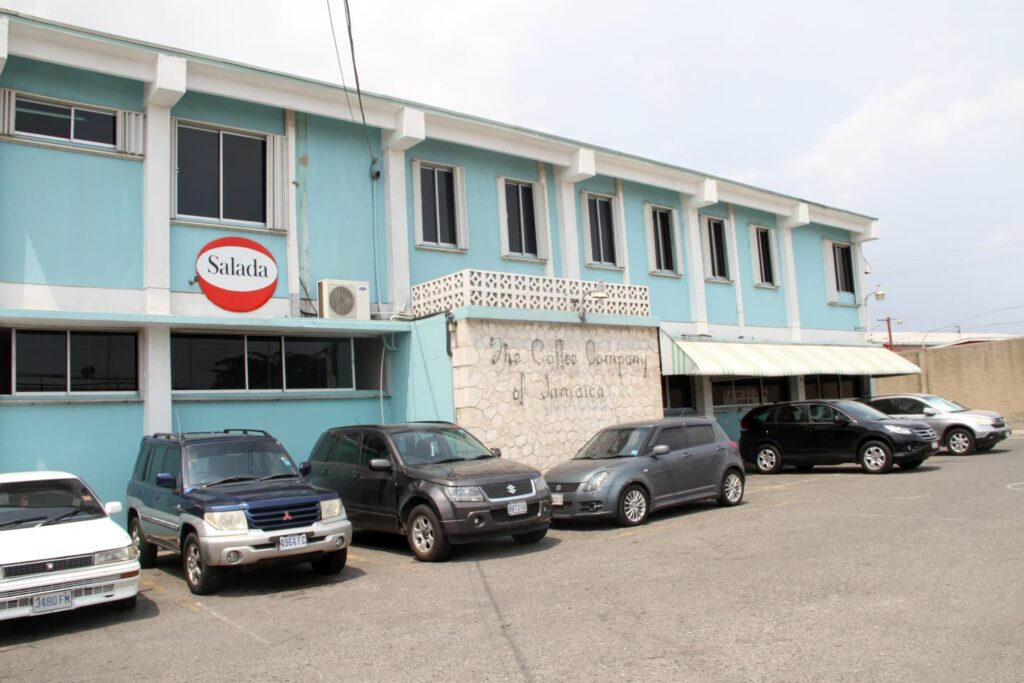
    Jamaican coffee and beverage manufacturer Salada Foods Jamaica Limited has reported strengthened profitability in its fiscal year ending September 2025, despite facing significant operational challenges from inflationary pressures, currency fluctuations, and climate-related disruptions.

    The company achieved a net profit of $171.5 million, representing solid financial performance as revenue climbed 7.9% to approximately $1.6 billion. Gross profit reached $487.9 million, with margins maintaining stability at around 30.5% despite persistent cost pressures throughout the supply chain.

    Beneath the surface of these positive earnings indicators, the company’s financial position reveals strategic adaptations to a volatile operating environment. Cash reserves declined substantially to $154.6 million from $272.5 million year-over-year, while inventories surged to $552.5 million from $420.6 million. This inventory accumulation reflects a deliberate corporate strategy to secure essential inputs amid rising global coffee prices and supply chain uncertainties.

    The company’s defensive posture proved prescient when Hurricane Melissa struck Jamaica shortly after the fiscal year end, damaging agricultural infrastructure and supply networks. Salada’s advanced procurement strategy has shielded immediate production from disruption, though long-term agricultural impacts remain under assessment.

    Capital investment continued throughout the period with $67.1 million allocated to machinery, equipment, and work-in-progress assets, elevating the net book value of property, plant and equipment to $165.9 million. The company also distributed $130.9 million in dividends to shareholders, further impacting liquidity positions.

    Market performance revealed contrasting trends between domestic and international operations. Local sales demonstrated robust growth, advancing to $1.30 billion from $1.16 billion, while export revenues declined to $304.3 million from $322.1 million despite concerted efforts to expand regional and UK market presence.

    Looking forward, management emphasizes product diversification as a cornerstone of long-term strategy. Recent expansions into functional beverages utilizing locally sourced ingredients like ginger, turmeric, sorrel, and hibiscus target health-conscious consumers and aim to reduce dependence on volatile coffee markets. These innovations, coupled with established brands and operational efficiency focus, provide optimism despite the challenging trade-offs between financial resilience and cash generation in an increasingly unpredictable manufacturing landscape.


  • Forex: $157.38 to one US dollar

    Forex: $157.38 to one US dollar

    KINGSTON, Jamaica — Jamaica’s foreign exchange market witnessed notable currency movements during Wednesday’s trading session, with the Jamaican dollar demonstrating appreciable strength against its US counterpart. Official data released by the Bank of Jamaica revealed the US dollar concluded trading at J$157.38, marking a decline of five cents from previous valuations.

    The midweek trading activity showcased contrasting performances across major currency pairs. While the US dollar experienced depreciation, the Canadian dollar demonstrated notable resilience, closing substantially stronger at J$116.32 compared to Tuesday’s closing rate of J$114.63. Similarly, the British pound sterling maintained its upward trajectory, finishing the trading day at J$215.48, representing an increase from the previous session’s close of J$214.87.

    These currency fluctuations occurred within the context of Jamaica’s managed exchange rate regime, where the Bank of Jamaica periodically intervenes to maintain stability in the foreign exchange market. The central bank’s daily trading summary provides critical insights into currency performance, serving as an important indicator for businesses, investors, and policymakers monitoring the Caribbean nation’s economic landscape and external trade dynamics.

  • NCB’s Cayman transfer completes balance sheet clean-up

    NCB’s Cayman transfer completes balance sheet clean-up

    NCB Financial Group Limited has executed a significant internal restructuring through the acquisition of its Cayman Islands subsidiary by majority-owned Clarien Bank Limited. While presented as an organizational realignment, this transaction culminates a multi-year balance sheet optimization initiative that has fundamentally reshaped the group’s offshore operations.

    The transfer, pending regulatory approval, will transition select wealth and investment management relationships from NCB (Cayman) Limited to Clarien Bank, with the Cayman entity subsequently rebranding under the Clarien name. Group leadership has assured stakeholders of seamless client continuity and no material impact on capital adequacy, liquidity, or ownership structures.

    This stability is anchored by exceptionally robust capital metrics. Regulatory filings reveal NCB (Cayman) maintained a Total Capital Ratio exceeding 30%—more than double the 12% regulatory requirement—with nearly all capital derived from internally generated retained earnings. The entity’s Net Tier 1 capital, a core measure of financial strength, stood at US$35.5 million, characterized by simplicity without complex subordinated debt structures that typically complicate financial transfers.

    Despite these capital strengths, operational challenges persist. A recent rating agency downgrade highlighted a US$1 million net loss for fiscal 2024 and a fourth consecutive year of deposit base contraction. This funding decline reflects both strategic divestments and client migration to higher-yielding alternatives, indicating ongoing profitability pressures despite improved balance sheet stability.

    The transaction represents the culmination of a deliberate cleanup process that included addressing the substantial Sandy Bay loan facility in Barbados, which previously constituted approximately 75% of the subsidiary’s non-performing loans (NPLs). While its removal to National Commercial Bank Jamaica Limited in Q3 2025 significantly improved headline NPL ratios, the Cayman unit’s NPL ratio remained elevated at 25.8% as of June 2025, suggesting persistent credit quality concerns within the remaining portfolio.

    Group CEO Robert Almeida characterized the move as “a deliberate strategic internal realignment designed to strengthen focus and operational coherence across our regional businesses.” The consolidation simplifies the group’s offshore narrative for regulators and investors following its US$300 million return to international capital markets last year, reducing the number of separate entities requiring scrutiny.

    For Clarien Bank, the acquisition supports strategic expansion in selective offshore markets with emphasis on operational continuity, according to CEO Ian Truran.

    Ultimately, this transaction represents the strategic tidying of a stabilized but still recovering operation. While major surgical interventions have addressed the most critical issues, the transferred entity continues to navigate profitability and funding challenges within a cleaner, simplified operational structure.

  • Nawasa Vacancy: Human Resource Manager

    Nawasa Vacancy: Human Resource Manager

    Grenada’s National Water and Sewerage Authority (Nawasa) has announced a strategic recruitment initiative for an accomplished Human Resource Manager to spearhead its comprehensive institutional modernization program. This pivotal leadership position represents a cornerstone in the statutory body’s ambitious transformation agenda focusing on climate resilience, operational excellence, and customer-centric service delivery.

    The successful candidate will assume critical responsibility for shaping Nawasa’s human capital strategy, driving organizational performance through innovative people-management practices. This executive role demands sophisticated leadership capabilities alongside modern technical expertise across the full spectrum of HR services. The authority specifically seeks professionals passionate about public service transformation and organizational development within Grenada’s essential utilities sector.

    Qualification requirements include a Bachelor’s degree in Human Resources, Business Administration, or related field, complemented by minimum five years of management experience. The position mandates extensive knowledge of Grenadian labor legislation and proven competence in managing unionized environments, including collective bargaining processes and grievance resolution mechanisms.

    The HR Manager will champion several strategic priorities including advanced HR analytics implementation, occupational health and safety programs tailored to utility staff, leadership development initiatives for technical personnel, and Board-level advisory functions. The role necessitates exceptional stakeholder engagement capabilities with government ministries, regulators, and regional partners.

    Nawasa emphasizes its commitment to employee development through competitive remuneration, professional growth opportunities, and organizational support for innovative HR programs. Applications featuring comprehensive CVs with professional references must be submitted via email or postal service to the General Manager by February 20, 2026. This recruitment underscores Nawasa’s dedication to strengthening Grenada’s water security through strategic human capital investment.

  • Goud staat op het punt nieuwe records te bereiken nu kopers terugkeren

    Goud staat op het punt nieuwe records te bereiken nu kopers terugkeren

    Gold markets are experiencing a dramatic resurgence as investor demand and central bank acquisitions propel the precious metal toward unprecedented valuations. Following a significant two-session decline that attracted bargain hunters, analysts project gold will reach new record levels while silver maintains its volatile trajectory.

    The precious metal recorded its most substantial single-day gain since 2008 on Tuesday, rebounding from a substantial sell-off triggered by President Donald Trump’s appointment of Kevin Warsh as Federal Reserve chair, dollar strengthening, and profit-taking activities. This recovery demonstrates the underlying strength of gold’s market position despite temporary fluctuations.

    Market strategists point to persistent inflationary pressures exceeding target levels, escalating debt concerns, and growing investor preference for portfolio diversification beyond traditional stocks, bonds, and fiat currencies. Bart Melek, Head of Commodity Strategy at TD Securities, emphasized that “inflation remains well above target, debt is increasing, and investors continue to view precious metals as a way to diversify their portfolio and reduce dependence on stocks, bonds, and fiat currencies.”

    Financial institutions have issued bullish projections, with UBS and JP Morgan anticipating gold prices reaching $6,200-$6,300 by year-end. Deutsche Bank maintains a 2026 estimate of $6,000, while Citi upheld its baseline scenario predicting an average first-quarter price of $5,000. Spot gold prices climbed 5.4% to $4,915 per troy ounce during morning trading.

    The physical market’s dynamics are now under intense scrutiny following gold and silver’s record peaks of $5,594.8 and $121.6 respectively on January 29th, before experiencing corrections. Gold’s 9.8% decline on Friday represented its most substantial single-day drop in 43 years according to LSEG data, which analysts characterize as a healthy market adjustment.

    Standard Chartered analyst Suki Cooper noted that “the physical market will be crucial in determining the bottom, particularly after Chinese New Year,” referencing the mid-February holiday period in the world’s largest consumer market. Investment demand, particularly from retail sectors, has emerged as the primary driver behind gold’s price surge as other traditional demand sectors—jewelry and central bank purchases—have stagnated.

    Philip Newman, Director at Metals Focus, cautioned that “we expect prices to remain volatile, even though conditions remain favorable for further significant price increases this year,” while acknowledging gold could surpass the $5,500 threshold.

    Silver exhibits even greater volatility due to its smaller market size, recently trading 9.3% higher at $86.8 after retreating from Thursday’s record high. The January rally was largely driven by momentum trading and substantial inflows from private investors. Analysts at Mitsubishi observe that silver has lost a key driver from last year’s gains as concerns about U.S. import tariffs following critical minerals revisions have diminished and London supply constraints have eased. However, the retreat from record levels benefits industrial applications by alleviating extreme margin pressure on solar energy producers.

  • Antigua & Barbuda Seek Applications for Canadian Agent Advisory Committee

    Antigua & Barbuda Seek Applications for Canadian Agent Advisory Committee

    In a strategic move to deepen its engagement with the North American market, the Antigua and Barbuda Tourism Authority (ABTA) has officially launched its Canadian Travel Agent Advisory Committee. The initiative is now actively seeking applications from top-tier Canadian travel advisors, agency proprietors, and consortia leadership until the February 15th deadline.

    Tameka Wharton, the Director of Tourism for Canada at ABTA, emphasized the indispensable role Canadian advisors play in curating traveler experiences to the dual-island nation. “Canadian travel advisors are pivotal architects in defining how explorers encounter the unique offerings of Antigua and Barbuda,” Wharton stated. She further elaborated that the committee is designed to provide these industry experts with a direct platform for collaboration, enabling a symbiotic partnership that leverages their profound market insights. This, in turn, is expected to guide the destination’s growth with data-driven and culturally resonant strategies, ensuring its development is both sustainable and aligned with traveler expectations.

    This membership-based committee is exclusive and will be curated through a selective application process. The ABTA has streamlined the procedure by directing all interested and qualified professionals to complete a dedicated online application form available on its official channels. This formalized approach signifies a shift towards more structured and influential dialogue between the destination marketing organization and the retail travel sector, which is often the primary touchpoint for potential visitors.

  • Nicolas N Menon Takes the Helm as Chief Executive Officer (CEO) of TDC

    Nicolas N Menon Takes the Helm as Chief Executive Officer (CEO) of TDC

    In a significant corporate leadership transition, The St. Kitts Nevis Anguilla Trading and Development Company Limited (TDC) has confirmed the appointment of Nicolas N. Menon as its new Chief Executive Officer, effective February 1st, 2026. This strategic move positions the veteran executive to guide the Caribbean conglomerate through its next evolutionary phase.

    Menon brings to the CEO role an impressive portfolio of executive leadership competencies, including demonstrated strategic management capabilities, operational excellence, and sharp business acumen. His appointment comes at a critical juncture in TDC’s corporate development, with the board expressing confidence that his revolutionary vision will drive substantial growth and transformation.

    As Chief Executive, Menon will assume responsibility for steering the Group’s strategic direction, enhancing operational performance across all subsidiaries, and advancing TDC’s longstanding commitments to innovation, customer service excellence, and sustainable development throughout St. Kitts and Nevis and the broader Caribbean region.

    Menon’s corporate journey with TDC began in 1994 following a successful tenure as a Management Consultant with several prominent UK business houses. His rapid ascent within the organization saw him appointed head of the Marketing Department merely six months after joining. During this period, he pioneered the establishment of a new unit dedicated to implementing innovative branding strategies, leading cross-functional teams, and executing data-driven promotional campaigns.

    His exceptional professional ethos earned him recognition, culminating in his 2000 appointment as Executive Director with oversight of Client Relations, Marketing, Retail, Insurance, Real Estate Development, and Manufacturing divisions. In 2003, he additionally assumed directorship of the TDC Warren C Tyson Scholarship Programme, an internal mentorship initiative named after the company’s inaugural chairman.

    Expressing gratitude for his new role, Menon stated: ‘It is profoundly honorable to assume leadership of TDC, an indigenous institution that has fundamentally shaped the economic and social landscape of St. Kitts and Nevis for over fifty years. I approach this responsibility with both confidence and purposeful determination, eagerly anticipating collaboration with the Board, management, and staff to build upon our strong legacy and guide the Company into its next growth chapter.’

    Menon’s academic credentials include a Master’s Degree in Business Administration from Cranfield University (London) and Babson College (United States), complemented by an Honours Bachelor of Science Degree in Geography and Economics from the University of Liverpool.

  • Tribute to the Life and Legacy of Dr. William Warren Smith, CD

    Tribute to the Life and Legacy of Dr. William Warren Smith, CD

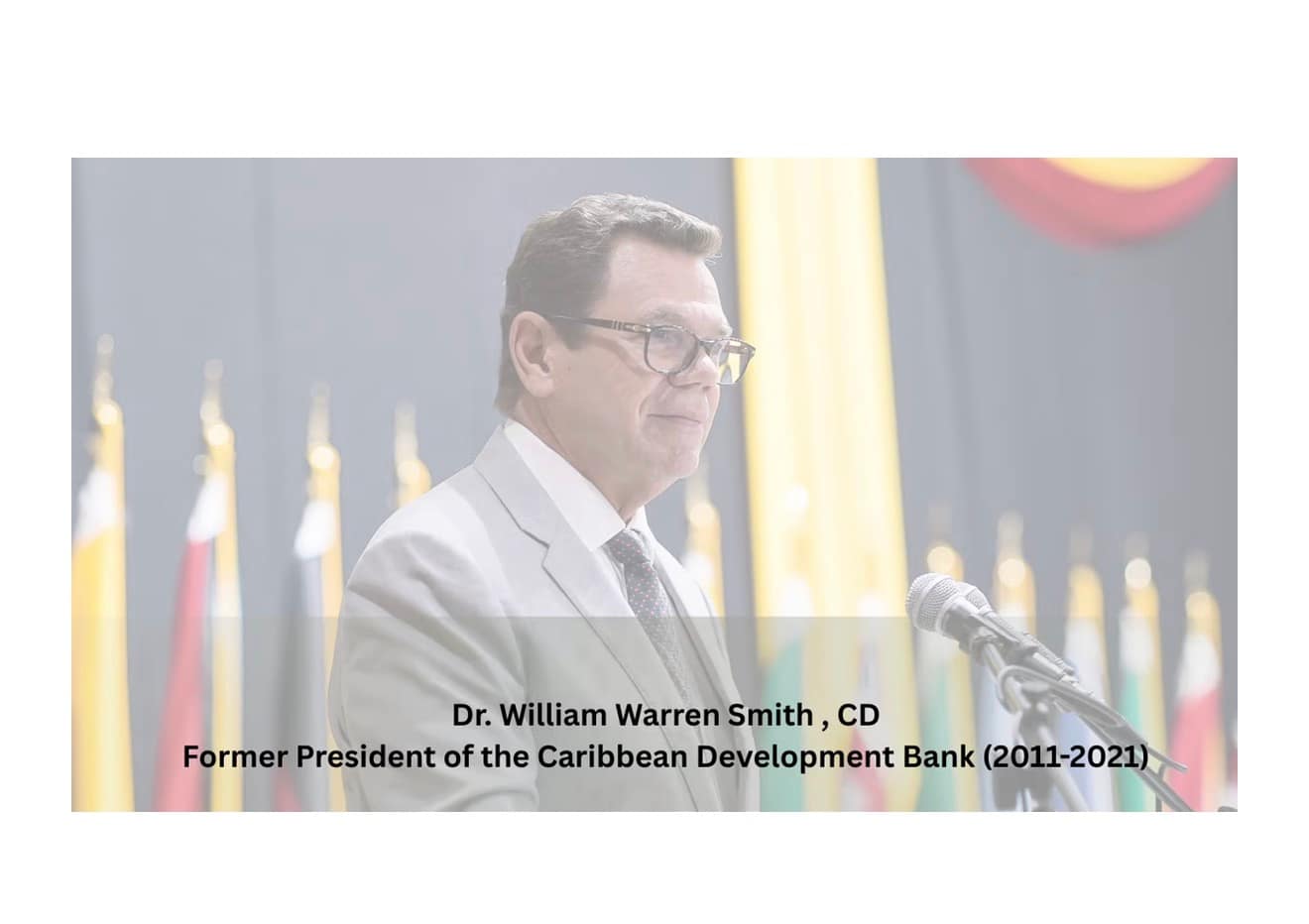
    The Caribbean development community mourns the profound loss of Dr. William Warren Smith, whose visionary leadership as President of the Caribbean Development Bank (CDB) reshaped regional economic resilience. The Organisation of Eastern Caribbean States (OECS) joined global partners in honoring the legacy of this transformative figure who steered the region through unprecedented challenges.

    During his tenure as the CDB’s fifth President, Dr. Smith navigated multiple crises including the lingering effects of the 2008 financial collapse, devastating 2017 hurricanes, and the COVID-19 pandemic. His strategic approach transformed the institution into a bastion of stability and innovation, embedding climate adaptation and sustainable infrastructure as core principles long before these concepts gained global prominence.

    Among his landmark achievements, Dr. Smith orchestrated the approval of over US$3 billion in regional financing, with significant grant allocations directed toward the most vulnerable nations. He fundamentally strengthened the Bank’s institutional framework through establishing the Office of Risk Management and the Office of Integrity, Compliance and Accountability, enhancing both governance standards and international credibility.

    Dr. Smith’s diplomatic acumen facilitated the historic expansion of CDB membership to include Brazil and Suriname, substantially broadening the institution’s resource base and hemispheric influence. His particular dedication to the Eastern Caribbean Currency Union manifested in groundbreaking initiatives including the development of geothermal energy potential and the securing of a critical $50 million COVID-19 Line of Credit for OECS members during the pandemic’s most severe phase.

    Beyond his technical accomplishments, Dr. Smith will be remembered as a mentor and principled leader who demanded excellence in service to Caribbean citizens. His profound understanding of Small Island Developing States’ unique vulnerabilities informed every policy decision and strategic direction.

    The OECS Commission and member states extended deepest condolences to his family, noting that his physical legacy endures in strengthened infrastructure, protected communities, and a fortified regional spirit that will continue inspiring future generations of Caribbean leadership.

  • Dominican Republic chosen for Tonino Lamborghini Towers development

    Dominican Republic chosen for Tonino Lamborghini Towers development

    In a strategic move beyond automotive manufacturing, the prestigious Lamborghini brand has unveiled an exclusive partnership to develop three ultra-luxury residential towers in the Dominican Republic. The landmark agreement, announced at the prominent FITUR tourism and investment forum in Madrid, signals Lamborghini’s inaugural entry into the Caribbean’s high-end real estate market.

    The collaboration partners the Italian luxury brand with DUNA Development, a firm renowned for executing premium large-scale projects in prime global locations under the leadership of co-CEOs José González and Josué Virgen. Archipelago, one of the world’s most rapidly expanding hospitality management groups, has been appointed as the exclusive operator for all three developments, guaranteeing internationally recognized service standards throughout the portfolio.

    The inaugural development will be situated in Cap Cana, Punta Cana—among the Caribbean’s most elite luxury destinations. A subsequent tower is planned for Santo Domingo, with a third location to be disclosed at a future date. These architectural projects aim to embody Tonino Lamborghini’s distinctive design philosophy, innovative approach, and luxury lifestyle ethos through both residential and condo-hotel configurations, establishing new benchmarks for branded developments in the region.

    Brand representatives characterized this initiative as a natural extension of the Lamborghini lifestyle into premium living environments across selective global markets. DUNA Development hailed the partnership as a transformative moment for Dominican Republic luxury real estate, while industry analysts observed that this development positions the country alongside established luxury markets like Miami and Dubai within the ultra-branded residential sector.

  • CAF’s Economic Forum brought together more than 6,500 leaders from 70 countries in the largest regional meeting in recent years

    CAF’s Economic Forum brought together more than 6,500 leaders from 70 countries in the largest regional meeting in recent years

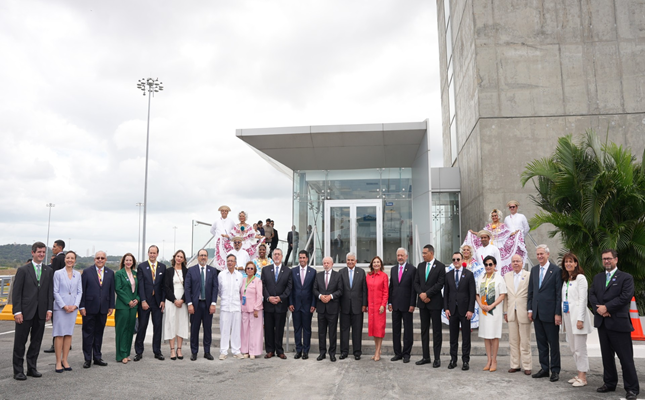
    Panama City emerged as the definitive hub for Latin American economic discourse on January 28-29, 2026, hosting an unprecedented gathering of regional leadership. The International Economic Forum – Latin America and the Caribbean 2026, orchestrated by CAF – Development Bank of Latin America and the Caribbean in collaboration with the Panamanian government, achieved historic participation metrics with over 6,500 delegates representing 70 nations.

    The summit’s significance was underscored by the attendance of seven sitting heads of state, including Panama’s José Raúl Mulino, Brazil’s Luiz Inácio Lula da Silva, Bolivia’s Rodrigo Paz, Colombia’s Gustavo Petro, Ecuador’s Daniel Noboa, Guatemala’s Bernardo Arévalo, alongside Jamaica’s Prime Minister Andrew Holness and Chile’s President-Elect José Antonio Kast. This convergence of leadership represented the most substantial regional assembly in recent years.

    CAF Executive President Sergio Díaz-Granados emphasized the forum’s transformative potential, stating, ‘This gathering represents the pinnacle of regional mobilization and alliance-building. Our deliberations will generate actionable insights to translate conceptual frameworks into tangible improvements for citizens across Latin America and the Caribbean.’ He further articulated CAF’s evolving role beyond traditional financing: ‘We are building bridges and creating dialogue platforms to amplify the region’s collective voice amidst global challenges.’

    The comprehensive agenda featured 50 expert panels addressing critical development themes including regional integration strategies, artificial intelligence implementation, energy transition pathways, innovative financing mechanisms, and sustainable development practices. These discussions featured 250 distinguished panelists and attracted over 400,000 virtual participants through digital platforms.

    Notable intellectual contributions came from Nobel Economics laureates James Robinson and Philippe Aghion, who analyzed institutional frameworks for growth innovation, while futurist Michio Kaku provided visionary perspectives on AI’s economic implications.

    The forum transcended theoretical discourse through concrete diplomatic engagement, facilitating more than 400 bilateral meetings between governmental representatives, business leaders, and multilateral organizations. CAF’s proprietary networking technology enabled an additional 1,100 scheduled meetings, creating unprecedented opportunities for investment and cooperation.

    This monumental event, supported by organizations including the Adam Smith Center for Economic Freedom, COX, Copa Airlines and Coca-Cola, demonstrated Latin America’s determined pursuit of coordinated action and enhanced global positioning within the evolving international economic architecture.